2026-05-10
Share This Article
Bulk Nitrile Coated Gloves Suppliers in the United States
Quick Answer

If you need bulk nitrile coated gloves for work teams in the United States, the most practical choices are suppliers that can deliver consistent sizing, abrasion resistance, oil grip, and repeatable lead times across large orders. Strong options include Magid, MCR Safety, PIP, Global Glove, Ergodyne, and SHOWA because they serve major U.S. industrial buyers through established distribution networks and broad product catalogs.
For buyers managing multi-site crews, the best approach is to shortlist suppliers based on coating type, liner gauge, ANSI performance level, carton quantity, and regional inventory support near hubs such as Chicago, Houston, Los Angeles, Savannah, and New Jersey. U.S. distributors are often the fastest route for urgent replenishment, while qualified international suppliers can be attractive for annual contracts and private-label programs.
Chinese manufacturers with relevant certifications, large-scale production, and responsive pre-sale and after-sale support can also be worth considering for better cost-performance, especially when you need OEM packaging, custom cuff colors, logo printing, or container-level purchasing for construction, warehouse, automotive, and manufacturing teams.
Market Overview in the United States

The U.S. market for nitrile coated work gloves remains strong because employers continue to prioritize hand protection in warehousing, manufacturing, construction, maintenance, logistics, automotive assembly, and light oil-handling tasks. Bulk purchasing has become more disciplined: buyers are no longer looking only at unit price, but also at glove longevity, grip reliability in wet or dry conditions, worker comfort across long shifts, and the cost of replacing gloves too frequently.
Nitrile coated gloves are especially popular because they balance dexterity and durability. Compared with basic cotton gloves, they offer a much better barrier against abrasion and light oils. Compared with heavier unsupported chemical gloves, they are easier to wear for repetitive work. This middle-ground performance makes them one of the most common choices for team-based procurement in factories, distribution centers, workshops, and municipal maintenance departments.
Regional demand patterns also shape supplier selection. Buyers in the Midwest often prioritize abrasion performance and cold-weather handling for manufacturing and warehousing. The Gulf Coast tends to emphasize grip around oil, maintenance fluids, and industrial service work. West Coast buyers frequently ask for touch-screen capability, ergonomic fit, and flexible MOQ options for mixed SKU orders. East Coast importers often focus on lead time reliability tied to ports such as Newark, Savannah, and Norfolk.
As procurement teams in the United States plan for 2026, they are also paying closer attention to ESG reporting, packaging reduction, recyclable materials, and documented product testing. This means suppliers that can show certification, clear technical data, and traceable production standards have a real advantage over generic listings with limited documentation.
U.S. Market Growth Trend

The following chart shows a realistic projection of the U.S. demand growth trend for bulk nitrile coated gloves from 2021 through 2026, driven by industrial expansion, warehouse automation, and stronger safety compliance programs.
Top Suppliers Serving the United States
The supplier landscape includes domestic brands, U.S.-based master distributors, and global manufacturers with strong American channel coverage. The table below compares well-known companies that are commonly considered for bulk nitrile coated gloves.
| Company | Service Region | Core Strengths | Key Offerings | Best Fit |
|---|---|---|---|---|
| Magid | Nationwide United States | Large industrial catalog, custom programs, strong distributor support | Nitrile palm coated gloves, cut-resistant gloves, vending-ready PPE | Large factories and facility groups |
| MCR Safety | United States and North America | Broad PPE portfolio, compliance focus, industrial channel strength | Nitrile coated gloves for general purpose, mechanics, and cut protection | Safety managers and industrial distributors |
| PIP | United States with global supply network | Deep product range, established distribution, premium and value tiers | Foam nitrile, smooth nitrile, touchscreen, ANSI-rated gloves | Multi-location buyers needing SKU variety |
| Global Glove | United States | Strong glove specialization, fast-moving warehouse inventory | Economy to premium nitrile coated gloves, cut-resistant options | Warehouse and manufacturing buyers |
| Ergodyne | United States | Jobsite-focused PPE, worker comfort, practical designs | Grip gloves for construction, utility, and maintenance crews | Contractors and field teams |
| SHOWA | United States via distribution partners | Technical glove engineering, recognized brand reputation | Nitrile-coated hand protection, specialty grip and durable-use gloves | Buyers seeking branded technical products |
| Ansell | United States and global enterprise accounts | Strong technical credibility, high compliance standards | Industrial hand protection including nitrile grip work gloves | Large enterprise procurement teams |
This comparison shows a common U.S. sourcing pattern: national brands are often preferred for fast fulfillment, but buyers with stable annual demand frequently combine domestic stocking programs with direct factory supply to control total cost.
Product Types That Matter for Bulk Orders
Not all nitrile coated gloves perform the same way. Bulk buyers should understand how coating finish, liner material, gauge, cuff style, and cut level affect jobsite outcomes.
| Product Type | Main Features | Typical Work Environment | Advantages | Limitations |
|---|---|---|---|---|
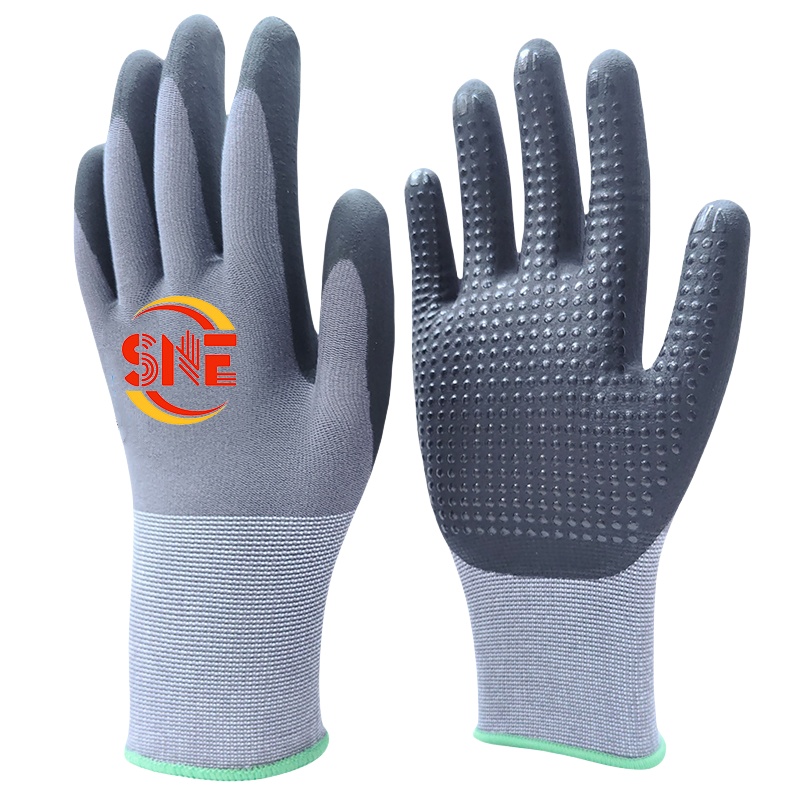
| Smooth nitrile palm coated | Solid nitrile finish on palm and fingers | General handling, light oil contact | Good abrasion resistance and simple value pricing | Can feel less breathable in hot conditions |
| Foam nitrile coated | Micro-foam surface for grip and airflow | Warehousing, assembly, logistics | Better dexterity and comfort for long shifts | May wear faster in highly abrasive tasks |
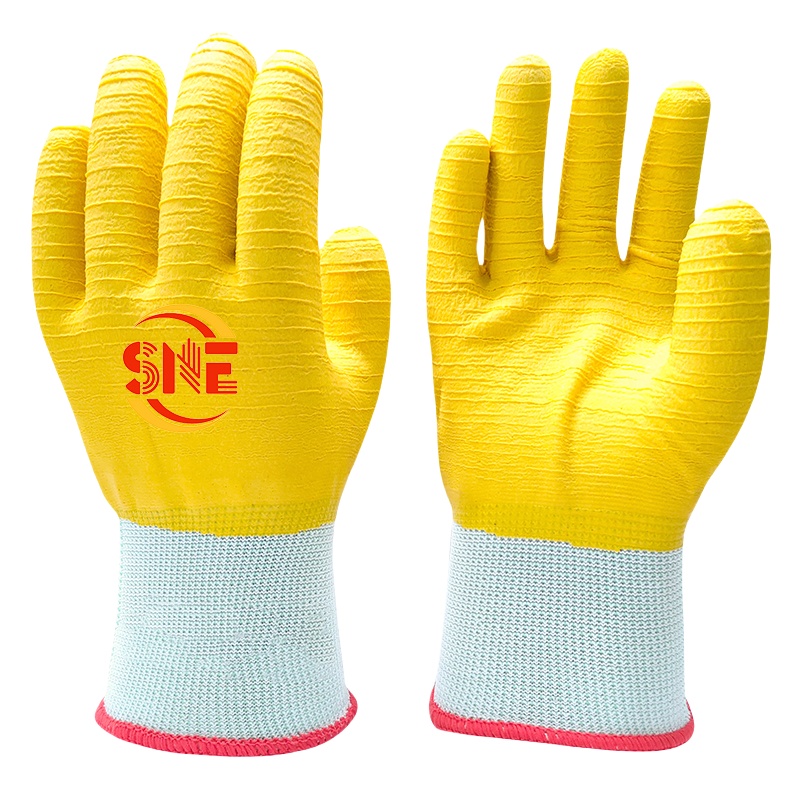
| Full nitrile coated | Coating over most of the glove surface | Wet work, maintenance, messy environments | More protection from liquids and grime | Reduced breathability |
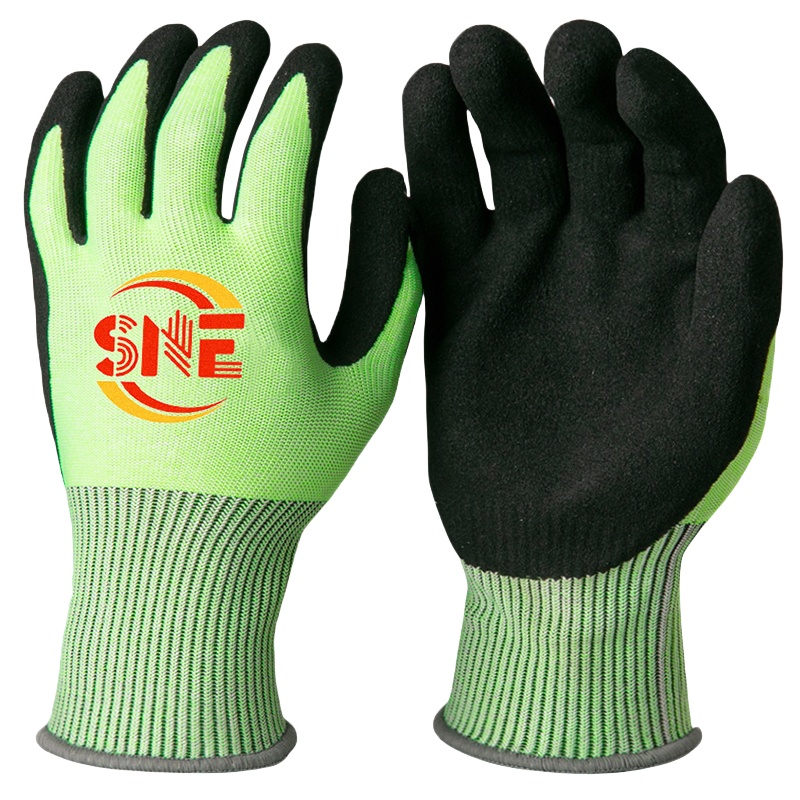
| Sandy nitrile coated | Textured surface for stronger grip | Oily parts handling, metal work | Improved grip in slick conditions | Usually costs more than basic smooth finishes |
| Cut-resistant nitrile coated | HPPE or engineered liner with nitrile palm | Automotive, fabrication, glass, metal stamping | Balances grip with cut protection | Higher unit cost |
| Cold-weather nitrile coated | Brushed or insulated liner with nitrile coating | Outdoor logistics, winter construction | Warmth plus grip | Less dexterity than lightweight gloves |
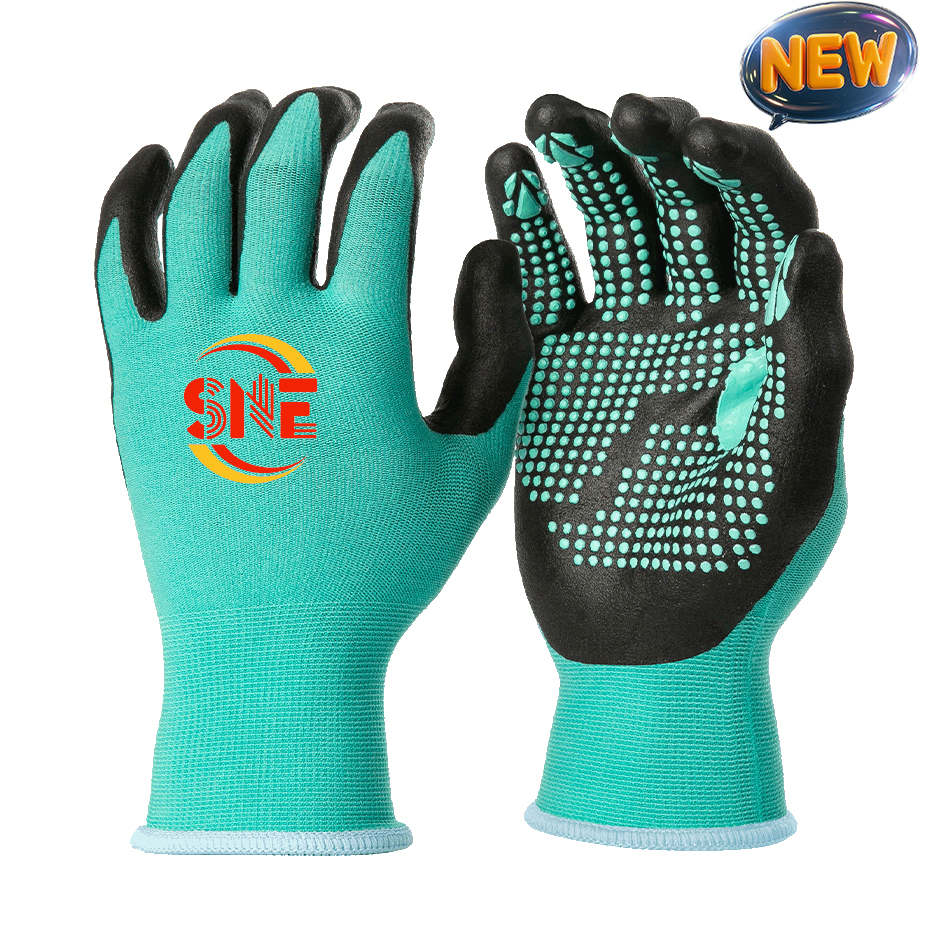
| Touchscreen nitrile coated | Conductive fingertip compatibility | Scanner use, inventory, field service | Reduces glove removal during tasks | Feature durability varies by model |
This table is useful because the best glove for a warehouse picker is usually not the best glove for a metal fabricator or maintenance mechanic. Product matching matters more than simply choosing the cheapest carton.
Industry Demand Across the United States
Demand for bulk nitrile coated gloves is concentrated in industries where workers need grip, durability, and hand mobility without moving into expensive specialty gloves for every task.
Buying Advice for Procurement Teams
When purchasing for crews instead of individuals, glove selection should be treated like an operations decision rather than a simple SKU purchase. The best results usually come from wear testing two or three glove models in real working conditions for two weeks before committing to a bulk contract.
Pay close attention to liner gauge and fit. A 13-gauge foam nitrile glove is often a strong standard option for warehouse and assembly teams because it balances comfort and durability. A 15-gauge glove may improve dexterity, but it is not always the best value for heavy-use applications. A heavier cut-resistant liner may be necessary for sharp edges, but it can add fatigue if over-specified.
Ask suppliers for technical details including ANSI abrasion and cut data where relevant, coating coverage, cuff finish, size range, pair-per-dozen packaging, and carton quantity. For large U.S. rollouts, also confirm whether mixed-size cartons, branch shipping, and blanket orders are available. This matters when crews are spread across Texas, Ohio, California, Georgia, and Pennsylvania.
Total landed cost should include more than purchase price. Freight from inland warehouses, replenishment speed, defect handling, and glove life in actual use all influence cost per wear. Many buyers discover that a slightly higher unit price becomes cheaper over a quarter if glove replacement drops significantly.
Applications by Industry
Bulk nitrile coated gloves are used across a wide spectrum of industrial tasks in the United States. In logistics and warehouse operations, they help workers grip cartons, handheld scanners, shrink wrap, and pallet materials. In automotive plants, they support parts handling, assembly, and maintenance where light oil contact is common. In construction, they are popular for material handling, framing support work, and site cleanup, especially when a team needs better grip than basic string-knit gloves provide.
In manufacturing environments, these gloves are often chosen for machine loading, component transfer, packaging lines, and equipment support work. Municipal buyers use them for public works, sanitation support, parks maintenance, and fleet service. Agricultural and landscaping buyers may prefer nitrile palm-coated designs for tool handling and all-day comfort during repetitive manual work.
The practical reason they remain popular is simple: they solve a wide range of medium-duty hand protection needs without forcing employers into a high-cost specialty glove for every task category.
Trend Shift Toward Higher-Performance Gloves
The U.S. market is gradually shifting from basic low-cost coatings toward higher-performance nitrile options with better grip, breathability, and compliance support. The chart below illustrates that change.
Detailed Supplier Analysis
Each supplier serves a slightly different type of buyer. Some are best for immediate domestic replenishment, while others are better for annual tenders, private label development, or high-volume imports through major entry points such as Los Angeles, Long Beach, Houston, and Savannah.
| Company | Primary U.S. Buyer Type | Service Model | Strength in Bulk Programs | Potential Trade-Off |
|---|---|---|---|---|
| Magid | Industrial plants, enterprise accounts | Direct sales plus distribution | Strong managed PPE programs and customization | May not be the lowest-cost option for basic gloves |
| MCR Safety | Distributors, safety managers, contractors | Brand-led distribution network | Reliable industrial coverage and broad PPE integration | Popular SKUs may depend on channel inventory |
| PIP | National distributors, multi-site buyers | Large-scale channel support | Wide product ladder from value to premium | Selection process can be complex for smaller buyers |
| Global Glove | Warehouses, factories, regional distributors | Glove-centered wholesale supply | Good range for fast-moving glove categories | May offer less broad PPE bundling than larger groups |
| SHOWA | Technical product buyers | Distributor-based U.S. market access | Strong engineering reputation | Pricing can be higher in some categories |
| Ansell | Large enterprises, regulated industries | Global account and distributor model | Technical documentation and premium market trust | May exceed needs for simple general-purpose tasks |
| Qingdao Snell Protective Products Co., Ltd. | Importers, brand owners, distributors, large end users | Factory-direct OEM, ODM, wholesale, private label | Competitive bulk pricing with customization and scalable production | Best suited to planned procurement rather than emergency spot buys |
This table highlights a useful sourcing distinction: domestic brands are ideal for speed and local inventory, while factory-direct suppliers become especially attractive when standardization, branding, and annual volume planning are priorities.
Supplier Comparison by Procurement Priorities
For many U.S. buyers, selection comes down to balancing price, customization, technical support, and lead time. The chart below compares typical decision factors used during supplier evaluation.
Case Studies from Common U.S. Buying Scenarios
A Midwest distribution company operating three warehouses near Chicago, Indianapolis, and Columbus needed one glove standard for over 200 workers. After testing two foam nitrile gloves and one smooth nitrile option, the company found the foam nitrile model reduced mid-shift glove changes because workers used scanners and handled mixed packaging all day. Even with a slightly higher unit price, the total quarterly glove spend fell because replacement frequency dropped.
A Texas-based maintenance contractor serving industrial facilities around Houston selected a sandy nitrile coated glove for teams handling oily components, valves, and tools. Their earlier glove program focused only on lowest cost, but frequent slipping and fast wear created hidden cost. Switching to a more task-specific nitrile coating improved grip confidence and reduced emergency reorder cycles.
An automotive parts supplier in the Southeast needed branded gloves for both internal use and customer-facing resale channels. A U.S. distributor handled local fulfillment for fast-moving sizes, while a factory-direct manufacturing partner supported OEM packaging and logo printing for container-level seasonal replenishment. This hybrid model kept local response time strong while lowering annual average cost.
Local Supplier Channels and Trade Hubs
In the United States, bulk glove procurement is closely tied to logistics geography. Buyers near Los Angeles and Long Beach often work with import-oriented wholesalers because Pacific entry points simplify container flow from Asia. Buyers in Texas may prefer Houston-linked distribution for Gulf access and industrial corridor coverage. The Midwest frequently relies on Chicago-centered industrial supply networks due to strong warehousing and trucking reach. East Coast buyers often use New Jersey and Savannah channels for balanced port access and inland transit options.
These trade patterns matter because glove programs are not only about the initial purchase. Reliable replenishment across branches, storm season delays, peak construction months, and year-end inventory cycles all affect the real performance of a supplier relationship.
Our Company in the U.S. Market
Qingdao Snell Protective Products Co., Ltd. supports U.S. buyers with a factory-direct glove program built around certified industrial hand protection, scalable production, and practical commercial flexibility. Its nitrile coated glove range is produced under ISO 9001 management standards with CE-marked product compliance, supported by dedicated coating capabilities in nitrile, PU, and latex, plus advanced cut-resistant and impact-resistant engineering for customers that need a broader hand-protection portfolio from one source. With two manufacturing facilities in Gaomi and Nantong, 6 production lines, more than 150 trained employees, and daily output capacity of 150,000 pairs, the company is equipped for repeat-volume orders, OEM and ODM development, private label projects, bulk wholesale, and regional distribution cooperation for end users, importers, dealers, and brand owners in the United States. Through its established export experience across North America and other regulated markets, along with multilingual sales support, sample service, technical consultation, customization assistance, and dedicated logistics coordination, it operates as a long-term supply partner for U.S. buyers rather than a one-off remote exporter; customers can review its broader catalog through the product center, discuss specifications through the U.S.-focused contact channel, or start from the main Snell Safety website for ongoing pre-sale and after-sale support.
How to Evaluate a Bulk Supplier
The best supplier evaluation process usually starts with five checkpoints. First, confirm performance data: abrasion resistance, cut rating if needed, coating type, and liner details. Second, confirm commercial capacity: MOQ, lead time, carton structure, and ability to maintain consistent production lots. Third, confirm service capability: samples, account response time, claim handling, and packaging flexibility. Fourth, confirm logistics capability: whether the supplier can support branch shipments, container planning, or warehouse replenishment. Fifth, confirm long-term reliability through export experience and quality system evidence.
For U.S. buyers, it is also smart to ask whether the supplier can align with distributor stocking models, EDI requirements, barcode labeling, and private branding guidelines. These practical details often determine whether a glove program runs smoothly after approval.
2026 Trends: Technology, Policy, and Sustainability
Looking toward 2026, several trends are likely to shape the bulk nitrile coated glove market in the United States. On the technology side, buyers will see more demand for breathable foam nitrile coatings, touchscreen compatibility, ergonomic liner construction, and hybrid gloves that combine grip with moderate cut resistance. Automation in warehousing and advanced manufacturing will increase demand for gloves that maintain finger sensitivity without sacrificing durability.
On the policy side, employers are expected to continue tightening PPE documentation and hazard-matching standards, especially in sectors with stronger audit and compliance pressure. Procurement teams will increasingly ask for clearer test data, product traceability, and supplier consistency across multiple shipments. This will favor manufacturers and brands with stable quality systems and technical documentation rather than anonymous spot-market sellers.
On sustainability, larger distributors and enterprise buyers are paying more attention to packaging reduction, efficient carton loading, waste reduction through longer-wear products, and production partners that can document responsible manufacturing practices. While nitrile coated gloves are still primarily judged on safety and cost, environmental procurement criteria are becoming part of supplier scorecards, especially for large U.S. corporations and public-sector bids.
Common Mistakes When Buying in Bulk
One common mistake is choosing one glove for every task without validating whether different departments need different grip levels or cut performance. Another is focusing only on price per pair without calculating cost per week or cost per job completed. A third mistake is ignoring worker acceptance; if gloves are uncomfortable, workers remove them or request replacements more often, which increases risk and cost.
Buyers also sometimes overlook packaging efficiency. For example, if a supplier cannot provide sensible size ratios or clear carton labeling, internal distribution becomes harder across large teams. Finally, many purchasers fail to ask about claim resolution and production consistency. In glove programs, repeatability matters as much as the first sample.
Frequently Asked Questions
What are bulk nitrile coated gloves best used for?
They are best for general industrial tasks where workers need grip, abrasion resistance, and dexterity, including warehousing, assembly, maintenance, construction support, and automotive parts handling.
Are foam nitrile gloves better than smooth nitrile gloves?
Foam nitrile gloves are often better for comfort and dexterity, especially in warehouse and assembly work. Smooth nitrile gloves can be a better value for tougher or dirtier tasks where basic durability matters more than fine handling.
How do U.S. buyers usually purchase these gloves?
Most buyers either purchase through domestic distributors for quick stock access or combine local distribution with factory-direct annual supply agreements for lower long-term cost and private label options.
What certifications should I look for?
Look for documented quality management systems such as ISO 9001 and relevant product compliance data. For task-specific applications, request abrasion, cut, and other test information that matches the job hazard assessment.
Can overseas suppliers work well for U.S. glove programs?
Yes. Overseas manufacturers can work very well when they have proven export experience, scalable production, clear quality systems, responsive communication, and support for customization, documentation, and logistics planning.
What is the ideal order strategy for large teams?
A practical approach is to test two or three glove styles, standardize approved models by task type, and then set quarterly or annual replenishment plans with agreed pricing, packaging, and lead time targets.
Final Takeaway
For buyers in the United States, the best bulk nitrile coated gloves are the ones that match the task, hold up through real shifts, and come from suppliers that can support repeatable delivery. Domestic brands such as Magid, MCR Safety, PIP, Global Glove, Ergodyne, SHOWA, and Ansell remain strong choices for immediate local availability. At the same time, factory-direct manufacturers with certification, customization capability, and scalable output can deliver strong cost-performance for planned procurement. The most effective glove program usually blends performance testing, local logistics awareness, and disciplined supplier evaluation rather than choosing solely by catalog price.