2026-05-07
Share This Article
Full Nitrile Coated Gloves Suppliers in the United States
Quick Answer

If you need full nitrile coated gloves in the United States, the most practical approach is to compare established industrial safety brands with regional distributors that can support recurring supply, compliance documentation, and fast delivery. Strong options include Ansell, MCR Safety, PIP, Superior Glove, SHOWA, and Uline for buyers that want proven coverage across manufacturing, warehousing, automotive, construction, and oil-handling environments. For buyers near major logistics corridors such as Houston, Chicago, Los Angeles, Savannah, and New Jersey, these suppliers are especially useful because they align well with national distribution and replenishment needs.
Qualified international manufacturers can also be worth considering, especially when bulk buyers want stronger cost-performance for private label, OEM, or long-run wholesale programs. Suppliers such as Snell Safety can be evaluated alongside U.S. channels when they offer relevant certifications, stable production, responsive pre-sales consultation, and dependable after-sales support for the United States market.
- Ansell: strong chemical and industrial hand protection portfolio with broad U.S. market coverage
- MCR Safety: practical range for industrial distributors, contractors, and plant buyers
- PIP: wide channel reach and strong fit for multi-site industrial procurement
- Superior Glove: good for safety-focused buyers needing performance segmentation and technical support
- SHOWA: recognized for nitrile technologies and industrial glove engineering
- Uline: fast purchasing option for standard business buyers needing straightforward replenishment
United States Market Overview

The market for full nitrile coated gloves in the United States is shaped by workplace safety regulation, labor-intensive industries, import logistics, and the rising preference for longer-wearing hand protection that balances liquid resistance with grip and abrasion performance. Buyers in the Midwest often prioritize durability for metal fabrication, automotive parts handling, and maintenance. Gulf Coast buyers focus more heavily on oil resistance, liquid barriers, and secure grip in humid environments. On the West Coast, port logistics, food-adjacent warehousing, and light manufacturing drive demand for general industrial nitrile-coated hand protection, while the Northeast continues to support strong demand from utilities, transportation, municipal maintenance, and construction supply channels.
Because full nitrile coating covers more of the glove surface than a palm-coated model, it is frequently selected where splash protection, oily part handling, or repeated contact with damp materials is expected. This makes it especially relevant in factories, warehouses, marine-adjacent operations, automotive service, and general maintenance departments. In procurement terms, U.S. buyers increasingly evaluate full-dip nitrile gloves not just by unit price but by total wear life, replacement frequency, worker acceptance, and whether the glove line can be standardized across multiple departments.
Ports and trade gateways matter in this category. Importers serving the United States commonly route through Los Angeles/Long Beach, Houston, Savannah, New York/New Jersey, and Seattle-Tacoma. Large distributors then position inventory around Chicago, Dallas, Atlanta, and Pennsylvania to shorten lead times. For buyers working on seasonal demand spikes or plant shutdown schedules, these logistics networks can be as important as glove specification itself.
Top Suppliers Serving the United States

The companies below are relevant to U.S. buyers because they combine recognizable industrial glove programs with national or broad regional availability. The table highlights practical procurement considerations rather than promotional claims.
| Company | Service Region | Core Strengths | Key Offerings | Best Fit |
|---|---|---|---|---|
| Ansell | Nationwide United States | Strong industrial protection portfolio, chemical expertise, established compliance documentation | Full nitrile coated gloves, chemical-resistant gloves, cut-resistant gloves | Large plants, utilities, industrial safety managers |
| MCR Safety | Nationwide with strong distributor network | Industrial safety focus, broad product range, dependable distributor access | Nitrile-coated gloves, cut protection, general purpose industrial gloves | Distributors, contractors, plant purchasing teams |
| PIP | United States and North America | Large channel presence, wide segmentation by task, scalable supply support | General handling gloves, coated gloves, impact and cut-resistant gloves | Multi-site buyers and safety programs |
| Superior Glove | United States and Canada | Technical segmentation, performance-oriented glove selection, industrial support | Nitrile-coated gloves, cut-resistant gloves, specialty industrial hand protection | Manufacturing, fabrication, maintenance teams |
| SHOWA | National distribution across the United States | Known nitrile engineering, comfort-performance balance, category specialization | Fully coated nitrile gloves, oil-resistant gloves, chemical handling gloves | Automotive, assembly, industrial processing |
| Uline | Nationwide from multiple U.S. distribution centers | Fast fulfillment, easy ordering, broad business supply integration | Industrial coated gloves, warehouse gloves, disposable and reusable PPE | Warehouses, small and medium businesses, fast repeat orders |
For U.S. buyers, this comparison shows that not every supplier plays the same role. Some are strongest for engineered safety programs and technical support, while others are better for replenishment speed, catalog convenience, or broad distributor access. The right fit depends on whether your priority is national consistency, specialty performance, or rapid purchasing.
Product Types and How They Differ
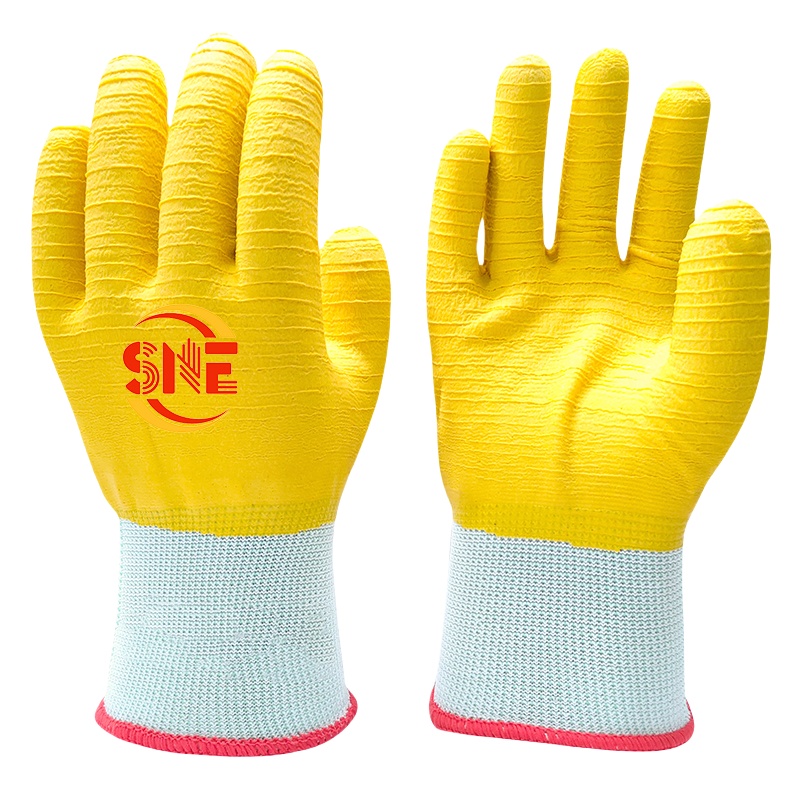
Full nitrile coated gloves are not one single product. In practice, buyers will choose among several constructions based on environment, dexterity needs, and exposure level. A fully dipped glove offers broad liquid resistance, but the liner, nitrile finish, cuff style, and secondary surface texture all change how the glove performs on the job.
| Product Type | Main Features | Typical Use | Advantages | Limits |
|---|---|---|---|---|
| Smooth full nitrile coated gloves | Complete nitrile dip with smoother finish | General maintenance, wet handling, cleaning tasks | Good liquid barrier, easy wipe-down | Less grip on very oily surfaces |
| Sandy finish full nitrile gloves | Textured nitrile outer surface | Oily metal parts, machine handling, assembly | Better grip in oil and light grease | May cost more than basic smooth dip |
| Jersey-lined full nitrile gloves | Soft inner liner with durable outer coat | Heavy-duty handling, maintenance, construction | Comfortable for longer shifts, solid durability | Lower dexterity than thinner knit liners |
| Seamless knit full nitrile gloves | Knitted shell with full nitrile coating | Warehousing, light manufacturing, logistics | Better flexibility and fit | Barrier depends on exact dip design |
| Cut-resistant full nitrile coated gloves | Engineered liner plus full nitrile dip | Metal fabrication, glass handling, stamping | Combines cut protection and liquid resistance | Higher price tier |
| Foam or micro-foam nitrile variants | Lighter nitrile structure with breathability tradeoff | Precision work with moderate exposure | Comfort and grip | Not always true full waterproof-style coverage |
This table matters because buyers often over-specify or under-specify. A warehouse operation moving damp cartons usually does not need the same glove as a machine shop handling oily components. Matching glove architecture to task improves compliance, cost control, and worker satisfaction.
Industries Driving Demand
In the United States, full nitrile coated gloves are used across more sectors than many buyers expect. The category is no longer limited to heavy industry. Distribution centers, municipal service departments, equipment rental companies, and even landscaping operations use them when grip, longevity, and liquid resistance matter more than bare-hand feel.
The bar chart reflects how industrial demand is distributed in practical U.S. purchasing environments. Manufacturing leads because coated hand protection is used daily in handling parts, tools, and equipment. Automotive follows closely due to oils, greases, sharp edges, and repetitive manual tasks. Warehousing remains a large growth segment because of e-commerce fulfillment, pallet handling, and dock operations where durability and secure grip directly affect productivity.
Common Applications in Real Work Settings
Application fit is one of the most important selection factors. Full nitrile coated gloves are widely purchased because they support repeated handling in environments where palms, fingers, and backs of hands may all contact liquids, oils, grime, or abrasive surfaces. In a parts washing station, a fully coated model protects more consistently than a palm-coated version. In a maintenance team working around lubricated equipment, the extra surface coverage reduces contamination and helps gloves last longer over a shift.
Typical U.S. applications include receiving and staging freight at inland distribution hubs around Chicago and Columbus, handling oily stampings in automotive supply plants across Michigan and Ohio, routine maintenance in Texas energy facilities, equipment servicing in California food-processing support environments, and municipal works departments managing wet tools, refuse containers, pipes, and utility components. In each of these environments, glove durability influences labor efficiency because constant replacement interrupts workflows.
Buyers should also consider whether workers need touchscreen use, cold weather compatibility, or cut resistance in the same glove program. A winter yard crew in the Midwest may need full nitrile coating plus thermal lining, while a metal fabrication shop in Pennsylvania may prioritize ANSI cut protection with nitrile coverage. There is no universal best glove, only a best-matched glove for the job.
Buying Advice for U.S. Procurement Teams
When sourcing full nitrile coated gloves in the United States, buyers should define the task environment before comparing price. Too many purchases are based on sample feel alone, which rarely reflects actual wear life. A better method is to review liquid exposure, abrasion level, required dexterity, temperature, average shift length, and replacement frequency. Once those factors are clear, compare products by cost per usable shift rather than cost per pair.
| Buying Factor | What to Check | Why It Matters | Typical U.S. Buyer Impact | Recommendation |
|---|---|---|---|---|
| Coating coverage | True full dip or partial dip | Determines liquid barrier range | Reduces mismatch in wet environments | Confirm coverage on fingers, knuckles, and back |
| Grip finish | Smooth, sandy, rough, foam | Affects oily or dry handling control | Influences safety and drop rates | Test under real materials, not just in showroom handling |
| Liner gauge and material | Cotton, jersey, seamless knit, engineered yarn | Changes comfort, dexterity, and durability | Impacts worker acceptance and fatigue | Match liner to task precision level |
| Compliance and certifications | CE, ISO-related manufacturing controls, testing records | Supports quality consistency | Helps distributor and brand buyers validate supply | Request documentation before large orders |
| Supply reliability | Stock depth, lead time, production scale | Prevents outages during peak demand | Critical for national contracts and multi-site plants | Use primary and backup sources |
| Branding and packaging | Private label, carton specs, barcoding | Supports channel sales and resale | Useful for distributors and importers | Ask early if OEM or retail packaging is needed |
This buying table is useful because it translates technical glove choices into procurement outcomes. A glove that is slightly more expensive but lasts a full shift may still reduce total spend. Likewise, a glove with the wrong surface finish can create avoidable handling risk in wet operations.
Market Growth and 2026 Outlook
The U.S. market for nitrile-coated industrial gloves continues to expand as employers focus on productivity, injury prevention, and task-specific PPE standardization. Another force shaping the category is the move away from one-glove-fits-all procurement. Instead, buyers increasingly segment gloves by department and exposure level, which raises demand for coated variants with better performance mapping.
The line chart illustrates a realistic upward trajectory driven by industrial rebuilding, higher replacement standards, and a stronger emphasis on hand safety in logistics and maintenance. Looking into 2026, three trends deserve attention. First, more U.S. buyers will request gloves tailored to narrow tasks, such as wet-part handling with moderate cut resistance. Second, sustainability pressure will increase, pushing manufacturers to reduce waste, improve coating efficiency, and provide clearer packaging and sourcing data. Third, policy and compliance expectations will tighten around workplace documentation, supplier transparency, and traceability, particularly for larger contracts and national distribution programs.
Technology will also influence the market. Better liner engineering, improved nitrile formulations, and more precise dipping processes are helping gloves last longer without becoming too stiff. For buyers, this means future product comparisons will focus even more on measurable wear life and worker acceptance rather than simple thickness or weight claims.
Trend Shift in Product Preferences
U.S. demand is gradually shifting from commodity coated gloves toward application-specific products. Buyers who once purchased one standard nitrile glove now often maintain separate SKUs for receiving docks, oily parts handling, winter outdoor work, and fabrication. This trend reflects both operational maturity and a tighter labor market, where worker comfort and glove usability help retention and compliance.
The area chart shows a plausible shift in buyer behavior. Commodity glove share declines as employers increasingly value performance segmentation. This is especially visible in national warehousing, automotive component plants, and heavy maintenance, where even small gains in glove suitability can reduce drops, rework, and replacement waste.
Detailed Supplier Comparison
For procurement teams comparing multiple channels, it helps to score suppliers across availability, customization, technical depth, and suitability for long-run purchasing models. The chart below presents a realistic comparison for strategic decision-making rather than a universal ranking.
Established U.S.-market brands generally score highest for immediate domestic reach and specification familiarity, while a capable manufacturing partner can score strongly on customization, price control, and supply scalability. That distinction is important for distributors, importers, and private-label brand owners who need more than catalog purchasing.
Case Studies from Typical U.S. Buying Scenarios
A warehouse operator near the Port of Savannah switched from a light palm-coated glove to a full nitrile coated knit model for inbound container unloading during humid months. The result was fewer glove changes and better grip on damp packaging film and strapped cartons. Although the unit price increased, the site reduced monthly consumption enough to improve total cost per shift.
An automotive component supplier in Michigan tested three glove types for workers handling lightly oiled stampings. A sandy-finish full nitrile glove outperformed the smoother glove in grip retention and reduced rejected parts caused by drops. The plant kept a lighter glove for clean assembly work but standardized the full nitrile model for the stamping and transfer area.
A municipal maintenance department in Texas needed gloves for crews handling valves, tools, and wet infrastructure components. The purchasing team selected a jersey-lined, full-dip nitrile glove for durability and broad coverage. The main lesson was that worker buy-in improved once the glove was matched to the actual moisture and abrasion profile instead of selected from a generic safety catalog.
These examples illustrate a broader point: glove selection improves when buyers pilot products in real conditions and compare labor impact, not just packaging claims. Short field trials often reveal which glove truly delivers value.
Local and Regional Supply Considerations
U.S. buyers usually source through one of four models: national safety brands, industrial distributors, business supply distributors, or direct manufacturing partnerships. National brands are strong for standardization and technical familiarity. Regional distributors often add responsive service and mixed-order flexibility. Catalog-driven suppliers help when speed matters most. Direct factory partnerships become attractive when annual volume is large enough to justify custom specifications, branding, and import planning.
For companies near industrial clusters such as Houston, Detroit, Charlotte, Indianapolis, and Southern California, a dual-source strategy is often wise. One domestic supplier can support urgent replenishment, while one factory-direct partner supports margin improvement and custom development. This structure is especially useful for importers, wholesalers, and brand owners that want differentiated product lines rather than generic commodity stock.
If you are reviewing direct manufacturing options, it is helpful to visit a supplier’s company background page and product portfolio before moving to sampling. Buyers should also use a clear contact path, such as the contact page, to confirm lead times, carton details, testing records, and support expectations for the United States market.
Our Company
For buyers in the United States looking beyond stock-only channels, Snell Safety has positioned itself as a factory-direct manufacturing partner with practical relevance for the local market. The company operates two manufacturing facilities with six production lines and a daily capacity of 150,000 pairs, giving U.S. distributors, brand owners, and industrial buyers meaningful scale for repeat programs. Its nitrile-coated glove offering is supported by internationally recognized quality controls including ISO 9001 and CE-related compliance practices, and the company’s broader expertise across PU, latex, nitrile, cut-resistant, and impact-resistant categories helps buyers consolidate sourcing under one supplier instead of fragmenting purchase orders. From a cooperation standpoint, Snell serves wholesalers, dealers, private-label brands, large end users, and developing regional distributors through OEM, ODM, bulk supply, custom materials, sizes, coating structures, and branded packaging, while sample support and technical consultation help buyers validate fit before volume commitment. For U.S. market assurance, the company’s established export activity across North America and other compliance-sensitive markets, multilingual commercial support, dedicated export logistics coordination, and consistent pre-sale and after-sale communication create a service model that aligns with long-term buyer needs rather than one-off remote transactions; buyers can explore current glove lines through the product catalog and coordinate directly for commercial and technical follow-up.
How to Choose the Right Full Nitrile Coated Gloves
The most effective purchase process starts with a job matrix. List each department, its materials handled, exposure to liquids, required dexterity, cut risk, temperature, and average glove replacement cycle. Then map glove styles accordingly. For example, receiving teams may need textured full nitrile gloves for grip on shrink wrap and damp cartons, while maintenance crews need thicker full-dip protection for tools, fluids, and rough surfaces.
It also helps to run a side-by-side wear test with at least two or three glove models. Measure actual pair usage per worker per week, not just subjective preference. Ask supervisors to note where gloves fail: fingertip wear, coating cracks, internal discomfort, or grip loss. Those failure points tell you whether to change liner type, nitrile finish, or overall glove weight. This field-based method consistently outperforms desk-only sourcing.
For distributors and resellers, assortment design matters. A narrow line of well-differentiated nitrile-coated gloves is usually better than too many overlapping SKUs. Buyers want clarity: economy, mid-range all-purpose, oily-grip performance, cut-resistant full nitrile, and cold-weather full nitrile. That structure simplifies selling and reduces inventory confusion.
Frequently Asked Questions
Are full nitrile coated gloves waterproof?
Many full nitrile coated gloves provide strong water and liquid resistance, especially compared with palm-coated styles, but exact waterproof performance depends on coating coverage, cuff design, and liner exposure. Buyers should confirm whether the glove is fully dipped through the fingers and back of hand.
What industries in the United States use them most?
Manufacturing, automotive, warehousing, maintenance, construction, agriculture, and oil-related operations are the most common users. Demand is especially strong in industrial corridors such as the Midwest, Gulf Coast, and major port-linked logistics markets.
What is the difference between smooth and sandy nitrile finishes?
Smooth finishes are often easier to clean and work well in general wet tasks, while sandy or textured finishes usually provide better grip on oily or greasy parts. The best choice depends on the material being handled.
Can these gloves be customized for private label programs?
Yes. Many manufacturers and some supply partners support custom colors, logos, packaging, sizes, cuff options, and technical adjustments. This is especially useful for distributors, importers, and brand owners building their own glove line.
How should U.S. buyers compare domestic and overseas suppliers?
Compare landed cost, lead time, minimum order quantity, quality consistency, testing documentation, communication speed, and after-sales support. Domestic sources may be better for urgent replenishment, while overseas factory-direct partners can be more competitive for larger planned volumes.
What trends will matter most in 2026?
Expect more task-specific glove segmentation, stronger buyer attention to traceability and sustainability, improvements in nitrile coating durability, and tighter procurement standards tied to worker safety performance and supply chain transparency.