2026-09-22
Share This Article
ANSI A4 Cut Level Gloves for United States Buyers
Quick Answer

If you need ANSI cut level A4 gloves in the United States, the right choice depends on whether your team handles sheet metal, stamped parts, glass, warehouse cartons, HVAC ducting, or light-to-medium sharp edge work. For most U.S. buyers, the best fit is a 13-gauge or 18-gauge cut-resistant liner with a nitrile, PU, or sandy nitrile coating that balances dexterity, grip, abrasion resistance, and all-day comfort. Buyers in industrial hubs such as Houston, Chicago, Detroit, Los Angeles, Atlanta, and the Inland Empire usually prioritize fast replenishment, size consistency, and documented compliance with ANSI/ISEA 105.
Well-known suppliers active in the U.S. market include Ansell, MCR Safety, Superior Glove, PIP, HexArmor, and Youngstown Glove Company. Ansell is strong for broad industrial programs, MCR Safety is widely used in distribution and metalworking, Superior Glove offers a deep cut-resistant portfolio, PIP has strong channel reach across the United States, HexArmor is often considered for premium protection programs, and Youngstown is recognized in utility and field-service environments. Qualified international manufacturers can also be a practical option when they hold relevant certifications, maintain stable quality systems, and offer dependable pre-sale and after-sale support. For importers, distributors, and private-label buyers, factory-direct Chinese suppliers with compliant production and strong service responsiveness can deliver a compelling cost-performance advantage.
Understanding the U.S. Market for ANSI A4 Gloves

The United States remains one of the world’s largest industrial safety glove markets because it combines a large manufacturing base with strict workplace safety expectations. Procurement teams in the Midwest often buy A4 gloves for automotive stamping, fabricated metals, appliance assembly, and warehousing. Gulf Coast buyers in Texas and Louisiana frequently source them for oilfield maintenance, pipe handling, fabrication shops, and logistics work. Coastal regions such as California and the Northeast also show steady demand from food processing equipment maintenance, building materials distribution, aerospace subcontracting, and port-related warehouse activity.
ANSI cut level A4 gloves occupy an important middle-to-upper segment in hand protection. They typically serve workers who face regular contact with sharp materials but do not necessarily require the heavier protection, stiffness, or cost associated with higher cut levels such as A6 through A9. In practical terms, A4 is often chosen when employers want a stronger safety margin than A2 or A3 while preserving dexterity for assembly, picking, inspection, machine loading, and material handling.
U.S. buyers increasingly evaluate gloves using a total-cost lens rather than only the unit price. A glove that lasts longer, reduces hand fatigue, and improves grip in oily or dry conditions may reduce replacement frequency and support better worker compliance. That matters in labor-tight markets where supervisors want gloves workers will actually wear for a full shift.
The chart above illustrates a realistic growth trend for ANSI A4 glove demand in the United States. The pattern reflects continued investment in manufacturing resilience, warehouse expansion near ports and inland logistics corridors, and stronger employer attention to injury prevention. For buyers planning annual contracts, this trend suggests that locking in a stable supply partner early can help avoid lead-time pressure during seasonal spikes.
What ANSI Cut Level A4 Actually Means

ANSI A4 refers to a cut-resistance classification under ANSI/ISEA 105. It indicates a glove designed to resist a meaningful level of blade-cut force, making it suitable for many medium-to-high cut hazard environments. In day-to-day purchasing, the rating should not be read in isolation. U.S. safety managers also compare abrasion, puncture, tear, dexterity, coating type, cuff length, laundering performance, and touchscreen compatibility, especially when standardizing gloves across multiple departments.
A4 is especially relevant when the hazard profile includes recurring exposure to edges rather than infrequent extreme contact. It is common in stamping plants, metal service centers, HVAC fabrication, glass handling support tasks, recycling operations, cabinet manufacturing, and warehouse kitting where knives, sharp packaging, or metal edges are present. It is less suitable when workers directly handle razor-sharp scrap, broken glass with high force, or severe burr hazards that typically push a site toward A6 or higher protection.
Product Types and How to Choose Them
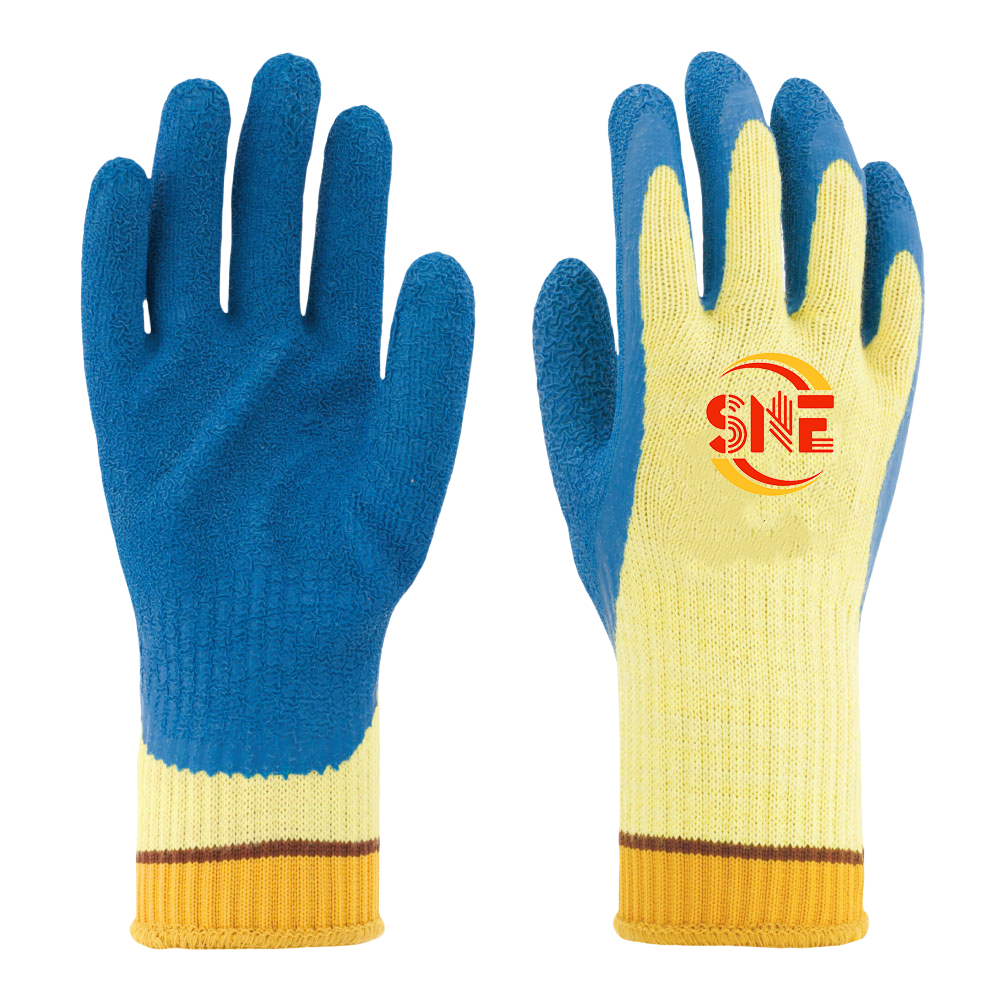
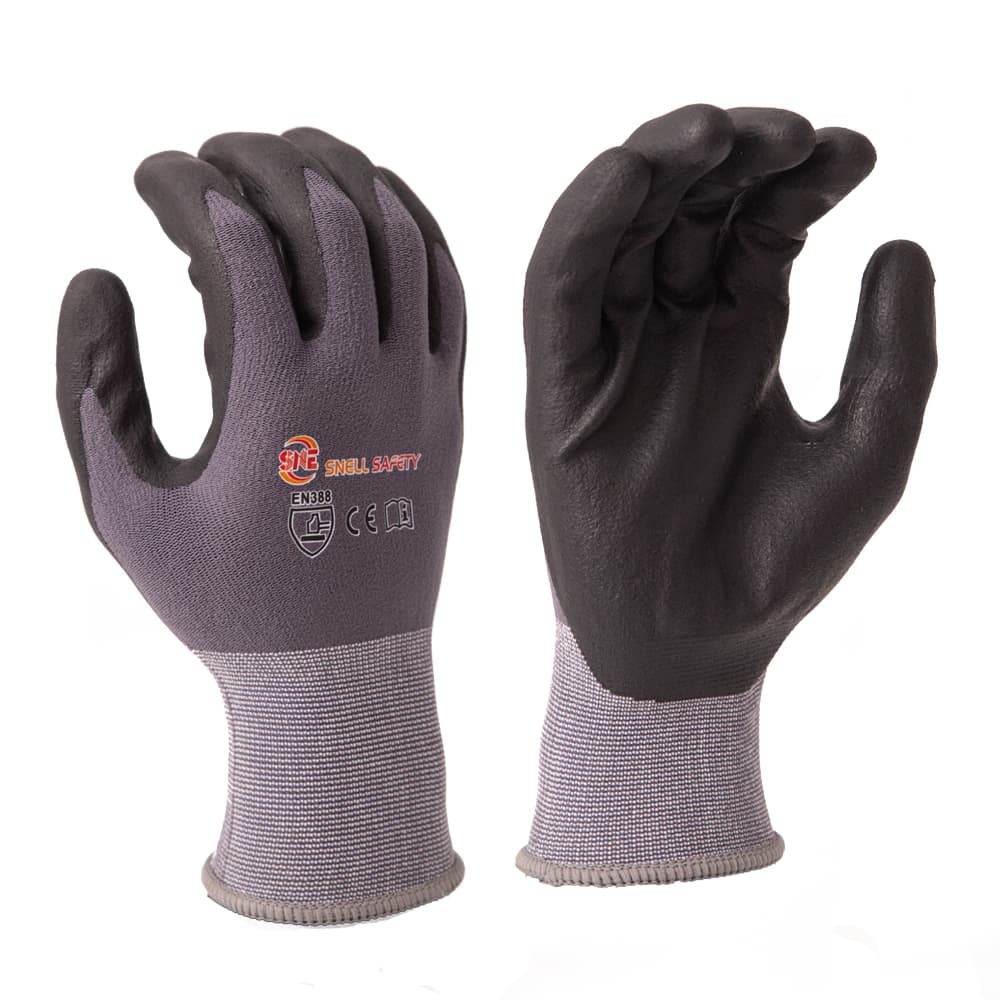
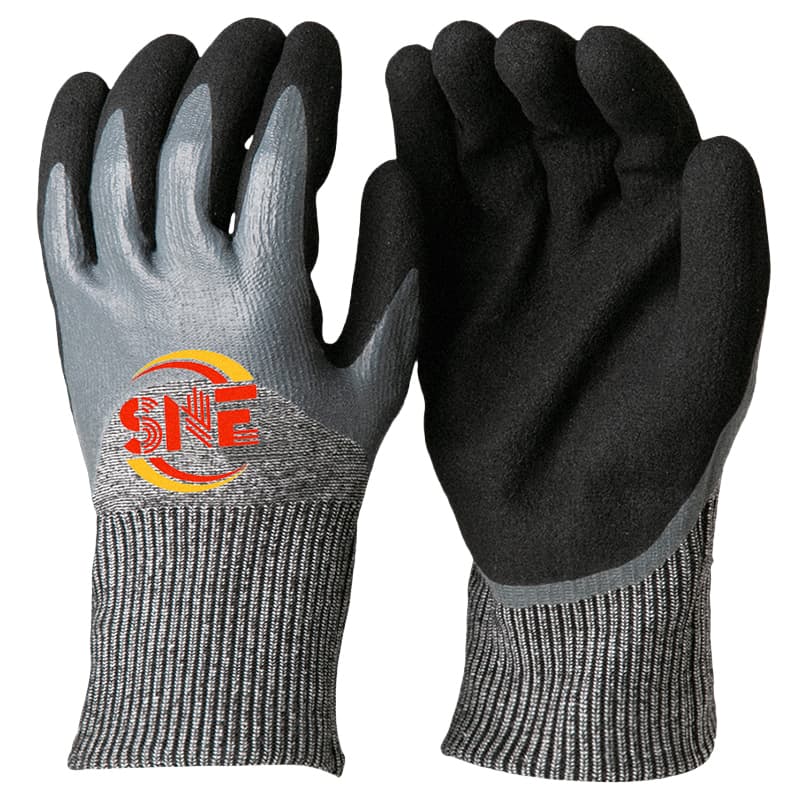
Not all ANSI cut level A4 gloves feel or perform the same. U.S. buyers usually compare glove construction by liner material, gauge, palm coating, and intended work environment. HPPE blends are widely used because they deliver a strong combination of cut resistance, comfort, and value. Reinforcement fibers such as steel, glass fiber, or engineered yarns may be used to achieve the required protection level. The right coating then determines grip, tactile feel, abrasion life, and suitability for wet or oily conditions.
| Glove Type | Common Liner | Typical Coating | Best For | Main Advantage | Possible Trade-Off |
|---|---|---|---|---|---|
| General assembly A4 glove | HPPE blend 13-gauge | PU palm | Light manufacturing and inspection | High dexterity and clean handling | Less grip in oil than nitrile |
| Warehouse handling A4 glove | HPPE blend 13-gauge | Foam nitrile | Carton handling and distribution | Good comfort and dry grip | Moderate wear in rough surfaces |
| Metal fabrication A4 glove | Engineered yarn 13-gauge | Sandy nitrile | Sharp edge contact and oily parts | Strong grip and durability | Can feel slightly thicker |
| Precision handling A4 glove | 18-gauge cut liner | Micro-foam nitrile | Small parts and fine assembly | Better touch sensitivity | Usually shorter service life in rough tasks |
| Food equipment maintenance A4 glove | Food-safe compatible liner | PU or nitrile | Dry maintenance and machine service | Balanced cut protection and dexterity | Specification review is critical |
| Extended forearm coverage glove | HPPE with long cuff | Nitrile palm | Sheet handling and glass support tasks | Added wrist and forearm coverage | Warmer during long shifts |
The table shows why two gloves with the same A4 rating can still behave very differently in the field. For example, a U.S. warehouse buyer in New Jersey may prefer micro-foam nitrile for order picking, while a fabrication manager in Indiana may choose sandy nitrile for better oily-part grip and longer wear. The rating sets a cut baseline, but the work process determines the better product.
Buying Advice for United States Procurement Teams
When evaluating ANSI A4 gloves, start with the exact hazard. Many procurement errors come from matching the glove to a generic industry instead of the actual task. A metal stamping line in Ohio, an e-commerce fulfillment center in California, and a cabinet plant in North Carolina may all ask for A4 gloves, but they need different coatings, cuff styles, and thickness levels.
Next, verify labeling and supporting documentation. U.S. distributors and end users generally expect transparent performance data tied to ANSI/ISEA 105. If a supplier cannot provide clear specification sheets, size consistency information, and test references, the risk of field complaints rises quickly. Fit also matters. A glove that bunches at the palm or slips at the fingertips can reduce grip and cause workers to remove it, undermining safety.
Bulk buyers should also review replenishment planning. Large U.S. users often need mixed size curves from XS through XXL, with recurring replenishment to multiple sites. Distributors may prioritize pack configurations, barcode labeling, and private-brand packaging. Brand owners may need OEM support that includes shell color, logo printing, cuff marking, and carton customization. Lead time predictability often becomes just as important as the initial price.
| Buying Factor | Why It Matters | Questions to Ask | Best Fit Buyer Type | Risk If Ignored | Practical U.S. Tip |
|---|---|---|---|---|---|
| ANSI documentation | Confirms performance basis | Can you share test data and specs? | All buyers | Compliance disputes | Keep spec files in vendor records |
| Coating selection | Controls grip and wear | Dry, wet, or oily application? | Plants and warehouses | Poor usability | Trial two coatings side by side |
| Size consistency | Improves user acceptance | How stable is fit across lots? | Multi-site employers | Worker complaints | Check sample runs by size |
| MOQ and lead time | Affects inventory planning | What is standard and rush lead time? | Distributors and importers | Stockouts | Align orders with peak seasons |
| Private labeling | Supports brand strategy | Can you customize logo and packaging? | Brand owners | Missed market differentiation | Request print and carton proofs |
| After-sales support | Helps solve field issues fast | Who handles claims and replacements? | All buyers | Service delays | Use written service commitments |
The table above highlights the most practical decision points for U.S. procurement teams. In many cases, a glove trial across two departments provides better purchasing insight than comparing catalog claims alone. Buyers in large metro areas such as Dallas, Chicago, and Atlanta often rely on wear-test feedback from supervisors and line workers before awarding larger contracts.
Industries That Commonly Use ANSI A4 Gloves
ANSI A4 gloves are widely used across sectors where cut hazards are regular but not extreme. Automotive suppliers use them for handling stamped parts, trim pieces, and unfinished metal components. Construction material distributors use them when moving metal framing, ductwork, and edge-sensitive building products. Logistics and warehouse operations adopt A4 gloves for carton opening, repacking, returns processing, and maintenance tasks. Metal fabrication shops and appliance manufacturers often standardize A4 where they need strong protection without losing too much dexterity.
This industry demand comparison shows why A4 gloves have become a versatile purchasing category in the U.S. market. Metal fabrication and automotive typically lead because they combine repetitive handling with sharp edges. General manufacturing and warehousing also account for meaningful volume because employers increasingly prefer one glove platform that serves multiple related tasks without overprotecting or reducing productivity.
Applications and Task-Level Fit
At the task level, A4 gloves are often the right answer for handling raw sheet components, moving unfinished parts between stations, assembling products with moderate edge exposure, stocking hardware, processing returns, and performing maintenance in areas where blades, burrs, or metal corners are present. They are also common in municipal and utility support work where crews need better cut resistance than standard general-purpose gloves but still need enough dexterity to operate tools, fasteners, and mobile devices.
For U.S. operations that run multiple shifts, task fit should include climate and worker comfort. In hot regions such as Texas, Arizona, and Southern California, a breathable 18-gauge option may improve compliance. In colder regions or refrigerated environments, buyers may combine an A4 cut platform with cold-protection features. Where touchscreen use matters, warehouse and field-service teams may prioritize glove models designed for scanner and smartphone compatibility.
Real-World Case Studies
A Midwestern auto parts supplier switched from an A2 PU-coated glove to an A4 micro-foam nitrile glove after reporting frequent minor hand lacerations around trimmed stampings. The new glove slightly increased unit cost but reduced incident frequency and improved grip during transfer tasks. The company also found lower glove consumption because the coating lasted longer on mixed dry/oily surfaces.
A distribution company near the Port of Los Angeles evaluated three A4 gloves for returns processing, carton opening, and pallet restacking. Workers preferred a lighter 18-gauge glove for comfort and scanning, while supervisors preferred a heavier 13-gauge sandy nitrile model for durability. The final program used two approved A4 gloves by task zone, reducing complaints and cutting emergency reorders.
A building products wholesaler serving the Southeast moved from a mixed glove inventory to a standardized A4 platform across warehouse and branch locations. The change simplified purchasing, made training easier, and reduced SKU sprawl. The company’s main lesson was that glove sizing and consistent packaging mattered almost as much as the formal performance rating.
Local Suppliers and Major Brands Serving the U.S. Market
The United States has a mature supply ecosystem for cut-resistant hand protection. National brands, regional distributors, and private-label importers all compete across this segment. The table below focuses on recognizable companies and how buyers typically view them in the market.
| Company | Primary Service Region | Core Strengths | Key Offerings | Typical Buyer Fit | Practical Notes |
|---|---|---|---|---|---|
| Ansell | Nationwide United States | Large industrial portfolio and strong compliance reputation | Cut-resistant gloves, chemical gloves, multi-site safety programs | Large manufacturers and enterprise accounts | Good for standardized corporate PPE programs |
| MCR Safety | Nationwide with strong distributor reach | Broad industrial channel coverage and practical product range | Cut-resistant gloves, safety apparel, eyewear | Distributors, fabricators, warehouses | Often competitive for volume purchasing |
| Superior Glove | United States and Canada | Deep specialization in hand protection categories | Cut, heat, impact, and task-specific gloves | Safety managers seeking product variety | Strong technical selling support |
| PIP | Nationwide United States | Strong distribution network and broad PPE assortment | Cut-resistant gloves, coatings, branded PPE lines | Industrial distributors and integrated supply accounts | Helpful for bundled PPE sourcing |
| HexArmor | Nationwide, especially industrial and energy accounts | Premium protective engineering and high-spec offerings | Cut and impact gloves, specialized protection products | High-risk industrial users | Often selected where higher budget is accepted |
| Youngstown Glove Company | United States utility and field markets | Utility, construction, and field-task fit | Performance gloves with task-oriented designs | Utilities, telecom, contractors | Useful where dexterity and field durability matter |
This supplier comparison helps clarify where each company tends to fit. Ansell and PIP are often favored for broad corporate safety programs. MCR Safety and Superior Glove are common in industrial distribution channels. HexArmor has strong appeal when premium engineering is prioritized. Youngstown is especially visible in utility and field-service segments. For many buyers, the right decision comes down to whether they need national program support, channel flexibility, price competitiveness, or a more specialized glove profile.
Comparison of Product Priorities by Buyer Type
Not all U.S. buyers evaluate ANSI A4 gloves in the same way. End users, distributors, importers, and brand owners each prioritize a different mix of speed, price, customization, and inventory risk. The following comparison helps match product and supplier strategy to the actual business model.
| Buyer Type | Top Priority | Preferred Supply Model | Key Product Focus | Commercial Need | Common Decision Trigger |
|---|---|---|---|---|---|
| Factory end user | Worker compliance and injury reduction | Direct or through distributor | Fit, grip, wear life | Reliable replenishment | Site trial performance |
| Industrial distributor | SKU breadth and turnover | Master stocking or import program | Consistent packaging and labeling | Margin and fill rate | Channel competitiveness |
| Brand owner | Private label differentiation | OEM or ODM factory partnership | Color, logo, packaging, specs | Brand control | Customization flexibility |
| Wholesaler | Bulk price stability | Container or mixed load sourcing | Popular sizes and mainstream coatings | Volume efficiency | Landed cost advantage |
| Regional dealer | Fast response to local accounts | Local inventory plus factory backup | Easy-to-sell core models | Availability | Short lead time |
| E-commerce seller | Repeatable quality and reviews | Private label or branded resale | Comfort, sizing clarity, packaging | Low return rate | User satisfaction data |
The table above shows why sourcing strategy must match channel strategy. A dealer in Ohio may value local stock and quick replenishment more than custom colors, while a private-label seller may accept longer lead times in exchange for packaging control and exclusive specifications.
Trend Shift in the United States
The U.S. market is gradually shifting from simple compliance buying to performance-based hand protection programs. Employers want gloves that support productivity, reduce fatigue, and integrate into broader safety culture. At the same time, procurement teams are under pressure to lower total cost and reduce supply risk. This has increased interest in dual-source strategies that combine domestic distribution access with global manufacturing partnerships.
The area chart reflects the growing U.S. preference for lighter, more dexterous A4 gloves that still meet cut-resistance requirements. This is especially relevant in fulfillment, electronics-adjacent assembly, appliance plants, and general manufacturing where workers increasingly expect gloves to feel less bulky while still offering dependable protection.
Supplier and Product Comparison Snapshot
Beyond brand recognition, buyers often compare how suppliers balance service, customization, and price-performance. The following chart gives a practical overview of what many U.S. sourcing teams look for during shortlist evaluation.
This comparison shows that U.S. buyers typically rank program support, industrial range, and price efficiency as top decision factors. Customization becomes especially important for distributors, private-label importers, and brand owners, while lead-time flexibility matters most during peak ordering periods or when onboarding new customer accounts.
Our Company
For U.S. buyers seeking a factory-direct option, Snell Safety presents a practical sourcing model grounded in industrial hand protection manufacturing rather than trading-only activity. The company manufactures safety gloves through two production facilities with six dedicated production lines and daily capacity of 150,000 pairs, supporting stable bulk supply for cut-resistant, PU-coated, latex-coated, nitrile-coated, impact-resistant, and general industrial gloves. Its quality position is backed by ISO 9001 and CE compliance, and its experience across demanding export markets helps align products with the documentation, consistency, and testing discipline expected by North American buyers. For cooperation, the company supports OEM and ODM production, private label, wholesale, and custom specification programs, making it suitable for end users, distributors, dealers, importers, and brand owners that need flexible packaging, branding, coatings, sizes, and technical consultation. For U.S. customer assurance, the company serves buyers through responsive online pre-sale support, sample evaluation, technical communication, and export logistics coordination, while its established shipment history into major overseas markets demonstrates long-term operational experience with international customers rather than one-off remote exporting. Buyers exploring private-label or bulk programs can review its product scope through the product catalog, learn more on the company overview page, or speak directly through the U.S.-focused contact channel for sampling, specification matching, and order planning.
How to Evaluate an Overseas Supplier for the U.S. Market
Many U.S. buyers now balance domestic availability with global sourcing efficiency. An overseas supplier can be a strong choice if the qualification process is disciplined. Start with documentation, then verify production capability, then assess communication and after-sales responsiveness. A supplier should clearly explain yarn composition, coating type, gauge, size range, packaging options, and production capacity. It should also be able to support sampling and lot consistency discussions without evasive answers.
Port access and shipping planning matter too. Importers serving Long Beach, Savannah, Houston, New York/New Jersey, and Seattle/Tacoma often plan glove procurement around vessel schedules, peak season congestion, and carton optimization. Experienced factories understand that landed cost, carton markings, labeling compliance, and replenishment timing are part of the product offering, not separate issues.
Future Trends for 2026
Looking ahead to 2026, three trends are likely to shape the ANSI A4 glove market in the United States. First, technology will continue moving toward thinner liners with better tactile sensitivity, stronger coating adhesion, and improved touchscreen function. Buyers increasingly want a glove that protects without slowing workers down. Second, policy and compliance expectations will keep pushing procurement teams toward better documentation, traceability, and vendor qualification, especially in large enterprise accounts and regulated industries. Third, sustainability will become more visible in sourcing decisions, including packaging reduction, longer glove life, and more efficient manufacturing processes that support lower waste per usable pair.
Another likely shift is broader segmentation within the A4 category itself. Instead of buying one generic cut glove, more U.S. employers will create task-specific A4 programs: lighter gloves for scanning and assembly, tougher sandy nitrile versions for fabrication, and extended-cuff versions for handling large edge-sensitive materials. This increases safety precision while keeping training manageable.
Frequently Asked Questions
Are ANSI A4 gloves enough for sheet metal work?
They are often suitable for light-to-medium sheet metal handling, HVAC ducting, and fabricated parts with moderate edge exposure. If edges are extremely sharp or forceful contact is common, many U.S. safety managers step up to A5, A6, or higher after field testing.
What coating is best for most U.S. industrial buyers?
Foam nitrile and sandy nitrile are usually the most versatile because they balance grip, comfort, and wear life. PU is often preferred for precise dry handling and cleaner assembly tasks.
How do I choose between 13-gauge and 18-gauge A4 gloves?
Choose 18-gauge when dexterity and breathability are the top priorities, such as order picking or fine assembly. Choose 13-gauge when durability and structure matter more, such as metal handling or rougher warehouse use.
Can private-label buyers source ANSI A4 gloves from overseas factories?
Yes. Many U.S. importers and brand owners do this successfully, especially when the factory offers OEM or ODM support, clear documentation, stable quality systems, sample approval, and dependable communication throughout production and shipping.
What should a U.S. distributor ask before adding a new A4 glove line?
Ask about ANSI documentation, coating options, size consistency, MOQ, lead time, packaging formats, barcode support, private-label capability, and the process for addressing field complaints or quality claims.
Why are A4 gloves so popular in warehouses?
They provide more protection than light general-purpose gloves while still allowing workers to pick, scan, repack, open cartons, and handle sharp packaging materials with reasonable comfort and dexterity.
Final Buying Takeaway
For buyers in the United States, ANSI cut level A4 gloves are a strong choice when the job involves regular sharp-edge exposure but still demands speed, grip, and hand flexibility. The best procurement strategy is to match the glove to the task, validate documentation, test fit across multiple sizes, and compare both domestic and qualified international supply options. National brands such as Ansell, MCR Safety, Superior Glove, PIP, HexArmor, and Youngstown offer solid pathways for U.S. users, while capable factory-direct partners can create meaningful value for importers, wholesalers, distributors, and private-label programs that need better cost control, customization, and scalable supply.