2026-07-08
Share This Article

What Are Cut Resistant Gloves Made Of in the United States?
Quick Answer

Cut resistant gloves are usually made from engineered fibers and reinforcement materials designed to slow, deflect, or distribute the force of a sharp edge. In the United States, the most common materials are HPPE (high-performance polyethylene), para-aramid fibers such as Kevlar, steel fiber, fiberglass, nylon, polyester, and blended yarns. These shell materials are often combined with palm coatings such as polyurethane, nitrile, latex, or sandy nitrile to improve grip, abrasion resistance, oil handling, and durability.
If you need a fast buying rule, choose HPPE blends for lightweight comfort and food, warehouse, or assembly tasks; aramid blends for heat and cut exposure; steel- or glass-reinforced yarns for higher ANSI cut levels in metal, glass, and fabrication work; and coated versions when workers handle oily parts, sheet metal, tools, or rough materials. In the U.S. market, leading suppliers include Ansell, HexArmor, MCR Safety, Magid, Superior Glove, and Youngstown Glove Company. Qualified international manufacturers can also be worth considering when they hold recognized certifications, offer OEM or private-label production, and provide dependable pre-sale and after-sale support, because they often deliver strong cost-performance for bulk buyers.
Why Material Choice Matters in the U.S. Market

In the United States, glove selection is tied closely to OSHA compliance expectations, ANSI/ISEA 105 cut ratings, and the practical realities of industries concentrated around manufacturing and logistics hubs such as Chicago, Houston, Detroit, Los Angeles, Savannah, and the Inland Empire. A glove that performs well in a dry warehouse picking operation may fail quickly in a Gulf Coast oil-service environment, while a glove that protects against sheet metal in Ohio may feel too bulky for electronics assembly in Texas or California.
This is why the question “what are cut resistant gloves made of” is really a question about performance engineering. The fiber itself determines the base cut resistance, but the yarn structure, gauge, coating, cuff design, dexterity, and wash durability all influence whether a glove works in real jobs. U.S. buyers increasingly want gloves that pass testing and also reduce hand fatigue, improve tool control, and support total cost management across large teams.
For procurement managers, safety directors, and distributors, the best material is not simply the strongest fiber. It is the material system that matches the hazard, worker behavior, climate, replacement cycle, and budget. That is why modern cut resistant gloves are rarely made from a single raw material. Most high-performing products sold in the U.S. are blended constructions that balance cut resistance, comfort, grip, and price.
The Core Materials Used in Cut Resistant Gloves

Most cut resistant gloves in the U.S. market are built from one or more of the following materials. Understanding them helps buyers compare products beyond catalog language.
| Material | What It Is | Main Advantage | Common U.S. Applications | Typical Limitations | Typical Pairing |
|---|---|---|---|---|---|
| HPPE | High-performance polyethylene fiber | High cut resistance with low weight | Warehousing, food processing, assembly, logistics | Lower heat resistance than aramids | PU or nitrile coating |
| Para-aramid | Heat-resistant synthetic fiber such as Kevlar | Cut and heat resistance | Automotive, glass, metal stamping | Can feel stiffer and cost more | Latex, nitrile, or blended shell |
| Steel fiber | Fine stainless or alloy filament in yarn blends | Raises cut protection significantly | Sheet metal, sharp parts handling | May reduce softness if overused | HPPE or engineered yarn blend |
| Fiberglass | Glass filament used as reinforcement | Boosts cut score economically | Industrial handling, fabrication | Needs careful encapsulation for comfort | HPPE, nylon, polyester |
| Nylon | Durable synthetic fiber | Comfort, fit, abrasion balance | Light manufacturing, general industry | Not highly cut resistant by itself | HPPE blends and PU coating |
| Polyester | Cost-effective synthetic fiber | Value and dimensional stability | General handling and entry-level PPE | Lower cut performance alone | Blends with glass or coatings |
| UHMWPE blends | Ultra-high molecular weight polyethylene variants | Excellent strength-to-weight ratio | Precision handling, e-commerce, light metal work | Needs additives for heat or grip performance | Nitrile micro-foam or PU |
This table shows that the shell material does most of the cut-resistance work, while the coating and knit design tune the glove for the actual task. U.S. buyers often compare gloves with the same ANSI cut level but very different comfort and wear life, and that difference usually comes from how these materials are blended and finished.
How Each Material Performs in Practice
HPPE and UHMWPE Fibers
HPPE is one of the most widely used materials in modern cut resistant gloves because it offers a strong strength-to-weight ratio. Workers generally like it because it is light, cool, and flexible. In distribution centers around Columbus, Dallas, and Atlanta, HPPE gloves are popular for carton handling, light blade exposure, and pick-pack operations where dexterity matters. They also show up in food processing environments because they can be made lint-resistant and comfortable for long shifts.
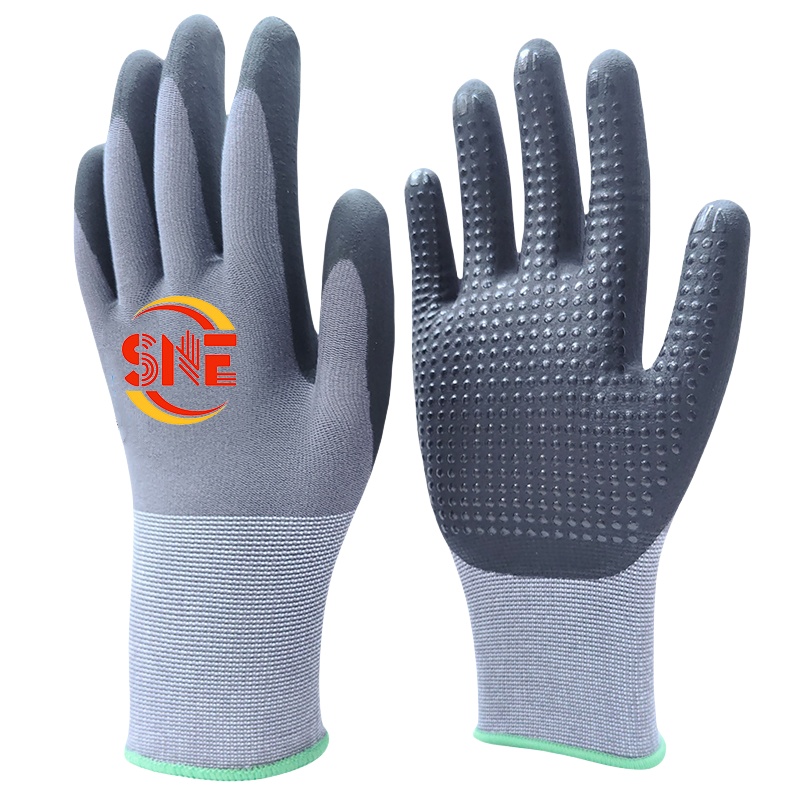
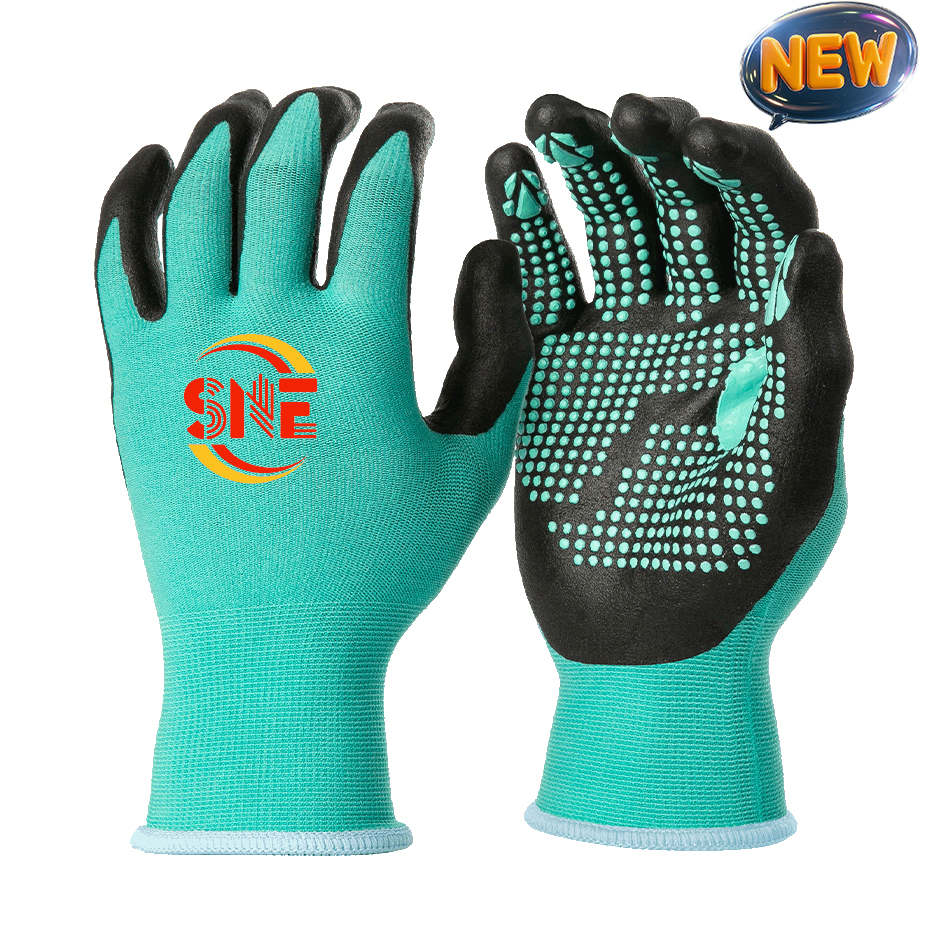
HPPE gloves often perform best when combined with a polyurethane or nitrile coating. A PU-coated HPPE glove can be ideal for dry assembly and precision tasks. A micro-foam nitrile-coated HPPE glove is better for oily components and mixed surfaces. Buyers should note that polyethylene-based fibers usually need reinforcement or blending when very high cut ratings are required.
Para-Aramid Fibers
Para-aramid materials such as Kevlar are known for both cut resistance and heat resistance. This makes them useful in automotive plants, stamping facilities, and glass handling lines. In U.S. manufacturing zones like Michigan, Indiana, and Tennessee, aramid-based gloves remain common where sharp edges and intermittent heat are present together.
Aramid gloves can hold up well in higher-temperature tasks compared with pure HPPE styles, but they may be less soft and can cost more. Many suppliers now use aramid as part of a blend rather than as the only fiber, which helps balance comfort and cut protection.
Steel and Metal Fiber Reinforcement
When buyers need high cut resistance for sheet metal, HVAC ductwork, metal service centers, or recycling operations, metal fiber reinforcement becomes more common. Stainless steel or alloy filaments increase resistance to slicing, especially when embedded in engineered yarns rather than exposed on the surface. This category is often chosen in heavy industry around Pittsburgh, Cleveland, and Houston.
The tradeoff is that high-reinforcement gloves can feel firmer. Better yarn engineering reduces this issue, but end-user trials are still important before large purchases.
Fiberglass Reinforcement
Fiberglass is frequently used as a cut-enhancing component because it raises protection at a reasonable cost. However, glove quality matters greatly here. Poorly wrapped fiberglass can affect comfort, while well-encapsulated fiberglass in quality yarns is barely noticeable to the wearer. U.S. distributors often carry fiberglass-reinforced gloves in mid-range and higher-ANSI categories because they fit a broad range of price points.
Nylon and Polyester Carriers
Nylon and polyester are not usually the stars of cut resistance, but they are important support materials. They contribute fit, elasticity, abrasion performance, and cost control. Many gloves advertised as cut resistant rely on a carrier fiber plus reinforcement, making the final glove more wearable for all-day shifts. For buyers in sectors with high glove turnover, these fibers help manufacturers build commercially practical products.
How Coatings Change Performance
The shell material answers what cut resistant gloves are made of at the yarn level, but the coating determines how the glove behaves in the hand. In the U.S. market, palm coatings are often just as important as the base shell because grip failures cause productivity losses and secondary injuries.
| Coating | Best For | Grip Profile | Oil Resistance | Dexterity | Common Industries |
|---|---|---|---|---|---|
| Polyurethane | Dry precision work | Light, controlled grip | Moderate | High | Electronics, assembly, inspection |
| Nitrile | General industrial handling | Reliable on rough surfaces | High | Medium | Manufacturing, automotive, maintenance |
| Micro-foam nitrile | Mixed dry and light-oily tasks | Balanced and breathable | Good | High | Warehousing, logistics, parts handling |
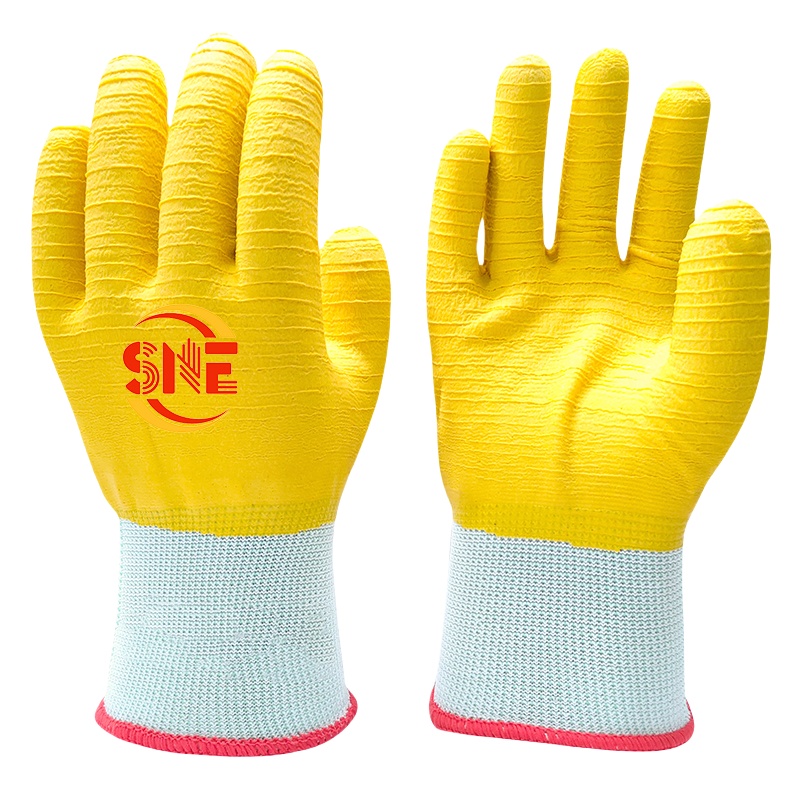
| Latex | Wet grip and construction handling | Strong on wet surfaces | Lower than nitrile | Medium | Construction, masonry, outdoor work |
| Sandy nitrile | Oily and abrasive environments | Very strong grip | Very high | Medium | Oil and gas, metalwork, heavy maintenance |
| Double coating | Harsh mixed conditions | Enhanced durability | High | Medium-low | Heavy industry, fabrication, utilities |
This table matters because two gloves made from similar HPPE or aramid shells can feel completely different on the job. A warehouse manager in New Jersey may prefer micro-foam nitrile for breathable picking, while a steel processor near Gary, Indiana may prioritize sandy nitrile for secure grip on oily, sharp edges.
ANSI Cut Levels and Material Selection
In the United States, ANSI/ISEA 105 ratings are the language most buyers use to compare cut protection. Material choice strongly influences where a glove falls on the A1 to A9 scale. Lower levels may rely on lighter HPPE or blended synthetic yarns, while higher levels often involve steel, fiberglass, aramid, or advanced engineered blends.
That said, higher ANSI does not always mean better for every task. A glove that is too thick or too stiff may reduce compliance because workers remove it. Many successful U.S. hand-safety programs now segment gloves by task instead of forcing one product across all operations. This has increased demand for multiple material constructions within the same facility.
The line chart reflects a realistic market-growth pattern driven by tighter safety oversight, warehouse expansion, domestic manufacturing investment, and replacement demand. Growth does not come only from more workers. It also comes from upgrading from basic gloves to task-specific cut-resistant models.
Product Types Commonly Sold in the United States
U.S. buyers can divide cut resistant gloves into practical product families based on material construction and end use.
| Product Type | Main Materials | Typical ANSI Range | Best Use Case | User Priority | Typical Buyer |
|---|---|---|---|---|---|
| Lightweight seamless knit | HPPE, nylon, PU | A2-A4 | Picking, inspection, assembly | Dexterity | 3PLs, electronics firms |
| General industrial coated glove | HPPE, fiberglass, nitrile | A3-A5 | Parts handling, light metal work | Balance | Manufacturers, distributors |
| Heavy-duty cut glove | HPPE, steel, sandy nitrile | A5-A7 | Sheet metal, fabrication | Protection | Metal shops, HVAC firms |
| Heat and cut glove | Aramid, reinforced blends | A4-A6 | Automotive and warm parts handling | Multi-hazard safety | OEM plants, stamping lines |
| Food-safe cut glove | HPPE, stainless blends | A3-A7 | Knife work and food processing | Washability | Processors, commercial kitchens |
| Sleeve and glove systems | Aramid, HPPE, thumb-hole knits | A4-A7 | Arm and hand protection together | Coverage | Glass, metal, recycling |
The table highlights how “cut resistant glove” is not one product class but a family of solutions. Buyers should compare task exposure, not just catalog terms. Gloves used in fulfillment centers near the Port of Savannah differ greatly from those used in metal service centers around St. Louis or fabrication shops near Long Beach.
Industry Demand Across the United States
Demand varies significantly by sector. E-commerce and warehousing have increased the use of lighter, more dexterous cut gloves, while domestic reshoring and infrastructure spending continue to support heavier industrial categories. Food processing remains an important segment because of blade hazards and hygiene requirements.
The bar chart shows why suppliers maintain wide material portfolios. A company heavily focused on warehousing may stock mostly lightweight HPPE gloves, while one serving fabrication and oilfield accounts needs more steel-, aramid-, and heavy-coating options.
Buying Advice for U.S. Distributors and End Users
When evaluating what cut resistant gloves are made of, start with the hazard and then narrow the material mix. If workers handle cardboard, plastic straps, or light blades, a flexible HPPE glove may be enough. If they handle sheet metal, jagged stampings, or glass edges, reinforced constructions with fiberglass, steel, or aramid are more suitable.
Also ask whether the glove must resist oils, provide touchscreen use, handle heat, or stand up to repeated laundering. U.S. buyers often underestimate how much the coating and cuff design affect worker acceptance. For a 500-person operation, a glove that workers actually keep on may outperform a technically stronger glove that stays in lockers.
Procurement teams should also request wear trials in multiple departments, compare replacement rates, verify ANSI test data, and ask whether the supplier can maintain inventory through demand spikes. Ports and inland logistics cycles can affect availability, especially during peak import seasons through Los Angeles, Long Beach, New York-New Jersey, and Savannah.
Applications by Industry
Different industries use cut resistant gloves in distinct ways, and that affects material preference.
In automotive manufacturing, workers may need cut resistance plus tactile control for stampings, trim pieces, and tool use. HPPE and aramid blends are common here. In metal fabrication, reinforced yarns with sandy nitrile coatings are often preferred because grip and higher ANSI performance matter more than ultralight feel. In food processing, stainless steel mesh gloves may be used for direct blade exposure, but many tasks now rely on washable HPPE-blend gloves that are more comfortable for repetitive movement. In warehouse settings, glove users increasingly prefer thin knit shells with micro-foam nitrile because they preserve scanning, picking, and packaging speed.
Construction creates a mixed environment. Drywall studs, roofing edges, rebar ties, and site debris require protection, but glove choice changes with weather and season. In colder states, the shell may combine cut-resistant materials with thermal liners. In Gulf Coast environments, breathability and oil grip become more important. For energy and maintenance teams, double-dipped and impact-ready variants may be selected where hand injuries involve both cuts and knocks.
Real-World Case Examples
A Midwest HVAC fabricator handling galvanized sheet stock switched from standard nitrile gloves to A5-level HPPE and steel-blend gloves with sandy nitrile palms. The result was fewer minor lacerations and better confidence during edge handling, though the company had to conduct a two-week trial to find the right balance between grip and finger flexibility.
A California produce processor moved from heavier aramid styles to lighter HPPE-based cut gloves in trimming and packaging zones. Workers reported less hand fatigue, and replacement frequency improved because the selected glove matched both hygiene procedures and repetitive use patterns.
A large e-commerce fulfillment operation near Louisville adopted a two-tier glove program: lighter A3 gloves for picking and packing, and tougher A5 gloves for maintenance and returns processing. This reduced overspending on premium gloves in low-risk tasks while improving protection where box cutters and damaged packaging created higher exposure.
Supplier Comparison in the United States
For buyers looking beyond materials and into sourcing, the U.S. market includes several established names. The table below compares practical supplier positioning rather than making generic claims.
| Company | Service Region | Core Strengths | Key Offerings | Best Fit Buyer | Notes |
|---|---|---|---|---|---|
| Ansell | Nationwide U.S. | Broad industrial portfolio, testing credibility | HyFlex cut-resistant gloves, specialty PPE | Large enterprise and multi-site plants | Strong national distribution presence |
| HexArmor | Nationwide U.S. | High-spec hand protection, impact integration | Cut and impact gloves for oil, gas, and industry | High-risk industrial users | Popular in heavy-duty sectors |
| MCR Safety | Nationwide U.S. | Value range across many glove categories | Memphis line, coated and cut-resistant gloves | Distributors and broadline buyers | Well-known in industrial supply |
| Magid | Midwest stronghold, national reach | Private label and industrial safety depth | Cut-resistant gloves, sleeves, PPE programs | Safety managers and contract buyers | Strong customization options |
| Superior Glove | U.S. and Canada | Technical variety and high cut-level options | TenActiv series, sleeves, specialty gloves | Fabrication, food, logistics buyers | Known for engineered yarn programs |
| Youngstown Glove Company | Nationwide U.S. | Task-driven work gloves and durable designs | Cut-resistant work gloves for field use | Utilities, field maintenance, contractors | Good fit for rugged outdoor work |
This comparison helps buyers match supplier capability to actual need. National firms often win on program scale, while specialized brands may perform better in niche tasks such as impact plus cut, food-safe use, or contractor-focused applications.
The area chart illustrates a real trend in the U.S. market: buyers are moving toward lighter engineered yarns that preserve dexterity while still meeting higher cut requirements. This is especially visible in warehouse, automotive, and assembly settings.
Detailed View of Local and Regional Supply Options
Many U.S. buyers prefer suppliers with domestic inventory, responsive technical support, and regional account coverage. This matters when glove trials, emergency restocks, or specification changes are needed quickly. Buyers in major industrial corridors like Chicago, Detroit, Houston, Charlotte, and Southern California often value lead-time reliability as much as unit price.
At the same time, imports remain crucial to the market. A significant share of cut resistant gloves sold in the United States are manufactured in Asia and supplied through U.S. distributors, private labels, or direct factory programs. For distributors and brand owners, that creates opportunities to source engineered products at competitive costs while preserving local service.
The comparison chart shows why factory-direct sourcing continues to gain attention. Established suppliers offer proven distribution support, but factory-direct programs can approach similar overall value when buyers need custom specifications, private-label options, and stronger pricing on volume orders.
Our Company for U.S. Buyers
For U.S. importers, distributors, and brand owners seeking a factory-backed option, Snell Safety operates as a specialized industrial glove manufacturer with ISO 9001 quality management and CE-backed production controls, supported by two manufacturing facilities in Gaomi and Nantong, six production lines, more than 150 trained workers, and daily capacity of about 150,000 pairs; this production base supports consistent material selection across PU, latex, nitrile, cut-resistant, impact-resistant, and sleeve products, with vertically integrated manufacturing and testing processes designed to meet international benchmarks expected by North American buyers. In practical commercial terms, the company supports OEM/ODM development, bulk wholesale, private-label projects, custom materials and branding, and regional distribution cooperation, making it relevant not only to end users but also to U.S. distributors, dealers, importers, and safety brands that need flexible sourcing models. For customers in the American market, the company’s long-running export activity across Europe, Australia, the Middle East, Russia, Southeast Asia, and South America, combined with multilingual sales support, sample service, technical consultation, and dedicated logistics coordination, provides a grounded service structure for pre-sale product matching and after-sale follow-up; buyers looking for a direct manufacturing partner can review the company background, browse the product catalog, or reach out through the U.S. buyer contact page to discuss custom cut-resistant glove programs with supply continuity in mind.
How to Evaluate a Factory-Direct International Supplier
U.S. buyers should not reject international suppliers automatically. Instead, they should apply a disciplined review process. Check whether the manufacturer can provide recognized testing data, stable coating quality, sample development, and clear communication on yarn composition and ANSI target levels. Ask whether production is vertically integrated or outsourced, how many production lines are dedicated to gloves, and how large the daily output is. This reveals whether the supplier can really support national contracts or just pilot orders.
Also verify support systems. A serious supplier should offer pre-sale task matching, approval samples, branding options for distributors, and post-sale follow-up on wear issues. Even without a U.S. factory, a supplier with proven export experience, multilingual service, and reliable logistics coordination can still be a practical long-term partner for wholesalers and brand owners.
Market Trends Through 2026
By 2026, three trends are expected to reshape how cut resistant gloves are designed and purchased in the United States.
First, engineered lightweight yarns will continue gaining share. Buyers want higher cut performance without the stiffness associated with older constructions. This means more advanced HPPE blends, better encapsulated glass fiber, and more selective use of metal reinforcement.
Second, policy and compliance pressure will increase task-specific purchasing. Safety teams are moving away from generic glove programs and toward job-matched protection based on incident data, ergonomic review, and department-specific risk mapping. This favors suppliers with broad portfolios and accurate technical guidance.
Third, sustainability will matter more. U.S. buyers are beginning to ask about glove longevity, packaging reduction, coating chemistry, and the total waste generated by high-turnover disposable or low-durability products. The most competitive manufacturers will focus not only on recycled claims, but on longer wear life, cleaner production controls, and supply chains that reduce replacement frequency.
Technology will also play a role. Expect more touchscreen-capable cut gloves, improved grip coatings for automation-heavy warehouses, and growing integration of impact protection in sectors where multiple hand hazards overlap. Data-driven PPE programs, where replacement rates and injury trends are tracked by site, will influence which materials get specified in contracts.
Common Mistakes Buyers Make
One common mistake is choosing solely by ANSI cut level without considering dexterity, grip, or compliance. Another is assuming all HPPE or all Kevlar-style gloves perform the same. In reality, yarn engineering, gauge, coating, and finishing can change the user experience dramatically.
Buyers also sometimes ignore service conditions. A glove tested in clean lab conditions may not hold up in oily fabrication, cold storage, or repeated laundering. Finally, many teams underestimate the value of supplier support. Good conversion guidance can reduce overspecification, improve worker acceptance, and lower annual PPE spend.
FAQ
Are cut resistant gloves made from Kevlar only?
No. Many are made from HPPE, UHMWPE blends, fiberglass, steel fiber, nylon, polyester, aramid fibers such as Kevlar, or combinations of these materials. Most modern gloves use blended yarns rather than a single material.
Do cut resistant gloves stop punctures?
Not necessarily. Cut resistance and puncture resistance are different properties. A glove that resists slicing may not protect well against nails, needles, or pointed burrs unless it is specifically engineered for puncture hazards.
What material is best for lightweight cut protection?
HPPE or UHMWPE-blend gloves are often the best choice when weight, dexterity, and comfort are priorities. They are widely used in warehousing, food processing, and light manufacturing in the United States.
What material is best for heavy metal work?
For sheet metal and fabrication, gloves using steel, fiberglass, and aramid reinforcement in engineered blends are commonly selected, usually with nitrile or sandy nitrile coatings for grip and abrasion resistance.
Are coated gloves better than uncoated gloves?
In many U.S. industrial applications, yes. Coatings improve grip, wear life, and handling performance. The right coating depends on whether the job is dry, wet, oily, abrasive, or highly precise.
How should U.S. buyers compare suppliers?
Compare ANSI data, material transparency, comfort, coating quality, inventory reliability, trial support, and post-sale service. For distributors and private-label buyers, also compare OEM flexibility, branding support, and production capacity.
Final Takeaway
So, what are cut resistant gloves made of? In the United States, they are most often made from engineered combinations of HPPE, aramid fibers, steel, fiberglass, nylon, polyester, and performance coatings such as PU, nitrile, and latex. The best glove is not defined by one fiber alone, but by how the material package fits the hazard, the work environment, and the user’s need for grip and comfort.
For local buyers, established U.S. suppliers remain strong choices for rapid support and national distribution. At the same time, qualified factory-direct manufacturers with recognized certifications, large production capacity, and structured pre-sale and after-sale support can offer attractive alternatives for bulk sourcing, private-label development, and value-focused procurement. That is especially true when the supplier understands the expectations of the U.S. market and can translate material science into practical hand protection performance.