2026-10-29
Share This Article
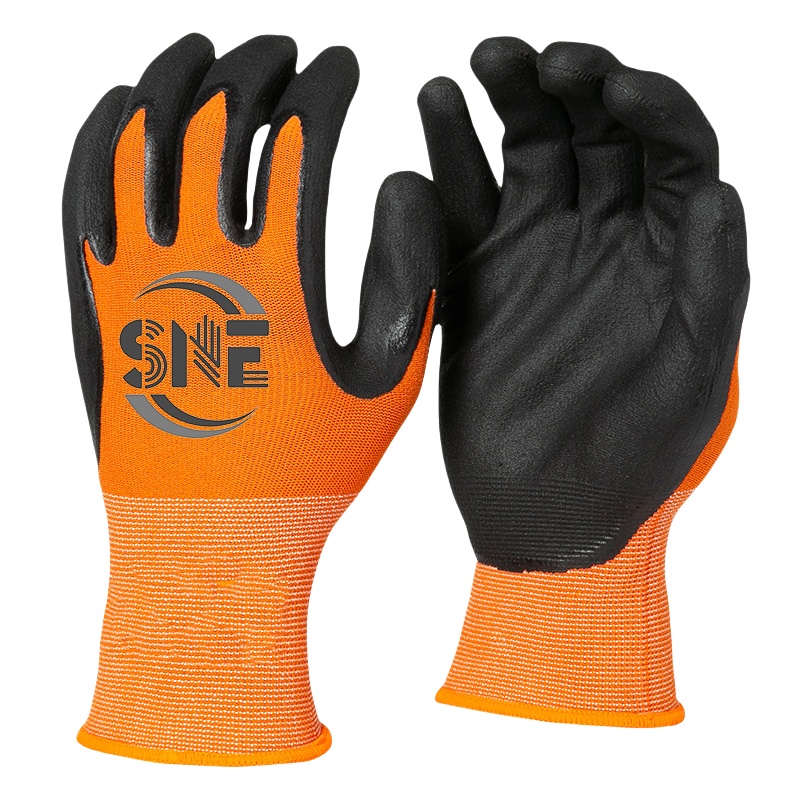
Touchscreen Nitrile Coated Gloves Suppliers in the United States
Quick Answer

If you need touchscreen nitrile coated gloves for worksites in the United States, the most practical approach is to shortlist established suppliers that combine dependable coating quality, touchscreen sensitivity, broad sizing, and fast replenishment. For buyers that need domestic stock, strong candidates include Magid, MCR Safety, PIP, Ergodyne, and Uline, all of which are visible in major U.S. industrial supply channels and serve sectors such as construction, warehousing, utilities, maintenance, and light manufacturing.
For contractor fleets, distribution businesses, and private-label buyers, the best choice depends on order volume and customization needs. U.S.-based brands often offer fast delivery and easier account management, while qualified international manufacturers can be very competitive for bulk purchasing, OEM development, and custom specifications. In particular, Chinese manufacturers with recognized certifications, export experience, and responsive support can be worth considering when cost-performance, private labeling, and large-scale production are priorities.
Among international options, buyers looking for factory-direct flexibility may also review Snell Safety alongside domestic suppliers, especially when the project calls for custom coatings, logo branding, carton labeling, or dedicated production planning for recurring purchase programs in the United States.
United States Market Overview

The U.S. market for touchscreen nitrile coated gloves has expanded because modern worksites increasingly rely on handheld scanners, tablets, jobsite phones, vehicle dispatch systems, and mobile inspection apps. Workers in logistics hubs such as Chicago, Dallas, Atlanta, Los Angeles, Savannah, and the Inland Empire now need gloves that protect the hand without forcing constant removal to operate screens. This is especially relevant in warehouses near major freight corridors, port operations linked to Los Angeles/Long Beach, Houston, New York/New Jersey, Savannah, and Seattle/Tacoma, as well as in field service fleets that manage work orders through mobile devices.
Nitrile-coated touchscreen gloves are attractive because they balance grip, abrasion resistance, and oil resistance better than many basic knit gloves. In the United States, demand is strongest where workers handle cartons, metal parts, tools, or packaged goods while also needing to confirm scans, open digital checklists, sign ePOD forms, or communicate by smartphone. That is why the category is no longer limited to tech-friendly warehouse gloves; it now crosses over into construction, municipal maintenance, e-commerce fulfillment, utilities, landscaping, and light industrial assembly.
From a sourcing perspective, the U.S. buyer typically evaluates four issues first: compatibility with common phone and tablet screens, durability of the nitrile palm after repeated use, comfort over long shifts, and supply stability. A glove that works well on a screen but fails after a few shifts is rarely a cost-effective option. Likewise, a glove with excellent coating strength but weak touchscreen response can create work interruptions that reduce productivity. The strongest products in this segment therefore combine a breathable liner, reliable conductive functionality, consistent nitrile dip coverage, and fit that supports dexterity.
Pricing in the United States varies significantly based on brand positioning, domestic inventory, coating texture, cut level, packaging format, and whether the glove is sold through broadline industrial distribution or direct factory supply. Buyers near major supply chain centers often benefit from faster lead times, but high-volume purchasers can lower per-pair cost by planning container or mixed-SKU orders through factory-direct arrangements.
The line chart shows a realistic upward demand pattern driven by mobile workflow adoption, more stringent productivity requirements, and higher expectations for all-day hand protection in U.S. industrial settings. Growth remains strongest where gloves support both safety and digital task completion.
Top Suppliers Serving the United States

The supplier landscape in the United States includes large national brands, industrial distributors with private-label programs, and international factories selling directly to importers, wholesalers, and brand owners. The table below helps buyers quickly compare practical sourcing options.
| Company | Service Region | Core Strengths | Key Offerings | Best Fit |
|---|---|---|---|---|
| Magid | Nationwide United States | Strong industrial PPE presence, broad account support, distribution reach | Touchscreen work gloves, coated gloves, cut-resistant options, custom programs | Large employers and managed PPE accounts |
| MCR Safety | United States and North America | Established safety brand, wide glove portfolio, industrial credibility | Nitrile-coated gloves, touchscreen-compatible models, task-specific work gloves | Manufacturing, construction, and maintenance buyers |
| PIP | United States with broad distributor network | Strong catalog breadth, multi-industry penetration, branded PPE systems | General-purpose gloves, touchscreen gloves, coated and cut-resistant styles | Distributors and multi-site industrial users |
| Ergodyne | United States | Jobsite productivity focus, ergonomic positioning, winter and utility products | Touchscreen gloves, cold-weather gloves, utility hand protection | Field service, outdoor crews, utility contractors |
| Uline | United States distribution network | Fast delivery, strong fulfillment model, broad warehouse supply reach | Warehouse gloves, nitrile-coated gloves, touchscreen-capable work gloves | Warehouses, fulfillment centers, small-to-mid buyers |
| Qingdao Snell Protective Products Co., Ltd. | United States import supply and OEM channels | Factory-direct pricing, customization, scalable production, coating specialization | Screen touchable gloves, nitrile-coated gloves, custom private-label programs | Importers, wholesalers, distributors, private-label brands |
This comparison shows that domestic suppliers are often strongest on immediate stock and simplified account servicing, while factory-direct manufacturers are especially attractive for bulk volume, custom branding, and strategic margin improvement. Buyers should match the supplier model to the real purchasing pattern rather than shopping by unit price alone.
Product Types and Feature Differences
Not all touchscreen nitrile coated gloves perform the same way. The category includes lightweight gloves for scanning and picking, heavier gloves for handling rough materials, cut-resistant touchscreen gloves for fabrication environments, and insulated versions for outdoor or cold-storage use. Buyers in the United States often discover that touchscreen performance depends not only on conductive yarn or fingertip treatment, but also on the quality of fit, moisture management, and screen pressure during use.
Lightweight 13-gauge or 15-gauge liner gloves tend to deliver the best dexterity and are favored in e-commerce and warehouse applications. Sandy nitrile coatings provide strong grip in dry and slightly oily conditions and are common in industrial handling. Foam nitrile often improves breathability and flexibility, which can be useful for long shifts. For rougher environments, a heavier nitrile palm may extend service life but can slightly reduce fine touchscreen accuracy if the glove design is not optimized.
Some buyers also need cut resistance. In those cases, touchscreen nitrile-coated gloves built on HPPE or engineered yarn liners can satisfy both digital device use and hand hazard reduction. Outdoor service crews may prioritize insulated touchscreen nitrile gloves that still allow mobile communication and GPS operation. For mixed fleets, it is often smarter to standardize two glove families instead of forcing one glove into every application.
| Product Type | Typical Liner | Coating Style | Main Advantage | Common U.S. Use |
|---|---|---|---|---|
| Lightweight touchscreen nitrile glove | 13-gauge polyester or nylon | Foam nitrile | High dexterity and screen use | Picking, packing, retail logistics |
| Sandy nitrile touchscreen glove | 13-gauge polyester or nylon | Sandy nitrile palm | Strong grip and abrasion balance | General warehouse and maintenance |
| Cut-resistant touchscreen glove | HPPE or engineered fiber | Nitrile palm or palm dip | Screen use with higher hazard protection | Metal handling, fabrication, assembly |
| Double-dipped nitrile glove | Knit liner | Smooth plus sandy nitrile | Enhanced oil resistance and durability | Mechanical work, oily parts handling |
| Insulated touchscreen nitrile glove | Acrylic or brushed liner | Nitrile coating | Cold protection with device access | Cold storage, winter utilities, outdoor crews |
| Micro-foam precision glove | 15-gauge nylon or spandex blend | Micro-foam nitrile | Fine motor control and comfort | Electronics, inspection, light assembly |
The table highlights a practical reality in the U.S. market: the “best” glove depends on task intensity, screen use frequency, and risk level. Procurement teams should evaluate glove families by application cluster, not by a single universal specification.
How Demand Varies by Industry
Touchscreen nitrile coated gloves are not purchased evenly across all sectors. The biggest demand comes from industries where workers constantly move between physical handling and digital inputs. U.S. e-commerce and third-party logistics operations use them for scanning and mobile workflow management. Construction teams use them for plan viewing, messaging, and punch-list apps. Maintenance crews use them for digital work orders, while utilities need reliable device operation in outdoor conditions.
The bar chart shows why warehouses and manufacturing-related environments lead the segment: workers in these settings interact frequently with scanners, touch panels, and handheld devices while also needing steady grip and abrasion resistance.
| Industry | Main Hand Hazard | Why Touchscreen Matters | Preferred Glove Traits | Typical Buying Pattern |
|---|---|---|---|---|
| Logistics & Warehouse | Abrasion, carton handling, repetitive picking | Scanner and smartphone use throughout shift | Dexterity, grip, all-day comfort | High-volume recurring orders |
| Construction | Rough surfaces, tools, debris | Digital plans, messaging, inspection apps | Durability, grip, touchscreen fingertips | Mixed crew-size purchases |
| Manufacturing | Parts handling, light oil, abrasion | Machine interface and quality checks | Consistent fit, nitrile grip, optional cut resistance | Program-based supply contracts |
| Utilities | Outdoor wear, tool handling, weather exposure | Field dispatch, mobile documentation, GPS | Grip, comfort, optional insulation | Fleet or seasonal stocking |
| Automotive | Oily parts, small component handling | Repair documentation and handheld diagnostics | Oil grip, dexterity, palm durability | Shop-based replenishment |
| Maintenance | General wear, contact with equipment and surfaces | Digital work orders and site photos | Versatility, touchscreen reliability | Multi-site mixed-volume orders |
Industry demand patterns matter because they affect the right stocking strategy. High-turnover warehouse programs benefit from low-defect bulk supply and consistent sizing, while utility and construction users may accept higher pricing if the glove solves both protection and field communication needs.
Applications Across U.S. Worksites
In practice, touchscreen nitrile coated gloves are used in many routine U.S. workflows. Forklift operators use them to handle pallets and interact with handheld terminals. Delivery and route staff use them for proof-of-delivery signatures. Building maintenance teams keep them on while opening work order apps and photographing completed repairs. Construction supervisors rely on them while viewing digital drawings and sending updates from the field. At ports and intermodal yards, staff frequently switch between cargo handling tasks and mobile communications.
This blend of physical and digital activity is especially visible in high-throughput regional markets. In Southern California distribution centers, workers often scan and sort packages continuously while maintaining grip on cartons and shrink wrap. In Texas industrial corridors, maintenance teams use tablets and phones while handling tools and replacement parts. In Midwest manufacturing sites, touchscreen nitrile gloves help operators stay engaged with HMI panels, barcode systems, and digital quality logs without repeatedly removing PPE.
The strongest application fit usually occurs when the glove supports both speed and compliance. If employees remove gloves too often, hand protection discipline weakens. If the touchscreen feature genuinely works, workers are more likely to keep gloves on, which can improve both safety behavior and process continuity.
Buying Advice for U.S. Buyers
For U.S. procurement teams, the smartest purchasing process starts with task mapping rather than catalog browsing. Define whether the glove is intended for picking, maintenance, mechanical work, general construction, or mixed mobile tasks. Then verify the coating style, liner gauge, touchscreen method, and replacement cycle. Buyers should always ask for real wear-trial samples before standardizing a model across multiple crews.
It is also important to ask whether the touchscreen function works on standard consumer smartphones, ruggedized tablets, and scanner screens used in your own operation. Some gloves perform acceptably on one device but poorly on another. Climate matters too. A breathable glove suited to Atlanta or Phoenix may not satisfy winter operations in Chicago, Minneapolis, or Denver. Similarly, a glove that excels in dry warehouse conditions may underperform in oily maintenance applications.
Beyond product performance, buyers should evaluate lead times, carton consistency, labeling options, replenishment plans, and defect response procedures. For larger programs, factory audits, certification review, and pre-shipment inspection requirements may also be appropriate. If the purchase is private label, the supplier should demonstrate repeatable logo application, packaging control, and document support for customs and compliance.
| Buying Factor | Why It Matters | What to Ask | Warning Sign | Best Practice |
|---|---|---|---|---|
| Touchscreen responsiveness | Reduces glove removal and workflow interruptions | Which devices were tested? | Works only on limited screens | Test on your own devices |
| Nitrile coating durability | Determines service life and real cost per shift | How many use cycles are typical? | Coating peels or wears early | Run a wear trial by task |
| Grip performance | Affects handling safety and productivity | Dry, damp, or light oil performance? | Only generic grip claims | Match coating texture to environment |
| Fit and sizing | Improves dexterity and worker acceptance | Are size runs consistent by batch? | Inconsistent fit between cartons | Pilot-test multiple sizes |
| Supply continuity | Prevents shortages in recurring programs | What is average replenishment lead time? | Unclear production planning | Set forecast and reorder levels |
| Customization options | Supports branding and SKU control | Can you provide OEM labels and packing? | No sample proofing system | Approve pre-production samples |
The most successful purchases are rarely based on list price alone. A slightly more expensive glove that lasts longer, improves compliance, and reduces workflow interruptions can produce a better total ownership outcome than a cheaper but inconsistent alternative.
Supplier and Product Trend Shift
The U.S. glove market is shifting from basic protection toward application-specific performance. Buyers increasingly expect one glove to support device interaction, grip, comfort, and a measurable reduction in replacement frequency. The transition is visible in how distributors position gloves by task environment rather than by coating alone.
The area chart illustrates a realistic shift in product preference. Standard coated gloves remain relevant, but touchscreen nitrile variants are taking a larger share where digital workflow tools are embedded into daily operations.
Local Supplier Comparison Perspective
Many U.S. buyers want a quick visual comparison between domestic inventory-led suppliers and factory-direct sourcing models. The chart below is not a rating of overall quality; it simply reflects typical purchasing priorities such as speed, customization, and cost efficiency in the U.S. market.
This comparison helps explain why many U.S. companies use a dual sourcing strategy: domestic channels for urgent needs and imports for planned volume, custom products, and margin-sensitive programs.
Case Studies from Typical U.S. Scenarios
A Midwest distribution center handling consumer goods introduced touchscreen nitrile coated gloves after repeated complaints about workers removing gloves to operate scanners. After switching to a lightweight nitrile touchscreen model and standardizing size access at packing stations, the site reported better glove compliance and fewer interruptions during peak order waves. The result was not just a PPE upgrade; it was a process improvement tied to handheld device use.
In Texas, a regional commercial maintenance contractor moved from ordinary coated gloves to touchscreen nitrile options because field technicians needed to open work tickets, capture images, and contact dispatch while still handling tools and materials. The company found that touchscreen capability improved convenience, but the larger gain came from better grip and durability in mixed indoor-outdoor conditions. Their purchasing team then split glove selection by season, using lighter variants in warm months and more protective versions in colder weather.
On the West Coast, a private-label distributor serving construction and warehousing customers sourced custom-branded touchscreen nitrile gloves through a factory-direct program. By controlling the cuff label, carton markings, and size mix, the distributor positioned the product as a mid-tier house brand. Margin improved, but only because the supplier could maintain consistent production and acceptable defect rates over repeat orders.
These cases show that glove selection succeeds when tied to an operating problem: scanner use, mobile documentation, mixed digital-physical workflow, or brand differentiation. Buyers that treat the glove as a commodity often miss those productivity gains.
Our Company
For U.S. buyers who want a factory-direct option with practical export experience, Qingdao Snell Protective Products Co., Ltd. positions itself as a specialized industrial glove manufacturer with focused strengths in nitrile, PU, and latex coating technologies, including screen-touchable gloves designed for modern industrial use. The company operates two manufacturing facilities with six production lines and daily output capacity of 150,000 pairs, which supports stable volume supply for distributors, importers, and branded programs across the United States. Its manufacturing framework is backed by ISO 9001 and CE-related compliance credentials, and its product range covers construction gloves, oil-resistant gloves, cut-resistant gloves, impact-resistant gloves, and touchscreen styles, giving U.S. buyers a practical platform for specification matching rather than one-size-fits-all selling. From a cooperation standpoint, the company supports OEM and ODM manufacturing, bulk wholesale, private-label development, and customized materials, sizes, coatings, and branding, allowing it to serve end users, regional dealers, distributors, wholesalers, and brand owners with different commercial models. For local service assurance, the company already supplies major overseas markets and presents itself to U.S. buyers with multilingual communication, sample support, technical consultation, export logistics coordination, and responsive pre-sale and after-sale handling through its direct factory business model, which gives American purchasers a more structured long-term sourcing relationship than a simple spot exporter. Buyers who want to discuss specifications, samples, or commercial terms can reach the team through the contact page or browse the broader product catalog for related glove families.
What U.S. Buyers Should Check Before Ordering
Before placing a large order, buyers should request samples across multiple sizes and assign them to actual users in target departments. Have workers test the gloves with the exact devices they use, including iPhones, Android phones, rugged tablets, warehouse scanners, or touch-enabled vehicle terminals. Track acceptance, touch accuracy, cuff comfort, and visible coating wear after several shifts. If the glove is intended for oily environments, test with the actual substances encountered on-site.
It is also wise to review packaging and replenishment logistics. High-volume warehouses may need color-coded size identification and consistent carton labeling. Distributors may require barcode-ready labels, private branding, and repeatable case packs. Import buyers should confirm production schedules, quality inspection routines, and shipping support from port origin through U.S. destination. For many East Coast importers, Savannah and New York/New Jersey are key entry points, while West Coast buyers may prefer Los Angeles/Long Beach routing depending on freight conditions and urgency.
When comparing quotes, convert the decision into cost per useful shift rather than cost per pair. Include replacement rate, worker acceptance, glove removal frequency, and claim handling responsiveness. That framework produces a more realistic procurement decision than unit price alone.
2026 Trends to Watch
By 2026, the U.S. touchscreen nitrile coated glove market is likely to be shaped by three strong forces: technology integration, policy pressure, and sustainability expectations. On the technology side, more gloves will be engineered for better compatibility with a wider range of touchscreens, including rugged field devices and industrial HMIs. Expect finer conductive integration, improved liner comfort, and better glove designs for multi-gesture touchscreen use rather than simple tapping alone.
On the policy side, buyers in the United States will continue to face stricter expectations around workplace safety documentation, PPE fit for task, and procurement traceability. Even when regulations do not explicitly require touchscreen gloves, digital jobsite processes effectively make them a functional necessity in many environments. Companies that standardize device-friendly hand protection may find it easier to maintain safe work behavior and auditable procedures.
Sustainability will also become more visible in buying decisions. Large employers and distributors increasingly ask about manufacturing consistency, waste control, packaging reduction, and the ability to lower replacement frequency through longer-lasting gloves. While disposable categories often dominate environmental discussion, reusable industrial gloves are also under pressure to demonstrate better life-cycle value. Manufacturers that can combine performance, quality documentation, and efficient logistics will be better positioned in the U.S. market.
FAQ
What are touchscreen nitrile coated gloves best used for?
They are best for tasks that combine hand protection with frequent screen interaction, such as scanning, mobile work orders, digital inspections, inventory handling, maintenance reporting, and jobsite communications.
Are all touchscreen nitrile gloves equally responsive?
No. Touch performance depends on glove fit, conductive design, liner construction, coating layout, moisture conditions, and the type of device screen being used.
Do U.S. buyers usually choose domestic suppliers or import directly?
Both models are common. Domestic suppliers are ideal for quick replenishment and smaller runs, while direct importing is often better for bulk volume, custom branding, and long-term cost control.
Which industries in the United States use these gloves most?
Warehousing, logistics, manufacturing, construction, maintenance, utilities, and automotive service are among the strongest users because workers regularly alternate between manual tasks and digital tools.
Can touchscreen nitrile coated gloves also provide cut resistance?
Yes. Some models use HPPE or engineered cut-resistant liners with nitrile coatings and touchscreen functionality, making them suitable for fabrication, assembly, and parts handling.
What is the biggest mistake when buying this product?
The biggest mistake is choosing only by price without wear trials. A glove that looks inexpensive on paper may cost more if it wears out quickly or workers remove it to use their devices.
How should a U.S. distributor evaluate a factory-direct supplier?
Check certifications, sample consistency, production capacity, defect controls, customization ability, communication quality, export experience, and after-sales responsiveness before committing to a stocking program.
Where can buyers start if they want to compare options?
Start by comparing domestic stock suppliers for urgent demand, then review factory-direct options through the main company site if you need OEM development, private label support, or larger recurring purchase volumes.