2026-10-26
Share This Article
Best Reinforced Palm Construction Gloves in the United States
Quick Answer

If you need reinforced palm construction gloves in the United States, the most practical shortlist includes Ironclad, Mechanix Wear, MCR Safety, Youngstown Glove Company, and HexArmor. These brands are widely recognized by contractors, utility crews, warehouse operators, and industrial safety buyers for durable palm protection, grip stability, abrasion resistance, and dependable sizing for all-day work.
For local procurement, buyers in construction hubs such as Houston, Chicago, Los Angeles, Atlanta, and Newark often prioritize suppliers with fast replenishment, strong distributor networks, and clear compliance documentation. Ironclad is frequently chosen for jobsite durability, Mechanix Wear for comfort and dexterity, MCR Safety for broad industrial distribution, Youngstown Glove Company for rugged specialty work, and HexArmor for advanced protection programs.
Qualified international suppliers can also be a smart option, especially for importers, distributors, private-label buyers, and large contractors seeking cost-performance advantages. Chinese manufacturers with relevant certifications, stable quality control, and responsive pre-sales and after-sales support are increasingly considered when the goal is to balance price, customization, and reliable bulk supply.
United States Market Overview

The market for reinforced palm construction gloves in the United States remains strong because labor-intensive sectors continue to demand better hand protection without sacrificing grip or flexibility. Construction firms, logistics operators, public utilities, manufacturing plants, and maintenance contractors all rely on gloves that reduce palm wear during repetitive lifting, rebar handling, masonry work, material movement, and tool use. In the United States, glove selection is rarely based on price alone. Buyers often evaluate lifespan per pair, worker acceptance, replacement frequency, coating performance in dry and oily conditions, and the glove’s ability to handle mixed-duty tasks across indoor and outdoor job sites.
Regional buying patterns also differ. In the Gulf Coast, heat resistance, sweat management, and grip in humid environments matter more. In the Midwest, abrasion resistance and cold-weather compatibility are often essential. On the West Coast, warehousing, port logistics, solar installation, and light-industrial construction can increase demand for gloves that combine reinforced palms with touch-screen usability and high dexterity. In the Northeast, infrastructure repair, municipal procurement, and utility maintenance keep demand steady for gloves with longer wear life and dependable distributor support.
Large domestic trade flows through ports such as Los Angeles, Long Beach, Houston, Savannah, and New York/New Jersey also influence glove sourcing strategies. Importers and regional wholesalers use these gateways to shorten lead times and maintain stock for local dealer networks. As inflation, labor shortages, and procurement scrutiny continue, many buyers now compare premium U.S. brands with factory-direct global manufacturers that can support custom programs, contract pricing, and faster reorders for large-volume accounts.
The chart above shows a realistic demand-growth pattern for reinforced palm work gloves in the United States, reflecting continued expansion tied to infrastructure spending, warehousing growth, utility maintenance, and stricter workplace safety expectations. Growth is not explosive, but it is steady, making the category attractive for both established distributors and new private-label entrants.
Top Suppliers in the United States Market

The supplier landscape includes domestic brands, industrial safety specialists, and international OEM manufacturers serving U.S. buyers through import channels and regional partnerships. For purchasing teams, the most useful comparison points are service coverage, palm construction, target industries, customization options, and replacement economics.
| Company | Primary Service Region | Core Strength | Key Offerings | Best For |
|---|---|---|---|---|
| Ironclad | Nationwide United States | Heavy-duty jobsite durability | Reinforced palm work gloves, impact styles, utility gloves | General contractors and skilled trades |
| Mechanix Wear | Nationwide United States | Dexterity with protection | Synthetic leather palm gloves, reinforced work gloves, tactical-industrial crossover models | Construction crews and maintenance teams |
| MCR Safety | United States through industrial distribution | Broad industrial product coverage | Construction gloves, cut-resistant gloves, coated gloves, leather work gloves | Distributors and industrial buyers |
| Youngstown Glove Company | United States and selected industrial export markets | Specialty rugged-use designs | Reinforced palm gloves, winter work gloves, performance work gloves | Utility, rail, and heavy field service |
| HexArmor | United States and North American enterprise accounts | Advanced protective engineering | High-performance gloves with impact and abrasion protection | High-risk industrial environments |
| Qingdao Snell Protective Products Co., Ltd. | U.S. importers, distributors, private-label buyers, and bulk users | Factory-direct customization and scalable production | Construction gloves, nitrile, latex, PU-coated gloves, cut-resistant and impact-resistant lines | Wholesale sourcing and OEM/ODM programs |
This supplier table is useful because it separates brand-led domestic purchasing from factory-direct sourcing models. U.S. brands often win on immediate recognition and local channel availability, while factory-direct suppliers can offer stronger flexibility on logo branding, sizing runs, palm reinforcement designs, coatings, and landed-cost efficiency for larger orders.
Product Types and How They Fit the Job
Not all reinforced palm construction gloves are built the same. Palm reinforcement can come from synthetic leather overlays, double-layer palm patches, padded wear zones, textured coatings, or stitched anti-slip panels. The right choice depends on the type of contact stress workers face. A mason moving concrete block needs different performance than a warehouse picker handling packaged freight or a framing crew using nail guns and lumber all day.
| Glove Type | Palm Construction | Main Benefit | Typical Work Setting | Trade-Off |
|---|---|---|---|---|
| Synthetic leather reinforced palm | Layered palm patch with stitched overlays | Balanced durability and dexterity | General construction, carpentry, material handling | May wear faster in extreme abrasive work |
| Nitrile-coated reinforced palm | Coating plus extra wear-zone support | Strong grip and abrasion resistance | Warehousing, steel handling, maintenance | Less breathable in hot weather |
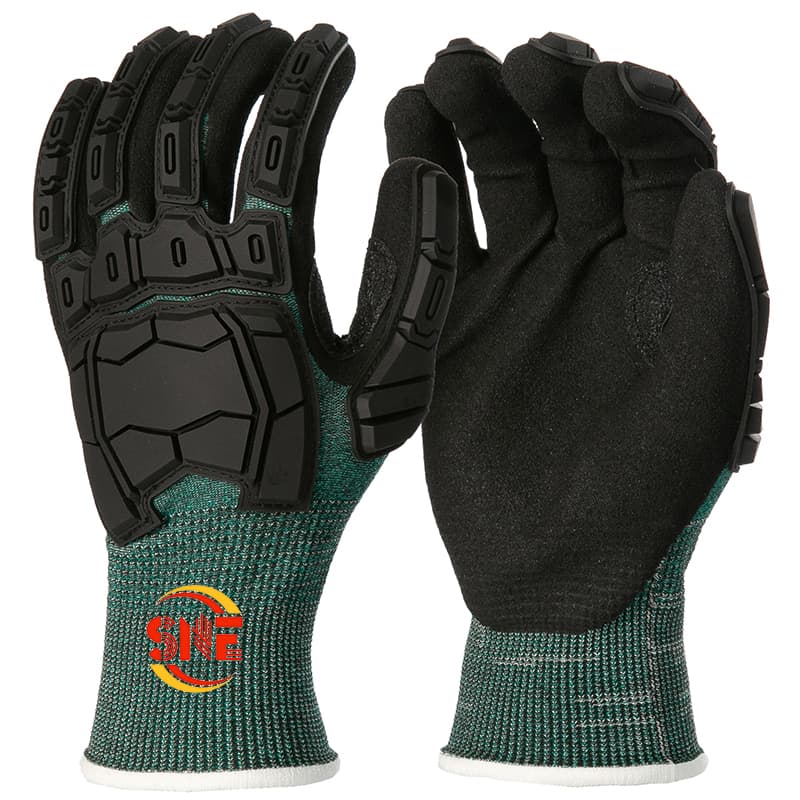
| Impact plus reinforced palm | TPR back with durable palm patch | Palm and knuckle protection | Oilfield support, utilities, heavy construction | Can feel bulkier |
| Padded anti-vibration palm | Cushioned palm sections | Reduces fatigue from tools | Demolition, drilling, equipment operation | Less precise for fine tasks |
| Cut-resistant reinforced palm | Engineered liner plus palm overlay | Helps against sharp edges and wear | Metal framing, glass handling, fabrication support | Often higher cost per pair |
| Cold-weather reinforced glove | Insulated interior with durable palm face | Grip and warmth in winter conditions | Outdoor construction, utilities, yard operations | Reduced fingertip sensitivity |
The table shows why glove selection should follow the task rather than the category name alone. Reinforced palm gloves can solve abrasion, fatigue, or grip problems, but each version introduces a different balance of comfort, lifespan, and control. Good buyers map glove style to the highest-cost failure on the job, whether that is rapid wear, hand fatigue, slippage, or worker refusal to use bulky PPE.
Buying Advice for United States Buyers
For buyers in the United States, the smartest procurement strategy starts with understanding actual wear points. Many companies buy a “standard construction glove” without checking whether the palm fails at the thumb saddle, center pad, index pinch zone, or cuff seam. A glove that lasts two extra shifts on a concrete, steel, or lumber handling crew can deliver meaningful savings across hundreds of workers.
Another key factor is distributor alignment. Buyers with decentralized operations in Texas, Florida, California, Illinois, Pennsylvania, or Georgia often need consistent SKU availability through regional industrial supply partners. That matters because glove standardization only works when replenishment is easy. If field crews start substituting random gloves during stockouts, safety performance and worker acceptance both decline.
Import sourcing is increasingly relevant when annual consumption volumes are high. Buyers using private-label channels or master-distributor programs can improve margins by working directly with a factory capable of quality-controlled production, certification support, and tailored packaging. This is especially true when the specification requires customized cuff colors, branded logos, barcoding, or mixed material programs such as nitrile-coated, impact-resistant, and cut-resistant gloves under one supplier relationship.
| Buying Factor | What to Check | Why It Matters | Recommended for U.S. Buyers | Risk If Ignored |
|---|---|---|---|---|
| Palm durability | Overlay thickness and wear-zone design | Controls replacement frequency | Request wear-life samples by job type | Higher glove consumption cost |
| Grip performance | Dry, wet, dusty, or oily handling conditions | Improves safety and productivity | Test in actual field conditions | Slips and lower worker confidence |
| Fit and sizing | Size range and cuff stability | Increases compliance and comfort | Run wearer trials across departments | Worker rejection and misuse |
| Supply continuity | Warehouse stock or import planning | Prevents jobsite shortages | Use forecast-based reorder cycles | Emergency substitutions |
| Certification and QA | Quality system and test documentation | Supports procurement confidence | Review ISO and product test records | Inconsistent product performance |
| Customization options | Branding, packaging, and spec flexibility | Helps scale private-label programs | Prioritize OEM-capable suppliers | Limited differentiation |
This buying framework helps both end users and resellers. It is especially relevant for contractors managing multiple crews, industrial distributors balancing inventory cost, and brand owners launching private-label work gloves for the United States market.
Industry Demand Across the United States
Demand for reinforced palm construction gloves varies by industry because hand stress changes with materials, motion patterns, and exposure levels. Construction remains the largest category, but logistics, utilities, manufacturing support, and municipal field services are also major users.
The bar chart highlights that construction still leads glove demand, but adjacent sectors are substantial and often more standardized in their procurement approach. Warehousing and utilities, for example, may purchase fewer glove models but in larger recurring volumes, making them attractive targets for both national brands and OEM suppliers.
Applications on Real Job Sites
In practice, reinforced palm gloves are used in a wide range of tasks that combine abrasion, pressure, impact, and repetitive grip. Framing crews rely on them for carrying dimensional lumber and using fastening tools. Concrete workers use them while handling forms, rebar ties, and rough aggregates. Roofers need durable palm zones when moving bundles and gripping steep surfaces. Utility contractors value them during cable pulling, hand-tool work, and ground operations. Warehouse teams use reinforced palms to reduce friction burn and wear from repetitive carton and pallet handling.
Different cities and trade corridors reveal different use priorities. Around Houston and the Gulf Coast, palm durability plus sweat control is a priority. Around Chicago and Minneapolis, buyers may want winter-compatible reinforced gloves. In Inland Empire distribution centers near Los Angeles, glove buyers tend to prefer a balance of grip, speed, and lower hand fatigue. In the Southeast, where logistics expansion continues around Savannah and Atlanta, the demand often leans toward cost-effective, replenishable gloves that still survive repetitive handling tasks.
These practical applications matter because they help buyers avoid overbuying advanced protection they do not need or underbuying on durability where labor replacement and downtime costs are much higher than glove cost.
Case Studies from Common Buyer Profiles
A mid-sized general contractor in Dallas may use several glove styles across crews, but their framing and material handling team often destroys standard gloves too quickly. By switching to reinforced palm gloves with improved thumb saddle reinforcement, the contractor can reduce glove replacement frequency and improve worker satisfaction, especially on large commercial jobs where repetitive lifting dominates the day.
A regional distributor in Ohio may find that local buyers want a national-brand equivalent at a better margin. In that case, a private-label reinforced palm glove program sourced from a qualified manufacturer can open new business while preserving local account relationships. The distributor’s real advantage is not just price; it is controlling inventory, packaging, and product positioning for local end users.
A municipal public works department in the Northeast may need gloves that can handle seasonal outdoor use, debris handling, equipment support, and road maintenance. They often prefer straightforward specifications, durability, and predictable annual bids. Reinforced palm gloves with broad size availability and stable replenishment are more valuable in this context than overly specialized gloves that complicate procurement.
An energy-service subcontractor serving Oklahoma and West Texas may prioritize gloves that combine impact back protection with reinforced palms. Here, the decision is less about low price and more about avoiding hand injuries, maintaining grip, and extending glove use through rugged, high-contact tasks.
Local and Regional Supplier Comparison
U.S. buyers often compare suppliers based on channel support, replacement speed, product breadth, and willingness to support trials or custom programs. The matrix below gives a practical view of how common supplier types stack up for the reinforced palm category.
| Supplier | Service Region | Lead Time Style | Customization | Strength in Reinforced Palm Segment |
|---|---|---|---|---|
| Ironclad | National U.S. dealer network | Fast through distribution | Limited compared with OEM factories | Strong brand recognition for tough-use gloves |
| Mechanix Wear | National U.S. retail and industrial channels | Fast through stocked channels | Limited to program-level arrangements | Very strong for comfort-focused work gloves |
| MCR Safety | National industrial distribution | Reliable distributor replenishment | Moderate in channel programs | Strong breadth across industrial hand protection |
| Youngstown Glove Company | United States industrial and specialty accounts | Moderate | More product-focused than private-label focused | Strong in rugged specialty applications |
| HexArmor | Enterprise and safety-led programs | Program dependent | Lower emphasis on low-cost private label | Strong for premium protection environments |
| Qingdao Snell Protective Products Co., Ltd. | U.S. import, wholesale, distribution, and OEM programs | Planned bulk lead times with scalable output | High for OEM, ODM, branding, and packaging | Strong for cost-controlled bulk sourcing across multiple glove families |
This comparison matters because not every buyer needs the same service model. A local contractor may prefer stocked domestic brands for immediate use, while a distributor building margin and exclusivity may gain more from a factory-direct partner that can support a differentiated line.
Our Company
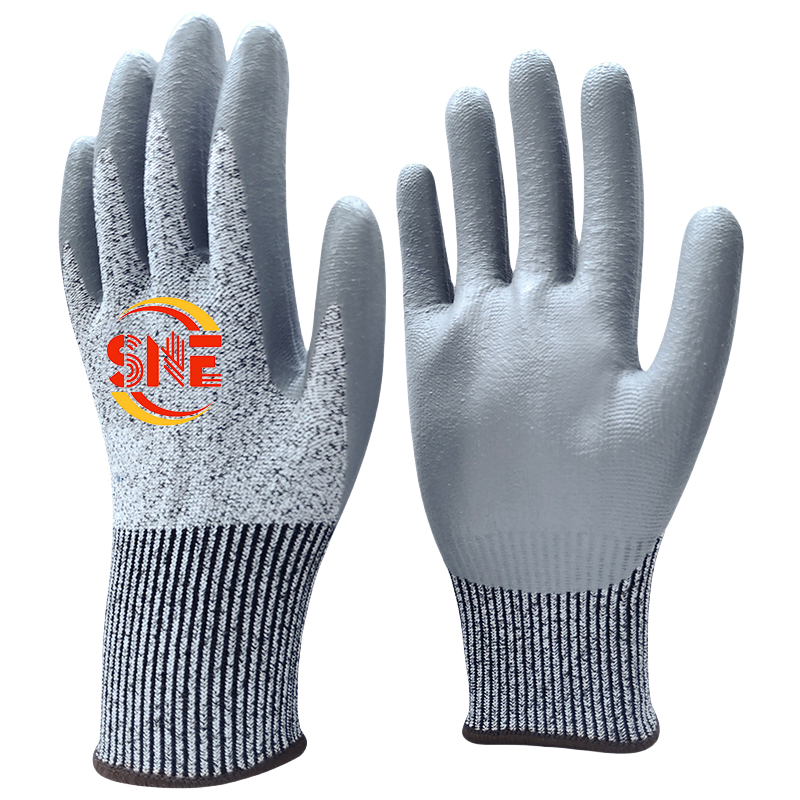
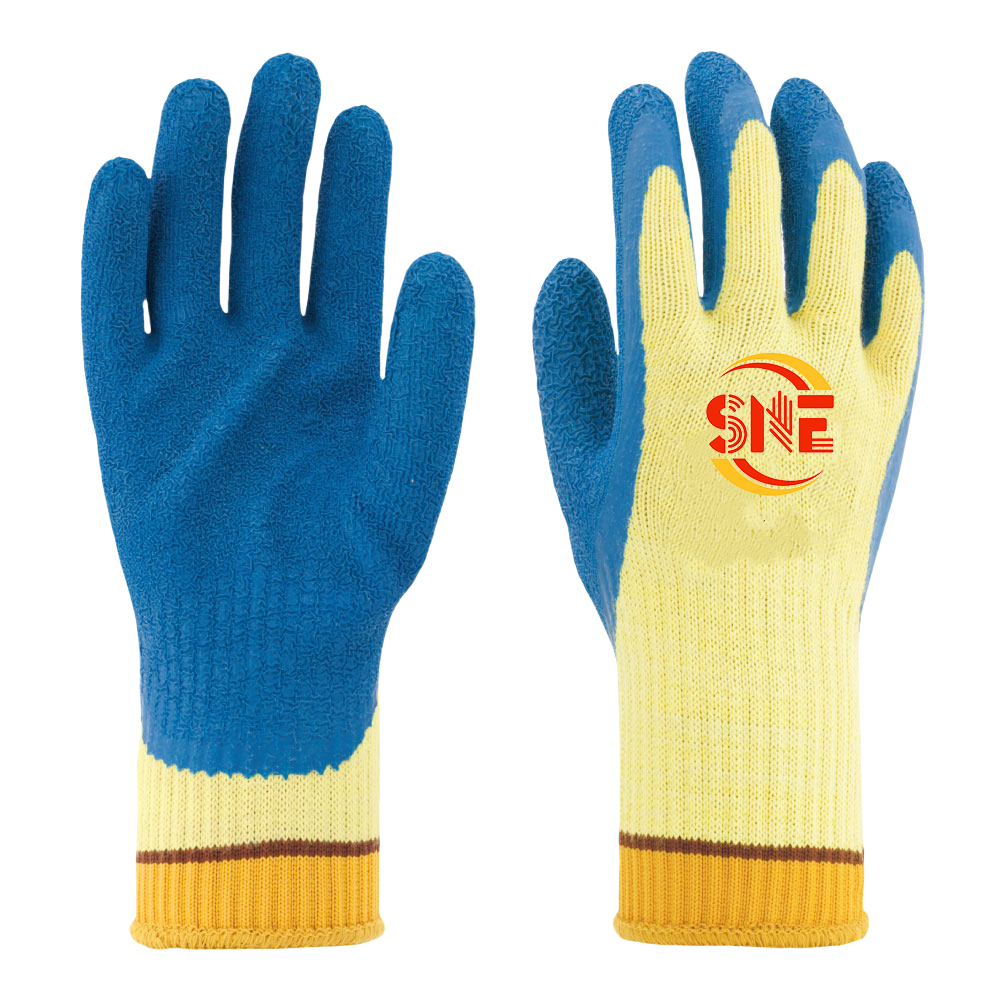
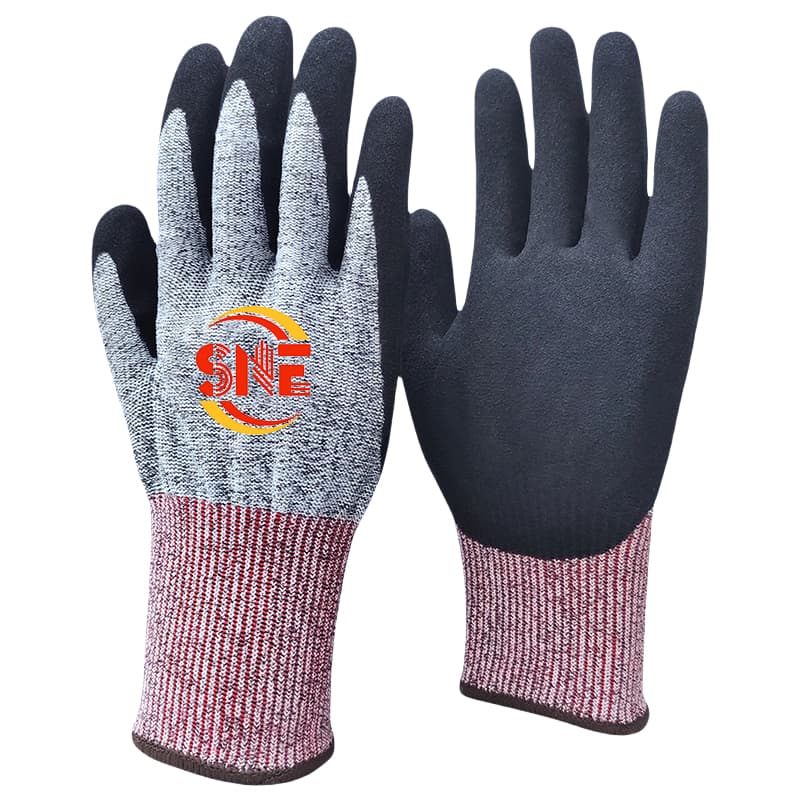
Qingdao Snell Protective Products Co., Ltd. serves the United States market as a factory-direct industrial glove manufacturer with a practical focus on certified, scalable hand protection programs for construction, warehousing, maintenance, and industrial distribution. The company operates two manufacturing facilities in Gaomi and Nantong with 6 production lines, more than 150 skilled employees, and daily capacity of 150,000 pairs, supporting stable volume supply for U.S. buyers that cannot risk inconsistent replenishment. Its product strength comes from a broad technical base across PU, latex, and nitrile coatings, alongside cut-resistant and impact-resistant glove engineering, backed by ISO 9001 and CE-marked production standards that support disciplined quality management, traceable manufacturing, and export-ready compliance expectations. For cooperation, the company works with end users, distributors, dealers, brand owners, and private-label programs through flexible OEM/ODM production, wholesale supply, customized materials, coatings, sizing, branding, and sample-based development, which is especially useful for United States importers and regional resellers building their own glove ranges. In local service terms, the company already has established export experience across North America and other regulated markets, supports buyers through multilingual online communication, technical consultation, sample supply, and dedicated export logistics coordination, and reinforces buyer confidence through responsive pre-sale specification support and after-sale order follow-up designed for long-term account relationships rather than one-off remote exports. Buyers exploring current product lines can review the broader industrial glove catalog, start discussions through the United States inquiry contact page, or visit the main company site to evaluate sourcing fit.
Supplier and Product Trend Shift
The U.S. glove market is shifting from simple low-cost replacement purchasing toward value-based sourcing. Buyers increasingly want proof that a glove reduces replacement frequency, improves worker acceptance, and fits multi-task environments. That is why the category is moving toward hybrid designs that combine reinforced palms with coatings, cut resistance, or impact protection.
The area chart reflects the rising importance of performance-led and customized purchasing decisions. This trend is especially visible among importers, industrial dealers, and larger employers that want branded programs and measurable wear-life improvements instead of generic commodity gloves.
Supplier Feature Comparison
Beyond brand familiarity, buyers should compare suppliers on practical execution: customization depth, product breadth, bulk-order economics, and support for multi-industry demand.
This comparison chart shows where factory-direct sourcing tends to outperform pure domestic stock programs, especially for buyers that need custom branding, broad glove-category integration, and better economics at scale. Domestic channels remain stronger when immediate shipment is the top priority, but long-term procurement programs often favor manufacturers that can build to specification.
Future Trends for 2026
Looking toward 2026, three trends are likely to shape the reinforced palm construction glove market in the United States. First, technology will continue improving glove materials, especially in synthetic leather alternatives, higher-dexterity abrasion layers, touch-screen compatibility, and hybrid coated-palm constructions. Buyers will increasingly seek gloves that can handle more than one task category without constant glove changes.
Second, policy and procurement standards will carry more influence. Public-sector projects, utilities, and larger general contractors are expected to tighten supplier qualification requirements, emphasizing documentation, quality-system discipline, and product consistency. Even when a glove is not highly technical, buyers will want better proof of repeatability, testing, and traceable manufacturing processes.
Third, sustainability will matter more in bid discussions and private-label development. This will not only mean recycled packaging or lower-waste logistics. Buyers will also consider total-use sustainability, where a longer-lasting glove reduces disposal volume and replacement cycles. Manufacturers that can combine durable design, efficient production, and practical packaging programs will be better positioned as procurement teams increasingly include environmental criteria in vendor reviews.
For ports, logistics corridors, and distribution-heavy regions such as Southern California, Houston, Savannah, and New Jersey, these trends may accelerate the move toward data-driven glove programs. Buyers will compare not just unit cost, but cost per wear cycle, worker adoption, and supply-chain resilience.
FAQ
What makes reinforced palm construction gloves different from standard work gloves?
They include added material or engineered wear zones in the palm area to improve durability, grip life, and resistance to abrasion from repeated lifting, dragging, gripping, and tool contact.
Are reinforced palm gloves good for heavy lifting?
Yes. They are commonly chosen for heavy lifting because the reinforced palm helps reduce surface wear and improves grip stability when carrying lumber, block, steel, tools, cartons, and other high-friction loads.
Which industries in the United States buy the most reinforced palm gloves?
Construction leads, followed by warehousing, utilities, manufacturing support, municipal maintenance, and certain oil and gas field service applications.
Should I buy from a domestic brand or an overseas manufacturer?
It depends on your priority. Domestic brands are strong for quick stock availability and brand familiarity. Overseas manufacturers are often stronger for OEM, private-label, customization, and bulk cost control, especially when annual usage volume is high.
What certifications should buyers ask about?
Buyers commonly review quality-management documentation, product test data, and export compliance readiness. For internationally sourced products, ISO 9001-backed manufacturing systems and relevant product certifications help support confidence in consistency.
Can reinforced palm gloves be customized for distributors or brand owners?
Yes. Many manufacturers support OEM and ODM programs that allow custom colors, logo printing, packaging, cuff styles, coating choices, and tailored sizing runs for local market positioning.
How can I choose the right reinforced palm glove for my crew?
Match the glove to the real wear point: abrasion, grip loss, hand fatigue, cold weather, or mixed sharp-edge contact. Then run field trials across several users before standardizing the SKU.
Why do some buyers import through ports like Los Angeles, Houston, or Newark?
These ports support efficient inbound logistics, regional warehousing, and better inventory planning for distributors and large-volume buyers serving multiple states.