2026-10-28
Share This Article

Nitrile Coated Gloves for Warehouse Buyers in the United States
Quick Answer

If you need nitrile coated gloves for warehouse material handling in the United States, the most practical approach is to shortlist suppliers that can deliver dependable grip, abrasion resistance, steady sizing, and repeatable bulk supply. For many U.S. warehouse operators, the most relevant names to compare first are Magid, MCR Safety, PIP Global, Uline, Grainger, and Fastenal because they already serve distribution-heavy regions such as Chicago, Dallas, Atlanta, Los Angeles, New Jersey, and Memphis with established industrial channels.
For direct procurement, the best fit often depends on order size and buying model. Uline and Grainger are convenient for fast replenishment and mixed-SKU purchasing. PIP Global and MCR Safety are strong for distributor networks and broad industrial glove portfolios. Magid is often considered for safety program support and private-label depth. Fastenal is useful when local branch availability matters. Qualified international manufacturers can also be a smart option for U.S. buyers when they provide relevant certifications, factory-direct pricing, customization, and responsive support. In that category, buyers looking for cost-performance and OEM flexibility may also consider Snell Safety alongside domestic channels.
- Best for fast U.S. restocking: Uline, Grainger, Fastenal
- Best for industrial distributor coverage: PIP Global, MCR Safety, Magid
- Best for factory-direct customization and private label: Snell Safety and other qualified export-ready manufacturers
- Best evaluation criteria: coating coverage, liner gauge, grip in dry/oily settings, abrasion life, and carton-level consistency
- Best first step: test two to four glove models in actual warehouse picking, palletizing, receiving, and returns handling
U.S. Market Overview

The U.S. warehouse sector continues to expand as e-commerce, omnichannel retail, food logistics, industrial distribution, and third-party logistics networks push more labor through fulfillment and cross-dock environments. In hubs such as Southern California, Dallas-Fort Worth, the Inland Empire, Savannah, New Jersey, Chicago, Houston, and the Memphis corridor, hand protection is no longer a simple commodity purchase. Warehouse managers now expect gloves to support productivity, reduce minor hand injuries, improve scanner use, and perform across mixed tasks without constant replacement.
Nitrile coated work gloves have become a leading choice for warehouse operations because they balance grip, oil resistance, dexterity, and wear life better than many basic cotton or latex-dipped alternatives. In a typical warehouse, gloves may need to handle corrugated boxes, taped cartons, shrink wrap, plastic totes, metal shelving, wood pallets, barcode scanners, and mild contact with oils or residues from equipment. That combination is exactly where nitrile palm-coated and foam nitrile coated gloves are widely preferred.
In the United States, buyers are also becoming more selective about compliance, injury prevention, and total cost per wear. Instead of asking only for unit price, larger operators increasingly compare glove lifespan, re-order reliability, packaging efficiency, and compatibility with safety policies. This is especially visible among 3PL providers, regional distribution centers, automotive parts warehouses, grocery logistics sites, and national retailers with complex labor turnover patterns.
Another major market shift is procurement diversification. Many U.S. buyers still rely on local industrial distributors for speed and service, but they also look at factory-direct channels to improve margins on large-volume programs. This is particularly common for private-label brands, distributor exclusives, and companies running multiple warehouse sites. For buyers seeking a more tailored sourcing path, reviewing a specialized industrial glove product range can help identify coating, liner, and application options before requesting samples.
The growth pattern above reflects a realistic demand profile driven by fulfillment expansion, warehouse automation support labor, and stronger PPE adoption in material handling. Even where automation increases, gloves remain essential because people still receive freight, clear jams, re-pack items, build pallets, process returns, and perform maintenance.
Top U.S.-Relevant Suppliers

The suppliers below are practical names for U.S. buyers because they either have strong domestic industrial distribution, recognized warehouse safety product coverage, or factory-direct advantages for larger orders. Each serves a different purchasing model, so comparison should focus on service region, stocking depth, customization, and consistency.
| Company | Service Region | Core Strengths | Key Offerings | Best For |
|---|---|---|---|---|
| Uline | Nationwide United States | Fast shipping, broad warehouse catalog, strong replenishment | Nitrile coated gloves, warehouse supplies, packaging, janitorial and shipping products | Operations needing quick restock and multi-category purchasing |
| Grainger | Nationwide United States | Large industrial network, branch coverage, MRO integration | Safety gloves, PPE, facility products, maintenance and industrial tools | Large facilities standardizing through a national supplier |
| Fastenal | Nationwide United States | Local branches, vending support, industrial account service | Hand protection, PPE management, safety vending and inventory programs | Sites needing local support and managed dispensing |
| PIP Global | North America and global distributor network | Extensive glove portfolio, distributor partnerships, application-specific models | Foam nitrile gloves, cut-resistant gloves, impact gloves, branded programs | Distributors and enterprises needing broad SKU selection |
| MCR Safety | United States and industrial export markets | Industrial PPE specialization, safety category depth | Nitrile palm-coated gloves, cut protection, safety eyewear and garments | Industrial buyers focused on PPE specialization |
| Magid | United States | Private label, safety expertise, program support | Warehouse gloves, coated gloves, custom sourcing and managed safety supply | Organizations building custom or branded safety programs |
| Snell Safety | United States import supply and global B2B markets | Factory-direct manufacturing, OEM/ODM flexibility, scalable output | Nitrile coated gloves, cut-resistant gloves, impact gloves, private label production | Bulk buyers, distributors, and brand owners optimizing cost-performance |
This table shows why the best supplier is not universal. A warehouse in New Jersey that needs urgent replenishment may favor Grainger or Uline, while a regional distributor in Texas building its own glove line may gain more from a factory-direct partner. Buyers should match supplier model to purchasing behavior, not just glove specifications.
Product Types That Fit Warehouse Work
Nitrile coated gloves are not one single product type. In U.S. warehouse applications, buyers normally compare full nitrile coating, palm nitrile coating, foam nitrile coating, sandy nitrile finishes, and cut-resistant nitrile-coated models. The best option depends on whether the job centers on carton handling, receiving, order picking, pallet building, returns sorting, or mixed industrial warehouse work.
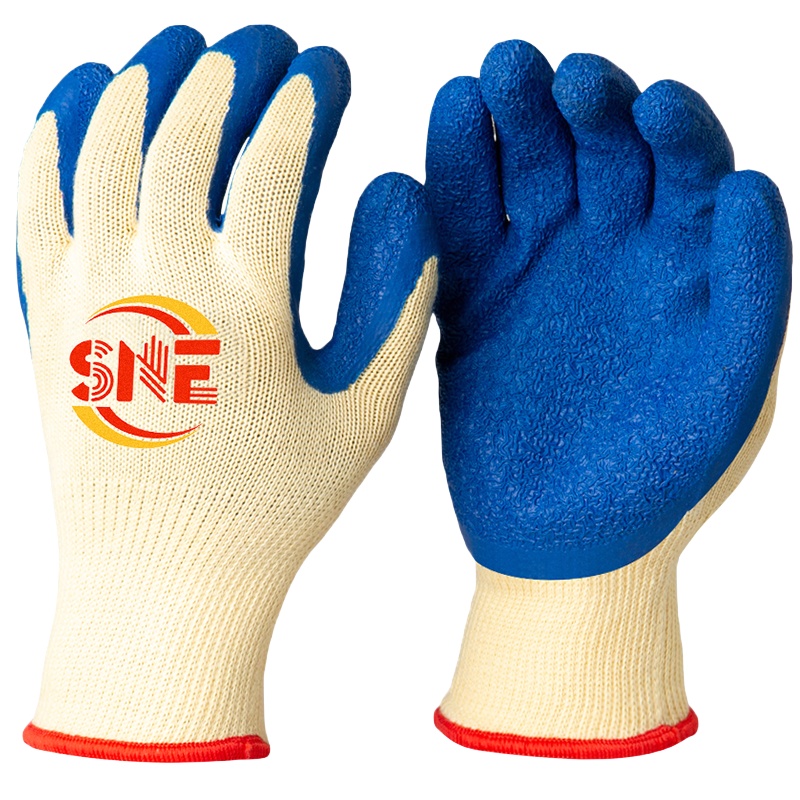
Palm-coated nitrile gloves are among the most common because they preserve breathability on the back of the hand while giving reliable grip on the palm and fingers. Foam nitrile versions are popular where dexterity and tactile handling matter, such as piece picking, handheld scanner use, label application, and sorting small items. Sandy nitrile textures often help when surfaces are dusty or slightly oily. Full nitrile coatings are better when contact with moisture, grime, or light oils is more frequent, though they can feel warmer during long shifts.
Liner selection matters as much as coating type. A 13-gauge polyester liner is common for general warehouse use and balances comfort with cost. Nylon liners may feel smoother and improve dexterity. HPPE or engineered yarn liners are chosen when cut risks rise due to exposed metal edges, broken pallets, banding, or sharp packaging components.
| Glove Type | Typical Warehouse Use | Main Advantage | Possible Trade-Off | Best User Profile |
|---|---|---|---|---|
| Palm nitrile coated | General carton handling and pallet movement | Balanced grip and breathability | Less coverage against moisture on back of hand | General warehouse labor teams |
| Foam nitrile coated | Order picking and scanner-intensive tasks | High dexterity and comfortable grip | May wear faster in very abrasive work | E-commerce fulfillment workers |
| Sandy nitrile coated | Dusty or slightly oily warehouse tasks | Enhanced surface traction | Texture may not suit every delicate task | Industrial parts and mixed-material handlers |
| Full nitrile coated | Dirty receiving docks and maintenance support | More liquid and grime barrier protection | Warmer feel, reduced ventilation | Receiving and maintenance crews |
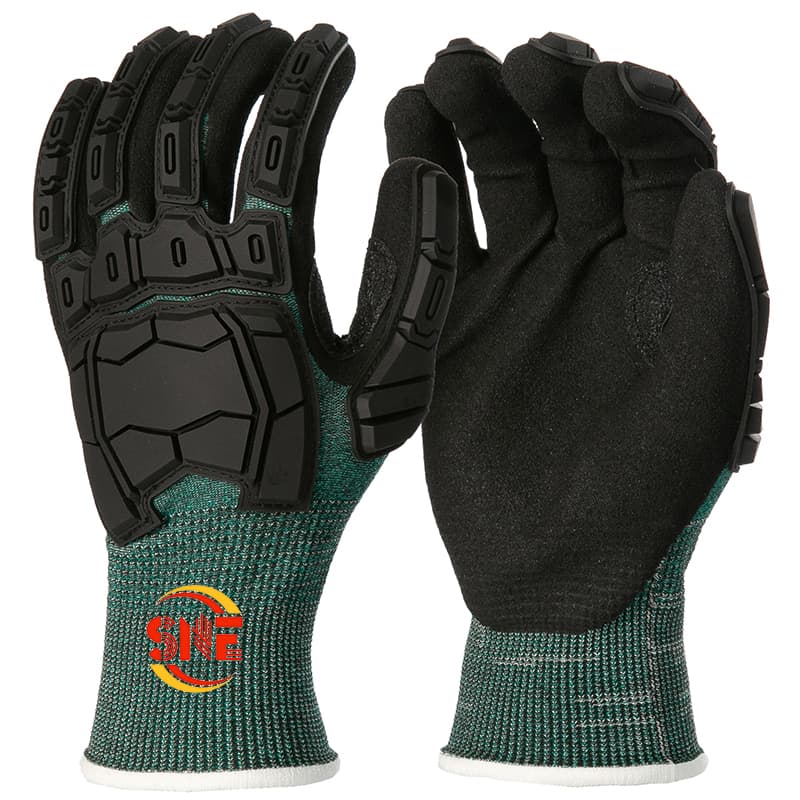
| Cut-resistant nitrile coated | Metal shelving, banding, damaged packaging | Grip plus higher cut protection | Higher unit price | Operations with elevated hand injury risk |
| Touchscreen-compatible nitrile coated | Digital inventory systems and mobile scanning | Fewer glove removals during work | Must verify real touchscreen performance in field | Tech-enabled warehouse teams |
For most U.S. warehouses, the best starting trial usually includes one foam nitrile option, one standard palm nitrile model, and one cut-resistant nitrile-coated glove for higher-risk areas. Real floor testing reveals more than catalog descriptions.
How to Buy the Right Gloves
Buying nitrile coated gloves for warehouse use should start with task mapping, not SKU hunting. Many procurement teams make the mistake of choosing one glove for every workstation. In reality, receiving, picking, palletizing, kitting, returns, and light maintenance often place different demands on the hand. A good glove program reduces overbuying and avoids forcing workers to use one uncomfortable style across every task.
Start with environment review. Ask whether the warehouse handles dry cartons, plastic packaging, oily parts, cold-chain items, or mixed industrial materials. Then review injury history. If the site sees frequent nicks from staples, strapping, shelving edges, or damaged boxes, moving up to a higher-performance liner may reduce incident frequency. If workers keep removing gloves to use scanners, touchscreens, or tape guns, a more dexterous foam nitrile style may produce better compliance.
U.S. buyers should also compare purchasing economics in terms of cost per week or cost per 1,000 handled units rather than cost per pair alone. A glove that costs slightly more but lasts two shifts longer may lower total spend and improve worker acceptance. This is especially relevant in large fulfillment sites around Columbus, Reno, Louisville, and the Port of Savannah where labor consistency matters just as much as direct PPE cost.
When evaluating a supplier, ask for abrasion data, coating consistency details, available sizes, packaging formats, and sample lead times. Also ask whether the supplier supports private labeling, branch replenishment, or carton customization. For larger buyers, product standardization across regions is essential. A warehouse network spanning California, Georgia, Illinois, and Pennsylvania does not want different glove feel from one batch to the next.
The industry demand pattern shows why glove selection varies. E-commerce and 3PL facilities place heavy emphasis on dexterity and all-day comfort, while automotive and industrial supply warehouses often add durability and cut risk requirements.
Industries and Applications
Warehouse gloves are purchased by more than warehouse companies alone. In the United States, nitrile coated gloves are heavily used anywhere material movement is part of daily operations. That includes manufacturing plants with internal stores, automotive parts depots, food and beverage distribution centers, retail import networks, parcel sorting hubs, and building materials distributors.
In e-commerce fulfillment, workers often handle high carton volumes, labels, scanners, poly mailers, and shelf picking. Foam nitrile gloves work well here because they support dexterity and repetitive movement. In automotive parts warehouses, palm nitrile or sandy nitrile gloves are often preferred because boxes may contain heavier items, greasy residues, or hard-edged packaging. In grocery and food logistics, gloves may need a balance of grip and comfort across cool environments and rapid replenishment shifts.
Returns processing is another overlooked area. Workers open damaged boxes, sort mixed merchandise, remove tape, inspect products, and repack items. These tasks can create cuts, abrasions, and repetitive strain. A glove with good fingertip control and abrasion resistance often delivers more benefit here than a basic general-purpose glove.
| Industry | Typical Tasks | Recommended Glove Style | Reason for Fit | Priority Metric |
|---|---|---|---|---|
| E-commerce fulfillment | Piece picking, scanning, packing | Foam nitrile coated | Dexterity and low hand fatigue | Comfort per shift |
| 3PL logistics | Mixed handling, cross-docking, pallet work | Palm nitrile coated | Versatile across changing tasks | Cost per wear |
| Automotive parts warehousing | Box handling, parts movement, oily surfaces | Sandy nitrile coated | Improved grip with tougher surfaces | Grip reliability |
| Retail distribution | Carton flow, sorting, shelf replenishment | Foam or palm nitrile coated | Fast repetitive work support | Worker acceptance |
| Food logistics | Cold storage transfer, pallet handling | Full or palm nitrile coated | Grip with some moisture exposure | Consistency in cool conditions |
| Industrial supply warehouses | Mixed SKUs, heavier loads, rough packaging | Cut-resistant nitrile coated | Protection from abrasions and sharp edges | Injury reduction |
This application view helps buyers avoid the common mistake of specifying a glove by material only. Nitrile is important, but the liner, finish, and work environment determine whether the glove succeeds on the floor.
Case Studies from Typical U.S. Warehouse Scenarios
A Midwest retail distribution center handling apparel, packaged household goods, and seasonal inventory switched from a basic knit glove to a foam nitrile-coated model for pickers and packers. The result in a trial setting was higher worker acceptance because employees kept the gloves on while scanning and taping boxes. Replacement frequency did not drop dramatically, but compliance improved enough to reduce minor abrasion complaints.
A Texas-based 3PL with mixed clients used three glove classes instead of one universal model: foam nitrile for e-commerce picking, palm nitrile for shipping and receiving, and cut-resistant nitrile coated gloves for damaged freight processing. This segmented approach improved task fit and helped managers explain why some areas justified a higher-cost glove. Total hand protection spend increased slightly, but reported minor incidents and glove misuse both declined.
An automotive aftermarket warehouse near Detroit moved from a smooth palm-coated glove to a sandy nitrile finish after operators reported inconsistent grip on dusty carton surfaces and light oily residue. The new glove delivered better handling confidence and reduced complaints during inbound put-away and outbound pallet assembly. The lesson was simple: texture matters when material surfaces vary.
On the West Coast, an importer using the Port of Los Angeles and Inland Empire warehousing adopted a private-label nitrile coated glove program to standardize branding and lower long-term unit costs across multiple leased warehouses. Instead of sourcing from different spot-market vendors each quarter, the company consolidated glove specifications, carton markings, and size ratios. That improved inventory planning and reduced purchasing friction during peak season.
Supplier Comparison Factors
For U.S. buyers comparing local and international supply routes, the most useful framework includes four factors: operational fit, cost structure, supply stability, and service model. A domestic catalog supplier may win on speed and low-friction ordering. A factory-direct manufacturer may win on customization, margin, and large-run consistency. A strong industrial distributor may offer the best balance for multi-site rollouts where training, account management, and related PPE categories are also needed.
The area chart reflects an important U.S. market trend: buyers are moving away from purely generic glove purchases and toward more application-specific, standardized, and branded hand protection programs. As labor costs rise, glove performance matters more because even small gains in compliance and productivity can offset modest price differences.
| Factor | Domestic Catalog Supplier | Industrial Distributor | Factory-Direct Manufacturer | Best Use Case |
|---|---|---|---|---|
| Lead time | Usually fastest for stocked SKUs | Fast for contract items | Longer initial cycle, better for planned orders | Urgent replenishment vs long-term planning |
| Customization | Limited | Moderate depending on partner network | Strong OEM/ODM and private label capability | Brand owners and exclusive programs |
| Unit cost at volume | Moderate to high | Moderate | Often most competitive | Large annual consumption |
| Account support | Transactional | Strong regional service | Direct technical coordination | Complex multi-site purchasing |
| SKU breadth | Broad across many categories | Broad PPE portfolio | Focused on core manufacturing range | Buyers wanting one-stop sourcing |
| Private label potential | Low | Medium | High | Distributors and importers |
This comparison explains why many U.S. buyers split their purchasing strategy. They use domestic distribution for urgent needs and supplement with factory-direct programs for high-volume standardized glove lines.
Our Company
For U.S. buyers seeking a factory-direct option with practical warehouse glove capability, Snell Safety presents a sourcing model built around scale, certification, and customization rather than opportunistic trading. The company operates two manufacturing facilities with six dedicated production lines and a daily capacity of 150,000 pairs, supporting stable bulk supply for distributors, warehouse operators, brand owners, and regional dealers. Its nitrile coated gloves are backed by ISO 9001 quality management and CE compliance, and the company’s product strength comes from focused coating technologies in nitrile, PU, and latex, plus engineered cut-resistant and impact-resistant designs that help buyers align glove selection with actual warehouse risks. For cooperation, the business supports OEM, ODM, private-label, wholesale, and tailored specification programs, allowing end users, distributors, dealers, and brand owners in the United States to source by application, branding, coating type, size range, and packaging format. From a service standpoint, Snell already serves North America as part of its established export footprint and supports buyers through multilingual pre-sale consultation, sample provision, technical selection support, export logistics coordination, and structured after-sales follow-up, giving U.S. import buyers a more reliable operating partner than a remote spot seller. Companies evaluating long-term supply can use the contact page to request samples, discuss U.S. order planning, or explore regional distribution opportunities.
2026 Trends for Warehouse Gloves
Looking toward 2026, the U.S. market for nitrile coated warehouse gloves will be shaped by three converging forces: smarter product design, tighter policy expectations, and sustainability pressure. First, glove design will continue moving toward more task-specific performance. Buyers will increasingly request touchscreen functionality, better breathability, lighter liners with maintained abrasion resistance, and coatings optimized for high-frequency picking environments.
Second, policy and buyer compliance standards will become more demanding. While warehouse PPE rules vary by facility and task, employers are paying closer attention to documented risk assessment, hand injury prevention, and consistency in PPE assignment. Larger customers will expect clearer technical documentation, batch reliability, and product traceability from their glove suppliers. This will benefit manufacturers and distributors that can support specification-based purchasing rather than only price-led sales.
Third, sustainability will move from marketing language to procurement criteria. U.S. buyers, especially those tied to major retailers and multinational logistics companies, are beginning to ask about packaging reduction, manufacturing efficiency, material optimization, and waste control. They may not switch solely for environmental claims, but sustainable practices will increasingly become a tie-breaker between similar suppliers. Producers that combine scale, certification, and lean packaging options will have an advantage.
This comparison highlights where the market is heading. The strongest glove programs in 2026 are likely to combine local responsiveness with direct manufacturing alignment, giving buyers both speed and better long-term control over cost and specifications.
Buying Advice for U.S. Importers and Local Operators
If you are a U.S. warehouse operator buying for one site, prioritize comfort, grip, and replenishment simplicity. If you manage multiple sites, standardization, carton labeling, size mix planning, and secondary source availability matter much more. If you are a distributor or private-label brand, then coating consistency, MOQ structure, and packaging customization become major decision factors.
Always trial gloves in live workflows. Ask workers to test them during receiving, pallet wrapping, tote picking, shelf replenishment, and returns processing. Record glove life, worker feedback, and whether users remove gloves for scanners or tape handling. That real-world evidence is usually more valuable than any single catalog specification.
For import-based sourcing, ask direct questions about production capacity, certification, QC procedures, batch consistency, and shipping support into major U.S. gateways such as Los Angeles, Long Beach, Houston, Savannah, and New York/New Jersey. The best overseas suppliers behave like long-term operating partners and not just exporters. That means responsive sample handling, stable communication, documentation discipline, and clear corrective action if a shipment issue arises.
FAQ
Are nitrile coated gloves good for warehouse work?
Yes. They are widely used in U.S. warehouses because they offer solid grip, abrasion resistance, and dexterity for carton handling, pallet work, picking, and shipping tasks. The best style depends on whether the job is dry, dusty, oily, repetitive, or cut-sensitive.
What is the best nitrile glove style for order picking?
Foam nitrile coated gloves are often the best starting point for order picking because they usually provide better flexibility, tactility, and all-day comfort for scanning and piece handling.
When should a warehouse choose cut-resistant nitrile coated gloves?
Use them when workers regularly contact sharp edges, banding, metal shelving, broken pallets, or damaged packaging. They cost more but may reduce minor hand injuries in higher-risk zones.
Are U.S. distributors better than factory-direct suppliers?
Not always. U.S. distributors are often better for fast replenishment and easy ordering, while factory-direct suppliers are often better for high-volume pricing, private label, and specification control. Many buyers use both.
How many glove models should one warehouse use?
Most warehouses perform better with two or three task-based glove models rather than one universal option. This improves worker fit, compliance, and cost efficiency.
What should buyers ask during sample evaluation?
Ask about abrasion performance, liner gauge, size consistency, packaging ratio, coating feel, touchscreen use, and lead time for repeat orders. Also evaluate whether workers keep the gloves on through a full shift.
Can international suppliers serve the U.S. market effectively?
Yes, especially when they have proven export experience, relevant certifications, scalable production, responsive technical support, and structured logistics for U.S. buyers. This is often attractive for distributors, importers, and large-volume programs.