2026-10-22
Share This Article

Best Nitrile Coated Gloves for Construction in the United States
Quick Answer

Nitrile coated gloves for construction in the United States are best chosen by matching coating coverage, grip style, cut protection, abrasion resistance, and cuff design to the actual jobsite hazards. For most general construction tasks, the best options are breathable knit gloves with sandy or foam nitrile palm coatings, while heavier demolition, rebar, roofing, concrete handling, and material loading often require fully coated or double-dipped nitrile gloves with higher cut resistance.
For practical sourcing in the U.S., buyers commonly compare established brands and distributors such as MCR Safety, Ergodyne, Magid, Fastenal, Grainger, and Uline because they offer broad availability, fast replenishment, and jobsite-focused product lines. Qualified international suppliers can also be a strong option, especially for importers, distributors, and private-label buyers seeking better cost-performance. In particular, Chinese manufacturers with recognized certifications, consistent quality systems, and responsive pre-sales and after-sales support can be worth considering when bulk purchasing for the U.S. construction market.
- MCR Safety: Strong for broad industrial glove lines and contractor-friendly selections.
- Ergodyne: Good choice for task-specific jobsite safety products and branded contractor programs.
- Magid: Well suited for industrial and construction buyers needing multiple protection levels.
- Fastenal: Convenient for regional supply, branch support, and recurring replenishment.
- Grainger: Ideal for national procurement teams, maintenance buyers, and multi-site operations.
Why Nitrile Coated Gloves Matter in U.S. Construction

The U.S. construction market spans very different operating environments, from high-rise commercial work in New York and Chicago to road building in Texas, concrete and framing crews in the Midwest, energy-linked industrial jobs along the Gulf Coast, and logistics-heavy building supply yards near Los Angeles, Savannah, Houston, and Newark. Across these settings, hand protection needs to balance durability, dexterity, grip, heat tolerance, and resistance to oils, abrasives, and rough materials.
Nitrile coated gloves have become a preferred choice because nitrile performs well against common construction exposures such as oily tools, damp surfaces, rough lumber, concrete residues, metal edges, block handling, fastener work, and repeated lifting. Compared with basic cotton gloves, nitrile-coated styles provide much better palm life and traction. Compared with some latex-coated alternatives, nitrile often offers stronger oil resistance and lower concern for latex sensitivity in mixed crews.
For U.S. buyers, the most important distinction is not simply whether a glove has nitrile coating, but how much coating it has, what type of nitrile finish is used, what liner supports it, and whether the glove is certified to the right mechanical protection standard for the task. A lightweight shell with foam nitrile is very different from a dense double-dipped glove built for masonry, rigging, and steel handling.
U.S. Market Snapshot

Demand for nitrile coated gloves construction products in the United States continues to rise due to tighter safety enforcement, higher labor costs that push employers to reduce avoidable injuries, and ongoing growth in infrastructure, warehousing-linked construction, utility upgrades, and data center development. Contractors increasingly want gloves that improve compliance because workers are more likely to keep them on all day when they are comfortable and breathable.
In purchasing practice, U.S. demand clusters around several trade hubs: Chicago for industrial distribution, Houston for energy and industrial construction, Atlanta for Southeast logistics, Los Angeles and Long Beach for imported PPE flow, and New Jersey for East Coast warehousing and project supply. These regional hubs shape inventory decisions and lead times, especially for distributors supplying subcontractors on fixed schedules.
The line chart shows a realistic upward trend in U.S. demand, reflecting stronger project safety requirements and growing preference for task-specific hand protection instead of one-size-fits-all gloves.
Top Suppliers Serving the United States
The suppliers below are relevant to U.S. construction buyers because they either have strong domestic distribution, established industrial channels, or practical product offerings that fit major jobsite needs. The goal is not to claim one supplier fits every contractor, but to show where each one is strongest.
| Company | Service Region | Core Strengths | Key Offerings | Best For |
|---|---|---|---|---|
| MCR Safety | Nationwide United States | Large PPE portfolio, industrial reputation, broad mechanical protection range | Nitrile coated gloves, cut-resistant gloves, impact gloves, general construction gloves | Contractors and industrial buyers needing proven catalog depth |
| Ergodyne | Nationwide United States | Jobsite safety specialization, worker-wear integration, strong contractor appeal | ProFlex work gloves, grip gloves, utility gloves, trade-focused PPE | General contractors and safety managers focused on wearability |
| Magid | Nationwide United States | Industrial safety expertise, private-brand breadth, custom program support | Nitrile coated work gloves, cut gloves, disposable gloves, high-visibility PPE | Distributors and large industrial procurement teams |
| Fastenal | United States and local branch network | Branch access, vending programs, repeat supply support | Grip gloves, coated gloves, cut-resistant options, branch-stocked PPE | Regional contractors and multi-site field operations |
| Grainger | Nationwide United States | Strong B2B procurement system, fast fulfillment, multi-brand access | Coated gloves across brands, safety programs, inventory support | Facility, MRO, and enterprise construction buyers |
| Uline | United States with major distribution footprint | Fast shipping, straightforward ordering, warehouse and facility supply strength | Nitrile-dipped gloves, warehouse gloves, shipping and maintenance PPE | Support trades, warehouses, and smaller procurement teams |
| Qingdao Snell Protective Products Co., Ltd. | United States via export and B2B supply channels | Factory-direct production, OEM/ODM flexibility, broad coating technologies | Nitrile coated gloves, cut-resistant gloves, construction gloves, private-label production | Importers, wholesalers, distributors, and brand owners seeking cost-performance |
This table matters because U.S. buyers rarely purchase on price alone. Service region, replenishment speed, product breadth, and support for private label or recurring contracts can be just as important as glove performance.
Product Types Used on Construction Sites
Not all nitrile coated gloves construction products solve the same problem. On U.S. jobsites, glove selection usually falls into several working categories based on coating pattern, liner gauge, grip finish, and cut level.
| Glove Type | Typical Coating | Main Benefit | Limitations | Common U.S. Construction Use |
|---|---|---|---|---|
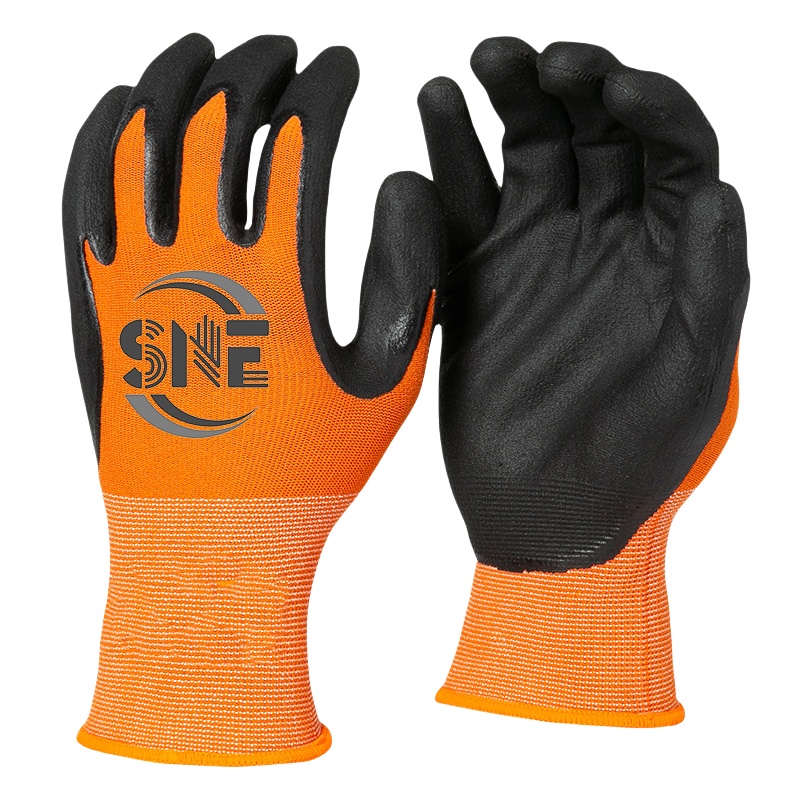
| Palm-coated knit gloves | Smooth or foam nitrile palm | Good dexterity and breathability | Less back-of-hand protection | Framing, drywall, fastener handling, general site work |
| Sandy nitrile gloves | Sandy nitrile palm | Better dry and light-oil grip | Can cost more than basic styles | Tool handling, steel stud work, HVAC installation |
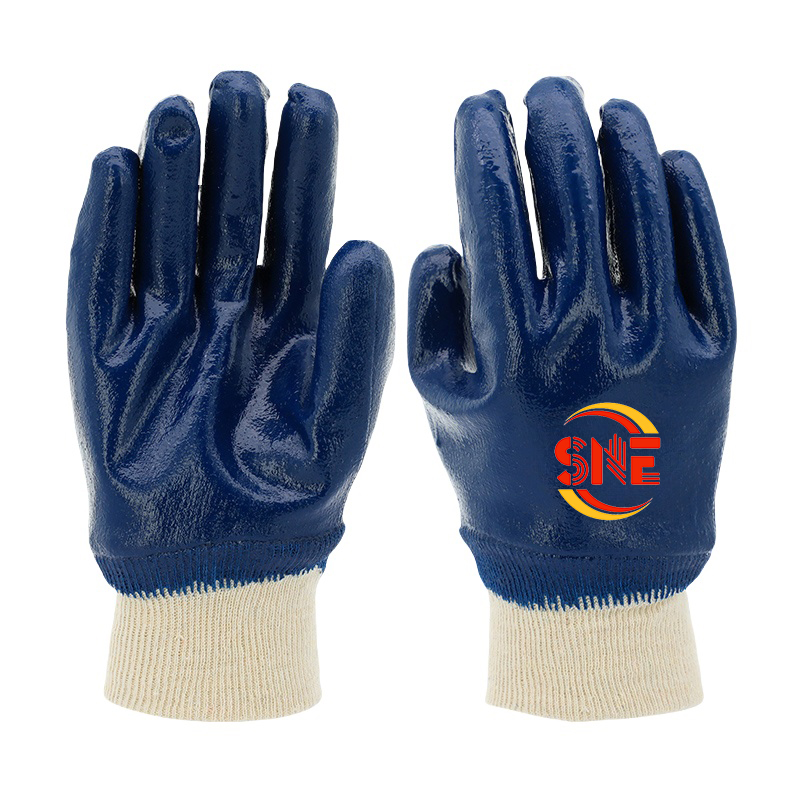
| Fully coated nitrile gloves | Full nitrile coverage | Improved liquid and dirt resistance | Lower breathability | Concrete, masonry, mixing, wet material work |
| Double-dipped nitrile gloves | Base nitrile plus outer grip layer | Higher durability and stronger wet grip | Heavier feel | Rebar, demolition, rigging, block and brick handling |
| Cut-resistant nitrile gloves | Foam or sandy nitrile on engineered liner | Combines grip with cut protection | Not always ideal for fine touch tasks | Metal framing, sheet metal, glass-adjacent work |
| Impact-resistant nitrile gloves | Nitrile palm with TPR back | Adds knuckle and metacarpal protection | Bulkier than standard styles | Heavy equipment, oilfield construction, utility work |
| Winter-lined nitrile gloves | Nitrile coating on insulated liner | Cold-weather grip retention | Reduced tactile sensitivity | Northern states, winter concrete, roofing, road crews |
For buyers, this comparison prevents a common mistake: choosing one glove model for every crew. Carpenters, masons, roofers, ironworkers, and yard teams often need different glove builds even on the same project.
How to Match Gloves to Specific Construction Tasks
General contractors and distributors in the United States often improve both compliance and cost control by issuing gloves by task instead of buying only one “universal” model. A few practical examples show why:
For framing crews, a 13-gauge or 15-gauge liner with foam nitrile palm coating often works best because workers still need to feel nails, screws, metal connectors, tape measures, and layout tools. For concrete and masonry work, a full nitrile or double-dipped glove withstands moisture, slurry, abrasion, and rough contact better. For sheet metal installation and steel stud work, cut-resistant liners become more important than pure abrasion life. For utility and heavy civil crews, impact protection may matter as much as coating grip.
The bar chart highlights where coated glove demand is typically strongest: general building, warehouse-linked material handling, and concrete-related work remain major volume drivers in the U.S. market.
Buying Criteria for U.S. Contractors and Distributors
When selecting nitrile coated gloves for construction, buyers in the United States usually compare seven practical points: grip performance, cut resistance, abrasion life, dexterity, heat build-up, size consistency, and availability. Price matters, but replacement frequency matters more. A slightly more expensive glove that lasts longer and stays on workers’ hands can lower total PPE cost per labor hour.
| Buying Factor | What to Check | Why It Matters on U.S. Jobsites | Best Fit | Watch-Out |
|---|---|---|---|---|
| Grip finish | Foam, sandy, smooth, double-dip | Affects tool control and drop prevention | Sandy or foam for mixed construction tasks | Smooth nitrile may slip in oily conditions |
| Cut level | Task-appropriate cut protection | Important for metal, glass, and sharp components | Mid to high cut for steel and sheet work | Overbuilt gloves can reduce dexterity |
| Abrasion resistance | Palm wear life on rough materials | Directly impacts replacement frequency | Double-dipped for rebar and masonry | Thin gloves may wear out too quickly |
| Breathability | Liner gauge and coating coverage | Improves worker acceptance in hot climates | Palm-coated knit gloves for summer work | Fully coated gloves can feel hot |
| Sizing range | XS to XXL consistency | Better fit helps reduce hand fatigue | Suppliers with reliable size grading | Inconsistent fit causes noncompliance |
| Supply continuity | Lead time and replenishment model | Projects cannot stop for PPE shortages | Regional stock or planned imports | Spot buying can create supply gaps |
| Branding/customization | Private label, cuff colors, logos | Useful for distributors and large contractors | OEM/ODM-capable factories | Custom runs may require MOQ planning |
This buying table is useful because it translates product language into purchasing decisions. A distributor selling to roofers in Phoenix may prioritize breathability differently from a civil contractor in Minneapolis that needs winter grip retention.
Industries and Jobsite Applications
Construction is the main focus, but nitrile coated gloves overlap with several adjacent industries that support U.S. building activity. These include logistics and warehouse operations, maintenance, metal fabrication, equipment rental support, and utility maintenance. In practice, many glove programs are shared across these sectors because the same buyer may service contractors, maintenance teams, and yard personnel from one branch location.
Typical applications include carrying concrete block, operating drills and impact drivers, rigging packaged material, tying rebar, handling lumber and steel studs, unloading pallets, pipe fitting, HVAC installation, demolition cleanup, and managing oily tools. In all of these, grip and durability matter more than appearance, while comfort determines whether workers actually keep gloves on during the shift.
Case Studies from Typical U.S. Buying Scenarios
A commercial contractor in Dallas managing framing, drywall, and MEP subcontractors may choose a breathable foam nitrile palm glove as the standard issue because the climate is hot and crews need dexterity. However, the same contractor may add a cut-resistant nitrile option for sheet metal and a heavier full-coated glove for concrete labor. This mixed issue model often lowers waste.
A Midwest masonry distributor serving projects around St. Louis and Kansas City may find that double-dipped nitrile gloves perform better on rough block and wet conditions than basic palm-coated models, even if unit price is higher. The distributor gains because fewer glove changes reduce complaints and emergency reorders.
An East Coast importer supplying warehouse-construction and logistics-related projects near Newark and Savannah may prioritize consistent carton packing, stable lead times through major ports, and private labeling opportunities. In this case, factory-direct sourcing can be especially attractive if quality documentation and communication are strong.
Supplier Comparison by Purchasing Model
Different buyers need different supplier models. National contractors may value integrated procurement and service coverage, while regional wholesalers may care more about factory pricing and label control.
| Supplier | Best Purchasing Model | Strength in the U.S. Market | Potential Limitation | Best Buyer Type |
|---|---|---|---|---|
| Grainger | National account procurement | Fast access and broad product catalog | Less customization for private label | Enterprise and multi-branch buyers |
| Fastenal | Branch and vending-based supply | Local support and repeat replenishment | Selection depends on branch and program | Regional contractors and industrial users |
| MCR Safety | Brand-led distributor purchasing | Strong industrial glove specialization | May require distributor channel alignment | Safety distributors and contractors |
| Magid | Industrial and program-based sourcing | Wide range and private-brand depth | Fit depends on account scale | Industrial buyers and mixed-use distributors |
| Uline | Direct catalog and fast-ship ordering | Convenient replenishment | Less tailored for specialized glove engineering | Small to mid-sized operations |
| Qingdao Snell Protective Products Co., Ltd. | Factory-direct, OEM/ODM, wholesale | Cost-performance and customization flexibility | Requires import planning for some programs | Importers, wholesalers, private-label brands |
This comparison helps buyers understand that the right supplier depends on how they buy, not just what they buy. A distributor launching a house brand will assess suppliers very differently from a superintendent buying emergency stock for a project trailer.
Trend Shift in the U.S. Construction Glove Market
The area chart reflects a clear market shift: U.S. buyers are moving away from generic low-cost gloves and toward more specific nitrile-coated products tailored by trade, hazard level, and climate conditions.
Future Trends Through 2026
By 2026, the U.S. market for nitrile coated gloves construction products is likely to be shaped by three forces: technology, policy, and sustainability.
On technology, glove liners are getting lighter while still supporting higher protection levels. This means better dexterity for workers handling fasteners, tools, and prefabricated systems. Grip finishes are also becoming more specialized, especially for wet, dusty, and lightly oily conditions common on infrastructure and mechanical projects.
On policy, contractors are under pressure to document stronger safety programs, especially on publicly funded infrastructure, energy, and logistics projects. This favors gloves that can be clearly specified by task and hazard. Procurement teams increasingly ask for test data, compliance documentation, and consistency across multiple project sites.
On sustainability, large buyers increasingly want longer-lasting gloves, more efficient packaging, and suppliers that can explain production controls rather than simply offer the lowest price. While nitrile-coated gloves are still fundamentally industrial products, lifecycle thinking is becoming more important in large bids, especially for contractors serving ESG-sensitive clients and public-sector work.
Our Company
For U.S. buyers looking beyond domestic catalog supply, Qingdao Snell Protective Products Co., Ltd. offers a factory-direct model that is particularly relevant for distributors, importers, contractors with recurring volume demand, and private-label brand owners. The company manufactures industrial safety gloves through two production facilities with six dedicated production lines and a daily output of 150,000 pairs, supporting stable scale for ongoing procurement. Its nitrile coated gloves, along with PU-, latex-, cut-resistant, and impact-resistant lines, are produced under ISO 9001 quality management and CE-marked product systems, giving U.S. buyers concrete evidence of manufacturing discipline, standardized testing, and export readiness for demanding markets. In practical commercial terms, Snell serves wholesalers, distributors, dealers, brand owners, and end-use buyers through OEM/ODM production, bulk supply, product customization, and regional partnership models, making it suitable both for stock programs and private-brand development. The company already supplies multiple international markets and supports buyers with sampling, technical consultation, branding options, and export logistics coordination, which matters for U.S. procurement teams managing lead times through major ports such as Los Angeles, Houston, and Savannah. Buyers looking to review available models can explore the product catalog, start a conversation through the U.S.-focused contact page, or visit the main website to compare glove categories aligned with construction, warehouse, maintenance, and industrial applications.
How to Evaluate International Suppliers for the United States
International sourcing can work very well for the U.S. construction glove market, but it should be done with discipline. Buyers should request product specifications, coating details, liner composition, size charts, packing information, and quality documentation before approving bulk orders. Samples should be tested on real tasks, not just inspected in the office. A glove that looks fine in a showroom may fail quickly on rebar, formwork, or steel stud edges.
It is also important to align ordering cycles with port timelines and seasonal demand. For example, winter-lined gloves should be booked earlier for northern states, while breathable foam nitrile gloves often spike in warmer regions before peak construction months. Importers should also verify carton labeling, barcode needs, and private-brand packaging requirements in advance.
Comparison of Product Priorities by Trade
The comparison chart shows that grip and wear life remain the top priorities in most U.S. construction purchasing decisions, followed closely by dexterity and cut protection depending on the trade mix.
Practical Buying Advice
For most U.S. construction buyers, the best approach is to create a small approved glove matrix rather than a single approved glove. One breathable nitrile palm style for general work, one heavier glove for abrasive wet conditions, and one cut-resistant nitrile option for sharp materials will cover most jobsite scenarios. This approach improves worker satisfaction and lowers overspending on overbuilt gloves where they are not needed.
Distributors should also consider whether they want fast domestic replenishment, factory-direct margin improvement, or private-label control. These are different strategies, and the best supplier choice follows from the strategy. If the goal is immediate branch stock, a domestic distributor-focused brand may be best. If the goal is better landed cost and custom branding, a factory partner may be stronger.
FAQ
Are nitrile coated gloves good for construction?
Yes. They are widely used in U.S. construction because they offer better grip, abrasion resistance, and oil resistance than basic knit gloves, especially for material handling, framing, and general site work.
What is the best nitrile coating for construction sites?
Foam nitrile is usually best for comfort and dexterity, sandy nitrile is often best for grip, and fully coated or double-dipped nitrile is better for wet, rough, and abrasive applications.
Do construction crews need cut-resistant nitrile gloves?
Not every crew does, but trades working with metal studs, sheet metal, glass-adjacent materials, or sharp edges often benefit from cut-resistant liners with nitrile coating.
Are imported nitrile coated gloves a good option for U.S. buyers?
They can be, especially for wholesalers, distributors, and private-label buyers. The key is verifying certifications, quality systems, sample performance, and consistent delivery planning.
How often should construction gloves be replaced?
It depends on the task. General framing gloves may last longer than gloves used in masonry, rebar, or demolition. Buyers should track actual wear by crew type rather than using one universal replacement cycle.
What matters more, price or durability?
For most contractors, total use cost matters more than unit price. A glove that lasts longer and reduces worker complaints often costs less over the life of the project.