2026-06-16
Share This Article
Oil Resistant vs Chemical Resistant Gloves in the United States
Quick Answer

Oil resistant gloves are designed primarily to maintain grip, flexibility, and hand protection when workers handle lubricants, fuels, grease, hydraulic fluids, and oily machine parts. Chemical resistant gloves are built to protect against a broader range of hazardous substances such as acids, caustics, solvents, cleaners, and specialty industrial chemicals. In practical terms, if the hazard is mostly petroleum-based oil, light grease, or slippery surfaces, oil resistant gloves are usually the better choice. If there is splash risk, unknown chemical contact, or prolonged exposure to corrosive or solvent-based substances, chemical resistant gloves are the safer option.
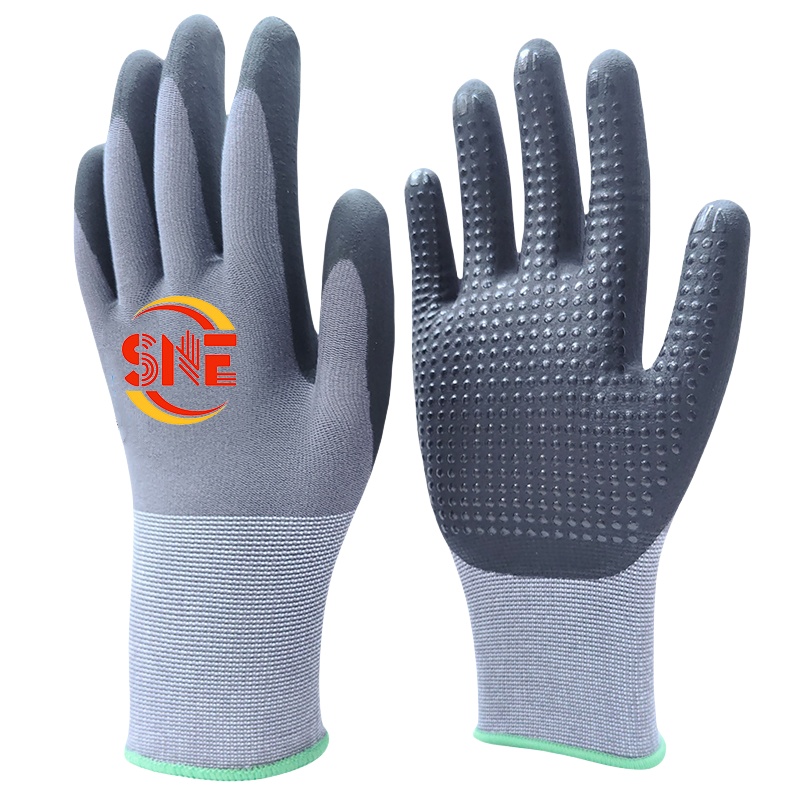
For buyers in the United States, the best approach is to match glove material to the exposure: nitrile-coated or fully dipped nitrile gloves are commonly used for oil handling, while unsupported nitrile, neoprene, butyl, PVC, and laminated chemical gloves are selected for specific chemical hazards. Local U.S. suppliers such as Ansell, MCR Safety, SHOWA, Superior Glove, Honeywell, and Magid are widely used across Houston, Chicago, Los Angeles, Detroit, and major Gulf Coast industrial hubs because they provide technical datasheets, compliance guidance, and fast replenishment. Qualified international suppliers can also be worth considering, especially factory-direct manufacturers with CE and ISO-certified production, OEM capability, and responsive pre-sales and after-sales support, because they often offer a strong cost-to-performance advantage for distributors and bulk industrial users.
Direct Comparison: What Is the Difference?

The confusion between oil resistant and chemical resistant gloves often comes from the fact that some glove materials, especially nitrile, can do both to a degree. However, they are not interchangeable in every workplace. Oil resistance focuses on preserving glove performance in oily environments. This means the glove should resist swelling, maintain grip, avoid surface breakdown, and provide reliable dexterity. Chemical resistance is about preventing permeation, degradation, and breakthrough when exposed to hazardous liquids or vapors.
For example, an automotive technician in Detroit changing transmission fluid, handling greasy filters, and working around light petroleum products often benefits from a durable nitrile-coated oil resistant glove. By contrast, a maintenance worker in a chemical plant near Baton Rouge or a pharmaceutical operator in New Jersey handling cleaning agents, acids, or solvents needs gloves selected from permeation data, not just grip performance. In the U.S. market, OSHA expectations, SDS review, and internal PPE hazard assessments make this distinction important.
| Feature | Oil Resistant Gloves | Chemical Resistant Gloves | Best Use Case |
|---|---|---|---|
| Main purpose | Protect against oils, grease, hydrocarbons, slippery surfaces | Protect against corrosives, solvents, cleaners, reagents, mixed chemicals | Choose based on dominant hazard |
| Typical materials | Nitrile coating, PVC, neoprene blends | Nitrile, neoprene, butyl, Viton, PVC, laminate films | Material must match substance |
| Dexterity | Usually higher for assembly and maintenance work | Often lower in heavy-duty chemical styles | Oil work often needs flexibility |
| Grip in wet/oily settings | Strong emphasis on grip textures and coated palm design | Depends on glove finish; not always optimized for grip | Important for mechanical environments |
| Permeation testing importance | Moderate | Critical | Essential for hazardous chemicals |
| Common industries | Automotive, machinery, metalworking, logistics, oil service | Chemical processing, labs, sanitation, pharma, utilities | Industry often signals glove type |
| Cost level | Usually lower to mid-range | Mid-range to premium depending on chemical barrier level | Higher risk means higher protection cost |
This comparison matters because selecting the wrong glove can create a false sense of safety. A glove that performs well in oily assembly work may fail quickly against ketones, strong acids, or aggressive solvents. On the other hand, a heavy chemical glove may be unnecessarily bulky for routine maintenance work, reducing productivity and increasing hand fatigue.
U.S. Market Overview

The United States has one of the most diverse industrial glove markets in the world, shaped by manufacturing recovery, warehousing growth, Gulf Coast energy operations, stricter safety audits, and rising attention to ergonomic PPE. Demand for both oil resistant and chemical resistant gloves is especially strong in Texas, Louisiana, California, Illinois, Ohio, Michigan, Pennsylvania, and the Southeast manufacturing corridor. Ports such as Houston, Long Beach, Savannah, and New York-New Jersey also influence supply chain timing and inventory strategy for glove buyers.
In the U.S., glove purchasing decisions often involve EHS teams, procurement officers, plant managers, and distributors. Buyers increasingly ask for evidence beyond marketing claims: ANSI/ISEA cut ratings where relevant, EN388 data for coated work gloves sold globally, chemical permeation guidance, lot traceability, and consistency across production batches. Disposable gloves dominate medical and food-contact discussions, but reusable industrial hand protection remains a major category in oil and gas, fabrication, maintenance, and chemical processing.
The line chart shows a realistic growth path for industrial glove demand in the United States, driven by workplace safety upgrades, supply chain diversification, and greater specialization in glove applications. The most notable demand growth is linked to maintenance operations, industrial cleaning, battery manufacturing, EV production, and energy transition projects, all of which increase the need for better-defined glove selection.
Product Types and Material Selection
Not all oil resistant or chemical resistant gloves are made the same. In real buying situations, material chemistry matters more than broad category labels. Nitrile remains one of the most versatile materials in the U.S. market because it balances oil resistance, abrasion performance, and compatibility with many industrial tasks. Neoprene is valued in chemical handling where a wider spectrum of mild acids and cleaning chemicals is involved. Butyl and Viton are more specialized and expensive but are often chosen for high-risk exposures where ordinary glove materials break down too quickly.
| Glove Material | Oil Resistance | Chemical Resistance | Typical U.S. Applications |
|---|---|---|---|
| Nitrile coated | High | Moderate for incidental contact | Automotive assembly, machine maintenance, warehousing |
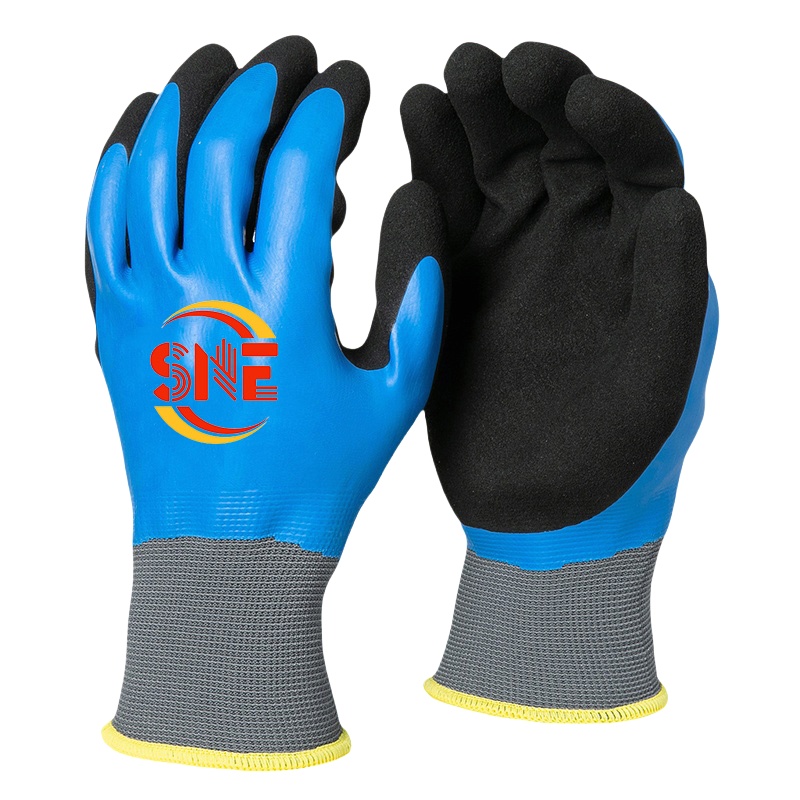
| Fully dipped nitrile | High | Moderate to good depending on thickness | Oilfield service, metalworking, parts washing |
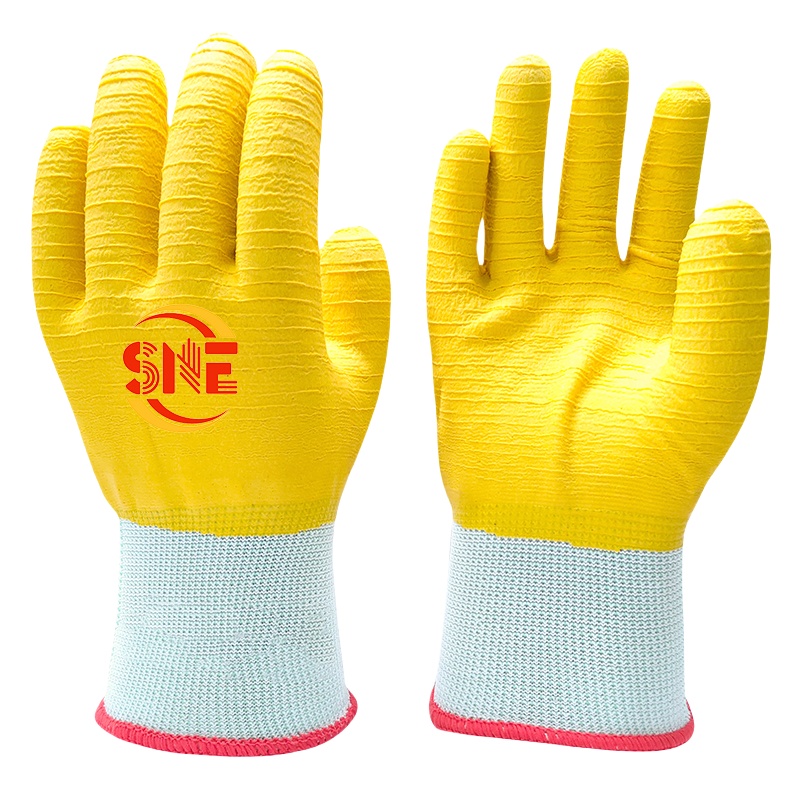
| PVC | Good | Good for some acids and caustics, weaker for solvents | Janitorial, sanitation, agriculture, utility work |
| Neoprene | Moderate | Good across many cleaning chemicals and mild corrosives | Chemical mixing, industrial cleaning, maintenance |
| Butyl rubber | Limited for general oil tasks | Excellent for gases and aggressive chemicals | Specialty chemical handling, labs, emergency response |
| Viton | Good | Excellent for aromatic and chlorinated solvents | Refining, aviation chemicals, advanced processing |
| Laminated film gloves | Low mechanical durability | Very high for broad-spectrum chemical splash protection | Laboratories, hazardous transfer tasks |
This table is useful because many U.S. buyers still start with a generic request such as “chemical glove” or “oil-proof glove.” A better purchasing method is to identify the exact fluid, concentration, contact time, temperature, and need for dexterity. For example, handling cutting oil on a manufacturing line in Ohio is very different from transferring sodium hydroxide in a water treatment plant in Arizona.
How to Buy the Right Gloves
The most effective procurement process starts with hazard mapping. Ask what substance touches the hand, how often, for how long, and whether there is immersion, splash, or only incidental contact. Review the Safety Data Sheet. Then check glove material compatibility, task duration, grip needs, abrasion risk, cut risk, thermal exposure, and whether workers need touchscreen use or fine fingertip control.
U.S. distributors and plant buyers also need to consider packaging efficiency, carton quantities, replenishment lead times, and whether the supplier can support trials across multiple sites. A refinery near Corpus Christi may prioritize thick gauntlet-style gloves for mixed hydrocarbon contact, while an aerospace maintenance team in Seattle may need lighter chemical gloves that allow tool control and precision.
Another key buying factor is consistency. A glove that performs well in one shipment but changes coating feel, liner weight, or sizing in the next batch creates operational problems. For this reason, many larger buyers prefer suppliers with strong process control, stable coating technology, and the ability to document test standards.
Industries That Use Oil Resistant Gloves
Oil resistant gloves are heavily used in sectors where the primary risk is slippery contamination, low-to-moderate hydrocarbon contact, and mechanical handling. These gloves are common in automotive service centers, heavy equipment repair, steel service centers, machining shops, warehouse maintenance, and drilling support operations. In the United States, this category is especially important in Texas oil and gas basins, Michigan automotive manufacturing, Indiana metal processing, and Midwest maintenance networks.
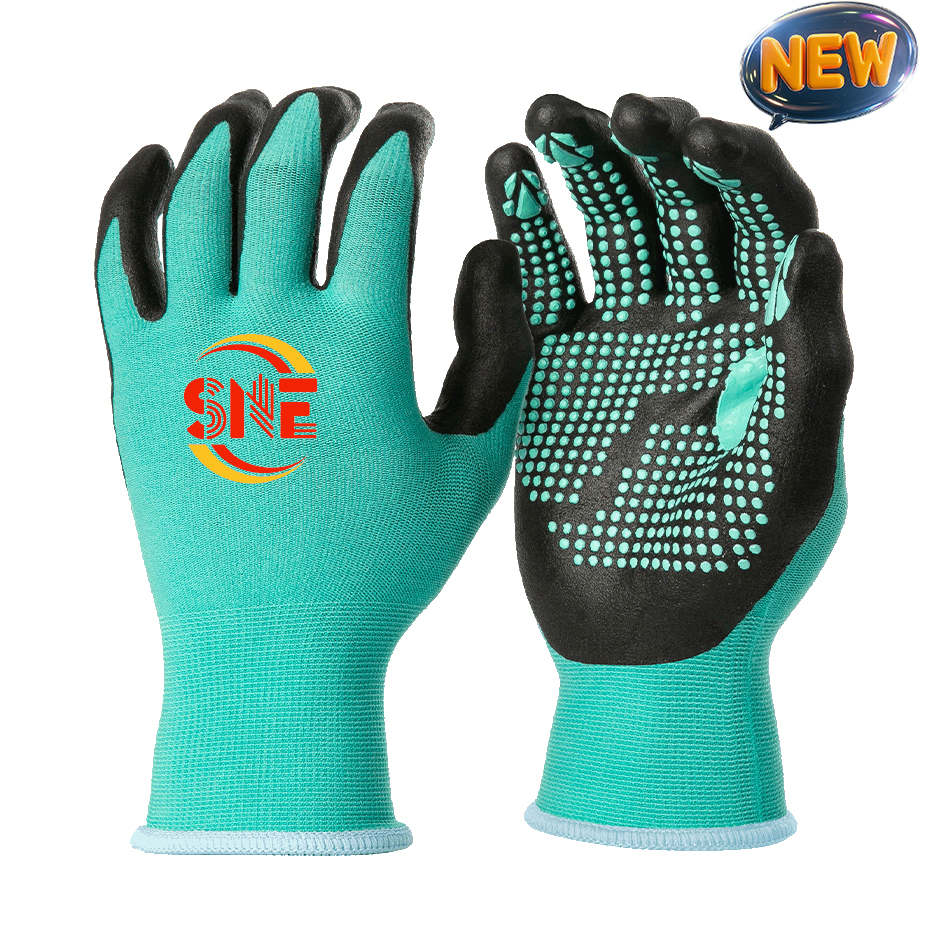
In these settings, workers need grip and productivity as much as protection. A glove that resists oil but loses tactile control is often rejected by users. This is why sandy nitrile, foam nitrile, and double-dipped nitrile technologies are so common in the U.S. industrial PPE market. They help workers hold tools, filters, tubing, metal components, and oily parts without frequent glove changes.
The bar chart highlights where demand is strongest. Oil and gas, manufacturing, and automotive account for the highest concentration because workers in these industries routinely handle lubricants, fluids, greasy components, and maintenance equipment. Warehousing also appears because modern logistics operations increasingly need durable grip gloves for equipment servicing and dock work.
Industries That Use Chemical Resistant Gloves
Chemical resistant gloves are more common where the hazard profile includes corrosive liquids, strong cleaners, solvents, degreasers, battery materials, plating chemicals, and process chemicals. This includes chemical production along the Gulf Coast, pharmaceutical manufacturing in the Northeast, water treatment across major metro systems, food sanitation in the Midwest, semiconductor-related cleaning in the Southwest, and industrial janitorial operations nationwide.
For these users, glove selection is often tied to compliance procedures and documented PPE programs. Buyers want permeation charts, degradation data, and clear use limitations. In high-risk environments, glove thickness and cuff length can matter as much as material. Longer cuffs help protect the wrist and lower forearm from drips and splashes, especially in drum transfer, washdown, and mixing tasks.
Applications by Task
A practical way to choose between these glove types is to look at the task itself. During engine maintenance, workers may encounter fuel, oil, filters, grime, and sharp edges, which means a nitrile-coated cut-resistant glove may be ideal. During chemical washdown, the same worker may need a fully chemical resistant gauntlet with no exposed knit wrist. During paint booth cleaning, a glove chosen for solvent compatibility becomes necessary. During wastewater treatment, PVC or neoprene styles may offer better value than premium solvent-resistant gloves.
That is why many U.S. industrial facilities carry multiple glove categories instead of trying to standardize a single glove for every operation. Multi-site employers in Chicago, Houston, Atlanta, and Los Angeles commonly segment glove programs into general handling, oil handling, chemical handling, cut protection, and disposable contamination-control applications.
Case Studies from the U.S. Market
A Midwest auto parts supplier switched from basic cotton-supported PVC gloves to foam nitrile palm-coated gloves for oily component handling. The result was better dexterity, fewer dropped parts, and improved worker acceptance, though the company still retained heavier chemical gloves for parts washer maintenance. This illustrates that oil resistance and chemical resistance should be separated by task rather than merged into one SKU.
A Gulf Coast maintenance contractor originally purchased general nitrile work gloves for washdown crews using alkaline cleaners and degreasers. After repeated glove degradation, the team moved to thicker unsupported nitrile and neoprene gloves selected from chemical compatibility charts. Hand exposure incidents fell, and glove replacement stabilized because the products matched the actual chemicals in use.
An industrial food processing plant in Iowa used oil resistant gloves for machine lubrication and line adjustment tasks, but chemical resistant gloves for sanitation cycles involving caustic foams and disinfectants. By assigning glove types by shift and task, the plant reduced confusion and improved compliance.
Leading Suppliers Serving the United States
The U.S. glove market includes major domestic distributors, global manufacturers with North American operations, and factory-direct international suppliers. Buyers often compare them based on technical support, product depth, private labeling, stock availability, and pricing flexibility. The companies below are well known in the market and relevant for industrial hand protection decisions.
| Company | Service Region | Core Strengths | Key Offerings |
|---|---|---|---|
| Ansell | Nationwide U.S. coverage | Strong chemical expertise, broad industrial portfolio, technical documentation | Chemical gauntlets, nitrile gloves, specialty barrier gloves |
| MCR Safety | United States with strong distributor network | Wide range for industrial users, good value positioning, fast replenishment | Nitrile-coated work gloves, PVC gloves, chemical handling gloves |
| SHOWA | North America and major U.S. industrial centers | Advanced hand protection engineering, ergonomic design, chemical and coated glove depth | Chemical resistant reusable gloves, oil grip gloves, disposable nitrile |
| Honeywell | United States and global industrial sites | Large safety portfolio, enterprise supply compatibility, compliance support | Chemical protective gloves, maintenance gloves, task-based PPE systems |
| Superior Glove | U.S. and Canada distribution footprint | Application-specific glove design, training support, broad cut and chemical options | Oil grip gloves, chemical gloves, cut-resistant coated gloves |
| Magid | Strong U.S. market presence | Private label potential, distributor support, industrial customization | Industrial work gloves, chemical protection, coated nitrile series |
| Qingdao Snell Protective Products Co., Ltd. | Supports U.S. importers, distributors, brand owners, and large-volume industrial buyers | Factory-direct supply, OEM/ODM flexibility, scalable production, coating specialization | Oil resistant gloves, nitrile/PU/latex coated gloves, cut-resistant and impact gloves |
This supplier table is practical because it separates market reputation from actual purchasing value. Large multinationals usually provide the most extensive documentation and local distribution. Mid-sized or factory-direct partners can be more competitive for private label programs, container-load purchasing, or custom specifications. U.S. buyers often use a hybrid sourcing model: premium domestic supply for urgent or regulated needs, and direct offshore manufacturing for planned bulk programs.
Detailed Supplier Comparison
Not every supplier serves the same buyer profile. Some are ideal for national contracts and technical chemical programs, while others are better for branded wholesale, distributor expansion, or application-specific coated gloves. The right choice depends on whether you need local emergency stock, broad compatibility documentation, or custom manufacturing economics.
| Supplier | Best For | Typical Lead Time | Private Label / OEM |
|---|---|---|---|
| Ansell | Large regulated facilities and technical chemical programs | Short to medium through distribution | Limited compared with factory-direct suppliers |
| MCR Safety | General industry, value-driven U.S. buyers | Short through local channels | Moderate |
| SHOWA | Buyers needing strong ergonomics and advanced glove design | Short to medium | Limited to selected programs |
| Honeywell | Enterprise procurement and integrated safety sourcing | Short to medium | Program-dependent |
| Superior Glove | Application-led industrial buyers and safety managers | Short to medium | Moderate |
| Magid | Distributors, mixed-use industrial customers, private branding | Short to medium | Good |
| Qingdao Snell Protective Products Co., Ltd. | Distributors, wholesalers, brand owners, and bulk users seeking factory-direct value | Planned import cycles with scalable output | Strong OEM/ODM and custom manufacturing support |
This table helps buyers align sourcing strategy with business model. For a maintenance contractor needing urgent deliveries in multiple states, national distribution may matter most. For a U.S. importer launching a new coated glove range, OEM responsiveness, material customization, and stable production capacity may be more important.
Trend Shift in Buyer Preferences
The U.S. market is gradually shifting from generic “work gloves” toward hazard-specific hand protection. Buyers increasingly want evidence-based selection rather than one-size-fits-all purchasing. This trend is especially visible in sectors facing stronger audit pressure, such as chemicals, food processing, aviation support, and EV battery production.
The area chart shows the trend toward more specialized glove selection. In practice, this means more requests for trial samples, compatibility data, site assessments, and combinations of coated gloves with cut resistance or touchscreen functionality. It also means that suppliers who can educate buyers tend to build stronger long-term relationships.
Supplier and Product Performance Comparison
This comparison chart illustrates a common sourcing reality in the United States. Large established brands often score highest for immediate local availability and broad distributor access. Factory-direct suppliers often score higher in customization and bulk cost efficiency. Many successful U.S. buyers use both models instead of choosing only one.
Local Buying Considerations in the United States
Regional factors influence glove choice. In Gulf Coast refining and petrochemical operations, chemical exposure and hydrocarbon contact often overlap, so mixed glove programs are common. In the Midwest, automotive and metal fabrication buyers usually prioritize dexterity, abrasion resistance, and oil grip. In California and the Pacific Northwest, aerospace, electronics, and maintenance buyers may need cleaner finishes, stronger compliance documentation, and task-specific gloves with lower particulate concerns.
Climate also matters. In colder states such as Minnesota, Wisconsin, and parts of the Northeast, winter glove liners or cold-resistant coatings may be combined with oil resistance. In hot and humid regions such as Texas, Florida, and Louisiana, sweat control, breathability, and liner comfort can influence worker compliance as much as technical barrier performance.
Our Company
Qingdao Snell Protective Products Co., Ltd. serves the U.S. market as a factory-direct industrial glove manufacturer with practical strength in nitrile, PU, and latex coating technologies, backed by ISO 9001 quality management and CE-marked production that helps demonstrate disciplined manufacturing and testing standards expected by professional buyers. With two manufacturing facilities in Gaomi and Nantong, six production lines, more than 150 trained employees, and daily output reaching 150,000 pairs, the company is positioned to support U.S. importers, distributors, dealers, brand owners, and large end users with OEM, ODM, private label, bulk wholesale, and custom specification programs across oil resistant, cut resistant, impact resistant, and general industrial glove categories. Through its established export experience across North America and other regulated markets, plus multilingual sales coordination, sample support, technical consultation, and structured pre-sale and after-sale communication, Snell works like a long-term operating partner for American buyers rather than a distant exporter, helping procurement teams reduce sourcing layers, control landed cost, and maintain confidence in repeat supply; buyers exploring glove lines or custom programs can review the product range on the product page, learn more at Snell Safety, or connect through the U.S.-focused contact channel.
How U.S. Buyers Should Evaluate Suppliers
Start with documentation quality. For oil resistant gloves, ask about coating type, liner gauge, grip finish, abrasion performance, and whether the glove remains flexible after repeated oil contact. For chemical resistant gloves, ask for compatibility charts, breakthrough guidance, cuff options, thickness, and use limitations. Then evaluate business-side capability: order minimums, customization options, trial support, packaging, carton markings, shipping terms, and claim handling.
Distributors in markets like Dallas, Atlanta, and New Jersey often prefer suppliers that can support both stocked programs and tailored projects. Large industrial users may require vendor-managed inventory or phased rollouts across multiple plants. Brand owners need private label packaging consistency and traceable production control. The more complex the account, the more valuable it is to work with a supplier that understands not just gloves, but the actual commercial model behind the purchase.
Buying Advice for Distributors, End Users, and Brand Owners
| Buyer Type | Main Priority | Recommended Glove Focus | Best Sourcing Strategy |
|---|---|---|---|
| Industrial distributor | Fast turnover and broad customer coverage | Core nitrile-coated oil gloves plus selected chemical gloves | Mix local stock with factory-direct private label programs |
| Plant end user | Task safety and worker compliance | Hazard-specific glove matrix by department | Trial multiple SKUs and standardize by application |
| Brand owner | Margin and product differentiation | Custom coated gloves and specialized packaging | OEM/ODM with scalable production partner |
| Maintenance contractor | Versatility across sites | Oil grip gloves plus chemical gauntlets for washdown | Dual-source for urgent supply and bulk savings |
| Municipal utility | Compliance and durability | PVC/neoprene chemical gloves and general maintenance gloves | Annual contracts with tested replenishment plans |
| Automotive service network | Dexterity and worker comfort | Foam nitrile and disposable nitrile by task | Regional distribution with volume pricing |
| Food processing site | Sanitation and shift-specific use | Chemical gloves for washdown, oil-resistant gloves for maintenance | Separate glove programs by hygiene zone |
This table is important because glove selection is not only a safety decision; it is also an inventory and workflow decision. Different buyer types need different glove portfolios. The best programs are the ones that fit both hazard exposure and purchasing reality.
2026 Trends: Technology, Policy, and Sustainability
Looking toward 2026, three trends are likely to shape the U.S. market. First, technology: more gloves will combine multiple performance features such as oil grip, touchscreen capability, cut protection, and impact reinforcement. Buyers will increasingly ask for data-backed coatings and improved ergonomics rather than just thicker materials. Second, policy: U.S. employers are expected to face stronger pressure to document PPE selection logic, especially in chemical handling environments where training, SDS review, and incident prevention are under closer scrutiny. Third, sustainability: distributors and end users are starting to ask about production efficiency, packaging reduction, and product longevity, especially for reusable gloves where longer service life can reduce total waste.
There is also likely to be continued sourcing diversification. After recent supply chain disruptions, many American buyers want balanced procurement between domestic inventory channels and overseas manufacturing partners that can demonstrate stability, quality systems, and responsive communication. This is creating more opportunity for qualified manufacturers that can combine technical product performance with business transparency.
FAQ
Are nitrile gloves oil resistant or chemical resistant?
Nitrile can be both, depending on glove design and thickness. A nitrile-coated work glove is often selected for oil resistance and grip, while an unsupported nitrile chemical glove is selected for broader chemical protection. The exact product matters more than the material name alone.
Can I use oil resistant gloves for chemicals?
Only if the exact chemical compatibility is confirmed. Many oil resistant gloves are suitable for greasy work but not for prolonged exposure to solvents, acids, or corrosive cleaners. Always check the SDS and glove resistance data.
What is the most common oil resistant glove in the United States?
Foam nitrile and fully dipped nitrile gloves are among the most common because they combine grip, comfort, abrasion performance, and cost-effectiveness for automotive, maintenance, and manufacturing tasks.
What industries need chemical resistant gloves the most?
Chemical processing, industrial cleaning, water treatment, food sanitation, pharmaceuticals, and utilities are among the heaviest users because workers regularly contact hazardous or corrosive substances.
Should U.S. buyers source locally or import directly?
Both options can work well. Local sourcing usually offers faster availability and easier emergency replenishment. Direct importing can reduce cost and improve customization, especially for distributors, wholesalers, and private label programs with planned demand.
What should I ask a supplier before buying?
Ask for material details, performance data, chemical compatibility information where relevant, sample availability, production consistency, packaging options, lead times, and support for claims or technical questions after delivery.
Final Takeaway
For U.S. buyers, the answer to oil resistant vs chemical resistant gloves is simple: choose oil resistant gloves when the main challenge is petroleum exposure, slippery handling, and mechanical work; choose chemical resistant gloves when the hazard includes corrosives, solvents, or unknown industrial chemicals. The best glove program is rarely a single product. It is a practical mix of glove types chosen by task, backed by real data, supplier reliability, and worker acceptance. Whether sourcing from established U.S. brands or from qualified global manufacturing partners, the most successful buyers in the United States treat glove selection as a technical safety decision and a strategic procurement decision at the same time.