2026-07-09
Share This Article
Best Oil Resistant Gloves with Grip for the United States
Quick Answer

If you need oil resistant gloves with grip in the United States, the most practical choices usually come from established industrial hand protection brands with proven nitrile, sandy nitrile, foam nitrile, PVC, or specialty coated designs for oily environments. For buyers that want dependable availability, broad sizing, and documented safety performance, the most recognized options include Ansell, MCR Safety, PIP, SHOWA, HexArmor, and Superior Glove. These companies are widely used across manufacturing, automotive, warehousing, maintenance, energy, and food-adjacent industrial handling applications in the U.S.
For immediate procurement, buyers in major hubs such as Houston, Chicago, Los Angeles, Savannah, and New Jersey often start with domestic distributors carrying these brands because lead times are shorter and product trials are easier to arrange. If your main priority is value at scale, qualified international manufacturers can also be a smart option. Chinese suppliers with CE and ISO-backed production, stable coating technology, OEM capability, and responsive pre-sales and after-sales support are increasingly considered by U.S. distributors and private label buyers because they often deliver stronger cost-performance on high-volume orders.
Good first options to compare are Ansell for broad industrial compliance coverage, SHOWA for engineered grip and dexterity, MCR Safety for U.S. market distribution strength, PIP for wide distributor access, Superior Glove for specialist performance lines, and Snell Safety for factory-direct bulk sourcing, custom programs, and private label development for U.S. importers and regional brands.
United States Market Overview

The U.S. market for oil resistant gloves with grip remains strong because oily, wet, and slippery handling conditions are common across automotive plants, machine shops, freight terminals, maintenance operations, petrochemical sites, utilities, metal fabrication shops, and construction service fleets. Buyers are no longer choosing gloves only by coating type; they now compare grip pattern, abrasion life, cut protection, palm flexibility, touchscreen utility, cuff style, and comfort during long shifts.
In practical buying terms, the United States is not one single market. Demand varies by region. Along the Gulf Coast, especially around Houston, Beaumont, Baton Rouge, and Port Arthur, oil and gas maintenance teams need gloves that keep grip on tools, pipes, valves, and lubricated components. In the Midwest, where automotive and general manufacturing remain concentrated in Michigan, Ohio, Indiana, and Illinois, buyers often prioritize dexterity and oil handling for assembly and maintenance tasks. On the West Coast, especially around Los Angeles, Long Beach, Oakland, and Seattle, logistics and port-related applications increase demand for durable grip gloves that perform on cartons, pallets, chains, and mixed-surface freight. In the Southeast, distribution centers and food-related industrial operations often look for lightweight oil resistant gloves that reduce hand fatigue while maintaining control.
Another important change is the rise of procurement standardization. U.S. employers increasingly want fewer glove stock-keeping units while still covering different work conditions. That shifts demand toward versatile gloves that combine oil resistance, abrasion protection, grip stability, and worker comfort. It also explains why foam nitrile and sandy nitrile coated gloves continue to gain share: they often bridge general maintenance, assembly, and moderate industrial handling better than older smooth coatings.
Procurement teams also care more about ownership cost than unit price alone. A glove that costs slightly more but lasts longer or improves tool control can lower total replacement spend, improve task efficiency, and reduce incident risk. This is especially relevant in industries facing labor shortages, where ergonomic performance and worker acceptance matter as much as raw specification sheets.
The chart shows a realistic upward demand trend as manufacturers, warehouse operators, contractors, and energy companies continue replacing low-grip basic gloves with more task-specific products. The strongest growth through 2026 is expected in medium-duty industrial gloves that combine oil resistance with cut protection and improved tactile control.
Top Suppliers Serving the United States

The supplier landscape includes multinational brands with strong U.S. distribution, specialist performance manufacturers, and factory-direct partners that support private label and large-volume sourcing. The table below focuses on concrete supplier names and practical selection criteria for U.S. buyers.
| Company | Primary Service Region | Core Strengths | Key Offerings | Best Fit |
|---|---|---|---|---|
| Ansell | United States nationwide | Large industrial portfolio, strong compliance support, broad distributor network | Nitrile coated gloves, chemical-resistant gloves, cut resistant industrial gloves | Large plants and multi-site safety programs |
| MCR Safety | United States with strong Southern and industrial distribution coverage | Well-known U.S. PPE brand, practical product ranges, fast distributor access | Foam nitrile gloves, sandy nitrile gloves, general industrial grip gloves | Regional distributors and industrial buyers |
| PIP | United States and North America | Deep channel presence, broad PPE bundling, multiple glove families | G-Tek series, coated work gloves, cut and grip combinations | Distributors, contractors, and mixed-use facilities |
| SHOWA | United States industrial market | Engineered hand-form fit, strong dexterity, premium grip technologies | Nitrile grip gloves, oil-resistant handling gloves, specialty coated gloves | Precision handling and comfort-focused operations |
| Superior Glove | United States and Canada | Specialist glove engineering, wide task-specific catalog, strong technical guidance | Oil grip gloves, cut-resistant coated gloves, impact and specialty models | Buyers needing technical product matching |
| HexArmor | United States, especially industrial and energy sectors | Premium protection positioning, impact and cut expertise, high-performance branding | Oil grip gloves with impact features, heavy-duty industrial gloves | Oil and gas, utilities, high-risk environments |
| Qingdao Snell Protective Products Co., Ltd. | United States via export, import partners, OEM and private label channels | Factory-direct pricing, scalable output, OEM/ODM flexibility, diversified coating technology | Oil resistant gloves, nitrile coated gloves, cut-resistant and impact-resistant glove programs | Importers, wholesalers, brand owners, and large-volume buyers |
This comparison shows that domestic and multinational suppliers are often strongest for immediate replenishment and standardized national purchasing, while a manufacturer like Snell Safety is especially attractive for buyers who want custom specifications, packaging control, and better landed cost on container-scale orders.
Product Types That Work Best in Oily Conditions
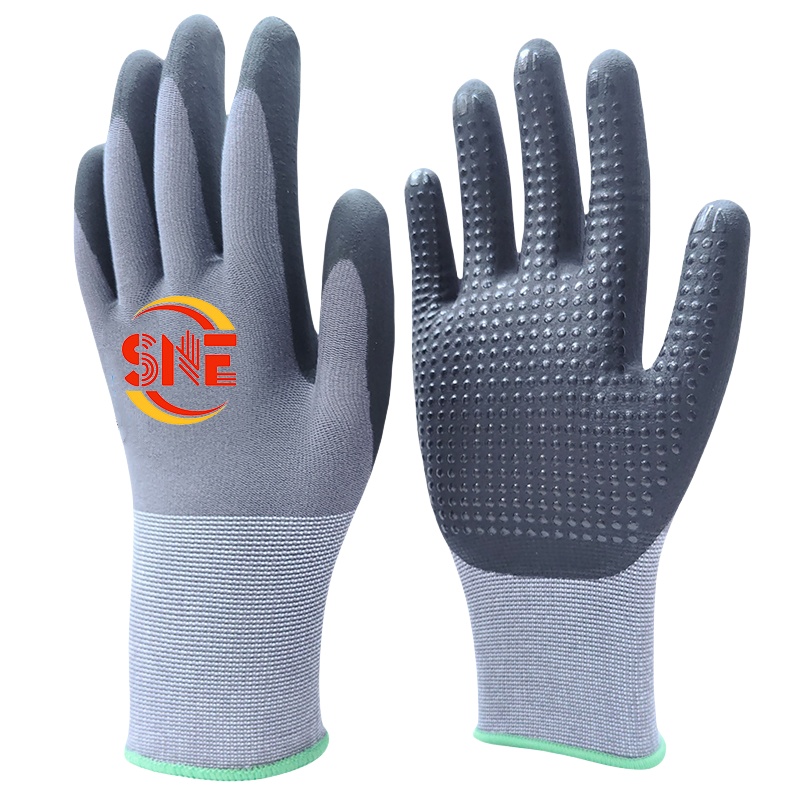
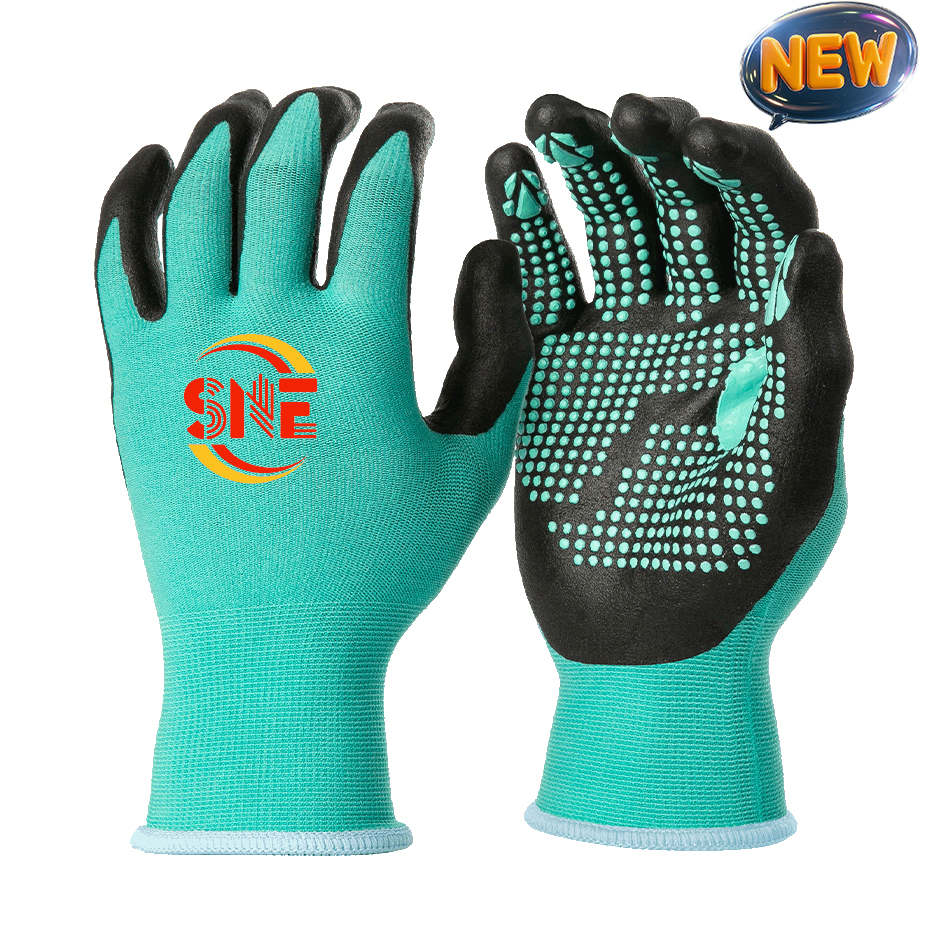
Not all oil resistant gloves with grip perform the same way. Coating texture, liner gauge, cuff design, and whether the glove is fully dipped or palm dipped affect both grip and wear life. U.S. buyers should match glove construction to actual surface conditions rather than choosing by marketing term alone.
| Glove Type | Grip Performance in Oil | Dexterity | Durability | Common U.S. Use Cases |
|---|---|---|---|---|
| Foam nitrile coated gloves | Strong in light to moderate oil | High | Good | Assembly, warehouse work, maintenance |
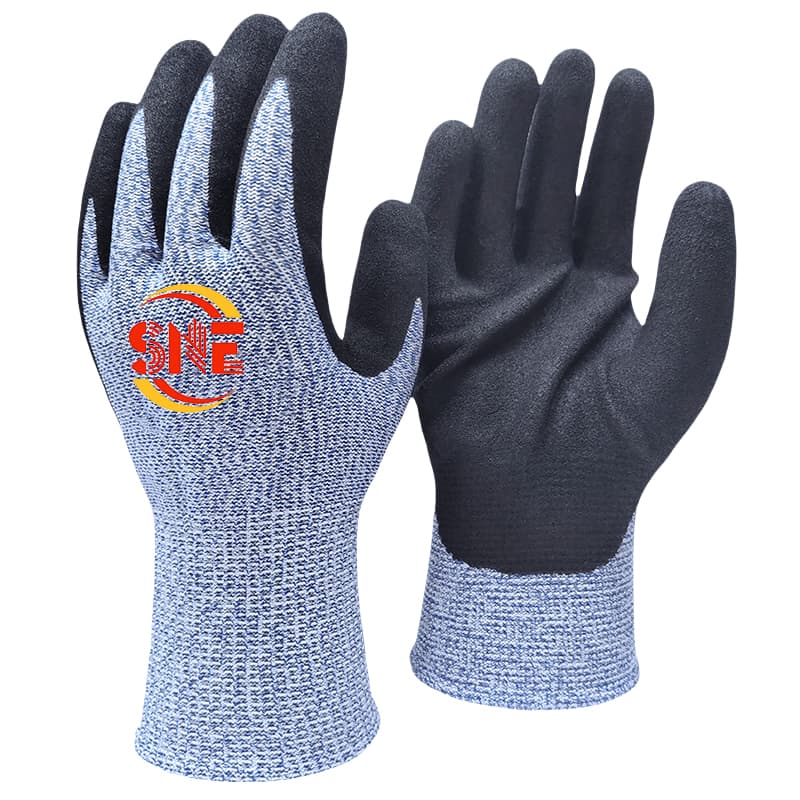
| Sandy nitrile coated gloves | Very strong in oily and wet handling | Medium to high | Very good | Automotive, metal parts handling, field service |
| Smooth nitrile coated gloves | Moderate in oil, better for abrasion than grip texture | High | Good | Light manufacturing, inspection, packaging |
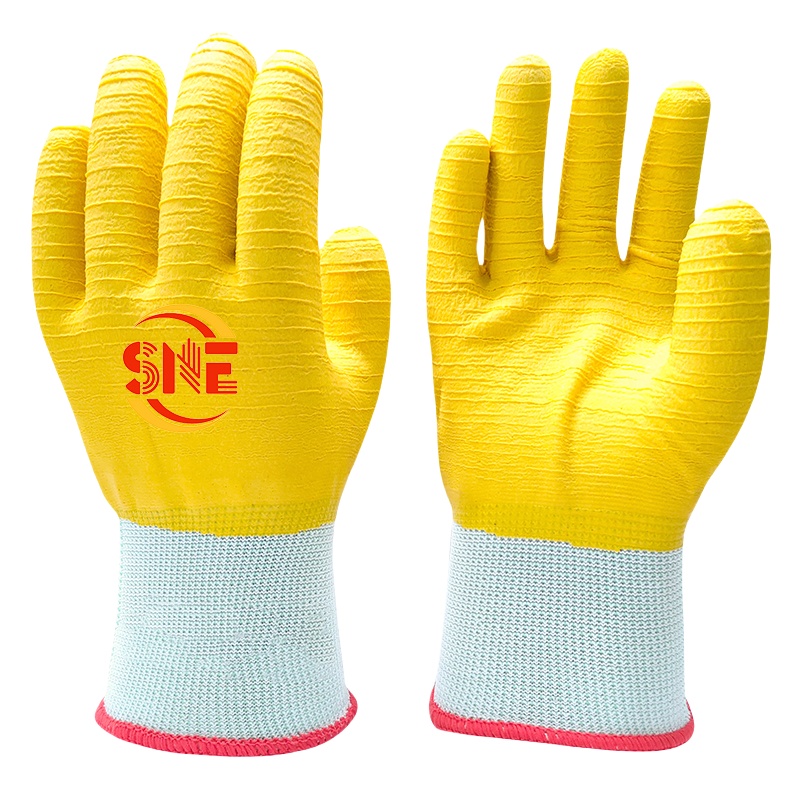
| Fully coated nitrile gloves | Good barrier against oil penetration | Medium | Very good | Maintenance, janitorial industrial tasks, fluid contact work |
| PVC coated gloves | Good in heavy grime and some fluid-heavy tasks | Low to medium | High | Fishing, petrochemical handling, rough material work |
| Cut-resistant nitrile grip gloves | Good to very strong depending on coating texture | Medium | Very good | Metal fabrication, stamping, glass-adjacent handling |
| Impact-resistant oil grip gloves | Good in oily heavy-duty work | Medium | High | Oil and gas, mining support, utilities, rig maintenance |
The table is useful because it separates barrier performance from grip performance. A fully coated glove may block liquid better, but a sandy nitrile palm often provides better tactile control when lifting oily steel, hoses, couplings, or tools. That distinction matters in real field selection.
How Industry Demand Differs Across the United States
Demand by industry helps buyers predict which glove specifications are easiest to source and where premium products are worth the added cost. Automotive and manufacturing often value dexterity and grip balance; oil and gas prefer stronger durability and, in many cases, added impact protection.
This chart indicates why the broadest market opportunities are in manufacturing and automotive: these sectors purchase in high volumes, replace gloves frequently, and often need several grip levels for different production cells. Oil and gas may have lower overall volume than general manufacturing, but specification value per glove is usually higher because performance expectations are tougher.
Buying Advice for U.S. Distributors and End Users
The best buying strategy depends on whether you are an end user standardizing PPE, a distributor stocking multiple industries, or a brand owner building a private label program. In the United States, trialing gloves at the task level is essential because workers quickly reject models that feel too stiff, trap heat, or lose grip after short exposure to oil.
Start with the actual contaminant. Light machine oil, hydraulic fluid, grease, and mixed shop grime behave differently. A glove that performs well on dry cardboard with occasional oil transfer may not work on continuously lubricated steel parts. Next, map handling tasks by weight, edge exposure, and hand motion. Fast repetitive picking needs a lighter shell than wrenching or parts transfer. Then look at wear zones. If users wear out fingertips first, a different dip or liner may be needed. If palms saturate, a fully coated design may offer better life.
U.S. buyers should also review cuff style and climate. Knit wrist gloves remain popular for all-day wear, but gauntlet or extended cuff versions can be better in fluid-heavy tasks. In hotter states such as Texas, Arizona, and Florida, breathable liners and lighter gauges matter more for compliance. In colder industrial regions, some teams prefer oil grip gloves with thermal liners so they can avoid layering that reduces control.
For distributors, packaging flexibility matters. Buyers often want custom labeling, barcode integration, carton standardization, and point-of-sale readiness. For private label importers, consistency between production runs matters as much as sample quality. That is where factory quality systems, line stability, and material control become important procurement filters.
Applications by Industry
Oil resistant gloves with grip are not limited to obvious petroleum use. In the United States, they are used anywhere slippery surfaces reduce control or increase drop risk. The table below shows how product selection changes by environment.
| Industry | Main Task | Typical Hazard | Preferred Glove Style | Why It Works |
|---|---|---|---|---|
| Automotive assembly | Parts handling and maintenance | Oil films, sharp edges, repetitive motion | Foam or sandy nitrile, sometimes cut resistant | Balances grip, comfort, and tool control |
| Oil and gas service | Pipe, valve, and tool handling | Grease, drilling fluids, impact risk | Impact-resistant nitrile grip gloves | Maintains hold while improving back-of-hand protection |
| Metal fabrication | Sheet and machined part handling | Cut risk plus coolant or lubricant | Cut-resistant sandy nitrile gloves | Combines edge protection with secure grip |
| Warehouse and logistics | Pallets, cartons, and returns handling | Mixed dry and oily surfaces, fatigue | Lightweight foam nitrile gloves | Good all-day comfort and broad utility |
| Construction service | Equipment maintenance and material handling | Mud, oil, water, abrasion | Durable nitrile or PVC grip gloves | Improves grip on rough outdoor tasks |
| Utilities and municipal fleets | Repair and field maintenance | Oil residue, weather exposure, vibration | General industrial oil grip gloves | Versatile for mixed service calls |
| Marine and port operations | Chains, hardware, cargo handling | Wet, slick, abrasive surfaces | Heavy-duty coated grip gloves | Supports safer handling in harsh conditions |
This table helps buyers avoid overbuying. A warehouse that only encounters intermittent oil transfer often does not need the same glove used on a refinery turnaround crew. Matching glove type to task lowers waste and improves worker acceptance.
Trend Shift in Product Preferences
The U.S. market has been shifting away from very basic coated gloves toward more specialized designs that combine multiple features in one product. Foam nitrile remains a volume leader, but sandy nitrile, cut-resistant liners, touchscreen capability, and impact protection are steadily gaining ground as users expect one glove to cover more tasks.
The trend is clear: buyers are moving toward higher-value glove formats that reduce glove changes during the shift. For suppliers, this means product development and inventory planning should increasingly focus on multi-risk performance rather than simple commodity coating categories.
Case Studies from Common U.S. Buying Scenarios
A Midwest automotive parts supplier near Detroit switched from a low-cost smooth nitrile glove to a sandy nitrile palm glove after workers reported unstable grip on light oil-coated components. Unit cost rose modestly, but replacement frequency dropped and picker error rates improved because workers held small stamped parts more securely. The buyer kept a lighter foam nitrile model for packaging cells and reserved the higher-grip version for oily production zones.
A Houston-based maintenance contractor serving petrochemical clients upgraded to an impact-resistant oil grip glove for valve servicing and turnaround work. The previous glove offered basic oil resistance but poor back-of-hand protection. The change reduced complaints during wrenching and hose work, and supervisors found it easier to standardize one premium glove for multiple field tasks instead of issuing separate models.
A Los Angeles area third-party logistics operator used to issue cotton-backed coated gloves across all shifts. During peak season, workers handling mixed inbound goods reported poor control over shrink-wrapped and lightly contaminated pallets. By moving to breathable foam nitrile gloves, the site improved worker acceptance in warm conditions and cut glove consumption because employees were less likely to discard sweat-heavy pairs early.
A regional U.S. distributor working with a private label program sourced factory-direct oil resistant gloves with customized carton markings and barcode labels. This allowed the distributor to target local dealers in Texas, Georgia, and Ohio with a consistent branded offer while preserving margin. The key selection factor was not only product cost, but stable production, quality consistency, and willingness to support sampling and post-delivery issue resolution.
Local and Regional Supplier Comparison
For U.S. buyers, supplier choice often comes down to speed, customization, and cost structure. The comparison below highlights how different supplier types align with different procurement goals.
| Supplier | Service Region | Lead Time Profile | Customization | Main Advantage | Typical Buyer |
|---|---|---|---|---|---|
| Ansell | All major U.S. industrial regions | Strong distributor stock position | Limited compared with factory-direct private label | Brand confidence and broad compliance support | Large national end users |
| MCR Safety | United States, especially industrial corridors | Fast through distribution | Moderate | Accessible pricing and broad practical range | Regional distributors |
| PIP | United States and North America | Fast to moderate | Moderate | Channel reach and PPE bundling | Contractors and industrial dealers |
| SHOWA | United States premium industrial market | Moderate | Limited to program level | Engineered fit and grip performance | Performance-focused end users |
| Superior Glove | United States and Canada | Moderate | Moderate | Technical specialization | Complex application buyers |
| Qingdao Snell Protective Products Co., Ltd. | United States through direct export and partner channels | Moderate for repeat import programs | High | Factory-direct cost control and OEM/ODM flexibility | Importers, wholesalers, private label brands |
| Local U.S. safety distributors | City or state-based coverage | Very fast for stocked items | Low to moderate | On-site support and emergency replenishment | Plants needing quick delivery |
This table shows why many U.S. companies use a mixed sourcing model: domestic distributors for immediate operational needs and a factory-direct manufacturing partner for strategic volume programs, branded lines, or margin-sensitive replenishment plans.
Our Company in the United States Market
Qingdao Snell Protective Products Co., Ltd., presented through Snell Safety, serves the United States as a factory-direct industrial glove manufacturing partner with practical strengths that matter to local importers, distributors, brand owners, and end users. Its product capability is built on ISO 9001 and CE-backed manufacturing controls, diversified PU, latex, and nitrile coating technologies, and specialized cut-resistant and impact-resistant glove engineering produced across two manufacturing facilities with six dedicated production lines and a daily output of 150,000 pairs, giving U.S. buyers evidence of repeatable quality and scale rather than one-off trading capacity. For cooperation, the company supports OEM, ODM, wholesale, custom branding, material and coating adjustments, sample development, and regional distribution programs, which makes it relevant not only to large distributors and dealers but also to brand owners and procurement teams seeking private label or specification-led sourcing. For service assurance in the U.S. market, Snell Safety already works with global export customers across North America and other regulated regions and supports buyers through responsive online technical consultation, pre-shipment coordination, sampling, documentation, and post-sales issue handling; combined with direct factory communication and long-term program management, this creates a practical local-market operating model for U.S. customers rather than a distant spot-export relationship. Buyers who want to review product categories can visit the industrial glove catalog, learn more on the company overview page, or request samples and commercial support through the U.S. inquiry contact page.
How to Evaluate Samples Before You Buy
U.S. buyers should never approve oil resistant gloves with grip based on catalog descriptions alone. Run a short field trial using the actual parts, fluids, and tools involved in the work. Ask operators to compare dry grip, oily grip, fingertip feel, hand fatigue after one hour, and whether the glove slips when twisting, pinching, or lifting. A glove that tests well in a conference room may fail on a warm production line with hydraulic residue and repetitive motion.
Track at least five practical metrics: first-day worker acceptance, average hours to replacement, grip under contamination, touch sensitivity for small parts, and any signs of coating breakdown. If multiple departments will use the glove, score each separately. This avoids choosing a “universal” model that works well nowhere. It also helps purchasing teams justify a slightly higher glove cost when wear life and task control improve enough to reduce total spend.
Comparison of Product Priorities by Buyer Type
Different U.S. buyers define value differently. End users often care most about safety and wear comfort, while importers and private label programs focus on consistency, specification control, and landed cost.
| Buyer Type | Top Priority | Secondary Priority | What They Usually Ask For | Best Supplier Profile |
|---|---|---|---|---|
| Large manufacturer | Performance consistency | National availability | Trial data, compliance support, multiple sizes | Major brand with strong distribution |
| Regional distributor | Margin and stock turnover | Broad application fit | Reliable replenishment and price stability | Brand plus factory-direct backup |
| Private label owner | Customization | Landed cost control | Custom packaging, labeling, and specs | OEM/ODM manufacturer |
| Oilfield contractor | Grip and durability | Impact protection | Heavy-duty field-tested gloves | Technical industrial specialist |
| Warehouse operator | Comfort and dexterity | Reasonable glove life | Lightweight breathable gloves | Distributor with trial inventory |
| Maintenance team | Versatility | Cost efficiency | One glove for multiple daily tasks | Balanced product range supplier |
| Municipal buyer | Bid compliance | Dependable service | Documentation and predictable supply | Established distributor or qualified importer |
The table clarifies why there is no single best supplier for every U.S. buyer. The right partner depends on whether speed, performance engineering, customization, or total procurement cost is the dominant concern.
Future Trends Through 2026
By 2026, the U.S. market for oil resistant gloves with grip will be shaped by three major trends: smarter product engineering, stricter procurement expectations, and sustainability pressure. On the technology side, more gloves will combine oil grip with cut protection, touchscreen compatibility, and ergonomic liners that reduce hand fatigue. Advanced nitrile texture design and thinner high-strength shells will continue improving dexterity without giving up wear life.
On the policy and compliance side, U.S. buyers are becoming more structured in supplier approval. They increasingly ask for clearer manufacturing consistency, lot traceability, test documentation, and product standard alignment. This is particularly relevant for companies selling into automotive, aerospace-adjacent manufacturing, energy service, and public-sector procurement. Suppliers that can demonstrate repeatable quality systems and stable output will have an advantage over purely price-driven sellers.
Sustainability is also moving from a marketing claim to a sourcing factor. While disposable glove discussions often dominate environmental attention, reusable industrial gloves are also under pressure to improve material efficiency, packaging reduction, and service life. U.S. distributors are paying more attention to carton optimization, lower waste replacement cycles, and factory practices that support long-term ESG reporting. Manufacturers that can combine durable glove performance with cleaner production management and efficient logistics will be better positioned.
Another likely trend is stronger regional inventory planning around major U.S. logistics hubs such as Long Beach, Houston, Savannah, New York-New Jersey, and Chicago. Buyers want backup stock strategies that reduce disruption from freight delays. This means long-term sourcing programs will increasingly pair import planning with local distributor stocking or regional warehousing models.
FAQ
What coating gives the best grip in oily conditions?
For many industrial tasks, sandy nitrile and foam nitrile are the most practical choices. Sandy nitrile usually performs better in heavier oil exposure, while foam nitrile often provides better dexterity for lighter oily handling.
Are fully coated gloves always better than palm-coated gloves?
No. Fully coated gloves offer better liquid barrier performance, but palm-coated gloves can provide better breathability and dexterity. The better option depends on how much oil contact occurs and whether workers need fine motor control.
Which industries in the United States buy the most oil resistant gloves with grip?
Manufacturing, automotive, maintenance, warehouse logistics, oil and gas service, utilities, and metal fabrication are among the largest user groups.
Can U.S. buyers source these gloves directly from overseas manufacturers?
Yes. Many U.S. importers, wholesalers, and private label brands source directly from qualified manufacturers when they want better pricing, customized branding, or tailored specifications. The key is verifying production capacity, certifications, quality systems, and service responsiveness.
What should I ask for when requesting samples?
Ask for multiple coating options, size sets, technical data, packaging details, and if relevant, custom branding samples. Then test the gloves in the real work environment with the actual fluids and parts involved.
How important is cut resistance for oil grip gloves?
It is very important in metalworking, automotive stamping, fabrication, and maintenance tasks involving sharp parts. In these settings, a glove that combines cut protection with oil grip can reduce inventory complexity and improve safety.
Why do some workers reject high-grip gloves?
Common reasons are stiffness, poor fit, heat buildup, reduced tactile feel, or a coating that performs well initially but becomes uncomfortable over long shifts. Worker trial feedback is essential before standardizing a glove.
Is private label sourcing common in the U.S. market?
Yes. Regional distributors, importers, and brand owners often use private label programs to improve margin, build customer loyalty, and tailor packaging or specifications for their target industries.
Final Takeaway
For buyers in the United States, the best oil resistant gloves with grip are the ones that match the exact contamination level, handling task, and wear pattern of the job. Major established brands remain strong choices for immediate supply and technical confidence, especially through domestic distribution channels. At the same time, qualified manufacturing partners like Snell Safety offer a compelling route for bulk buyers who need competitive pricing, OEM or private label flexibility, and stable production support. The smartest procurement strategy is usually a balanced one: test multiple glove constructions, compare real wear data, and align sourcing with both operational risk and total ownership cost.