2026-09-24
Share This Article
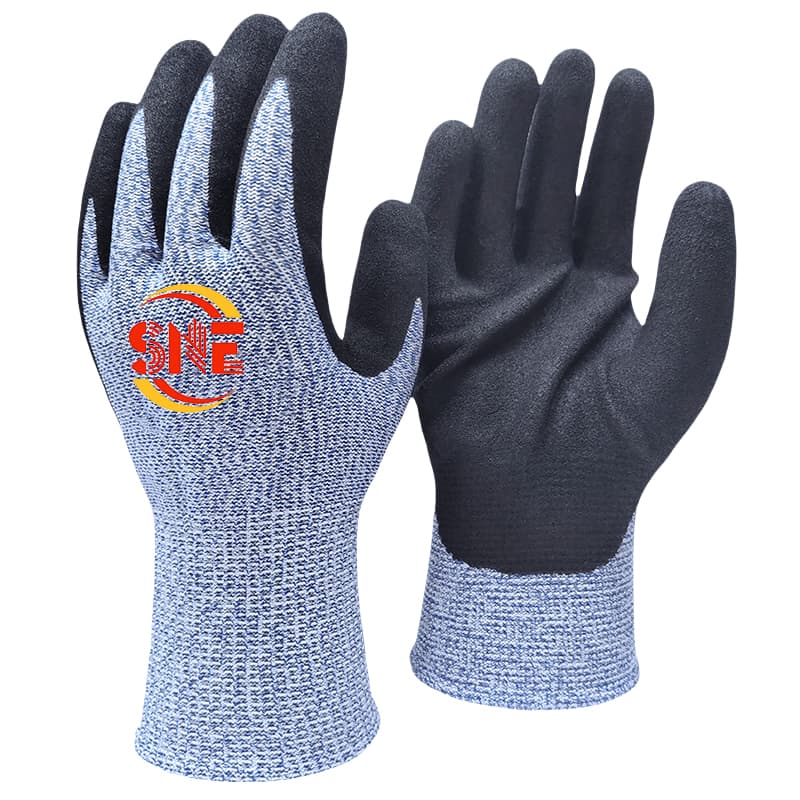
Best Oil Resistant Gloves for Auto Mechanics in USA
Quick Answer

If you need oil resistant gloves for auto mechanics in the United States, the most practical choices are nitrile-coated work gloves for general repair, disposable nitrile gloves for fluid changes and detailing, and cut-resistant oil-grip gloves for heavy parts handling. For local sourcing, companies such as Grainger, Fastenal, Magid, Global Industrial, and Uline are among the most accessible suppliers for workshops, fleet service centers, and dealership service departments across major markets like Chicago, Houston, Los Angeles, Atlanta, and Newark. For branded hand protection, Ansell, Mechanix Wear, MCR Safety, HexArmor, and SHOWA are widely used in automotive maintenance because they combine grip, abrasion resistance, dexterity, and chemical splash performance.
For most US auto shops, the best buying path is to match gloves to the actual task: thin disposable nitrile for oil changes and brake fluid work, foam nitrile-coated knit gloves for engine repair and parts handling, and impact or cut-resistant oil-resistant gloves for undercar work and industrial fleet maintenance. Buyers focused on bulk value should also consider qualified international manufacturers that already supply North America with recognized certifications and responsive technical support, especially Chinese producers that can offer strong cost-performance advantages without sacrificing consistency when they have documented QA systems, export experience, and dependable pre-sales and after-sales support.
Why Oil Resistant Gloves Matter in US Auto Repair

Auto mechanics in the United States work in environments where petroleum oils, transmission fluid, grease, coolants, solvents, metal edges, and vibrating tools come together in a single shift. That combination makes ordinary fabric gloves a poor choice. Once soaked, non-specialized gloves lose grip, trap contaminants, and can increase hand fatigue. The right oil resistant glove helps maintain control when loosening filters, handling brake parts, replacing CV axles, or moving greasy components from a bench to a lift bay.
In busy service corridors such as Detroit, Dallas-Fort Worth, Charlotte, Phoenix, and the Inland Empire, workshop managers increasingly standardize glove programs by task. This reflects a broader shift in the US market: buyers no longer ask only whether a glove resists oil; they ask how it performs after repeated contact with lubricants, whether it still allows touchscreen use on diagnostic tablets, whether the coating stays flexible in cooler winter service bays, and how quickly replacements can be delivered through regional distribution hubs. In ports and logistics gateways such as Los Angeles/Long Beach, Savannah, Houston, and New York/New Jersey, supply continuity has become almost as important as glove performance itself.
Oil resistant gloves also support compliance and workforce retention. Mechanics are more likely to wear gloves consistently when the glove is breathable, sized correctly, and does not reduce dexterity during fine tasks such as clip removal, wiring work, or sensor installation. A glove program that aligns protection with comfort lowers waste, improves buy-in from technicians, and reduces hand exposure to fluids that can dry or irritate skin over time.
US Market Snapshot

The United States remains one of the largest and most mature markets for automotive hand protection, driven by independent repair shops, dealer service departments, collision repair centers, fleet garages, heavy-duty truck maintenance facilities, and aftermarket parts warehouses. Demand is strongest where vehicle density, fleet activity, and industrial transport overlap. States such as California, Texas, Florida, Illinois, Georgia, Ohio, and Pennsylvania generate steady glove demand because they combine dense population centers with large automotive service networks.
The market is also becoming more segmented. Quick-lube chains may prioritize disposable nitrile gloves with fast replenishment and low cost per unit, while diesel and municipal fleet workshops often choose reusable cut-resistant nitrile-coated gloves with stronger abrasion performance. EV service adds another layer, pushing some buyers toward gloves that combine grip and dexterity for precision work rather than only heavy oil protection.
The chart above shows a realistic demand index trajectory for oil resistant gloves in US automotive applications. Growth is supported by stricter shop safety standards, higher technician glove adoption, increased parts handling intensity, and broader use of nitrile-coated and task-specific gloves across service chains and fleets.
Top Suppliers Serving the United States
The supplier landscape in the United States includes national distributors, specialist PPE brands, industrial catalog houses, and factory-direct overseas manufacturers with North American buyers. For mechanics, the most useful suppliers are those that combine broad size availability, repeatable inventory, and product categories suitable for both light-duty and heavy-duty service work.
| Company | Service Region | Core Strengths | Key Offerings | Best Fit |
|---|---|---|---|---|
| Grainger | Nationwide US, strong in major metro and industrial zones | Fast fulfillment, deep industrial catalog, branch network | Nitrile-coated gloves, cut-resistant gloves, disposable nitrile gloves | Multi-site repair groups and MRO-driven buyers |
| Fastenal | Nationwide US with local branch support | Local stocking programs, vending integration, B2B account support | Shop gloves, coated grip gloves, chemical-resistant disposable gloves | Fleet garages and service chains |
| Magid | Nationwide US from industrial distribution centers | PPE specialization, private label options, safety consultation | Grip gloves, cut-resistant gloves, mechanic task gloves | Workshops wanting PPE-focused sourcing |
| Uline | Nationwide US with strong warehouse logistics | Rapid shipping, broad operational supply range | Disposable nitrile gloves, general maintenance gloves | Quick-lube, warehouse-attached shops, operations buyers |
| Global Industrial | Nationwide US e-commerce and contract supply | Competitive online procurement, broad industrial selection | Oil-grip gloves, nitrile-coated gloves, disposable gloves | Mid-size shops and procurement teams |
| MSC Industrial Supply | Nationwide US, especially manufacturing-adjacent regions | MRO expertise, industrial account management | Mechanic gloves, abrasion-resistant gloves, nitrile hand protection | Industrial maintenance and mixed automotive facilities |
This table highlights suppliers that are practical for US buyers because they already operate across major industrial and automotive corridors. Grainger and Fastenal stand out for branch-based service and account management, while Magid is particularly useful for buyers that want PPE guidance rather than just catalog ordering. Uline and Global Industrial fit buyers that prioritize ordering speed and centralized procurement.
Leading Glove Brands for Auto Mechanics
Beyond distribution, US buyers often choose by brand because technicians quickly develop preferences around fit, cuff style, grip feel, and coating durability. The brands below are commonly considered in automotive maintenance and repair.
| Brand | Main Product Focus | Oil Resistance Level | Dexterity | Typical Automotive Use |
|---|---|---|---|---|
| Ansell | Industrial and disposable hand protection | High across nitrile ranges | High | Fluid handling, assembly, service tasks |
| Mechanix Wear | Mechanic task gloves and impact styles | Moderate to high depending on model | High | General repair, tools, underhood work |
| SHOWA | Coated work gloves and chemical-resistant designs | High | High | Oily parts handling, maintenance, parts washing |
| MCR Safety | Industrial work gloves with value focus | Moderate to high | Medium to high | Shop operations, warehouse, parts movement |
| HexArmor | Premium cut and impact protection | High | Medium | Heavy-duty repair, fleet, sharp components |
| PIP | Broad PPE portfolio and coated glove ranges | High in nitrile-coated ranges | High | Mixed shop work and contract supply |
The brands in this table serve different workshop priorities. Ansell and SHOWA are often chosen when fluid exposure and tactile control matter most. Mechanix Wear is popular where technician acceptance is essential because the fit and style feel familiar to service staff. HexArmor is often selected for higher-risk tasks involving sharp sheet metal, suspension parts, or heavy truck service.
Product Types That Work Best for Mechanics
Not every oil resistant glove performs the same way in an auto shop. The best category depends on whether the user is changing oil, tearing down engines, servicing brakes, handling greasy inventory, or managing mixed MRO tasks. In practical procurement, buyers usually standardize two or three glove types instead of trying to solve every use case with one model.
| Glove Type | Construction | Main Advantage | Main Limitation | Recommended Use |
|---|---|---|---|---|
| Disposable nitrile gloves | Single-use nitrile, unsupported | Excellent chemical and fluid barrier, tactile control | Limited cut and abrasion resistance | Oil changes, detailing, fluid service, inspections |
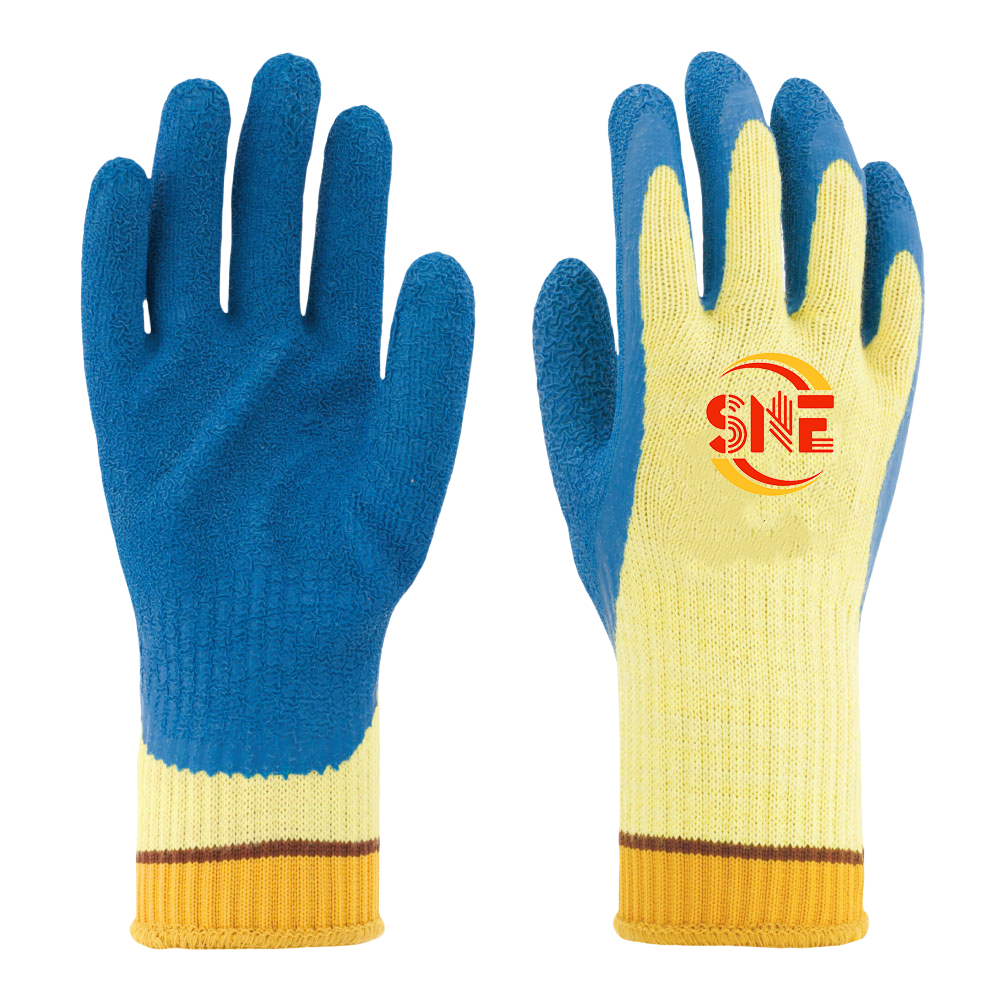
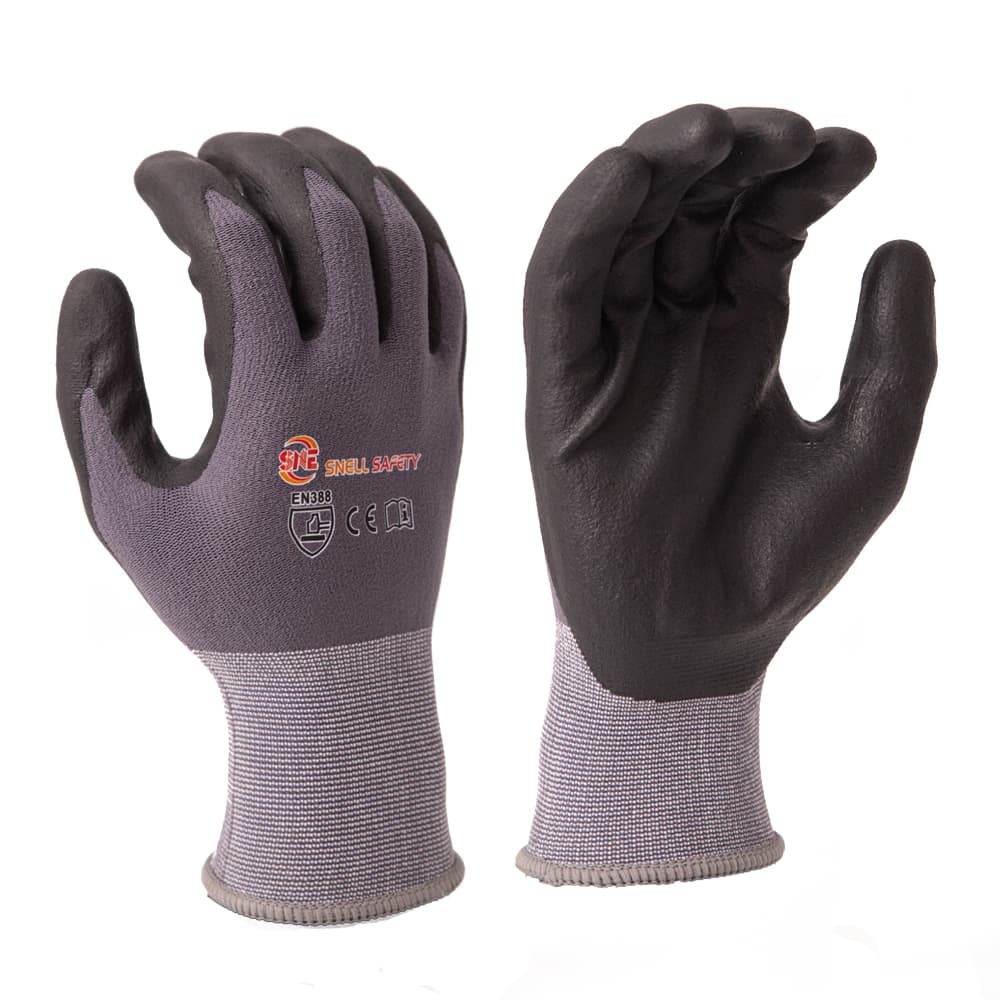
| Foam nitrile-coated knit gloves | Seamless liner with foam nitrile palm | Strong grip on oily parts, breathable, comfortable | Not ideal for immersion or harsh solvents | General repair, parts handling, assembly |
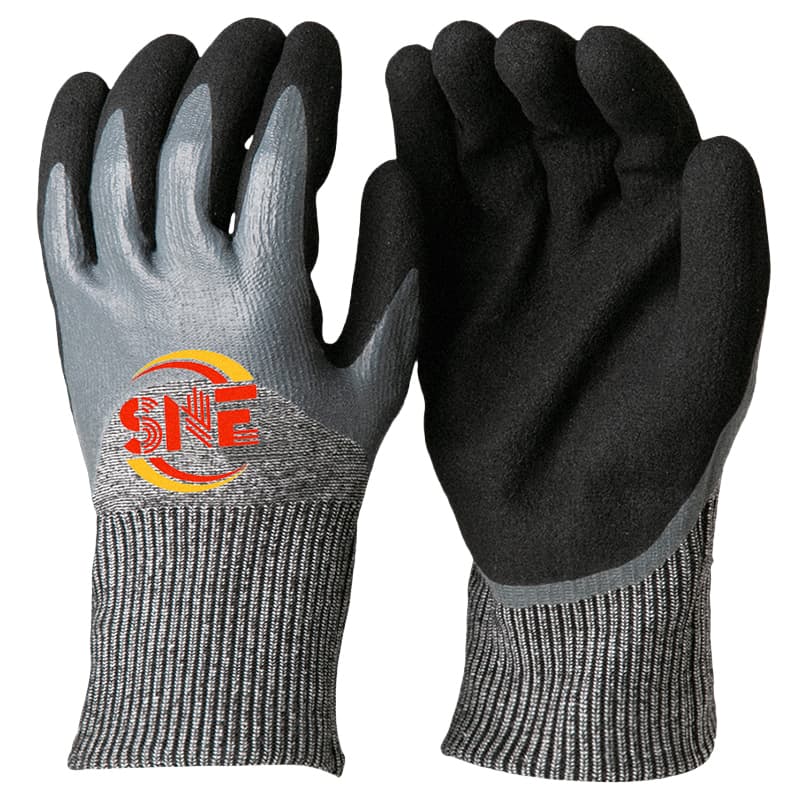
| Fully nitrile-coated gloves | Knit base with full nitrile coating | Better liquid repellency and longer wear | Lower breathability than palm-coated styles | Heavy oil contact, wet maintenance tasks |
| Cut-resistant nitrile-coated gloves | HPPE or engineered fiber liner with nitrile coating | Oil grip plus blade and edge protection | Higher unit cost | Brake work, sheet metal, drivetrain components |
| Impact-resistant oil-grip gloves | Coated glove with TPR back protection | Hand impact protection in rough service environments | Reduced fine dexterity | Fleet, diesel, heavy equipment, undercar service |
| Hybrid mechanic gloves | Synthetic leather or fabric with reinforced palm | Comfort and tool handling | Oil saturation can shorten life if coating is limited | Light mechanical tasks and mobile service |
For most US buyers, foam nitrile-coated gloves are the everyday workhorse because they balance grip, comfort, and cost. Disposable nitrile remains essential for fluid contact and cleanliness, while cut-resistant oil-grip gloves should be added where hand injuries from edges and burrs are common. The strongest programs treat these as complementary categories rather than substitutes.
Industry Demand by Automotive Segment
Different automotive segments consume different glove types and volumes. Quick-lube operators use high volumes of disposable nitrile, while collision repair and heavy-duty truck service often use more reusable coated gloves.
The bar chart shows how demand is spread across automotive service types. Independent repair remains the largest segment because of the sheer number of local shops across the United States, while fleet, dealership, and heavy truck maintenance create stable institutional demand with repeat purchasing patterns.
How to Choose the Right Oil Resistant Gloves
The first step is to define the exposure type. Splash contact with used motor oil is different from full-hand contact with greasy suspension parts, and both differ from short contact with cleaners or parts-washer fluids. If the job centers on fluids, barrier protection matters most. If it centers on parts handling, grip and abrasion resistance dominate. If it combines both, a coated glove plus disposable inner glove program may make sense.
Second, review liner gauge and coating texture. A thinner gauge improves dexterity for spark plugs, clips, electrical connectors, and scanning tools. A thicker liner may improve durability but can reduce precision. Smooth nitrile coatings can repel fluid well but may not grip oily surfaces as confidently as foam or sandy nitrile textures. In workshops that handle oily rotors, filters, pulleys, and hoses all day, surface texture has a measurable impact on safety and productivity.
Third, check sizing range and wearer acceptance. A technically strong glove that technicians dislike will end up unused. Good programs test at least two styles across multiple bays before rolling out. Buyers should also examine cuff length, touchscreen capability, color-coding by task, laundering or replacement cycle, and compatibility with climate conditions in places from humid Florida to cold Midwest winters.
Fourth, verify certifications and testing relevance. For US buyers, importer documentation, product consistency, and test alignment matter. Cut levels, abrasion performance, and basic quality management practices should be available and explainable, especially for larger tenders. If the supplier offers technical data sheets and batch traceability, that is a positive sign for professional workshop adoption.
Applications Across the Workshop
In an automotive workshop, oil resistant gloves are used far beyond simple oil changes. They support engine work, brake service, steering and suspension repair, transmission handling, inventory movement, and cleanup operations. In service departments attached to dealers, gloves are used during inspections and warranty work where technicians shift quickly between touchscreens, tools, and customer vehicles. In independent garages, the same glove may see parts receiving in the morning and drivetrain repair in the afternoon.
Warehouse-linked automotive distributors also use oil resistant gloves when picking, packing, and moving lubricated or residue-covered parts. In logistics hubs such as Memphis, Louisville, and New Jersey warehouse clusters, coated gloves improve grip on cartons and parts bins while keeping hands cleaner. In fleet depots, gloves are essential for nighttime maintenance windows where technicians must work quickly and safely under less forgiving conditions.
Trend Shift in Product Preferences
US buyers are gradually shifting from basic general-purpose gloves to more task-specific products. The strongest growth is in coated gloves that combine grip with cut resistance, followed by better breathable nitrile coatings and touchscreen-compatible models.
The area chart reflects a realistic increase in task-specific glove adoption. Workshops are moving away from one-size-fits-all procurement because technicians now expect better comfort and management wants fewer slips, cleaner handling, and measurable PPE compliance.
Local Buying Considerations in the United States
Service level matters as much as glove performance. In the US, a supplier that can replenish from regional warehouses near Chicago, Dallas, Atlanta, Los Angeles, or the Port of New York/New Jersey provides a practical advantage. Auto shops rarely want to carry excessive stock, so predictable lead times and fill rates are crucial. Buyers should ask whether the supplier supports blanket orders, local stocking, branch pickup, vending integration, or scheduled replenishment.
Regional climate and sector mix also shape buying decisions. Gulf Coast buyers may focus more on sweat management and grip in humid conditions. Upper Midwest workshops may prefer coatings that remain flexible in cold service bays. California and Northeast buyers may pay more attention to sustainability disclosures and packaging waste, while Texas fleet buyers often prioritize durability and account-level supply continuity.
Case Studies from US Workshop Scenarios
A multi-bay independent repair group in suburban Chicago switched from low-cost cotton-dipped gloves to foam nitrile-coated gloves for general repairs and disposable nitrile for oil and coolant contact. Over a quarter, technicians reported better grip on oily filters and fewer mid-task glove changes. The owner also found that glove usage became easier to forecast because each bay used the same two-glove system.
A municipal fleet workshop in Texas serving light trucks, vans, and maintenance vehicles moved to cut-resistant nitrile-coated gloves for undercar and brake service after repeated minor hand injuries from rusty edges and components. Although the unit cost increased, the workshop reduced interrupted jobs and improved technician acceptance because the chosen model preserved enough dexterity for handheld diagnostic tools.
A dealer service center in Southern California adopted touchscreen-compatible oil-grip gloves for fast-moving inspection and repair lanes. The goal was to reduce glove removal when switching between physical work and tablets. The result was not just cleaner workflow but more consistent glove use, especially during routine service procedures where staff previously removed gloves to complete digital checklists.
Supplier Comparison by Procurement Priorities
This comparison chart shows why many US buyers now combine domestic distribution with factory-direct sourcing strategies. National distributors score strongly on availability and regional service, while factory-direct programs often win on bulk value and customization. The most effective procurement model can include both: local supply for immediate demand and direct factory programs for planned volume purchases.
Detailed Supplier Analysis
| Supplier | Service Regions | Core Strengths | Key Offerings | Buying Notes |
|---|---|---|---|---|
| Grainger | US nationwide, strong metro coverage | Fast branch fulfillment, industrial purchasing support | Disposable nitrile, nitrile-coated, cut-resistant gloves | Best for buyers needing speed and account structure |
| Fastenal | US branches near industrial and fleet markets | Local stocking, vending, account-managed service | Maintenance gloves, coated gloves, PPE programs | Strong for fleets and recurring usage accounts |
| Magid | Nationwide, PPE-centric distribution | Safety expertise, custom/private label capability | Oil-grip gloves, mechanic gloves, cut-resistant models | Useful when buyer wants technical glove guidance |
| Ansell | Served through US distribution channels | Recognized nitrile expertise, broad performance portfolio | Disposable nitrile, industrial coated gloves | Premium brand option for performance-led buyers |
| Mechanix Wear | US-wide through retail and industrial channels | Technician acceptance, fit, task-oriented designs | Mechanic gloves, specialty work gloves | Strong choice where comfort drives compliance |
| SHOWA | US industrial supply channels | Advanced coatings, chemical and oil handling strength | Nitrile-coated gloves, liquid-resistant designs | Well suited to oily parts and wet shop tasks |
| HexArmor | US industrial and safety distribution | Cut and impact protection, premium engineering | High-risk service gloves, reinforced grip gloves | Better for heavy-duty and injury-reduction programs |
This table is useful because it separates channel strength from glove specialization. A distributor may be best for fast replenishment, but a brand may be best for specific performance needs. Many successful workshop programs buy through a distributor while standardizing on one or two preferred glove brands.
Our Company
For US buyers evaluating factory-direct options, Snell Safety presents a practical route for oil resistant glove programs because its product platform is built around nitrile, PU, and latex coating technologies, supported by ISO 9001 quality management and CE-marked production standards that help demonstrate disciplined process control, repeatable testing, and export-ready documentation. With two manufacturing facilities, six production lines, more than 150 skilled employees, and daily capacity reaching 150,000 pairs, the company can support bulk supply for distributors, service chains, private-label programs, and regional dealers while also handling OEM and ODM customization across coating types, sizes, branding, and application-specific designs. Its track record supplying Europe, North America, Australia, the Middle East, Russia, South America, and Southeast Asia shows real operational experience with demanding overseas markets, and that matters for US importers who need consistency rather than spot buying. For customers in the United States, the company’s market commitment is reflected through ongoing export service to North American buyers, multilingual sales support, sample provision, technical consultation, documented production oversight, and dedicated logistics coordination that helps protect lead times and landed-cost planning. Buyers seeking long-term partnerships can review its manufacturing background on the company page, explore relevant coated glove lines through the product catalog, and arrange direct commercial discussion through the US inquiry contact channel for bulk procurement, private label development, or regional distribution planning.
Buying Advice for Distributors and Workshops
Distributors should avoid evaluating gloves only on unit price. Cost per wear is the more useful metric for reusable coated gloves, and usage-per-job is the better metric for disposable gloves. In oily automotive environments, a glove that lasts longer and maintains grip can reduce accidental drops, replacement frequency, and technician frustration. Workshops should also consider whether glove color helps identify contamination, whether touchscreen use matters in the bay, and whether the glove can be standardized across multiple service locations.
Brand owners and private-label buyers should focus on coating consistency, carton marking accuracy, and lot traceability. If the supplier offers custom packaging, barcode labeling, and stable production windows, rollout across multiple US states becomes easier. Regional dealers should look for partners that can support mixed-container programs or phased replenishment rather than pushing only single large-volume shipments.
For individual mechanics and small garages, local availability often outweighs customization. Purchasing through national distributors or specialist industrial retailers makes sense when jobsite demand is unpredictable. However, once glove consumption becomes stable, direct supply or distributor contract pricing can produce meaningful savings.
Industries Beyond Auto Repair
Although the main focus is automotive mechanics, oil resistant gloves are also used in related sectors that overlap with vehicle service operations. Warehousing teams use them when handling lubricated parts and returns. Manufacturing maintenance crews use them during machine servicing. Oil and gas support contractors use similar glove specifications for tools and equipment. Agricultural equipment service, mining support, transit maintenance, and municipal public works all share the same core requirement: maintain grip and hand protection when surfaces are oily or greasy.
This crossover matters for procurement because a fleet operator with both automotive and industrial assets may be able to consolidate hand protection across departments. Doing so can improve bargaining leverage and simplify training if the gloves meet the right mix of oil resistance, abrasion performance, and dexterity.
Future Trends Through 2026
Several trends are likely to shape the US market through 2026. First, coatings will continue to improve, especially micro-foam and sandy nitrile textures that offer better grip without adding excessive bulk. Second, sustainability pressure will grow. Buyers in the United States are increasingly asking about packaging reduction, longer service life, and manufacturing practices that reduce waste. Third, policy and compliance expectations will continue to elevate documentation, especially for institutional buyers and large multi-site service chains.
Technology is also changing expectations. Touchscreen-friendly fingertips, improved liner blends for breathability, and hybrid designs that combine cut resistance with all-day flexibility are gaining traction. Data-driven procurement will expand too, especially where vending machines or branch-managed inventory track glove consumption by technician or bay. The result will be more precise buying and more frequent switching away from generic low-cost gloves that do not hold up in real shop conditions.
Another notable trend is sourcing diversification. Many US companies now want a mix of domestic stocking partners and qualified overseas manufacturers. This reduces disruption risk and gives buyers better leverage on pricing, customization, and lead times. Suppliers that can combine technical documentation, reliable production scale, and responsive support will be best positioned in this environment.
FAQ
What are the best oil resistant gloves for auto mechanics?
For most automotive repair tasks, foam nitrile-coated gloves are the best reusable option because they provide strong grip on oily parts and good dexterity. Disposable nitrile gloves are best for oil changes, fluid handling, and clean inspection work. Cut-resistant nitrile-coated gloves are preferred for sharper, heavier parts.
Are nitrile gloves better than latex for automotive oil work?
Yes, in most cases nitrile is the better choice for automotive oil and grease exposure. It generally offers better resistance to petroleum-based substances and is the dominant material in both disposable mechanic gloves and many coated industrial gloves used in the US market.
Should a repair shop buy disposable or reusable gloves?
Most shops need both. Disposable nitrile is ideal for fluid contact and contamination control, while reusable nitrile-coated gloves are more cost-effective for general repair, parts handling, and repeated tool use. A two-category glove program usually delivers the best result.
How often should oil resistant gloves be replaced?
Disposable gloves should be replaced after contamination, tearing, or task changes. Reusable coated gloves should be replaced when the coating loses grip, the liner frays, or fluid penetration starts to affect comfort and safety. Tracking replacement by task can help reduce waste.
What should distributors ask a factory-direct glove supplier?
Distributors should ask about coating technology, production capacity, quality systems, export experience to North America, carton customization, labeling, lead times, sample policy, and support for private label or regional distribution. Documentation and consistency are as important as price.
Do oil resistant gloves work for EV service too?
Yes, especially for general handling, maintenance, and non-electrical service tasks. However, buyers should not confuse oil resistance with electrical insulation. EV service programs may need separate glove categories depending on the specific job and safety protocol.
Final Takeaway
For buyers in the United States, the best oil resistant gloves for auto mechanics are those matched precisely to workshop tasks, sourced through reliable supply channels, and supported by clear technical documentation. Local distributors such as Grainger, Fastenal, Magid, Uline, and Global Industrial are strong options for immediate procurement, while brands such as Ansell, SHOWA, Mechanix Wear, MCR Safety, PIP, and HexArmor remain relevant across different repair environments. For larger-volume buyers, qualified factory-direct suppliers with established export performance, quality certifications, and professional support can offer a compelling advantage, especially when cost control, customization, and stable replenishment matter just as much as glove performance on the shop floor.