2026-06-23
Share This Article
Oil and Grease Resistant Gloves in the United States
Quick Answer

If you need oil and grease resistant gloves in the United States, the most practical choice is to match the glove coating and liner to the hazard: nitrile-coated gloves for oily assembly and automotive work, fully dipped nitrile or PVC gloves for heavier petroleum contact, and cut-resistant nitrile gloves for metal handling with lubricants. For buyers seeking proven supply options, major U.S.-relevant names include Ansell, Superior Glove, MCR Safety, SHOWA, PIP, and Magid. These suppliers are widely used across industrial hubs such as Houston, Chicago, Los Angeles, Detroit, and Atlanta because they offer reliable safety documentation, multiple sizes, and strong distributor networks. Qualified international suppliers can also be a smart option, especially for importers, distributors, and private-label programs. Manufacturers with recognized certifications, stable production capacity, and responsive pre-sales and after-sales support can offer strong cost-performance advantages for bulk orders in the U.S. market.
United States Market Overview

The United States remains one of the largest and most demanding markets for hand protection, especially in sectors where workers regularly handle lubricants, fuels, cutting fluids, hydraulic oils, greasy machinery parts, and chemical residues. Demand is strongest in manufacturing belts around the Midwest, energy and petrochemical corridors near Houston and the Gulf Coast, logistics centers in California and Texas, and automotive supply chains linked to Detroit, Tennessee, Ohio, and the Carolinas. In these environments, gloves that can maintain grip under slick conditions while preserving dexterity are not optional; they directly affect worker safety, productivity, and product handling quality.
Oil and grease resistant gloves are not a single product category. U.S. buyers often source different glove constructions depending on whether the real priority is liquid repellency, abrasion resistance, cut protection, touch sensitivity, impact resistance, or all of these at once. This is why procurement teams rarely choose based on price alone. They compare coating technology, ANSI cut levels, grip design, cuff length, ergonomic fit, wash performance, and consistency across large purchase volumes. In practice, a warehouse in New Jersey, a refinery in Louisiana, and a machine shop in Wisconsin may all request “oil resistant gloves,” but their actual performance requirements differ significantly.
Another defining feature of the U.S. market is compliance awareness. Buyers commonly expect product documentation, technical data, lot traceability, and stable sizing standards. Safety managers also prefer suppliers that can support pilot orders, warehouse replenishment, and custom branding for local distribution. This has made the market highly competitive, with established North American brands competing alongside global factories that can offer direct manufacturing value.
The line chart above reflects a realistic demand pattern driven by reshoring in manufacturing, stronger PPE awareness, labor retention concerns, and the ongoing replacement of basic cotton gloves with coated, task-specific hand protection. The upward path into 2026 is also supported by automation-adjacent work, where human operators still manage oily parts, maintenance tasks, and final inspection functions.
Key Product Types

Understanding glove types is the fastest way to avoid overbuying or selecting a glove that fails early in the field. In the U.S. market, the best-selling categories are usually nitrile-coated seamless knit gloves, sandy nitrile palm gloves, full nitrile dip gloves, PVC-supported gloves, and hybrid cut-resistant gloves for oily metal parts.
| Glove Type | Typical Material | Best Use | Main Advantage | Main Limitation | Common U.S. Buyers |
|---|---|---|---|---|---|
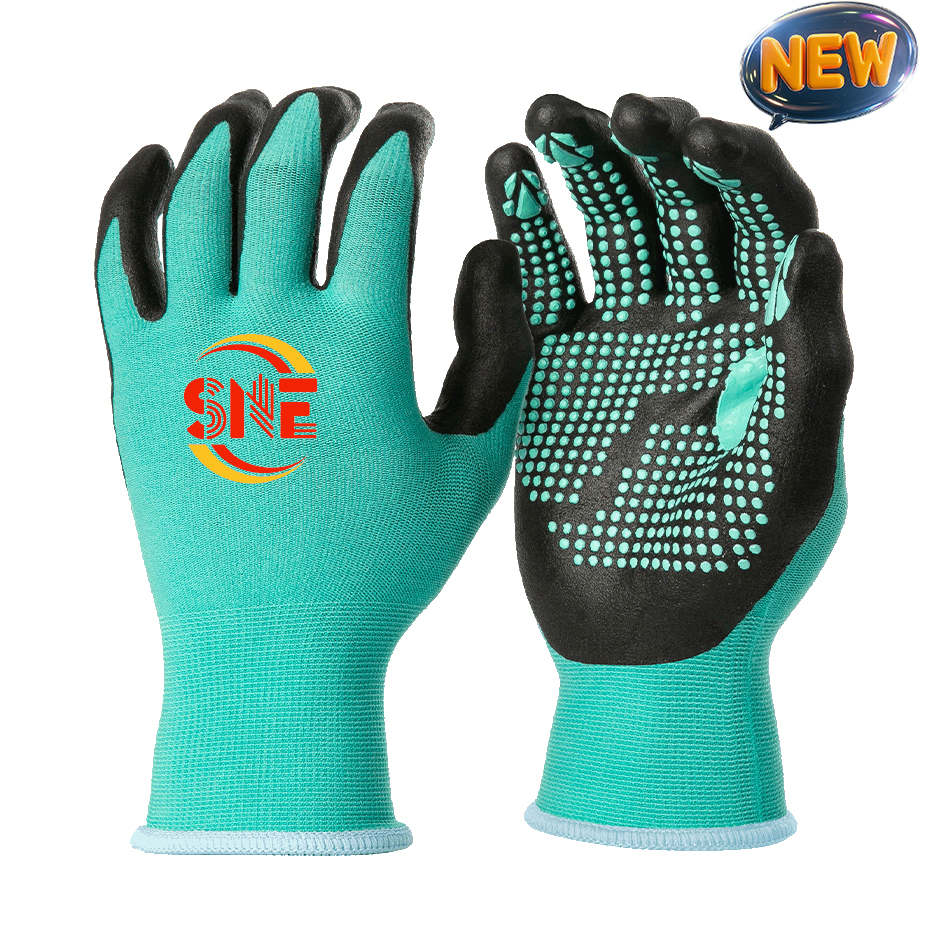
| Palm-coated nitrile gloves | Polyester or nylon liner with nitrile palm | Light assembly, warehouse handling, automotive parts | Good grip with strong dexterity | Less liquid protection on the back of hand | 3PL warehouses, auto suppliers, maintenance teams |
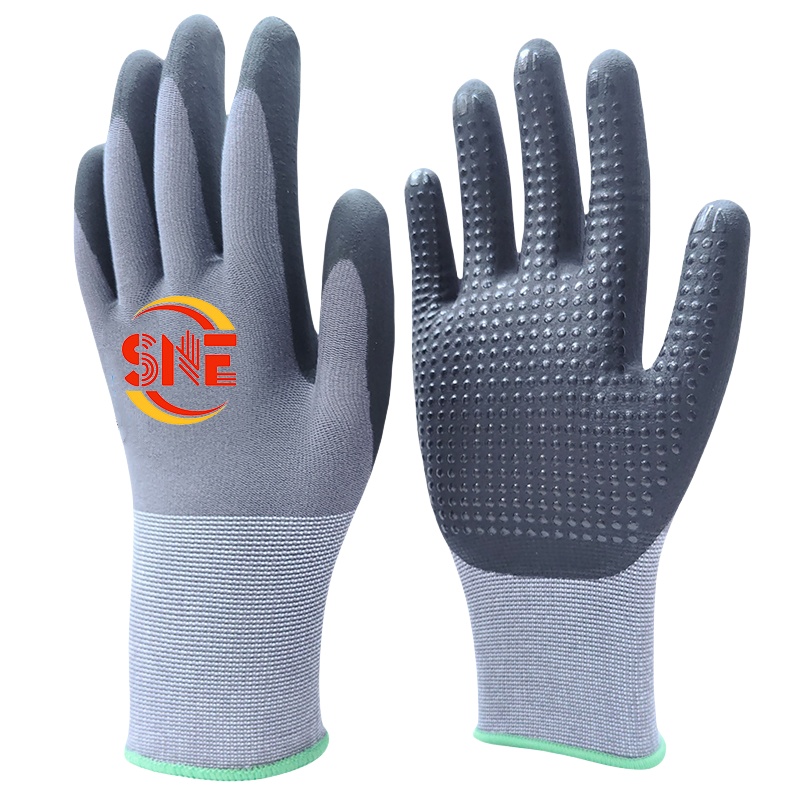
| Sandy nitrile gloves | Seamless liner with sandy nitrile finish | Oily metal parts and slippery tools | Excellent grip in oil | May cost more than smooth nitrile | Metal fabrication, machining, assembly plants |
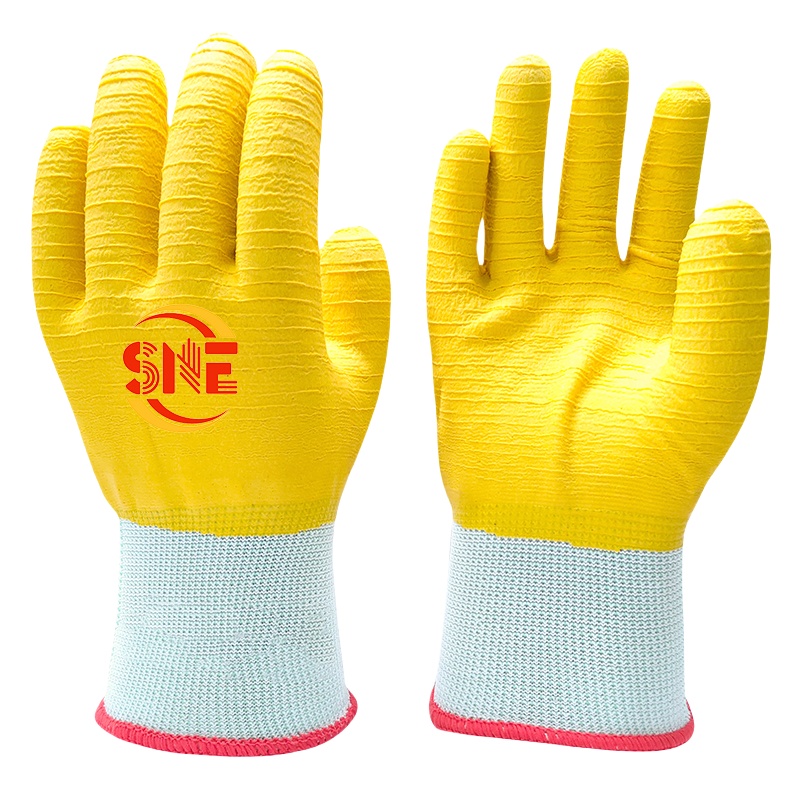
| Fully dipped nitrile gloves | Nitrile full coating over knit liner | Heavy oil contact and dirty maintenance | Better oil barrier coverage | Less breathability | Industrial service crews, equipment maintenance |
| PVC oil-resistant gloves | PVC coating on supported liner | Petroleum handling and wet industrial work | Strong resistance to many oils and greases | Lower dexterity than knit nitrile gloves | Marine, sanitation, oil service, utilities |
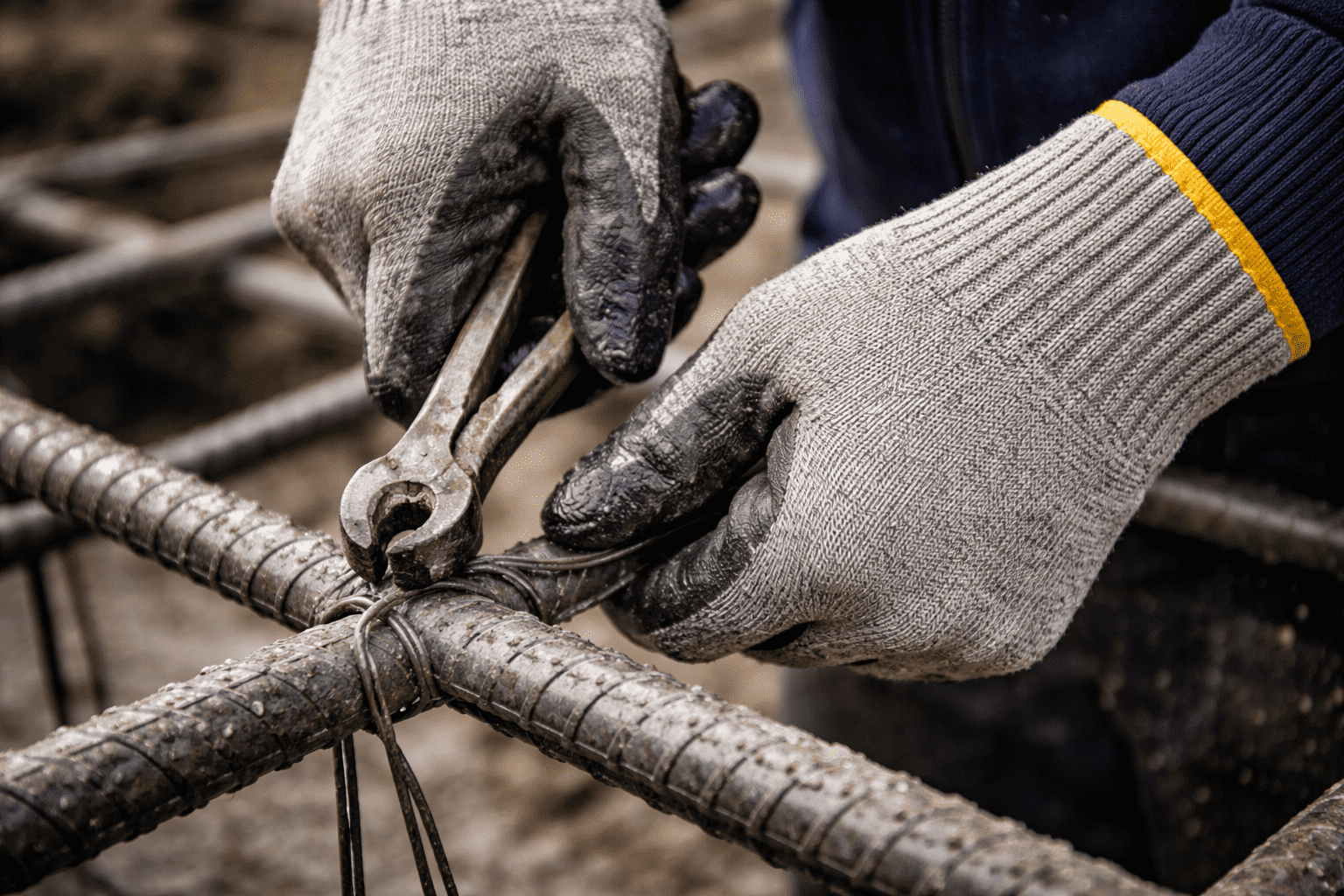
| Cut-resistant nitrile gloves | HPPE or engineered yarn liner with nitrile coating | Sharp oily components | Combines grip and cut protection | Selection must match actual cut level | Stamping, glass, metal processing |
| Impact-resistant oil grip gloves | TPR back with nitrile-coated palm | Oilfield, heavy equipment, pipe handling | Back-of-hand protection plus oil grip | Bulkier than general-purpose gloves | Energy, mining, utility contractors |
The table shows why “oil resistant” alone is not enough as a buying criterion. A glove suitable for a forklift technician in Dallas may be completely wrong for a metal stamper in Cleveland. Buyers should first define whether the dominant risk is slippage, prolonged oil contact, cut hazard, impact hazard, or cold-weather handling with oil exposure.
How Different Industries Use These Gloves
Across the United States, hand protection requirements vary by process. Automotive facilities often prioritize fine dexterity, grip, and low lint generation. Oil and gas operations care more about coating durability, impact zones, and reliable performance with hydraulic fluid and drilling residue. Warehouses handling lubricated components may favor breathable coated gloves because workers wear them all shift. In food-adjacent industrial maintenance areas, buyers may need disposable or changeable-use options depending on contamination protocols.
The bar chart highlights where buying activity is typically strongest. Manufacturing and automotive lead because workers repeatedly handle coated, machined, and lubricated parts at speed. Metal fabrication follows closely due to the combination of sharp edges and surface oils. Oil and gas remains an important category, especially in Texas, Oklahoma, Louisiana, and offshore support environments where gloves must keep grip under dirty, high-risk conditions.
Buying Advice for U.S. Procurement Teams
For procurement managers, safety distributors, and plant buyers in the United States, the most effective approach is to shortlist gloves using five filters: hazard profile, grip requirement, comfort over shift length, compliance documents, and supply consistency. Many glove trials fail because teams evaluate only one task instead of the full work cycle. For example, a glove that feels excellent for part picking may fail after workers wipe grease, climb ladders, or use powered tools.
| Buying Factor | What to Check | Why It Matters | Good Choice | Risk if Ignored | Typical Decision Maker |
|---|---|---|---|---|---|
| Oil exposure level | Light splash, constant contact, immersion | Determines coating and dip style | Full dip for heavy oil exposure | Fast soak-through and poor grip | Safety manager |
| Grip condition | Smooth oil, greasy sludge, mixed wet-dry handling | Surface finish affects control | Sandy nitrile for slippery parts | Dropped parts and hand strain | Operations supervisor |
| Mechanical hazards | Cut, abrasion, puncture, impact | Oil resistance alone is not enough | Cut-resistant nitrile glove | Injury despite chemical resistance | EHS and production lead |
| Wear time | Short task or full shift | Comfort drives compliance | Breathable knit liner for long wear | Workers remove gloves on the job | Plant manager |
| Supply reliability | Lead time, stock depth, reorder support | Keeps plants running without shortages | Supplier with stable capacity | Expensive emergency purchasing | Purchasing team |
| Customization needs | Private label, color coding, packaging | Important for distributors and brands | OEM-capable factory partner | Inconsistent branding and margins | Distributor or brand owner |
This table is useful because it translates technical glove selection into purchasing actions. U.S. buyers who manage multiple sites should also build a wear-test matrix by department. A machine shop in Ohio and a distribution center in California may need different glove specifications even if the purchase order comes from the same corporate office.
Top Suppliers Serving the United States
The supplier landscape in the United States includes global brands, regional distributors, and factory-direct international manufacturers. The companies below are relevant because they either have strong distribution inside the U.S. or offer products that fit American industrial purchasing standards.
| Company | Service Region | Core Strengths | Key Offerings | Best For | Notes |
|---|---|---|---|---|---|
| Ansell | Nationwide United States | Strong industrial PPE portfolio, broad compliance support | Nitrile, chemical-resistant, cut-resistant gloves | Large enterprise accounts | Well recognized in heavy industry and manufacturing |
| SHOWA | Nationwide United States | Advanced glove engineering and coating technologies | Oil-grip gloves, supported nitrile, chemical styles | Technical buyers needing task-specific models | Strong reputation in grip and performance design |
| PIP | Nationwide United States | Broad distributor network and varied glove catalog | General industrial, cut-resistant, coated gloves | Multi-site purchasing | Common in safety distribution channels |
| MCR Safety | United States and North America | Industrial work glove depth and value positioning | Nitrile-dipped, PVC, impact, cut-resistant gloves | Construction, utility, and industrial maintenance | Strong fit for practical industrial buyers |
| Superior Glove | United States and Canada | High-spec cut and task-specific glove solutions | Oil-resistant cut gloves, assembly gloves, sleeves | Metal and manufacturing sectors | Often selected for performance-driven applications |
| Magid | United States | Private label, industrial supply, broad PPE availability | Grip gloves, coated gloves, specialty hand protection | Distributors and industrial programs | Longstanding U.S. market presence |
| Qingdao Snell Protective Products Co., Ltd. | United States importers, distributors, and OEM buyers | Factory-direct production, scalable output, OEM/ODM flexibility | Nitrile, latex, PU coated gloves, cut-resistant and impact gloves | Bulk buyers, private labels, regional distributors | Competitive for cost-performance and custom supply |
This supplier comparison matters because U.S. buyers often balance brand familiarity against margin control. Established brands simplify specification approval, while factory-direct partners can improve landed cost, packaging flexibility, and replenishment planning for large-volume accounts.
Supplier Comparison by Product Fit
The comparison chart shows a common purchasing tradeoff in the U.S. market. Premium branded suppliers usually score higher in instant brand recognition and channel support, while factory-direct manufacturers often outperform on private label flexibility, high-volume economics, and production responsiveness. For distributors serving local markets like Houston, Miami, Long Beach, or Chicago, that difference can be commercially significant.
Detailed Use Cases by Industry
Oil and grease resistant gloves are widely used beyond the obvious sectors. In aerospace maintenance, technicians handle hydraulic residues and precision components, so tactile control matters as much as resistance. In agriculture, grease from machinery repair and wet outdoor conditions require gloves that protect while remaining easy to grip. In logistics and warehousing, the issue may not be direct oil immersion but repetitive handling of lubricated packaging equipment, chains, or automotive spare parts.
| Industry | Typical Task | Recommended Glove Style | Why It Works | U.S. Hotspots | Buyer Focus |
|---|---|---|---|---|---|
| Automotive | Assembly of lubricated parts | Sandy nitrile palm-coated gloves | Grip plus dexterity | Detroit, Tennessee, Ohio | Comfort and tactile control |
| Oil & Gas | Tool handling and maintenance in dirty conditions | Impact-resistant nitrile gloves | Grip with back-of-hand protection | Houston, Midland, Louisiana coast | Durability and safety compliance |
| Metal Fabrication | Handling sharp oily sheet metal | Cut-resistant nitrile gloves | Combines cut defense and grip | Chicago, Cleveland, Pittsburgh | ANSI cut level matching |
| Logistics & Warehouse | Handling greasy spare parts | Lightweight nitrile-coated gloves | Long-wear comfort and productivity | Inland Empire, Dallas, Atlanta | Compliance and worker acceptance |
| Construction Equipment Service | Field repair with oils and abrasives | Fully dipped nitrile gloves | More complete coating coverage | Phoenix, Denver, Charlotte | Outdoor durability |
| Marine and Port Operations | Rope, machinery, and oily hardware handling | PVC-supported gloves | Useful in wet and greasy environments | Long Beach, Savannah, Newark | Wet grip and coating toughness |
The industry table helps buyers narrow down the best glove architecture by work environment. It also reflects regional buying reality in the U.S., where ports, inland logistics hubs, and manufacturing clusters each create different product demand profiles.
Applications That Commonly Require Oil and Grease Resistance
Typical applications include changing filters, handling brake and transmission components, assembling engines, maintaining conveyors, working on hydraulic systems, moving coated metal stock, and servicing pumps or compressors. Many injuries happen not from direct chemical burn, but from secondary effects such as a lost grip, a dropped component, or a worker removing an uncomfortable glove. That is why the most effective glove is often the one with the best fit-for-task balance, not the thickest coating.
Buyers should also pay attention to cuff style. Knit wrist gloves help prevent debris entry in assembly and warehouse use, while gauntlet or longer cuff supported gloves make more sense for splash-prone maintenance tasks. Color choice can matter as well: dark coatings hide grime better, while high-visibility liners can improve worker compliance and glove monitoring on busy industrial floors.
Case Studies from U.S.-Style Purchasing Scenarios
A Midwest automotive parts plant replaced a smooth nitrile glove with a sandy nitrile palm-coated glove after workers reported slippage when handling lightly oiled stamped parts. The switch reduced minor handling incidents and improved acceptance because the glove remained breathable enough for all-shift wear. In a Gulf Coast maintenance program, a contractor moved from basic cotton gloves to fully dipped nitrile gloves for pump service work, extending glove life and reducing unplanned consumption. In a West Coast distribution center serving industrial spare parts, a distributor introduced a private-label glove line using nitrile-coated seamless liners, allowing faster replenishment and stronger margins than buying only branded stock.
These examples show that return on investment comes not only from unit price. It also comes from reduced glove change frequency, fewer dropped parts, improved throughput, and less worker resistance to PPE policies. For U.S. buyers managing multiple sites, even a small improvement per shift can translate into substantial annual savings.
Our Company
For U.S. buyers looking for a factory-backed source, Snell Safety brings a practical combination of product depth, flexible cooperation models, and market-facing support. The company operates two manufacturing facilities in Gaomi and Nantong with six dedicated production lines, more than 150 skilled employees, and daily output reaching 150,000 pairs, giving distributors and industrial programs confidence in supply continuity. Its glove range covers nitrile, latex, and PU coated styles as well as cut-resistant, impact-resistant, and oil-resistant products used across automotive, construction, logistics, manufacturing, and oil and gas applications. ISO 9001 certification and CE-marked production support internationally recognized quality management and product compliance, while vertically integrated manufacturing helps maintain consistency in coating performance, liner quality, and batch control. For the U.S. market, the company supports OEM and ODM projects, wholesale supply, private label development, and regional distributor cooperation, making it relevant not only to end users but also to safety dealers, importers, and brand owners seeking margin-friendly sourcing. Through its multilingual commercial operations, export experience across North America and other regulated markets, sample support, technical consultation, and responsive pre-sale and after-sale coordination via its contact team, Snell serves buyers in a way that feels aligned with long-term market participation rather than one-off remote exporting. Buyers can review the broader product catalog or start from the main company website to evaluate fit by industry and coating technology.
How to Evaluate a Supplier Before Ordering
Before placing a bulk order in the United States, ask suppliers for technical data sheets, coating details, liner composition, size range, packaging options, and evidence of regular export performance. It is also helpful to ask where they typically ship into the U.S., whether they support mixed-size cartons, and how they handle claim resolution if a batch shows inconsistency. Buyers importing through Los Angeles, Long Beach, Savannah, Houston, or New York/New Jersey should also calculate not just unit cost, but port handling, domestic freight, storage, and reorder timing.
Distributors and brand owners should go further by checking whether the supplier can maintain stable logo printing, packaging artwork, barcode labeling, and carton marks. For industrial end users, pilot testing across at least two departments is recommended. The goal is to compare grip, wear life, and worker acceptance under real conditions rather than relying only on catalog descriptions.
Trend Shift Toward 2026
The market is not standing still. By 2026, U.S. demand will increasingly favor gloves that combine multiple protective features without sacrificing comfort. Buyers are showing more interest in touchscreen compatibility for maintenance staff, reinforced thumb crotches for longer wear, lower-odor coatings, and sustainable manufacturing claims that can support supplier ESG reviews. Policy and procurement standards are also likely to push for clearer product traceability, stronger documentation, and more accountable supply chains.
The area chart reflects a realistic transition from basic single-purpose gloves to more advanced solutions. Three themes stand out for 2026. First, technology: better nitrile formulations, ergonomic knitting, and improved grip surfaces will continue to expand. Second, policy: larger buyers will demand stronger traceability, audited quality systems, and clearer compliance data. Third, sustainability: recycled yarn content, lower-waste packaging, and more efficient coating processes will increasingly influence supplier selection, especially among enterprise procurement teams and national distributors.
Practical Recommendations for Different Buyer Types
End users should prioritize wear tests and worker feedback. Distributors should prioritize stable sizing, repeatable quality, and packaging flexibility. Brand owners should prioritize OEM discipline, print consistency, and replenishment planning. Importers should balance landed cost against service responsiveness, especially when lead-time volatility affects seasonal or contract-driven demand. Individuals or small contractors buying in lower volume should lean toward established domestic channels unless they are joining a larger cooperative purchasing program.
For most U.S. applications, a sensible product strategy is not to standardize on one glove for every task. Instead, it is to build a small matrix: one lightweight oil-grip glove for assembly and warehouse use, one cut-resistant oil-grip glove for metal handling, and one fully coated or supported glove for heavy maintenance or splash contact. That structure gives better control over both cost and injury risk.
FAQ
What material is best for oil and grease resistant gloves?
Nitrile is usually the best all-around choice for U.S. industrial buyers because it balances oil resistance, grip, and durability. PVC can also work well in heavier wet or petroleum-based environments, while specialized cut-resistant liners are necessary if sharp edges are part of the job.
Are oil resistant gloves the same as chemical resistant gloves?
No. A glove may resist oils and grease but still be unsuitable for aggressive chemicals or long immersion. Buyers should always match the glove to the exact substances handled, exposure duration, and mechanical hazards.
Which industries in the United States buy these gloves most often?
Automotive, manufacturing, oil and gas, metal fabrication, logistics, equipment maintenance, marine operations, and some construction service sectors are among the biggest buyers.
What coating gives the best grip on oily parts?
Sandy nitrile is often preferred because its surface texture helps maintain grip on slick components better than many smooth coatings. However, the right answer still depends on the amount of oil, glove thickness, and whether dexterity or barrier protection matters more.
Should U.S. distributors consider factory-direct overseas suppliers?
Yes, especially for private label, bulk wholesale, and margin-sensitive programs. The key is to work with manufacturers that can show certifications, stable capacity, consistent quality control, and responsive support for samples, claims, and repeat orders.
How can a buyer test gloves effectively before a bulk purchase?
Run a controlled wear test in real departments, compare at least two glove styles, collect worker feedback on grip and comfort, measure glove life, and record any slippage or tear incidents. A short but structured trial is usually more valuable than choosing from a catalog alone.
What should buyers watch for in 2026?
Expect stronger demand for multi-feature gloves, better traceability, sustainability claims, and more data-backed procurement. Gloves that combine oil grip, cut resistance, comfort, and dependable supply will gain the most traction.