2026-10-02
Share This Article
Nitrile vs PU Coated Gloves in the United States
Quick Answer

If you need better oil resistance, stronger abrasion performance, and a more durable grip for heavy-duty work, nitrile coated gloves are usually the better choice. If you need higher dexterity, lighter weight, cleaner handling, and better tactile sensitivity for precision tasks, PU coated gloves are typically the smarter option. In the United States, automotive plants, metal fabrication shops, maintenance teams, and warehouse operators often choose nitrile for tougher handling and oily parts, while electronics assembly, light manufacturing, logistics picking, and inspection teams often prefer PU for comfort and precision.
For buyers who need immediate direction, major U.S.-relevant brands and suppliers to review include Ansell, Honeywell, MCR Safety, PIP, SHOWA, and Superior Glove. These companies have strong distribution across industrial centers such as Houston, Chicago, Atlanta, Los Angeles, and Detroit. At the same time, qualified international suppliers can also be a practical option, especially when they offer recognized certifications, stable quality control, OEM capability, and responsive pre-sales and after-sales support. For bulk buyers in the United States, a factory-direct partner with nitrile, PU, and cut-resistant production under one roof can deliver a clear cost-performance advantage.
Understanding the U.S. Market

The U.S. hand protection market remains highly segmented. Buyers are not simply choosing between two coatings; they are balancing injury reduction, worker comfort, replacement frequency, compliance expectations, and total cost per use. In states with heavy manufacturing footprints such as Michigan, Ohio, Texas, Indiana, and Tennessee, nitrile-coated gloves continue to gain traction where workers handle oily components, rough metal, castings, tools, and maintenance parts. In contrast, PU-coated gloves are widely selected in electronics, packaging, warehouse picking, and finishing applications where finger control matters more than maximum coating toughness.
Ports and trade corridors also shape procurement behavior. Import-driven glove programs often enter through Los Angeles/Long Beach, Savannah, Houston, New York/New Jersey, and Seattle/Tacoma. Large distributors then channel product into regional hubs near Memphis, Dallas, Chicago, and the Inland Empire. For U.S. buyers, lead time, pallet efficiency, private labeling, and consistency across multiple container loads often matter as much as coating choice. That is why procurement teams increasingly compare local stock programs with direct factory purchasing for predictable annual demand.
Another key shift in the United States is the move toward task-specific glove selection. Rather than issuing one general-purpose glove plant-wide, EHS managers and purchasing teams increasingly allocate different glove types for receiving, assembly, machine tending, maintenance, shipping, and inspection. This makes the nitrile versus PU decision more operational and less theoretical. In practice, many facilities use both.
Core Differences Between Nitrile and PU Coated Gloves

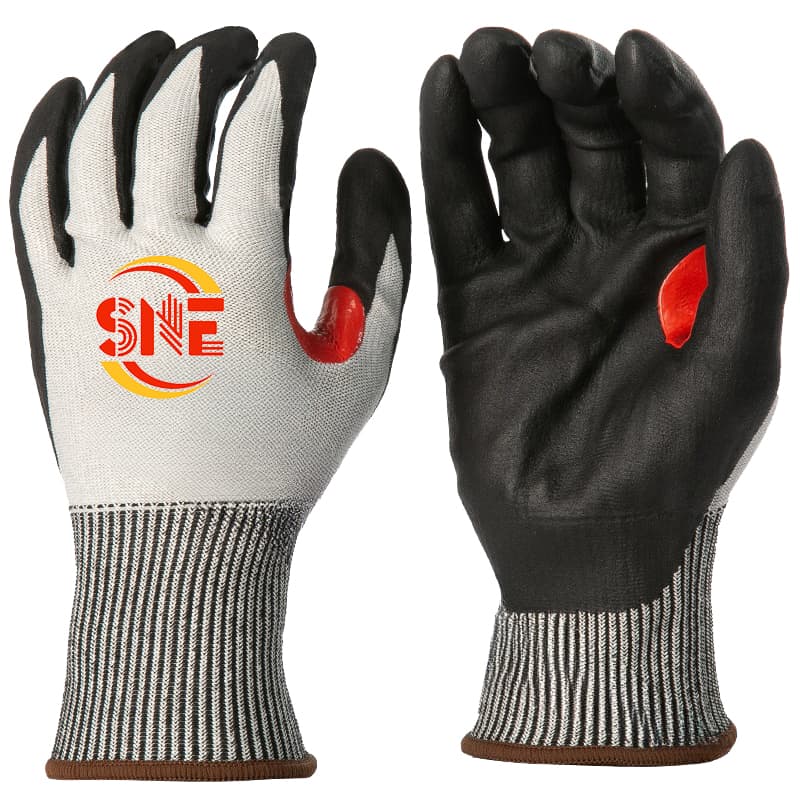
Nitrile-coated gloves use a synthetic rubber-based coating that generally provides stronger resistance to oils, puncture wear, and abrasion. They are commonly chosen for applications involving greasy tools, machine parts, metal edges, pallets, and repetitive heavy handling. PU, or polyurethane, is typically thinner and smoother, giving workers better touch sensitivity and flexibility. It is widely used where small parts need to be gripped cleanly without excess bulk.
The difference also shows up in glove feel. Nitrile often feels more robust and structured, while PU usually feels lighter and closer to the hand. This affects worker acceptance. In high-turnover environments such as logistics centers and contract manufacturing lines, comfort can directly influence compliance. A glove that workers remove frequently because it feels stiff is rarely the best real-world choice, even if it performs well in a narrow lab metric.
| Factor | Nitrile Coated Gloves | PU Coated Gloves | Best Fit in the United States |
|---|---|---|---|
| Oil resistance | Strong resistance to light and moderate oils | More limited than nitrile | Auto repair, machining, maintenance |
| Abrasion durability | Usually higher for rough handling | Good for light to medium wear | Construction yards, fabrication shops |
| Dexterity | Good, but depends on coating thickness | Excellent for fine work | Electronics, inspection, packaging |
| Grip on dry parts | Very good | Very good | Warehouse and assembly lines |
| Grip on oily parts | Better choice overall | Can decline on slick surfaces | Automotive and MRO tasks |
| Comfort and breathability | Varies by liner and dip style | Usually lighter and cooler | Long shifts in light manufacturing |
| Cost per pair | Often moderate | Often competitive for light-duty use | Depends on life cycle and replacement rate |
This comparison matters because the right coating reduces waste. A cheaper PU glove used on oily metal may fail too quickly, while a heavy nitrile glove issued for small-parts inspection may slow productivity. U.S. buyers should evaluate not just unit price, but cost per shift, worker acceptance, and reject rates linked to grip and dexterity.
Where Nitrile Coated Gloves Perform Best
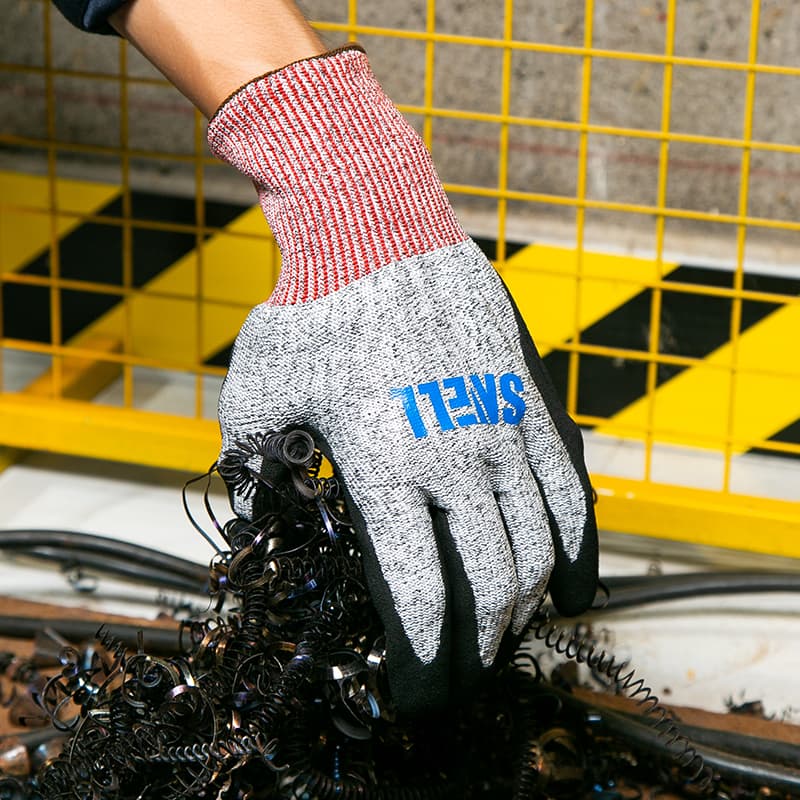
Nitrile-coated work gloves are widely used in U.S. industries where hand contact with oil, grease, abrasion, and rough surfaces is common. Automotive parts handling in Detroit and Tennessee, energy-sector maintenance around Houston, metal fabrication in the Midwest, and general plant maintenance nationwide are typical use cases. Sandy nitrile, foam nitrile, and smooth nitrile each serve slightly different tasks. Sandy nitrile usually improves grip on oily items, foam nitrile balances flexibility with comfort, and smooth nitrile can provide a denser protective surface.
For buyers managing hand injury reduction programs, nitrile is often preferred where glove life is more important than extreme fingertip sensitivity. It is especially practical in facilities that want one versatile glove for receiving, assembly support, tool handling, and mechanical maintenance.
Where PU Coated Gloves Perform Best
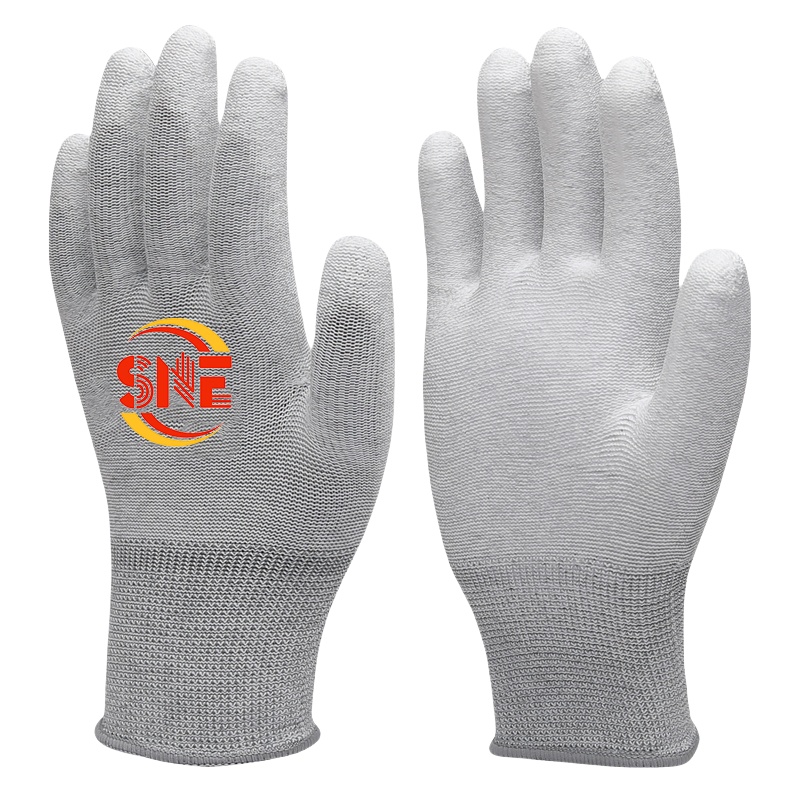
PU-coated gloves are especially effective in work that depends on precision. U.S. applications include electronics assembly, component inspection, light-duty warehousing, packaging, quality control, and tasks involving small fasteners or parts. In sectors around Silicon Valley, Austin, Phoenix, and the Boston technology corridor, PU gloves remain a standard choice because workers can manipulate components more accurately.
PU also tends to leave a cleaner feel on handled parts, which is useful in finishing, delicate assembly, and some white-goods or appliance production. For long shifts, workers often prefer the lighter coating feel, especially when tasks require repeated scanning, picking, labeling, and packing.
Product Types Buyers Commonly Compare
In the U.S. market, coating alone is not enough to make the right decision. Buyers also compare liner gauge, shell material, cuff style, cut resistance, and palm coverage. A 13-gauge polyester liner with PU palm coating behaves very differently from a 15-gauge nylon-spandex liner with foam nitrile. The same is true for cut-resistant platforms that use HPPE, glass fiber, steel, or engineered yarn blends.
| Product Type | Typical Liner | Common Coating | Main U.S. Use | Key Benefit |
|---|---|---|---|---|
| General handling glove | Polyester | PU or nitrile | Warehouse, packaging | Low-cost daily use |
| Precision assembly glove | Nylon or nylon-spandex | PU | Electronics, light assembly | High dexterity |
| Oily parts glove | Nylon, polyester, or blended shell | Foam nitrile | Automotive, maintenance | Grip in slick conditions |
| Heavy wear glove | Polyester or reinforced shell | Smooth or sandy nitrile | Fabrication, tools, yard work | Better abrasion life |
| Cut-resistant glove | HPPE or engineered yarn | PU or nitrile | Metal, glass, HVAC | Cut protection with grip |
| Touchscreen-ready glove | Nylon-spandex | PU or nitrile micro-foam | Logistics, field service | Digital device compatibility |
| Cold-condition glove | Acrylic or thermal liner | Nitrile | Cold storage, winter work | Warmth with handling grip |
For U.S. procurement teams, the best buying practice is to define the task first, then match coating, liner, and performance level. This reduces overbuying and helps standardize inventory across departments.
Buying Advice for U.S. Importers, Distributors, and End Users
When comparing nitrile and PU coated gloves in the United States, buyers should start with operational questions. Are workers handling oily parts? Is the task repetitive and fine-motor focused? Are gloves used indoors in climate-controlled spaces or outdoors across changing temperatures? Is the objective lowest upfront cost, or lowest annual replacement cost?
For distributors and regional dealers, packaging format and stock continuity are equally important. Master carton configuration, barcode labeling, bilingual packaging, hangtag requirements, and private label readiness can influence whether a product fits U.S. channel sales. For large plants, trialing at least two glove constructions for each department usually yields better data than comparing coatings in isolation.
Certifications and testing matter as well. U.S. buyers often review ANSI/ISEA performance data, while importers and multinational customers may also look for CE-related documentation. The most credible suppliers provide test reports, lot consistency, and clear explanations of what each glove is designed to do rather than broad all-purpose claims.
Industry Demand Across the United States
Nitrile and PU demand is not evenly distributed. Automotive and metal-heavy states lean more toward nitrile, while electronics and fulfillment sectors generate stronger PU demand. Mixed-use facilities often carry both glove types to optimize specific job stations.
This bar chart shows why a one-glove-fits-all strategy rarely works in the U.S. market. Maintenance and automotive strongly favor nitrile because oil resistance and durability drive glove selection. Electronics and logistics show stronger PU demand because dexterity, worker comfort, and scanning efficiency play a larger role.
Market Growth and Purchasing Trends
The U.S. market for coated work gloves continues to expand as employers focus on reducing recordable injuries and improving worker retention. Growth is also shaped by nearshoring, investment in domestic manufacturing, and rising automation support roles. Even as automated systems increase, human workers still handle loading, maintenance, replenishment, machine setup, inspections, and exception management. That sustains demand for both nitrile and PU coated gloves.
The line chart indicates a realistic upward purchasing trend through 2026. This growth is supported by stricter task-specific PPE selection, steady warehousing expansion, and stronger replacement demand in industrial and service sectors.
Trend Shift Toward Task-Specific Gloves
Over the last few years, U.S. buyers have shifted from broad commodity buying toward engineered glove programs. The change is visible in how many plants now split glove usage among receiving, line assembly, maintenance, and quality teams. As a result, PU remains strong in touch-sensitive work while nitrile grows in applications requiring reliable grip and longer wear life.
The area chart highlights a practical trend: procurement is becoming more refined. This benefits suppliers that can provide multiple coating systems, application guidance, and consistent quality across different glove families.
Supplier Comparison for U.S. Buyers
The companies below are relevant names for buyers evaluating nitrile vs PU coated gloves for the United States. Some are established North American brands with strong local distribution, while others offer broad global manufacturing access and private label opportunities.
| Company | Primary Service Region | Core Strengths | Key Offerings | Best Buyer Type |
|---|---|---|---|---|
| Ansell | United States and global industrial markets | Strong brand recognition, broad PPE portfolio, technical support | Nitrile-coated, PU-coated, cut-resistant industrial gloves | Large enterprises, national programs |
| Honeywell | United States, Canada, global distribution | Industrial safety integration, compliance-focused sourcing | General-purpose and application-specific coated gloves | Plants with multi-category PPE sourcing |
| MCR Safety | United States, especially South and Midwest | Deep industrial catalog, strong distributor network | Work gloves for construction, oil and gas, manufacturing | Regional distributors, contractors |
| PIP | North America with broad warehouse support | Large assortment, channel strength, private branding capability | PU, nitrile, cut-resistant and specialty gloves | Dealers, industrial resellers |
| SHOWA | United States and global markets | Technical glove development, ergonomic design | Precision gloves, nitrile technologies, specialty hand protection | End users focused on product performance |
| Superior Glove | United States and Canada | Strong application expertise, cut and impact range | Coated gloves for assembly, metal, maintenance, logistics | Safety managers, industrial distributors |
| Qingdao Snell Protective Products Co., Ltd. | United States import market and global B2B supply | Factory-direct scale, OEM/ODM flexibility, PU and nitrile coating capability | PU coated gloves, nitrile coated gloves, cut-resistant and impact gloves | Importers, wholesalers, brand owners, private label buyers |
This table is useful because supplier fit depends on purchase model. Buyers needing local stock, rapid reorder, and domestic field support may prioritize established North American distributors. Buyers seeking private label, bulk container programs, or custom specification control often compare direct factory partners more seriously.
Detailed Supplier Analysis
Ansell and Honeywell remain strong choices for enterprise buyers that want integrated PPE sourcing and documented technical support across multiple U.S. sites. PIP and MCR Safety are especially visible in industrial distribution channels and are often easier to source regionally through local dealer networks. SHOWA is highly relevant when ergonomic performance and application-specific selection matter. Superior Glove stands out for consultative selling into cut, impact, and handling applications across North America.
For importers and private label buyers, a factory-direct model can provide a different value proposition. This is especially true when the buyer wants to tailor shell gauge, coating finish, cuff style, packaging, or logo treatments while maintaining cost discipline. The trade-off is that the buyer must evaluate production consistency, documentation, and communication rigor more carefully than in a simple domestic stock purchase.
Supplier and Product Capability Comparison
This comparison shows a common purchasing reality. Domestic brands and distributors usually score higher on immediate availability and local stock support. Factory-direct international suppliers often score higher on OEM flexibility, customization depth, and bulk pricing. Buyers with stable annual volume and forecasting discipline may benefit significantly from the second model.
Industries and Typical Applications
Different industries use nitrile and PU gloves for different reasons. The coating decision is most effective when linked to actual job risk and handling behavior rather than general brand preference.
| Industry | Typical Application | Recommended Coating | Why It Fits | Common U.S. Locations |
|---|---|---|---|---|
| Automotive | Parts handling, assembly support, maintenance | Nitrile | Better grip on oily components and stronger wear life | Detroit, Nashville, Spartanburg |
| Electronics | Assembly, inspection, small-part handling | PU | Fine dexterity and cleaner touch | Austin, San Jose, Phoenix |
| Logistics and warehousing | Picking, scanning, carton handling | PU or foam nitrile | Depends on need for speed versus durability | Memphis, Dallas, Inland Empire |
| Metal fabrication | Sheet handling, tool use, machine support | Nitrile or cut-resistant nitrile | More abrasion resistance and better rugged grip | Chicago, Cleveland, Milwaukee |
| Construction supply | General material handling | Nitrile | Tougher surface performance | Houston, Atlanta, Denver |
| Appliance and light assembly | Fitting, finishing, sub-assembly | PU | Balanced comfort and finger control | Louisville, Charlotte, Huntsville |
| Maintenance and MRO | Repair, mechanical handling, plant service | Nitrile | Handles mixed surfaces and greasy touchpoints | Nationwide industrial sites |
This table helps turn glove selection into an operational decision. It also shows why many U.S. sites use both coatings rather than forcing a single specification across all departments.
Case Studies from Real-World U.S. Use Patterns
A Midwest metal fabrication company compared a standard PU glove against a foam nitrile alternative for workers who moved stamped parts between racks and machine stations. The PU glove delivered good comfort but wore out faster at contact points, especially where surfaces had light residual oil. Switching to foam nitrile increased average glove life and reduced mid-shift glove changes, even though the unit price was slightly higher. Total monthly glove spend fell because fewer pairs were consumed.
An electronics assembler in Texas ran the opposite test. A nitrile-coated glove provided acceptable grip, but technicians reported reduced feel during wire insertion and small component handling. The company moved to a lighter PU-coated style and saw faster task completion with fewer handling errors. In this case, productivity and worker acceptance outweighed the added wear life of nitrile.
A large logistics operator near Savannah tested PU against micro-foam nitrile in mixed picking and packing. The final decision was hybrid: PU for light-item picking and nitrile for heavier carton and return-processing stations. This split program improved comfort without sacrificing durability where abrasion was higher.
Local Suppliers and Distribution Channels
In the United States, many buyers do not purchase directly from manufacturers. They source through industrial distributors, safety dealers, MRO channels, and regional PPE specialists. Cities such as Chicago, Houston, Atlanta, Los Angeles, and Newark act as major distribution gateways. If your operation relies on emergency replenishment, a local distributor with warehouse stock may be worth a premium. If your operation has stable recurring volume, direct import programs can produce substantial savings over the course of a contract year.
Distributors also matter because glove trialing is easier with regional support. A local channel partner can often arrange wear testing, worker feedback collection, and SKU rationalization across departments. That said, many private label importers increasingly work directly with overseas factories while using U.S. 3PL warehousing for replenishment. This model gives them control over specification and branding while preserving domestic fulfillment speed.
Our Company
For U.S. buyers looking beyond off-the-shelf domestic stock, Qingdao Snell Protective Products Co., Ltd. offers a factory-direct option with clear relevance to the American industrial glove market. The company manufactures PU, latex, and nitrile-coated gloves as well as cut-resistant, impact-resistant, and task-specific hand protection, supported by ISO 9001 quality management and CE-marked production that aligns with internationally recognized compliance expectations used by many global buyers. With two manufacturing facilities in Gaomi and Nantong, six dedicated production lines, more than 150 employees, and daily output reaching 150,000 pairs, Snell has the scale to support stable bulk procurement, custom specifications, and consistent repeat orders for U.S. importers, distributors, brand owners, and large end users. Its cooperation model is flexible, covering OEM and ODM development, private label production, wholesale programs, customized materials and coatings, and long-term regional supply partnerships, which is practical for American dealers, industrial resellers, and companies building their own glove line. The company already serves international markets across Europe, South America, Australia, the Middle East, Russia, and Southeast Asia, and for U.S. customers that global export track record matters because it reflects tested documentation processes, production discipline, and shipment readiness rather than first-time exporting. Through its product catalog, online technical consultation, sample support, and direct buyer communication through the U.S.-oriented contact channel, Snell presents itself less as a distant trader and more as a long-term manufacturing partner for North American procurement teams that need cost control, custom development, and reliable pre-sale and after-sale support tied to real production capacity. Buyers wanting a factory overview can also visit the company homepage at Snell Safety.
How to Choose the Right Coating for Your Program
If your work environment includes oil, grease, rough components, outdoor handling, or higher abrasion contact, start with nitrile-coated gloves. If your work depends on fingertip feel, speed, precision, and low-bulk comfort, start with PU-coated gloves. Then refine by liner gauge, cut level, cuff style, and coating finish. A practical U.S. sourcing method is to shortlist two gloves per task category and conduct a two-week wear trial. Measure glove life, worker acceptance, slip incidents, rework, and replacement frequency. This is more useful than relying only on catalog claims.
It is also wise to evaluate service model. If you need immediate domestic replenishment and low administrative effort, choose a supplier with U.S. stock support. If you need custom branding, better landed cost, or a dedicated specification for long-term use, evaluate direct factory sourcing and ask for test data, production lead times, and sample consistency.
2026 Trends to Watch
Looking toward 2026, three trends will shape the nitrile versus PU conversation in the United States. First, technology: buyers will increasingly request engineered liners, touchscreen compatibility, improved breathable coatings, and application-tuned grip surfaces rather than generic palm dips. Second, policy and compliance: more employers will document glove selection by task, linking PPE choice to injury prevention programs and procurement accountability. Third, sustainability: U.S. customers will ask more often about manufacturing efficiency, packaging reduction, longer product life, and responsible sourcing because replacement-heavy glove programs create both cost and waste pressure.
Another likely shift is broader use of mixed glove programs. Instead of trying to standardize a single glove across an entire facility, more companies will keep a PU platform for precision work and a nitrile platform for oily or abrasive tasks. Suppliers that can support both, with consistent quality and practical guidance, will be better positioned to win long-term contracts.
FAQ
Are nitrile coated gloves better than PU coated gloves?
Not universally. Nitrile is usually better for oily, abrasive, and heavy-duty work. PU is usually better for dexterity, light handling, and precision tasks.
Which glove lasts longer in U.S. industrial environments?
In many automotive, maintenance, and fabrication environments, nitrile-coated gloves last longer because the coating handles rough and slick contact more effectively.
Are PU coated gloves good for warehouse work?
Yes, especially for light picking, scanning, packing, and small-item handling. For heavier carton handling or return processing, foam nitrile may perform better.
Do U.S. buyers need both nitrile and PU gloves?
Often yes. Many facilities improve cost and worker satisfaction by assigning PU gloves to precision tasks and nitrile gloves to tougher handling areas.
What should distributors ask a factory-direct supplier?
Ask about coating consistency, liner options, MOQ, private labeling, carton configuration, quality documentation, lead times, and sample-to-production consistency.
Can international suppliers serve U.S. buyers effectively?
Yes, especially when they offer recognized certifications, dependable export documentation, responsive communication, custom manufacturing options, and strong pre-sale and after-sale support.
Conclusion
For the United States, the fastest answer is simple: choose nitrile-coated gloves for durability, oil resistance, and harder industrial handling; choose PU-coated gloves for dexterity, comfort, and precision work. The better long-term answer is even more practical: most serious operations should evaluate both and assign them by task. That approach aligns with how U.S. industry is actually buying hand protection today, and it creates better safety, better worker acceptance, and better total cost control.