2026-11-29
Share This Article
Nitrile vs Neoprene Oil Resistant Gloves in the United States
Quick Answer

If your main priority is resistance to petroleum oils, fuels, grease, abrasion, and puncture risk in automotive, metalworking, warehousing, and general maintenance, nitrile oil resistant gloves are usually the better choice in the United States. If your work involves broader chemical exposure, temperature fluctuation, acids, caustics, or washdown environments common in chemical processing, sanitation, marine work, and certain refinery tasks, neoprene oil resistant gloves often provide the more balanced performance. In short: choose nitrile for heavy contact with oils and tougher mechanical wear; choose neoprene for mixed chemical environments where oil resistance alone is not enough.
For U.S. buyers, the most practical approach is to match glove material to the exact fluid, contact duration, dexterity requirement, and replacement cycle. Large domestic brands such as Ansell, SHOWA, Honeywell, MCR Safety, Superior Glove, and PIP remain common sourcing options across Houston, Chicago, Los Angeles, Savannah, and New Jersey distribution corridors. At the same time, qualified international manufacturers can also be a smart option, especially when they offer relevant certifications, stable production capacity, OEM support, and dependable pre-sales and after-sales service. Cost-performance advantages matter in high-volume procurement, particularly for distributors, importers, and private-label programs serving the U.S. market.
Understanding the U.S. Market for Oil Resistant Gloves

The U.S. market for oil resistant gloves is shaped by a wide range of industries, including oil and gas in Texas and Louisiana, automotive manufacturing in Michigan and Ohio, food processing in the Midwest, port logistics in Los Angeles and Savannah, aerospace in Washington and Kansas, and industrial maintenance nationwide. Buyers are not simply comparing glove materials in a lab setting. They are evaluating total operating cost, worker acceptance, compliance, availability, and task-specific safety performance.
In the United States, glove selection is often influenced by procurement teams, EHS managers, plant engineers, and distributors who balance OSHA compliance needs with practical shop-floor realities. A glove that resists cutting oil well but reduces grip on oily parts may fail in use. A glove that handles acids but is too stiff for assembly work may be rejected by operators. That is why the nitrile versus neoprene decision remains highly relevant across both disposable and reusable industrial glove categories.
Regional logistics also matter. Import activity through Long Beach, Houston, New York-Newark, and Savannah affects lead times and replenishment planning. Buyers in high-usage sectors increasingly want backup suppliers outside a single domestic warehouse network. This has opened the door to factory-direct and hybrid sourcing models, especially for buyers managing OEM programs, private labels, or seasonal volume spikes.
What Makes Nitrile and Neoprene Different

Nitrile is a synthetic rubber known for strong oil, fuel, and grease resistance, along with good puncture and abrasion performance. It is widely used in coated work gloves and disposable gloves. In oil-heavy operations, nitrile is often preferred because it retains performance in contact with hydrocarbons better than many alternatives and can deliver a secure grip when paired with the right palm finish.
Neoprene is another synthetic rubber with a broader chemical resistance profile in many environments. It can perform well against oils, but its major advantage is often its balance against acids, caustics, alcohols, cleaning agents, weathering, and temperature variation. In operations where workers move between oily contact and chemical washdown or mixed process handling, neoprene can outperform nitrile overall, even if nitrile wins on pure petroleum resistance.
Neither material is universally better. The right answer depends on whether your process risk is dominated by hydrocarbons, mechanical wear, chemical blending, or repeated wet handling.
Head-to-Head Comparison
| Factor | Nitrile Gloves | Neoprene Gloves | Why It Matters in the U.S. |
|---|---|---|---|
| Petroleum oil resistance | Very strong | Strong | Important for automotive, machining, maintenance, and oilfield support |
| Fuel and grease handling | Excellent | Good to very good | Common in fleets, MRO, and heavy equipment service |
| Acid and caustic resistance | Moderate to good depending on formulation | Often better overall | Relevant in chemical plants, sanitation, and process industries |
| Abrasion and puncture resistance | Typically stronger | Usually moderate | Useful in metal parts handling and rough maintenance tasks |
| Flexibility in cold or wet conditions | Good, varies by thickness | Often better in variable environments | Important in outdoor utility, marine, and washdown settings |
| Cost in bulk industrial sourcing | Usually more cost-effective | Often higher | Affects total cost for distributors and large-volume end users |
| Best fit | Oil-intensive mechanical work | Mixed oil and chemical work | Helps narrow material choice by application |
This comparison shows why many U.S. plants standardize nitrile for general oil handling while reserving neoprene for narrower but more complex chemical applications. The material decision should be driven by exposure profile, not habit alone.
Where Nitrile Oil Resistant Gloves Usually Win
Nitrile gloves typically lead when operations involve repeated contact with lubricants, transmission fluid, diesel residue, cutting oil, hydraulic oil, and greasy machine components. In automotive service centers from Dallas to Detroit, maintenance teams often prefer nitrile because it combines oil resistance with a better balance of abrasion durability and dexterity than heavier chemical gloves.
In metal fabrication and machining, nitrile-coated gloves are especially common because they allow handling of oily metal stock, CNC components, tools, and bins without the bulk associated with chemical immersion gloves. In warehouses and third-party logistics operations handling oily packaged parts, nitrile-coated seamless knit gloves also remain popular because they reduce hand fatigue during long shifts.
Nitrile also tends to be more cost-efficient in bulk programs. For U.S. distributors building private-label industrial glove lines, nitrile offers a strong price-to-performance ratio across many sectors.
Where Neoprene Oil Resistant Gloves Usually Win
Neoprene becomes more compelling when workers are not just touching oil, but moving through a broader process environment. In chemical processing, industrial cleaning, aerospace surface preparation, marine maintenance, and food plant sanitation, workers may face oils along with detergents, diluted acids, or cleaning chemicals. In those conditions, neoprene can offer a more versatile protective barrier.
For gauntlet-style reusable gloves used in washdown or immersion tasks, neoprene often earns a place because it remains serviceable under wet conditions and can handle environmental changes better than some nitrile options. U.S. plants with mixed hazard zones sometimes issue neoprene for chemical rooms and nitrile for general maintenance, rather than forcing one glove type across every task.
Market Growth and Demand Trends in the United States
Demand for oil resistant gloves in the U.S. has expanded due to stricter workplace safety expectations, labor retention concerns, and a growing preference for task-specific PPE rather than generic hand protection. Buyers also want better wearer comfort, touchscreen capability, cut resistance, and improved grip in oily conditions. This has encouraged more advanced nitrile formulations and hybrid glove constructions.
The market trend above reflects broad industrial PPE growth, stronger replenishment planning after supply chain disruption, and more aggressive adoption of application-specific gloves across the U.S. industrial base.
Industry Demand by Sector
Demand is not evenly spread across all industries. Oil and gas, automotive, manufacturing, and maintenance remain core drivers, while sanitation, marine, and food processing contribute demand for gloves that can handle wet and chemical conditions in addition to oil exposure.
This distribution helps explain why nitrile often dominates total glove volume in the United States, while neoprene holds strategic importance in specialized process environments.
Product Types Buyers Commonly Compare
When U.S. buyers say they need oil resistant gloves, they may actually be comparing several different product categories. Material is only one part of the decision. Coating style, liner, cuff length, thickness, grip pattern, and whether the glove is disposable or reusable all affect results.
| Product Type | Typical Material | Main Use | Best For |
|---|---|---|---|
| Disposable examination-style glove | Nitrile | Light-duty maintenance, inspection, fluid contact | Short-term precision work |
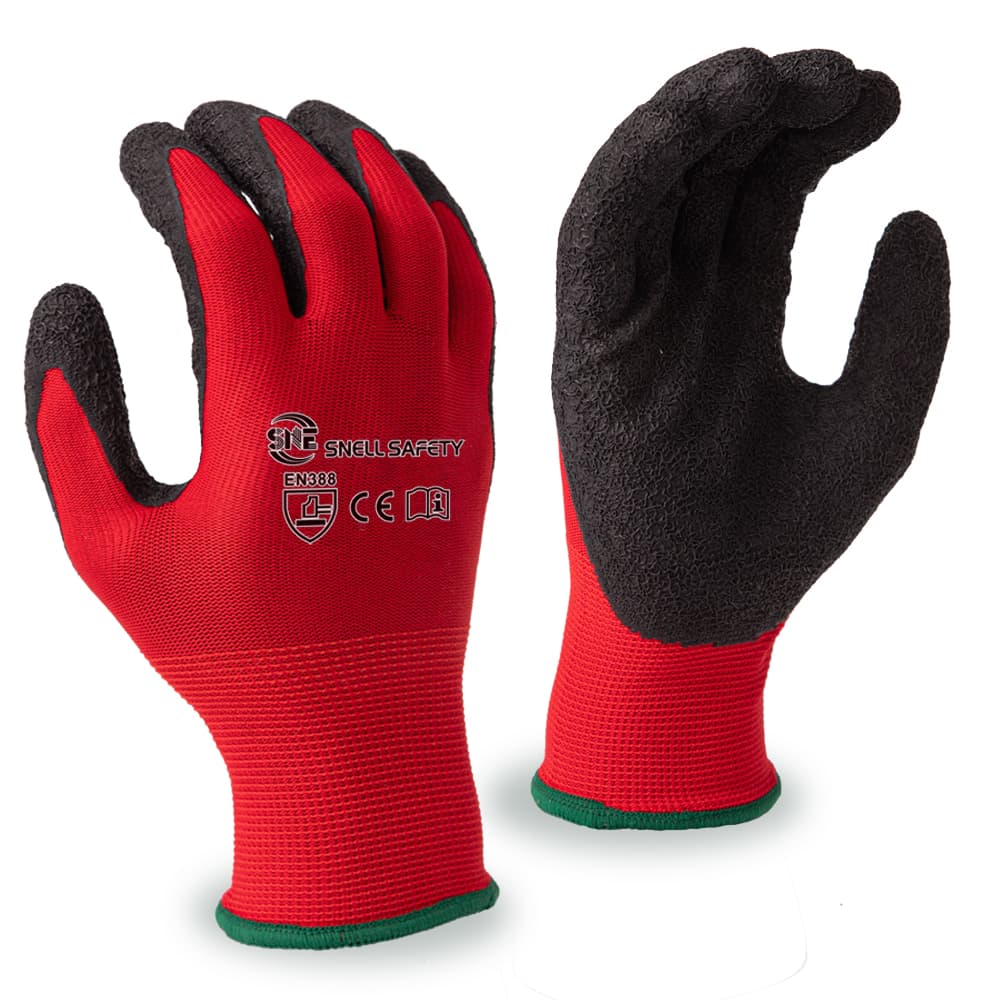
| Nitrile-coated knit glove | Nitrile coating over liner | Oily parts handling, warehousing, assembly | Grip and dexterity with moderate oil exposure |
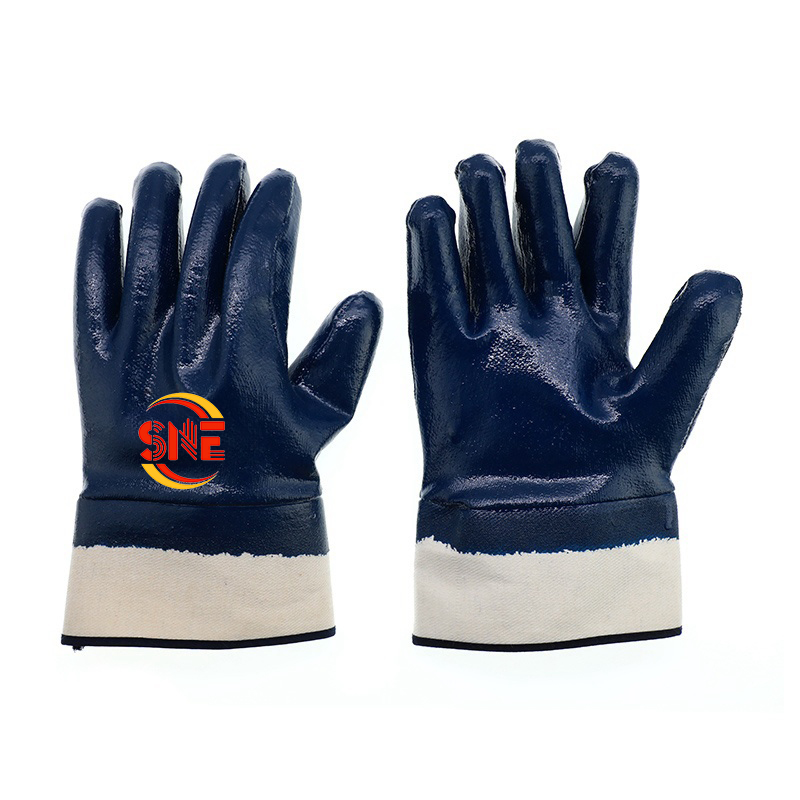
| Fully dipped nitrile glove | Nitrile | Heavier oil contact, dirty maintenance | More coverage and better liquid barrier |
| Chemical gauntlet glove | Neoprene | Chemical mixing, washdown, sanitation | Mixed chemical and oil environments |
| Unsupported reusable glove | Nitrile or neoprene | Janitorial, process handling, cleaning | Wet work with repeated reuse |
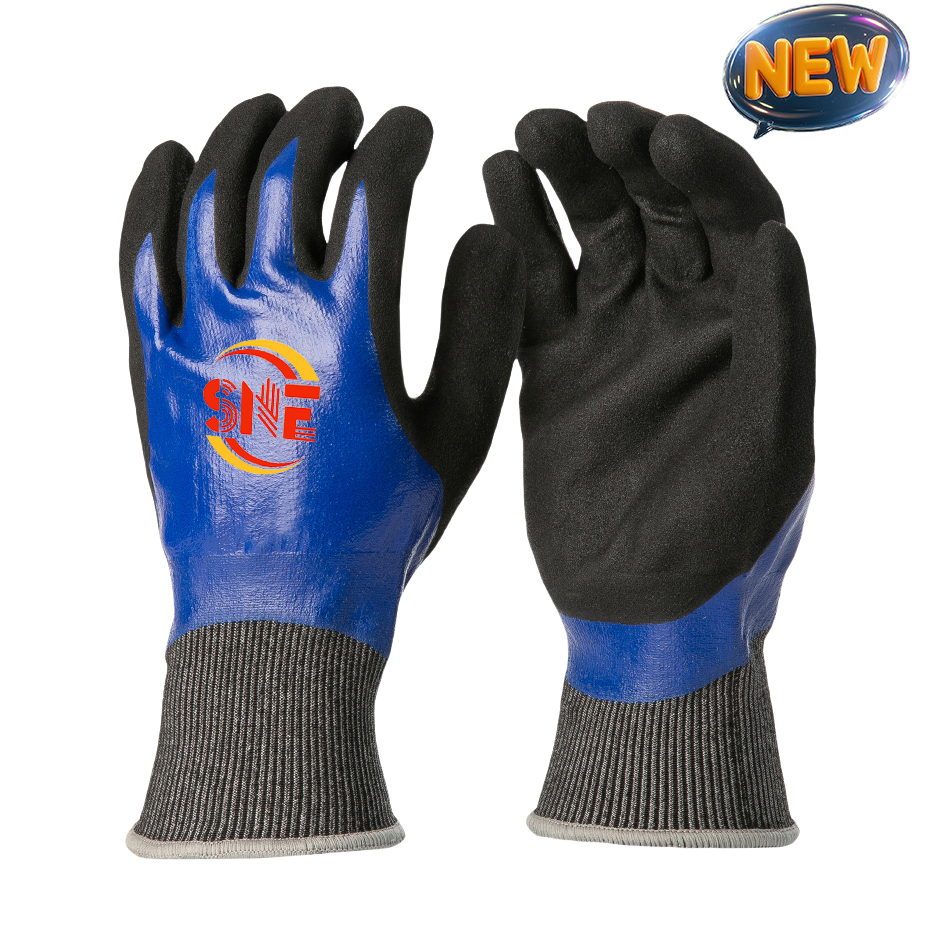
| Cut-resistant oil grip glove | Nitrile with engineered liner | Metal, glass, fabrication | Combined oil resistance and cut protection |
| Cold-weather oil resistant glove | Nitrile-coated insulated liner | Outdoor maintenance and utilities | Grip under cold, oily conditions |
This product breakdown shows why buyers should specify the task before choosing the material. A neoprene chemical gauntlet and a nitrile-coated knit glove are not direct substitutes even if both are described as oil resistant.
Buying Advice for U.S. Procurement Teams
Start with the fluid. Ask whether the main exposure is crude, fuel, grease, hydraulic oil, cutting fluid, detergent, acid, solvent blend, or a rotating mix. Then define the contact pattern: splash, intermittent handling, continuous wet contact, or immersion. Next, determine whether the worker needs fingertip sensitivity, touchscreen use, anti-slip grip, cut resistance, heat tolerance, or forearm coverage.
For U.S. facilities purchasing across multiple states, standardization can reduce complexity, but over-standardization can create safety gaps. Many large employers benefit from a two-tier or three-tier glove matrix: nitrile-coated gloves for parts handling, heavier nitrile for maintenance, and neoprene for chemical sanitation or washdown. This reduces misuse while keeping training simple.
Buyers should also review packaging, carton counts, replenishment lead times, and compatibility with distributor inventory systems. Ports such as Los Angeles/Long Beach, Houston, and Savannah remain important entry points for imported PPE, so freight predictability matters as much as unit cost for many buyers.
How Industries Use Nitrile and Neoprene
| Industry | Common Exposure | Preferred Material | Reason |
|---|---|---|---|
| Automotive service | Motor oil, grease, sharp parts | Nitrile | Better oil resistance, puncture performance, and dexterity |
| Metal fabrication | Cutting oil, metal edges | Nitrile | Works well with coated cut-resistant designs |
| Chemical processing | Oils plus acids and caustics | Neoprene | Broader chemical resistance in mixed environments |
| Food plant sanitation | Fats, oils, cleaners, washdown chemicals | Neoprene | Handles wet cleaning cycles and chemical contact |
| Oilfield maintenance | Hydrocarbons, grime, rough handling | Nitrile | Good abrasion resistance and oil grip |
| Marine repair | Fuel, lubricants, salt, cleaning agents | Neoprene | Useful across mixed environmental exposures |
| Warehouse logistics | Oily cartons, packaged machine parts | Nitrile | Lightweight grip and productivity advantage |
These patterns are common across U.S. industrial operations, but glove trials remain essential because conditions differ even within the same industry.
Application-Specific Guidance
For automotive technicians in states such as Texas, California, and Michigan, disposable nitrile gloves often support short-cycle tasks like inspections, fluid checks, and brake work, while coated nitrile gloves fit parts movement and general maintenance. For machine shops in Ohio or Illinois, foam nitrile or sandy nitrile coatings usually offer the best combination of grip and comfort when handling oily components.
For chemical cleaning contractors in New Jersey, Louisiana, or the Gulf Coast, neoprene gloves may reduce risk where workers face both oily residues and strong cleaning chemistry. For food processing plants in Iowa, Arkansas, or Georgia, neoprene can be useful in sanitation shifts, while nitrile remains practical in packaging or maintenance zones depending on exact process exposure.
For marine docks and port maintenance around Houston, Norfolk, and Seattle, neoprene can be valuable where wet handling and cleaning agents intersect with oil and fuel exposure. For general MRO programs, nitrile remains the default in many sites because it scales well across multiple tasks.
Trend Shift in Material Preference
U.S. buyers are gradually moving from simple oil resistance purchasing to a more nuanced model that combines grip, cut protection, comfort, sustainability, and task segmentation. This trend does not eliminate neoprene or nitrile; it creates more precise use cases for both.
The chart reflects a practical market shift: instead of asking which material is universally better, U.S. buyers increasingly ask which glove profile best matches each workstation.
Case Studies from Common U.S. Scenarios
A Midwest automotive parts remanufacturer handling oily housings and sharp-edged components tested neoprene and nitrile alternatives. Workers preferred nitrile-coated cut-resistant gloves because they reduced slippage while keeping hand fatigue lower during 10-hour shifts. The site cut glove consumption and improved operator acceptance by switching away from a heavier glove that was technically versatile but impractical for production speed.
A Gulf Coast cleaning contractor serving petrochemical facilities found that nitrile worked well for general maintenance but underperformed in cleaning cycles involving degreasers and chemical washdown. The company segmented PPE by task, assigning neoprene gauntlets for chemical cleaning and nitrile-coated gloves for handling equipment and oily tools. The result was better glove life and fewer complaints about stiffness or breakthrough risk.
A West Coast food processor with frequent sanitation cycles reviewed glove failure rates and found that one glove standard was being used in both maintenance and sanitation. By separating nitrile for mechanical maintenance and neoprene for sanitation teams, the site improved task fit and reduced excess spend on premium gloves used in the wrong area.
Local Suppliers and Major Brands Serving the United States
The U.S. market includes well-known domestic and multinational suppliers with broad industrial coverage. The table below highlights companies that are visible in U.S. distribution channels and commonly considered by procurement teams.
| Company | Service Region | Core Strengths | Key Offerings |
|---|---|---|---|
| Ansell | United States nationwide | Deep industrial portfolio, chemical expertise, strong distributor reach | Nitrile disposable gloves, chemical gloves, oil-grip industrial gloves |
| SHOWA | United States nationwide | Engineered hand protection, coated gloves, chemical-resistant lines | Nitrile-coated work gloves, unsupported nitrile, neoprene styles |
| Honeywell | United States nationwide | Large safety brand, industrial integration, broad PPE supply | General purpose nitrile gloves, industrial hand protection solutions |
| MCR Safety | United States and North America | Strong value positioning, warehouse availability, industrial focus | Nitrile-coated gloves, chemical resistant gloves, mechanic styles |
| Superior Glove | United States and Canada | Application-specific glove development, cut-resistant options | Oil-grip nitrile gloves, specialty industrial gloves, sleeves |
| PIP | United States nationwide | Extensive PPE distribution, multiple glove categories | Nitrile palm gloves, disposable nitrile, chemical hand protection |
| Magid | Midwest and nationwide distribution | Private label capability, industrial supply integration | Oil resistant gloves, coated work gloves, plant safety programs |
These companies are frequently sourced through industrial distribution networks in Chicago, Houston, Atlanta, Los Angeles, and other major U.S. trade hubs. Their main advantage is strong local availability, technical support, and established relationships with large end users.
Supplier and Product Position Comparison
This comparison illustrates a common U.S. sourcing reality. Large established brands score well on distribution depth and technical familiarity, while factory-direct import programs may score higher on customization and cost flexibility for private label and bulk volume buyers.
What to Ask Any Supplier Before Buying
Request permeation or resistance guidance for the specific oils, fuels, and chemicals in your operation. Ask whether the glove is intended for splash contact, prolonged wet handling, or immersion. Confirm coating type, liner material, cuff length, and whether grip performance changes when saturated with oil. Review carton quantities, lead time, and support for urgent replenishment. For branded resale or distributor expansion, ask about OEM options, packaging customization, and exclusivity by region.
U.S. buyers should also ask whether the supplier can support pilot trials, provide sizing runs for mixed workforces, and offer documentation needed for internal safety committees. Good glove programs succeed when users can compare performance directly in real work conditions rather than selecting only from catalog descriptions.
Our Company
For U.S. buyers evaluating factory-direct supply, Snell Safety presents a practical option in the oil resistant glove segment because its production model combines scale, certification, and customization. The company operates two manufacturing facilities with six dedicated production lines and daily output of about 150,000 pairs, supporting consistent bulk supply for distributors, wholesalers, brand owners, and industrial end users. Its core strengths include nitrile, latex, and PU coating technologies, plus cut-resistant and impact-resistant glove engineering that helps buyers build more specialized product lines beyond basic oil resistance. From a product assurance perspective, ISO 9001 and CE credentials, vertically integrated production control, and established export experience across Europe, Australia, the Middle East, South America, Russia, and Southeast Asia provide concrete evidence of process discipline and compliance readiness expected by U.S. procurement teams. From a cooperation standpoint, the company supports OEM, ODM, private label, wholesale, and custom manufacturing, which is useful for importers, regional dealers, and employers that need branded packaging, size runs, coating adjustments, or market-specific product positioning. For service continuity, buyers can explore the company’s industrial glove range, start discussions through the U.S.-oriented contact channel, or review its factory profile on the official website. This matters in the U.S. market because responsive pre-sales technical communication, sampling support, and organized export logistics are often the difference between a successful private-label rollout and a delayed replenishment cycle. With multilingual operations and documented export activity into regulated markets, the company fits buyers looking for long-term supply partnership rather than one-off remote sourcing.
How to Decide Between Nitrile and Neoprene for Your Operation
Choose nitrile if your workflow is dominated by petroleum oils, greasy parts, tool handling, and high replacement volume. It is usually the better fit for automotive, machine shops, warehouse maintenance, and general industrial MRO. Choose neoprene if your employees move between oil exposure and chemical cleaning, sanitation, or process contact where a broader resistance profile matters. If your operation is complex, do not force a single answer. Build a glove matrix by task.
In most U.S. facilities, the best practical decision is not nitrile or neoprene across the entire site. It is nitrile for core volume usage and neoprene for targeted chemical or wet-process applications. That approach aligns safety performance with cost discipline.
2026 Trends to Watch
By 2026, the U.S. oil resistant glove market is expected to move further toward task-specific designs and more data-driven PPE selection. Three trends stand out. First, technology: more gloves will combine oil resistance with cut protection, touchscreen functionality, improved ergonomic liners, and enhanced coatings designed for secure grip on wet and oily surfaces. Second, policy and compliance: buyers will pay closer attention to documented performance, training compatibility, and product consistency as workplace safety scrutiny remains high across industrial sectors. Third, sustainability: U.S. distributors and end users are showing greater interest in packaging reduction, more durable reusable gloves, and supply programs that reduce unnecessary glove consumption rather than relying on single-spec overuse.
Another likely 2026 development is stronger dual-sourcing and near-market inventory planning. U.S. importers and distributors want resilience after prior freight and inventory disruptions. Suppliers able to support local planning, stable container programs, and faster custom development will have an advantage, especially in port-driven trade lanes such as Long Beach, Houston, Savannah, and Newark.
Frequently Asked Questions
Are nitrile gloves more oil resistant than neoprene gloves?
Nitrile is usually better for petroleum oils, fuels, and grease, especially in automotive and industrial maintenance. Neoprene can still resist oil well, but it is often chosen for broader chemical balance rather than pure oil performance.
Are neoprene gloves better for chemical plants?
Often yes, especially when workers face oils along with acids, caustics, detergents, or washdown chemicals. The exact answer depends on the chemical mix and contact duration.
Which glove lasts longer in rough mechanical work?
Nitrile usually performs better where abrasion, puncture risk, and oily parts handling are the main issues. Durability also depends on thickness, coating style, and liner construction.
Which is better for food processing sanitation?
Neoprene is often preferred for sanitation and washdown roles because of its chemical versatility in wet cleaning environments. Nitrile may still be suitable in maintenance or packaging zones.
Is nitrile cheaper than neoprene?
In many industrial purchasing programs, nitrile is more cost-effective, especially for coated work gloves and high-volume usage. Neoprene specialty gloves often cost more.
Should one facility buy both types?
Yes, many U.S. facilities benefit from stocking both. Nitrile covers most oil-intensive tasks, while neoprene supports mixed chemical applications that nitrile may not handle as well.
Can international suppliers support U.S. buyers effectively?
Yes, especially when they offer recognized certifications, dependable production capacity, OEM or private-label options, and responsive pre-sales and after-sales support. This is particularly valuable for distributors and large-volume industrial buyers.
Final Takeaway
For most U.S. industrial buyers, nitrile wins the comparison when the job centers on oil, grease, fuels, abrasion, and productivity. Neoprene wins when the job includes oil but extends into broader chemical exposure, sanitation, or variable wet conditions. The smartest purchasing strategy is to align glove material with the real exposure profile, validate through site trials, and source from suppliers that can prove both product performance and supply reliability.