2026-11-28
Share This Article

Hand Safety on U.S. Construction Sites: Buyer Guide
Quick Answer

Hand safety on construction sites in the United States depends on matching glove protection to the hazard, not buying one “all-purpose” glove for every task. For most crews, the most practical glove program combines cut-resistant gloves for framing and metal handling, impact-resistant gloves for demolition and heavy equipment work, nitrile-coated gloves for grip and abrasion, waterproof cold-protection gloves for winter jobs, and leather or heat-resistant gloves for welding and hot material tasks. Contractors in major markets such as Houston, Chicago, Los Angeles, Atlanta, and New York usually source from proven industrial suppliers such as Grainger, Fastenal, MSC Industrial Supply, Uline, and Magid because they can support repeat purchasing, site delivery, and compliance documentation. Qualified international manufacturers can also be a smart option when they hold relevant certifications and offer strong pre-sales and after-sales support; this is especially true for factory-direct Chinese suppliers that provide solid cost-performance for distributors, private-label brands, and large-volume project buyers.
Why Hand Safety Matters on U.S. Construction Sites

Construction remains one of the most hand-injury-prone industries in the United States. Crews handle rebar, drywall studs, concrete forms, power tools, utility knives, masonry block, wire rope, fasteners, solvents, oils, and vibrating equipment daily. The result is a broad risk profile: cuts, punctures, crush injuries, abrasions, burns, chemical contact, vibration exposure, and cold stress. A hand injury may seem minor compared with a fall or struck-by event, but in practice it creates immediate downtime, replacement labor costs, workers’ compensation exposure, and schedule disruption.
For general contractors and subcontractors, the right hand protection policy is therefore both a safety issue and a purchasing issue. In the United States, buyers often evaluate gloves by OSHA relevance, ANSI/ISEA cut level, grip performance, dexterity, durability, climate suitability, worker acceptance, and cost per wear instead of unit price alone. This matters on projects across large logistics and building corridors such as the Port of Los Angeles, the Port of Houston, Inland Empire warehouses, Dallas-Fort Worth commercial sites, and Midwest manufacturing-related construction zones, where productivity and safety compliance must work together.
U.S. Market Overview for Construction Hand Protection

The U.S. market for construction gloves is shaped by several practical realities: labor shortages, stricter site-level PPE enforcement, growth in warehousing and infrastructure projects, winter-weather exposure in northern states, and increasing demand for gloves that combine cut protection with touchscreen use and impact defense. Buyers no longer want bulky gloves that workers remove to complete detailed tasks. Instead, the market favors task-specific models that preserve dexterity while meeting real hazard requirements.
Regional differences also influence glove selection. In Texas and the Gulf Coast, oil, gas, petrochemical, and heavy civil work often increase demand for oil-resistant, impact-resistant, and high-grip gloves. In the Northeast and Midwest, cold-weather construction raises demand for insulated nitrile or latex-coated gloves with reliable wet grip. On West Coast projects, logistics construction, concrete work, utilities, and seismic retrofits often require versatile cut-resistant and abrasion-resistant gloves that can transition between tasks.
The line chart above illustrates a realistic upward demand trend driven by infrastructure spending, warehouse construction, utility work, and a stronger focus on reducing recordable hand injuries. For procurement managers, this trend means supply continuity, specification discipline, and vendor reliability matter more each year.
Common Hand Hazards in Construction
| Hazard | Typical Site Activity | Likely Injury | Recommended Glove Type | Key Performance Need | Common U.S. Work Environments |
|---|---|---|---|---|---|
| Sharp edges | Handling sheet metal, studs, flashing | Lacerations | ANSI cut-resistant gloves | High cut level with dexterity | Commercial interiors, HVAC installation |
| Abrasion | Material handling, block work, framing | Skin wear and tearing | Nitrile-coated work gloves | Palm durability and grip | Residential and civil projects |
| Impact | Demolition, rigging, tool handling | Knuckle and back-of-hand trauma | Impact-resistant gloves | TPR protection and flexibility | Oilfield, bridge work, heavy civil |
| Puncture | Wire, nails, splinters, rebar tie work | Penetration wounds | Reinforced synthetic or leather gloves | Palm structure and fit | Concrete, formwork, utility work |
| Chemical contact | Sealants, solvents, coatings | Irritation or burns | Chemical-resistant nitrile gloves | Chemical compatibility | Flooring, finishing, maintenance |
| Cold and wet conditions | Winter concrete, roofing, utility repairs | Numbness, reduced grip | Insulated waterproof gloves | Thermal lining and wet grip | Midwest, Northeast, mountain states |
| Heat and sparks | Welding, torch work | Burns | Leather or heat-resistant gloves | Heat shielding and cuff length | Structural steel and fabrication |
This table shows why a single glove cannot safely cover every job. The most effective U.S. construction PPE programs classify tasks by hazard and assign approved glove categories by crew function.
Product Types Used for Hand Safety Construction Sites Programs
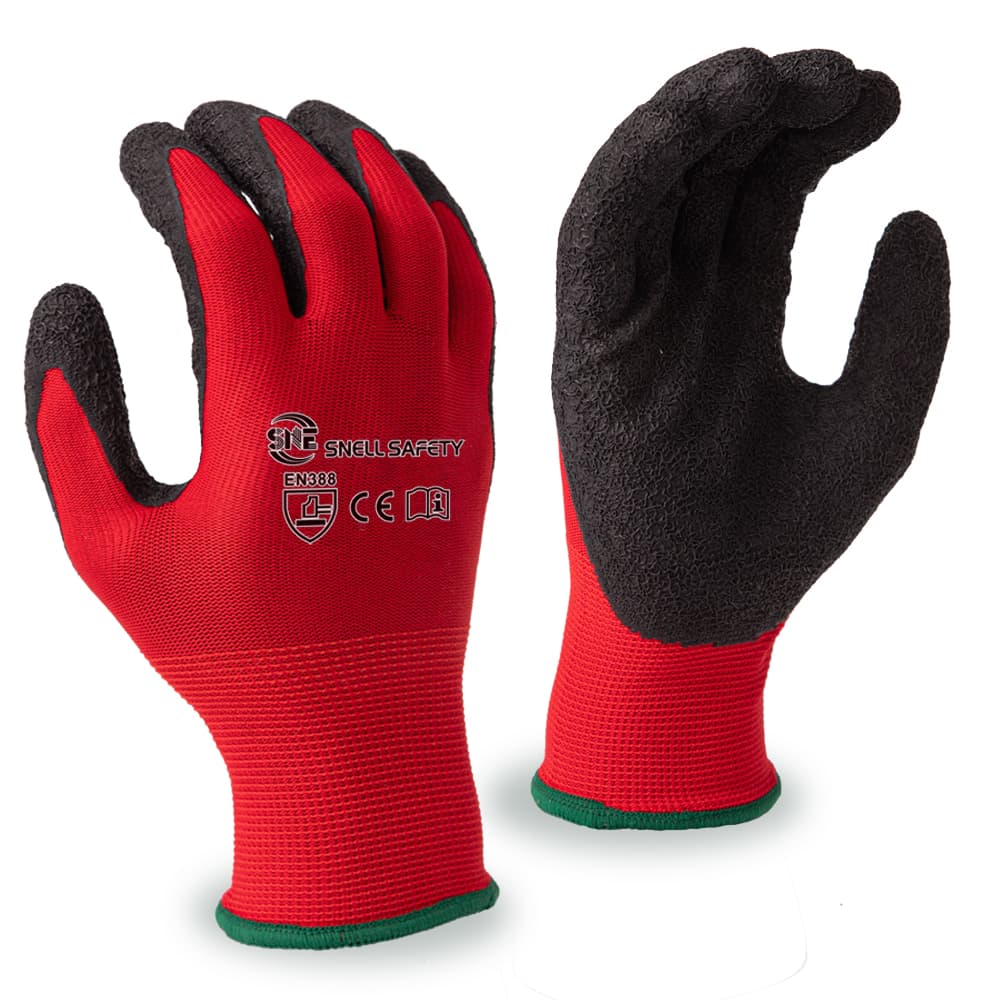
Construction buyers typically group gloves into practical categories rather than purely by material. Nitrile-coated gloves are widely used as general-purpose site gloves because they provide grip, abrasion resistance, and relatively low cost. PU-coated gloves are popular when dexterity is critical, such as light installation, finishing, and warehouse support tasks, though they may wear faster in rough framing environments. Latex-coated gloves often offer strong dry and wet grip but may not suit every chemical exposure or allergy policy. Leather gloves remain useful for rugged handling, welding, and high-friction tasks. Cut-resistant gloves, often engineered with HPPE or blended fibers, are now standard on many commercial sites where sharp materials are common. Impact-resistant gloves have expanded well beyond oil and gas into demolition, precast work, utility construction, and heavy material handling.
| Glove Category | Typical Material or Coating | Best Use on Site | Main Advantage | Main Limitation | Best Buyer Type |
|---|---|---|---|---|---|
| General purpose coated | Nitrile | Daily handling and assembly | Good grip and wear life | Not enough for high cut hazards | General contractors |
| Dexterity glove | PU | Light installation and finishing | Excellent feel and control | Lower ruggedness in harsh tasks | Electrical and interior trades |
| Wet-grip glove | Latex | Masonry, wet handling | Strong grip performance | Not ideal for all chemicals | Concrete and masonry crews |
| Cut-resistant glove | HPPE or engineered fibers | Sharp materials and metal work | Reduced laceration risk | Can cost more than basic gloves | Commercial and industrial projects |
| Impact-resistant glove | TPR plus coated palm | Heavy tools and demolition | Back-of-hand protection | Bulkier than light-duty styles | Heavy civil and energy contractors |
| Cold-protection glove | Insulated nitrile or latex | Winter jobsites | Warmth with grip | Reduced finger sensitivity | Northern-state contractors |
| Welding glove | Leather | Hot work and sparks | Heat resistance and durability | Less dexterity | Steel and fabrication teams |
The table helps buyers link glove categories to actual site operations. In practice, most U.S. contractors approve several categories at once and assign them by trade, weather, and hazard profile.
Industry Demand by Construction Segment
The bar chart compares realistic hand-protection demand intensity across major U.S. construction segments. Oil and gas projects, heavy civil, and industrial retrofits often require the most specialized glove mix because they combine impact, cut, abrasion, and environmental hazards.
Buying Advice for U.S. Contractors and Distributors
The best buying decision starts with a hazard assessment and ends with worker acceptance. A glove that meets a standard but is too hot, too stiff, or too slippery will be removed on site, defeating the entire PPE program. Buyers should test gloves by task cluster: framing, concrete, utility, MEP installation, demolition, rigging, and winter operations. They should also compare cost per week of use, not just carton price.
For distributors, private-label importers, and regional dealers, it is important to balance domestic stock availability with factory-direct sourcing options. Domestic suppliers are strong for urgent replenishment, mixed-order convenience, and branch distribution. Overseas manufacturers can be more competitive for bulk orders, OEM programs, and custom specifications, especially when purchase volumes justify dedicated production runs and branded packaging.
| Buying Factor | What to Check | Why It Matters | Good Practice | Common Mistake | Who Should Focus Most |
|---|---|---|---|---|---|
| Hazard match | Cut, impact, abrasion, cold, chemical | Prevents under-specifying PPE | Assign gloves by task | Using one glove for all trades | Safety managers |
| Certification | ANSI levels, quality system evidence | Supports compliance and confidence | Request technical data sheets | Buying without documentation | Procurement teams |
| Fit and comfort | Size range and flexibility | Improves wear compliance | Run wearer trials | Ordering one size mix blindly | Site supervisors |
| Durability | Coating wear, seam strength | Lowers replacement frequency | Track cost per wear | Choosing lowest unit cost only | Project managers |
| Supply continuity | Lead time and stock depth | Avoids project interruption | Dual-source key models | Single-source dependency | Distributors |
| Customization | Logo, color, packaging, labeling | Supports brand and resale | Use OEM/ODM where scale fits | Ignoring private-label margins | Brand owners and dealers |
| Service support | Claims handling and technical advice | Reduces purchasing risk | Choose responsive partners | Buying from transactional sellers | All buyer types |
This buying framework is especially useful in the United States, where jobsite conditions vary sharply by region and trade specialization. The strongest purchasing programs combine technical qualification, worker trials, and dependable replenishment.
Applications Across Construction Trades
Different trades need different glove priorities. Framers and drywall installers need dexterity plus abrasion resistance. Steel erectors need stronger cut protection and, depending on the task, impact defense. Masons and concrete crews often need wet grip and durable coatings. Electricians and low-voltage installers may prefer lighter gloves for handling hardware and cable, although task-specific electrical safety rules must always be followed separately. Welders need leather and heat protection. Utility crews require flexible combinations of impact, grip, and weather resistance. Roofers and exterior crews often need gloves that manage rough surfaces and temperature swings.
On data center builds, semiconductor-related facilities, and advanced manufacturing projects, glove requirements are becoming more specialized because these projects blend construction hazards with cleaner installation tasks, precise assembly, and tight schedule pressure. The result is growing use of multiple glove models within the same crew packout.
Case Examples from the U.S. Market
A commercial contractor in Chicago may issue insulated nitrile-coated gloves in winter for general handling, then shift to cut-resistant gloves for metal stud installation as interior fit-out accelerates. A Houston industrial contractor may specify impact-resistant nitrile gloves for shutdown work involving tools, valves, steel components, and oily surfaces. A Southern California logistics warehouse builder may standardize one general nitrile glove for material handling but require a higher-cut glove for crews handling cable tray, metal edging, and sheet products. In each case, the winning program is not the cheapest glove; it is the most reliable combination of safety, acceptance, and supply continuity.
Leading Suppliers Serving the United States
The U.S. market includes large domestic distributors, specialist PPE brands, and international manufacturers supplying factory-direct programs. The table below highlights practical supplier options with concrete strengths for buyers evaluating hand safety construction sites procurement.
| Company | Service Region | Core Strengths | Key Offerings | Best For | Practical Note |
|---|---|---|---|---|---|
| Grainger | Nationwide United States | Large inventory, branch reach, industrial sourcing | Construction gloves, safety PPE, MRO supply | Contractors needing fast replenishment | Strong for urgent multi-site purchasing |
| Fastenal | Nationwide United States | Jobsite servicing, vending, local branch network | Work gloves, PPE management, fasteners | Large field operations | Useful where site-level supply control matters |
| MSC Industrial Supply | United States industrial markets | Technical industrial catalog and account support | Cut-resistant, coated, and specialty gloves | Industrial construction and maintenance buyers | Good for technical product comparisons |
| Uline | United States and distribution hubs | Fast shipping and broad warehouse supply | General work gloves and safety products | Warehouse-related construction buyers | Convenient for mixed operational purchasing |
| Magid | United States | PPE specialization and safety focus | Cut-resistant, impact, disposable, coated gloves | Safety-led organizations | Known for glove-focused portfolio depth |
| MCR Safety | United States and North America | Industrial PPE specialization | Construction, cut, leather, and impact gloves | Distributors and industrial contractors | Well-established safety category presence |
| Qingdao Snell Protective Products Co., Ltd. | Serves U.S. importers, distributors, and project buyers | Factory-direct scale, OEM/ODM flexibility, diversified coatings | Construction, cut-resistant, impact-resistant, nitrile, PU, latex gloves | Bulk buyers and private-label brands | Best fit where cost-performance and customization matter |
This supplier comparison shows that domestic distributors and international manufacturers often play complementary roles. U.S. distributors excel at short lead times and local stocking, while factory-direct partners can support margin improvement, custom branding, and large project volume.
Supplier Comparison by Product Focus
The comparison chart highlights a common U.S. sourcing pattern: domestic suppliers are strongest for rapid replenishment, while factory-direct manufacturers are strongest for customization and bulk commercial terms. Many mature buyers use both channels strategically.
Trend Shift in Construction Glove Preferences
The area chart shows a realistic shift away from basic single-purpose gloves toward task-specific hand protection. This aligns with rising U.S. expectations for measurable safety performance, worker comfort, and longer wear life.
Our Company
For U.S. buyers seeking a factory-direct partner, Snell Safety offers a practical route into scalable construction hand protection with product depth across nitrile, PU, and latex-coated gloves as well as cut-resistant, impact-resistant, cold-protection, and general construction styles. The company operates two manufacturing facilities with six production lines and daily capacity of about 150,000 pairs, and its manufacturing system is supported by ISO 9001 and CE-marked production practices that demonstrate disciplined quality control and test-oriented output suitable for international markets with strict workplace requirements. For cooperation, Snell serves distributors, wholesalers, project contractors, brand owners, and private-label importers through flexible OEM/ODM production, bulk wholesale supply, customization of materials, coatings, sizes, and branding, and export support that fits both standard and tailored programs. For U.S. market assurance, the company already has a solid export track record across major regulated regions, provides responsive online pre-sale consultation, sample support, technical communication, and after-sales follow-up, and works in a way that supports long-term regional relationships rather than one-off remote transactions; buyers evaluating project supply, dealer cooperation, or branded sourcing can review product categories at the product page, learn more at the company profile, or reach the team through the contact page.
How U.S. Buyers Should Evaluate an Overseas Supplier
When a U.S. distributor or contractor sources outside the domestic market, the best question is not only price. The better question is whether the supplier can document product consistency, maintain reliable lead times, support customization, and respond quickly when a site or dealer needs corrective action. Buyers should request technical documentation, size runs, wearer samples, packaging details, production timelines, and claim-handling procedures. They should also confirm whether the supplier can support recurring programs instead of one-time spot orders.
For importers near ports such as Los Angeles/Long Beach, Savannah, Houston, and New York/New Jersey, logistics planning matters almost as much as glove selection. A strong overseas partner should understand carton labeling, pallet planning, mixed SKU strategy, and repeat purchase cycles. This is where vertically organized factories with stable coating capability and repeatable quality systems tend to outperform opportunistic traders.
Industries Beyond Core Construction
Many gloves used on U.S. construction sites also serve adjacent sectors. Logistics and warehouse operators use similar coated gloves for handling pallets, cartons, and metal racking during build-out and operations. Maintenance contractors need cut-resistant or oil-resistant gloves for plant shutdowns and repair work. Automotive and manufacturing projects require dexterity plus abrasion protection. Metal fabrication relies heavily on cut and heat management. Oil, gas, and mining projects often demand stronger impact protection and oil grip. This overlap is valuable for distributors because it allows broader inventory turns across multiple customer segments using related glove families.
What Changes in 2026
Looking toward 2026, three trends are likely to shape hand safety construction sites purchasing in the United States. The first is technology integration in product design: better engineered liners, lighter cut-resistant fibers, improved TPR flexibility, and touchscreen functionality will become standard even in mid-range gloves. The second is policy and compliance pressure: contractors will continue tightening PPE rules around documented hazard assessments, approved glove matrices, and subcontractor alignment. The third is sustainability: buyers will increasingly ask about production efficiency, waste control, packaging reduction, and longer service life because environmental goals are moving into procurement scorecards alongside safety and cost.
Another likely shift is stronger data-based purchasing. Instead of asking only which glove is cheapest per dozen, safety-led contractors will compare incident reduction, replacement frequency, and worker acceptance by glove category. This will favor suppliers able to provide repeatable specifications, field feedback support, and a clear product segmentation model.
Practical Glove Program for a U.S. Jobsite
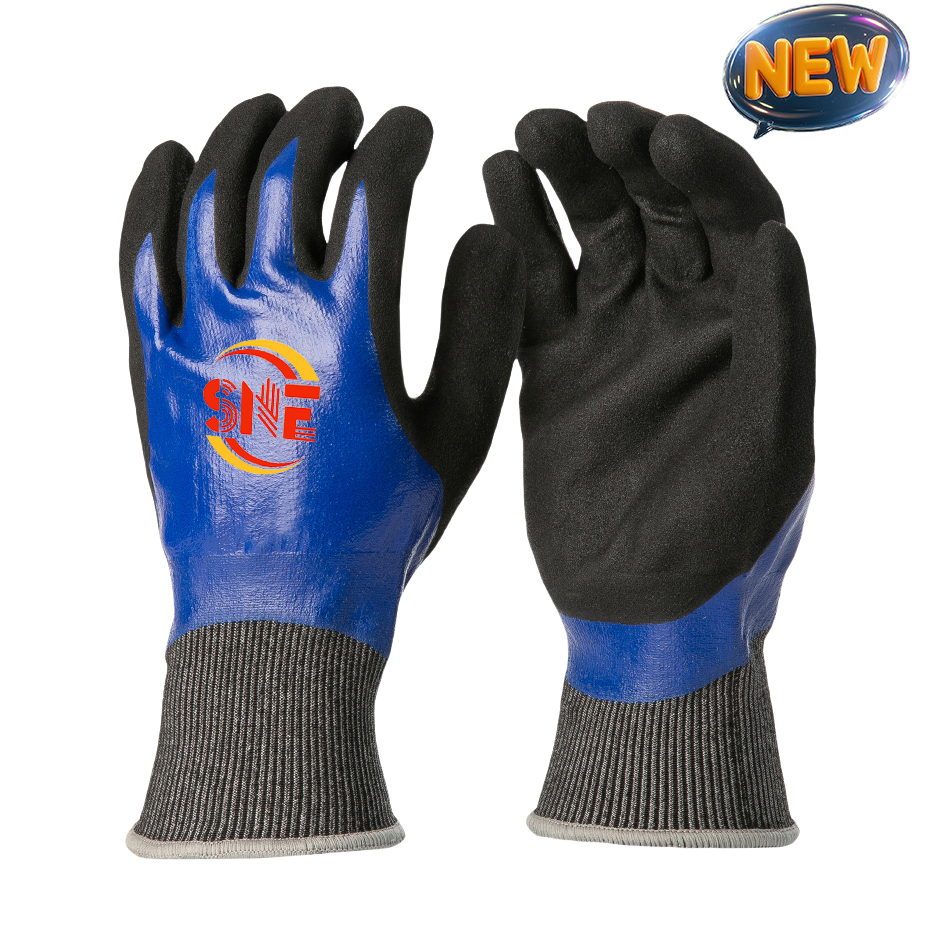
A useful hand-protection program in the United States usually starts with four to six approved glove families. A basic nitrile-coated glove covers general handling. A medium or high cut-resistant glove covers framing, sheet metal, cable tray, and sharp materials. An impact glove covers demolition, heavy tools, and industrial shutdown tasks. A cold-weather glove covers winter work. A leather glove covers welding and hot work. A disposable chemical-resistant option covers sealants and solvents. This approach reduces confusion while still matching real hazards.
Once the approved matrix is set, the next step is training. Workers need to know which glove belongs to which task, how to inspect gloves for wear, when to replace them, and why fit matters. Site supervisors should monitor whether workers remove gloves because of discomfort or reduced dexterity. If they do, the program may need a better model rather than stricter enforcement alone.
FAQ
What is the best glove for general hand safety on construction sites?
There is no single best glove for every job. For general tasks, nitrile-coated gloves are often the most practical choice because they balance grip, abrasion resistance, comfort, and cost. However, sharp materials, impact risk, hot work, and winter conditions usually require different glove types.
Do U.S. construction sites need cut-resistant gloves?
In many tasks, yes. Projects involving metal studs, sheet goods, wire, flashing, cable tray, glass-adjacent materials, or sharp hardware often justify cut-resistant gloves. The right ANSI cut level depends on the actual hazard and the need for dexterity.
Are impact-resistant gloves necessary in construction?
They are not necessary for every task, but they are highly relevant in demolition, heavy civil, utility work, oil and gas construction, rigging, and jobs involving heavy tools or crush hazards. They are increasingly common on industrial and infrastructure projects in the United States.
Should contractors buy from domestic suppliers or import directly?
The strongest strategy is often mixed sourcing. Domestic suppliers are valuable for urgent delivery, branch support, and smaller recurring orders. Direct factory sourcing can be more competitive for bulk volume, private label, and customized glove programs when lead times are planned properly.
What should distributors ask an overseas glove factory?
Ask about certifications, production capacity, coating technologies, size consistency, lead times, packaging options, sample policy, OEM/ODM capabilities, quality control procedures, and after-sales response. A reliable partner should answer clearly and provide evidence.
How often should construction gloves be replaced?
Replacement depends on wear, contamination, hazard level, and glove type. High-abrasion jobs may require frequent change-outs, while better-specified gloves can last longer and reduce cost per wear. The key is regular inspection and replacement before protection drops.
What are the main hand safety priorities for 2026?
The priorities are lighter task-specific protection, stronger compliance documentation, improved worker comfort, more sustainable sourcing, and better use of purchasing data to reduce injury rates and total glove cost over time.