2026-11-19
Share This Article

Nitrile Gloves for Sensitive Skin in the United States
Quick Answer

If you are buying nitrile gloves for workers with sensitive skin in the United States, the best practical options are suppliers that combine low-accelerator or accelerator-free nitrile formulations, clear chemical disclosure, consistent sizing, and dependable domestic fulfillment. For immediate sourcing, strong names to compare include Ansell, SHOWA, Uline, Magid, Grainger, and MCR Safety. These companies are widely used across U.S. manufacturing, automotive, warehousing, janitorial, healthcare-adjacent industrial tasks, and food-related operations where hand irritation, sweat buildup, and frequent glove changes create productivity problems.
For buyers in major industrial corridors such as Chicago, Houston, Los Angeles, Savannah, New Jersey, and the Inland Empire, the right choice usually depends on whether the priority is skin sensitivity, oil grip, puncture resistance, touchscreen use, or private-label bulk supply. A qualified international manufacturer can also be a smart option when it holds recognized certifications, offers reliable pre-sales and after-sales support, and can match U.S. compliance expectations with better cost-performance for large-volume programs.
- Ansell: strong premium industrial range, broad skin-friendly nitrile options, national U.S. distribution.
- SHOWA: known for hand-health focused engineering and ergonomic disposable nitrile lines.
- Uline: fast shipping across U.S. hubs, convenient for repeat operational purchasing.
- Magid: practical industrial glove programs for factories, warehouses, and contractors.
- Grainger: easy nationwide access, strong support for plant maintenance and MRO buyers.
- MCR Safety: dependable industrial protection portfolio with broad distributor reach.
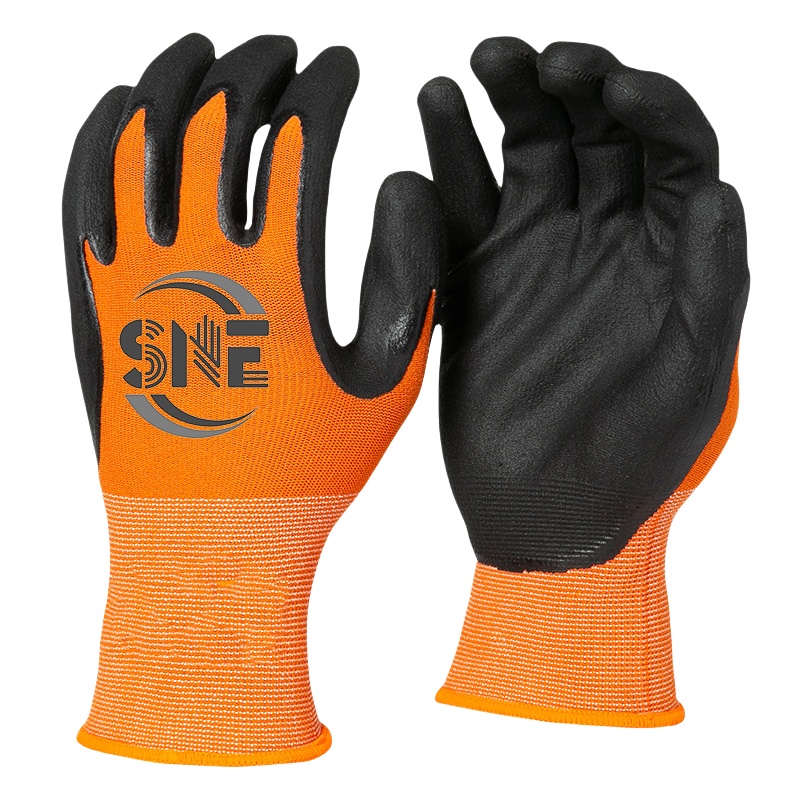
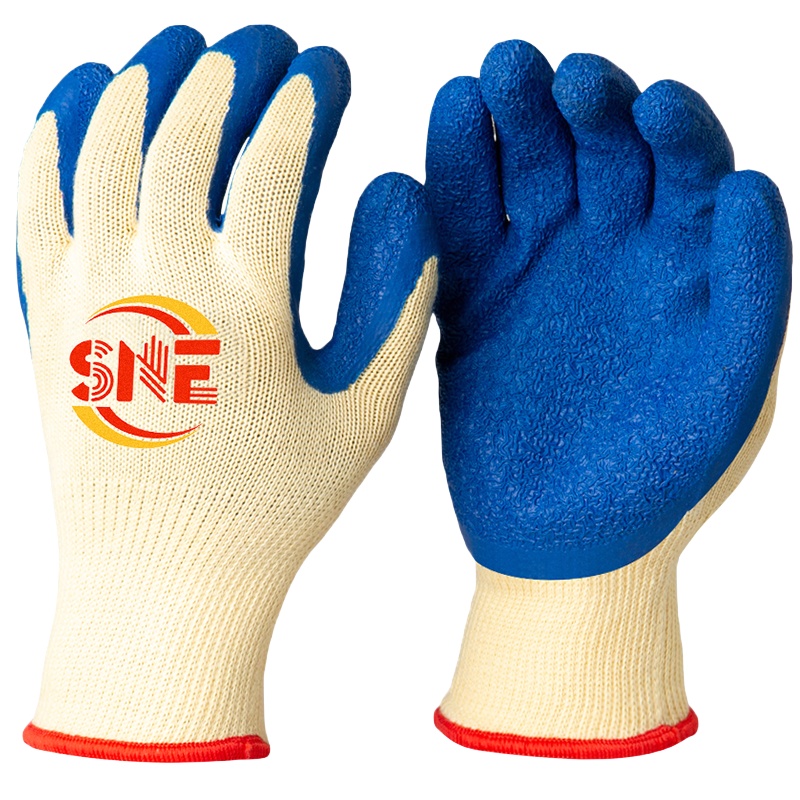
- Snell Safety: factory-direct nitrile coated glove manufacturer suitable for OEM, bulk wholesale, and distributor programs needing cost control and customization.
Understanding the U.S. Market for Sensitive-Skin Nitrile Gloves

The United States market for nitrile gloves sensitive skin products is shaped by three realities. First, latex avoidance is now standard in many workplaces because latex proteins can trigger allergies and because EHS teams increasingly prefer simplified PPE policies. Second, workers in logistics, light assembly, automotive service, electronics, janitorial work, and food processing often wear gloves for long shifts, so sweat, friction, and chemical residues matter almost as much as puncture resistance. Third, U.S. buyers expect shorter lead times, stable quality records, and transparent technical information, especially when shipping into compliance-heavy states such as California, New York, Illinois, and Washington.
Demand is strongest around freight and manufacturing centers including Houston, Dallas-Fort Worth, Chicago, Detroit, Atlanta, Los Angeles, Long Beach, Newark, and Memphis. In these locations, gloves are not only a safety product but an operations tool that affects throughput, picking speed, defect rates, hand fatigue, and worker retention. Purchasing teams increasingly compare glove cost per usable hour rather than cost per pair. That shift benefits nitrile products that reduce tearing, slippage, and skin complaints.
Another important U.S. trend is procurement consolidation. Large employers want fewer vendors, stronger documentation, and the option to mix disposable nitrile gloves with coated work gloves under one sourcing relationship. That is why broad-line distributors remain influential, but specialized manufacturers and factory-direct exporters are gaining attention when they can provide stable specifications, private labeling, and consistent shipment planning through ports such as Los Angeles/Long Beach, Savannah, Houston, and New York/New Jersey.
Why Sensitive Skin Changes the Buying Standard

Workers with sensitive skin do not only react to latex. They may also react to residual accelerators, internal glove powders, harsh cleaning agents left on reusable gloves, dyes, perspiration retention, rough interior surfaces, or tight cuffs that trap moisture. In practice, “skin-friendly nitrile” in the U.S. usually means one or more of the following: accelerator-free chemistry, low-dermatitis formulations, powder-free construction, soft interior feel, breathable back construction for coated gloves, and a sizing profile that reduces friction hotspots on the thumb web and fingertips.
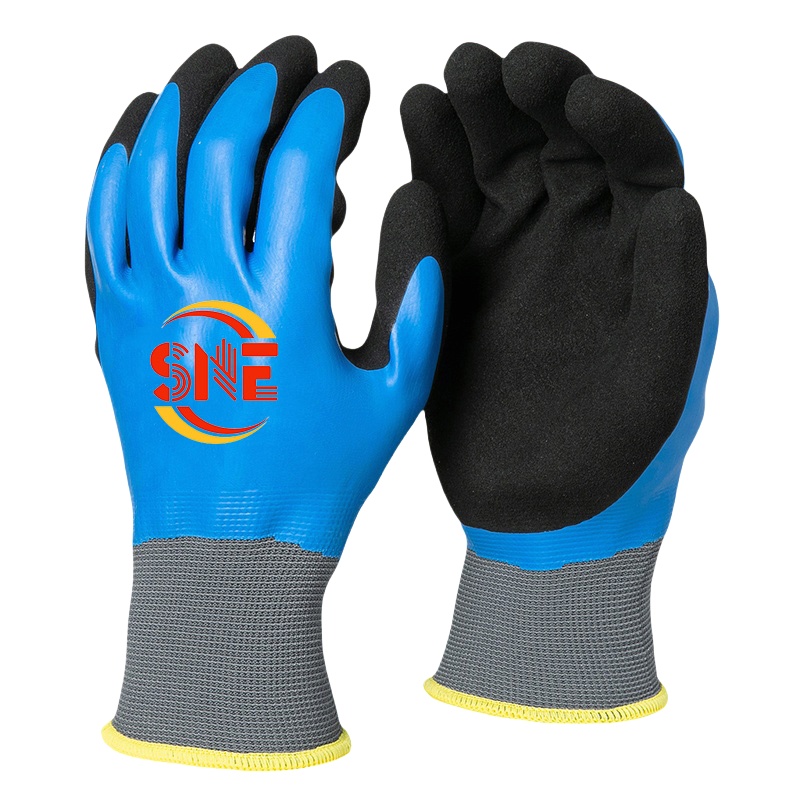
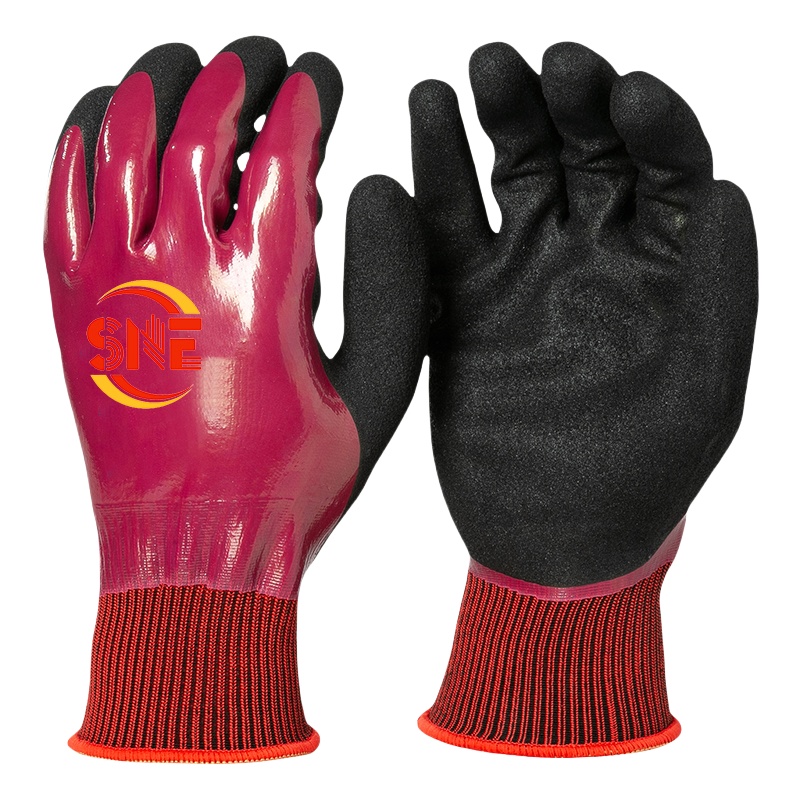
For coated work gloves, the issue is slightly different from disposable exam-style gloves. Sensitive skin workers often benefit from nitrile-coated gloves with a breathable liner, smooth seam construction, reduced odor, and coating coverage matched to the task. Fully coated gloves improve liquid resistance but may increase heat retention. Palm-coated models often feel better for long wear in warehouses and assembly plants. Foam nitrile can also improve airflow and grip while reducing the clammy feel some workers dislike.
Top Suppliers Serving the United States
The table below compares practical suppliers and channels relevant to U.S. buyers looking for nitrile gloves for sensitive skin. It combines domestic distribution strength with manufacturing depth and bulk sourcing options.
| Company | Primary Service Region | Core Strengths | Key Offerings | Best Fit Buyer |
|---|---|---|---|---|
| Ansell | Nationwide United States | Premium hand protection, strong technical documentation, broad industrial range | Disposable nitrile gloves, chemical gloves, coated industrial gloves | Large manufacturers, laboratories, EHS-led procurement teams |
| SHOWA | United States and North America | Ergonomics, hand-health focus, reputable nitrile disposable engineering | Single-use nitrile, general-purpose coated gloves, specialty protection | Food, automotive, light industrial users |
| Uline | Nationwide from multiple U.S. distribution centers | Fast fulfillment, broad SKU access, easy repeat ordering | Disposable nitrile gloves, warehouse PPE, janitorial consumables | Warehouses, operations teams, fast-turn buyers |
| Grainger | Nationwide United States | MRO integration, account support, plant purchasing convenience | Nitrile gloves, coated gloves, maintenance PPE | Facilities, utilities, maintenance departments |
| Magid | Strong U.S. industrial coverage | Industrial PPE specialization, practical glove selection, customization support | Nitrile disposables, coated gloves, cut-resistant options | Factories, contractors, private-label buyers |
| MCR Safety | United States and selected export markets | Industrial safety heritage, distributor network, task-specific options | Nitrile coated gloves, disposable nitrile, impact and cut-resistant gloves | Construction, fabrication, energy, distribution buyers |
| Snell Safety | U.S. import supply through factory-direct export programs | OEM/ODM capability, diversified coatings, large-volume production, price efficiency | Nitrile coated gloves, oil-resistant gloves, cut-resistant gloves, private label programs | Importers, distributors, brand owners, regional wholesalers |
For U.S. buyers, the meaning of “best supplier” changes by use case. A Chicago maintenance team may prioritize next-day delivery through a domestic distributor. A Texas distributor may care more about a factory-direct OEM partner that protects margin. A California importer may want both CE-backed product discipline and a quality management system that supports recurring mixed-container orders. That is why supplier comparison should include technical fit, skin comfort, lead time, packaging format, and program flexibility, not only unit price.
Product Types That Work Best for Sensitive Skin
Nitrile gloves for sensitive skin in the United States typically fall into four functional groups: disposable powder-free nitrile, low-accelerator disposable nitrile, palm-coated knit work gloves, and foam nitrile gloves for long wear. Each type solves a different problem. Disposable nitrile is common when contamination control and quick changes matter. Palm-coated gloves are common in logistics, packaging, maintenance, and assembly. Foam nitrile serves users who need dexterity, breathability, and oily-part handling. Fully coated nitrile is more suitable for wet and messy jobs, though it may feel warmer on sensitive hands.
| Product Type | Skin Comfort Profile | Main Use | Advantages | Watch-Outs |
|---|---|---|---|---|
| Powder-free disposable nitrile | Good for latex-avoidance programs | Food prep, janitorial, light industrial, inspection | Easy to change, clean presentation, broad availability | Some users still react to accelerators or sweat buildup |
| Accelerator-free disposable nitrile | Best for dermatitis-sensitive workers | High-frequency glove wear, sensitive-hand programs | Reduces common chemical sensitizer exposure | Usually higher cost per box |
| Palm-coated nitrile knit gloves | Good breathability on the back of hand | Warehouse, assembly, packaging, light maintenance | Better comfort in long shifts, reusable, grip support | Less liquid barrier than full coating |
| Foam nitrile coated gloves | Often preferred for airflow and soft feel | Automotive, logistics, general handling | Grip in light oil, dexterity, reduced clammy feel | May wear faster in rough abrasion tasks |
| Fully coated nitrile gloves | Moderate comfort depending on liner | Wet handling, oil exposure, maintenance | Better barrier protection and surface coverage | More heat retention during long wear |
| Cut-resistant nitrile-coated gloves | Depends on liner softness and gauge | Metal, glass, fabrication, recycling | Combines hand protection with grip | Heavier feel may bother some users |
| Touchscreen nitrile-coated gloves | Useful for high-mobility workers | Delivery, scanning, warehouse, field service | Less glove removal, better workflow | Touch function varies by device and wear level |
For sensitive-skin programs, it is rarely wise to standardize one glove for every job. A mixed strategy usually works better. For example, a warehouse may use foam nitrile for pickers, fully coated nitrile for dock cleanup, and accelerator-free disposables for quality control. This reduces total irritation and lowers waste because each glove type matches the actual task.
What U.S. Buyers Should Check Before Ordering
U.S. buyers should verify five things early in the sourcing process. First, ask whether the nitrile formulation is accelerator-free or low-accelerator. Second, confirm whether the glove is powder-free and what odor-control or post-processing steps are used. Third, review the liner material, gauge, and cuff finish if it is a coated glove. Fourth, request consistency data across multiple production lots. Fifth, match packaging and carton dimensions to your warehouse system, especially if inbound product moves through cross-dock networks in places like Atlanta, Joliet, or Ontario, California.
Many glove complaints described as “allergy” are actually fit, moisture, or use-cycle problems. Gloves that are too tight increase friction and sweating. Gloves worn too long between changes trap irritants. Gloves used beyond their suitable chemical exposure profile degrade and leave residue. Strong suppliers help buyers troubleshoot these issues instead of simply quoting a lower price.
Buying Advice for Different U.S. Customer Types
End users, distributors, brand owners, and procurement resellers all approach nitrile gloves sensitive skin purchases differently. End users usually need performance stability and workforce acceptance. Distributors care about margin, reorder predictability, and SKU clarity. Brand owners focus on private labeling, packaging control, and quality documentation. Regional dealers often want low MOQs at first, followed by scale once local demand is proven.
| Buyer Type | Main Priority | Recommended Product Focus | Preferred Supply Model | Common Mistake |
|---|---|---|---|---|
| Factory end user | Worker comfort and productivity | Foam nitrile or low-accelerator nitrile | Direct distributor or managed inventory | Choosing only by piece price |
| Warehouse operator | Dexterity and fast replenishment | Palm-coated or touchscreen nitrile gloves | Domestic stocking partner | Ignoring heat comfort on long shifts |
| Distributor | Margin and repeatability | Balanced portfolio of disposable and coated gloves | Factory-direct OEM/ODM | Adding too many overlapping SKUs |
| Brand owner | Private label consistency | Custom packaging and specification lock | OEM manufacturing agreement | Skipping pilot-market user testing |
| Contractor supply dealer | Mixed-job versatility | General-purpose nitrile coated range | Regional wholesale program | Underestimating seasonal demand spikes |
| E-commerce seller | Packaging and returns control | Broad-size, comfort-focused nitrile offerings | Private label or stocked domestic program | Weak product description and fit guidance |
In the United States, good glove procurement often starts with a wear trial. A real trial should include at least two shifts, multiple hand sizes, and both male and female users. The test should measure grip, hand temperature, odor, cuff comfort, donning ease, and breakage rate. When dealing with sensitive skin, include workers with known irritation histories so that the evaluation reflects real usage rather than only lab specifications.
Industry Demand Across the United States
Demand for nitrile gloves sensitive skin products is spread across many industries, but the intensity of need differs. Warehousing and logistics need comfort and dexterity. Automotive and metalworking need oil grip and abrasion balance. Food handling needs fast changes and clean presentation. Janitorial and sanitation need chemical awareness and skin resilience. Electronics assembly needs fine touch and lint control. Construction and maintenance need practical durability without bulky hand fatigue.
The bar chart shows why U.S. sourcing teams cannot treat all nitrile gloves as interchangeable. Warehousing leads because of the scale of labor in hubs like Southern California, Dallas-Fort Worth, Chicago, and central Pennsylvania. Automotive remains important because oil contact and repetitive handling stress both glove coatings and worker skin. Food processing and janitorial sectors continue to grow because they require frequent glove changes, making skin tolerance and supply continuity essential.
Market Growth Outlook
The U.S. market for nitrile gloves that address sensitive skin is expected to grow steadily through 2026 as employers tighten hand-safety programs and workers demand more wearable PPE. Several forces support growth: ongoing latex avoidance, more ergonomic PPE selection, stronger attention to dermatitis prevention, and the rise of e-commerce-driven logistics employment. Procurement departments are also becoming more data-focused, which favors products that reduce hand complaints and replacement rates.
The line chart reflects a realistic growth path rather than a speculative spike. Unlike emergency-pandemic buying patterns, today’s growth is driven more by long-term occupational health planning. U.S. employers now increasingly view skin irritation as a preventable operational cost tied to absenteeism, complaint handling, retraining, and lower glove compliance on the floor.
How Product Preferences Are Shifting
The trend inside the U.S. market is moving away from one-size-fits-all glove programs toward segmented hand-protection systems. Buyers want different gloves for different workflows, but they also want easier vendor management. This is creating opportunities for suppliers that can offer both coated nitrile gloves and disposable nitrile options under one technical support structure.
This area chart shows the gradual shift from basic nitrile buying to more targeted sensitive-skin programs. The transition is especially visible in sectors with large turnover or long glove-wear hours. In those settings, even a small reduction in skin complaints can improve compliance and reduce hidden labor costs.
Comparing Supplier Models
Not every buyer needs the same supplier model. Some need the speed of a domestic catalog distributor. Others need the flexibility and pricing power of a manufacturer. The comparison below helps frame the trade-offs more clearly.
This comparison highlights a key U.S. sourcing reality: domestic distributors usually win on speed and convenience, while factory-direct manufacturers often win on customization and large-volume cost control. For distributors, dealers, and private-label buyers, that distinction can significantly affect long-term profitability.
Applications by Task
Nitrile gloves for sensitive skin are used differently across applications. In e-commerce fulfillment, workers may scan, lift, tape, and sort for eight to ten hours, making breathability and dexterity central. In automotive service, exposure to oils and solvents means grip and breakthrough resistance matter more. In food operations, rapid glove changes require easy donning and low irritation. In electronics, tactile sensitivity and clean handling dominate. In building maintenance, workers may switch between dry handling and chemical cleaning, so glove rotation becomes important.
The best glove program therefore matches glove type to the contact pattern: dry abrasion, light oil, wet handling, repeated donning, sharp edges, or touchscreen activity. Sensitive skin programs fail when they ignore these task differences.
Case Studies from Common U.S. Scenarios
A distribution center near Joliet, Illinois replaced a low-cost general knit glove with a foam nitrile palm-coated model for pickers and packers. Reported hand discomfort fell after the first month because the new glove reduced trapped heat and improved box handling grip. Even though unit cost rose, total monthly glove consumption declined because the gloves lasted longer and workers were more willing to keep them on.
An automotive parts operation in the Detroit metro area shifted technicians with recurring hand irritation from standard disposable nitrile to an accelerator-free alternative for inspection and fluid-check tasks, while keeping a more robust coated nitrile glove for rough handling. The split-program approach reduced complaints without forcing the entire site onto a premium disposable SKU.
A Texas janitorial supply dealer serving Houston and San Antonio added a private-label sensitive-skin nitrile line for schools, commercial cleaning crews, and building services contractors. The dealer’s most successful tactic was simple packaging communication: clearly stating powder-free, intended use, fit guidance, and change frequency. Return rates dropped because customers better understood the product.
A California importer supplying Inland Empire warehouses combined domestic safety stock with overseas replenishment. This hybrid model reduced port-related risk while preserving cost advantages. It also helped the importer manage seasonal demand spikes around peak logistics cycles without overcommitting to expensive local production.
Local Supplier Access and Distribution Reality
For many U.S. buyers, “local” does not always mean the product is made domestically. It often means the supplier can ship quickly, provide technical support in the same time zone, and handle returns or urgent replenishment. This is why national distribution coverage matters. Buyers in New Jersey and Pennsylvania often value East Coast inventory near the Port of New York and New Jersey. Buyers in Georgia and the Carolinas may prefer supply aligned with Savannah. Gulf buyers look for Houston-linked flow. West Coast import-heavy businesses depend on Los Angeles and Long Beach, plus inland stock in Nevada, Arizona, or Southern California.
When comparing vendors, ask where stock is held, what reorder lead times look like, and whether the company can support trial conversions site by site. These practical questions often matter more than marketing claims.
Supplier Snapshot Table for Practical U.S. Sourcing
The following table turns broad supplier reputation into a more practical decision view for buyers selecting nitrile gloves sensitive skin options in the United States.
| Company | U.S. Access Model | Service Strength | Skin-Sensitivity Relevance | Ideal Order Profile |
|---|---|---|---|---|
| Ansell | Distributor and industrial channel coverage | Technical support and premium portfolio | Strong for buyers needing documented specification control | Medium to large recurring contracts |
| SHOWA | Regional and national distribution | Ergonomics and hand-health product positioning | Good for long-wear disposable nitrile programs | Medium to large industrial accounts |
| Uline | Domestic warehouse network | Fast delivery and simple ordering | Useful when quick replacement matters more than customization | Small to large operational replenishment orders |
| Grainger | Nationwide MRO access | Plant purchasing integration | Good for mixed-facility buyers managing many PPE categories | Routine facility supply orders |
| Magid | Industrial PPE channels | Application-oriented support | Strong for combining comfort with industrial practicality | Distributor and end-user contracts |
| MCR Safety | Distributor-driven industrial reach | Broad task-based glove assortment | Relevant for coated nitrile and rugged applications | Industrial, construction, and fabrication orders |
| Snell Safety | Factory-direct export with U.S. buyer support | Customization, bulk supply, scalable production | Strong for importers seeking skin-comfort-oriented coated nitrile programs | OEM, distributor, wholesale, and brand-owner volumes |
This table shows that a domestic distributor is not automatically the best fit for every U.S. buyer. If your program needs custom cuff color, branded packaging, mixed-size ratios, or a regional dealership model, direct manufacturing partners may deliver better long-term value.
Our Company
For U.S. buyers seeking a factory-backed source beyond catalog distribution, Snell Safety presents a practical option because its nitrile-coated glove manufacturing is supported by ISO 9001 quality management and CE-marked production discipline, along with focused expertise in PU, latex, and nitrile coating technologies, cut-resistant engineering, and oil-resistant hand protection built on a vertically integrated process across two operating facilities and six production lines capable of producing about 150,000 pairs daily. This matters in the United States because importers, distributors, regional dealers, brand owners, and large end users can use different cooperation models through factory-direct wholesale, OEM/ODM customization, private-label development, and scalable bulk supply rather than being forced into a single standard catalog approach. For buyers needing continuity, the product range spans general-purpose, construction, logistics, maintenance, manufacturing, gardening, oil-resistant, impact-resistant, and cut-resistant applications, which makes line extension easier as local demand grows. The company already serves major global markets that include North America and operates with multilingual commercial support, sample service, technical consultation, export logistics coordination, and responsive pre-sales and after-sales assistance through its established international sales structure, giving U.S. customers a more grounded long-term supply relationship rather than a purely remote transaction. Buyers that want specification review or project consultation can reach the team through the contact page or start from the main company website.
How to Evaluate Glove Quality for Sensitive Skin
When evaluating coated nitrile gloves for sensitive skin, request a sample set across several liners and coating finishes. Compare 13-gauge and 15-gauge options if dexterity matters. Ask whether the glove has a breathable shell, how much of the hand is coated, and whether the finishing process reduces odor. For disposable nitrile, verify powder-free status, accelerator disclosure, cuff strength, and average breakage during donning. Quality is not just the lab spec; it is the consistency users experience every day.
It is also smart to check packaging integrity, carton markings, inner pack counts, and barcoding if the gloves will flow through large U.S. distribution systems. Seemingly minor packaging errors create receiving delays and recount work, especially at high-volume logistics sites.
2026 Trends in the United States
Looking toward 2026, three trends are likely to shape the nitrile gloves sensitive skin market in the United States.
Technology will become more user-specific. Expect more low-dermatitis chemistries, improved foam nitrile coatings, better touchscreen integration, and glove-liner combinations tuned for airflow and long-shift wear. Buyers will increasingly ask suppliers for task-specific matching rather than generic recommendations.
Policy and compliance attention will intensify. Employers are paying closer attention to occupational dermatitis, chemical communication, and documentation quality. Even when regulations do not explicitly prescribe one glove type, EHS managers increasingly want auditable reasons for glove selection. This benefits suppliers with organized technical files and stable quality processes.
Sustainability will gain influence, although cost remains decisive. U.S. buyers are beginning to ask more questions about packaging reduction, manufacturing efficiency, shipment planning, and glove durability because sustainability and total cost often align. Longer-lasting coated gloves and smarter replenishment planning can lower both waste and budget pressure.
FAQ
Are nitrile gloves always safe for sensitive skin?
No. Nitrile avoids latex proteins, but some users react to accelerators, sweat, friction, or residues. Accelerator-free or low-accelerator products are often better for highly sensitive workers.
What is better for warehouse workers with hand irritation: disposable nitrile or nitrile-coated gloves?
For long shifts in dry-to-light-oily handling, foam nitrile or palm-coated nitrile gloves are often more comfortable because they breathe better and reduce repeated glove changes. Disposable nitrile is better when cleanliness or contamination control is the main issue.
Do fully coated nitrile gloves cause more sweating?
They can. Fully coated gloves give stronger liquid resistance, but they often trap more heat than palm-coated or foam nitrile alternatives. In warm U.S. regions such as Texas, Florida, and Southern California, this matters during long wear.
What should a U.S. distributor ask a manufacturer before importing?
Ask about certifications, formulation details, production capacity, lot consistency, carton configuration, private-label options, sample lead time, and how after-sales support is handled if end users report fit or skin-comfort issues.
Are Chinese manufacturers a realistic option for U.S. buyers?
Yes, especially for bulk programs, private labeling, and distributor margins. The key is choosing a manufacturer with recognized quality systems, relevant market experience, dependable communication, and strong support before and after shipment.
What size strategy works best for mixed workforces?
Do not guess. Review hand-size distribution by department and test multiple size ratios. Poor sizing is one of the biggest hidden causes of discomfort that gets mistaken for material sensitivity.
How often should sensitive-skin glove programs be reviewed?
At least annually, and sooner if there are changes in tasks, cleaning chemicals, climate conditions, or workforce feedback. A glove that works in one season or department may fail in another.
What is the best first step for a new buyer?
Start with a targeted wear trial using two or three glove types matched to real tasks. Measure worker feedback, replacement rates, and grip performance before expanding the order.