2026-06-28
Share This Article
Level A4 Cut Resistant Gloves for the United States
Quick Answer

For buyers in the United States, level A4 cut resistant gloves are a strong fit for medium-to-high cut hazards where workers need a balance of dexterity, grip, comfort, and dependable blade resistance. They are commonly used in metal fabrication, automotive work, glass handling, logistics, maintenance, and manufacturing. Well-known suppliers serving the U.S. market include Ansell, MCR Safety, HexArmor, Superior Glove, Magid, and PIP. The best choice depends on whether your priority is touchscreen use, oily-grip performance, abrasion life, or all-day comfort. Qualified international manufacturers can also be a smart option when they hold relevant certifications, offer stable quality systems, and provide responsive pre-sales and after-sales support, especially when cost-performance matters for large volume purchasing.
If you are sourcing for a plant, distributor network, or private label program, start by comparing ANSI A4 cut performance, coating type, gauge, grip in dry or oily conditions, and delivery capability into U.S. hubs such as Los Angeles, Houston, Savannah, Chicago, and New York/New Jersey.
Understanding the U.S. Market for Level A4 Cut Resistant Gloves

The U.S. hand protection market continues to grow as employers face tighter safety expectations, rising insurance pressure, and more frequent audits around worker injury prevention. In practical terms, level A4 cut resistant gloves sit in an important middle band of protection. They are often selected when A2 or A3 gloves do not provide enough cut defense, but A5 or above may reduce comfort, flexibility, or price efficiency for the task.
In the United States, purchasing decisions are usually driven by ANSI/ISEA cut ratings, task-specific grip needs, and total cost of ownership. Safety managers do not only look at the glove’s cut score. They also care about how long it lasts, whether it causes hand fatigue, whether workers will actually wear it, and whether the supplier can maintain stock during peak demand. This is especially important in industrial corridors such as the Midwest manufacturing belt, Gulf Coast energy zone, the Southeast warehouse network, and West Coast port logistics markets.
Buyers in cities such as Chicago, Detroit, Dallas, Atlanta, and Long Beach often prefer glove programs that combine standardized performance data with reliable replenishment. For that reason, established U.S. brands remain popular, but factory-direct international sourcing has also gained traction among importers, distributors, and private label brands seeking more control over margin and customization.
The line chart above illustrates a realistic growth pattern for demand in the U.S. market. The upward trend reflects steady expansion in manufacturing recovery, warehouse automation, metal handling, and stricter workplace compliance programs. By 2026, demand is likely to rise further as employers replace low-spec gloves with task-matched cut protection.
What Level A4 Cut Resistant Gloves Actually Mean

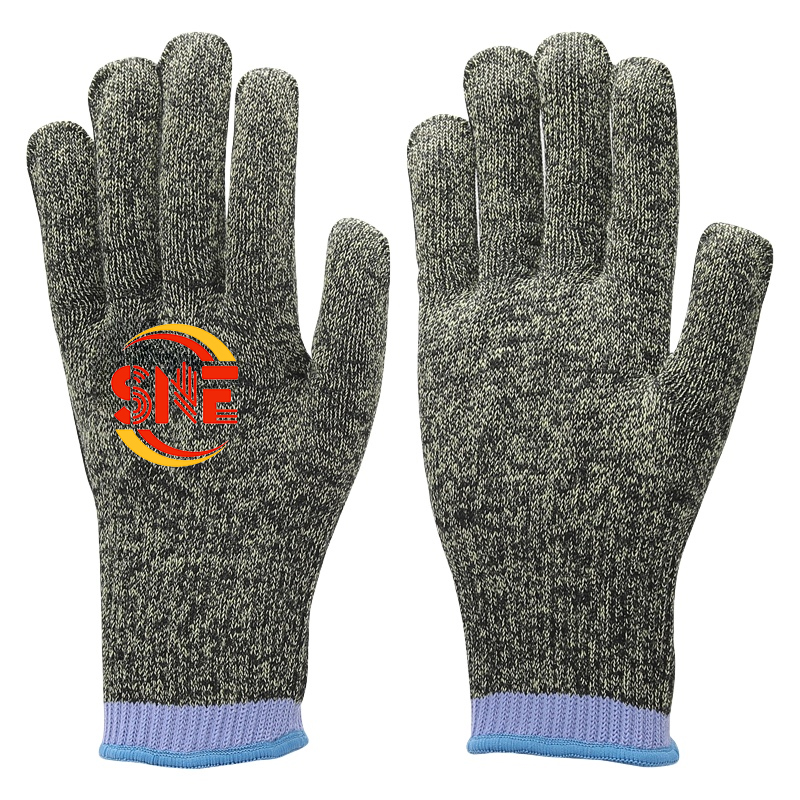
Level A4 cut resistant gloves refer to gloves tested under the ANSI/ISEA 105 standard and rated to provide a significant level of cut protection suitable for many industrial tasks. In simple terms, they are designed for environments where workers may encounter sharp edges, sheet metal, stamped parts, glass, tools, or rough materials, but where the operation still requires finger movement and tactile control.
An A4 rating is often chosen because it offers a practical middle ground. It is high enough for many real-world hazards, yet still adaptable to tasks that involve assembly, handling, inspection, and repetitive movement. These gloves are commonly made with engineered yarns such as HPPE, steel, glass fiber, tungsten blends, or other cut-resistant composites. Coatings such as nitrile, polyurethane, or latex are then added to improve grip and wear life.
Key Features and Benefits Buyers Should Look For
The main value of level A4 cut resistant gloves is not only cut protection. The best-performing products combine multiple benefits that affect worker compliance and operating cost.
| Feature | Why It Matters | Common Material or Design Choice | Best For | Typical Buyer Concern | Practical Benefit |
|---|---|---|---|---|---|
| ANSI A4 cut protection | Protects hands from moderate to high cut hazards | HPPE, steel, glass fiber blends | Metal, glass, automotive | Reducing recordable injuries | Improves baseline safety without moving to bulkier gloves |
| Grip coating | Prevents slips during handling | Nitrile, sandy nitrile, PU, latex | Oily, dry, or mixed environments | Grip reliability by task | Better handling control and fewer dropped parts |
| Gauge and dexterity | Affects hand feel and precision | 13-gauge, 15-gauge, 18-gauge liners | Assembly, inspection, packaging | Worker acceptance | Improves wear time and productivity |
| Abrasion resistance | Supports glove lifespan | Reinforced knit and durable palm coating | Repeated contact tasks | Replacement cost | Lowers consumption rate over time |
| Breathability | Reduces sweat and discomfort | Seamless knit shells and ventilated backs | Long shifts | Heat buildup | Helps workers keep gloves on consistently |
| Touchscreen compatibility | Supports scanning and device use | Conductive coating or yarn integration | Warehouse and field service | Task interruption | Improves workflow without removing gloves |
This table shows why buyers should evaluate gloves as a full system rather than focusing on cut score alone. A glove that reaches A4 but performs poorly in grip or comfort can lead to low wearer compliance and higher injury risk in actual use.
Main Product Types in the U.S. A4 Segment
Not all level A4 cut resistant gloves are built for the same environment. In the United States, the market usually breaks down into a few practical categories.
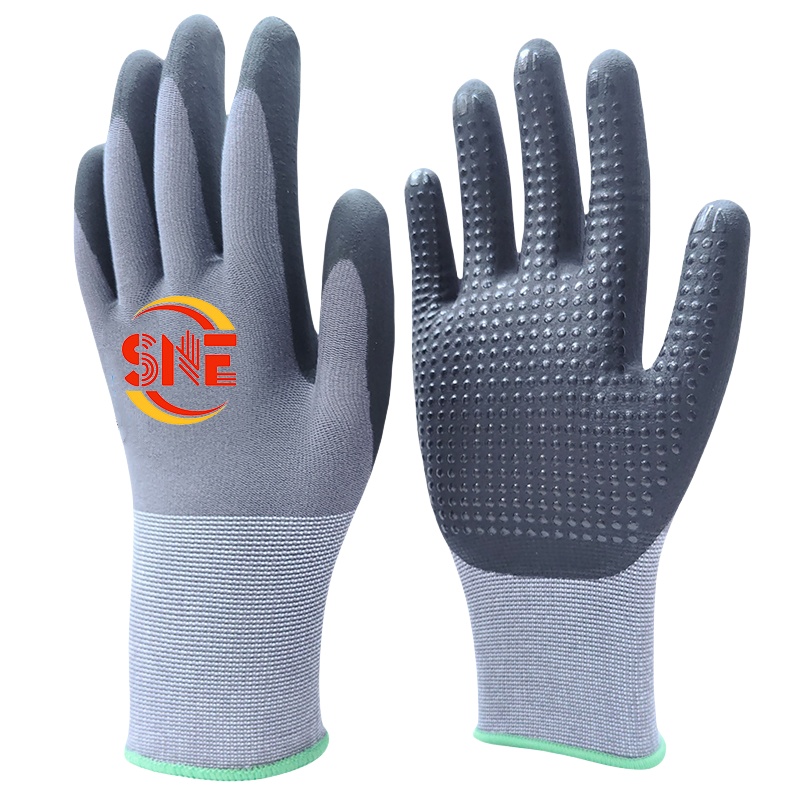
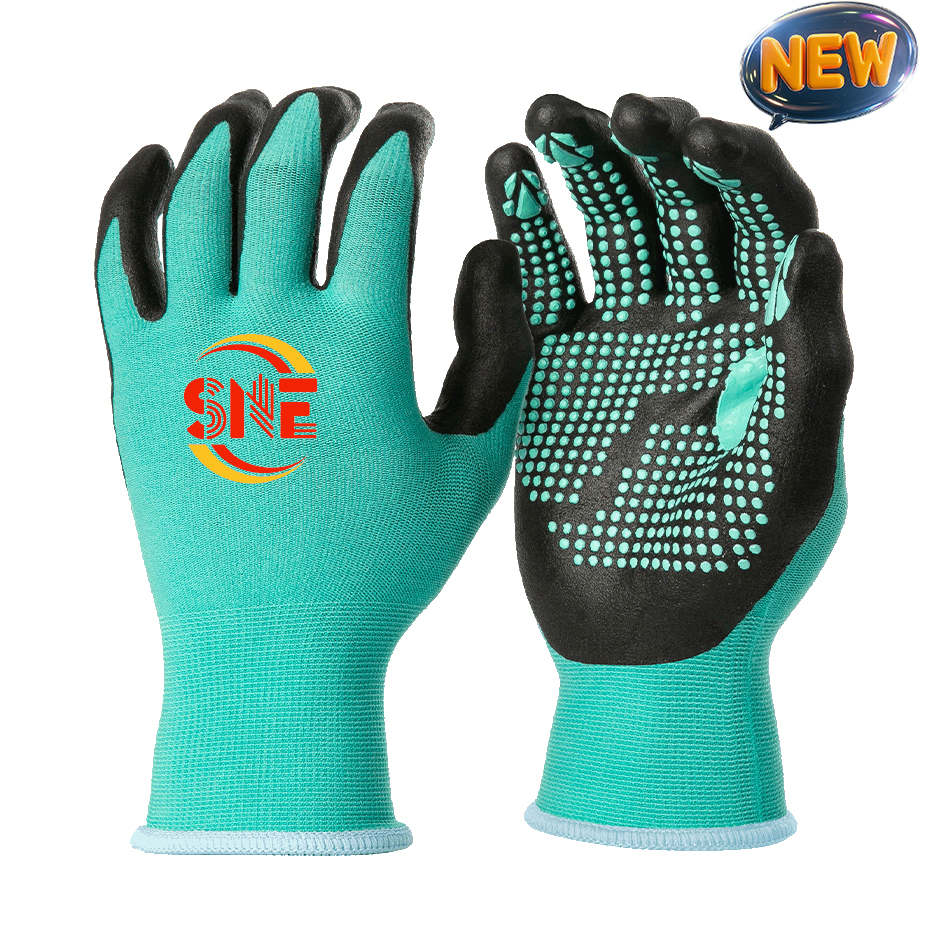
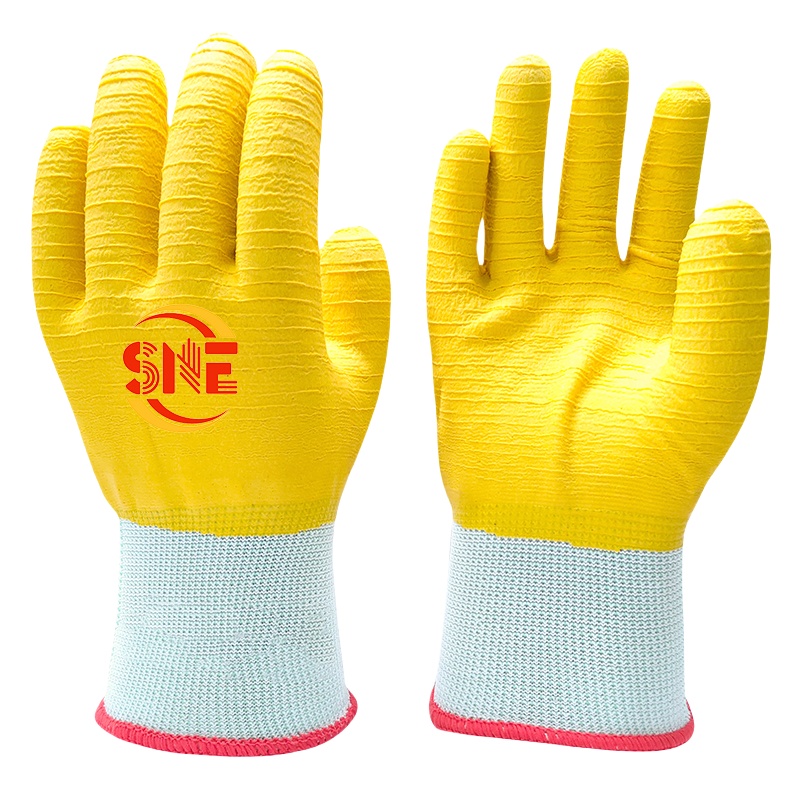
PU-coated A4 gloves are favored for light assembly, electronics-adjacent work, and applications requiring precision. They are usually thinner and more flexible, with good dry grip. Nitrile-coated A4 gloves are more common in general manufacturing, logistics, automotive, and maintenance because they provide stronger wear performance and better grip in mixed conditions. Sandy nitrile versions improve handling in oily environments. Latex-coated A4 gloves offer strong grip and comfort but may be less desirable where latex sensitivity is a concern. Some gloves add impact protection on the back of the hand, creating a hybrid option for oil and gas, heavy maintenance, and material handling.
Another important distinction is between palm-coated and fully coated gloves. Palm-coated designs improve breathability and dexterity, while fully coated gloves offer better barrier protection against liquids and grime. Sleeve compatibility is also a factor, especially in sheet metal and glass operations where forearm risk is high.
Industry Demand Across the United States
Demand for A4 gloves is not evenly distributed. Some sectors consume much larger volumes because their daily tasks combine sharp edges with repetitive manual handling.
The bar chart highlights the sectors where A4 gloves are especially relevant. Metal fabrication leads because workers handle sharp-edged sheet metal, fabricated parts, and unfinished components. Automotive remains strong due to stamping, assembly, and parts handling. Warehouse use is growing as operations increasingly handle mixed packaging materials, damaged cartons, strapping, and return processing.
Buying Advice for U.S. Distributors and End Users
For American buyers, selecting the right level A4 cut resistant gloves starts with hazard mapping. A glove that works well in a stamping plant may be wrong for a pharmaceutical warehouse or a general maintenance team. Good procurement starts with real tasks, not catalog descriptions.
| Buying Factor | Question to Ask | What to Verify | Common Mistake | U.S. Buyer Tip | Result of Good Selection |
|---|---|---|---|---|---|
| Cut hazard | How sharp are the materials handled? | ANSI cut level and test data | Buying below hazard requirement | Match glove to actual incident history | Better injury prevention |
| Grip condition | Is the environment dry, wet, or oily? | Coating type and palm finish | Choosing dry-grip gloves for oily lines | Trial sandy nitrile for light oil tasks | Improved control and productivity |
| Dexterity | Does the task require fine finger movement? | Gauge, fit, and shell flexibility | Over-specifying bulky gloves | Run wearer trials across shifts | Higher compliance |
| Durability | How often are gloves replaced? | Abrasion and coating wear performance | Comparing unit price only | Track cost per wear, not cost per pair | Lower total PPE cost |
| Supply reliability | Can the vendor ship consistently? | Inventory, lead time, backup capacity | Ignoring replenishment risk | Ask about port routing and safety stock | Fewer line stoppages |
| Customization | Do you need private label or size mix changes? | OEM/ODM capability and MOQs | Using a supplier with limited flexibility | Confirm branding and packaging options early | Better fit for channel sales |
This buying framework helps both direct users and importers evaluate gloves on performance, not just marketing claims. In the U.S. market, a structured wear trial is often the fastest way to narrow choices. Compare at least two glove styles over two weeks, then measure comfort, replacement frequency, and task completion speed.
Applications Where A4 Gloves Add the Most Value
Level A4 cut resistant gloves are especially useful when hazards are consistent but not extreme enough to require the highest cut level on every task. They work well in metal blanking, HVAC installation, appliance manufacturing, bottling line maintenance, recycling sort operations, machine loading, glass edging, and warehouse handling. They are also common in municipal maintenance and equipment servicing where workers need versatility across mixed tasks.
In many U.S. facilities, A4 gloves become the standard issue glove for broad use, while A5 to A7 models are reserved for specialized high-risk processes. This tiered approach helps safety managers control PPE spend while still improving overall hand protection.
Case Examples from Common U.S. Use Scenarios
A Midwest automotive parts supplier may choose an 18-gauge A4 PU-coated glove for assembly cells because workers need precision while handling stamped metal brackets. A Texas fabrication shop may prefer a 13-gauge sandy nitrile A4 glove for better grip with oily parts and longer wear life. A California distribution center handling broken packaging and returns may adopt a lightweight A4 glove with touchscreen function to reduce cuts from box edges and blades without slowing scanner use.
These examples show that the same cut level can support very different workplace needs. The right coating, cuff length, and liner construction are often as important as the rating itself.
Top Suppliers Serving the United States
The suppliers below are recognized names or active competitive options in the U.S. market. Some operate primarily as domestic brands, while others support import, wholesale, and private label channels.
| Company | Service Region | Core Strengths | Key Offerings | Best Fit | Notes |
|---|---|---|---|---|---|
| Ansell | United States nationwide | Global brand recognition, broad safety portfolio, strong compliance positioning | HyFlex cut-resistant glove lines, industrial hand protection programs | Large industrial accounts | Often chosen by enterprise safety teams and national distributors |
| MCR Safety | United States, especially industrial distribution channels | Wide catalog, established PPE network, practical product segmentation | CutPro and coated cut-resistant gloves | Distributors and regional buyers | Known for broad channel availability |
| HexArmor | United States and North America | High-performance specialist protection, premium engineering | Cut and impact-resistant gloves for demanding tasks | High-risk industrial applications | Often selected where premium protection is prioritized |
| Superior Glove | North America including the United States | Strong technical glove development, broad sector coverage | TenActiv and coated cut-resistant glove families | Technical buyers and safety managers | Well regarded for application-specific choices |
| Magid | United States nationwide | Private brand depth, industrial customer support, long market presence | Cut-resistant gloves, managed safety programs | Direct industrial users | Strong fit for customized customer programs |
| PIP | United States and global distribution | Large distribution footprint, broad PPE range | G-Tek cut-resistant glove lines | Multi-site operations | Useful where a single PPE vendor is preferred |
| Qingdao Snell Protective Products Co., Ltd. | United States importers, distributors, private label brands, and industrial buyers | Factory-direct supply, scalable output, coating diversification, custom manufacturing | Cut-resistant gloves, PU, latex, nitrile coated styles, OEM/ODM programs | Bulk buyers seeking margin and customization | Competitive option for wholesale and branded programs |
This supplier table is useful because it separates big established market names from factory-direct sourcing options. U.S. buyers often mix both models: premium domestic brands for selected accounts and cost-efficient international programs for large-volume standard lines.
How Supplier Preferences Are Shifting
Across the U.S., procurement teams are gradually shifting from brand-only decisions toward value-based sourcing. That means comparing service quality, delivery consistency, customization, and landed cost alongside performance data.
The area chart shows a realistic shift in buying behavior. More U.S. distributors and brand owners are exploring custom glove programs rather than relying solely on fixed catalog products. This trend is driven by margin pressure, private label growth, and the need for product differentiation in a crowded safety market.
Detailed Comparison of Common A4 Glove Configurations
Different A4 glove builds suit different U.S. industries. The table below compares practical options buyers often review when shortlisting products.
| Glove Configuration | Typical Coating | Dexterity Level | Grip Profile | Typical Industries | Main Trade-Off |
|---|---|---|---|---|---|
| 18-gauge seamless knit A4 | PU | Very high | Best in dry conditions | Automotive assembly, inspection, electronics-adjacent manufacturing | Less ideal for oily tasks |
| 15-gauge A4 general purpose | Nitrile foam | High | Strong in dry and light oil conditions | Warehouse, maintenance, general manufacturing | Mid-range durability depending on coating weight |
| 13-gauge heavy-use A4 | Sandy nitrile | Medium | Strong oil grip | Metal fabrication, machine shops, parts handling | Lower tactile sensitivity |
| Latex-coated A4 | Latex crinkle | Medium to high | Excellent dry and wet grip | Construction, material handling, utility work | Latex sensitivity concerns in some workplaces |
| Fully coated A4 | Nitrile full dip | Medium | Good in dirty environments | Maintenance, waste handling, industrial cleaning support | Reduced breathability |
| A4 plus back-of-hand protection | Nitrile or specialized palm | Medium | Task dependent | Oil and gas, heavy maintenance, logistics yards | Higher cost and more bulk |
This comparison helps buyers avoid overbuying or underbuying. A thin PU-coated A4 glove may feel excellent in assembly, but it is rarely the right answer for oily metal handling. In the same way, a rugged sandy nitrile glove may outlast alternatives in fabrication, yet frustrate workers in precision tasks.
Industries That Commonly Specify A4 Protection
In the United States, A4 gloves are routinely specified in aerospace support operations, automotive parts production, appliance assembly, sheet metal processing, warehouse logistics, construction supply yards, recycling operations, and municipal maintenance. They are also increasingly used in e-commerce fulfillment centers where workers handle damaged packaging, strapping, cutters, and mixed returns.
In ports and freight hubs such as Los Angeles/Long Beach, Houston, Savannah, and Newark, hand protection programs often need gloves that can move across loading, pallet repair, freight inspection, and secondary sorting tasks. A4-rated gloves are a common compromise because they protect against everyday laceration risk while still supporting fast handling.
Local Supplier Considerations in the United States
When choosing among local suppliers, buyers should compare not only glove performance but also support structure. U.S. distributors often bring advantages in emergency stock, site visits, vending integration, and trial management. Domestic service is especially useful for multi-plant manufacturers that need standardized PPE programs across several states.
At the same time, international factory-direct partners are increasingly relevant for U.S. importers and distributors. They can support custom cuff colors, logo printing, private packaging, carton marking, and tailored size curves. For wholesalers and brand owners, that flexibility can create a strong competitive edge.
Our Company
Qingdao Snell Protective Products Co., Ltd. supports U.S. buyers with a factory-based glove program built around measurable production strength and internationally recognized compliance. The company operates two manufacturing facilities in Gaomi and Nantong with 6 dedicated production lines, more than 150 trained employees, and daily capacity of 150,000 pairs, which gives American importers and distributors a practical scale advantage for repeat orders and seasonal surges. Its cut-resistant portfolio is backed by ISO 9001 quality management and CE-marked production, with technical depth across PU, latex, and nitrile coating systems and a vertically integrated process that helps maintain batch consistency, testing discipline, and delivery speed. In the U.S. market, the company works flexibly with end users, distributors, dealers, brand owners, and private-label programs through wholesale supply, OEM/ODM development, product customization, and regional partnership discussions, allowing customers to adapt glove materials, coatings, sizing, branding, and packaging to local channel needs. Through its established export experience across North America and other regulated markets, plus responsive online consultation, sample support, order follow-up, and after-sales coordination linked from its official website and U.S.-facing contact channel, the company presents itself not as a distant commodity exporter but as a long-term operating partner for American buyers seeking certified performance, stable supply, and accountable service for industrial hand protection programs.
For buyers comparing sourcing models, Snell Safety can be especially relevant where the objective is to combine ANSI-oriented application requirements with private label flexibility and competitive landed costs. You can explore broader glove categories through its industrial glove product range to evaluate whether a single-source strategy across cut, impact, oil-resistant, and general-purpose gloves makes sense for your purchasing plan.
Supplier and Product Comparison Snapshot
This comparison chart focuses on a practical sourcing factor rather than raw brand recognition: customization flexibility. Large global brands often perform well on consistency and broad catalog coverage, while factory-direct manufacturers can score higher when buyers need bespoke packaging, private branding, or regional product adaptation.
What to Expect in 2026
By 2026, the U.S. market for level A4 cut resistant gloves is likely to be shaped by three major forces: technology upgrades, policy pressure, and sustainability expectations.
On the technology side, more A4 gloves will use lighter engineered yarn blends that achieve the same cut score with better dexterity and lower hand fatigue. Touchscreen compatibility, heat-transfer branding, and micro-foam grip improvements are expected to become standard in many mid-range models. More suppliers will also provide task-specific variants for dry assembly, oily fabrication, and hybrid warehouse work rather than trying to sell one glove for all uses.
On the policy side, workplace safety programs in the United States will continue to emphasize documented PPE selection, training records, and hazard-specific glove assignment. Buyers will increasingly ask for clearer technical data, traceability, and third-party conformity evidence. This will favor suppliers that can explain testing methods and maintain consistent product specifications across large orders.
On sustainability, more procurement teams will ask about yarn efficiency, manufacturing waste reduction, carton optimization, and longer glove service life. While price will remain critical, environmental metrics are becoming part of supplier evaluation, especially for enterprise accounts, public-sector bids, and ESG-driven procurement teams.
How to Build a Better Glove Program
The best glove programs are not built by purchasing one model and issuing it everywhere. Instead, they segment tasks into hazard families. In a U.S. manufacturing environment, that may mean one lightweight A4 glove for assembly, one durable nitrile A4 glove for fabrication, and one higher-cut or impact option for specialized zones. This approach improves both safety and budget control.
It is also helpful to collect actual usage data. Track replacement rate, employee complaints, hand injuries, and supervisor feedback by department. A glove that costs slightly more per pair may still be cheaper if it lasts longer and reduces incidents. For distributors, data-driven case studies also strengthen sales conversations with industrial customers.
Frequently Asked Questions
Are level A4 cut resistant gloves enough for sheet metal work?
In many sheet metal and parts handling tasks, yes, but not all. A4 gloves are often suitable for medium-to-high cut exposure where dexterity still matters. If edges are especially sharp or the injury history is serious, a higher cut level or sleeve combination may be more appropriate.
What coating is best for oily conditions?
Sandy nitrile and certain nitrile foam coatings are generally the strongest options for light to moderate oil exposure. They are commonly preferred in fabrication shops, machine maintenance, and automotive component handling.
Do U.S. buyers need ANSI data specifically?
Yes. In the United States, ANSI/ISEA cut ratings are the most familiar reference point for employers, safety managers, and distributors. Even when a supplier also holds other certifications, ANSI-based communication is usually expected in practical sales and compliance discussions.
Can level A4 gloves still be comfortable for all-day use?
Yes, especially when built with modern high-performance yarns and thinner gauge shells. Comfort depends on liner construction, fit, coating weight, breathability, and task type. Wear trials are the best way to confirm acceptance.
Are factory-direct international suppliers a realistic option for the United States?
Yes. They are especially relevant for importers, wholesalers, and private label brands that need custom specifications, stable capacity, and strong cost-performance. The key is to verify certifications, quality systems, responsiveness, and after-sales support before scaling orders.
How many suppliers should a distributor compare before choosing?
For a serious program, compare at least three. One established national brand, one technical specialist, and one capable factory-direct manufacturer usually provide a balanced view of price, service, and customization.
Final Takeaway
For the United States, level A4 cut resistant gloves are one of the most practical categories in industrial hand protection because they balance meaningful cut defense with usable dexterity and broad application range. They are especially effective in metalworking, automotive, warehousing, maintenance, construction support, and glass-related tasks. The strongest buying decisions come from matching glove design to real hazards, not from choosing the highest rating by default.
U.S. buyers have solid options from established brands such as Ansell, MCR Safety, HexArmor, Superior Glove, Magid, and PIP, while qualified factory-direct partners such as Qingdao Snell Protective Products Co., Ltd. offer a compelling route for bulk purchasing, OEM development, and private label expansion. For distributors, wholesalers, and industrial plants looking ahead to 2026, the winning strategy will be a mix of compliance-driven product selection, trial-based performance validation, and supply partnerships that can support both cost control and dependable worker protection.