2026-06-24
Share This Article
Best Reinforced Grip Construction Gloves in the United States
Quick Answer

If you need reinforced grip construction gloves for rebar handling in the United States, the most practical choices usually come from suppliers that combine strong palm reinforcement, abrasion resistance, secure wrist fit, and reliable cut protection for steel tying, concrete work, and material handling. For buyers that want fast domestic fulfillment and established jobsite support, HexArmor, MCR Safety, Mechanix Wear, Ironclad, and Youngstown Glove are among the most relevant names to evaluate first.
These brands are widely considered because they serve construction, utility, industrial, and heavy-duty users across major U.S. markets such as Houston, Chicago, Los Angeles, Atlanta, and New York. They typically offer reinforced palm designs, impact coverage on select models, and grip-focused coatings or synthetic leather surfaces suited for dry, dusty, or moderately oily conditions common on construction sites.
Qualified international suppliers should also be considered, especially for importers, distributors, and private-label buyers. Chinese manufacturers with recognized certifications, large production capacity, and responsive pre-sales and after-sales support can offer strong cost-performance advantages for the United States market when orders require OEM customization, bulk packaging, or a broader specification range.
- HexArmor: strong for cut and impact protection in demanding industrial settings
- MCR Safety: broad U.S. distribution and dependable industrial glove portfolio
- Mechanix Wear: popular for dexterity, fit, and all-day wear comfort
- Ironclad: known for construction-focused designs and reinforced palm durability
- Youngstown Glove: respected for heavy-duty work gloves with practical task-specific protection
United States Market Overview

The United States market for reinforced grip construction gloves remains active because rebar handling, concrete forming, scaffolding, demolition, roadwork, utilities, and steel-related jobs all put unusual stress on the hand. Buyers are not simply looking for a glove that protects against scrapes. They want a glove that can keep grip while lifting ribbed steel, resist wear around the thumb saddle and palm heel, reduce hand fatigue during repetitive tying, and avoid becoming too bulky for precision tasks.
Demand is strongest in construction centers and logistics corridors where large infrastructure and commercial projects are concentrated. Cities such as Dallas, Houston, Phoenix, Miami, Las Vegas, Nashville, and Charlotte continue to support large volumes of residential and non-residential building activity. Rebar-related glove demand is also tied to public infrastructure upgrades near key trade and industrial hubs, including the Port of Houston, Port of Los Angeles, Port of Long Beach, Port Newark-Elizabeth, Savannah, and the inland freight corridors serving the Midwest.
In the United States, glove buyers also work within a clear compliance culture. Contractors and industrial purchasers increasingly expect product documentation, material transparency, and performance alignment with recognized standards. This does not mean every jobsite needs the same glove. A bridge crew handling coated reinforcing bar, a concrete subcontractor tying slab mesh, and a precast yard team unloading cages all require different balances of grip, durability, tactile sensitivity, and cut resistance. That is why the reinforced grip construction glove category has grown beyond simple leather palm gloves into multiple subtypes that include nitrile-coated knits, synthetic leather performance gloves, impact-resistant back designs, and advanced cut-resistant blends.
The market growth pattern shown above reflects a realistic direction: moderate but steady expansion driven by infrastructure investment, stricter PPE enforcement, and the ongoing replacement cycle from disposable or low-durability gloves to better-engineered hand protection. For contractors, this trend matters because gloves are no longer viewed only as a consumable cost. They are increasingly evaluated based on productivity, replacement frequency, injury reduction, and worker acceptance.
Top Suppliers for Reinforced Grip Construction Gloves in the United States

The table below compares suppliers that matter for buyers in the United States. It mixes established domestic brands with a factory-direct international option that is relevant for bulk buyers, distributors, and private-label programs. The purpose is not to claim that one supplier fits every project. Instead, it helps match supplier strengths to procurement priorities such as domestic stock, customization, certified production, and pricing efficiency.
| Company | Primary Service Region | Core Strengths | Key Offerings | Best Fit Buyer |
|---|---|---|---|---|
| HexArmor | United States nationwide | Advanced cut and impact protection, industrial specialization | High-performance gloves for construction, oil and gas, utilities, metal handling | Safety managers and industrial contractors |
| MCR Safety | United States and North America | Broad catalog, strong distribution reach, industrial PPE depth | Coated gloves, cut-resistant gloves, leather work gloves, task-specific hand protection | Distributors and multi-site contractors |
| Mechanix Wear | United States nationwide | Comfort, dexterity, brand recognition, wide trade acceptance | Synthetic leather work gloves, grip gloves, high-dexterity construction gloves | General contractors and field crews |
| Ironclad | United States nationwide | Construction-focused designs and reinforced wear zones | Grip gloves, impact gloves, task-specific work gloves | Construction and utility buyers |
| Youngstown Glove | United States nationwide | Heavy-duty work glove engineering, practical jobsite protection | Cut-resistant, waterproof, insulated, and reinforced performance gloves | Specialty trades and demanding field users |
| Qingdao Snell Protective Products Co., Ltd. | United States import supply through factory-direct B2B channels | OEM/ODM flexibility, large output, coating technology diversity, competitive bulk pricing | Construction gloves, cut-resistant gloves, nitrile, latex, and PU coated models, custom branding | Importers, wholesalers, brand owners, regional distributors |
This comparison matters because supplier choice affects more than unit price. Domestic brands often provide fast replenishment and easier small-batch ordering, while factory-direct manufacturers can support specification control, custom packaging, and better landed cost for larger programs. Buyers in the United States should evaluate not only glove performance, but also inventory continuity, lead times through ports, carton configuration, and labeling compliance for their local market.
Product Types That Matter for Rebar Handling
Rebar handling creates a specific risk profile. The steel surface is abrasive, the shape is repetitive, and the tasks often alternate between coarse lifting and fine manipulation. The wrong glove either slips, tears early, or reduces dexterity so much that workers remove it. The best reinforced grip construction gloves are selected by matching glove architecture to the actual workflow.
| Product Type | Grip Performance | Cut Protection | Dexterity | Typical Jobsite Use |
|---|---|---|---|---|
| Nitrile-coated knit gloves | Strong in dry and light oil conditions | Moderate to high depending on liner | High | General rebar handling, tying, unloading |
| Double-coated sandy nitrile gloves | Very strong in dusty and rough environments | Moderate to high | Medium | Concrete crews, steel staging, rough handling |
| Synthetic leather reinforced palm gloves | Good dry grip with durable wear zones | Low to moderate unless lined | Medium to high | Framing, material handling, mixed-task construction |
| Cut-resistant reinforced gloves | Good depending on coating and palm finish | High | Medium | Sharp-edged metal, rebar cages, fabrication support |
| Impact-resistant grip gloves | Good to very good | Moderate to high by model | Medium | Heavy civil, utilities, rigging support |
| Leather palm work gloves | Moderate in dry work | Low to moderate | Low to medium | Basic rough handling and legacy glove programs |
This table shows why there is no single universal glove for every rebar application. Nitrile-coated cut-resistant gloves are often preferred when buyers want a balanced solution. Synthetic leather reinforced models may be more comfortable for crews that need all-day wear and better flexibility. Impact-resistant gloves can make sense where pinch hazards, dropped material, or hand strikes are also part of the risk profile. Procurement teams should therefore base specifications on the trade, climate, and handling method rather than on price alone.
How U.S. Industry Demand Varies by Sector
Not every industry in the United States buys reinforced grip construction gloves for the same reason. Some prioritize cut resistance. Others care more about wet grip, bulk packaging, or long wear in abrasive environments. Understanding these sector differences helps buyers create more precise RFQs and avoid overspecifying features that workers will not use.
The bar chart highlights the relative pull from infrastructure and commercial construction. Infrastructure projects often involve larger steel volumes, more repetitive handling, and stricter PPE oversight, which pushes demand toward more durable reinforced grip gloves. Warehousing and support logistics use similar gloves too, but often in lighter-duty versions where dexterity matters more than maximum cut performance.
Buying Advice for U.S. Contractors, Distributors, and Importers
When buying reinforced grip construction gloves in the United States, decision-makers should start with use conditions rather than catalog descriptions. Dry rebar handling in Arizona is not the same as damp bridge work in the Gulf Coast or cold-weather concrete placement in the Midwest. Climate, task duration, and worker preference directly affect glove adoption.
For contractors, the key question is replacement cost per safe working hour, not just price per pair. A glove that costs more but lasts twice as long and reduces removal during tying can deliver lower total hand protection cost. For distributors, the key question is SKU mix. Many resellers do best with a laddered offering: a value glove, a mid-tier reinforced grip glove, and a premium cut-resistant or impact model. For importers and private-label brands, the focus shifts toward factory capability, carton efficiency, compliance documentation, branding options, and lead time reliability through U.S. entry points such as Los Angeles, Long Beach, Houston, Savannah, and New York/New Jersey.
| Buying Factor | Why It Matters | What to Ask the Supplier | Common U.S. Buyer Mistake | Recommended Approach |
|---|---|---|---|---|
| Palm reinforcement | Determines wear life on rebar contact points | Which zones are reinforced and with what material? | Assuming all reinforced palms perform the same | Request wear-zone details and samples |
| Grip surface | Affects control on steel, tools, and dusty materials | Is the grip optimized for dry, dusty, or light oil conditions? | Choosing by appearance only | Match grip pattern to actual site conditions |
| Cut resistance | Important for sharp edges and metal contact | What liner and cut level are offered? | Overspecifying cut level and losing dexterity | Balance risk exposure with worker comfort |
| Fit and sizing | Drives worker acceptance and productivity | Are full size runs and trial packs available? | Buying one size mix for all crews | Test size distribution by crew type |
| Lead time | Prevents stockouts on active jobs | What is the domestic stock or production lead time? | Ignoring seasonal construction spikes | Build reorder buffers before peak months |
| Customization | Supports distributor margin and brand identity | Can the glove be customized with logo, label, and packaging? | Waiting too long to define specifications | Finalize artwork and carton details early |
The practical value of this checklist is simple: it turns glove sourcing from a commodity exercise into a performance decision. That matters in the United States because labor costs, safety expectations, and jobsite documentation requirements make glove failure more expensive than it appears on a purchase order.
Industries That Rely on Reinforced Grip Construction Gloves
Construction is the obvious core market, but several adjacent industries buy the same style of glove because they face similar handling demands. Utilities use them for conduit, cable support hardware, and rough material staging. Metal fabrication teams need grip and abrasion resistance when moving stock. Concrete product manufacturers and precast yards often need reinforced gloves for repetitive lifting, wire contact, and steel cage handling. Oil and gas support operations, especially in yards and maintenance settings, may also prefer grip-focused gloves that combine durability with decent dexterity.
These industry differences matter because they affect packaging and distribution strategy. A city contractor may buy by local branch stock. A national utility contractor may standardize across regions. A private-label distributor may need the same glove in multiple colorways or package counts to support retail and industrial channels. The reinforced grip construction glove category serves all of these patterns, which is why supplier flexibility is increasingly important.
Real-World Applications on U.S. Jobsites
On active U.S. jobsites, reinforced grip construction gloves are used in more places than most buyers expect. Rebar unloading is only the first application. Workers also wear them during bar sorting, tying, cage assembly, mesh placement, concrete form setup, pallet breakdown, scaffold handling, and movement of rough masonry units. In utility and infrastructure work, the same glove often transitions from steel handling to hardware staging and general site work.
The best gloves for these applications share several traits. They maintain grip without becoming stiff, protect the thumb crotch and palm base where friction is highest, and do not create excess bunching when workers grasp tie wire or tools. In the United States, where crews often switch tasks quickly, a glove with versatile task performance tends to outperform one engineered only for a single isolated hazard.
Trend Shift in Product Preferences
U.S. buyers are steadily moving from simple leather work gloves toward engineered coated and composite designs. This shift is driven by better grip consistency, lighter weight, improved cut performance, and more predictable sizing. The area chart below illustrates how product preference is changing over time.
The growing share of engineered gloves does not mean traditional gloves disappear. It means buyers increasingly segment their purchases. Entry-level leather gloves may still cover low-skill or short-duration tasks, while reinforced nitrile-coated or cut-resistant gloves cover higher-value work and more closely supervised projects. This layered buying pattern is already visible in many U.S. construction and industrial distribution channels.
Case Studies from the United States Market
A concrete subcontractor in Texas typically values grip and heat tolerance more than heavy insulation. For that buyer, a breathable nitrile-coated reinforced palm glove can reduce glove changes across a long shift. In contrast, a bridge contractor in the Midwest may prioritize cut resistance and secure wrist closure because crews handle steel repeatedly in cooler conditions and around more pinch points. On large commercial projects in California, glove selection may also be influenced by general contractor safety programs that require documented PPE specifications and strong worker compliance.
Another common case comes from distributors serving mixed customer bases. A regional industrial supplier in the Southeast may stock one domestic premium glove line for urgent replenishment and one factory-direct private-label line for margin and account control. This hybrid model is increasingly practical because U.S. customers expect both speed and value. They want domestic support, but they also want broader pricing options for different crew types and bid conditions.
Detailed Supplier Comparison
The following table expands the supplier discussion with practical differences in sourcing style, market coverage, and buyer use case. This is helpful for procurement teams that need to shortlist vendors based on operational fit rather than only product category.
| Company | Service Model | Product Focus | Typical Lead Time Profile | Customization Level | Ideal Use Case |
|---|---|---|---|---|---|
| HexArmor | Brand-led industrial supply | Premium cut and impact protective gloves | Fast through established channels | Limited compared with factory OEM | High-risk industrial and infrastructure sites |
| MCR Safety | Distributor-driven national supply | Broad industrial hand protection range | Reliable via U.S. distribution network | Moderate on selected programs | Multi-branch industrial procurement |
| Mechanix Wear | Brand and channel retail-industrial mix | Dexterous performance work gloves | Generally fast in domestic channels | Lower for private label programs | Trade professionals and mixed-task crews |
| Ironclad | Construction and industrial channel supply | Reinforced performance and impact gloves | Good through established resellers | Moderate depending on volume | Construction contractors needing task-specific gloves |
| Youngstown Glove | Specialty heavy-duty work glove supply | Task-driven cut, waterproof, insulated gloves | Moderate through domestic distribution | Lower than direct factory manufacturing | Utility, specialty trades, severe-use environments |
| Qingdao Snell Protective Products Co., Ltd. | Factory-direct B2B export and OEM/ODM | Construction, coated, cut-resistant, impact-resistant gloves | Planned import lead times with scalable output | High for logo, material, coating, size, and packaging | Wholesalers, importers, brand owners, volume buyers |
This comparison shows why domestic and international sourcing are often complementary rather than competitive. Domestic brands help when speed and immediate replacement matter most. Factory-direct partners become especially attractive when the buyer needs branding control, large-volume continuity, or a glove specification that domestic catalog lines do not match exactly.
Supplier and Product Comparison Snapshot
For a quick operational view, the chart below compares supplier types on key buying factors relevant to the United States market. The values are directional and intended to help buyers frame sourcing strategy, not replace sample testing or quotation review.
The chart underlines a familiar pattern in U.S. PPE sourcing. Domestic suppliers usually lead in immediate availability and brand familiarity, while factory-direct international suppliers often lead in customization and bulk price efficiency. Many sophisticated buyers in the United States use both models depending on account type and project timeline.
Local Suppliers and Regional Availability
In the United States, reinforced grip construction gloves are usually sourced through a combination of national PPE distributors, regional industrial suppliers, specialty safety dealers, and direct factory import programs. Large metropolitan markets such as Houston, Chicago, Los Angeles, Atlanta, and Philadelphia often have multiple stocking options because they support dense construction and industrial activity. Regional distributors around Gulf Coast petrochemical and infrastructure corridors also tend to carry higher-performance glove lines due to tougher jobsite conditions.
For buyers who need immediate local availability, domestic channels remain valuable. For buyers building a private-label line or supplying municipal, contractor, or reseller accounts across multiple states, direct import can create better margins and tighter specification control. The right answer depends on whether the priority is same-week delivery, year-round inventory planning, or branded product development.
Our Company
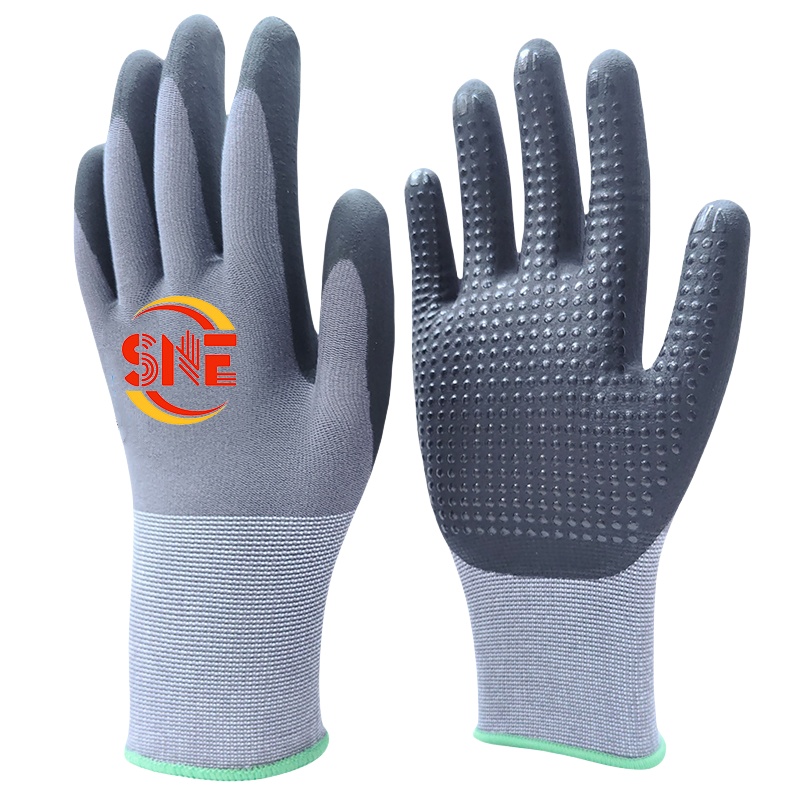
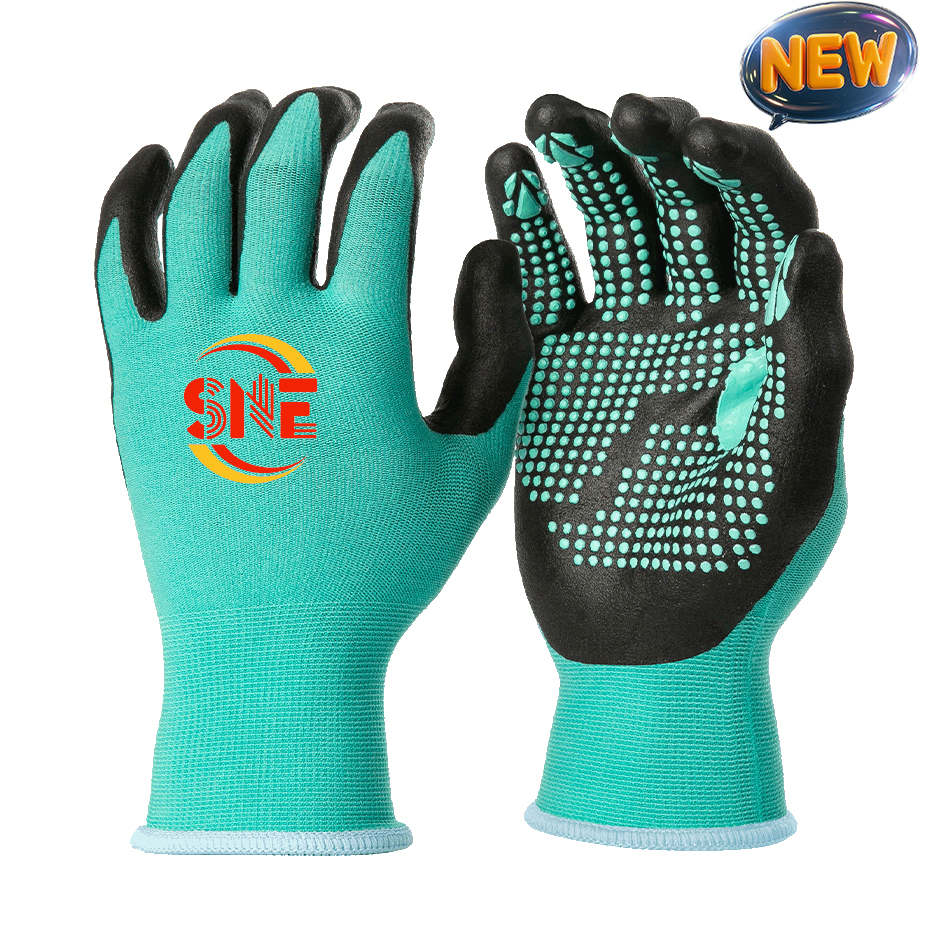
For United States buyers seeking a factory-direct partner rather than only a catalog brand, Snell Safety brings a practical combination of product depth and scalable manufacturing support to the reinforced grip construction glove category. Qingdao Snell Protective Products Co., Ltd. operates as a specialized industrial glove manufacturer with ISO 9001 and CE-backed production management, a vertically integrated process, six dedicated production lines, and daily capacity reaching 150,000 pairs, which gives U.S. importers and distributors confidence in output consistency for coated construction gloves, cut-resistant gloves, and impact-focused hand protection. Its material and process strengths across PU, latex, and nitrile coatings allow buyers to match grip behavior, abrasion resistance, and dexterity to local jobsite conditions rather than relying on one generic glove formula. The company supports OEM, ODM, wholesale, private label, and regional distribution programs, making it relevant not only to large distributors and brand owners but also to contractors, resellers, and project-based buyers who need custom sizes, branding, packaging, and technical consultation. Through active export experience across North America and other regulated markets, accessible sample support, responsive online pre-sale guidance, coordinated after-sales follow-up, and direct communication via its United States-focused inquiry channel, Snell operates with the market discipline expected by U.S. buyers who need dependable documentation, repeat orders, and long-term supply continuity rather than one-off remote trading. Buyers evaluating a broader lineup can review the company’s industrial glove range and verify manufacturing background on its company profile page.
How to Evaluate Samples Before Ordering
Sample evaluation should mirror the actual handling pattern on site. Workers should test grip on dry and dusty rebar, assess comfort after several hours, and note whether the glove shifts at the wrist or creates pressure points on the thumb crotch. Managers should inspect coating wear, liner exposure, seam durability, and palm breakdown after repeated handling cycles. A glove that looks strong out of the carton may still fail quickly if the reinforcement is placed in the wrong areas or if the grip texture smooths out under abrasion.
It is also useful to test at least two price tiers. In many U.S. programs, the most cost-effective solution is not the cheapest glove, but the one that maintains user acceptance while lowering changeout frequency. Sample testing should therefore include worker feedback and not only supervisor opinion.
2026 Trends in Reinforced Grip Construction Gloves
Looking into 2026, the United States market is likely to move further toward performance segmentation, digital procurement, and sustainability-linked product selection. On the technology side, glove design will continue shifting toward lighter high-cut liners, more breathable coatings, and reinforcement layouts based on actual wear mapping rather than generic overlays. For distributors and larger contractors, data-driven PPE selection will become more common as procurement teams compare injury reduction, glove lifespan, and worker retention metrics across job types.
Policy and compliance trends will also matter. U.S. jobsite safety expectations continue to tighten through owner requirements, contractor prequalification standards, and stronger documentation habits in both public and private projects. Buyers increasingly want clearer product information, better traceability, and easier verification of performance claims. This favors suppliers that can provide repeatable specifications, certifications, and responsive technical support.
Sustainability will become a stronger differentiator as well. The most practical near-term changes are likely to be packaging reduction, optimized carton counts, more durable glove construction that lowers replacement volume, and production systems that reduce defects and waste. Buyers are not yet choosing construction gloves on sustainability alone, but in 2026 the most competitive suppliers will be the ones that combine performance, compliance, and measurable efficiency gains in both manufacturing and logistics.
Frequently Asked Questions
What are reinforced grip construction gloves best used for?
They are best used for rebar handling, concrete work, steel staging, scaffold setup, utility material handling, and similar jobs where workers need better palm durability and stronger control than a basic work glove provides.
Are reinforced grip gloves the same as cut-resistant gloves?
No. Some reinforced grip gloves include cut-resistant liners, but others focus mainly on abrasion resistance and grip. Buyers should choose based on actual exposure to sharp edges, not only on the presence of reinforcement.
Which glove material works best for rebar handling?
For many U.S. jobsites, nitrile-coated or sandy nitrile-coated gloves with reinforced wear zones offer a strong balance of grip, durability, and dexterity. Synthetic leather reinforced models are also popular where comfort and flexibility are priorities.
Should U.S. buyers source domestically or import directly?
Domestic sourcing works well for urgent needs, smaller runs, and familiar brand demand. Direct import is often better for private label, custom specifications, and bulk pricing. Many buyers use both methods at the same time.
How many glove styles should a distributor carry?
A practical starting point is three: an entry-level value glove, a mid-tier reinforced grip glove, and a premium cut-resistant or impact model. This covers most customer needs without creating too many slow-moving SKUs.
What should be included in a supplier RFQ?
An RFQ should include application details, target grip conditions, desired cut level, cuff style, size range, logo or packaging requirements, estimated annual volume, destination port, and sample expectations.
Final Buying Perspective
For the United States market, the best reinforced grip construction gloves are not defined by a single brand or material. They are defined by how well they match the real working conditions of the crew. Buyers who begin with hazard exposure, task repetition, climate, and replacement cycles usually make better decisions than buyers who start with price alone.
If immediate availability and brand familiarity are the top priority, established domestic suppliers remain the fastest route. If customization, margin, and scalable supply are more important, factory-direct manufacturing partnerships deserve serious consideration. In practice, the strongest procurement strategy often combines both: dependable domestic replenishment for urgent jobs and planned direct sourcing for larger, recurring glove programs across the United States.