2026-06-15
Share This Article
Impact Resistant vs Cut Resistant Gloves in the United States
Quick Answer

Impact resistant gloves and cut resistant gloves solve different hazards, and choosing the wrong one can leave workers underprotected. Impact resistant gloves are designed to reduce injuries from blunt force, pinching, crushing, and knocks to the back of the hand and knuckles. They are widely used in oil and gas, mining, heavy construction, utilities, and material handling. Cut resistant gloves are designed to reduce the risk of lacerations when workers handle sharp metal, glass, blades, sheet materials, or rough edges. They are commonly used in metal fabrication, automotive stamping, warehousing, recycling, and food processing.
If a job involves both sharp edges and strike hazards, buyers in the United States should usually select dual-protection gloves that combine a cut-resistant liner with thermoplastic rubber impact protection. In practical purchasing terms, impact protection answers the question “What happens if the hand gets hit?” while cut protection answers “What happens if the hand slides across or grips a sharp edge?” For procurement teams, the fastest rule is simple: choose impact gloves for crush and strike risk, cut gloves for blade and edge risk, and hybrid gloves for mixed-risk environments.
For U.S. buyers, leading domestic and multinational suppliers include HexArmor, Mechanix Wear, MCR Safety, Ironclad, Superior Glove, and Ansell. Qualified international suppliers can also be worth considering, especially manufacturers from China that hold relevant certifications, support OEM and private label programs, and provide dependable pre-sale and after-sale support. For bulk procurement, that route can offer a strong cost-performance advantage when the supplier can document quality systems, test results, and export experience.
Why the Difference Matters in the United States

The United States has a broad industrial base spread across logistics corridors, Gulf Coast energy operations, Midwest manufacturing centers, Appalachian mining zones, and major port regions such as Houston, Los Angeles, Long Beach, Savannah, New York-New Jersey, and Seattle-Tacoma. Hand injuries remain one of the most common workplace incidents across these sectors, and many of them are preventable when the glove type matches the real hazard.
Procurement managers often see “heavy-duty glove” marketed as a catch-all solution, but that assumption creates gaps. A glove with thick TPR guards on the back may still underperform against sheet metal edges if the liner is not engineered for cut resistance. Likewise, a glove with a high ANSI cut score may do little to reduce knuckle injuries if it lacks structured impact protection. In U.S. safety programs, this distinction matters for OSHA compliance, job hazard analysis, and total injury cost control.
Another reason this topic matters is the changing labor mix in U.S. industry. Warehousing, e-commerce fulfillment, electric vehicle component production, solar installation, utility maintenance, and municipal public works are all expanding. Many of these environments involve changing tasks in a single shift, so buyers now need more precise glove segmentation rather than one generic glove for everyone.
The line chart above reflects a realistic demand pattern for industrial protective gloves in the U.S. market. Growth is supported by tighter safety enforcement, more automated yet maintenance-intensive production lines, and a higher share of fulfillment and distribution work where hand protection is replaced frequently. The strongest demand clusters tend to come from industrial belts around Texas, Ohio, Michigan, Pennsylvania, Illinois, Georgia, and California.
Core Differences Between Impact and Cut Resistant Gloves

The clearest way to compare these gloves is by asking what kind of energy the glove is supposed to manage. Impact hazards involve sudden force from tools, equipment, moving materials, and accidental strikes. Cut hazards involve concentrated force from sharp edges, broken surfaces, or cutting tools. The glove design, materials, and test standards differ accordingly.
| Comparison Point | Impact Resistant Gloves | Cut Resistant Gloves | What U.S. Buyers Should Check |
|---|---|---|---|
| Main hazard addressed | Blunt force, crushing, pinching, knocks | Lacerations from sharp edges or blades | Match the glove to the primary injury mechanism in the task |
| Typical protection zone | Back of hand, fingers, knuckles | Palm and full hand contact areas | Review whether the exposed side of the hand is actually protected |
| Common materials | TPR, reinforced padding, synthetic leather, nitrile palm | HPPE, aramid, steel, glass fiber, engineered yarns | Request material breakdown and coating details |
| Typical industries | Oil and gas, mining, utilities, heavy equipment | Metal fabrication, glass, recycling, automotive, warehousing | Ask for case examples from your own sector |
| Key standard focus | Impact performance claims, often knuckle/back-of-hand design review | ANSI/ISEA cut levels such as A2 to A9 | Demand current test reports, not brochure claims |
| Comfort tradeoff | Can be bulkier and less flexible | Can vary from lightweight to heavy depending on cut level | Check dexterity for specific tasks, not just lab ratings |
| Best fit for combined hazard | Only if paired with a cut liner | Only if paired with impact structure | Choose hybrid gloves where both hazards are present |
This table shows why the phrase “stronger glove” can be misleading. A stronger back-of-hand shell does not automatically mean better cut protection, and a higher cut level does not automatically mean the glove can absorb impact. U.S. buyers should confirm both the glove architecture and the test evidence before approving a SKU for site-wide use.
How Protective Standards Affect Buying Decisions
In the U.S. market, cut resistance is commonly discussed through ANSI/ISEA ratings, which help buyers compare glove performance under standardized test methods. Higher levels generally indicate stronger resistance to cutting force, but that does not mean the glove is puncture-proof, slash-proof, or suitable for all blade conditions. Performance must still be interpreted in context. A warehouse worker opening cartons may need a different solution than a metal fabrication operator handling oily sheet steel.
Impact claims are often more application-driven because gloves use TPR geometry, padding placement, and flexible reinforcement to reduce back-of-hand injury. Buyers should ask for impact testing information, field-use history, and examples of similar deployments. For mixed-risk tasks, the best procurement process is to review cut level, grip performance, abrasion resistance, fit, and back-of-hand coverage together rather than in isolation.
U.S. Market Overview
The U.S. industrial glove market is driven by a mix of replacement demand and safety upgrades. Employers are trying to lower recordable injuries, reduce lost workdays, and improve worker acceptance. This has increased demand for gloves that are task-specific and comfortable enough to wear consistently. Regional demand is not uniform. Texas and Louisiana strongly influence demand for impact-resistant gloves because of energy, refining, and industrial maintenance work. Michigan, Ohio, Indiana, and Illinois drive large volumes of cut-resistant gloves because of manufacturing, stamping, machining, and warehouse activity. Coastal gateways such as Houston, Savannah, and Long Beach also contribute to demand through ports, freight, and container handling.
E-commerce and 3PL growth continue to shape glove purchasing patterns across inland hubs like Columbus, Louisville, Dallas-Fort Worth, Atlanta, and Southern California. These buyers increasingly prefer gloves with touchscreen capability, better breathability, and shorter replacement cycles, especially for fast-moving fulfillment operations. In heavier industries, durability and compliance remain more important than lightweight comfort alone.
| U.S. Region | Main Trade or Industrial Hub | Typical Hazard Mix | Higher Demand Type | Why Demand Is Strong |
|---|---|---|---|---|
| Texas Gulf Coast | Houston | Impact, oil, abrasion, pinch points | Impact resistant gloves | Energy, petrochemicals, maintenance shutdowns |
| Midwest Manufacturing Belt | Detroit and Chicago | Sharp metal, stamping, assembly | Cut resistant gloves | Automotive and metalworking concentration |
| Southeast Distribution Corridor | Atlanta and Savannah | Box cutters, pallet handling, mixed tasks | Cut resistant and hybrid gloves | Warehousing, logistics, port-linked operations |
| Appalachian Resource Zone | Pittsburgh region | Impact, abrasion, vibration, tools | Impact resistant gloves | Mining, heavy maintenance, utility work |
| West Coast Ports | Los Angeles and Long Beach | Cargo handling, sharp packaging, equipment contact | Hybrid gloves | High-volume freight and container movement |
| California Processing and Tech Manufacturing | Fresno and San Jose | Cut, fine handling, grip-sensitive work | Cut resistant gloves | Food processing and precision assembly needs |
The market table highlights why U.S. distributors often carry wide glove portfolios. A single branch serving Texas may need TPR-heavy impact styles for field crews while also supporting cut-resistant coated gloves for fabrication shops. Buyers should therefore evaluate glove ranges by regional industry mix, not by one national average.
Product Types Buyers Will See
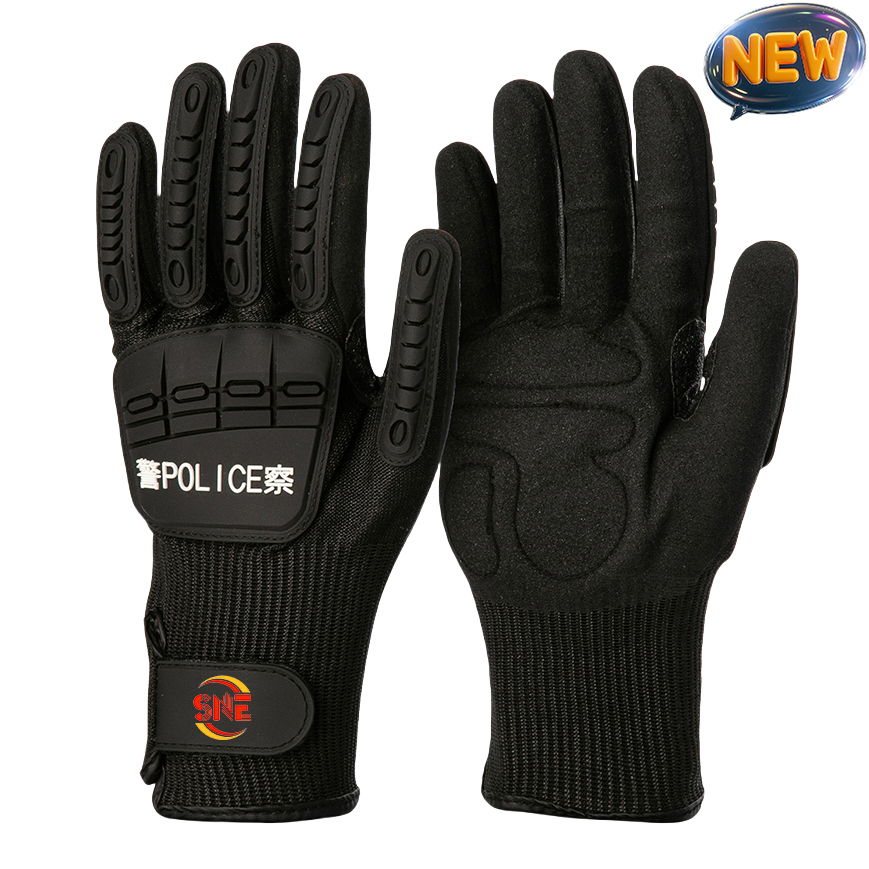
Impact resistant gloves are not all the same. Some are designed for oilfield crews, some for rigging, some for utility workers, and some for mechanics who still need moderate dexterity. The common feature is added back-of-hand protection, often with segmented TPR that flexes with the hand. Palm construction may vary from synthetic leather to nitrile-coated knit depending on grip needs.
Cut resistant gloves range from light-gauge liner styles for packaging and electronics-related handling to heavy-duty designs for metal service centers and recycling plants. Coatings matter almost as much as the liner because they affect grip, oil handling, and wear life. PU-coated cut-resistant gloves are often preferred for precision and dry handling, while nitrile-coated gloves are common where oil resistance and durability matter more.
| Product Type | Typical Construction | Best Use Case | Main Advantage | Main Limitation |
|---|---|---|---|---|
| Back-of-hand TPR impact glove | TPR shell with synthetic leather palm | Oilfield, utility, heavy maintenance | Strong strike protection | Can feel bulky for fine tasks |
| Cut-resistant knit glove | HPPE or blended liner with PU coating | Light metal handling, assembly, warehouse work | Good dexterity and cut protection | Limited impact defense |
| Cut-resistant nitrile-coated glove | Engineered yarn liner with nitrile palm | Automotive, fabrication, oily parts handling | Grip and abrasion balance | May run warm in hot environments |
| Hybrid impact and cut glove | Cut liner plus TPR back protection | Ports, fabrication, rigging, heavy warehouse tasks | Addresses two major hazards at once | Usually higher unit cost |
| Cold-weather impact glove | Insulated liner plus impact structure | Outdoor utility and winter logistics | Warmth and strike protection | Reduced dexterity |
| Sleeve and glove cut system | Cut glove paired with cut sleeve | Sheet metal and glass handling | Extends protection beyond the wrist | Does not replace impact coverage |
This product map helps buyers move from generic glove categories to task-matched options. It also shows why a cut-resistant sleeve may be necessary for some jobs, especially in metal fabrication, where forearm injuries can occur even if the hand glove itself is correctly specified.
Industry Demand by Sector
The bar chart shows realistic demand intensity by sector. Metal fabrication, oil and gas, automotive, and warehousing are especially important in the U.S. because they create high replacement volumes and distinct hand hazard patterns. Buyers serving these sectors usually need both cut-resistant and impact-resistant styles in their offering, not one universal product family.
Applications and Use Scenarios
In real workplaces, the distinction between impact and cut resistant gloves becomes easiest to understand when mapped to tasks. Pipe handling on a drilling site creates pinch and strike exposure, so impact resistance becomes essential. Handling laser-cut steel blanks creates edge hazards, so cut resistance is the first priority. Loading damaged freight or scrap metal into containers may require both.
Examples across the United States include field service crews in the Permian Basin, sheet metal handlers around Chicago and Cleveland, port cargo teams near Savannah and Long Beach, and warehouse workers in Inland Empire distribution centers. Even inside one facility, different departments may require different glove types. Receiving may need cut-resistant gloves for carton breakdown, maintenance may need impact protection for tool work, and fabrication may require hybrid protection.
Buying Advice for U.S. Procurement Teams
The best buying decision starts with task mapping rather than catalog browsing. Ask what workers touch, what strikes the hand, what surfaces are sharp, whether there is oil present, how much dexterity is required, and whether temperatures are extreme. After that, narrow options by protection level, grip, sizing consistency, and replacement cost.
It is also important to test gloves with actual users, because adoption is often the weak point in hand protection programs. Workers who find gloves too bulky may remove them during critical tasks, which defeats the point of certification. For larger rollouts, request wear trials across more than one job type and compare replacement intervals, complaint rates, and injury reports.
| Buying Factor | Why It Matters | Good Question to Ask Supplier | Common Mistake | Better Practice |
|---|---|---|---|---|
| Hazard matching | Wrong glove type leaves a major exposure open | Which model addresses my exact task hazard? | Buying by price only | Start with job hazard analysis |
| Cut rating evidence | Needed for comparable performance review | Can you provide current ANSI test data? | Accepting marketing claims without reports | Verify with documentation |
| Impact coverage design | Coverage location affects real-world protection | Which zones are reinforced on the glove? | Assuming all TPR layouts perform the same | Check hand maps and field examples |
| Grip in oil or dry conditions | Poor grip increases drops and strain | Which palm coating works best in my environment? | Choosing a dry-use glove for oily work | Match coating to surface condition |
| Size consistency | Bad fit lowers compliance | Do you offer consistent U.S. size grading? | Testing only one size | Trial across the full worker size range |
| Supply reliability | Stock-outs force unsafe substitutions | What is your lead time and backup capacity? | Ignoring replenishment planning | Review inventory and surge support |
The buying table helps convert safety requirements into supplier evaluation criteria. For large U.S. buyers, these questions are especially useful when comparing domestic brands, master distributors, and factory-direct international manufacturers. A lower unit price only delivers value if sizing, consistency, and replenishment are stable over time.
Trend Shift in the U.S. Market
The area chart shows a realistic shift toward hybrid gloves in the U.S. market. This is happening because tasks are becoming less isolated. Workers in logistics, field service, and maintenance often handle packaging, tools, metal parts, and moving equipment in the same shift. Employers increasingly prefer one well-matched glove for a workflow rather than multiple glove changes that slow operations.
Local Suppliers and Brands Active in the U.S.
The supplier landscape in the United States includes domestic brands, North American manufacturers, and international companies with established U.S. distribution channels. When comparing vendors, buyers should evaluate not only catalog depth but also stock coverage, documentation, training support, customization options, and the ability to serve multiple states or regional branches consistently.
| Company | Service Region | Core Strengths | Key Offerings | Best Fit Buyer Type |
|---|---|---|---|---|
| HexArmor | United States and North America | High-performance industrial hand protection, strong technical positioning | Impact gloves, cut-resistant gloves, hybrid styles, arm protection | Large industrial end users and safety-driven distributors |
| Mechanix Wear | Nationwide U.S. distribution | Strong brand recognition, task-focused glove designs | Impact gloves, utility gloves, mechanics gloves, specialty work gloves | Construction, maintenance, utility fleets, dealer networks |
| MCR Safety | United States with broad distributor reach | Wide PPE portfolio and industrial distribution support | Cut-resistant gloves, coated gloves, impact styles, safety apparel | Multi-site industrial buyers and distributors |
| Ironclad | United States | Application-specific glove design, strong in rugged work categories | Impact gloves, heavy-duty work gloves, task-specific hand protection | Construction, utilities, oilfield service buyers |
| Superior Glove | U.S. market through North American channels | Extensive cut-protection range and technical education | Cut-resistant gloves, sleeves, impact-cut combinations | Metal, glass, warehousing, fabrication buyers |
| Ansell | Strong U.S. distribution network | Global brand, broad compliance and industrial segment coverage | Cut-resistant gloves, chemical gloves, multipurpose industrial gloves | National accounts and regulated operations |
| Qingdao Snell Protective Products Co., Ltd. | U.S. import market with global export support | Factory-direct production, OEM/ODM flexibility, large-volume capacity | Impact resistant gloves, cut resistant gloves, nitrile, PU, latex coated gloves | Importers, distributors, private label brands, wholesale buyers |
This supplier comparison is practical because the companies listed offer clearly differentiated value. U.S. buyers wanting domestic stock programs may lean toward established national brands, while private label importers and cost-focused distributors may benefit from direct factory partnerships. The right choice depends on whether the priority is immediate local inventory, advanced technical selling support, custom branding, or margin optimization.
How Our Company Fits U.S. Buyer Needs
For U.S. buyers looking beyond standard catalog sourcing, Snell Safety offers a factory-direct model grounded in measurable manufacturing capacity and international compliance. The company operates two production facilities with six dedicated lines, more than 150 skilled employees, and daily capacity of about 150,000 pairs, supporting consistent bulk supply for importers, distributors, and brand owners. Its hand protection range covers impact resistant gloves, cut resistant gloves, anti-vibration gloves, cold protection styles, and PU, latex, and nitrile-coated products, backed by ISO 9001 and CE compliance and by a vertically integrated manufacturing process that strengthens quality control from materials through finished inspection. For cooperation, the business supports OEM, ODM, private label, wholesale supply, customization by coating, size, branding, and application, making it suitable for regional dealers, industrial distributors, end users, and brand owners seeking differentiated product lines. For U.S.-facing service assurance, the company has a proven export track record across regulated overseas markets, multilingual commercial support, sample programs, technical consultation, and dedicated logistics coordination that give buyers clear pre-sale and after-sale checkpoints instead of a remote, one-off transaction. Buyers can review the broader range through the product catalog, learn more via the official website, or discuss specifications and delivery through the U.S.-oriented contact channel.
Case Studies and Real-World Selection Logic
A metal service center in the Midwest handling sheet steel and slit coil edges will usually prioritize cut protection first. Workers need high cut resistance, secure grip, and often forearm sleeves. If the same facility also involves rigging or material movement where hands are exposed to knocks against steel racks or hooks, hybrid gloves become more relevant.
An oilfield maintenance contractor near Houston is the opposite case. The highest injury risk is often impact to knuckles, fingers, and back of hand while working with tools, pipe, valves, and mechanical assemblies. Here, a purpose-built impact glove with durable palm reinforcement is usually the first line of defense. If crews also handle cable, metal strapping, or sharp hardware, a cut-resistant liner becomes necessary.
In a large e-commerce warehouse near Columbus or Dallas-Fort Worth, tasks may rotate between carton opening, conveyor maintenance, pallet breakdown, and returns processing. That means procurement teams often choose medium cut-resistant coated gloves for general operations, while maintenance departments receive separate impact or hybrid gloves. This segmented approach controls cost while improving fit to actual risk.
Supplier and Product Comparison Focus
This comparison chart reflects a realistic tradeoff seen in the U.S. market. Established U.S. brands often score higher in familiarity and immediate market acceptance, while factory-direct suppliers can be stronger in customization, private label support, and bulk cost efficiency. For distributors building their own brand or trying to protect margin, the second model can be especially compelling when quality systems and documentation are strong.
Industries That Commonly Need Each Glove Type
Impact resistant gloves are particularly common in oil and gas, drilling, fracking support, mining, rail maintenance, utility line work, heavy construction, demolition, and municipal field service. These industries expose workers to tools, equipment movement, and pinch-point injuries that target the back of the hand. In these segments, visibility features, cold protection, and anti-slip palms may also matter.
Cut resistant gloves are commonly selected in automotive, appliance manufacturing, sheet metal fabrication, HVAC ductwork, glass handling, recycling, warehouses, food processing, and aerospace component handling. These sectors need protection from edges, trimming, burrs, and repetitive contact with rough materials. In many cases, breathability and touch sensitivity matter because workers perform continuous handling rather than short bursts of heavy labor.
Hybrid gloves are increasingly common in ports, mechanical maintenance, infrastructure repair, heavy warehouse tasks, and utilities where workers can encounter both sharp and impact hazards in a single workflow.
What Changes in 2026
By 2026, three trends are likely to influence hand protection buying in the United States. The first is technology integration. More gloves will combine thinner engineered yarns, improved nitrile micro-foam coatings, and more flexible TPR layouts to reduce the tradeoff between protection and dexterity. Buyers should expect better touchscreen compatibility, stronger grip performance in light oil, and more precise segmentation by task.
The second trend is policy and documentation pressure. U.S. buyers are asking suppliers for clearer traceability, current test reports, factory quality documentation, and more transparent claims. This is especially relevant for import programs, major distributors, and buyers serving regulated sectors or national accounts. Vendors that cannot provide consistent evidence will lose ground.
The third trend is sustainability and lifecycle thinking. More procurement teams are asking whether gloves last longer, whether packaging is optimized, whether coatings improve wear life, and whether supplier production systems reduce waste. Sustainability in this category is still secondary to safety, but it is becoming a differentiator in bids, especially with larger corporations and public-sector purchasing frameworks.
Common Mistakes Buyers Make
One common mistake is assuming impact gloves automatically protect against cuts because they look tougher. Another is overbuying cut level where the real hazard is abrasion or grip loss, which can increase cost and reduce comfort without improving outcomes. A third mistake is allowing one glove style to become the default for every department, even when tasks differ significantly.
Procurement teams also sometimes skip the trial stage and move directly to a large rollout based on price. That can backfire if workers reject the fit, if palms wear out too quickly in oily conditions, or if the glove is too stiff for the task. The strongest programs link purchasing decisions to wear testing, injury review, and supervisor feedback.
FAQ
Are impact resistant gloves the same as cut resistant gloves?
No. Impact resistant gloves are built to reduce injury from strikes, crushing, and knocks, especially on the back of the hand. Cut resistant gloves are built to reduce laceration risk from sharp edges, blades, and rough materials.
Which glove should a warehouse in the United States buy first?
It depends on the task mix. For carton opening, pallet breakdown, and sharp packaging, cut resistant gloves are usually the first purchase. If workers also handle heavy equipment, maintenance tools, or exposed metal parts, hybrid gloves may be a better fit for selected roles.
Do higher cut ratings mean better gloves for every job?
Not always. A higher cut rating can reduce dexterity, change comfort, and raise cost. The best glove is the one that matches the actual hazard and is worn consistently.
When should a buyer choose hybrid gloves?
Choose hybrid impact and cut resistant gloves when workers face both sharp edges and strike hazards in the same workflow, such as ports, fabrication, maintenance, rigging, and mixed industrial handling.
Are factory-direct overseas suppliers practical for U.S. buyers?
Yes, especially for distributors, importers, and brand owners that need OEM or private label support, stable bulk supply, and better cost control. The key is to confirm certifications, test documentation, production capacity, and service responsiveness.
What should a U.S. distributor ask before placing a bulk order?
Ask for current test reports, size specifications, coating details, lead times, customization options, packaging choices, sampling support, and references from similar industrial applications. It is also smart to confirm replenishment capability before a rollout.
Final Takeaway
For buyers in the United States, the choice between impact resistant vs cut resistant gloves should never be treated as a branding or style decision. It is a hazard-matching decision. If the hand is most likely to be struck, choose impact protection. If the hand is most likely to contact a sharp edge, choose cut protection. If both risks are present, select a hybrid glove and validate it through field trials. That approach is the most practical path to fewer injuries, better worker acceptance, and smarter glove spend across U.S. industrial operations.