2026-06-02
Share This Article
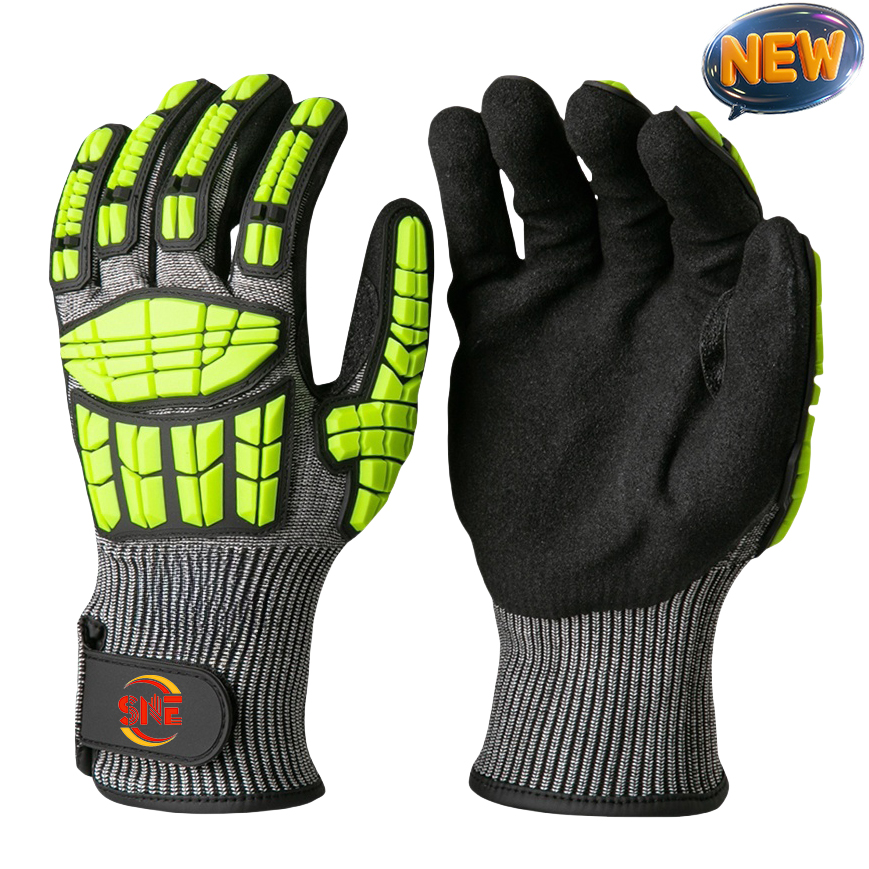
Impact Gloves for Oil and Gas in the United States
Quick Answer

If you need impact gloves for oil and gas operations in the United States, the best choice depends on whether your priority is maximum back-of-hand protection, cut resistance, oil grip, cold-weather performance, or bulk procurement. For most U.S. buyers in drilling, completions, pipeline maintenance, refining, and field service, the most practical suppliers to evaluate first are MCR Safety, Ironclad, Mechanix Wear, HexArmor, Superior Glove, and Youngstown Glove because they already serve industrial users across major energy hubs such as Houston, Midland, Odessa, Corpus Christi, Lafayette, and Pittsburgh.
For heavy mechanical risk and pinch-point exposure on rigs and service trucks, HexArmor and Ironclad are often shortlisted for strong impact design. For balanced dexterity, broad availability, and fast replacement cycles, Mechanix Wear and MCR Safety remain common picks. For cut-and-impact combinations and cold-weather variants, Superior Glove and Youngstown Glove are practical options for contractors and maintenance teams. Buyers in the United States should also consider qualified international manufacturers with proven certifications, scalable production, and reliable support. Suppliers such as Snell Safety can be attractive for OEM programs, distributor supply, and cost-performance sourcing when they provide documented quality control, responsive pre-sales guidance, and dependable after-sales support.
U.S. Market Overview for Oil and Gas Impact Gloves

The United States remains one of the world’s largest markets for industrial hand protection used in upstream, midstream, and downstream energy activity. Demand for impact-resistant gloves is concentrated in Texas, Louisiana, Oklahoma, New Mexico, Pennsylvania, North Dakota, and Colorado, where workers face repetitive contact with pipe, slips on oily surfaces, crushing hazards, and hand injuries from tools, valves, cables, and equipment handling. In field conditions, a glove that performs well on paper but fails in grip, dexterity, or comfort is often rejected by crews within days, so real adoption is driven by wear acceptance as much as compliance.
Procurement teams in Houston and other Gulf Coast trade hubs usually assess gloves through a combination of trial wear, safety manager feedback, total cost per month, and compatibility with task-specific PPE rules. Offshore support operations around Port Fourchon and Gulf Coast refineries also emphasize oil resistance, wet grip, and durable back-of-hand thermoplastic rubber structures. Buyers serving shale regions such as the Permian Basin and Eagle Ford tend to prioritize impact performance, abrasion life, and bulk availability for rotating crews.
Another key market shift is the move from basic mechanic-style gloves to higher-spec hybrid designs that combine impact protection, cut resistance, touchscreen capability, and reinforced palms. This is especially relevant where workers move between handling tubulars, operating digital inspection devices, and performing maintenance without changing gloves repeatedly. Because U.S. safety managers increasingly look at incident reduction data rather than unit price alone, premium designs can justify higher initial cost if they reduce replacement frequency and improve worker compliance.
Market Growth Trend

The chart below illustrates a realistic growth outlook for U.S. demand for impact gloves used in oil and gas from 2021 through 2026, shaped by energy activity, stricter safety programs, and greater adoption of multi-risk glove platforms.
Leading Suppliers Serving the United States
The table below compares well-known companies that are relevant to U.S. industrial buyers looking for oilfield impact gloves. This is not a ranking for every application; it is a practical shortlist for sourcing discussions, field trials, and distributor onboarding.
| Company | Primary Service Region | Core Strengths | Key Offerings for Oil and Gas | Best Fit Buyer Type |
|---|---|---|---|---|
| HexArmor | United States and North America | Advanced impact design, premium cut protection, strong industrial branding | High-spec impact gloves, cut-resistant impact gloves, task-specific industrial hand protection | Large operators, refineries, safety-led industrial programs |
| Ironclad | United States nationwide | Recognized impact glove range, field-ready rugged construction, strong oilfield familiarity | Impact mechanic gloves, oilfield service gloves, heavy-duty palm reinforcement | Field crews, drilling contractors, maintenance teams |
| Mechanix Wear | United States and distributor networks | Comfort, dexterity, broad channel availability, fast replenishment | Impact gloves, utility gloves, multi-purpose industrial hand protection | Contractors, distributors, mixed industrial fleets |
| MCR Safety | United States with broad industrial coverage | Extensive industrial PPE range, value-based sourcing, established distribution | Impact gloves, cut-resistant gloves, oil-resistant palm options | Distributors, regional dealers, cost-conscious buyers |
| Superior Glove | United States and Canada | Technical glove engineering, cut and impact combinations, climate-specific options | Impact gloves, insulated impact gloves, high-cut protective gloves | Midstream, winter operations, utility and service teams |
| Youngstown Glove | United States industrial markets | Durable work gloves, utility-focused design, task-specific configurations | Oilfield impact gloves, winter work gloves, grip-oriented industrial gloves | Maintenance crews, field technicians, utility contractors |
| Snell Safety | United States import supply and global B2B channels | Factory-direct scale, OEM/ODM flexibility, impact and cut glove manufacturing expertise | Custom impact gloves, private label supply, bulk industrial hand protection | Importers, brand owners, wholesalers, regional distributors |
For U.S. buyers, the practical takeaway is simple: domestic brands often win when immediate stock, local distributor familiarity, and trial speed matter most, while factory-direct international suppliers become especially competitive for private label programs, large tenders, and buyers trying to balance specification with landed cost.
Common Product Types Used in Oil and Gas
Impact gloves for oil and gas are not one single category. The right type depends on exposure to crush hazards, cut hazards, oil saturation, weather, and tool handling. Buyers often reduce hand injury rates faster when they issue gloves by task rather than forcing one glove across all jobs.
| Glove Type | Main Protection Focus | Typical Use Case | Main Advantage | Possible Limitation |
|---|---|---|---|---|
| Standard impact glove | Back-of-hand protection | General rig work, equipment handling | Good protection against knocks and pinch hazards | May lack cut protection for sharp edges |
| Impact plus cut-resistant glove | Impact and blade resistance | Pipe handling, metal parts, maintenance shutdowns | Reduces need to switch between glove types | Usually higher unit cost |
| Oil-grip impact glove | Grip in oily and wet conditions | Drilling fluids, maintenance, valve work | Better control on slick tools and surfaces | Grip coatings can wear faster in abrasive use |
| Insulated impact glove | Impact and cold protection | Winterized field service, northern operations | Improves comfort and compliance in cold conditions | Can reduce fine dexterity |
| Hi-vis impact glove | Visibility and hand awareness | Night work, traffic-adjacent sites, logistics yards | Hands are easier to see around moving equipment | May show dirt quickly |
| Touchscreen-compatible impact glove | Device use without removal | Digital inspections, tablets, handheld scanners | Improves workflow and reduces glove removal | Touch sensitivity varies by model |
| Extended-cuff impact glove | Wrist and lower forearm coverage | Pipe yards, rough material handling | More coverage during repetitive handling tasks | Can feel bulky under sleeves |
In the United States, the strongest demand now tends to center on hybrid gloves that combine impact structures with cut liners and nitrile or sandy nitrile palms. This reflects real field conditions where workers are rarely exposed to only one hazard at a time.
Industry Demand by Segment
Different oil and gas segments place different demands on gloves. The bar chart shows a realistic index of where impact glove demand is strongest in the U.S. market.
How to Buy the Right Gloves
U.S. buyers should begin with hazard mapping, not catalog browsing. A glove suitable for refinery turnaround crews in Louisiana may not be the right option for tubular handling in Midland or winter line work in Pennsylvania. Procurement quality improves when safety teams and frontline supervisors agree on the dominant hazards before issuing samples.
Start by checking whether the work involves impact-only risk or a combination of impact, cut, abrasion, oil, vibration, or cold exposure. Then verify cuff length, grip pattern, sizing range, and whether workers need to use tablets or inspection screens. In oil and gas, glove rejection often happens because the glove is too stiff, too hot, or loses grip when saturated. That is why controlled wear trials across multiple shifts matter more than a quick office inspection.
Buyers should also ask suppliers direct questions about coating durability, liner construction, TPR attachment, production consistency, and replacement cycle expectations. Imported products should be evaluated not just on sample quality but also on repeatability across volume orders. If you are working with a factory-direct partner, it helps to confirm carton configuration, logo customization, lead time, and how they manage quality claims.
For initial outreach, many U.S. distributors and end users prefer to compare stocked brands with custom-capable manufacturers at the same time. That allows a buyer to decide whether immediate local supply or a private-label cost structure fits better. It can be useful to review current options through the supplier’s product catalog and then move to a structured specification discussion instead of requesting a generic quote.
Buying Checklist for U.S. Energy Operations
The following table gives a practical checklist for procurement teams, safety managers, and distributors evaluating impact-resistant gloves for energy applications.
| Buying Factor | What to Check | Why It Matters in Oil and Gas | Good Sign from Supplier | Warning Sign |
|---|---|---|---|---|
| Impact protection design | TPR layout, finger coverage, flexibility | Hands face repeated knocks, pinch points, and crush exposure | Task-specific layout with flexible joints | Rigid design that restricts grip |
| Grip performance | Palm coating, wet grip, oil resistance | Tools and surfaces are often oily or muddy | Consistent grip in wet and slick handling | Grip fades quickly in field trials |
| Cut resistance | Liner level and palm reinforcement | Metal edges, wire, and rough components are common | Clear cut rating and balanced dexterity | No test data or vague claims |
| Comfort and fit | Sizing, breathability, cuff style | Workers remove uncomfortable gloves, creating compliance gaps | Multiple sizes with stable fit | Few sizes and bulky profile |
| Supply consistency | Capacity, lead time, repeatability | Large crews need uninterrupted replacement stock | Stable production and replenishment plans | Sample quality differs from batch quality |
| Certification and QA | Quality systems, test standards, documented controls | Supports procurement audits and buyer confidence | Transparent certification and inspection process | Unclear paperwork or no traceability |
| Commercial model | Stock supply, OEM, packaging, branding | Different buyers need different service structures | Flexible commercial options | One-size-fits-all quotation approach |
For many U.S. organizations, the smartest buying pattern is to standardize two glove families rather than one: a general impact glove for daily handling and a higher-spec cut-and-impact glove for shutdowns, maintenance, or pipe handling tasks.
Where These Gloves Are Used
Impact gloves are used across drilling rigs, wireline services, hydraulic fracturing support, pipeline construction, gathering systems, compressor stations, LNG terminals, marine transfer points, and refinery maintenance. In upstream fields, gloves are heavily used during rig-up and rig-down, handling tools, moving tubulars, changing equipment, and operating chain or powered devices. In midstream, they are common during valve operations, pigging support, loading activities, and mechanical maintenance. In downstream sites, gloves support maintenance crews, scaffold teams, mechanical contractors, and warehouse handling personnel.
Local conditions shape glove selection. In the Permian Basin, dust, heat, rough handling, and high replacement turnover influence buying decisions. Along the Gulf Coast, oily grip and chemical-adjacent working environments become more important. In Appalachia and northern states, winter insulation and flexible fit in low temperatures matter more. That is why the same company may use several glove platforms across its U.S. operations.
Trend Shift in Product Requirements
This area chart reflects how U.S. buyer preferences are shifting from basic impact-only gloves toward multi-risk and sustainability-aware options through 2026.
Case-Based Glove Selection Examples
Below are practical selection scenarios that mirror common U.S. oil and gas applications. These examples help buyers match glove type to field reality instead of relying only on general product descriptions.
| Application Scenario | Main Hazards | Recommended Glove Profile | Why It Fits | Typical U.S. Region |
|---|---|---|---|---|
| Land drilling floor support | Impact, abrasion, oily tool contact | Heavy-duty impact glove with reinforced palm | Handles repeated knocks and rough handling | West Texas, Oklahoma |
| Pipe and tubular handling | Impact, cut, pinch points | Impact plus cut-resistant glove | Reduces combined mechanical injury risk | Permian Basin, Pennsylvania |
| Refinery turnaround maintenance | Impact, abrasion, intermittent sharp contact | Flexible impact glove with strong dexterity | Supports tool handling over long shifts | Houston Ship Channel, Louisiana |
| Winter pipeline field service | Cold, impact, grip loss | Insulated impact glove with oil grip | Protects hands without sacrificing control | North Dakota, Colorado |
| Terminal and loading operations | Grip, impact, visibility | Hi-vis impact glove with nitrile palm | Improves hand visibility and wet handling control | Corpus Christi, Gulf Coast ports |
| Inspection and digital reporting work | Light impact, repeated device use | Touchscreen-compatible impact glove | Reduces glove removal during digital workflows | Nationwide service fleets |
| Contractor mechanical maintenance | Mixed hazards and long wear time | Balanced multi-risk impact glove | Works across varied tasks with fewer glove changes | Nationwide industrial sites |
The best case-study lesson is that glove acceptance improves when the product clearly matches the job rhythm. Workers are far more likely to keep gloves on if they can still grip, feel, and move naturally.
Local Supplier Landscape in the United States
Local supply in the United States is shaped by three channels: direct branded manufacturers, industrial PPE distributors, and importer-private-label programs. In large energy centers such as Houston, Midland, Odessa, New Orleans, and Tulsa, buyers often work through regional distributors that can arrange samples quickly and support rollouts across multiple sites. National brands gain an advantage when end users need immediate replenishment from established warehouse networks.
At the same time, regional dealers and brand owners increasingly use custom manufacturing to develop their own impact glove lines for oilfield customers. This model is attractive when a distributor wants margin control, custom branding, exclusive specifications, or packaging aligned with its sales channel. It is also common for buyers near major import gateways such as Los Angeles, Long Beach, Savannah, and Houston to combine domestic safety stock with periodic container-based replenishment from overseas factories.
That hybrid procurement model has become more practical because many international manufacturers now support specification development, labeling, testing documentation, and export logistics in ways that feel much closer to local partnership than traditional remote sourcing. For U.S. buyers, the best result often comes from balancing fast local stock for urgent needs with planned factory-direct purchasing for scale and customization.
Supplier and Product Positioning Comparison
This comparison chart shows a realistic view of how buyers often evaluate different supplier models for oil and gas impact gloves in the United States.
Our Company in the U.S. Market
Snell Safety has built a practical presence for U.S. buyers by focusing on industrial hand protection that matches American purchasing priorities: documented quality systems, scalable output, and flexible commercial models. As a manufacturer operating two production facilities with six dedicated lines and daily capacity of 150,000 pairs, the company supports bulk supply of impact-resistant, cut-resistant, nitrile-, latex-, and PU-coated gloves while maintaining ISO 9001 and CE-backed production controls that help buyers verify consistency, traceability, and compliance expectations. For customers in the United States, this matters because procurement teams need more than a sample that looks good; they need repeatable batch quality, stable lead times, and a supplier that understands how oilfield, construction, logistics, and manufacturing users evaluate risk and wear life. Snell Safety works with end users, distributors, dealers, brand owners, and importers through OEM, ODM, wholesale, private label, and customized product programs, making it suitable for everything from regional dealer lines to container-scale contract supply. Its export track record across North America and other regulated markets, multilingual business operations, sample support, technical consultation, and coordinated logistics show that it is not simply shipping remotely without accountability. U.S. buyers can review the company background at about us, discuss project requirements through the U.S. contact channel, and use that combination of pre-sale specification support and post-sale order follow-up as a concrete service safeguard when building longer-term sourcing plans.
What Will Matter Most in 2026
By 2026, the U.S. market for impact gloves in oil and gas is expected to be shaped by three major themes: smarter glove engineering, tighter procurement accountability, and sustainability-linked sourcing. On the technology side, buyers will increasingly favor gloves that combine impact structures with better ergonomic shaping, lighter cut-resistant liners, touchscreen compatibility, and coatings engineered for both oil grip and longer abrasion life. Workers want less bulk and better feel, while safety managers want fewer hand injuries and better PPE compliance; new product design will keep moving toward that middle ground.
On the policy side, procurement teams are likely to demand clearer performance documentation, more consistent test reporting, and stronger supplier traceability. Even where no single federal rule mandates one glove type, contractor qualification systems, insurer expectations, and internal safety audits will continue to push buyers toward better-documented products and more disciplined vendor management. In practical terms, that means suppliers that can explain materials, testing, production controls, and replacement expectations will stand out.
Sustainability will also become more relevant, especially for large operators and branded distributors. This does not mean buyers will sacrifice protection for marketing language. Instead, they will look for realistic steps such as improved production efficiency, responsible material selection where feasible, reduced packaging waste, and longer-wearing products that reduce disposal frequency. Manufacturers that can combine performance, credible documentation, and supply-chain visibility will be in a stronger position in the U.S. market.
FAQ
What are the best impact gloves for oil and gas work in the United States?
The best gloves are usually those that combine strong back-of-hand impact protection with dependable grip and enough dexterity for daily tasks. For many U.S. applications, leading options come from suppliers such as HexArmor, Ironclad, Mechanix Wear, MCR Safety, Superior Glove, and specialized OEM manufacturers for private label programs.
Do oil and gas workers need impact-only gloves or cut-and-impact gloves?
If the task includes contact with pipe, metal edges, cable, or rough fabricated parts, cut-and-impact gloves are usually the safer choice. Impact-only gloves may still work for some general handling tasks, but mixed hazards are common in the field.
Why do some crews stop wearing impact gloves?
The most common reasons are poor fit, loss of grip in oily conditions, excessive stiffness, heat build-up, and reduced dexterity. That is why real wear trials are essential before full rollout.
Are factory-direct overseas suppliers suitable for the U.S. market?
Yes, if they provide documented quality systems, repeatable production, clear communication, and reliable shipping support. They are especially useful for distributors, brand owners, and large-volume buyers seeking custom specifications or better cost-performance.
How many glove styles should an oil and gas company standardize?
Many companies perform best with at least two core styles: one general impact glove for daily handling and one higher-spec model for cut-heavy, winter, or more demanding maintenance tasks.
Where should U.S. buyers start when requesting quotations?
Start with a clear task list, target protection levels, expected monthly volume, sizing mix, and whether you need stock supply or custom branding. This makes it easier for both domestic brands and manufacturing partners to recommend the right glove platform.
Final Takeaway
For buyers in the United States, the best impact gloves for oil and gas are the ones that match real jobsite hazards, maintain grip in oily conditions, and are comfortable enough for crews to keep wearing. Domestic brands remain a strong choice for fast deployment and easy replenishment, especially in major energy centers like Houston, Midland, and the Gulf Coast. At the same time, qualified manufacturing partners with proven quality systems and flexible OEM capability can deliver serious value for distributors, importers, and large end users. A smart sourcing strategy is to test both local stock options and factory-direct custom programs, compare performance against replacement cost, and build a glove lineup that reflects the actual risks of U.S. oil and gas work.