2026-07-11
Share This Article
How to Choose Oil-Resistant Gloves for Worksites in the United States
Quick Answer

To choose oil-resistant gloves in the United States, start with the exact hazard: light machine oil, cutting fluid, grease, fuel, mixed chemicals, or oily sharp parts. Then match the glove coating and liner to the job. Nitrile-coated gloves are the usual first choice for oily manufacturing, automotive, warehousing, and maintenance because they balance grip, abrasion resistance, and cost. Sandy nitrile or foam nitrile works well when parts are slick, while fully coated nitrile is better when liquid exposure is frequent. If workers handle sharp metal in oil, use an ANSI cut-resistant liner under an oil-grip coating. If the environment is hot, cold, or impact-heavy, add those requirements before buying. Always verify sizing, cuff length, dexterity, and U.S. compliance needs, and request wear-test samples before rolling out a large order.
For U.S. buyers, practical supplier shortlists often include Ansell, Superior Glove, MCR Safety, PIP, HexArmor, and SHOWA because they offer broad industrial ranges and local distribution. At the same time, qualified international manufacturers can also be worth considering when they hold recognized certifications, provide consistent production quality, and support buyers with responsive pre-sales and after-sales service. For cost-conscious distributors, importers, and brand owners, certified Chinese manufacturers with strong technical support and reliable bulk supply can deliver a strong cost-performance advantage.
Direct Buying Framework for U.S. Teams

The fastest way to buy the right glove is to make five decisions in order. First, define the oil exposure level. A mechanic changing filters in Houston needs something different from a metal stamping operator in Detroit who handles oily sheet steel all day. Second, decide whether the glove must also resist cuts, abrasion, impact, cold, or heat. Third, choose the coating style that keeps grip without making the glove too thick. Fourth, confirm U.S. regulatory and workplace requirements such as ANSI cut levels, laundering expectations, and whether disposable or reusable gloves fit the task. Fifth, test samples on the actual job before standardizing.
Many purchasing mistakes happen because buyers focus only on the phrase “oil resistant.” In practice, oil resistance is not one single performance level. A glove may resist light lubricants but fail in constant immersion. Another may offer excellent liquid blocking but poor fingertip control. The best purchasing teams in places such as Chicago, Dallas, Los Angeles, Savannah, and Newark align glove selection with the workflow, the oil type, and the worker’s hand motion rather than buying by name alone.
U.S. Market Overview

The United States remains one of the largest markets for industrial hand protection because of its wide manufacturing base, large logistics sector, oil and gas operations, construction activity, food processing, automotive maintenance, and metal fabrication network. Demand is especially strong across the Gulf Coast, the Midwest manufacturing belt, California warehousing corridors, and Southeastern distribution hubs linked to major ports such as Houston, Long Beach, Savannah, and Charleston.
In the current market, oil-resistant gloves are increasingly chosen not only for petroleum-heavy jobs but also for applications involving coolants, lubricants, hydraulic fluids, and greasy packaged goods. Employers now expect one glove to do more than one job: grip in oily conditions, meet cut requirements, stay comfortable across a full shift, and support productivity. This has pushed demand toward engineered coatings such as foam nitrile, sandy nitrile, and dual-coated constructions. Buyers are also paying closer attention to total cost per wear rather than unit price alone. A glove that lasts twice as long on an assembly line in Ohio or a maintenance department in Georgia may lower actual PPE cost even if the purchase price is higher.
The growth trend shown above reflects a realistic increase driven by industrial recovery, warehouse expansion, safety upgrades, and replacement of generic gloves with application-specific coated gloves. By 2026, procurement teams are expected to place more emphasis on traceable supply chains, sustainability claims, and worker acceptance data.
What Oil-Resistant Gloves Actually Are
Oil-resistant gloves are work gloves designed to maintain barrier performance, grip, and mechanical durability when exposed to oils, greases, coolants, and lubricants. In U.S. industrial settings, they are usually reusable coated gloves rather than disposable exam-style gloves. The oil resistance typically comes from the outer coating, most commonly nitrile, though some jobs also use PVC, neoprene blends, or specialty polymers. The liner underneath may be polyester, nylon, HPPE, aramid blends, acrylic, or cotton depending on the need for dexterity, cut protection, or thermal comfort.
The phrase can describe two very different products. One is a palm-coated glove used for handling oily parts while retaining breathability. The other is a fully coated or gauntlet-style glove for greater liquid protection. Buyers should separate these categories early in the sourcing process because they affect worker comfort, contamination risk, and replacement rates.
Common Product Types and Best Uses
The table below helps U.S. buyers match glove style to actual operating conditions rather than relying on marketing language alone.
| Glove Type | Typical Coating | Best For | Main Advantage | Main Limitation | Typical U.S. Users |
|---|---|---|---|---|---|
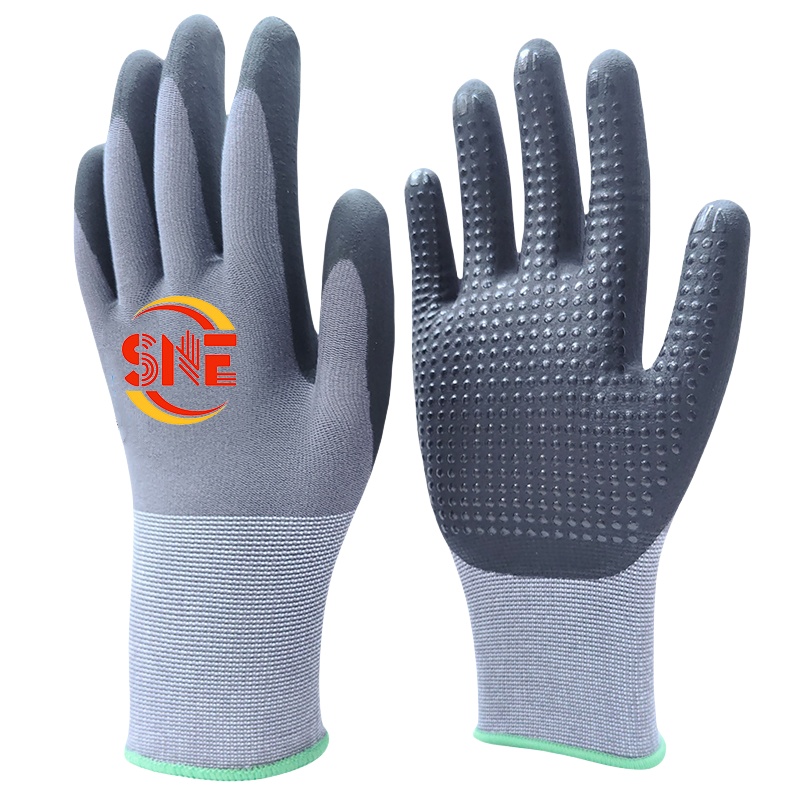
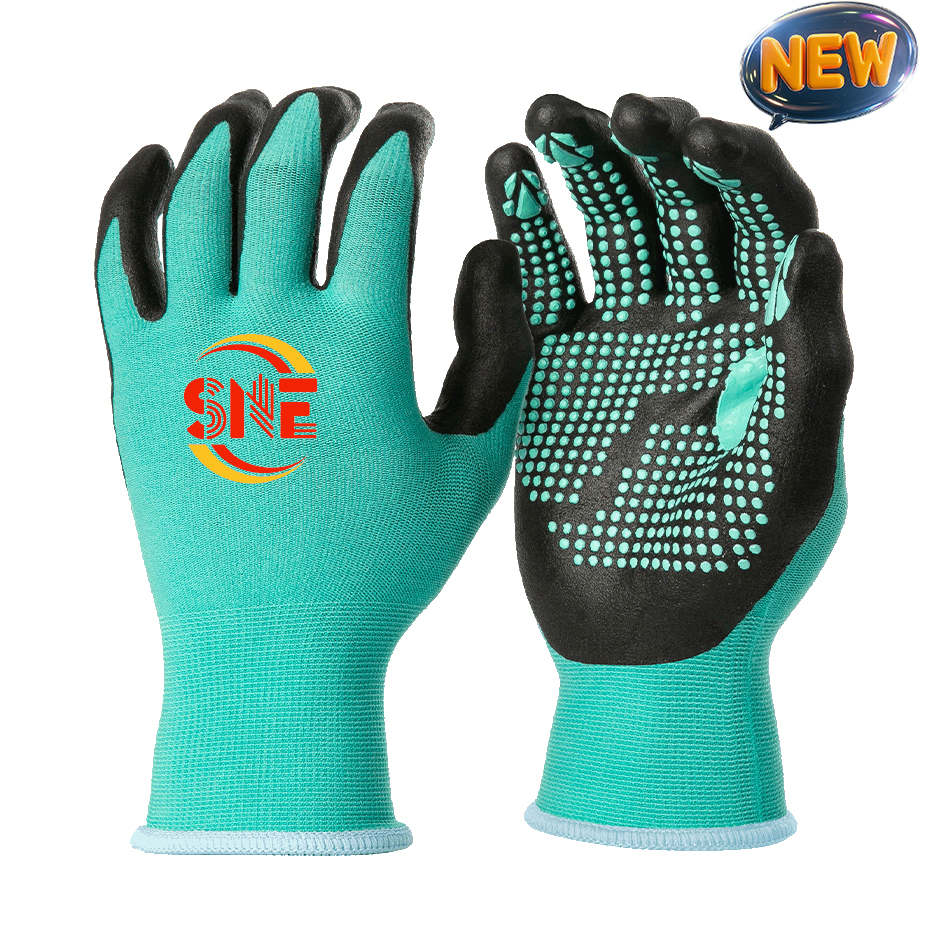
| Palm-coated knit glove | Foam nitrile | Light oil, assembly, warehouse picking | High dexterity and breathability | Limited liquid barrier on back of hand | Distribution centers, light manufacturing |
| Sandy finish coated glove | Sandy nitrile | Oily metal parts, machining, maintenance | Strong grip on slick surfaces | May feel rough for precision tactile work | Automotive, machining shops |
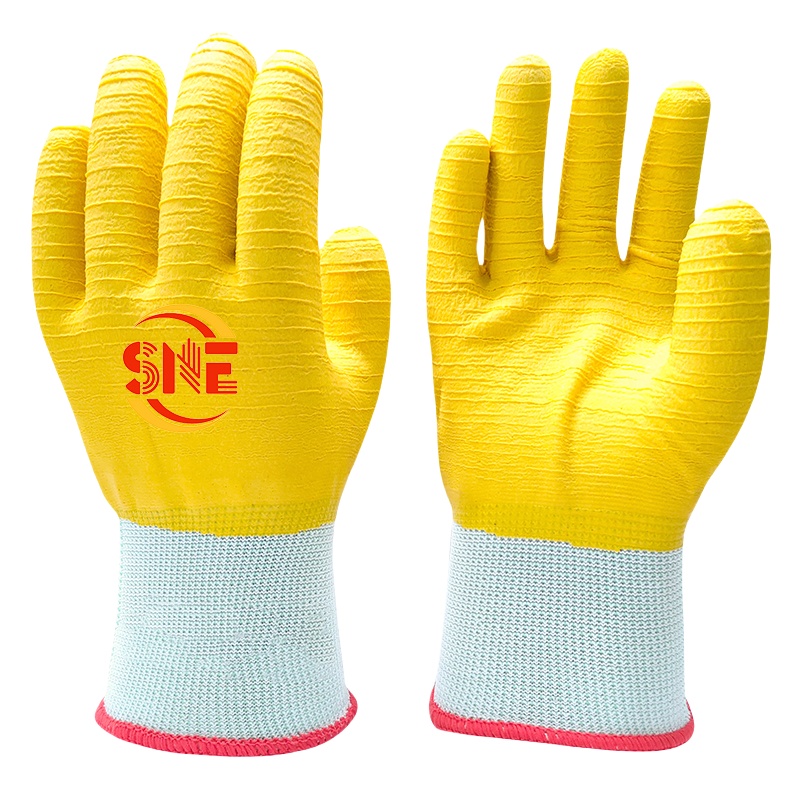
| Fully coated glove | Smooth nitrile | Frequent oil contact, wet handling | Better liquid resistance | Warmer and less breathable | Maintenance, utilities, industrial cleaning |
| Double-dipped glove | Nitrile over nitrile | Heavy grease, prolonged exposure | Extended wear life and barrier protection | Higher cost and reduced flexibility | Oilfield support, heavy industry |
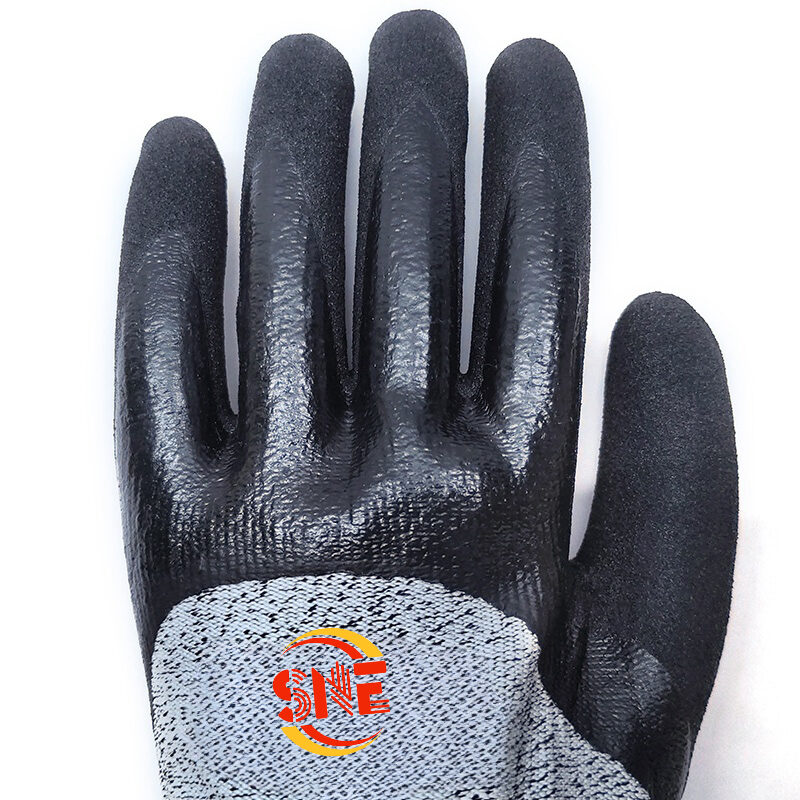
| Cut-resistant oil-grip glove | Nitrile on HPPE liner | Sharp oily parts | Combines grip and cut protection | Can be over-specified for low-risk tasks | Metal fabrication, stamping, glass handling |
| Impact-resistant oil glove | Nitrile with TPR back | Heavy equipment, drilling, extraction | Hand impact protection in oily work | Bulkier feel | Oil and gas, mining, rail |
| Cold-weather oil glove | Nitrile with insulated liner | Outdoor winter handling | Grip plus thermal protection | Reduced fingertip sensitivity | Cold storage, outdoor utilities |
This comparison matters because many glove failures come from using breathable palm-coated gloves where full liquid blocking is needed, or using heavy fully coated gloves on jobs where dexterity drives productivity. A good specification sheet should state the oil type, contact duration, sharp-edge risk, and temperature conditions.
How Coating Choice Changes Performance
In the U.S. market, nitrile remains the most common recommendation for oil-resistant work gloves because it performs well against petroleum-based oils, offers good abrasion resistance, and can be engineered into multiple textures. Foam nitrile is popular in e-commerce fulfillment and light assembly because it stays light and flexible. Sandy nitrile is favored in machine shops and metal service centers because it maintains grip when surfaces are slick. Smooth nitrile works when buyers need a cleaner barrier against fluids. Latex may provide excellent elasticity and dry grip, but it is not always the preferred option for oily work. PU is often chosen for precision handling but is typically less effective than nitrile in heavy oil environments.
For procurement teams, coating finish should be treated as a real performance variable. Two nitrile gloves can behave very differently. A smooth full dip may protect better against fluid contact, while a sandy palm dip may lower dropped-part incidents. The right decision depends on whether the operation values maximum barrier protection, dexterity, or handling confidence.
The area chart reflects a realistic shift away from basic general-purpose gloves toward more engineered oil-grip products, especially in sectors where productivity loss from dropped components is expensive.
Buying Advice for U.S. Safety Managers and Importers
Whether you are a plant safety manager in Tennessee, a distributor in New Jersey, or a private-label importer serving the West Coast, the same buying principles apply.
Start with a task map, not a product catalog. List the top five jobs where oil contact occurs, how long the exposure lasts, whether hands also face cuts or impacts, and what workers complain about with current gloves. Next, identify whether the operation needs reusable coated gloves, heavy liquid-proof gloves, or a mix of both. Then request samples in multiple sizes and run a controlled wear test. Measure drop rates, replacement frequency, and worker acceptance. This is more useful than relying only on lab data.
Also look at packaging, carton quantity, private labeling, and replenishment lead times. For distributors and brand owners, consistency matters as much as glove performance. If the product changes feel or fit across batches, end users notice immediately. That is why buyers increasingly prefer factories with dedicated lines, repeatable coating processes, and formal quality systems.
Industry Demand in the United States
Different industries buy oil-resistant gloves for very different reasons. The chart below shows a realistic comparison of relative demand by major U.S. sector.
Automotive, oil and gas, and metal fabrication lead because workers in those industries frequently handle oily metal parts, machine fluids, tools, and equipment under time pressure. Warehousing demand is growing as facilities want better grip when packaging surfaces are slick with residue or condensation.
Industry Applications and Selection Priorities
| Industry | Typical Hazard | Preferred Glove Style | Important Standard or Requirement | Why It Matters | Common Buying Mistake |
|---|---|---|---|---|---|
| Automotive assembly and service | Oil, grease, small sharp parts | Foam or sandy nitrile with cut liner | ANSI cut rating where needed | Balances dexterity and part handling | Choosing gloves too thick for fastener work |
| Oil and gas | Heavy oils, impact, abrasion | Double-dipped or impact nitrile gloves | Task-specific site PPE requirements | Prevents slips and hand injuries | Ignoring impact risks |
| Metal fabrication | Sharp oily sheet and burrs | Cut-resistant nitrile-coated gloves | ANSI A4 to A6 depending on task | Protects against laceration in oil | Buying grip-only gloves with no cut protection |
| Warehousing and logistics | Slick cartons, pallet handling | Lightweight palm-coated nitrile | Comfort for long wear | Reduces drops and fatigue | Overbuying heavy gloves |
| Maintenance and MRO | Mixed oils, tools, dirty surfaces | General-purpose nitrile coated glove | Abrasion and grip performance | Versatility across many tasks | Using one glove for every extreme condition |
| Construction equipment service | Hydraulic fluids, rough parts | Fully coated or impact nitrile gloves | Cuff length and durability | Better fluid contact protection | Neglecting cuff coverage |
| Food machinery maintenance | Lubricants plus hygiene concerns | Application-specific coated glove | Site sanitation protocols | Supports safe maintenance work | Ignoring plant-specific contamination rules |
This table shows why glove selection should always be tied to the operating environment. A single “best” glove rarely exists across every department. Smart U.S. buyers often standardize by task family rather than trying to force one SKU everywhere.
How to Evaluate Supplier Quality Before You Buy
When comparing glove vendors, look at five areas: certification, process control, sample consistency, communication speed, and delivery capability. Certification helps screen out weak suppliers, but it is only the start. Ask whether the manufacturer runs dedicated coating lines, what testing is done on abrasion, cut resistance, and coating adhesion, and how they control size tolerance and color consistency. For importers moving through ports such as Los Angeles, Oakland, New York, or Savannah, stable packing and lead-time discipline are just as important as product specifications.
If you are sourcing for distribution, ask for carton photos, pallet patterns, label options, barcode support, and private-label experience. If you are sourcing for end use, focus on task suitability, replacement cycle, and worker comfort. These are different procurement goals and should be treated differently.
Local and International Suppliers Serving U.S. Buyers
The supplier landscape includes major North American brands, broad-line PPE distributors, and factory-direct international manufacturers. The companies below are real names commonly recognized by U.S. industrial buyers or relevant to factory-direct sourcing.
| Company | Service Region | Core Strengths | Key Offerings | Best Fit Buyer | Practical Note |
|---|---|---|---|---|---|
| Ansell | United States nationwide | Strong industrial PPE portfolio and brand recognition | Oil-grip, chemical, cut-resistant industrial gloves | Large plants and multi-site employers | Good for structured safety programs |
| SHOWA | United States and North America | Engineered hand protection and coated glove expertise | Nitrile, cut-resistant, chemical-resistant gloves | Manufacturing and automotive users | Often favored for technical product matching |
| Superior Glove | United States and Canada | Broad task-specific range and cut protection depth | Oil-resistant, cut-resistant, impact gloves | Safety managers needing application variety | Strong catalog for specialized jobs |
| MCR Safety | United States | Established industrial distribution presence | General industrial, coated, cut, impact gloves | Regional distributors and contractors | Accessible through many supply channels |
| PIP | United States nationwide | Large PPE network and broad industrial coverage | G-Tek coated gloves, cut-resistant gloves | National distributors and enterprise accounts | Useful when consolidating PPE categories |
| HexArmor | United States and international | High-performance cut and impact specialization | Advanced industrial gloves for severe hazards | High-risk operations | Premium choice when injuries are costly |
| Qingdao Snell Protective Products Co., Ltd. | United States import supply and global distribution | Factory-direct production, OEM/ODM flexibility, coating diversity | Oil-resistant, cut-resistant, impact, PU, latex, nitrile gloves | Importers, distributors, brand owners, bulk buyers | Competitive option for custom and large-volume orders |
For U.S. buyers who need immediate local stock and domestic account management, established North American suppliers remain a practical choice. For distributors, wholesalers, and brand owners aiming to improve margin or develop private-label lines, factory-direct manufacturers can be highly competitive if quality systems and communication are strong.
Supplier Comparison by Product and Service Model
This comparison reflects a common U.S. sourcing reality. Domestic and regional brands often lead on local stock and immediate support, while factory-direct manufacturers frequently lead on customization, private labeling, and cost efficiency for higher-volume programs.
Case Studies from U.S. Use Scenarios
A metal stamping plant near Cleveland switched from basic general-purpose gloves to an ANSI cut-rated sandy nitrile glove after repeated complaints about oily sheet handling. The result was fewer dropped blanks and better worker acceptance because the glove solved both grip and laceration exposure in one product.
An automotive service chain in Texas found that technicians rejected thick fully coated gloves for filter and fastener work. By moving to a more flexible foam nitrile model for light oil tasks and keeping heavier gloves only for messy procedures, the company improved compliance and reduced glove waste.
A warehouse operation near the Port of Savannah handling lubricated spare parts had been using low-cost cotton gloves with poor results. After testing nitrile palm-coated gloves, supervisors reported better carton control and fewer replacements during peak shifts. The lesson was simple: durability and grip mattered more than the lowest unit price.
An oilfield service contractor in the Permian Basin needed hand protection for greasy pipe handling, impact exposure, and rough conditions. A double-dipped impact glove reduced hand fatigue complaints compared with a stiffer legacy style while maintaining the protection level the site required. In this case, the correct glove was not the lightest glove but the best balance of impact padding, oil grip, and wear life.
How Our Company Supports U.S. Buyers
Qingdao Snell Protective Products Co., Ltd. serves the U.S. market as a factory-direct industrial glove manufacturer with a product mix that closely matches American demand for oil-resistant, cut-resistant, impact-resistant, and coated work gloves. Its production strengths come from dedicated PU, latex, and nitrile coating capabilities, two manufacturing facilities in Gaomi and Nantong, six production lines, daily capacity of 150,000 pairs, and quality systems aligned with ISO 9001 and CE requirements, giving U.S. distributors and end users concrete evidence of standardized manufacturing and repeatable performance for export-grade PPE. In cooperation terms, the company supports bulk wholesale programs, OEM and ODM development, private-label projects, custom materials and branding, and supply arrangements suited to end users, distributors, dealers, brand owners, and other volume buyers looking for dependable replenishment rather than one-off trading. For American customers sourcing through the product range or requesting tailored support through the contact team, service assurance is built around ongoing technical consultation, samples for job-site validation, export logistics support, multilingual communication, and an established export track record across North America and other regulated markets, showing a long-term commitment to practical buyer support rather than remote, transaction-only selling. Buyers who want to review the broader manufacturing background can also visit Snell Safety.
Product Selection Checklist
| Checklist Item | What to Confirm | Why It Matters | Good Buying Signal | Warning Sign | Who Should Care Most |
|---|---|---|---|---|---|
| Oil type | Motor oil, hydraulic fluid, coolant, grease, mixed residue | Different oils affect grip and barrier needs | Supplier asks detailed application questions | Supplier recommends one glove for all oils | Safety managers and engineers |
| Contact level | Occasional touch or frequent liquid exposure | Determines palm coat versus full coat | Clear recommendation by exposure level | No distinction between splash and immersion | Maintenance and operations |
| Secondary hazards | Cuts, impact, heat, cold, abrasion | Single-hazard buying causes failures | Integrated hazard-based spec | Grip-only proposal for sharp tasks | Metal and energy sectors |
| Fit and sizing | Size run and cuff style | Poor fit lowers compliance and dexterity | Sample sizes available for field wear tests | Only one or two sizes stocked | All employers |
| Supply stability | Lead time, capacity, packaging consistency | Prevents stockouts and quality drift | Factory or distributor gives production detail | Vague lead times and inconsistent cartons | Importers and distributors |
| Cost per wear | Actual life on task, not just unit price | Better gloves may reduce total spend | Supplier supports trial and replacement tracking | Sales pitch focuses only on low price | Procurement teams |
| Worker acceptance | Grip, sweat control, finger feel | Rejected gloves are wasted PPE | Wear testing with user feedback | No field trial recommended | Site supervisors |
Use this checklist during sourcing meetings or RFQ reviews. It turns a broad PPE discussion into a practical, measurable buying process.
2026 Trends in Oil-Resistant Gloves
Looking ahead to 2026, U.S. buyers should expect three major changes. First, technology will continue moving toward more task-specific coatings and liners. Manufacturers are improving grip micro-textures, lighter cut-resistant yarn blends, and ergonomic designs that reduce fatigue during long shifts. Second, policy and procurement standards will place more attention on traceability, documented testing, and consistency across batches. Employers are under greater pressure to justify PPE selection with real performance data, especially in sectors with high recordable injury costs. Third, sustainability will matter more in both public and private purchasing. Buyers are beginning to ask about packaging reduction, longer product life, manufacturing efficiency, and whether a glove program can reduce waste without hurting safety.
These trends do not mean the lowest-cost glove will disappear. Instead, they mean value will be measured differently. Products that combine longer wear life, better fit, and fewer worker complaints will gain share. Suppliers able to provide evidence, customization, and dependable lead times will be in a stronger position than vendors selling purely on short-term price.
Frequently Asked Questions
Are nitrile gloves always the best choice for oil resistance?
For most industrial reusable work gloves in the United States, nitrile is the most practical starting point because it balances oil resistance, grip, and wear life. However, the best glove still depends on exposure level, dexterity needs, and whether cuts or impacts are also present.
Should I choose foam nitrile or sandy nitrile?
Foam nitrile is usually better for light oil, breathability, and dexterity. Sandy nitrile is often better when workers handle slick metal or greasy parts and need a more aggressive grip surface.
Do oil-resistant gloves also protect against cuts?
Not always. Many oil-grip gloves have no meaningful cut resistance. If workers handle sharp oily components, specify an ANSI cut-rated liner in addition to the right coating.
When is a fully coated glove better than a palm-coated glove?
Choose fully coated gloves when liquid contact is frequent or when the back of the hand may also contact oil. Choose palm-coated styles when breathability and dexterity matter more and exposure is lighter.
How should U.S. buyers test gloves before bulk purchase?
Run field trials in real tasks for at least several shifts, record replacement frequency, gather worker feedback on grip and comfort, and compare dropped-part incidents or rework. This is more reliable than catalog claims alone.
Can importers and private-label buyers work directly with overseas factories?
Yes. Many U.S. distributors and brand owners source directly from manufacturers when they need bulk volume, custom branding, stable quality, and stronger margins. The key is choosing a supplier with proven certifications, production capacity, and responsive support.
What are the most important compliance-related checks?
Confirm the glove’s suitability for the actual task, review any ANSI cut requirements if sharp hazards exist, and make sure the supplier’s testing and quality documentation align with your safety program and customer expectations.
How many glove types should one facility stock?
Most facilities operate best with a focused range tied to task families. Too few glove types can create safety gaps, while too many create inventory confusion. Many sites standardize three to five core options for their highest-risk applications.
Final Takeaway
Choosing oil-resistant gloves in the United States is not about finding one product with the strongest coating. It is about matching the glove to the oil, the task, the hand motion, and the full hazard profile. For most jobs, nitrile-coated gloves provide the best starting point, but the right final choice depends on whether the worker needs cut protection, liquid blocking, impact defense, cold insulation, or all-day dexterity. U.S. buyers should compare domestic suppliers and qualified international manufacturers on total cost per wear, consistency, and service support rather than unit price alone. When the selection process is built around real job-site testing and reliable supply, the result is safer work, better compliance, and lower long-term PPE cost.