2026-06-19
Share This Article
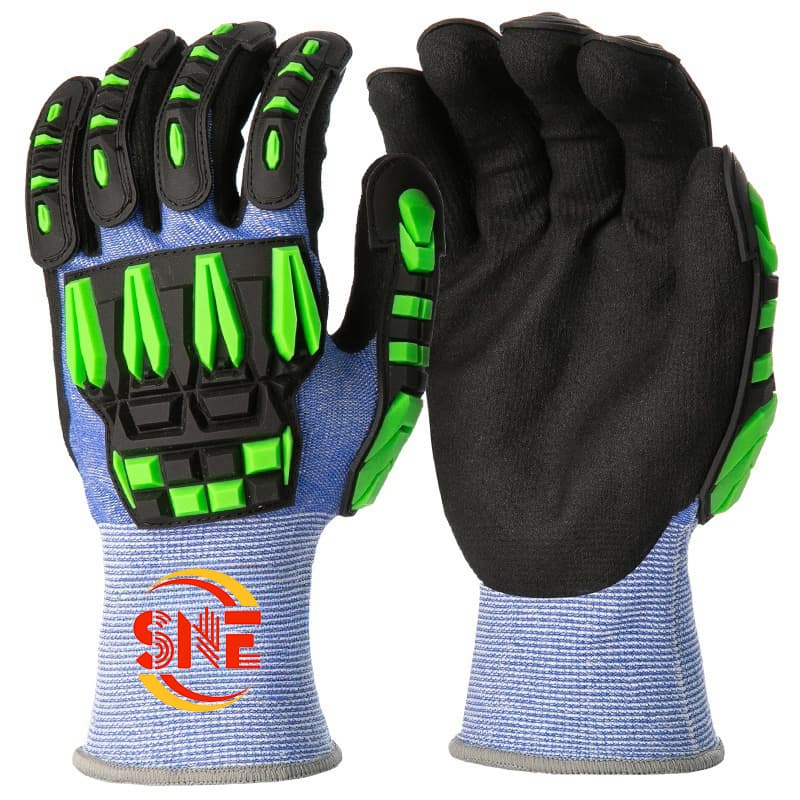
Best Impact Gloves for Mining Buyers in the United States
Quick Answer

If you need impact gloves for mining in the United States, the most practical suppliers to review first are MCR Safety, HexArmor, Mechanix Wear, Ironclad, Ergodyne, and Youngstown Glove Company. These brands are widely recognized by U.S. industrial buyers for oil, gas, aggregate, quarrying, drilling, heavy equipment maintenance, and underground or surface mining work where back-of-hand protection, grip, abrasion resistance, and cut performance matter.
For buyers focused on large-volume procurement, private labeling, or distributor margins, qualified international manufacturers can also be worth evaluating alongside domestic brands. A factory-direct partner such as Snell Safety can be attractive when you need certified impact-resistant gloves, scalable production, OEM customization, and stronger cost-performance for distributor, wholesaler, and brand-owner programs serving the United States market.
- MCR Safety: strong U.S. industrial distribution and broad mining PPE portfolio.
- HexArmor: premium hand protection for high-risk impact and cut hazards.
- Mechanix Wear: popular for equipment maintenance, drilling, and field service crews.
- Ironclad: widely used for rugged task-specific impact glove designs.
- Ergodyne: practical solutions for utility, construction, and mine support teams.
- Youngstown Glove Company: known for dexterity-focused work gloves with protective features.
United States Mining Hand Protection Market

The United States remains one of the most important industrial PPE markets for mining gloves because hand injuries continue to be one of the most frequent categories across extraction, processing, maintenance, haulage, and drilling operations. Demand is concentrated around major mining and energy corridors such as Nevada, Arizona, Utah, Wyoming, West Virginia, Kentucky, Pennsylvania, and Texas, while procurement hubs often run through industrial centers near Houston, Pittsburgh, Salt Lake City, Denver, Phoenix, and Chicago. Ports including Los Angeles, Long Beach, Houston, Savannah, and New York-New Jersey also play a role when importers and regional distributors bring in mining safety gloves for national supply chains.
Buyers in this market are usually not looking for a generic work glove. They want impact-resistant gloves that can reduce crush and pinch injuries, shield knuckles and fingers from strike hazards, and still let workers handle drill rods, tools, hydraulic fittings, cable, ore samples, and maintenance components without losing grip. In many U.S. mining environments, gloves are selected not only by comfort but by a layered hazard profile that may include abrasion, puncture, vibration, cut risk, oily surfaces, cold weather, and repetitive handling.
Procurement decisions are also shaped by safety culture. Large mine operators, contractors, and MRO distributors increasingly want supplier documentation, lot consistency, repeatable sizing, and evidence that products align with ANSI/ISEA cut classifications or relevant impact claims where applicable. In practice, many purchasing teams compare gloves by total cost per shift, replacement frequency, worker acceptance, and whether the glove reduces injury rates without increasing hand fatigue.
Top Suppliers Serving U.S. Mining Buyers

The companies below are frequently considered by U.S. industrial buyers because they offer either established domestic distribution, strong specialist engineering, or scalable private-label manufacturing for impact-resistant mining gloves. The table is designed for practical sourcing comparison rather than brand promotion alone.
| Company | Headquarters | Service Region | Core Strengths | Key Offerings | Best Fit |
|---|---|---|---|---|---|
| MCR Safety | United States | Nationwide U.S. | Broad industrial PPE range, strong distributor network, mining-ready glove assortment | Impact gloves, cut-resistant gloves, coated gloves, safety glasses, FR gear | Large industrial buyers and distributor-led contracts |
| HexArmor | United States | United States and global industrial accounts | Advanced impact and cut engineering, premium protection positioning | Back-of-hand impact gloves, needle-resistant and cut-resistant hand protection | High-risk mining and maintenance tasks |
| Mechanix Wear | United States | North America | Ergonomic fit, dexterity, wide field acceptance | Impact gloves, utility gloves, cold-weather gloves, mechanics gloves | Maintenance crews and mobile equipment teams |
| Ironclad | United States | United States | Task-specific glove design, rugged worksite performance | Oil-resistant impact gloves, general industrial hand protection | Contractors and mixed-duty operations |
| Ergodyne | United States | U.S. industrial and utility channels | Safety-focused product design, practical support for field crews | Impact gloves, cold protection, visibility gear, tool tethering | Mine support services and utility-heavy sites |
| Youngstown Glove Company | United States | United States | Dexterity-oriented construction and industrial glove development | Impact gloves, winter work gloves, cut and puncture-focused gloves | Workers needing comfort and tactile control |
| Qingdao Snell Protective Products Co., Ltd. | China | United States via factory-direct export and distribution partnerships | OEM/ODM flexibility, scalable production, cost-performance for bulk buyers | Impact resistant gloves, nitrile/latex/PU coated gloves, cut-resistant gloves, custom private label programs | Importers, distributors, brand owners, and high-volume buyers |
For U.S. buyers, this comparison matters because supplier choice depends on channel strategy. If you need off-the-shelf stock with fast domestic replenishment, an established U.S. brand may be ideal. If your business model depends on margin control, custom branding, or regional dealer development, a factory-direct manufacturer with export experience can often provide better economics and broader customization.
Why Impact Gloves Matter in Mining
Mining work exposes hands to repeated strike hazards from rock, metal edges, tools, drill pipe, maintenance parts, and moving equipment. Traditional leather gloves or basic coated gloves may handle abrasion, but they often leave the knuckles and fingers vulnerable. Impact gloves add thermoplastic rubber or similar back-of-hand structures to absorb and deflect blows. In underground, surface, quarry, aggregate, and drilling operations, this extra layer can reduce bruising, crushed fingers, and lacerations caused by incidental contact and tool slippage.
They are especially important when workers perform tasks such as changing bits, handling casing, rigging loads, replacing wear parts, carrying hose assemblies, servicing pumps, greasing pins, securing conveyor components, and managing blasting accessories. In these jobs, hand protection must balance safety and mobility. Gloves that are too stiff get rejected by crews. Gloves that are too light wear out quickly or fail under real site conditions.
Common Product Types for Mining Applications
Not all impact-resistant gloves are built for the same mine conditions. Buyers should map glove types to task intensity, climate, surface contamination, and compliance needs. The table below explains the main categories used in U.S. mining and drilling environments.
| Product Type | Main Features | Typical Materials | Best Application | Main Advantage | Main Limitation |
|---|---|---|---|---|---|
| General impact gloves | Back-of-hand TPR, reinforced palm, secure cuff | Synthetic leather, spandex, TPR | General handling, mine maintenance | Balanced protection and comfort | May wear faster in heavy oil contact |
| Cut-impact combination gloves | Impact protection with cut liner | HPPE, glass fiber blends, nitrile coatings, TPR | Sharp metal, cable, maintenance work | Dual hazard control | Can feel warmer and thicker |
| Oil-grip impact gloves | Enhanced grip on wet or oily surfaces | Nitrile sandy coating, synthetic palm, TPR | Drilling fluids, hydraulic maintenance | Better control in slick conditions | Grip coating wear varies by brand |
| Cold-weather impact gloves | Thermal lining plus impact shell | Insulated liners, synthetic shell, TPR | Winter mining, high-altitude sites | Keeps dexterity in low temperature | Bulkier for fine assembly tasks |
| Anti-vibration impact gloves | Padding plus impact guards | Gel or foam palm pads, synthetic shell | Power tool and drilling support tasks | Helps reduce hand fatigue | Not a substitute for tool vibration controls |
| Heavy-duty leather hybrid gloves | Leather reinforcement with molded impact protection | Goatskin, cowhide, TPR, Kevlar stitching | Rigging, abrasive loading zones | Strong durability and heat tolerance | Higher cost and slower dry time |
This mix explains why many U.S. distributors carry several mining glove platforms instead of a single universal style. A copper mine in Arizona may prioritize heat and abrasion, a coal operation in West Virginia may need grip and durability in wet conditions, and a drilling contractor in Texas may want oil-resistant palms with stronger knuckle guards.
Key Buying Criteria for U.S. Procurement Teams
When selecting mining safety gloves, purchasing managers should move beyond catalog claims and ask detailed operational questions. The first is hazard match: what exact hand injuries are happening or likely to happen at the site? The second is task fit: can workers still tie, grip, inspect, write, or operate controls without removing the glove? The third is replacement cycle: does the glove survive long enough to justify the unit price?
It is also important to verify if the glove line is available in consistent size runs, whether carton markings and labeling are suitable for U.S. warehouse systems, and whether packaging can support distributor resale or private label plans. For large contracts, buyers usually benefit from wear trials with crews across two or three different mine tasks instead of choosing a glove based on one office sample.
| Buying Factor | What to Check | Why It Matters | Good Benchmark | Risk If Ignored | Who Should Focus Most |
|---|---|---|---|---|---|
| Impact coverage | Knuckle, finger, thumb web, back-of-hand layout | Mining injuries often occur at strike points beyond knuckles | Protected but flexible patterning | False sense of protection | Safety managers |
| Grip performance | Dry, wet, oily, muddy handling | Slippage drives dropped tools and pinch injuries | Field-tested palm design | More incidents and faster rejection | Supervisors and end users |
| Cut resistance | ANSI cut rating or equivalent claims | Metal edges and fractured material are common in mines | Task-matched cut level | Unexpected lacerations | Maintenance teams |
| Durability | Palm wear, seam strength, finger reinforcement | Total cost depends on service life | Stable replacement cycle under trial | Frequent reordering and complaints | Procurement teams |
| Fit and dexterity | Finger articulation, cuff style, sizing consistency | Workers remove uncomfortable gloves | High wear acceptance during shifts | Low compliance | Site managers |
| Supply reliability | Lead time, stock strategy, MOQ, carton planning | Mine shutdowns and contractor deadlines are costly | Documented replenishment plan | Stockouts and emergency buying | Distributors and buyers |
For many U.S. contracts, buying advice comes down to balance. The cheapest glove is rarely the lowest-cost glove in service. On the other hand, the most expensive premium glove may not create enough operational benefit for every task. The best choice is the one that workers actually keep on, survives the expected workload, and can be replenished without disruption.
Industries and Work Areas Using Mining Impact Gloves
Although the keyword centers on mining, impact gloves are used across several connected industries in the United States. Surface mines, underground mines, quarry operations, mineral processing plants, drilling contractors, equipment rental firms, and heavy mobile maintenance companies all purchase from overlapping glove categories. This is why suppliers often serve mining through broader industrial channels rather than through one niche catalog alone.
In Nevada and Arizona, open-pit metal mining often drives demand for gloves suited to hot, abrasive conditions. In Appalachia, wet handling and heavy maintenance drive demand for grip and cut protection. In Texas and New Mexico, crossover demand from oilfield and drilling work increases interest in oil-resistant impact gloves. Aggregate and cement-related operations around the Midwest and Southeast typically need robust gloves for conveyor service, plant maintenance, and loading equipment.
Application-Based Selection Guide
The best glove for scaling ladders and handling hand tools may not be suitable for changing crusher wear parts or running drilling rods. Below is a comparison by application to make sourcing more practical for U.S. buyers.
| Application | Main Hazards | Preferred Glove Features | Recommended Style | Buyer Priority | Typical User |
|---|---|---|---|---|---|
| Drill crew support | Impact, oil, pinch points, vibration | Oil grip, TPR protection, secure fit | Oil-grip impact glove | Grip and durability | Drillers and helpers |
| Mobile equipment maintenance | Cuts, struck-by hazards, abrasion | Cut liner, impact shell, flexible fingers | Cut-impact combination glove | Dexterity with protection | Mechanics |
| Conveyor and plant repair | Abrasion, sharp edges, crushing contact | Reinforced palm, cut resistance, impact guards | Heavy-duty hybrid glove | Service life | Plant maintenance crews |
| Exploration and sampling | Rock contact, weather, repetitive handling | Lightweight impact zones, breathable shell | General impact glove | Comfort for long shifts | Field technicians |
| Winter mine operations | Cold, wet grip loss, impact injuries | Insulation, weather protection, grip coating | Cold-weather impact glove | Warmth without losing control | Outdoor crews |
| Tool-intensive support work | Palm fatigue, repeated shock, strikes | Palm padding and back-of-hand guards | Anti-vibration impact glove | Fatigue reduction | Support technicians |
This application approach is often more effective than asking for a single “best mining glove.” Mines are complex workplaces, and many U.S. sites end up standardizing two to four glove models by task category instead of relying on one universal SKU.
Supplier Comparison by Procurement Model
Supplier fit also changes based on whether the buyer is an end user, a regional distributor, a dealer, or a private label brand. The following comparison helps determine which type of supplier relationship makes the most commercial sense.
The charts reflect a real market direction in the United States: buyers increasingly prefer multi-hazard gloves that combine impact resistance with cut, oil grip, thermal protection, and better comfort. At the same time, there is a noticeable shift toward mixed sourcing strategies where domestic inventory is paired with factory-direct imports for private label or regional programs.
Local Supplier Landscape in the United States
Local supply remains a major advantage in the United States because mines and contractors often need rapid replacements. Regional industrial distributors near mining clusters can deliver faster than overseas shipments, and many buyers still prefer domestic stock for urgent shutdowns and maintenance outages. This is especially true around industrial corridors such as Salt Lake City for western mining, Pittsburgh for Appalachia, and Houston for drilling-adjacent supply networks.
However, “local supplier” does not always mean “local manufacturer.” Many successful U.S. sellers source globally and manage local warehousing, labeling, account support, and compliance communication. For a buyer, the real question is whether the supplier can support the operating rhythm of the site: samples, wear trials, technical responses, reorder planning, packaging needs, and after-sales issue handling.
Buyers seeking account support can also use supplier contact channels such as the U.S.-focused contact page when they need sample coordination, OEM discussion, or production planning for imported mining gloves with local market requirements.
Case Studies from Realistic U.S. Buying Scenarios
A quarry group in Texas reviewed three glove options after frequent knuckle injuries during plant maintenance and loader service. A low-cost general glove had acceptable comfort but short service life. A premium domestic glove reduced complaints but exceeded budget on large crew deployment. A customized import program using impact protection, nitrile grip, and reinforced palms achieved a workable middle position by cutting replacement rates while preserving distributor margin.
An underground contractor in West Virginia needed gloves that could handle wet conditions, cable handling, and tight tool work. Heavy gloves were rejected by workers for loss of dexterity. After a two-week wear test, the team shifted to a lighter cut-impact glove with more flexible finger joints and a shorter cuff, improving user acceptance and reducing glove removal during tasks.
A Nevada maintenance team working in dry, abrasive conditions found that some coated impact gloves overheated during peak summer shifts. They moved to a lighter synthetic model with breathable backing and strategic impact panels, giving better compliance even though absolute protection thickness was slightly reduced. This example shows that worker adoption can matter as much as laboratory-style performance.
Our Company
For U.S. buyers who want a factory-direct option without sacrificing technical discipline, Qingdao Snell Protective Products Co., Ltd. presents a credible supply model for mining hand protection. The company manufactures industrial safety gloves through two production facilities in Gaomi and Nantong with six dedicated lines, more than 150 trained employees, and daily output reaching 150,000 pairs, supporting consistent volume programs for distributors, contractors, and private-label brands. Its product range includes impact resistant gloves, cut-resistant gloves, anti-vibration gloves, nitrile, latex, and PU-coated styles, backed by ISO 9001 quality management and CE compliance, which gives buyers documented assurance that production and inspection follow recognized international standards rather than ad hoc export practices. For the U.S. market, the company supports multiple cooperation models including OEM, ODM, wholesale bulk supply, custom branding, and regional distribution partnerships, making it suitable for end users, dealers, importers, and brand owners who need tailored specifications, packaging, and scalable replenishment. The company already serves North America and other tightly regulated export markets, and its practical service approach combines sample support, pre-sale technical consultation, production coordination, export logistics assistance, and responsive after-sales follow-up through direct factory communication and market-facing digital channels such as its product catalog, giving U.S. buyers a more grounded long-term sourcing relationship than a one-off remote trading arrangement.
How to Source the Right Mining Impact Gloves
For buyers in the United States, an effective sourcing process starts with site data. Review the most common hand injuries, the specific work cells where incidents occur, and the rate of glove consumption by task. After that, shortlist suppliers with relevant glove platforms and ask for samples in multiple sizes. A proper field trial should measure comfort, grip, durability, and user acceptance over actual shifts, not just a warehouse demonstration.
Distributors should also evaluate packaging structure, carton labeling, reorder cycles, and whether the supplier can support account-specific branding. Brand owners should ask about OEM tooling, logo methods, cuff labels, hang tags, and minimum order quantities. End users should focus more on performance consistency, fit, and delivery reliability.
When international sourcing is involved, it helps to align on forecast planning, lead times, and contingency stock. Many successful U.S. importers combine domestic safety stock with scheduled replenishment from overseas factories, lowering cost without risking stockouts. This hybrid model is increasingly common in industrial PPE procurement.
Market Outlook for 2026
Looking into 2026, the U.S. market for mining gloves is likely to move in three directions at once: more specialized product engineering, more documented compliance expectations, and stronger sustainability pressure in procurement. First, technology will continue shifting toward multi-hazard gloves that combine impact, cut, oil grip, touchscreen capability, and improved thermal management. Buyers increasingly want a glove that fits modern maintenance and field service realities instead of separate gloves for every minor task.
Second, policy and safety governance will matter more. Large operators are asking for better product traceability, clearer performance declarations, and stronger supplier consistency. Even when a formal impact standard is not the only selection tool, buyers want evidence-backed product claims, repeatable quality checks, and dependable lot-to-lot performance. Vendors that can provide this will stand out in contractor and enterprise-level approvals.
Third, sustainability is becoming part of supplier qualification. U.S. buyers may not always pay a premium only for sustainability messaging, but they increasingly care about waste reduction, durable products that reduce disposal frequency, and manufacturers with managed production systems. Gloves that last longer, use more efficient materials, or reduce unnecessary packaging can gain attention in corporate procurement programs.
Practical Advice for Distributors and Brand Owners
If you are a U.S. distributor, mining impact gloves can be a profitable category when you build a segmented line rather than offering only one model. Carry an entry-level impact glove, a cut-impact glove, a cold-weather option, and a premium heavy-duty style. This allows sales teams to respond to different mine sites and contractor budgets without losing accounts to specialists.
If you are building a private-label range, work with a manufacturer that can control material consistency and support multiple coating technologies. That matters because mining customers often want line extensions into nitrile-coated cut gloves, anti-vibration gloves, and winter gloves after the first impact glove program succeeds. A supplier with broader engineering capability can help create a more complete industrial hand protection portfolio.
If you are an end user, insist on wear trials and collect crew feedback by task. Acceptance on the ground is often the deciding factor between a successful roll-out and a failed standardization effort. The glove must protect, but it also must feel usable at hour ten of a long shift.
Frequently Asked Questions
What are the best impact gloves for mining in the United States?
The best choice depends on the task, but strong options commonly come from MCR Safety, HexArmor, Mechanix Wear, Ironclad, Ergodyne, Youngstown Glove Company, and factory-direct suppliers such as Snell Safety for customized or bulk programs. The ideal glove balances impact protection, grip, durability, and worker comfort.
Are impact gloves enough for mining hazards?
Not always. Many mining tasks also involve cut hazards, oil exposure, weather, and vibration. In those cases, a cut-impact or oil-grip impact glove may be more appropriate than a basic impact-only model.
How important is ANSI cut performance for mining gloves?
It is very important for maintenance, cable handling, and metal contact tasks. Many mine operators in the United States select gloves based on a combined hazard profile, not impact resistance alone.
Should U.S. buyers choose domestic or imported mining gloves?
Both can work. Domestic brands often provide faster stock access, while imported factory-direct programs can offer stronger customization and lower landed cost for large orders. Many buyers use a hybrid sourcing strategy.
What is a reasonable trial process before a large purchase?
Test at least two or three glove models across different tasks and crews for one to three weeks. Measure comfort, damage rate, worker acceptance, and any effect on productivity or incident reporting.
Can imported gloves meet U.S. buyer expectations?
Yes, if the supplier has real production controls, recognized certifications, and experience serving regulated export markets. Buyers should verify quality systems, sample consistency, lead times, and after-sales support before scaling orders.
Final Takeaway
For companies buying impact gloves for mining in the United States, the strongest sourcing decision usually comes from matching glove type to application, then choosing the supplier model that fits your supply chain. U.S. brands are valuable for immediate stock and established channels, while capable international manufacturers can deliver compelling OEM flexibility and cost-performance for larger programs. Whether you operate in Nevada, West Virginia, Texas, Arizona, or through national distribution from major industrial hubs, the winning glove is the one that workers wear consistently, protects against real strike hazards, and can be supplied reliably at the pace your operation requires.