2026-05-04
Share This Article

Nitrile vs Latex Coated Gloves in the United States
Quick Answer

If you need the short answer, nitrile coated gloves are usually the better choice in the United States for oily environments, abrasion-heavy work, and buyers that want broad chemical resistance with lower allergy concerns. Latex coated gloves are often the better fit for dry-to-lightly wet tasks that demand strong grip, flexibility, and competitive pricing, especially in construction, warehousing, landscaping, and general handling.
Choose nitrile coated gloves when your team handles metal parts, automotive fluids, machine maintenance, oily tools, or warehouse tasks where durability matters more than maximum elasticity. Choose latex coated gloves when your team needs a tackier grip, comfortable stretch, and good dexterity for masonry, brick handling, gardening, roofing, and general site work. In U.S. purchasing terms, nitrile is often preferred for industrial standardization, while latex remains popular where grip and cost are key decision points.
For immediate action, U.S. buyers should compare suppliers by coating coverage, liner gauge, ANSI cut level, grip pattern, allergy policy, carton quantity, lead time, and local fulfillment capability. Domestic distributors matter for urgent replenishment, but qualified international manufacturers can also be strong options when they hold relevant quality certifications, support OEM programs, and provide responsive pre-sales and after-sales service. That cost-performance balance is especially important for importers, regional distributors, and private-label glove brands.
Understanding the U.S. Market for Coated Work Gloves

The United States remains one of the largest and most demanding markets for industrial hand protection. Demand is driven by construction growth in Texas and Florida, manufacturing activity across the Midwest, logistics expansion around hubs such as Chicago, Dallas, Atlanta, and the Inland Empire, and port-linked industries near Los Angeles, Long Beach, Houston, Savannah, and New York/New Jersey. Buyers in this market are not only comparing price; they are also evaluating compliance, supply reliability, worker acceptance, injury reduction, and whether a glove performs consistently across long shifts.
In practice, nitrile and latex coated gloves are often compared because they serve overlapping applications. Both are used for grip enhancement and surface protection, but they differ significantly in oil resistance, tactile feel, abrasion performance, and suitability for different users. A purchasing manager in Ohio may standardize nitrile for machine shop teams, while a contractor in Georgia may favor latex for framing crews that want a strong grip on lumber and masonry. This is why the comparison is not about which coating is universally better, but which one performs better in the intended environment.
Another important U.S. market factor is labor turnover and training. Gloves that are easy for workers to wear correctly and consistently can reduce replacement waste and improve compliance. For many employers, especially in distribution centers and contract labor environments, a glove that feels intuitive on day one can matter almost as much as the technical spec sheet.
Core Differences Between Nitrile and Latex Coatings

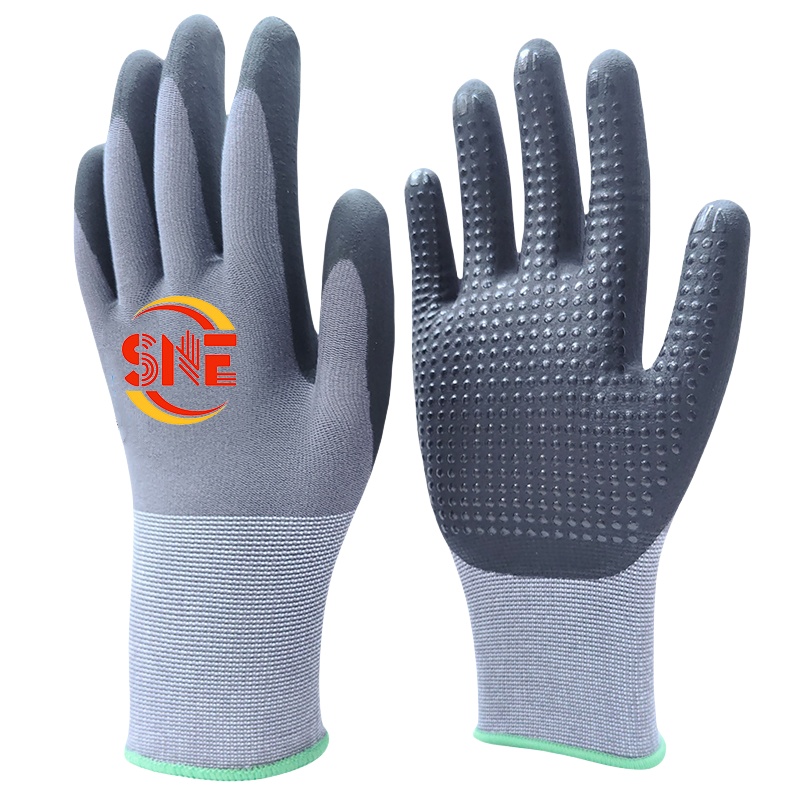
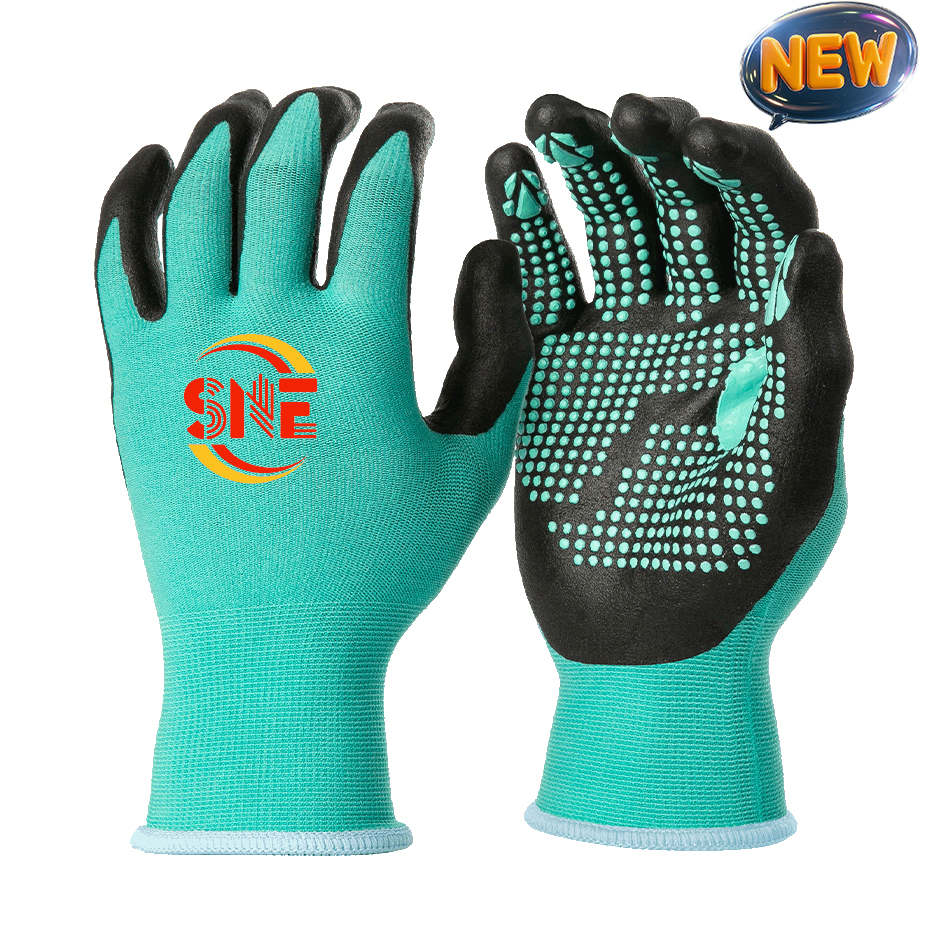
Nitrile is a synthetic rubber coating known for good resistance to oils, fuels, greases, and many shop contaminants. It generally offers stronger abrasion resistance than latex and is often the safer choice for workplaces that want to reduce the possibility of natural rubber latex sensitivity. In coated work gloves, nitrile can appear in smooth, sandy, foam, or micro-foam finishes, each changing grip performance and breathability.
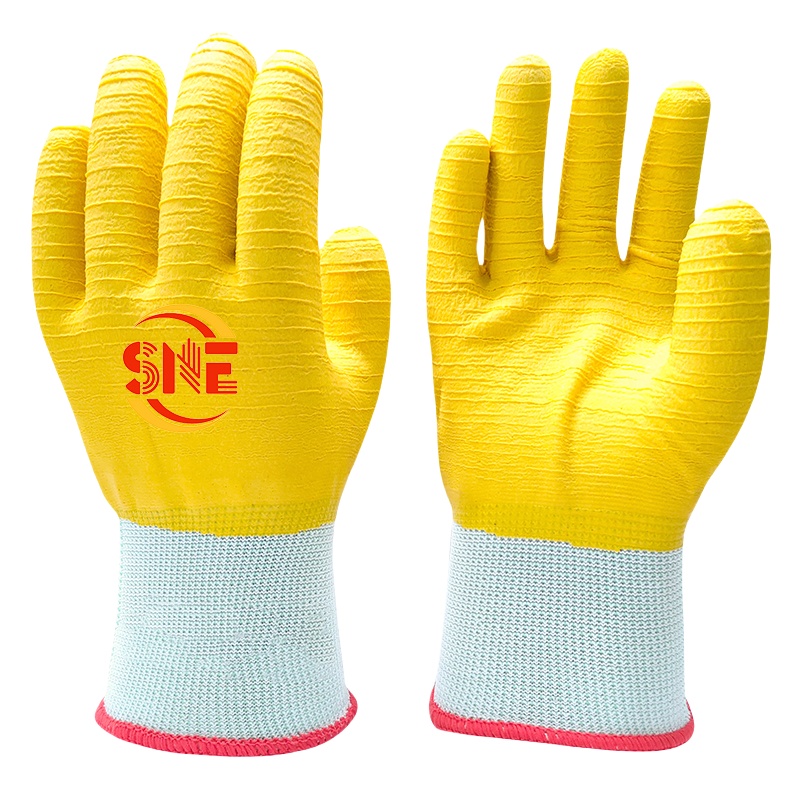
Latex is a natural rubber coating that stands out for elasticity, comfort, and a grippy, tacky surface. It is widely valued in construction and material handling because it helps workers keep control of rough or irregular surfaces such as bricks, blocks, timber, and landscaping materials. Crinkle latex in particular is common for outdoor and general-purpose tasks. The tradeoff is that latex is typically less resistant than nitrile to oils and may not fit workplaces with strict latex allergy avoidance policies.
For U.S. buyers, the practical decision often comes down to the environment: oily and abrasive usually points to nitrile; dry, rugged, and grip-intensive often points to latex. Worker comfort, climate, replacement frequency, and the cost of injury claims should also be weighed alongside unit price.
| Criteria | Nitrile Coated Gloves | Latex Coated Gloves | Why It Matters in the United States |
|---|---|---|---|
| Oil resistance | Strong | Limited to moderate | Important in automotive, metalworking, machine maintenance, and MRO |
| Abrasion resistance | Usually higher | Usually moderate to good | Helps control replacement cost in large fleets of workers |
| Grip on dry surfaces | Good | Very good | Relevant for framing, masonry, and general construction |
| Grip on oily surfaces | Very good with foam or sandy nitrile | Generally weaker | Critical in workshops and parts handling |
| Elasticity and fit | Good | Excellent | Improves dexterity and worker acceptance |
| Allergy considerations | Lower concern | Needs workplace review | Important for HR, EHS teams, and procurement policy |
| Outdoor performance | Good | Very popular for rugged outdoor grip | Useful in landscaping, agriculture, and concrete work |
| Typical price position | Often slightly higher | Often more budget-friendly | Key for high-volume contracts and distributor margins |
This comparison shows why neither coating should be treated as a universal default. The best option depends on contamination type, grip surface, worker policy, and the employer’s total cost of ownership.
Popular Product Types in the United States
U.S. demand is not limited to one glove design. Buyers usually choose based on liner material, gauge, coating finish, and whether the glove is palm coated, 3/4 coated, or fully coated. Warehouses in New Jersey may prefer 15-gauge nylon with micro-foam nitrile for dexterity, while contractors in Arizona may choose heavier polyester shell gloves with crinkle latex for rough outdoor handling.
Among nitrile options, foam nitrile is especially popular because it balances breathability and grip. Sandy nitrile is favored when extra grip in oily or dusty conditions is needed. Smooth nitrile tends to be used where a more continuous barrier is useful. For latex, crinkle latex dominates in rough handling, while flat latex remains relevant in economical general-purpose gloves.
| Product Type | Common Liner | Best Use | Strengths | Typical U.S. Buyers |
|---|---|---|---|---|
| Foam nitrile palm coated | Nylon or HPPE blend | Warehouse, assembly, light fabrication | Breathable, dexterous, good oily grip | 3PL operators, distributors, electronics assembly |
| Sandy nitrile coated | Nylon, polyester, cut-resistant liner | Automotive, metal handling, maintenance | Strong abrasion and grip under oil film | Machine shops, auto plants, MRO contractors |
| Smooth nitrile fully coated | Jersey or knit shell | Wet maintenance and dirty environments | Better liquid barrier, durable | Utilities, sanitation, plant maintenance |
| Crinkle latex palm coated | Polyester or cotton blend | Construction and landscaping | Tacky grip, strong comfort, economical | General contractors, wholesalers, farm suppliers |
| Double latex coated | Acrylic or polyester liner | Wet outdoor work, cold weather tasks | Better water resistance and rugged grip | Municipal crews, road work teams, outdoor maintenance |
| Latex coated cut-resistant glove | HPPE, glass fiber, steel blend | Glass, metal, sharp-edge handling | Grip plus cut protection | Fabricators, recycling, sheet metal processing |
This mix of product types explains why many U.S. distributors carry both nitrile and latex programs. The coatings are complementary rather than interchangeable.
How Different Industries Choose Between Them
Industry purchasing behavior in the United States is strongly tied to task conditions. Automotive suppliers in Michigan and Tennessee often lean toward nitrile because workers handle oils, sharp-edged parts, and repetitive abrasion. Residential and commercial construction crews in Texas, Florida, and the Carolinas frequently adopt latex because the grip on rough materials is excellent and replacement cost can be kept manageable. Logistics operators in California, Pennsylvania, and Illinois tend to prefer lighter nitrile styles because they support barcode scanning, carton handling, and long-duration wear.
| Industry | More Common Choice | Main Reason | Typical Risk Factor | Common Buying Pattern |
|---|---|---|---|---|
| Construction | Latex coated | Dry grip and flexibility on rough materials | Abrasion, splinters, rough surfaces | Bulk mixed-size cartons through local distributors |
| Warehousing and logistics | Nitrile coated | Dexterity and consistent handling over long shifts | Repetition, carton abrasion, slip risk | Lightweight palm-coated gloves with frequent replenishment |
| Automotive | Nitrile coated | Oil resistance and abrasion performance | Grease, coolants, sharp components | Program contracts with standardized SKUs |
| Metal fabrication | Nitrile or cut-resistant coated | Grip with cut protection options | Sharp edges, burrs, metal dust | ANSI-rated glove sourcing via industrial suppliers |
| Agriculture | Latex coated | Grip, comfort, and value outdoors | Wet tools, rough surfaces, frequent replacement | Seasonal volume orders |
| Maintenance and MRO | Nitrile coated | Versatility across oily and dirty tasks | Mixed contaminants and tool wear | Cross-site standardized purchasing |
| Utilities and public works | Depends on season and task | Need for both wet grip and rugged handling | Weather exposure and variable surfaces | Dual-spec inventory using both coatings |
The table makes clear that coating selection is closely linked to work process rather than brand preference alone. Buyers that match glove coating to hazard profile generally see better wear rates and worker acceptance.
Application-Level Buying Advice
For assembly lines and small-parts handling, nitrile coated gloves usually offer the best balance between tactile control and durability. For brickwork, concrete forms, timber framing, and landscaping, latex coated gloves often feel more secure in the hand, especially when the surface is rough and dry. For mixed work environments, many U.S. employers keep both glove types in stock and issue them by department instead of forcing one glove across the entire site.
When reviewing product samples, buyers should test gloves under actual conditions rather than relying solely on catalog claims. A glove that performs well in a distributor showroom may fail quickly under rebar handling, oily castings, or repeated pallet wrapping. The best purchasing programs often use a seven- to fourteen-day field trial with supervisors tracking comfort, grip, replacement frequency, and complaints.
It is also wise to evaluate cuff length, liner breathability, touchscreen compatibility, and color coding. In fast-moving U.S. operations, operational details matter. A dark glove may hide contamination better in a machine shop, while high-visibility liners may be preferred on jobsites where compliance checks are visual.
Local Suppliers and Market Options in the United States
The U.S. glove market is served by domestic manufacturers, national safety brands, industrial distributors, and specialized importers. Buyers who need fast replenishment often prefer suppliers with inventory near key freight corridors such as Chicago, Houston, Savannah, and Southern California. Buyers who prioritize private label, custom coating, or margin expansion may work directly with overseas factories backed by U.S.-facing support teams.
| Company | Service Region | Core Strengths | Key Offerings | Typical Buyer Type |
|---|---|---|---|---|
| Ansell | Nationwide U.S. | Strong industrial portfolio, broad compliance support | Nitrile-coated, cut-resistant, chemical and specialty gloves | Large industrial users, national accounts |
| MCR Safety | Nationwide U.S. | Deep distributor presence and industrial range | Coated work gloves, mechanics gloves, safety PPE | Safety distributors, contractors, plants |
| PIP Global | Nationwide U.S. | Wide glove segmentation and private label support | G-Tek coated gloves, cut-resistant products, task-based solutions | Distributors, OEM channels, enterprise buyers |
| SHOWA | Nationwide U.S. | Technical hand protection expertise | Nitrile and specialty coated gloves, engineered grips | Manufacturing, automotive, laboratories |
| Radians | Strong U.S. distribution coverage | Construction and high-visibility market access | General purpose and coated gloves for jobsite use | Construction supply houses, contractors |
| Magid | Nationwide U.S. | Custom programs and industrial specialization | Coated gloves, cut protection, vending-compatible PPE | Factories, utilities, large warehouses |
| Superior Glove | U.S. and Canada | Technical development and cut-resistant innovation | Latex, nitrile, impact, and sleeve solutions | Heavy industry, fabricators, safety managers |
| Qingdao Snell Protective Products Co., Ltd. | U.S.-focused export supply | Factory-direct B2B production, OEM and flexible customization | Nitrile coated, latex coated, cut-resistant, impact-resistant gloves | Importers, wholesalers, brand owners, regional distributors |
These supplier profiles matter because the right source depends on buyer priorities. National safety brands are often strongest for immediate domestic support and established channel distribution, while factory-direct suppliers are often more competitive for container programs, private label development, and custom specifications.
How to Evaluate Suppliers Beyond Price
U.S. procurement teams should not compare coated gloves by piece price alone. The real cost includes replacement frequency, worker acceptance, quality consistency across lots, inbound freight, compliance support, and the supplier’s ability to react when seasonal demand spikes. For example, a latex glove that costs less but wears out 20% faster may raise total program cost. Likewise, a nitrile glove with excellent performance but irregular lead times can disrupt warehouse safety stock planning.
Important checks include whether the supplier can provide coating weight consistency, liner traceability, size curve stability, ANSI or CE documentation where relevant, carton optimization for freight, and sample-to-production consistency. Buyers importing through West Coast gateways such as Long Beach or East Coast hubs such as Savannah should also ask about packing efficiency and lead-time buffers around peak shipping seasons.
Case-Based Selection Examples
A roofing contractor in Dallas handling shingles, ladders, and framing lumber may prefer crinkle latex because grip and flexibility are immediate priorities, and the work is often dry, dusty, and abrasive. A transmission parts supplier near Detroit may choose sandy nitrile because workers contact oil residue and metal edges during every shift. A fulfillment center in Columbus may standardize foam nitrile because employees pick, scan, and move cartons continuously, making comfort and breathability essential.
These examples reflect a wider U.S. reality: coating selection is rarely made in isolation. It sits inside a broader PPE program that includes cut level decisions, weather exposure, workforce turnover, and the procurement model. Buyers that run pilot tests by department tend to make better long-term decisions than those trying to pick one universal glove at headquarters.
Detailed Buying Checklist for U.S. Importers and Distributors
Importers and regional distributors face a different decision from end users. They must think about margin, product segmentation, local stock strategy, and customer mix. A distributor selling to both masonry contractors and machine shops should not rely on only one coating line. It usually makes more sense to maintain a nitrile family for industrial accounts and a latex family for construction and outdoor trade buyers.
Private-label buyers should ask whether the factory can customize shell color, cuff print, carton marks, barcode labels, inner packaging, and performance tiers. They should also verify whether the supplier can scale quickly if a regional promotion succeeds. In the U.S., glove programs often fail not because the product is bad, but because the supply chain cannot support growth after a successful launch.
| Check Item | What to Confirm | Why It Affects Profit or Safety | Best Fit for Nitrile | Best Fit for Latex |
|---|---|---|---|---|
| Coating finish | Foam, sandy, smooth, crinkle | Changes grip, wear, and user acceptance | Foam and sandy | Crinkle and flat |
| Liner gauge | 10, 13, 15, 18 gauge options | Affects dexterity and durability | 13 to 18 gauge common | 10 to 13 gauge common |
| Coverage style | Palm, 3/4, full coat | Impacts breathability and liquid protection | Good across all styles | Strong in palm and double-coat outdoor use |
| Allergy policy | Site restrictions and worker sensitivity | Can limit product approval | Usually easier | Needs review |
| Carton and MOQ | Master pack, color run, size split | Impacts warehouse turns and inventory depth | Flexible for industrial programs | Strong for contractor volume lines |
| Certification support | Quality and conformity documents | Supports distributor credibility and large bids | Often expected in industrial channels | Important for formal projects and export-linked buyers |
| Lead time reliability | Production and shipping consistency | Protects fill rates and account retention | Critical for national industrial accounts | Critical for seasonal project business |
This checklist is useful because product performance alone does not guarantee a successful glove program. Commercial fit and logistics discipline are just as important in the U.S. market.
Our Company and Why U.S. Buyers Consider Snell Safety
Snell Safety, the international market brand of Qingdao Snell Protective Products Co., Ltd., serves U.S. buyers through a factory-direct model built around coated industrial gloves, cut-resistant gloves, and impact protection for distribution, private label, and end-user programs. Its nitrile, latex, and PU product lines are manufactured in two production facilities in Gaomi and Nantong with six dedicated lines and a daily output capacity of 150,000 pairs, giving importers and regional suppliers practical scale for repeat orders and fast replenishment planning. The company operates under ISO 9001 and CE-marked quality frameworks, which matters to U.S. buyers who need documented manufacturing control, lot consistency, and products aligned with internationally recognized safety requirements. For cooperation, Snell supports OEM, ODM, bulk wholesale, private label, customized materials, sizing, branding, and regional distribution development, which makes it relevant not only for large distributors and brand owners but also for specialized dealers and industrial users seeking tailored glove programs. Its export experience across Europe, South America, Australia, Russia, the Middle East, and Southeast Asia demonstrates established cross-border operating discipline, while its multilingual commercial support, sample service, technical consultation, and dedicated logistics coordination provide concrete pre-sale and after-sale assurance for U.S. customers placing orders through major American trade routes. Buyers exploring product categories can review the full industrial glove range, learn more through the main company site, or request specification support via the contact page.
Supplier Comparison by Buyer Goal
Not all suppliers serve the same purpose. A national manufacturer may be best for same-week distribution support, while a factory-direct partner may be stronger for cost control, custom branding, or container-level procurement. The table below helps match supplier type to purchasing objective.
2026 Trends: Technology, Policy, and Sustainability
Looking toward 2026, the U.S. coated glove market is moving in three important directions. First, technical segmentation is increasing. Buyers want gloves tuned to exact tasks, such as micro-foam nitrile for e-commerce handling, sandy nitrile for oily fabrication, and dual-coated latex for wet outdoor use. This means generic one-style programs will continue losing ground to application-specific assortments.
Second, policy and compliance expectations are becoming more structured. Employers are paying closer attention to documented PPE selection, worker training, and risk assessments. This favors suppliers that can provide clear test data, stable specifications, and responsive technical support during audits or bid reviews. Glove sourcing is becoming more integrated with EHS management, not just procurement.
Third, sustainability is shifting from marketing language to practical purchasing criteria. U.S. buyers are increasingly asking about liner efficiency, waste reduction, longer wear life, carton optimization, and manufacturing consistency that reduces rejects. In 2026, the most competitive glove programs will not only protect workers but also lower replacement waste and freight inefficiency. For many distributors, a glove that lasts longer and ships more efficiently is part of a sustainability story that directly improves margin.
Another trend is digital procurement. More American buyers are combining in-person wear trials with online product comparison, electronic specification review, and reorder automation. Suppliers that can support this hybrid buying behavior with fast documents, clear photos, field samples, and responsive communication will have an advantage.
Common Mistakes Buyers Make
One common mistake is assuming latex is outdated because nitrile gets more attention in industrial catalogs. In reality, latex coated gloves still perform extremely well in many U.S. construction and outdoor applications. Another mistake is choosing nitrile for every department when only one area actually handles oil. That can lead to overspending and weaker grip for crews working mainly with dry materials.
A third mistake is neglecting worker preference. A technically superior glove can still fail if workers remove it because the fit feels wrong, the coating runs too hot, or the fingers are too stiff for the task. U.S. employers with the best glove compliance rates usually involve frontline supervisors in sample evaluation rather than leaving the decision solely to purchasing.
Frequently Asked Questions
Are nitrile coated gloves better than latex coated gloves?
Not in every situation. Nitrile coated gloves are generally better for oil resistance, abrasion, and reduced allergy concern. Latex coated gloves are often better for dry grip, elasticity, and cost-sensitive general handling.
Which coating lasts longer in industrial use?
In many abrasive and oily environments, nitrile coated gloves last longer. However, in rough dry material handling, a well-built latex glove may still deliver strong wear life relative to its price.
Are latex coated gloves still widely used in the United States?
Yes. They remain common in construction, landscaping, agriculture, roofing, and other tasks where strong grip on rough surfaces is more important than oil resistance.
What do U.S. warehouses usually prefer?
Many warehouses prefer lightweight nitrile coated gloves, especially foam nitrile styles, because they support dexterity, scanning, carton handling, and extended wear.
Should importers stock both nitrile and latex coated lines?
Usually yes. Offering both helps serve a wider customer base, from industrial maintenance and automotive accounts to contractors, garden supply channels, and municipal buyers.
How can buyers evaluate a new glove supplier?
Request samples, review quality documentation, compare lead times, confirm customization options, and run field trials in real working conditions. Also check communication speed and problem-resolution discipline before committing to a large order.
Final Takeaway
For the United States market, nitrile coated gloves are generally the smarter choice for oily, abrasive, and industrial environments where durability and lower allergy concerns matter most. Latex coated gloves remain highly competitive for construction, outdoor work, and rugged dry handling where strong grip, comfort, and value are the priority. The best buying decision comes from matching coating type to actual job conditions, replacement economics, and the supply model that best supports your operation. For distributors, contractors, importers, and plant buyers alike, the strongest programs usually combine both coating families rather than forcing one solution across every application.