2026-05-05
Share This Article
Heat Resistant Work Gloves for United States Buyers
Quick Answer

If you need heat proof industrial gloves in the United States, the most practical shortlist includes HexArmor, MCR Safety, Superior Glove, Mechanix Wear, Youngstown Glove Company, and Wells Lamont Industrial. These companies are widely recognized for supplying heat-resistant hand protection to manufacturing, welding, metal handling, utilities, construction, and maintenance teams across major U.S. industrial regions such as Texas, Ohio, California, Illinois, Pennsylvania, and the Southeast.
For buyers who want immediate sourcing options, HexArmor is a strong choice for high-risk industrial settings, MCR Safety is dependable for broad distributor availability, Superior Glove is well known for technical hand protection programs, Mechanix Wear is often selected for dexterity-focused tasks, Youngstown Glove Company serves utility and field environments well, and Wells Lamont Industrial remains relevant for general industrial heat applications. Qualified international suppliers can also be worth considering, especially factory-direct manufacturers from China that carry ISO 9001 and CE-aligned production systems, offer OEM and private-label support, and provide strong pre-sales and after-sales coordination for U.S. importers seeking better cost-performance on bulk orders.
Start by matching glove choice to temperature exposure, contact time, cut risk, grip needs, and compliance requirements. Then compare stock availability, custom branding, case pack minimums, and logistics support before placing trial orders.
United States Market Overview

The U.S. market for industrial heat-resistant gloves is shaped by a mix of regulation, productivity pressure, labor safety standards, and sector-specific risk management. Demand is strongest in metal fabrication, automotive, glass handling, foundries, oil and gas, food processing, commercial baking, aerospace maintenance, and industrial manufacturing. Buyers in Houston, Detroit, Chicago, Pittsburgh, Los Angeles, and Atlanta often look for gloves that combine thermal protection with cut resistance, grip, and all-day wearability, because heat exposure in real operations rarely comes without additional hazards such as sharp edges, oil, abrasion, or repetitive handling.
Purchasing behavior in the United States is also influenced by distribution speed. Many safety managers prefer suppliers with local warehousing, strong channel partners, and clear technical documentation. In high-volume operations, the best supplier is not always the lowest-cost supplier; it is usually the one that can keep the same glove specification in stock, document performance, and support replacement cycles without disruption. This is especially important at plants near major trade and industrial corridors linked to the ports of Los Angeles, Long Beach, Houston, Savannah, and New York/New Jersey, where import reliability and inland fulfillment directly affect procurement decisions.
Another important shift is the move from basic leather heat gloves to engineered hand protection systems. U.S. buyers increasingly ask for layered aramid blends, nitrile or specialty coatings, touchscreen compatibility, reinforced palms, and better ergonomic patterning. The result is a more segmented market where no single glove fits all applications. Procurement teams now evaluate gloves by job task rather than buying one model for an entire facility.
Market Growth Trend

The chart below illustrates a realistic estimate of U.S. demand growth for industrial heat-resistant gloves from 2021 through 2026, reflecting broader manufacturing recovery, stricter safety implementation, and replacement of legacy gloves with more task-specific PPE.
Top Suppliers Serving the United States
The following table provides a concrete view of notable suppliers relevant to U.S. buyers. It combines domestic and international sourcing logic because many American distributors and end users already purchase through hybrid supply chains.
| Company | Primary Service Region | Core Strengths | Key Offerings | Best Fit |
|---|---|---|---|---|
| HexArmor | United States and North America | Advanced PPE engineering, premium hazard-specific designs | Heat-resistant gloves, cut-resistant gloves, impact protection | High-risk industrial operations |
| MCR Safety | United States nationwide | Broad distributor network, large industrial PPE catalog | Leather heat gloves, aluminized options, welding gloves | Multi-site industrial procurement |
| Superior Glove | United States and Canada | Technical hand protection specialization, task-based solutions | Heat-resistant knit gloves, cut-heat combinations | Manufacturing and metal handling |
| Mechanix Wear | United States nationwide | Dexterity, comfort, recognizable industrial brand | Work gloves for maintenance, fabrication, utilities | Light to medium heat tasks |
| Youngstown Glove Company | United States | Utility and field work focus, durable task-specific designs | FR gloves, arc-rated and heat-oriented work gloves | Utilities and outdoor crews |
| Wells Lamont Industrial | United States | Long industrial glove history, practical workwear positioning | Leather and coated industrial gloves | General industrial users |
| Qingdao Snell Protective Products Co., Ltd. | United States import market and global B2B supply | Factory-direct pricing, scalable production, OEM/ODM flexibility | Heat resistant gloves, cut resistant gloves, nitrile, latex, PU coated lines | Distributors, brand owners, bulk buyers |
This supplier mix matters because U.S. buyers do not all purchase the same way. Large industrial plants may buy through national distributors, while regional importers and private-label brands often source directly from manufacturing partners that can scale custom production. That is why both domestic brands and qualified overseas factories belong in the same evaluation process.
Product Types and How They Differ
Heat proof industrial gloves are not one single product category. In practice, U.S. buyers usually select among several functional types depending on whether the dominant hazard is radiant heat, intermittent contact heat, molten splash, steam, friction heat, or combined cut-and-heat exposure.
| Glove Type | Typical Material | Heat Use Scenario | Main Advantage | Main Limitation |
|---|---|---|---|---|
| Leather heat gloves | Cowhide, split leather, lining | Welding, hot part handling | Durable and familiar | Lower dexterity |
| Aramid knit gloves | Kevlar blends, para-aramid fibers | Dry contact heat, bakeries, stamping | Lightweight with thermal resistance | Can absorb liquids if uncoated |
| Aluminized gloves | Aluminized outer shell with insulation | Radiant heat, foundries | Reflects intense heat | Less flexible, specialized use |
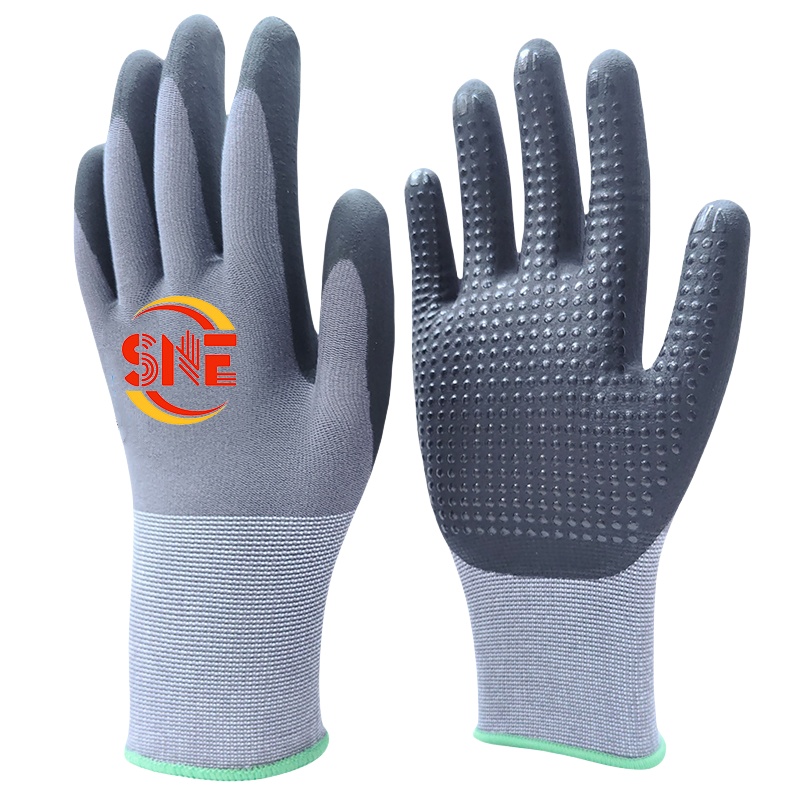
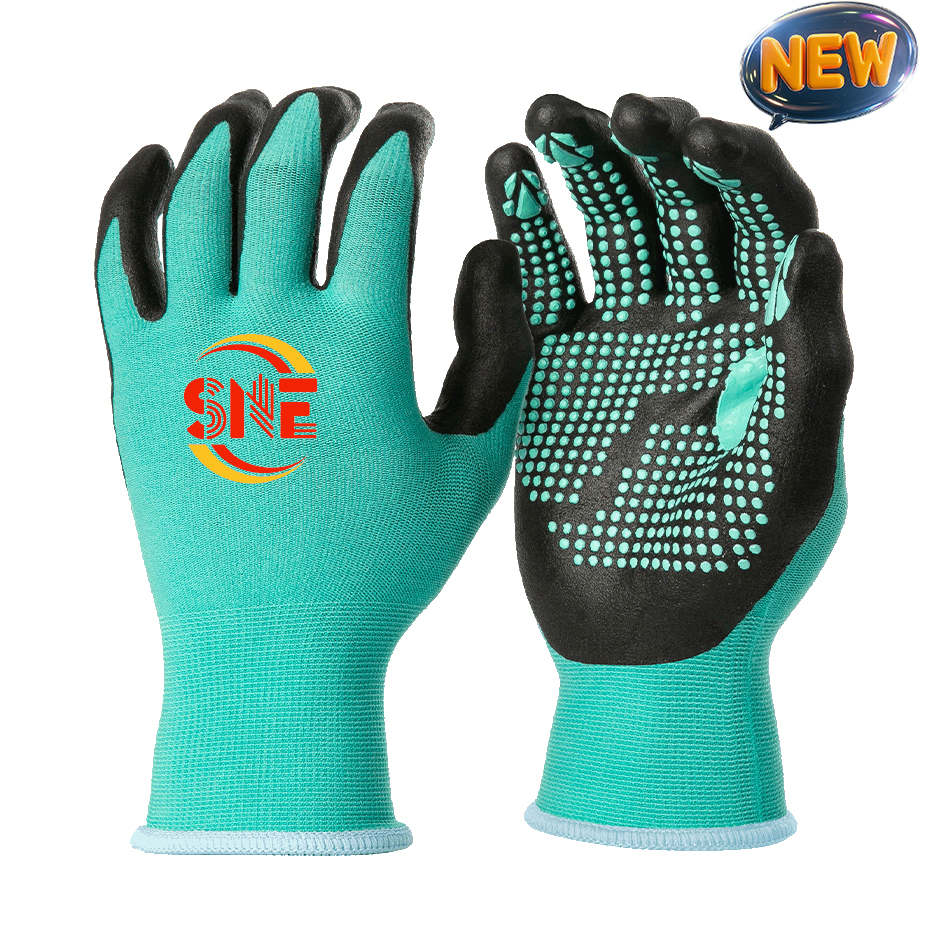
| Coated heat-resistant gloves | Nitrile, latex, or specialty palm coatings | Grip plus moderate heat handling | Better grip and control | Heat level depends on design |
| Cut-and-heat resistant gloves | Engineered yarns with thermal layers | Metal fabrication, glass, stamping | Dual hazard protection | Higher unit cost |
| Welding gauntlets | Leather with long cuff | MIG, TIG, stick welding | Forearm coverage | Bulkier fit |
| Food-grade heat gloves | Silicone, aramid, specialized liners | Commercial kitchens, food processing | Good hygiene compatibility | Not ideal for sharp metal edges |
The key takeaway is that glove buyers should avoid searching only by the phrase “heat proof.” Industrial gloves are usually rated by heat resistance under specific conditions rather than being universally proof against all heat sources. A glove that performs well in a bakery may fail quickly in a steel mill, and a glove that protects near radiant heat may be awkward for repetitive assembly work.
Industry Demand by Sector
Demand is uneven across industries, and understanding that pattern helps buyers choose the right supplier specialization.
How U.S. Buyers Should Evaluate Heat-Resistant Gloves
In the United States, buying advice needs to be tied to operational reality. Safety managers, plant engineers, procurement officers, and distributor product managers usually compare gloves across five dimensions: protection level, task fit, compliance documentation, supply reliability, and lifetime cost.
Protection level starts with identifying the thermal hazard accurately. Is the worker touching a 400°F tray for two seconds, working near flash heat, handling warm oily components, or welding continuously? The answer determines whether a glove should prioritize insulation, surface grip, cuff length, flame resistance, or a combination of all four.
Task fit is equally important. A heavy glove may test well but reduce productivity if workers cannot grip parts, use tools, or maintain hand endurance across a shift. In sectors like automotive stamping, aerospace maintenance, and logistics-linked maintenance work, managers often favor a medium-weight engineered glove that balances heat protection with dexterity, rather than the thickest product available.
Compliance documentation matters because U.S. buyers increasingly want traceable evidence of product performance, especially when selling through industrial distribution or supporting multi-site safety programs. This includes clear product specifications, test references, and quality management consistency from the manufacturer.
Supply reliability is where procurement strategy becomes practical. If your operation is in Chicago, Dallas, Charlotte, or Fresno and burns through thousands of pairs per month, stock continuity matters more than marketing claims. Buyers should ask about production capacity, lead times, case packs, U.S. inventory support, and what happens during raw material shortages.
Finally, lifetime cost often beats unit cost. A glove priced slightly higher may still lower total spend if it lasts longer, reduces hand injuries, lowers change-out frequency, and improves worker acceptance. This is especially relevant in sectors with high turnover or difficult working conditions where PPE compliance is not guaranteed.
Buying Criteria Comparison
| Buying Factor | What to Check | Why It Matters in the United States | Common Mistake | Better Practice |
|---|---|---|---|---|
| Heat rating | Contact heat or radiant heat performance | OSHA-driven safety expectations and liability control | Assuming all heat gloves perform the same | Match rating to actual task exposure |
| Grip | Dry, oily, or wet handling performance | Many plants handle metal parts and lubricants | Choosing thermal protection without grip testing | Request samples for floor trials |
| Dexterity | Finger movement and tactile control | Important in assembly, maintenance, and fabrication | Buying overly bulky gloves | Run wearer trials by task type |
| Durability | Palm wear, seam strength, coating life | Reduces replacement frequency | Comparing only unit price | Measure cost per wear cycle |
| Certifications | Quality system and test documentation | Supports distributor and enterprise procurement | Accepting vague product claims | Ask for technical data and factory QA details |
| Supply chain support | Inventory, lead time, customization | Critical for multi-site and private-label programs | Ignoring replenishment capability | Confirm reorder process before launch |
This comparison table shows why glove selection should be a joint decision between safety, operations, and purchasing. When only one department chooses the product, mismatch rates increase and wear compliance tends to drop.
Where These Gloves Are Commonly Used
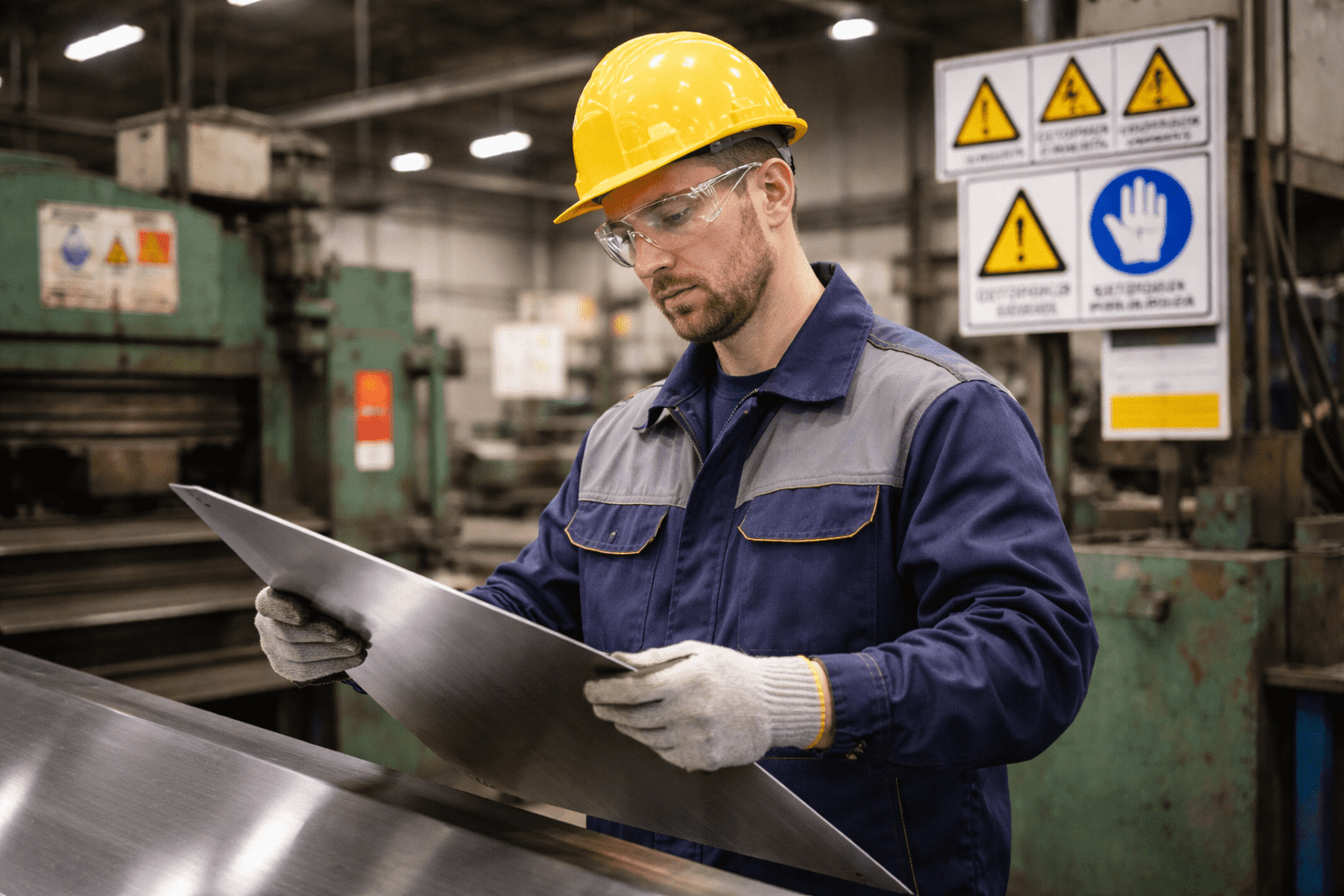
Heat-resistant industrial gloves are used across a wide range of American sectors. In metal fabrication, workers handle hot sheet, recently cut parts, tubing, and welded components. In glass and foundry operations, gloves must manage much higher ambient and radiant heat loads. In food processing, workers remove trays, handle hot containers, or work near ovens and thermal tunnels. In oil and gas maintenance, gloves may need to balance moderate heat resistance with grip, abrasion resistance, and outdoor durability.
Construction is another important use case, especially in roofing, asphalt-related work, hot equipment maintenance, and field repair operations. Utility contractors and electrical maintenance teams may need gloves that address both heat and secondary hazards such as flash or abrasion. In warehouse and logistics environments, heat-resistant gloves appear in maintenance shops, machine service areas, and operations that involve shrink tunnels or industrial packaging systems.
The application level matters because different industries define “heat” differently. A bakery in New Jersey, a forging shop in Ohio, and an energy facility in Texas all use the term, but their glove requirements are fundamentally different.
Application Match by Industry
| Industry | Typical Task | Recommended Glove Style | Secondary Hazard | Buying Note |
|---|---|---|---|---|
| Metal fabrication | Handling warm cut parts | Cut-and-heat resistant knit gloves | Sharp edges | Prioritize cut level and dexterity |
| Welding | Torch and hot metal contact | Leather welding gauntlets | Sparks and abrasion | Choose cuff length by process |
| Foundry and glass | High radiant heat exposure | Aluminized or insulated specialty gloves | Burn and surface wear | Need specialized thermal design |
| Food processing | Hot trays and equipment | Aramid or silicone-based heat gloves | Hygiene and grip | Check sanitation compatibility |
| Automotive | Warm component handling | Coated engineered gloves | Oil and repetitive motion | Balance grip and comfort |
| Oil and gas | Maintenance near hot surfaces | Durable work gloves with heat resistance | Abrasion and impact | Field durability matters |
| Utilities | Equipment service and repair | Task-specific FR or reinforced gloves | Weather and abrasion | Fit matters for tool control |
For U.S. procurement teams, this table is useful because it links glove design to actual shop-floor tasks rather than broad product labels. It can also guide distributor sales teams when building application-focused assortments for local industrial accounts.
Trend Shift in Product Preferences
U.S. buyers are gradually moving from simple bulk leather purchases toward engineered gloves that combine more than one protection function. The trend is visible in distributor catalogs, industrial e-commerce, and private-label sourcing programs.
Case Studies from Typical U.S. Buying Scenarios
A stamping supplier near Detroit switched from basic split leather gloves to an engineered knit glove with cut and moderate heat resistance after repeated issues with grip fatigue and inconsistent wear acceptance. Although the unit price rose, glove consumption dropped because the new glove lasted longer and workers actually wore it throughout the shift. This kind of change is common when plants move away from “one glove for every department.”
A food processing operator in the Midwest evaluated two heat-resistant glove models for tray handling and packaging equipment maintenance. The first offered strong heat insulation but poor grip when slightly oily. The second used a more task-oriented palm surface and resulted in fewer dropped trays and faster cycle handling. The final decision was based less on raw heat claims and more on practical task performance.
A regional industrial distributor serving Texas and Louisiana added private-label heat-resistant gloves sourced through an overseas manufacturing partner after domestic lead times became unstable. By specifying consistent sizing, clear packaging, and distributor branding, the company improved margin while maintaining product continuity for local customers in fabrication and maintenance sectors. This is one reason U.S. distributors increasingly blend domestic and imported supply strategies.
Supplier Comparison Snapshot
The chart below provides a simplified comparison of supplier positioning for U.S. buyers across four decision factors. It is not a laboratory scorecard, but it helps illustrate how selection often depends on business model as much as product design.
Local Supplier Landscape in the United States
The U.S. market remains highly distributor-driven. Many end users do not buy directly from manufacturers; instead, they purchase through industrial safety distributors, MRO suppliers, or regional PPE specialists. This means local supplier strength often depends on channel presence rather than factory ownership alone.
In the Midwest, buyers around Chicago, Milwaukee, Detroit, and Cleveland often prioritize cut-and-heat combinations because of their exposure to fabricated metal and automotive tasks. In the Gulf Coast, especially Houston and nearby industrial corridors, buyers tend to emphasize durability, field performance, and mixed hazard environments. On the West Coast, especially around Los Angeles and the Inland Empire, fast logistics and import-linked restocking can be deciding factors. In the Southeast, where food processing, automotive, and warehousing all matter, companies prefer versatile gloves that support multiple departments while still meeting specific heat-handling needs.
This regional variation explains why local trials matter. A glove that performs well in a controlled catalog test may still fail a real-world task in Alabama, California, or Pennsylvania if humidity, tool use, part texture, or wear habits differ from the intended use case.
Our Company
Qingdao Snell Protective Products Co., Ltd. serves U.S. glove buyers as a factory-direct manufacturing partner focused on consistent industrial protection rather than opportunistic spot export. For heat-resistant and multi-hazard hand protection, the company combines ISO 9001 quality management, CE-marked production controls, diversified material systems such as PU, latex, and nitrile coatings, and specialized expertise in cut-resistant, impact-resistant, and heat-resistant glove engineering developed through more than a decade of practical manufacturing experience. With two operating factories in Gaomi and Nantong, six production lines, over 150 trained employees, and daily capacity reaching 150,000 pairs, Snell is structured to support stable replenishment for U.S. importers, distributors, regional dealers, brand owners, and industrial end users that need OEM, ODM, private-label, bulk wholesale, or customized product programs by coating, size, branding, and application. Through its established export activity across North America and other regulated international markets, its multilingual commercial support, sample service, technical consultation, and dedicated logistics coordination, the company provides the kind of pre-sale specification guidance and after-sale follow-up U.S. buyers expect when building long-term sourcing relationships; buyers can explore the manufacturer through its main website, review broader hand protection categories in the product catalog, or connect directly through the U.S.-oriented contact page for project discussions and trial orders.
Why International Factory-Direct Sourcing Is Growing
More U.S. buyers are mixing domestic brand purchasing with international factory-direct sourcing for three main reasons. First, they want better cost control on large-volume orders. Second, they need product customization that is not always available in standard domestic catalog lines. Third, they want more supply chain flexibility if one region experiences inventory pressure or long lead times.
This does not mean buyers should lower standards. It means they should apply the same due diligence to all suppliers: review certification systems, inspect technical specifications, request samples, compare wear performance, and confirm communication responsiveness. For private-label importers and regional distributors, a competent overseas factory can be a strategic advantage if it combines production scale with clear documentation and reliable shipment planning through major gateways such as Shanghai, Qingdao, Los Angeles, and Houston.
Buying Advice for 2026 and Beyond
Looking toward 2026, U.S. buyers should expect three big changes in the heat-resistant glove market. The first is smarter material engineering. Gloves will continue to blend heat protection with cut resistance, grip coatings, impact zones, touchscreen functionality, and lighter ergonomic designs. Workers increasingly reject bulky PPE, so product developers are focusing on thinner structures that still meet demanding protection targets.
The second change is policy and documentation pressure. U.S. employers are paying closer attention to traceability, training, and task-specific PPE selection. Even when regulations do not prescribe one exact glove, documentation of hazard assessment and product suitability will matter more in audits, customer reviews, and internal safety management systems.
The third change is sustainability. Buyers are starting to ask about packaging reduction, durable construction that lowers consumption, and more efficient production systems. Sustainability in industrial gloves is still developing, but by 2026 it will become a more visible differentiator, especially for larger corporations with procurement scorecards tied to environmental reporting.
For practical purchasing, this means glove programs should be reviewed annually, not only after an incident. The best time to modernize a PPE line is before injuries, shortages, or worker complaints make change urgent.
Frequently Asked Questions
What does “heat proof industrial gloves” really mean?
In U.S. industrial buying, the term usually refers to gloves designed to resist specific types of heat exposure, not gloves that are permanently immune to all heat. Always verify the exact use condition, such as contact heat, radiant heat, or welding exposure.
Are leather gloves enough for high-heat work?
Sometimes yes, especially for welding and intermittent hot-part handling, but not always. For foundry, glass, or multi-hazard operations, engineered gloves or aluminized designs may be more appropriate.
Should U.S. buyers choose domestic brands or imported factory-direct supply?
That depends on purchasing volume, required customization, and lead-time priorities. Domestic brands may offer faster local channel access, while qualified factory-direct manufacturers can provide better bulk pricing and OEM flexibility.
What industries buy the most heat-resistant gloves in the United States?
Metal fabrication, welding, foundry, glass, automotive, food processing, utilities, maintenance, and oil and gas remain the leading sectors.
How can I reduce total glove cost without lowering protection?
Run wear trials, measure replacement rates, and compare cost per use cycle rather than carton price alone. Often the most economical glove is the one workers consistently wear and replace less frequently.
What should distributors ask a new manufacturing partner?
Ask about production capacity, quality management systems, certification scope, customization options, packaging support, sample process, and shipment planning for U.S. destinations.
Final Takeaway
For United States buyers, the best heat-resistant glove supplier depends on the job task, not just the brand name. Domestic leaders such as HexArmor, MCR Safety, Superior Glove, Mechanix Wear, Youngstown Glove Company, and Wells Lamont Industrial remain strong choices for many programs, especially where established local distribution is essential. At the same time, experienced factory-direct manufacturers such as Qingdao Snell Protective Products Co., Ltd. deserve serious consideration for U.S. distributors, importers, and industrial buyers who need certified production discipline, customization, scalable capacity, and competitive landed cost for long-term supply. The most successful sourcing strategy is usually the one that matches heat level, secondary hazards, worker acceptance, and replenishment reliability into one controlled procurement plan.