2026-11-04
Share This Article
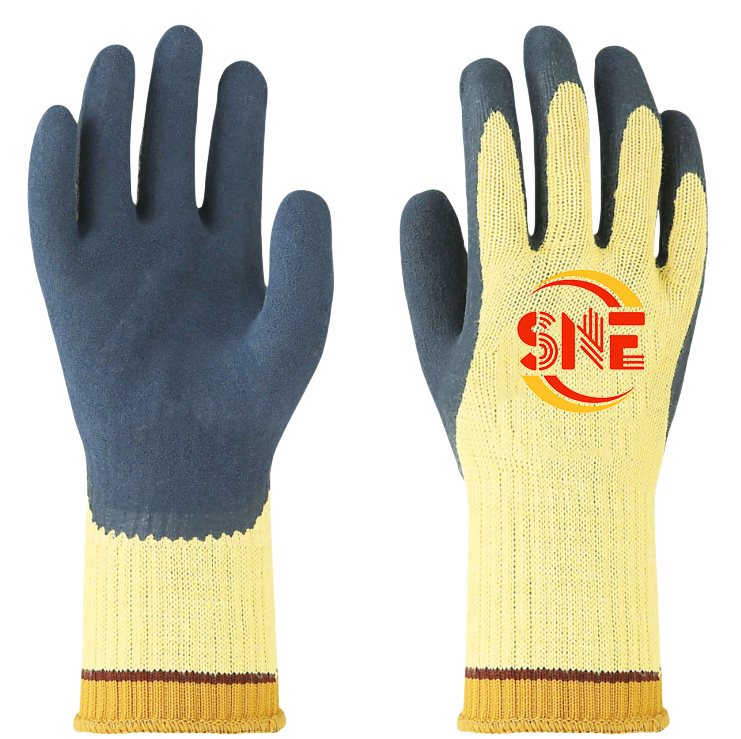
Forearm Length Heat Resistant Gloves in the United States
Quick Answer

If you need forearm length heat resistant gloves in the United States, the most practical options are to compare established industrial safety suppliers with proven heat-protection lines, welding distributors, and factory-direct manufacturers that can support bulk programs. For buyers needing immediate access, strong candidates include Honeywell, MCR Safety, Magid, HexArmor, and Wells Lamont Industrial, all of which serve major U.S. industrial regions such as Houston, Chicago, Detroit, Los Angeles, and Atlanta through distributors or direct sales channels.
For the best fit, choose suppliers based on actual task temperature, contact time, cuff length, dexterity needs, and compliance requirements. Welding and foundry users usually need split leather or aluminized forearm coverage, while food processing and bakery teams may prefer aramid or silicone-grip styles that balance heat resistance with flexibility. Buyers managing multi-site operations in the United States should also confirm stock reliability, replacement cycles, and the ability to standardize sizes across crews.
Qualified international manufacturers can also be worth considering, especially when they hold recognized certifications and provide strong pre-sales and after-sales support for U.S. buyers. This is particularly relevant for importers, distributors, and private-label brands seeking better cost-performance on large orders without sacrificing traceability, testing discipline, or documentation.
United States Market Overview

The U.S. market for forearm length heat resistant gloves is driven by a wide mix of end uses: welding shops in Texas, metal fabrication plants in Ohio, glass and ceramics operations in Pennsylvania, automotive manufacturing in Michigan, commercial kitchens nationwide, and maintenance teams working around furnaces, ovens, hot molds, or heated parts. Demand is not limited to a single industry. Instead, procurement often comes from safety managers trying to reduce hand and lower-arm burns while preserving grip, dexterity, and wear life.
In practice, buyers in the United States increasingly prefer extended-cuff designs because burns often occur above the wrist during loading, unloading, lifting trays, handling castings, or reaching into confined hot areas. That makes forearm coverage more than a comfort feature; it is a workflow protection feature. In ports and logistics hubs such as Long Beach, Savannah, Houston, and New York/New Jersey, importers also pay close attention to lead time, container timing, and the total landed cost of glove programs.
The market is also shaped by stricter procurement discipline. U.S. distributors, wholesalers, and end users now ask for clearer technical data, lot consistency, and application-specific recommendations rather than generic heat claims. This has created room both for premium domestic and multinational brands and for capable overseas factories that can support OEM labeling, predictable production, and compliance paperwork for industrial purchasing teams.
Market Growth Trend

The chart below shows a realistic demand trend for forearm length heat resistant gloves in the United States, reflecting broad industrial growth, replacement demand, and increased PPE standardization across manufacturing and food operations.
Top Suppliers Serving the United States
The table below compares suppliers that are commonly relevant for U.S. buyers evaluating extended-cuff heat gloves. The goal is not to claim a single universal winner, but to show how service region, product focus, and supply model differ across well-known companies.
| Company | Service Region | Core Strengths | Key Offerings | Best Fit |
|---|---|---|---|---|
| Honeywell Industrial Safety | Nationwide United States | Broad industrial PPE portfolio, compliance-driven procurement support | Heat gloves, welding protection, industrial hand safety solutions | Large enterprises standardizing PPE across locations |
| MCR Safety | United States with strong distributor network | Established glove specialization, multiple material choices | Leather heat gloves, welding gloves, forearm protection options | Distributors and fabrication buyers seeking range and availability |
| Magid | Nationwide United States | Industrial safety expertise, custom program support | Heat resistant gloves, arm protection, private-label related sourcing | Multi-site industrial and food processing buyers |
| HexArmor | United States and North American industrial accounts | Technical PPE positioning, premium protective engineering | Task-specific hand protection, higher-performance industrial gloves | Safety-led operations with premium budget tolerance |
| Wells Lamont Industrial | United States | Longstanding glove brand recognition, practical industrial assortment | Leather and specialty work gloves with protective cuff options | General industrial purchasing and replacement programs |
| Qingdao Snell Protective Products Co., Ltd. | United States import supply via factory-direct export | OEM/ODM flexibility, large-scale production, cost-performance for bulk orders | Heat resistant gloves, leather and welding styles, custom manufacturing | Importers, distributors, brand owners, and large wholesale buyers |
This comparison matters because U.S. buyers rarely purchase on temperature rating alone. National brands often offer strong local distribution and familiar procurement processes, while factory-direct suppliers can create measurable cost advantages for container-scale or private-label programs. The right choice depends on whether your main priority is same-week delivery, engineered customization, or margin control.
Product Types and How They Differ
Forearm length heat resistant gloves are not a single product category. They vary widely by shell material, liner design, cuff construction, and intended exposure. In the United States, buyers should separate gloves for intermittent contact heat from gloves meant for radiant heat, sparks, molten splash risk, steam-adjacent work, or food-contact-adjacent tray handling. A glove that performs well in a welding bay may be a poor choice in a bakery or on a die-change line.
| Type | Typical Material | Common Forearm Coverage | Main Advantage | Typical U.S. Use |
|---|---|---|---|---|
| Welding gauntlet gloves | Split leather or grain leather | Long cuff to mid-forearm | Spark and abrasion protection with heat resistance | Welding, fabrication, repair shops |
| Foundry heat gloves | Aluminized layers with thermal lining | Extended cuff or sleeve integration | Radiant heat reflection | Metal pouring, furnace tasks, foundries |
| Aramid knit heat gloves | Kevlar or similar aramid blends | Extended knit or reinforced cuff | Dexterity and cut plus heat balance | Glass handling, light hot-part handling |
| Silicone grip oven gloves | Aramid or cotton shell with silicone surface | Forearm-length cuff | Grip on trays, pans, and smooth hot surfaces | Commercial kitchens, bakeries, food plants |
| Terry cloth heat gloves | Cotton loop terry with insulation | Long cuff | Comfort and moderate heat handling | Laundry, bakery, light industrial heat tasks |
| Multi-layer industrial heat gloves | Leather, aramid, insulation composites | Forearm-length gauntlet | Balanced durability, grip, and burn reduction | Maintenance, automotive, molding operations |
The table shows why application matching is critical. A forearm-length design only delivers value when the base material matches the real hazard. Buyers should ask suppliers to explain where each glove is strongest: contact heat, radiant heat, abrasion, sparks, dexterity, or grip. That conversation is often more valuable than simply asking for the “highest heat rating.”
Industry Demand Comparison
U.S. sector demand is uneven. Metalworking, welding, glass, food processing, and maintenance remain the strongest buyers, while specialized demand also comes from aerospace and automotive suppliers.
How to Buy the Right Glove
For U.S. procurement teams, the best buying process starts with task mapping. Identify the hot object, its approximate temperature, contact duration, whether the hazard is dry heat or mixed with sharp edges, and whether workers need fingertip control. Then review cuff length, lining comfort, seam durability, and glove replacement frequency. This prevents a common mistake: overbuying a bulky glove that workers avoid wearing.
Another practical factor is sizing. Many burn incidents happen because workers remove gloves that feel too stiff or too hot internally. That is why distributors in cities like Chicago, Dallas, Charlotte, and Phoenix often offer wear trials. For multi-location employers, pilot testing across different crews produces better standardization than a one-location decision.
Buyers should also review inventory economics. A glove with higher unit cost may still lower total spend if it lasts longer, reduces replacement frequency, or improves adoption. In industries with high turnover, training simplicity and product consistency matter nearly as much as pure thermal performance.
Key Buying Checklist
| Buying Factor | What to Check | Why It Matters | Common U.S. Buyer Mistake | Best Practice |
|---|---|---|---|---|
| Heat exposure type | Contact, radiant, sparks, intermittent handling | Different materials protect differently | Using welding gloves for bakery tasks | Match glove to actual heat source |
| Cuff and forearm length | Coverage beyond wrist and sleeve overlap | Prevents lower-arm burns | Choosing short cuffs for deep-reach work | Test coverage during actual motion |
| Dexterity | Grip, flexibility, finger control | Supports safe handling and compliance | Buying overly bulky styles | Balance protection with task precision |
| Durability | Seams, wear zones, palm reinforcement | Impacts replacement cost | Comparing only unit price | Track cost per wear cycle |
| Compliance documents | Certification records and testing data | Supports internal safety validation | Accepting vague datasheets | Ask for traceable technical documents |
| Supply reliability | Stock position, lead time, reorder capacity | Reduces downtime and substitutions | Ignoring backup supply options | Qualify primary and secondary suppliers |
This checklist is useful because most glove failures in purchasing are specification failures, not manufacturing failures. When buyers define the task clearly, supplier comparisons become faster, and workers are more likely to use the gloves correctly on the floor.
Applications Across U.S. Industries
Forearm length heat resistant gloves are widely used in U.S. manufacturing and service sectors where wrist-only gloves leave gaps in protection. In metal fabrication, workers lifting tack-welded parts or moving hot assemblies benefit from extra cuff length. In bakeries and food plants, employees loading rotating racks, deck ovens, and sheet pans need both grip and forearm protection. In automotive plants, maintenance personnel handling heated molds, fixtures, or recently processed components often require intermittent heat shielding rather than maximum bulk.
Other applications include utility maintenance, ceramic handling, fireplace and stove accessory retail, industrial laundry, and laboratory or maintenance environments with heated equipment. The common requirement is simple: workers need to reach near or into hot zones without exposing the wrist and lower arm. Extended-cuff gloves solve that operational problem when selected correctly.
Trend Shift in Product Preference
The U.S. market is gradually shifting from generic heavy leather gloves to more task-engineered products that blend heat resistance, cut protection, and grip.
Case Studies from Real Buying Scenarios
A fabrication buyer in Houston may prioritize long-cuff leather gauntlets with strong seam construction and quick replenishment because the main issue is spark exposure and repetitive replacement. A food processing group in the Midwest may instead look for washable heat gloves with silicone grip and more consistent sizing because line speed and worker comfort matter more than heavy abrasion resistance. A distributor in Southern California may evaluate private-label imports to improve pricing on container quantities while still requesting certification records and sample approval before launch.
These examples show that the same keyword can represent very different operational needs. The best suppliers ask questions about handling time, heat source, part shape, and worker movement before recommending a model. That consultative approach is often the biggest predictor of long-term product fit.
Local Supplier Landscape in the United States
The U.S. supply structure combines national brands, specialty industrial distributors, regional safety houses, and direct-import programs. National providers usually perform well when the buyer needs broad catalog access, standard terms, and fast deployment across multiple states. Regional suppliers can be stronger when local inventory, fitting support, and on-site trials are important. Direct import works best for larger buyers who can forecast demand and want custom labeling, construction changes, or stronger cost control.
Industrial clusters matter here. Detroit and the wider Midwest favor automotive and fabrication-oriented glove programs. Texas supports strong demand from oil, gas-adjacent maintenance, heavy fabrication, and logistics. The Southeast around Atlanta and the Carolinas supports warehousing, food processing, and manufacturing. California combines food, logistics, aerospace, and specialty industrial use. Understanding these local demand patterns helps buyers shortlist the most practical partner.
Supplier Comparison by Purchasing Priorities
Detailed Supplier Analysis
| Company | Primary U.S. Coverage | Strength in Heat Gloves | Customization Level | Typical Buyer Type |
|---|---|---|---|---|
| Honeywell Industrial Safety | National | Strong enterprise PPE integration | Moderate | Large industrial operators |
| MCR Safety | National and distributor-led | Strong practical industrial assortment | Moderate | Distributors and fabrication shops |
| Magid | National | Broad industrial and food-related supply capability | Moderate to high | Mixed industrial buyers |
| HexArmor | North America | Technical performance focus | Moderate | Safety-led premium accounts |
| Wells Lamont Industrial | National | Reliable work glove heritage | Lower to moderate | General industry and replacement programs |
| Qingdao Snell Protective Products Co., Ltd. | Import supply for U.S. market | Strong bulk production and category breadth | High | Wholesalers, brand owners, importers |
This table is helpful because it separates product capability from business model. Some suppliers are strongest in quick domestic delivery, while others excel in customization or wholesale economics. U.S. buyers should decide early whether they are solving for immediate need, long-term contract supply, or private-label expansion.
Our Company
For U.S. buyers seeking a factory-direct option, Snell Safety presents a practical sourcing model for forearm length heat resistant gloves and related industrial hand protection. The company combines ISO 9001 quality management and CE-marked production with a broad technical base across heat resistant, leather welding, cut resistant, nitrile, latex, and PU-coated gloves, supported by two manufacturing facilities, six production lines, more than 150 trained employees, and daily capacity of 150,000 pairs. That production scale matters for U.S. importers and distributors that need stable lot consistency, repeatable materials, and dependable fulfillment for bulk orders. In cooperation terms, the company supports OEM and ODM programs, private label development, wholesale supply, product customization, and regional distribution partnerships, making it suitable for end users, dealers, wholesalers, brand owners, and procurement teams that want either standard industrial SKUs or tailored glove constructions. From a U.S. service perspective, the company already serves major global markets including North America and backs its business with sample support, technical consultation, export logistics coordination, and responsive pre-sale and after-sale communication, giving buyers practical assurance beyond a remote quote-only model. Businesses evaluating a longer-term sourcing relationship can review the product range through the product catalog, learn more about manufacturing capability on the company profile page, or contact the team directly through the U.S. inquiry channel.
How U.S. Buyers Should Evaluate International Suppliers
International sourcing can be highly effective when the supplier is organized for compliance, documentation, and scale. U.S. buyers should confirm whether the manufacturer can keep material specifications stable across reorder cycles, provide clear packaging and labeling controls, and support inspection before shipment. They should also ask how samples compare with production lots, what the standard lead times are around peak shipping periods, and how claims are handled if sizing or performance inconsistencies appear after delivery.
Ports and freight routes also matter. Import programs moving through Los Angeles/Long Beach, Houston, Savannah, or New York/New Jersey need planning discipline because glove demand can spike seasonally in manufacturing, maintenance shutdowns, or food production. For this reason, many U.S. distributors split procurement between domestic quick-ship supply and overseas private-label bulk replenishment.
What to Ask Before Placing a Purchase Order
Before finalizing any order for forearm length heat resistant gloves, U.S. buyers should request a sample review, detailed size chart, cuff-length measurement, material breakdown, and any available testing data relevant to heat resistance and overall protective performance. They should also define packaging needs, carton marks, barcode requirements, and replacement timelines. These details are especially important for multi-warehouse distribution and for brands selling through industrial catalogs or e-commerce channels.
It is also smart to ask whether the glove is intended for dry heat only, how it performs when flexed repeatedly, and whether the lining compresses after repeated use. Many glove issues only appear after several weeks on the job, so field feedback should be part of the first purchase cycle.
2026 Trends in Heat Resistant Gloves
Looking toward 2026, the U.S. market is expected to move in three directions at once. First, technology will push more hybrid gloves that combine heat resistance with cut protection, better grip coatings, and lighter multi-layer constructions. This is especially relevant in automotive, metal fabrication, and food handling, where workers want protection without losing speed.
Second, policy and procurement standards will continue to tighten. More U.S. employers are formalizing PPE selection around documented hazard assessments, traceable supplier data, and audit-friendly product records. That means suppliers with disciplined quality systems and better technical communication will gain ground over generic sellers.
Third, sustainability will become a stronger buying factor. Large buyers increasingly ask about manufacturing efficiency, waste control, packaging reduction, and longer product life. In practical terms, a glove that lasts longer and needs fewer replacements can support both cost reduction and sustainability goals. This trend will likely favor manufacturers that can show process control and scaled production efficiency rather than making broad environmental claims without evidence.
FAQ
What does forearm length mean in heat resistant gloves?
It usually refers to gloves with an extended cuff or gauntlet that protects beyond the wrist and covers part of the lower arm. Exact length varies by style and application.
Are longer heat resistant gloves always safer?
Not always. Extra length helps when the hazard reaches above the wrist, but the glove still needs the right material and construction for the actual heat source and task.
Which industries in the United States use these gloves most?
Welding, metal fabrication, foundry work, glass handling, automotive manufacturing, bakeries, food processing, industrial maintenance, and some aerospace operations are among the most common users.
What material is best for welding versus food handling?
For welding, leather gauntlet gloves are common because they handle sparks and abrasion well. For food handling or baking, aramid-based gloves with grip surfaces are often more suitable because they balance heat protection and dexterity.
Should I buy from a U.S. distributor or a factory-direct supplier?
If you need immediate stock, short lead times, or small mixed orders, U.S. distribution is often better. If you need private label, customized designs, or better bulk pricing, a factory-direct manufacturer can be the stronger choice.
What certifications should I ask about?
Ask for quality system information, product test data, and any market-relevant compliance documentation used by the supplier for industrial safety products. Buyers should match document requirements to their own internal safety and procurement standards.
Can international suppliers support U.S. buyers effectively?
Yes, if they have strong export experience, stable production, recognized certifications, clear communication, and practical support for sampling, documentation, and after-sales issues.
How do I reduce the risk of choosing the wrong glove?
Run wear trials, compare at least two glove types for the same task, gather worker feedback, and review replacement data over a few weeks before committing to a large-volume rollout.
For U.S. buyers, the best forearm length heat resistant gloves are the ones that match the exact task, fit workers consistently, and come from a supplier that can support your service model. Whether you choose a domestic industrial brand or a factory-direct manufacturer, the strongest purchasing decisions are built on application clarity, documented performance, and dependable replenishment.