2026-11-02
Share This Article
Bulk Oil Resistant Gloves in the United States
Quick Answer

If you need bulk oil resistant gloves in the United States, the most practical approach is to shortlist proven suppliers that can handle repeat industrial volumes, compliance needs, and fast replenishment for work teams across construction, oil and gas, automotive, warehousing, utilities, and maintenance. For many U.S. buyers, the strongest options include Grainger, Fastenal, Magid, MCR Safety, Honeywell Industrial Safety, and Global Glove. These companies are widely recognized for broad catalog depth, nationwide fulfillment reach, and experience serving safety managers, procurement teams, and regional distributors.
For buyers focused on cost control without sacrificing certification and product consistency, qualified international manufacturers can also be a smart option. A factory-direct supplier such as Snell Safety can be worth considering when the order requires private labeling, OEM or ODM production, or custom coating and sizing programs. This is especially relevant for U.S. importers, distributors, and brand owners seeking strong value, stable output, and technical support before and after purchase.
- Grainger: strong national distribution, fast MRO procurement support, and broad glove brand selection.
- Fastenal: good for multi-site industrial accounts and integrated branch-based replenishment.
- Magid: deep PPE specialization, custom programs, and strong industrial account management.
- MCR Safety: established protective glove portfolio with durable coated options for oily handling tasks.
- Honeywell Industrial Safety: trusted for regulated environments and national corporate supply needs.
- Global Glove: flexible glove assortment with coated, cut-resistant, and industry-specific options.
United States Market Overview

The U.S. market for oil resistant work gloves is driven by a wide mix of industries that need dependable grip, abrasion resistance, liquid repellency, and hand safety in greasy or wet conditions. Demand is especially strong in Texas energy operations, Gulf Coast petrochemical facilities, Midwest manufacturing plants, California logistics centers, and Southeast construction and utility projects. Buyers in these regions often balance three pressures at the same time: injury reduction, worker comfort, and total procurement cost.
Bulk purchasing behavior in the United States has shifted noticeably over the past few years. Instead of buying one glove style for every task, many safety teams now segment glove programs by application. For example, a warehouse team may use nitrile-coated gloves for carton movement and pallet handling, while a maintenance crew may need heavier oil grip gloves with stronger abrasion performance for machine servicing. This segmentation increases line-item complexity, but it usually lowers injury risk and improves wearer compliance.
Another defining feature of the U.S. market is speed. Procurement teams increasingly expect domestic stock, short lead times, and supplier visibility on backorders. Ports such as Los Angeles, Long Beach, Houston, Savannah, and New York/New Jersey remain critical entry points for imported glove programs, while inland hubs like Chicago, Dallas, Atlanta, and Memphis influence final delivery speed. As a result, successful glove sourcing in the United States often depends not only on glove performance, but also on logistics design and stocking strategy.
Compliance also matters. While glove requirements vary by application, buyers routinely ask for evidence of quality control, coating consistency, size stability, and performance testing. End users in higher-risk sectors may request cut levels, chemical compatibility context, or documentation that supports internal PPE selection procedures. That is why suppliers with stronger technical documentation and application guidance tend to win repeat contracts.
The chart above reflects a realistic demand trend rather than an official census measure. It illustrates how U.S. demand for bulk oil resistant gloves continues to rise as companies replace generic hand protection with task-specific coated gloves. The expected 2026 increase is supported by stronger infrastructure spending, industrial reshoring, warehouse automation support work, and sustained replacement demand from maintenance-heavy sectors.
Top Suppliers Serving the United States

The supplier landscape includes national distributors, established PPE manufacturers, and factory-direct global partners. The table below helps buyers compare practical options based on service region, strengths, and typical fit.
| Company | Headquarters | Service Region | Core Strengths | Key Offerings | Best Fit |
|---|---|---|---|---|---|
| W.W. Grainger, Inc. | Lake Forest, Illinois, USA | Nationwide United States | Large MRO network, broad inventory, strong procurement systems | Oil grip gloves, nitrile-coated gloves, maintenance PPE, managed supply | Large enterprises and multi-site buyers |
| Fastenal | Winona, Minnesota, USA | United States and North America | Branch network, vending integration, industrial account support | Coated work gloves, site supply programs, replenishment solutions | Plants, contractors, and field teams |
| Magid | Romeoville, Illinois, USA | Nationwide United States | PPE specialization, custom account support, broad glove portfolio | Nitrile-coated gloves, cut-and-oil grip styles, private programs | Safety-led purchasing teams |
| MCR Safety | Collierville, Tennessee, USA | United States and distribution partners | Protective glove expertise, industrial durability, application focus | Oil resistant gloves, coated gloves, impact and cut-resistant gloves | Manufacturing and oilfield buyers |
| Honeywell Industrial Safety | Charlotte, North Carolina, USA | United States and global | Enterprise credibility, compliance support, broad PPE ecosystem | Industrial hand protection, task-specific glove lines | Regulated and enterprise accounts |
| Global Glove | Romeo, Michigan, USA | United States | Flexible glove assortment, coated glove depth, distributor support | Nitrile, latex, and PU-coated industrial gloves | Regional distributors and mixed-use sites |
| Qingdao Snell Protective Products Co., Ltd. | Gaomi, Shandong, China | United States via factory-direct export | OEM/ODM capacity, 6 production lines, 150,000 pairs daily output | Oil resistant gloves, cut-resistant gloves, impact gloves, custom branding | Importers, private labels, wholesalers |
This comparison shows a key pattern in the U.S. market. Domestic distributors are often best for urgent replenishment and mixed-item ordering, while factory-direct manufacturers become more attractive when the buyer needs lower landed cost per pair, exclusive SKUs, custom packaging, or a scalable private label glove program.
Product Types for Bulk Oil Resistant Gloves
Not all oil resistant gloves perform the same way. In the United States, most bulk orders fall into a few coating categories, each suited to different environments. The best choice depends on surface grip needs, dexterity, abrasion level, temperature, and whether workers handle light oils, greasy components, or more aggressive industrial residues.
| Glove Type | Typical Coating | Oil Resistance | Grip Performance | Dexterity | Typical U.S. Uses |
|---|---|---|---|---|---|
| Light assembly glove | PU | Moderate | Good in dry to light-oily settings | High | Electronics assembly, inspection, light warehouse work |
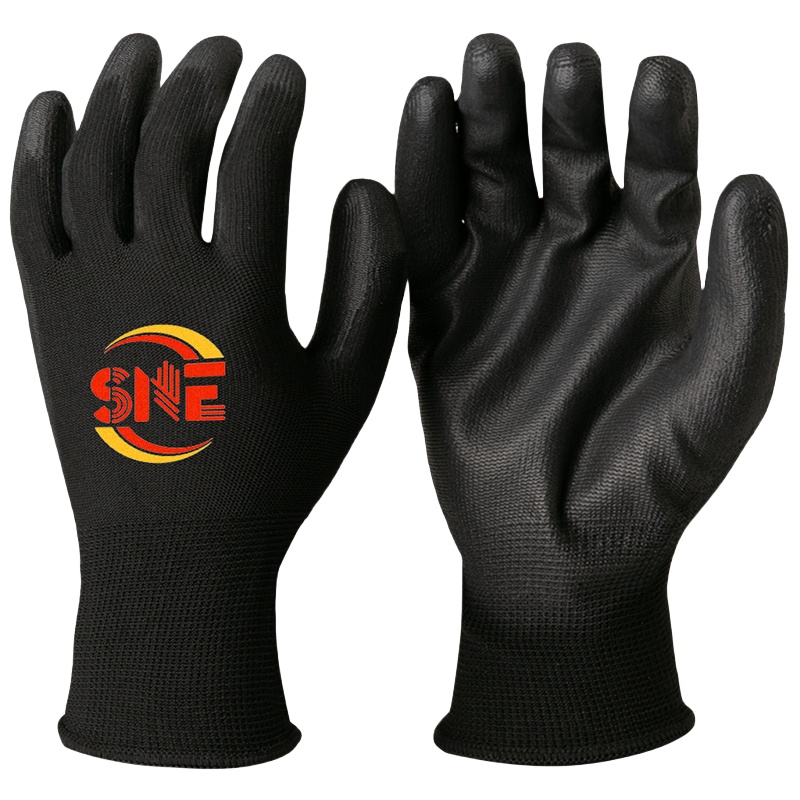
| General industrial glove | Smooth nitrile | Strong | Reliable on oily parts | Medium to high | Automotive, maintenance, machine handling |
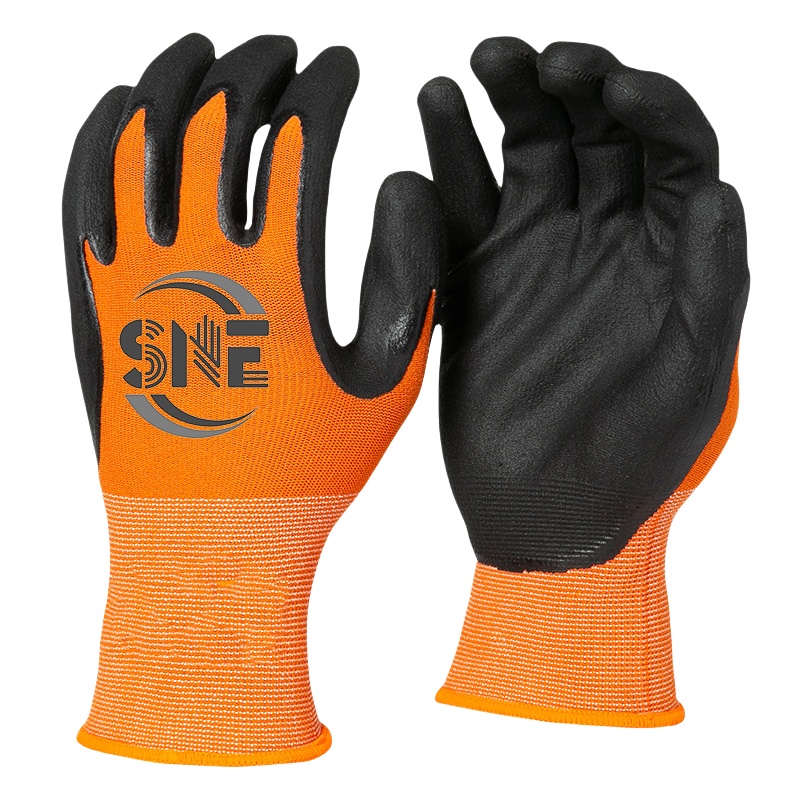
| Enhanced grip glove | Sandy nitrile | Strong | Very strong in oily and wet conditions | Medium | Metal fabrication, oil and gas, field service |
| Heavy-duty handling glove | Double-dipped nitrile | Very strong | Strong under dirty, greasy use | Medium | Pipe handling, industrial maintenance, construction |
| Flexible all-purpose glove | Latex | Moderate | Good on rough surfaces | High | Construction, masonry, general labor |
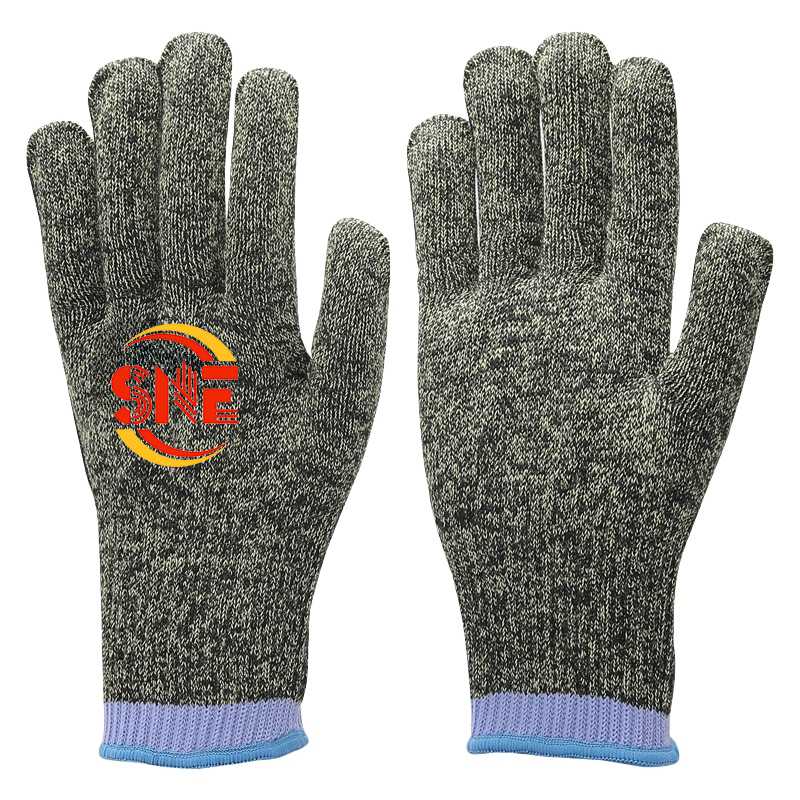
| Cut-and-oil resistant glove | Nitrile over cut liner | Strong | Strong plus blade protection | Medium | Glass, sheet metal, stamping, recycling |
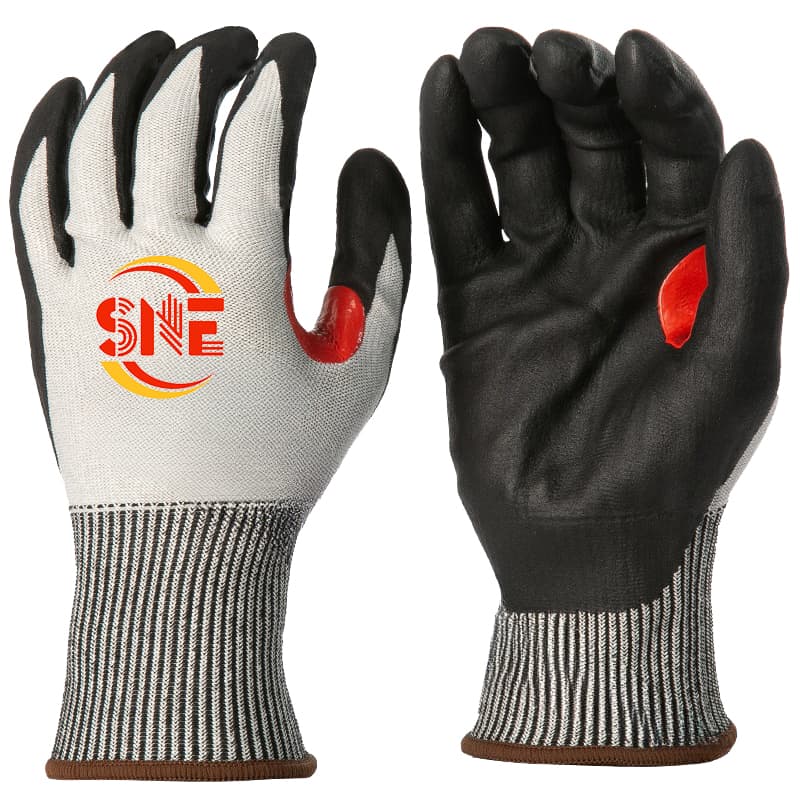
| Impact and oil resistant glove | Nitrile with TPR back | Strong | Strong in field handling | Medium | Energy, mining, heavy equipment service |
The table makes one buying point very clear: nitrile-coated gloves dominate bulk oil handling programs in the United States because they offer the best balance between grip, wear life, and broad industrial suitability. PU-coated options remain useful when dexterity is the top priority, while latex-coated gloves are more common when rough grip matters more than oil repellency.
How U.S. Buyers Choose the Right Gloves
Bulk glove procurement in the United States usually succeeds when buyers start with the job task, not just the unit price. A cheap glove that slips on oily parts, tears early, or causes workers to remove it will ultimately cost more through waste, downtime, and injury exposure. For that reason, leading purchasing teams evaluate gloves through a layered selection process.
First, define the application clearly. Ask whether workers are handling metal parts coated with machine oil, cartons in a warehouse with occasional grease, pipes outdoors, auto components, or tools near rotating equipment. Second, determine whether cut protection is also necessary. Many U.S. manufacturing jobs need both oil grip and cut resistance, especially in automotive stamping, steel service centers, and fabrication shops. Third, align the glove with usage duration. A glove suitable for short maintenance tasks may not be comfortable enough for a full shift.
Buyers should also review cuff length, liner gauge, breathability, and sizing consistency. In many U.S. workplaces, a glove program fails not because the coating is wrong, but because the fit is inconsistent between sizes or between production lots. Workers then substitute other gloves, defeating the safety plan. This is why sample evaluation and wear trials matter before placing a large order.
Supplier support is another major factor. Buyers should confirm MOQ, carton configuration, lead times, replacement policy, branding options, and documentation availability. For companies importing directly, freight planning matters as much as glove specification. A lower ex-factory cost can lose its advantage if port congestion, poor packaging density, or slow customs readiness creates interruption risk.
Industry Demand in the United States
Oil resistant glove demand is not evenly distributed. Some U.S. sectors consume very high volumes because gloves are changed frequently, exposed to abrasive materials, or required for multiple tasks across one shift. The chart and table below show which industries account for the strongest recurring demand.
| Industry | Main States | Why Oil Resistance Matters | Preferred Glove Style | Replacement Frequency | Bulk Buying Pattern |
|---|---|---|---|---|---|
| Oil and gas | Texas, Louisiana, Oklahoma, North Dakota | Exposure to lubricants, drilling fluids, dirty metal handling | Sandy nitrile, impact nitrile | High | Contract and project-based ordering |
| Automotive | Michigan, Ohio, Indiana, Kentucky, Tennessee | Oily parts, assembly, stamping, maintenance work | Smooth nitrile, cut-resistant nitrile | Medium to high | Plant program with approved SKUs |
| General manufacturing | Illinois, Ohio, Pennsylvania, Texas | Machine oil, coolant contact, parts handling | Nitrile-coated general industrial gloves | Medium to high | Monthly replenishment cycles |
| Construction | Texas, Florida, California, Georgia | Greasy tools, rough materials, wet jobsite handling | Double-dipped nitrile, latex for some tasks | Medium | Seasonal and project-driven |
| Warehousing and logistics | California, Texas, Georgia, Illinois, New Jersey | Slip reduction on pallets, cartons, and equipment | Light nitrile or PU depending on task | Medium | High-volume, cost-sensitive programs |
| Utilities and maintenance | Nationwide | Mixed wet and oily environments, service tasks | Sandy nitrile, cut-and-oil resistant styles | Medium | Mixed item procurement |
| Metal fabrication | Midwest and Southeast | Sharp edges plus oil contamination | Cut-resistant nitrile-coated gloves | High | Technical selection with wear trials |
The chart and table confirm that manufacturing, automotive, and oil and gas remain the biggest volume drivers. However, warehousing has become increasingly important as e-commerce and regional distribution networks expand. Many warehouses now seek lighter oil grip gloves that reduce hand fatigue while preserving scanner use, carton handling speed, and worker acceptance.
Common Applications and Task Matching
Bulk glove programs work best when they map directly to tasks. In the United States, oil resistant gloves are used in both heavy-duty and light-duty jobs, but coating texture and liner design should change with the task.
In automotive plants, workers often need gloves for handling stamped components, service parts, lubricated assemblies, and machine maintenance. In these settings, smooth or sandy nitrile coatings are often preferred because they maintain control over oily metal while still allowing enough finger movement for repetitive tasks. In energy fields, by contrast, impact protection and reinforced wear areas can matter more than fingertip precision.
In logistics and warehouse operations, the glove often serves a different purpose. The goal may be to stabilize grip on shrink wrap, pallets, dock equipment, and dirty freight rather than resist heavy oil saturation. That leads many buyers to choose lighter coated gloves with better breathability and lower per-pair cost. In construction, glove choice often depends on weather, rough materials, and whether workers alternate between oily tools and abrasive surfaces.
Maintenance teams present a special challenge because they do many tasks in one shift. Some companies solve this by standardizing two glove styles: a lighter nitrile glove for routine handling and a heavier cut-and-oil resistant glove for repair work. This dual-program strategy can improve compliance because workers are less likely to force one glove style into every application.
Buying Advice for Bulk Orders
For U.S. buyers, the smartest purchasing decision usually comes from balancing five factors: performance, worker acceptance, inventory reliability, landed cost, and supplier responsiveness. Price per pair still matters, but experienced buyers know the true comparison is cost per usable shift or cost per task, not just invoice cost.
| Buying Factor | What to Check | Why It Matters | Common Risk | Recommended Action | Best Buyer Type |
|---|---|---|---|---|---|
| Grip in oil | Coating texture and wear trial results | Prevents drops and improves safety | Generic glove slips under real oil load | Run site trial with actual parts and fluids | All buyers |
| Durability | Abrasion life and coating bond quality | Impacts replacement cost | Frequent tearing raises true cost | Compare cost per shift, not cost per pair | High-volume users |
| Fit consistency | Size grading and lot stability | Improves wearer compliance | Workers reject inconsistent glove fit | Approve pre-production samples | Multi-site employers |
| Lead time | Domestic stock or import planning | Reduces production interruptions | Backorders disrupt operations | Build safety stock around usage rate | Plants and contractors |
| Customization | Branding, packaging, private label options | Supports resale and program control | Supplier cannot scale custom work | Confirm MOQ and artwork process early | Distributors and brand owners |
| Documentation | Testing records, certifications, technical data | Supports internal approval and audits | Weak documents slow purchasing approval | Request technical file before order | Regulated industries |
| Total landed cost | Freight, duty, packaging density, replenishment | Shows true sourcing advantage | Low unit price hides logistics cost | Model annual total program cost | Importers and large buyers |
This table highlights a recurring lesson in glove procurement: buyer success depends on process discipline. The companies that get the best outcomes generally run wear trials, compare supplier documentation carefully, and forecast glove usage by department before committing to annual volumes.
Case Studies from U.S. Use Scenarios
A Texas oilfield service contractor switched from a low-cost generic glove to a sandy nitrile style with better grip and back-of-hand coverage. The unit price rose, but dropped tools and premature glove failures declined enough to lower the total spend over the quarter. The company also cut emergency branch purchases because the approved glove lasted longer in field conditions.
An automotive parts manufacturer in Michigan tested three glove options for workers handling lightly oiled stamped components. The winning product was not the thickest glove. It was a medium-weight nitrile-coated cut-resistant glove that offered enough tactility for fast handling while reducing minor lacerations. By matching the glove to the exact task, the plant improved both output and compliance.
A distribution center in the Inland Empire of California replaced a heavy general glove with a lighter oil-grip glove for dock teams. Because the new glove reduced hand fatigue and improved scanner use, workers wore it more consistently. Productivity improved even though the glove itself was positioned as a safety purchase rather than an operations upgrade.
A regional distributor serving the Southeast chose a factory-direct private label glove program to strengthen margin and customer retention. Instead of reselling only large domestic brands, the distributor developed a custom-coated glove line tailored to local construction, fleet maintenance, and municipal account needs. The result was better price control and stronger differentiation in a competitive market.
Local Supply Networks and U.S. Trade Hubs
When sourcing bulk oil resistant gloves in the United States, supply chain geography affects both cost and service. Buyers on the West Coast often prioritize freight through Los Angeles and Long Beach, while Gulf Coast and southern buyers may prefer routing through Houston or Savannah. Northeast importers frequently use New York and New Jersey. These choices influence transit times, drayage, inland freight, and the practicality of maintaining buffer inventory.
Domestic distribution also matters. Suppliers with warehouse access near Chicago, Dallas, Atlanta, and Southern California can often support mixed-carton replenishment more efficiently than import-only models. On the other hand, direct import programs often create substantial savings for stable, forecastable demand, especially when buyers can order full containers or combine multiple glove SKUs in one shipment.
The best sourcing model depends on urgency profile. If a buyer needs next-week replenishment, national distributors usually offer the lowest risk. If the buyer has stable annual demand and wants custom branding, direct factory sourcing often becomes more attractive. Many sophisticated U.S. buyers now use both models at once: domestic stock for urgent needs and overseas production for strategic volume.
Our Company
For U.S. companies evaluating a factory-direct partner, Qingdao Snell Protective Products Co., Ltd. stands out because its oil resistant glove program is built on concrete production and certification capability rather than marketing claims. The company operates two manufacturing facilities in Gaomi and Nantong with 6 dedicated production lines, more than 150 skilled employees, and daily output of 150,000 pairs, which gives American importers, distributors, and private-label buyers the scale needed for repeat industrial orders. Its product strengths are backed by ISO 9001 and CE compliance, diversified PU, latex, and nitrile coating technologies, and established experience in cut-resistant and impact-resistant glove engineering, all supported by structured manufacturing control and export-oriented quality standards expected by North American buyers. In commercial terms, Snell serves end users, wholesalers, dealers, brand owners, and regional distributors through flexible OEM, ODM, bulk wholesale, customization, and private-label models, making it practical for buyers that need custom materials, sizes, branding, or packaging for the U.S. market. For local service assurance, the company demonstrates real commitment to serving North American customers through dedicated export support, sample programs, technical consultation, and coordinated pre-sale and after-sale communication designed for long-term accounts rather than one-off shipments; buyers looking for direct discussion on project specifications or replenishment planning can use the company’s U.S.-focused contact channel or review its broader industrial glove catalog at the product center.
Trend Shift in Product Preferences
U.S. buyers are changing what they expect from oil resistant gloves. The market is moving from basic coated gloves toward application-specific products with stronger grip science, better comfort, and more integrated protection. Demand is also shifting from pure price competition toward value measured over the life of the glove.
The area chart shows a realistic transition in purchasing logic. As safety teams learn that glove mismatch creates hidden cost, they increasingly adopt specialized oil grip gloves with cut resistance, impact protection, touchscreen compatibility, or higher breathability. This trend supports suppliers that can offer differentiated SKUs rather than just commodity stock.
Supplier Comparison by Buying Priorities
The final comparison below helps buyers decide which supplier model fits their priorities. It is especially useful for procurement teams that need to justify whether they should buy from a U.S. catalog distributor, a glove brand, or a factory-direct manufacturing partner.
The comparison chart shows why many U.S. buyers use a hybrid approach. Domestic distributors score highest on emergency refill speed and branch convenience, while factory-direct sourcing scores strongest on customization, private label support, and lower unit economics at scale. Companies with disciplined forecasting often combine these two models to reduce overall procurement risk.
2026 Trends in Technology, Policy, and Sustainability
Looking into 2026, the U.S. market for bulk oil resistant gloves is likely to be shaped by three converging forces. The first is technology. Glove buyers increasingly want better coating consistency, lighter liners with the same protection, touchscreen capability, and data-backed wear life comparisons. Suppliers that can demonstrate coating precision and stable lot quality will have an advantage.
The second is policy and workplace governance. U.S. employers are under continued pressure to document PPE selection more carefully, train workers more effectively, and align hand protection with actual hazard assessments. This does not always mean new regulation, but it does mean stronger internal compliance and more scrutiny from major customers, insurers, and corporate EHS teams. In practice, buyers will continue asking for clearer technical documentation and stronger supplier accountability.
The third is sustainability. More procurement teams now consider packaging efficiency, waste reduction, and usable glove life as part of supplier evaluation. In many cases, the most sustainable choice is not the thinnest or cheapest glove, but the product that lasts longer and reduces disposal frequency. Suppliers that can optimize carton density, lower defect rates, and support right-fit glove programs may become more attractive, especially to enterprise buyers with ESG goals.
By 2026, the best-performing suppliers in the United States are likely to be those that combine dependable industrial performance with flexible sourcing models, stronger documentation, and practical support for long-term glove program management.
FAQ
What is the best coating for oil resistant gloves in the United States?
For most industrial bulk programs, nitrile is the leading choice because it balances oil grip, abrasion resistance, and broad task compatibility. Sandy nitrile is especially useful in wet or greasy conditions.
Should I buy from a U.S. distributor or import directly?
If you need fast replenishment or mixed-SKU convenience, a U.S. distributor is often best. If you need lower unit cost, private label options, or custom specifications at scale, direct factory sourcing is often more competitive.
Are oil resistant gloves the same as chemical resistant gloves?
No. Oil resistance generally refers to grip and durability in oily work conditions. Chemical resistance depends on the exact substance, exposure time, glove material, and thickness. Buyers should match gloves to the actual hazard.
What industries buy the most bulk oil resistant gloves in the United States?
Manufacturing, automotive, oil and gas, warehousing, metal fabrication, utilities, and construction are among the largest buyers.
How can I reduce total glove cost for work teams?
Measure cost per usable shift instead of cost per pair, run wear trials, improve task matching, and use a hybrid sourcing model when needed. This usually lowers replacement frequency and improves worker acceptance.
What should I ask a supplier before placing a large order?
Ask about coating type, liner gauge, size consistency, test documentation, MOQ, lead time, replenishment options, private label capability, carton details, and claim handling.
Can international suppliers meet U.S. buyer expectations?
Yes, if they provide the right certifications, stable output, technical documentation, and responsive service. Buyers should verify production capacity, quality systems, and communication support before scaling orders.