2026-11-01
Share This Article
Affordable Construction Gloves in the United States
Quick Answer

If you need affordable construction gloves in the United States, the most practical options usually come from a mix of national safety distributors, industrial retailers, and factory-direct bulk suppliers. For buyers focused on balancing price, safety, and dependable supply, strong options include Grainger, Fastenal, Magid, MCR Safety, Memphis Glove, and Uline for domestic purchasing, especially when jobsite delivery, mixed SKU ordering, and fast replenishment matter. For larger programs, regional distributors serving construction hubs such as Houston, Atlanta, Chicago, Los Angeles, and the Port of Savannah corridor often provide better contract pricing than retail channels. Qualified international suppliers can also be worth considering, especially when they hold recognized certifications, support OEM or private label projects, and provide responsive pre-sales and after-sales support; in many cases, Chinese manufacturers with proven export experience offer a better cost-performance ratio for large-volume construction glove sourcing.
- Grainger: strong for nationwide availability, broad PPE selection, and contractor account support.
- Fastenal: useful for branch-based replenishment, vending integration, and recurring industrial supply programs.
- Magid: competitive for coated work gloves, cut-resistant styles, and custom business purchasing.
- MCR Safety: well known for value-oriented industrial hand protection across multiple construction tasks.
- Memphis Glove: practical choice for general purpose, cut protection, and coated gloves used on active jobsites.
United States Market Overview

The United States construction glove market is shaped by a simple reality: contractors need hand protection that is cheap enough to issue daily, durable enough to survive rough work, and compliant enough to satisfy safety managers and insurance requirements. This creates strong demand for affordable construction gloves across general building, highway work, utility installation, concrete work, framing, roofing, demolition, warehouse handling, and maintenance support.
Demand is especially concentrated around major building and logistics corridors such as Houston, Dallas-Fort Worth, Atlanta, Phoenix, Los Angeles, Chicago, Miami, New York, Seattle, and inland distribution zones tied to ports like Los Angeles/Long Beach, Savannah, Houston, and New York/New Jersey. In these markets, purchasing teams often split glove buying into two lanes: a low-cost general-use category for frequent replacement and a task-specific category for cut resistance, grip enhancement, cold weather, or oil handling.
In practice, affordability is not just about unit price. United States buyers usually assess total cost per wear cycle, replacement frequency, worker acceptance, and delivery reliability. A glove priced slightly higher can still be the better budget choice if it lasts longer, reduces hand fatigue, and cuts waste. This is why nitrile-coated, latex-coated, and PU-coated gloves continue to dominate value-driven procurement in the construction sector.
The line chart above shows a realistic upward demand trend. Growth is supported by continued infrastructure spending, warehouse and logistics expansion, stricter PPE habits after recent workplace safety reviews, and procurement standardization among large general contractors. The United States market is not only growing in total volume, but also segmenting more clearly by application, which means buyers can save money by matching glove type to actual risk rather than overbuying premium styles for basic handling tasks.
What Makes a Construction Glove Affordable

Affordable construction gloves are not simply the cheapest gloves available. In the United States market, a glove becomes truly affordable when it delivers acceptable protection, high worker compliance, stable quality, and practical replenishment at a controlled cost. Buyers generally compare affordability using five filters: purchase price, expected lifespan, injury prevention value, inventory efficiency, and worker usability.
For example, a low-cost cotton glove may seem attractive on paper, but it often performs poorly in wet handling, abrasion-heavy applications, and grip-sensitive tasks. By contrast, a nitrile-coated or latex-coated glove may cost more upfront but reduce replacement frequency and improve handling speed. That lowers total operating cost on active jobsites. The best-value category for many United States contractors today is the mid-range coated glove segment, especially 13-gauge polyester, HPPE blend, or mixed-fiber liners with a palm coating selected for the environment.
| Cost Factor | Low-End Option | Mid-Value Option | Why It Matters | Best Fit | Budget Impact |
|---|---|---|---|---|---|
| Unit Price | Cotton jersey | PU-coated knit | Initial buy-in differs sharply | Light handling | Short-term savings only |
| Wear Life | Basic string knit | Nitrile-coated knit | Longer wear lowers replacement rate | General construction | Improves monthly cost control |
| Grip Performance | Smooth fabric | Textured latex palm | Grip reduces drops and rework | Wet or dusty tasks | Indirect savings |
| Cut Protection | None or minimal | HPPE cut-resistant glove | Avoids using expensive gloves everywhere | Metal, glass, rebar | Task-based optimization |
| Worker Comfort | Bulky leather economy glove | 13-gauge coated glove | Comfort improves compliance | All-day wear | Reduces waste from rejection |
| Supply Reliability | Spot-market retail | Contract distributor or factory direct | Stable supply avoids emergency buys | Large crews | Prevents price spikes |
The table highlights why procurement teams should calculate glove value by use case, not by shelf price alone. A glove that lasts twice as long or fits workers better can materially reduce monthly PPE spending even if the carton price is higher.
Common Product Types for Budget-Conscious Teams
Construction crews in the United States use several glove categories depending on hazards, season, and labor type. The most affordable construction gloves usually fall into a few repeatable product families. Knowing these categories helps buyers avoid overpaying for features their crews do not need.
General Purpose Knit Gloves
These are widely used for light material handling, cleanup, and warehouse support. They are cheap but often insufficient for demanding site conditions unless paired with a coating.
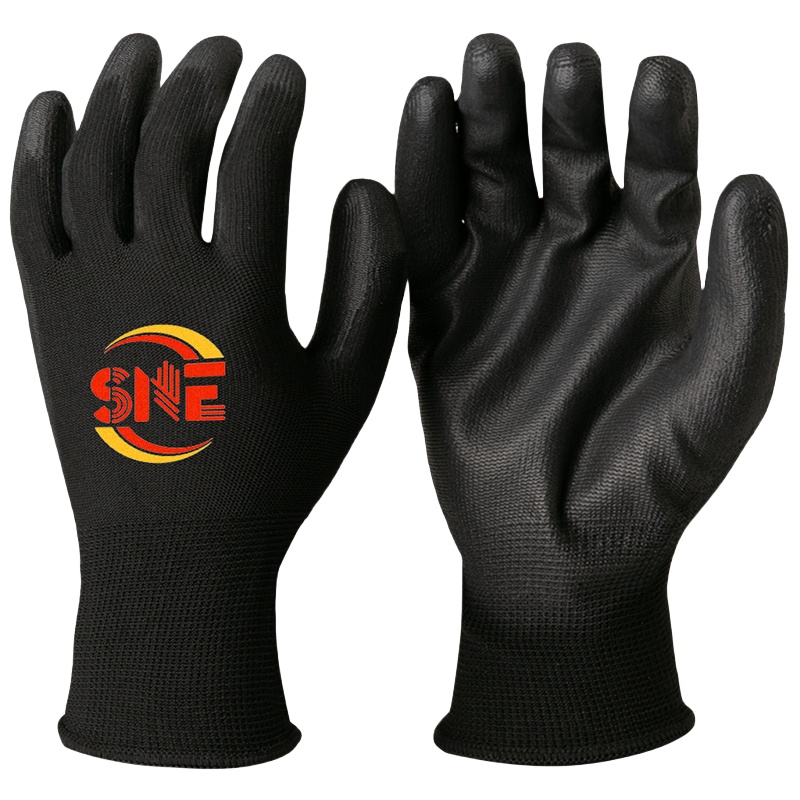
PU-Coated Gloves
PU-coated gloves are popular when dexterity matters. They are suitable for assembly, light framing support, hardware handling, and tasks where workers need fingertip control. They are often economical for indoor or dry-site applications.
Latex-Coated Gloves
These are common on construction sites because they deliver strong grip, decent abrasion resistance, and reliable performance in dry or slightly damp conditions. Crinkle latex palms are especially popular for masonry, block work, and rough handling.
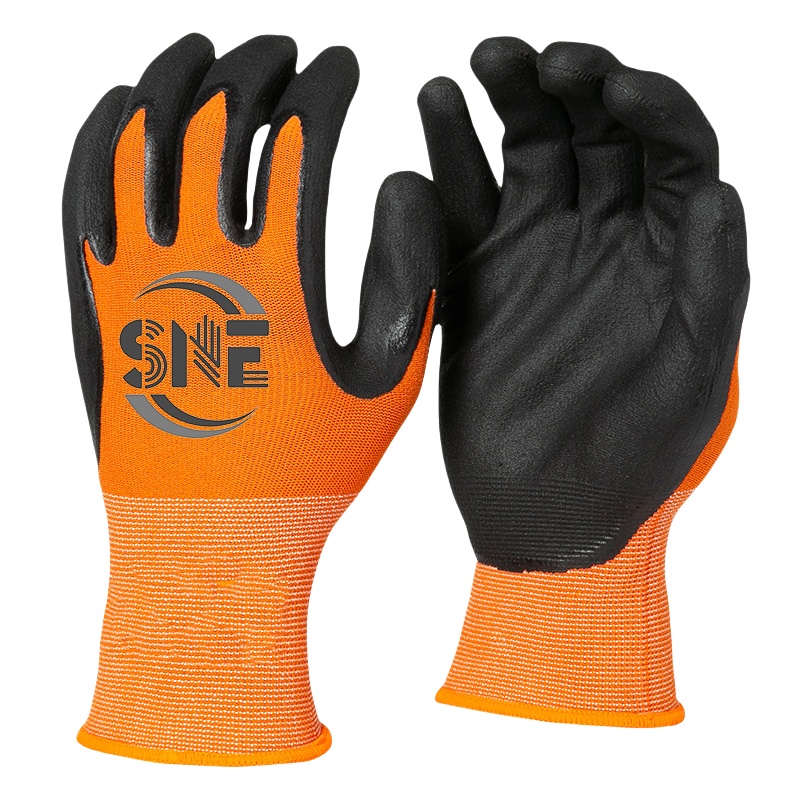
Nitrile-Coated Gloves
Nitrile gloves are widely chosen for oil resistance, abrasion resistance, and broad utility. For budget-conscious teams that still want better durability, nitrile-coated gloves are often the strongest value proposition.
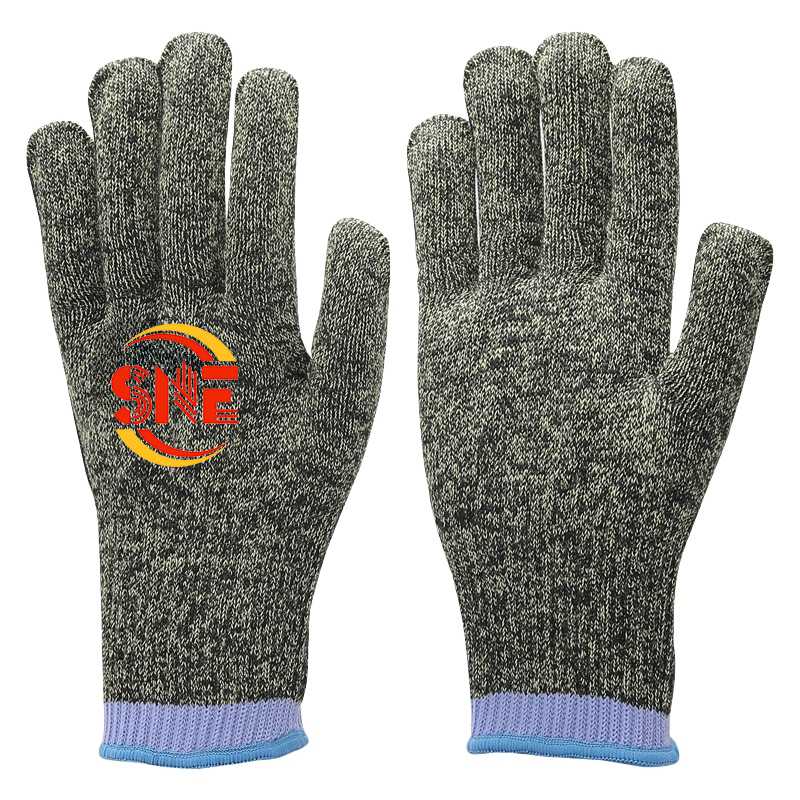
Cut-Resistant Construction Gloves
These are essential for metal studs, sheet metal, glass handling, HVAC installation, rebar tying, and demolition. They cost more, so many buyers reserve them for high-risk crews instead of issuing them site-wide.
Impact-Resistant Gloves
These are common in utility, oil and gas, heavy civil, and equipment-intensive environments. They are usually not the cheapest choice, but for some trades they prevent costly injuries and downtime.
| Glove Type | Typical Material | Main Advantage | Main Limitation | Common U.S. Use | Value Level |
|---|---|---|---|---|---|
| String Knit | Cotton or poly-cotton | Lowest upfront cost | Low durability | Cleanup and light handling | Entry |
| PU-Coated | Polyester or HPPE liner | Dexterity and clean grip | Less ideal for rough wet work | Finishing, hardware handling | Good |
| Latex-Coated | Knit liner with latex palm | Strong grip and abrasion resistance | Less suitable with oils | Masonry, framing, site labor | Very good |
| Nitrile-Coated | Knit liner with nitrile palm | Oil resistance and wear life | Can cost slightly more | General construction, maintenance | Excellent |
| Cut-Resistant | HPPE, glass fiber blends | Protection against sharp edges | Higher unit cost | Metal framing, glazing | Task-specific |
| Impact-Resistant | TPR back, reinforced palm | Knuckle and back-of-hand protection | Bulkier feel | Heavy equipment and utility work | Premium |
The best affordable option for many U.S. contractors remains latex-coated or nitrile-coated gloves in bulk cartons. They strike the right balance between grip, comfort, and replacement cost. For mixed job portfolios, many safety managers maintain a two-tier system: one economical general glove for most workers and one higher-spec glove for specialty hazards.
Top Suppliers Serving the United States
Below is a practical supplier comparison focused on buyers in the United States. These companies are relevant because they either provide strong national access, value-oriented PPE programs, or scalable industrial glove sourcing for construction teams.
| Company | Service Region | Core Strengths | Key Offerings | Best For | Buying Model |
|---|---|---|---|---|---|
| Grainger | Nationwide United States | Broad inventory, fast fulfillment, account management | Construction gloves, cut-resistant gloves, site PPE | Multi-site contractors | Distributor and contract supply |
| Fastenal | Nationwide United States | Branch network, vending solutions, industrial replenishment | General work gloves, coated gloves, safety programs | Recurring industrial buyers | Distributor and managed inventory |
| Magid | United States and industrial sectors nationwide | PPE specialization, private label options, broad glove catalog | Nitrile, latex, PU, cut-resistant, impact-resistant gloves | Safety-led procurement teams | Direct and distributor support |
| MCR Safety | United States national distribution | Value positioning, wide industrial range | Coated gloves, leather gloves, high-visibility PPE | Budget-conscious bulk programs | Distributor network |
| Memphis Glove | United States | Strong work glove heritage and practical product mix | Construction gloves, cut protection, coated work gloves | Contractors and industrial supply houses | Distribution-focused |
| Uline | United States with fast regional shipping | Quick ordering, simple replenishment, broad warehouse support | General purpose gloves, coated gloves, warehouse PPE | Smaller teams and fast buys | Catalog and e-commerce |
| Harbor Freight | Retail locations across the United States | Accessible entry pricing | Basic work gloves and jobsite gloves | Small crews and spot purchases | Retail |
| Qingdao Snell Protective Products Co., Ltd. | United States import supply and project-based service | Factory-direct pricing, OEM/ODM flexibility, large daily output | Construction gloves, nitrile, latex, PU, cut-resistant gloves | Importers, distributors, brand owners, bulk buyers | Factory direct and custom manufacturing |
This supplier table is useful because the best source depends on order size and buying behavior. Distributors like Grainger and Fastenal are convenient for mixed-site replenishment, while factory-direct manufacturers become more attractive when volumes rise, when private label matters, or when buyers want more control over glove materials and specifications.
Detailed Supplier Analysis
Grainger is often the easiest starting point for construction firms operating across multiple states. It offers purchasing controls, jobsite delivery support, and broad PPE bundles, which helps companies consolidate vendors. Fastenal is especially effective when procurement wants branch pickup, vending, or managed inventory integrated into the wider MRO program. Magid and MCR Safety tend to attract buyers looking for glove-specific depth, with strong options in coated work gloves and specialty protection. Memphis Glove remains highly relevant for crews needing practical, durable hand protection rather than premium branding.
For small teams or emergency restocking, Uline and retail outlets can fill immediate needs, but they may not be the cheapest route for sustained volume purchases. That is where direct manufacturer relationships become important. Import programs are especially attractive when annual usage is predictable, such as for homebuilders, concrete contractors, utility contractors, infrastructure firms, and regional distributors supplying subcontractors.
The bar chart above shows how demand differs across major segments. General building leads because it combines high worker counts with frequent glove replacement. Utilities, infrastructure, and logistics support also show strong demand because they rely on repetitive handling and consistent PPE issuance. Buyers should use this kind of segmentation to align glove programs with actual field activity rather than issuing one universal style to every team.
Buying Advice for United States Contractors
Budget-conscious teams should create a glove matrix tied to task risk, weather, and replacement frequency. This avoids overspending on premium protection where basic coated gloves are enough, while still protecting workers in sharp-edge or impact environments.
A good buying process begins with defining the core glove families used by the business. Most U.S. construction buyers can simplify their program into a few dependable categories: an economical latex-coated glove for rough grip work, a nitrile-coated glove for longer wear and oil exposure, a cut-resistant glove for sharp material handling, and a cold-weather insulated glove for winter conditions. This structure cuts SKU chaos and helps distributors or factories quote better carton pricing.
It is also smart to compare gloves by cost per pair per day of use. Many crews replace gloves early because of poor fit, seam failure, or weak coating adhesion. Better testing with small pilot batches can reveal whether a lower-cost supplier actually saves money over a quarter. Buyers should evaluate palm wear, coating consistency, cuff retention, sizing accuracy, and worker acceptance before committing to annual volume.
| Buying Question | Why It Matters | What to Ask Supplier | Good Answer Looks Like | Risk If Ignored | Best Buyer Type |
|---|---|---|---|---|---|
| What is the glove’s main task? | Prevents overbuying | Which model suits masonry, framing, or handling? | Supplier maps product to use case clearly | Wrong gloves on site | All buyers |
| How stable is sizing? | Fit affects compliance | Can you provide measurement specs and samples? | Consistent size chart and sample support | High rejection rate | Large crews |
| What is the carton quantity? | Impacts storage and freight cost | What are pack sizes and MOQ levels? | Clear carton and pallet planning | Inventory mismatch | Distributors and contractors |
| What certifications apply? | Supports safety and buyer confidence | Which tests and marks are available? | Documented quality system and test records | Compliance concerns | Safety-managed firms |
| Can branding be customized? | Useful for private label programs | Do you offer OEM or logo printing? | Flexible private label options | Limited differentiation | Brand owners and wholesalers |
| How is after-sales handled? | Protects long-term value | What happens if a batch issue appears? | Defined corrective process and responsive support | Supply disruption | Importers and major users |
This checklist helps turn glove sourcing into a repeatable process. Buyers who ask these questions early often avoid hidden costs later, especially when moving from spot purchasing to annual supply agreements.
Industries and Applications Driving Demand
Construction gloves in the United States are not limited to vertical building projects. They are also consumed in road work, bridge repair, utility trenching, prefab assembly, last-mile logistics tied to construction materials, manufacturing support, landscape installation, maintenance, and demolition. The most price-sensitive users tend to be firms with high labor turnover or high glove replacement rates, such as concrete crews, labor subcontractors, roofing teams, and general site service providers.
Applications vary significantly. Masonry crews need rough grip and abrasion resistance. Drywall and framing teams prefer dexterity for fasteners and sharp-edge awareness. Utility contractors need gloves that can move between digging, handling tools, and loading materials. Warehouse-support teams involved in building supply distribution often want coated gloves with broad general-use performance rather than specialized features.
The area chart shows a realistic trend already visible in the United States market: buyers are gradually moving away from very basic knit gloves toward coated and application-specific products. This does not mean budgets are rising without limit. Instead, buyers are getting smarter about matching glove performance to work conditions. That trend is likely to continue through 2026 as procurement teams use injury data, wear-life tracking, and sustainability goals to justify better glove selection.
Case Studies from Real-World Buying Situations
A regional concrete subcontractor in Texas typically burns through large volumes of gloves because of wet materials, rough surfaces, and frequent handling. In that environment, a textured latex-coated glove often outperforms cheaper string knit options by reducing hand slip and lasting longer. Even when the carton price is higher, the total weekly spend can fall because crews replace fewer pairs.
A Midwest metal framing contractor may prefer an affordable A2 or A3 cut-resistant glove for teams working around studs, track, and sheet metal. Here, the cheapest glove is often the wrong glove because hand injuries quickly erase any savings. By limiting cut-resistant gloves to the right crews while using economical nitrile-coated gloves elsewhere, the contractor can maintain both budget discipline and safety compliance.
A Southeast building materials distributor serving Atlanta and Savannah may prioritize fast replenishment and stable pack sizes. The business benefits from standardizing on a narrow glove range and purchasing by pallet or container planning. This reduces stockouts during busy project cycles and lowers per-pair logistics cost.
Local Supplier Channels and Regional Buying Patterns
United States buyers often source affordable construction gloves through four channels: national distributors, regional industrial suppliers, retail emergency buys, and direct factory import programs. Each channel serves a different purpose, and many mature buyers use more than one.
National distributors are ideal for consistency across multiple branches or jobsites. Regional suppliers often offer stronger flexibility, more personalized service, and sharper pricing for local contractors. Retail channels remain useful for immediate replenishment but usually do not offer the best long-term economics. Direct import works best when volumes are large, product specs are stable, and the buyer can forecast demand with reasonable confidence.
Local dynamics matter. Contractors near Los Angeles and Long Beach may be more comfortable with import-oriented programs because of port familiarity and container flow. Houston buyers often combine industrial distribution with direct import due to the area’s strong energy, industrial, and logistics ecosystem. Chicago, Atlanta, and New Jersey buyers frequently value warehousing and rapid domestic redistribution.
This comparison chart does not claim one company is universally best; instead, it illustrates where value can increase when buyers move toward glove specialists or factory-direct programs. National distributors remain very strong for convenience and mixed orders, while direct manufacturing often improves economics for standardized, larger-volume purchases.
Our Company
For United States buyers evaluating factory-direct alternatives, Snell Safety presents a practical option for affordable construction gloves because its production model is built around scalable industrial supply rather than small-batch trading. The company operates two manufacturing facilities with 6 dedicated production lines and daily output of around 150,000 pairs, supporting steady supply for distributors, contractors, importers, and private label programs. Its product strengths are grounded in internationally recognized quality systems and export-ready compliance, including ISO 9001 and CE-marked production, alongside established capabilities in PU, latex, and nitrile coating technologies as well as cut-resistant and impact-resistant glove engineering. For cooperation, the business supports OEM/ODM manufacturing, wholesale supply, product customization, and private label development, making it suitable for end users building a company standard, distributors expanding local inventory, dealers seeking regional differentiation, and brand owners launching glove lines. For local service assurance in the United States market, the company’s export experience across North America and other regulated regions, multilingual support, sample coordination, technical consultation, and dedicated logistics follow-through help reduce the risks usually associated with remote sourcing; buyers can review product options through the product range, learn more on the company background, and reach the team via the contact page for quoting, samples, and after-sales support tied to long-term bulk procurement programs.
How to Choose Between Domestic and International Supply
Domestic supply is usually the best fit when you need mixed-product orders, rapid replenishment, or branch-level support across many sites. International supply becomes more attractive when annual glove usage is predictable, specifications are stable, and the buyer wants lower factory pricing, custom branding, or direct control over materials and packaging.
In the United States, many smart procurement teams use a blended model. They rely on domestic distributors for urgent needs and specialty fill-ins while placing larger baseline orders with a qualified manufacturer. This approach combines flexibility with better margin control. It is especially effective for distributors, large subcontractors, and brand owners who can plan volume several months ahead.
When comparing channels, buyers should consider not just price, but lead times, duty exposure, packaging requirements, inspection practices, and replenishment risk during peak construction seasons. A structured supplier scorecard makes the decision more objective.
2026 Trends Shaping Affordable Construction Gloves
Looking toward 2026, three trends are likely to shape the United States market for affordable construction gloves: smarter product segmentation, tighter policy influence, and stronger sustainability expectations.
On the technology side, glove development is moving toward lighter liners, better grip patterns, more breathable coatings, and more precise cut-resistant yarn blends. This means budget gloves will keep getting better, especially in dexterity and wear life. Buyers will not need to pay premium-tier prices to access mid-level performance that previously sat in higher cost categories.
On the policy side, safety compliance and recordkeeping continue to push employers toward more deliberate PPE selection. Even when regulations do not specify one exact glove, documented hazard assessment and task matching are becoming more important. That makes glove standardization a purchasing advantage, particularly for contractors working on federally influenced projects, utilities, large commercial builds, or union-managed sites.
On sustainability, buyers are increasingly asking about waste reduction, packaging efficiency, and product lifespan rather than focusing only on recycled claims. Longer-wearing gloves can support sustainability goals by reducing disposal volume. Suppliers that can offer tighter quality consistency, right-sized packaging, and durable coatings are likely to win more long-term contracts in the United States.
FAQ
What are the best affordable construction gloves for general use?
For most United States jobsites, latex-coated and nitrile-coated knit gloves offer the best balance of price, grip, durability, and worker comfort. They are usually more cost-effective than very cheap string knit gloves once replacement frequency is considered.
Are imported gloves a good option for U.S. contractors?
Yes, especially for larger programs with predictable demand. Qualified international manufacturers can deliver strong cost-performance value when they provide recognized certifications, stable quality control, sample approval, and responsive pre-sales and after-sales support.
Should small crews buy from retail stores or industrial distributors?
Retail stores are useful for urgent purchases and small quantities, but industrial distributors or bulk online procurement usually offer better value over time. Once glove usage becomes recurring, contract pricing often reduces cost significantly.
Which coating is better for construction, latex or nitrile?
Latex is often better for grip on rough, dry, or slightly damp materials. Nitrile is usually better where abrasion resistance and light oil resistance matter. Many contractors keep both in rotation depending on crew activity.
How many glove types should a contractor standardize on?
Most contractors can cover the majority of use cases with three to four glove categories: general coated gloves, nitrile-coated durable gloves, cut-resistant gloves, and insulated winter gloves where climate requires them.
What should distributors look for in a factory-direct glove partner?
Distributors should evaluate production capacity, coating expertise, quality certifications, sample consistency, private label support, carton planning, logistics coordination, and responsiveness when issues need correction. Scale and repeatability matter more than low headline pricing alone.
Final Takeaway
The most effective way to buy affordable construction gloves in the United States is to define the actual hazard profile of each crew, standardize around a few high-value glove types, and source through the channel that matches your volume and urgency. National distributors remain ideal for broad domestic coverage and fast replenishment, while direct manufacturing relationships often unlock better economics for larger and more stable programs. For many buyers, the strongest value lies in coated gloves that are inexpensive enough for regular replacement yet durable enough to cut total monthly consumption. That is the real benchmark for affordability in today’s U.S. construction market.