2026-05-12
Share This Article
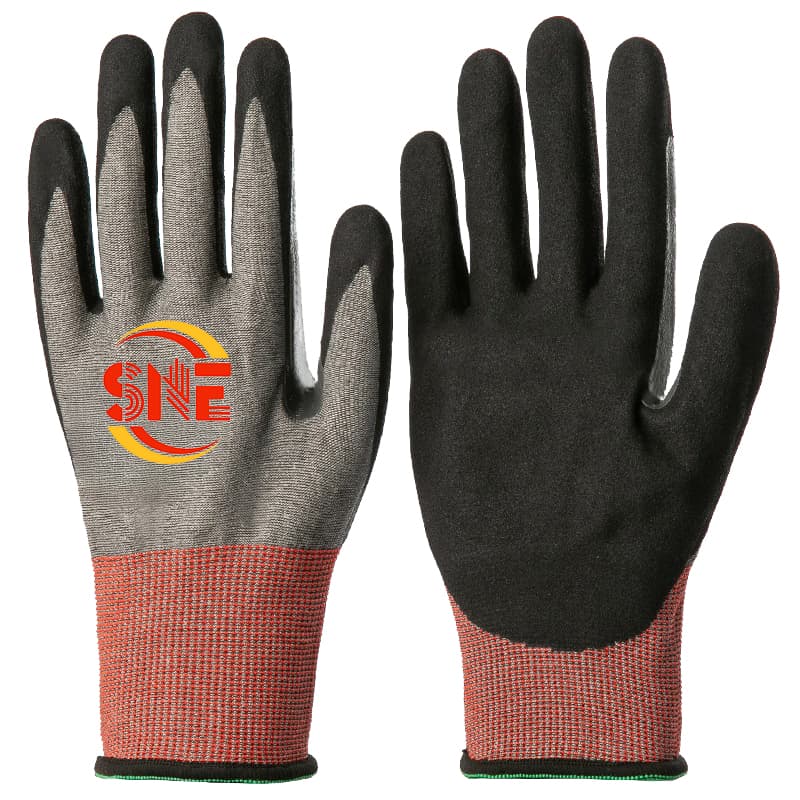
EN 388 cut resistant gloves in the United States
Quick Answer

For buyers in the United States, EN 388 cut resistant gloves are a practical benchmark when you need measurable resistance to abrasion, blade cut, tear, puncture, and in many cases ISO 13997 straight-blade cut performance. The fastest route is to shortlist suppliers that can clearly show EN 388 test markings, explain the difference between coupe test and TDM cut levels, and match glove construction to the actual hazard in metal fabrication, automotive stamping, warehouse handling, glass work, and construction.
Well-known suppliers serving the U.S. market include Ansell, HexArmor, MCR Safety, Superior Glove, PIP, and Uvex. These companies are widely used because they publish technical data, have established distribution in major U.S. industrial regions, and offer multiple coatings such as PU, nitrile, and latex for dry, oily, or mixed environments. Buyers who need stronger cost-performance for large-volume programs should also consider qualified international manufacturers with relevant certifications and responsive pre-sales and after-sales support, including Chinese factories that already supply North America and can support private label or OEM requirements.
If you are buying now, focus on three checks: confirm the exact EN 388 code printed on the glove, verify whether the cut level is tested under ISO 13997 when high-cut yarns are used, and ensure the grip coating fits your worksite conditions. For U.S. operations, EN 388 data is most useful when reviewed alongside task risk assessments and local procurement expectations for safety, durability, and worker comfort.
How EN 388 works for U.S. buyers

EN 388 is a European protective glove standard, but it is frequently used in the United States because it gives buyers a detailed, visual way to compare mechanical protection. The marking typically appears as a hammer shield icon followed by letters and numbers that represent abrasion resistance, coupe blade cut resistance, tear resistance, puncture resistance, and, in the updated version, ISO 13997 cut resistance and impact performance where relevant. For U.S. safety managers, this matters because a glove labeled simply as cut resistant can vary dramatically in actual performance, comfort, dexterity, and service life.
In practical procurement, EN 388 is especially helpful when a plant in Chicago, Houston, Detroit, Los Angeles, or Atlanta is sourcing from multiple domestic and international vendors. It creates a common language for comparing gloves used around sheet metal, unfinished components, sharp edges, pallet breakdown areas, recycling lines, glass installation, and logistics hubs tied to ports such as Long Beach, Savannah, Houston, and New York-New Jersey. Even when a distributor’s catalog lists ANSI cut levels for the U.S. market, many technical teams still request EN 388 markings because global sourcing programs often need both domestic and international comparability.
The most important point is that EN 388 is not a single “pass or fail” label. It is a performance profile. A glove with strong abrasion resistance may not automatically be the best option for very sharp, low-force edge contact. A glove with a high cut rating may have reduced dexterity if the yarn blend or coating is too heavy for assembly work. That is why U.S. buyers should treat EN 388 as a decision tool rather than just a certification badge.
Market outlook in the United States

The U.S. market for cut resistant hand protection remains strong because injury prevention, labor retention, and procurement standardization continue to influence industrial purchasing. Employers are under pressure to reduce hand injuries that can disrupt production, increase workers’ compensation costs, and trigger training or compliance reviews. At the same time, sectors such as e-commerce warehousing, metal processing, battery manufacturing, solar installation, automotive parts, and food equipment maintenance all create growing demand for task-specific protective gloves.
Another key market factor is the shift from generic cotton or low-spec coated gloves to more engineered products made with HPPE, glass fiber blends, steel fiber reinforcement, or advanced synthetic yarns. U.S. buyers increasingly want gloves that combine cut resistance with touchscreen compatibility, breathability, oil grip, wash durability, and reliable sizing. This is especially true for multi-site employers with operations across the Midwest, Gulf Coast, Southeast, and West Coast, where a single approved glove program can simplify training and replenishment.
The chart below illustrates a realistic market growth trend for cut resistant glove demand in the United States, based on a broad industrial purchasing pattern rather than a single published source. It reflects the continued replacement of general-purpose gloves with higher-performance protective options.
Understanding EN 388 rating elements
Many U.S. purchasing teams see the EN 388 code on a datasheet but are not fully sure how to interpret it. The following table explains the rating structure in a more practical way, so buyers can connect each metric to workplace conditions rather than treat the standard as abstract technical language.
| EN 388 element | What it measures | Typical rating format | Why it matters in the United States | Best-fit tasks | Buyer note |
|---|---|---|---|---|---|
| Abrasion resistance | Resistance to surface wear from rubbing | 0 to 4 | Important for repetitive handling and long wear shifts | Warehouse, parts handling, masonry support | Higher abrasion often improves glove life and replacement cost control |
| Coupe blade cut | Rotating blade cut resistance under standard conditions | 0 to 5 | Useful for moderate comparison but can be limited with high-cut yarns | Light metal handling, general manufacturing | Do not rely on this alone for advanced cut gloves |
| Tear resistance | Force needed to continue a tear once started | 0 to 4 | Relevant where snagging or rough materials are common | Construction, fabrication, logistics | Helps reduce early glove failure in heavy handling |
| Puncture resistance | Resistance to penetration by a pointed object | 0 to 4 | Important for scrap handling and certain maintenance work | Recycling, metal handling, utilities | Not the same as needlestick protection |
| ISO 13997 cut | Straight-blade cut resistance with force measurement | A to F | Critical for modern U.S. cut programs using engineered yarn gloves | Stamping, sheet metal, glass, appliance assembly | This is often the most decision-relevant cut metric |
| Impact protection | Protection against impact on the back of the hand | P marking where tested | Useful in oil and gas, mining, and heavy maintenance | Rigging, extraction, heavy equipment service | Only applies when a glove is specifically impact rated |
For many U.S. buyers, the ISO 13997 letter is the most useful part of EN 388 because it better reflects the performance of modern cut-resistant glove materials. If a supplier emphasizes only an older coupe score and avoids discussing the A to F value, that is usually a sign to ask more questions before approving the glove.
Product types and material choices
EN 388 cut resistant gloves sold in the United States are not a single category. They vary by liner, gauge, coating, cuff style, and intended environment. The right choice depends on whether the user is handling oily stampings in Ohio, unpacking sharp goods in New Jersey, installing sheet ducting in Texas, or moving glass panels in Arizona.
Common liner materials include HPPE for balanced cut resistance and comfort, aramid blends for heat and cut protection, fiberglass reinforcement for stronger cut performance, and steel or composite fibers for high-risk handling. Coatings then tailor the glove to the task: PU for dexterity and dry grip, nitrile for oil resistance and durability, sandy nitrile for better grip in mixed environments, and latex for flexible grip in general construction where chemical compatibility is not the main concern.
The area chart below shows a realistic shift in buyer preference across the U.S. market as employers move from basic coated gloves toward more technical cut-resistant products with stronger task matching.
| Glove type | Main material | Common coating | Typical EN 388 use case | Advantages | Limitations |
|---|---|---|---|---|---|
| Lightweight assembly glove | HPPE or engineered synthetic liner | PU | Low to medium cut tasks | High dexterity, low hand fatigue, clean handling | Less suitable for oily heavy-duty work |
| General industrial cut glove | HPPE with reinforcement fibers | Smooth nitrile | Medium to high cut exposure | Balanced grip, durability, broad plant use | May feel warmer than PU-coated styles |
| Oil-grip fabrication glove | Composite cut liner | Sandy nitrile | Oily parts and sharp edges | Strong grip in mixed environments | Coating may reduce tactile sensitivity |
| Construction cut glove | HPPE blend | Latex | Rough material handling and jobsite use | Flexible grip, good comfort, versatile | Not ideal where latex sensitivity is a concern |
| High-cut precision glove | Engineered yarn with glass or steel reinforcement | Micro-foam nitrile | Sharp sheet and stamping work | Strong cut protection with decent control | Usually costs more than entry-level gloves |
| Cut and impact glove | Cut liner with TPR back protection | Nitrile | Heavy industry and extraction work | Combines hand back impact and palm cut defense | Bulkier and less suited to fine assembly |
This comparison matters because the best-performing glove on paper can still fail in practice if the coating, fit, or flexibility does not match the user’s task cycle. A glove program should always include wear trials before full rollout.
Top suppliers serving the United States
The U.S. market is supplied by both domestic brands and international manufacturers with established distribution networks. The suppliers below are concrete companies buyers frequently encounter when sourcing EN 388 cut resistant gloves for industrial use. The table is designed to help purchasers compare service region, strengths, and product focus quickly.
| Company | Primary service region | Core strengths | Key offerings | Best for | Buyer consideration |
|---|---|---|---|---|---|
| Ansell | Nationwide United States and global industrial accounts | Deep technical portfolio, strong documentation, broad distributor access | HyFlex cut-resistant gloves, multi-industry PPE programs | Large plants needing standardized national supply | Premium pricing can be higher than factory-direct alternatives |
| HexArmor | United States with strong industrial and heavy-duty presence | High-performance cut and impact expertise | Specialized gloves for oil and gas, utilities, automotive, construction | High-risk environments needing premium protection | Often selected for demanding applications rather than budget programs |
| MCR Safety | United States, especially broad industrial distribution channels | Large catalog, practical product segmentation, strong distributor familiarity | Cut Pro gloves, coated industrial hand protection | Regional distributors and mixed-industry buyers | Performance varies widely by product tier, so spec review is important |
| Superior Glove | United States and Canada with wide North American reach | Technical cut protection range, custom program support | TenActiv and task-specific cut resistant gloves | Buyers wanting multiple cut levels and specialty options | Lead times can differ by product family and customization level |
| PIP | United States with national distribution footprint | Mass-market availability, broad PPE integration | G-Tek cut resistant gloves, coated work gloves, safety supply programs | Multi-site procurement through established distributors | Catalog depth is strong, but site trials remain essential |
| Uvex Safety | United States industrial buyers and global accounts | European testing credibility, ergonomic development, brand trust | Cut-resistant gloves for assembly, manufacturing, maintenance | Buyers familiar with European standards and fit consistency | Some product lines may be less common in local stock channels |
| Qingdao Snell Protective Products Co., Ltd. | United States importers, distributors, brand owners, and industrial buyers | Factory-direct pricing, OEM and custom manufacturing, scalable output | PU, latex, nitrile coated cut-resistant gloves and sleeves | Bulk procurement, private label, and value-driven sourcing | Best results come from clear technical specs, sampling, and forecast planning |
This supplier mix shows a common U.S. sourcing pattern: premium brands dominate highly specified safety programs, while factory-direct producers play a growing role where cost control, private label growth, and high-volume replenishment matter. For ports, inland warehouses, and contract manufacturing groups, the ability to balance technical performance with landed cost is often the deciding factor.
Industry demand by application
Not every U.S. industry buys cut resistant gloves for the same reasons. Some prioritize severe cut hazards, while others want a lower but still verified level of protection combined with grip and dexterity. The chart below illustrates a realistic demand comparison by sector based on procurement intensity and frequency of glove use.
Metal fabrication and automotive remain especially important because workers frequently handle edges, unfinished parts, and repetitive tasks where hand injuries can become both costly and disruptive. Logistics demand is also rising because carton breakdown, pallet handling, reverse logistics, and damaged-goods processing create hidden cut hazards, especially in large fulfillment centers.
Buying advice for U.S. procurement teams
When purchasing EN 388 cut resistant gloves in the United States, do not start with the highest cut level and assume it is the best. The right glove is the one that workers will actually wear consistently while still reducing injury risk. Gloves that are too stiff, too hot, or too bulky often end up being removed, which defeats the safety goal.
Start with task mapping. Identify whether the worker handles thin sharp edges, rough abrasive parts, oily components, cartons, glass, or mixed hazards. Then decide whether the glove needs fingertip precision, touchscreen function, washable durability, or impact protection. After that, compare the actual EN 388 performance code, coating type, shell gauge, and cuff length. A well-run trial should include user feedback from multiple shifts, not just a quick initial wear impression.
| Buying factor | What to check | Why it matters | Common mistake | Recommended action | Best fit buyer |
|---|---|---|---|---|---|
| Cut rating relevance | Review full EN 388 code and ISO 13997 letter | Ensures the glove matches the true hazard level | Looking only at marketing terms like high cut | Ask for test reports and technical data sheets | Safety managers and EHS teams |
| Grip environment | Check dry, oily, wet, or mixed condition performance | Grip failure can cause accidents and product drops | Choosing PU for oil-heavy handling | Match coating to actual handling surface | Plant supervisors and operators |
| Fit and dexterity | Evaluate sizing consistency and hand fatigue | Poor fit reduces use compliance | Testing only one hand size across the crew | Run multi-size user trials | Operations and HR teams |
| Durability | Review abrasion life and wash behavior | Affects real cost per wear | Buying cheapest unit price without life-cycle review | Track replacement rate during trial | Procurement and finance |
| Supply reliability | Assess inventory model and lead time | Prevents line interruptions | Approving a glove with unstable stock position | Ask for forecast support and replenishment plan | Distributors and large plants |
| Customization | Confirm branding, packaging, and cuff marking options | Supports private label and standardized programs | Assuming all suppliers can customize at volume | Verify MOQ, artwork process, and delivery terms | Brand owners and importers |
In many U.S. buying programs, the best savings come not from the lowest purchase price but from reducing glove turnover, improving worker acceptance, and standardizing SKUs across multiple facilities. This is one reason technical sampling and structured field trials matter so much.
Applications across major industries
EN 388 cut resistant gloves are used across a wide range of U.S. industrial settings. In automotive plants around Michigan, Ohio, and the Southeast, workers need gloves for stamped parts, trim work, and component handling. In metal fabrication shops across Illinois, Pennsylvania, and Texas, gloves must balance cut resistance with dexterity for machine loading, deburring, and assembly support. Construction users often prioritize grip and durability over maximum cut levels, while glass handlers need stronger edge protection and confidence in wet or smooth surface control.
In warehousing and logistics, cut hazards are often underestimated. Workers opening shrink wrap, handling broken pallets, cutting damaged packaging, and processing returns can benefit from light to medium cut-resistant gloves that remain breathable and comfortable. Food equipment maintenance and appliance assembly also rely on cut gloves because workers encounter metal edges during installation or service, even if the main business is not classified as heavy industry.
This broad application base explains why the U.S. market no longer treats cut resistant gloves as niche items. They are becoming a standard part of hand protection programs in both high-risk and moderate-risk workflows.
Case studies from realistic U.S. buying scenarios
A distributor serving fabrication shops around Houston switched from a generic coated glove to a medium-high cut nitrile-coated option carrying a stronger EN 388 profile. The result was not only fewer complaints about sharp burrs but also better grip when handling oily parts. Even though the unit cost was higher, the user accepted the glove more readily and replacement rates stabilized because the coating lasted longer.
An automotive supplier in the Midwest tested several glove types for assembly and subcomponent handling. The highest cut glove on paper was rejected by operators because it reduced tactile control. The final approved model used a more balanced EN 388 performance profile with a lighter shell and PU coating. The trial showed that compliance and dexterity can matter more than pushing every task toward the top cut category.
A private label importer working through West Coast ports used factory-direct sourcing for a national warehouse program. By combining clear EN 388 specifications, packaging requirements, and forecast planning, the buyer secured a more competitive landed cost while maintaining the technical data needed for customer approval. This model is increasingly common as U.S. distributors try to balance margin pressure with rising customer expectations.
Local supplier channels and regional buying patterns
In the United States, buyers usually access EN 388 cut resistant gloves through three channels: national industrial distributors, regional safety suppliers, and direct import or factory-partner programs. National distributors are attractive for multi-state accounts because they simplify billing, branch inventory, and rollouts. Regional suppliers often win when they can provide faster onsite support, glove trials, and plant-level relationship management. Direct import programs are increasingly attractive for larger distributors, brand owners, and industrial groups that want customized specifications or private label margin control.
Geography still matters. Buyers connected to Los Angeles and Long Beach often structure imports around Pacific entry, while East Coast operations may route through Savannah, Norfolk, or New York-New Jersey. Gulf Coast buyers sometimes prefer Houston-based logistics because of stronger ties to industrial and energy markets. These trade flows affect lead times, stocking strategies, and the practicality of custom glove programs.
Supplier comparison by offer profile
The table below compares suppliers by a practical buyer lens rather than by brand recognition alone. It helps clarify where each option tends to fit within U.S. sourcing strategy.
| Supplier | Service model | Typical customer type | Customization level | Lead time profile | Value position |
|---|---|---|---|---|---|
| Ansell | Brand-led distribution | Large enterprise accounts | Moderate | Usually stable through distribution | Premium technical program |
| HexArmor | Specialty performance supply | High-risk industry users | Moderate | Application dependent | Premium protection focus |
| MCR Safety | Broad distributor supply | General industrial buyers | Low to moderate | Good for standard stock items | Balanced mainstream value |
| Superior Glove | Technical product specialization | Users needing task-specific selection | Moderate | Depends on SKU complexity | Performance-driven mid to premium |
| PIP | Integrated PPE distribution | Multi-site plants and distributors | Moderate | Strong through channel inventory | Scalable program value |
| Qingdao Snell Protective Products Co., Ltd. | Factory-direct and OEM/ODM manufacturing | Importers, wholesalers, dealers, brand owners | High | Best with forecasted orders and sample approval | Strong cost-performance for volume buying |
This comparison shows why no single supplier type is automatically best. A maintenance buyer needing quick local availability may choose an established distributor line, while a national reseller developing a private label range may get better long-term economics through direct factory cooperation.
About our company in the U.S. market
Qingdao Snell Protective Products Co., Ltd. serves the United States as a factory-direct manufacturing partner focused on industrial hand protection programs that need verifiable performance, scalable output, and flexible commercial models. Our cut-resistant gloves and sleeves are produced through a vertically integrated process across facilities in Gaomi and Nantong with 6 dedicated production lines, more than 150 trained employees, and daily capacity of 150,000 pairs, supporting stable volume supply for distributors, importers, end users, and private label buyers. The product range covers PU, latex, and nitrile coated styles for industries such as construction, automotive, logistics, manufacturing, metal fabrication, oil and gas, and gardening, while ISO 9001 and CE-marked production systems provide documented quality control aligned with internationally recognized requirements. For U.S. buyers, that matters because it combines tested material systems, disciplined manufacturing, and export experience across Europe, South America, Australia, the Middle East, Russia, and Southeast Asia with practical cooperation models including OEM, ODM, bulk wholesale, custom sizing, branded packaging, and regional distribution support. Through our product range, direct technical consultation, samples, online response, and coordinated export logistics, we support American importers, dealers, and brand owners with pre-sale specification alignment and after-sale follow-up designed for repeat business rather than one-off remote export transactions. Buyers who want to discuss project requirements can use our U.S.-oriented contact channel or review our broader capabilities at Snell Safety.
2026 trends to watch
Looking ahead to 2026, three trends are likely to shape how EN 388 cut resistant gloves are specified in the United States. The first is technology. Buyers increasingly want finer-gauge liners that deliver higher cut resistance without the stiffness associated with older glove constructions. There is also rising interest in touchscreen function, compatibility with automated picking environments, and gloves engineered for both comfort and measurable protection.
The second trend is policy and procurement discipline. U.S. employers are paying closer attention to documented hazard assessments, product traceability, and supplier consistency, especially in national accounts. Even when EN 388 is not a legal requirement in the U.S., its detailed testing structure makes it attractive for multinational safety programs and internal standardization. More purchasing teams are asking suppliers to explain both EN 388 and local market equivalents in one technical conversation.
The third trend is sustainability. Buyers are beginning to ask harder questions about glove lifespan, packaging efficiency, waste reduction, and whether a higher-performing glove can reduce total consumption by lasting longer. For import-driven channels, logistics planning and container optimization also affect the environmental and commercial footprint of the supply program. Suppliers that can combine durability, efficient packaging, and transparent quality systems will have an advantage.
Frequently asked questions
Are EN 388 cut resistant gloves accepted in the United States?
Yes. They are widely used as a technical reference by U.S. buyers, especially in global sourcing and multi-site industrial programs. Many purchasers compare EN 388 data alongside other local specifications and internal hazard assessments.
What is the most important EN 388 value for high-cut gloves?
For many advanced cut-resistant gloves, the ISO 13997 letter rating from A to F is one of the most useful indicators because it measures straight-blade cut resistance under controlled force conditions. It is often more informative than relying only on the older coupe blade score.
Which coating is best for oily work?
Nitrile and sandy nitrile are often preferred for oily or mixed-surface environments because they typically provide stronger grip and better wear resistance than PU in those conditions.
Can private label buyers source EN 388 gloves directly from a factory?
Yes. Many U.S. importers, wholesalers, and brand owners use factory-direct sourcing when they need custom colors, logos, packaging, cuff markings, or margin control. The key is to define technical specifications clearly and validate samples before mass production.
Do higher cut levels always mean better gloves?
No. The best glove is the one that matches the actual hazard while maintaining comfort, dexterity, and worker acceptance. Overspecifying cut level can increase cost and reduce wear compliance if the glove becomes too bulky or stiff.
How should a U.S. company start a glove conversion project?
Begin with task analysis, identify injury points, select two to four technically suitable glove options, and run structured field trials across multiple shifts. Track user feedback, replacement rate, grip performance, and handling accuracy before approving the final SKU.