2026-06-17
Share This Article
Construction Gloves vs Work Gloves in the United States
Quick Answer

In the United States, construction gloves are a specialized subset of work gloves. If your crews handle concrete, rebar, lumber, power tools, demolition debris, sheet metal, or mixed outdoor conditions, construction gloves are usually the better choice because they are built for higher abrasion, better grip, stronger cut protection, and more impact coverage. General work gloves are better for lighter-duty jobs such as warehouse handling, janitorial work, landscaping, basic maintenance, and routine loading tasks where flexibility, lower cost, and broad comfort matter more than maximum protection.
For buyers who need a fast purchasing rule, choose construction gloves when the jobsite includes sharp edges, repeated lifting, rough materials, vibration, heavy equipment, or weather exposure. Choose general work gloves when the tasks are low-risk, repetitive, and centered on basic hand protection. In major U.S. markets such as Houston, Chicago, Los Angeles, Atlanta, and New York, contractors often stock both: a heavier glove for active site work and a lighter glove for support crews, drivers, and warehouse staff.
Practical U.S. sourcing options include established local brands such as Honeywell, MCR Safety, Mechanix Wear, Ergodyne, Superior Glove, and Ironclad, all of which serve different jobsite risk profiles. Buyers can also consider qualified international manufacturers with strong certifications and responsive pre-sale and after-sale support, especially when cost-performance and private-label flexibility are priorities. For companies building a sourcing pipeline, reviewing industrial glove categories and speaking directly through the contact channel can help match glove type to actual field conditions.
Understanding the U.S. Market for Hand Protection

The U.S. hand protection market is large, fragmented, and highly practical. Contractors, utility crews, logistics operators, municipal buyers, and industrial maintenance teams do not buy gloves based only on a product label. They buy based on incident prevention, replacement rate, comfort in local climate, compliance needs, and whether the glove helps people finish the shift without hand fatigue. That is why the phrase construction gloves vs work gloves matters so much in procurement: the two are related, but they are not interchangeable in many real-world settings.
Construction activity in states such as Texas, Florida, California, North Carolina, and Arizona drives steady demand for gloves that balance durability, grip, and dexterity. Ports and distribution hubs like Los Angeles/Long Beach, Savannah, Houston, Newark, and Chicago create demand for more general-purpose gloves used in freight handling, warehouse work, and equipment support. In the United States, climate also changes buying behavior. Northern buyers often request insulated or cold-resistant versions for winter use, while Gulf Coast and Southwest buyers prioritize breathability, sweat management, and all-day grip on dusty or oily surfaces.
Another important market factor is liability. U.S. employers increasingly evaluate gloves by task-specific risk reduction rather than by unit price alone. A glove that costs more but reduces cuts, slips, and hand strain may lower total operating cost once workers’ compensation exposure, downtime, and replacement frequency are considered. This is especially true in unionized construction markets, infrastructure projects, industrial shutdowns, and government contracts.
Because of this, distributors and end users often separate glove purchasing into tiers: light-duty work gloves, general-purpose coated gloves, cut-resistant gloves, impact-resistant construction gloves, welding or leather gloves, and cold-weather options. That layered approach is why many safety managers ask not whether one glove is best, but which glove should be assigned to each crew, task, and shift.
The line chart shows a realistic growth pattern for U.S. industrial hand protection demand, supported by infrastructure spending, warehousing expansion, manufacturing reshoring, and stricter safety purchasing practices. For buyers, the implication is simple: glove selection is becoming more specialized, not less. The difference between construction gloves and general work gloves is likely to become more important through 2026 as procurement teams focus on measurable task fit.
What Makes Construction Gloves Different from General Work Gloves

Construction gloves are designed for higher-risk, mixed-hazard environments. They typically place greater emphasis on palm reinforcement, abrasion resistance, knuckle or back-of-hand protection, stronger coatings, cut-resistant liners, and secure wrist closure. These gloves are commonly used where workers move between materials and tasks all day, such as carrying block, tying rebar, framing, unloading rough goods, handling tools, or cleaning debris.
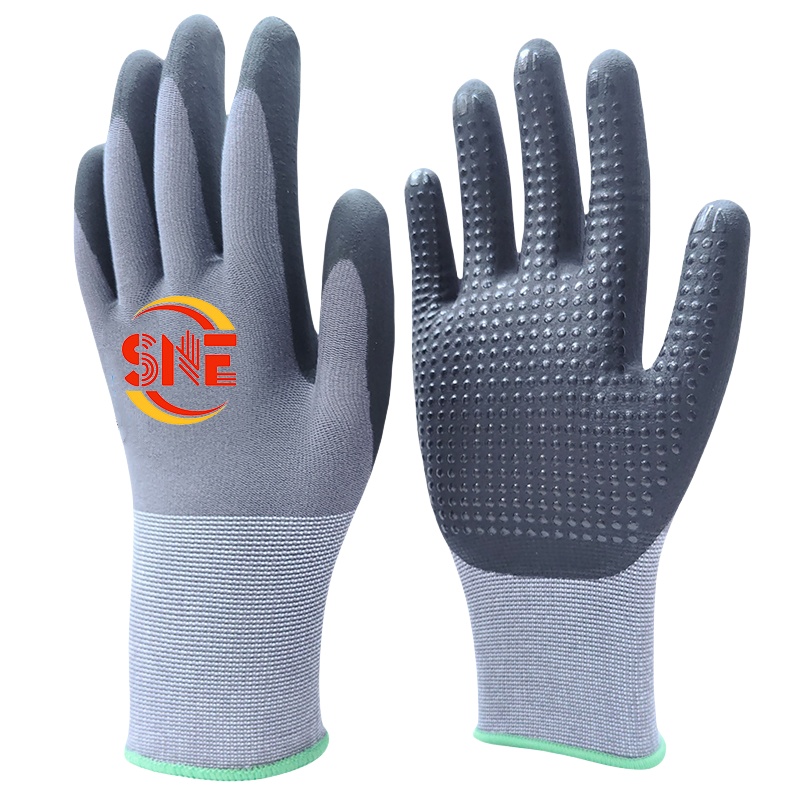
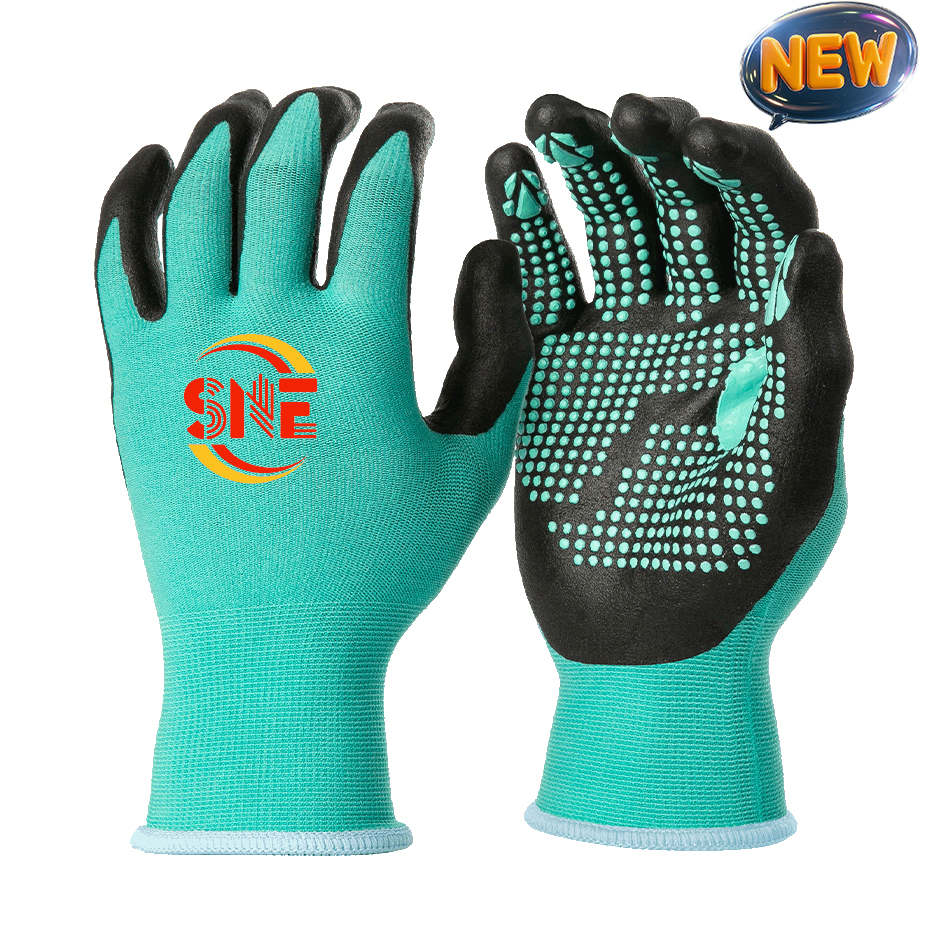
General work gloves are broader in scope. They may include simple cotton gloves, PU-coated knit gloves, nitrile-coated handling gloves, latex-coated grip gloves, or lightweight synthetic mechanic-style gloves. Their primary role is to protect against minor abrasion, dirt, blisters, and low-level mechanical contact while preserving dexterity and keeping cost under control. In many warehouse, delivery, groundskeeping, and maintenance operations, this category is sufficient.
The biggest practical difference is that construction gloves are built for unpredictable risk combinations. A worker on a U.S. commercial build may switch from unloading materials to operating power tools to handling metal studs to working outdoors in changing weather. A standard work glove may be comfortable, but it can wear out too fast or fail to provide enough grip, cut defense, or impact buffering. Construction gloves are intended for that more chaotic environment.
| Factor | Construction Gloves | General Work Gloves | Why It Matters for U.S. Buyers |
|---|---|---|---|
| Primary use | Jobsite tasks with mixed hazards | Routine low- to medium-risk handling | Helps buyers assign the right glove by crew type |
| Durability | Higher abrasion and tear resistance | Moderate durability | Affects replacement rate and true cost per shift |
| Cut protection | Often available in higher cut levels | Usually light or moderate protection | Critical for metal, glass, and sharp-edged materials |
| Impact protection | Frequently includes TPR back-of-hand guards | Often minimal or none | Important for tool use and contact with hard surfaces |
| Grip design | Optimized for dusty, wet, rough materials | Optimized for basic handling and dexterity | Improves control on ladders, scaffolds, and equipment |
| Comfort profile | Heavier, more structured | Lighter and more flexible | Influences worker adoption and fatigue levels |
| Typical price band | Higher upfront cost | Lower upfront cost | Needs to be compared against lifecycle performance |
This table matters because many U.S. buyers still compare gloves only by pack price. In reality, a more durable construction glove can reduce mid-shift failures, emergency reorders, and worker complaints. On the other hand, using premium construction gloves for low-risk support work can overspend the budget. The correct answer is usually a category mix, not a single universal glove.
Common Product Types Used Across the United States
Buyers in the U.S. market usually work with specific glove families rather than abstract categories. Understanding these product types makes glove selection faster and more accurate.
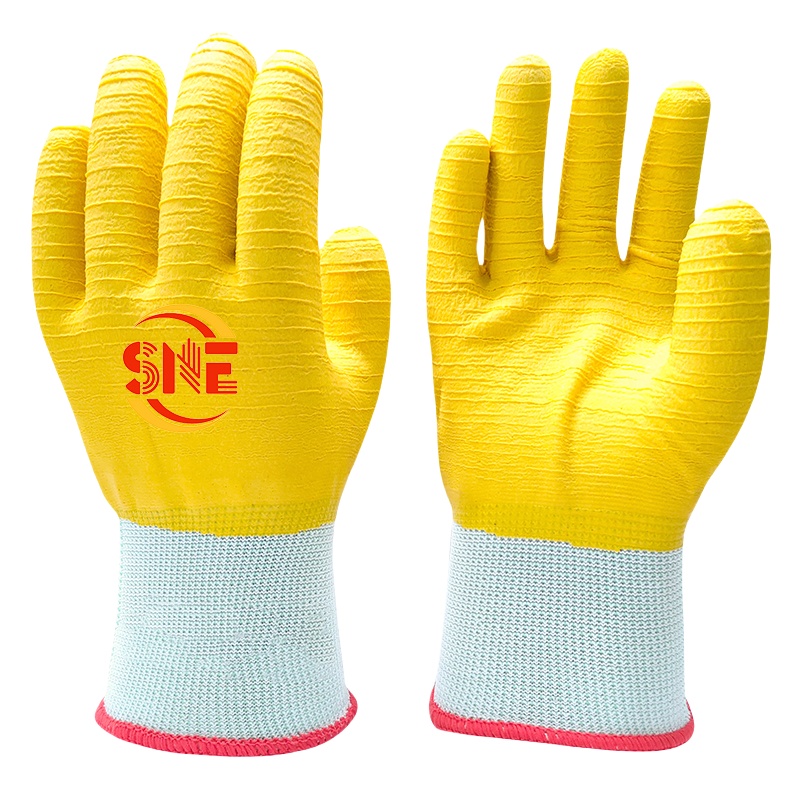
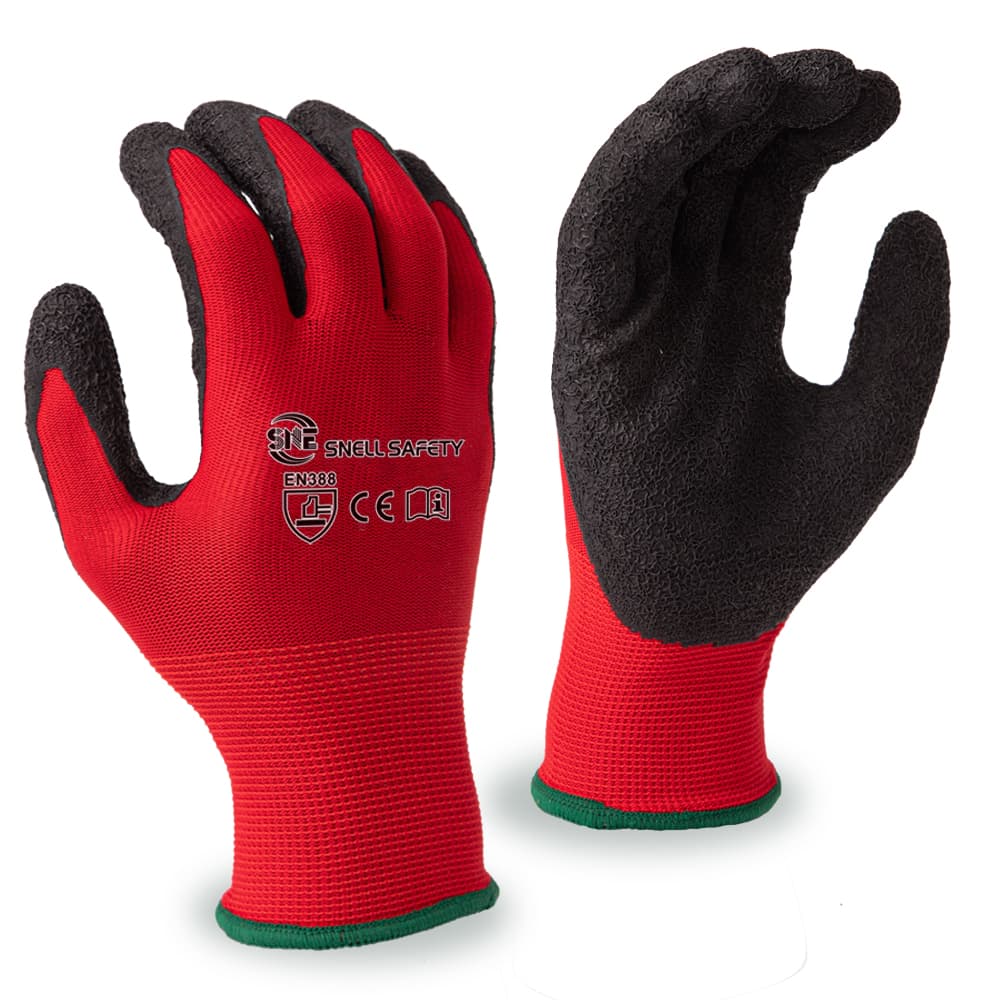
PU-coated gloves are popular for light assembly, warehousing, and jobs that need tactile control. They are usually considered general work gloves unless paired with advanced liners. Latex-coated gloves provide strong grip in dry or slightly wet environments and are common in landscaping, masonry support, and general handling. Nitrile-coated gloves offer better oil resistance and broad utility, making them one of the most common crossover choices between work gloves and lighter construction tasks.
Cut-resistant gloves are essential when handling metal studs, HVAC sheet metal, glass, cable, or sharp packaging. Impact-resistant gloves are more clearly associated with construction, oil and gas, utilities, and heavy material handling. Leather gloves remain relevant for rough outdoor work, welding support, and traditional construction trades. Winterized gloves are increasingly important in northern states and mountain regions, where dexterity often drops when workers wear bulky cold-weather layers.
| Glove type | Typical material or coating | Best-fit tasks | Construction or general work |
|---|---|---|---|
| PU-coated knit gloves | Polyurethane on nylon or HPPE shell | Assembly, picking, light maintenance | Mainly general work |
| Latex-coated grip gloves | Crinkle latex on knit liner | Brick, lumber, landscaping, rough handling | General work and light construction |
| Nitrile-coated gloves | Smooth or sandy nitrile | Oily parts, logistics, maintenance, tools | Both categories |
| Cut-resistant gloves | HPPE, glass fiber, steel blend, coatings | Metal framing, glass, fabrication, HVAC | Often construction-focused |
| Impact-resistant gloves | TPR back-of-hand, reinforced palm | Heavy equipment, demolition, utilities | Mainly construction |
| Leather work gloves | Cowhide, goatskin, split leather | Rough outdoor work, rigging, welding support | Both categories |
| Insulated winter gloves | Lined shell with grip coating | Cold storage, winter construction, utilities | Both categories |
This product map helps buyers avoid a common sourcing error: using the term work gloves too broadly. A nitrile-coated glove for a warehouse picker is not the same as an impact glove for a utility contractor, even if both are sold as work gloves in catalogs. Precise category language improves purchasing, training, and compliance.
How U.S. Buyers Actually Decide Which Glove to Purchase
Professional buyers in the United States rarely decide based on catalog images alone. They usually evaluate five things: hazard profile, wear life, fit consistency, worker acceptance, and supply reliability. If a glove is technically protective but people stop wearing it, it fails. If it performs well but sizes are inconsistent between shipments, it creates workforce frustration and returns. If the glove protects but tears too quickly, the real cost may exceed that of a stronger alternative.
The most effective way to compare construction gloves vs work gloves is by mapping glove type to task cluster. For example, a drywall crew, framing crew, and warehouse receiving team should not automatically receive the same glove. Construction tasks tend to produce more sudden contact risks, while general work tasks often involve repetitive, lower-severity contact. That difference should guide the specification.
For U.S. distributors and multi-site employers, another key factor is climate and regional seasonality. A glove program that works in Phoenix may not suit Minneapolis. Buyers should also check whether the glove supplier can maintain inventory through project peaks, weather disruptions, and port congestion. This matters in large trade corridors such as Houston, Savannah, Los Angeles, and New Jersey, where demand fluctuations can affect replenishment speed.
The bar chart highlights how different industries skew toward higher-spec gloves. Construction, utilities, and oil and gas show the strongest demand for more protective glove designs, while warehousing and landscaping often rely on a mix of basic work gloves and task-specific upgrades. This is why procurement teams should segment usage by department rather than write one glove standard for the whole company.
Industries That Prefer Construction Gloves
Construction gloves dominate where hands face repeated abrasion, blunt contact, unpredictable surfaces, and shifting weather. Commercial building contractors, highway crews, bridge maintenance teams, utility installers, roofing companies, concrete crews, and demolition contractors often choose gloves with stronger coatings, reinforced palms, and optional impact protection. U.S. infrastructure spending and ongoing transportation projects continue to support this demand profile.
Oil and gas field support, mining-related service work, and heavy industrial maintenance also tend to favor construction-style gloves, even if the buyer does not label them that way internally. In these sectors, workers need gloves that can survive rough materials, mechanical hazards, and long shifts. General work gloves may still be used for specific sub-tasks, but they are not usually the primary hand protection on high-risk jobs.
Industries That Often Use General Work Gloves
General work gloves remain essential in warehousing, e-commerce fulfillment, property maintenance, janitorial support, light manufacturing, agriculture support, landscaping, and routine delivery operations. These environments often prioritize dexterity, breathable liners, touchscreen compatibility, and lower cost per pair. For these users, construction gloves may feel too bulky or expensive for the actual hazard level.
That said, many U.S. employers now mix glove tiers inside the same operation. A distribution center may issue standard nitrile-coated gloves for picking and loading, cut-resistant gloves for broken pallet cleanup, and construction-style gloves for maintenance technicians working on docks or conveyor systems. The market is increasingly hybrid.
Applications Where the Difference Matters Most
The distinction between construction gloves and work gloves matters most in applications where injury risk changes quickly. Framing crews need strong grip on lumber and tools, but also hand protection against splinters and abrasion. Masonry work demands grip in dusty conditions plus decent wear resistance. Sheet metal installation often needs higher cut resistance than generic work gloves provide. Demolition work benefits from impact guards and durable palms. In contrast, inventory handling, package sorting, and basic equipment setup often need a lighter glove that reduces hand fatigue.
One practical rule for supervisors is to identify whether the task environment is stable or variable. Stable environments with predictable hand contact often suit general work gloves. Variable environments with rough materials, heavy tools, and incidental hazards usually justify construction gloves.
| Application | Main hazard | Better choice | Reason |
|---|---|---|---|
| Commercial framing | Abrasion, splinters, grip loss | Construction gloves | Need stronger palm durability and secure grip |
| Warehouse picking | Minor abrasion, repetitive handling | General work gloves | Dexterity and low hand fatigue matter more |
| Metal stud installation | Cuts, sharp edges | Construction gloves with cut resistance | Higher cut performance reduces laceration risk |
| Grounds maintenance | Dirt, mild abrasion, grip | General work gloves | Broad utility at lower cost |
| Utility repair | Impact, abrasion, weather | Construction gloves | Mixed hazards call for more robust designs |
| Facility maintenance | Variable light industrial contact | Depends on task mix | Many sites use both categories side by side |
| Landscaping crews | Grip, dirt, low to moderate abrasion | General work gloves or light construction gloves | Depends on tool use and material roughness |
This application table is useful because glove overbuying and underbuying both create problems. Overbuying wastes budget and may reduce comfort. Underbuying can increase injury risk and product failure. Matching glove type to the actual task is the best way to control both outcomes.
Case Studies from Real U.S.-Style Buying Situations
A mid-sized commercial contractor in Dallas working on mixed interior build-outs might initially issue a standard nitrile-coated work glove to every employee. After repeated complaints from framing and material-handling crews about fast wear and inconsistent grip, the company could split its program into two categories: general work gloves for punch-list, cleanup, and light support tasks, and construction-grade gloves with stronger palm reinforcement for active site labor. In many comparable U.S. operations, that shift improves acceptance and reduces emergency replacements.
A warehouse and fleet maintenance operation outside Chicago may take the opposite approach. It might begin with a heavier mechanic-style glove for all workers, only to find that pickers and inventory staff remove them during fine handling tasks. By moving warehouse staff into lighter nitrile-coated work gloves and reserving construction-style gloves for dock repairs and maintenance technicians, the company can increase actual glove compliance.
In a utility support environment in Georgia or the Carolinas, crews often need one glove for general handling and another for higher-risk field intervention. Buyers who treat all field work as general work glove territory often experience premature wear and reduced confidence from experienced workers. Field trials usually reveal that robust construction gloves are more appropriate where hand contact is unpredictable and frequent.
Local Suppliers and Major Brands Serving the U.S. Market
The U.S. market includes both domestic brands and international suppliers with strong distribution. Buyers usually compare supplier fit by region served, category strength, customization options, and order model. Some are strongest in catalog distribution through safety channels, while others are better suited for OEM and large private-label programs.
| Company | Service region | Core strengths | Key offerings |
|---|---|---|---|
| Honeywell Industrial Safety | Nationwide U.S. coverage | Large industrial safety portfolio, strong enterprise access | Cut-resistant gloves, impact gloves, general hand protection |
| MCR Safety | Strong presence across the South and nationwide distribution | Broad glove range, industrial distribution channels | Leather gloves, coated gloves, cut protection, safety gear |
| Mechanix Wear | Nationwide, strong contractor and automotive recognition | Mechanic-style and construction-oriented glove designs | Synthetic work gloves, reinforced gloves, impact options |
| Ergodyne | Nationwide with strong safety dealer network | Jobsite safety specialization, worker-focused product design | ProFlex gloves, cold-weather gloves, utility and construction options |
| Superior Glove | North America, widely available in the U.S. | Technical cut resistance, broad application engineering | Cut-resistant gloves, coated gloves, task-specific hand protection |
| Ironclad Performance Wear | Nationwide, strong in contractor and retail channels | Performance fit, jobsite-specific glove families | Construction gloves, general work gloves, high-dexterity models |
| Qingdao Snell Protective Products Co., Ltd. | U.S. import supply for distributors, brand owners, and bulk buyers | Factory-direct manufacturing, OEM/ODM flexibility, scaled production | Construction gloves, nitrile/latex/PU coated gloves, cut-resistant and impact lines |
This supplier table gives buyers a practical starting point. Large national brands are often easier for immediate replenishment through distribution, while factory-direct partners can be more competitive for custom programs, private label development, and bulk specification alignment. The best choice depends on whether the buyer values immediate stock access, brand recognition, technical customization, or landed-cost control.
The area chart reflects a realistic purchasing trend: U.S. buyers are moving from generic glove buying toward task-specific programs. This supports the growing importance of asking whether a glove is truly built for construction risk or only for general work handling. Through 2026, this shift is likely to accelerate because of safety data tracking, labor shortages, and stronger expectations around employee retention and comfort.
This comparison chart helps buyers understand the trade-off between traditional national brands and factory-direct specialists. National brands often perform best in distributor reach and ready availability. Factory-direct specialists tend to perform best in customization, private label support, and bulk value. For many U.S. importers and regional distributors, a blended sourcing model is the most resilient option.
Buying Advice for U.S. Contractors, Distributors, and Brand Owners
If you are buying for a construction company, start by dividing workers into risk groups instead of ordering one glove for everyone. Material handlers, carpenters, demolition crews, finish crews, and warehouse support teams often need different specifications. If you are buying for distribution, create a simple matrix based on abrasion, cut risk, impact exposure, grip environment, and climate. This helps your sales team recommend the correct glove quickly.
Buyers should request wear testing, not just product sheets. In the United States, jobsite conditions vary too much for desk-based glove selection to be fully reliable. A two-week field trial across multiple crews usually reveals whether the glove is too hot, too stiff, too slippery, or unexpectedly durable. This matters especially when comparing premium construction gloves to more economical work gloves.
Private-label and OEM buyers should also evaluate packaging, size consistency, carton efficiency, and replenishment planning. A glove can look excellent in a sample but fail in scaling if manufacturing discipline is inconsistent. That is why buyers often prefer suppliers that can demonstrate controlled production and repeatable quality across large-volume orders.
For product comparisons and sourcing pathways, buyers can explore the broader Snell Safety platform to assess glove families by application, then review the company background on the about page before moving into sample discussions.
Our Company in the U.S. Supply Context
Qingdao Snell Protective Products Co., Ltd. serves the U.S. market as a factory-direct industrial glove partner focused on practical performance, certified production, and scalable cooperation. Its manufacturing system combines ISO 9001 quality management and CE-compliant product control with specialized expertise in PU, latex, and nitrile coating technologies, plus engineered cut-resistant and impact-resistant glove lines that align with international benchmark requirements for mechanical hand protection. For U.S. buyers ranging from end users and regional contractors to distributors, dealers, brand owners, and private-label programs, the company supports flexible cooperation models including OEM, ODM, bulk wholesale, custom branding, and tailored material or coating configurations, making it easier to match glove design to local jobsite needs and price targets. With two production facilities in Gaomi and Nantong, six dedicated lines, more than 150 skilled employees, and daily capacity of about 150,000 pairs, the company has the scale to support repeat orders and seasonal demand spikes for North American customers. Its established export experience across Europe, South America, Australia, the Middle East, Russia, and Southeast Asia, together with multilingual buyer support, sample service, technical consultation, and coordinated export logistics, provides the kind of concrete pre-sale and after-sale structure U.S. importers expect from a long-term supply partner rather than a one-off remote exporter. For American buyers seeking dependable communication, product customization, and documented manufacturing discipline, this operating model fits regional distribution, project procurement, and private-label growth plans.
Future Trends Through 2026
By 2026, the U.S. market for construction gloves and work gloves will likely be shaped by three major forces: technology, policy, and sustainability. On the technology side, glove demand is moving toward higher dexterity cut-resistant yarns, smarter coating formulas for wet and oily grip, touchscreen compatibility, and better fit engineering that reduces hand fatigue. Buyers increasingly want protection without the bulky feel that used to define heavy-duty gloves.
Policy will also matter more. Infrastructure projects, municipal procurement standards, contractor prequalification, and insurance expectations all push employers toward documented task-specific PPE decisions. In practice, this means companies will need clearer justification for using low-spec gloves in medium- or high-risk environments. Training records, hazard assessments, and product assignment logic are becoming part of responsible glove purchasing.
Sustainability is moving from a marketing idea to a sourcing consideration. U.S. buyers are asking more questions about material efficiency, carton optimization, waste reduction, production consistency, and glove lifespan. In many cases, the most sustainable glove is not the cheapest glove but the one that lasts longer and reduces replacement volume. This trend may benefit better-engineered construction gloves in some use cases, while also encouraging lighter, more efficient coated work gloves where hazard levels are lower.
Another trend is regional resilience. After years of supply chain disruption, buyers increasingly prefer suppliers that can communicate lead times clearly, support forecast planning, and maintain a stable export process into U.S. ports and inland distribution networks. This makes supplier discipline almost as important as product design.
Frequently Asked Questions
Are construction gloves always better than work gloves?
No. Construction gloves are better only when the task requires stronger protection, better grip, or higher durability. For light warehouse work or routine maintenance, general work gloves are often the better and more economical choice.
Can nitrile-coated gloves be used for construction?
Yes. Many nitrile-coated gloves work well for light construction, maintenance, and material handling. For tougher sites, buyers often upgrade to reinforced, cut-resistant, or impact-resistant versions.
What is the biggest mistake U.S. buyers make when comparing these categories?
The biggest mistake is buying one glove for every worker and every task. Most companies get better results by segmenting gloves by crew type, hazard level, and climate.
Do construction gloves reduce total cost even if they cost more per pair?
Often yes. If they last longer, improve grip, and lower replacement frequency or injury exposure, they can reduce total operating cost. The answer depends on actual wear conditions and compliance rates.
Which industries in the United States most often need construction gloves?
Commercial construction, utilities, infrastructure, heavy maintenance, oil and gas support, and demolition are among the most common users of construction-style gloves.
Which users usually prefer general work gloves?
Warehousing, light manufacturing, landscaping, janitorial support, basic maintenance, and general logistics operations often prefer general work gloves because they value dexterity and cost control.
Should distributors carry both categories?
Yes. Most U.S. distributors benefit from stocking both general work gloves and construction gloves because their customers rarely operate in only one risk profile.
How should a buyer start a new glove program?
Start with a hazard review, define the top task groups, test several glove styles in the field, compare wear life and worker feedback, then standardize by application rather than by job title alone.
Final Takeaway
If you need the shortest possible answer to construction gloves vs work gloves in the United States, it is this: construction gloves are the better choice for demanding, mixed-hazard jobsite work, while general work gloves are the smarter choice for lighter, repetitive, lower-risk tasks. The right purchase decision depends on task exposure, climate, wear rate, and worker acceptance. U.S. buyers who build a two-tier or three-tier glove program usually achieve better safety, better compliance, and better total value than those who rely on a single glove type for every operation.