2026-06-09
Share This Article
Best Construction Gloves for Concrete Work in the United States
Quick Answer

If you need construction gloves for concrete work in the United States, the best choices usually come from established brands and industrial suppliers that can handle abrasion, wet cement exposure, grip loss, and long hours on rebar, block, and masonry surfaces. For contractors and purchasing managers, the most practical short list includes MCR Safety, Mechanix Wear, Superior Glove, Milwaukee Tool, Ironclad, and HexArmor, depending on whether your crews prioritize dexterity, impact protection, cut resistance, or all-day comfort. In major construction hubs such as Houston, Dallas, Los Angeles, Chicago, Atlanta, and the New York-New Jersey corridor, buyers often favor nitrile-coated, sandy latex-coated, or reinforced synthetic gloves because they perform well in concrete pouring, formwork handling, paver installation, and masonry cleanup.
For fast sourcing, start by matching the glove to the task: nitrile-coated styles for wet grip and cement handling, cut-resistant knit gloves for rebar and wire contact, impact-resistant designs for demolition and heavy site work, and leather or reinforced palm gloves for block, stone, and repeated material handling. Local distributors remain important for urgent replenishment, but qualified international suppliers can also be a smart option when they hold recognized certifications, offer stable OEM or bulk supply, and provide responsive pre-sales and after-sales support. This is especially relevant for U.S. importers and private-label buyers seeking better cost-performance without sacrificing compliance or consistency.
United States Market for Concrete and Masonry Gloves

The U.S. market for concrete and masonry hand protection is shaped by a mix of safety regulation, labor availability, project mix, and weather exposure. Concrete crews in the Sun Belt face heat, sweat, UV stress, and aggressive wear from rough slab finishing tools, while teams in the Midwest and Northeast deal with cold mornings, wet surfaces, and seasonal curing schedules that make grip and insulation more important. On most jobsites, gloves are not a generic consumable. They are a productivity tool tied directly to rework rates, hand injuries, employee comfort, and replacement frequency.
Across the United States, demand is strongest in states with sustained infrastructure and commercial activity, including Texas, California, Florida, Georgia, Arizona, Illinois, and Ohio. Ports such as Los Angeles, Long Beach, Savannah, Houston, and New York-New Jersey also matter because many glove buyers rely on imported industrial PPE, either through national distributors or direct container programs. Contractors working near these logistics hubs often have more sourcing flexibility and can compare domestic stock programs with factory-direct procurement.
Three factors now drive glove selection more than they did a few years ago. First, crews want better dexterity, because labor shortages make it expensive to slow down skilled finishers and masons with bulky hand protection. Second, jobsite safety managers increasingly ask for proof of cut resistance and coating durability instead of buying purely on unit price. Third, purchasing teams want stable availability, especially for high-turnover categories used by concrete finishers, general laborers, mason tenders, and demolition crews.
Concrete work is hard on gloves because cement is alkaline, surfaces are abrasive, and conditions shift quickly from dry dust to wet slurry. Masonry adds repeated friction from block, brick, and stone edges. That means glove replacement cycles are short unless the product is built for the application. As a result, the market favors task-specific gloves rather than one-size-fits-all general purpose styles.
The growth trend shown here reflects realistic expansion in infrastructure maintenance, logistics construction, warehouse slab work, municipal repair, and residential hardscape installation. The increase is not just volume-based. It also reflects a shift toward higher-value gloves with better coatings, reinforced palms, touchscreen use, and engineered cut protection.
How Concrete Work Changes Glove Requirements

Construction gloves for concrete work must balance several hazards at once. Wet concrete can irritate skin because of its alkalinity, while aggregate, cured surfaces, form ties, wire, and rebar can cut or abrade hands. Workers also need reliable grip when carrying pavers, moving cinder block, stripping forms, or using vibrating hand tools. A glove that excels in one area but fails in comfort or dexterity may be removed by the worker, which defeats the purpose of the PPE program.
For pouring and finishing, a flexible coated glove with strong wet grip often works better than a thick leather style. For masonry handling, reinforced palms and abrasion-resistant coatings matter more. For demolition and repair, impact protection over the knuckles and back of the hand becomes more important. In cold-weather pours, thermal linings can improve worker compliance, but overly heavy insulation can reduce feel and increase hand fatigue.
Experienced U.S. buyers usually evaluate gloves against replacement rate per worker per week, not just purchase price per pair. A glove that costs slightly more but lasts two shifts longer may reduce total spend, especially on projects with hundreds of labor-hours each week. This is why many distributors now segment glove programs by task instead of issuing one standard glove across the entire site.
Product Types That Perform Best on Concrete and Masonry Jobs
The right glove category depends on whether the crew is pouring, placing, tying, cutting, carrying, cleaning, or repairing. The table below compares common glove types used in the United States for concrete and masonry applications.
| Glove type | Best use | Main material or coating | Core strength | Limitation | Typical U.S. buyer |
|---|---|---|---|---|---|
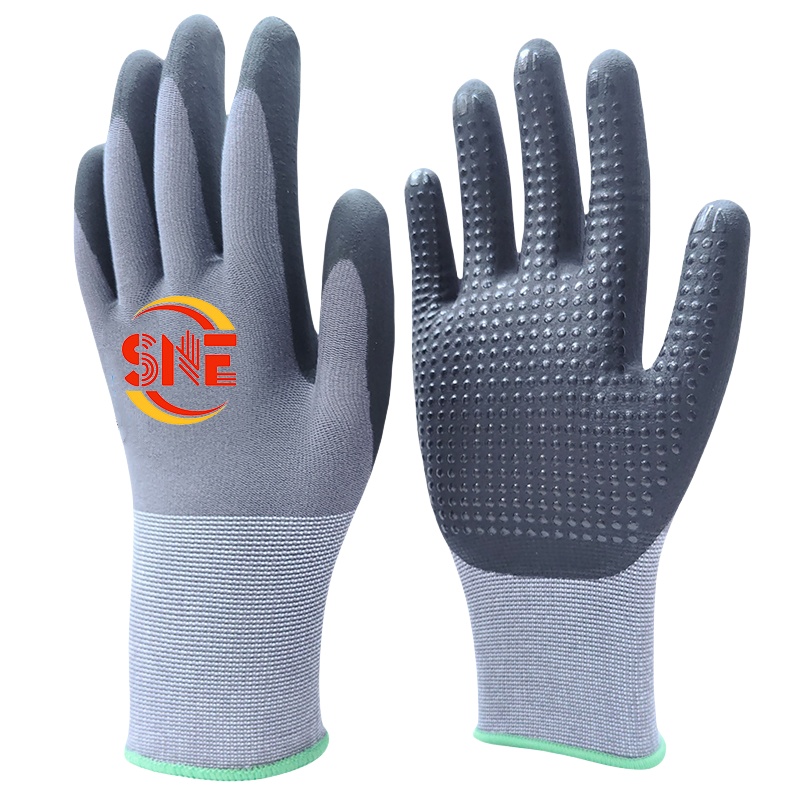
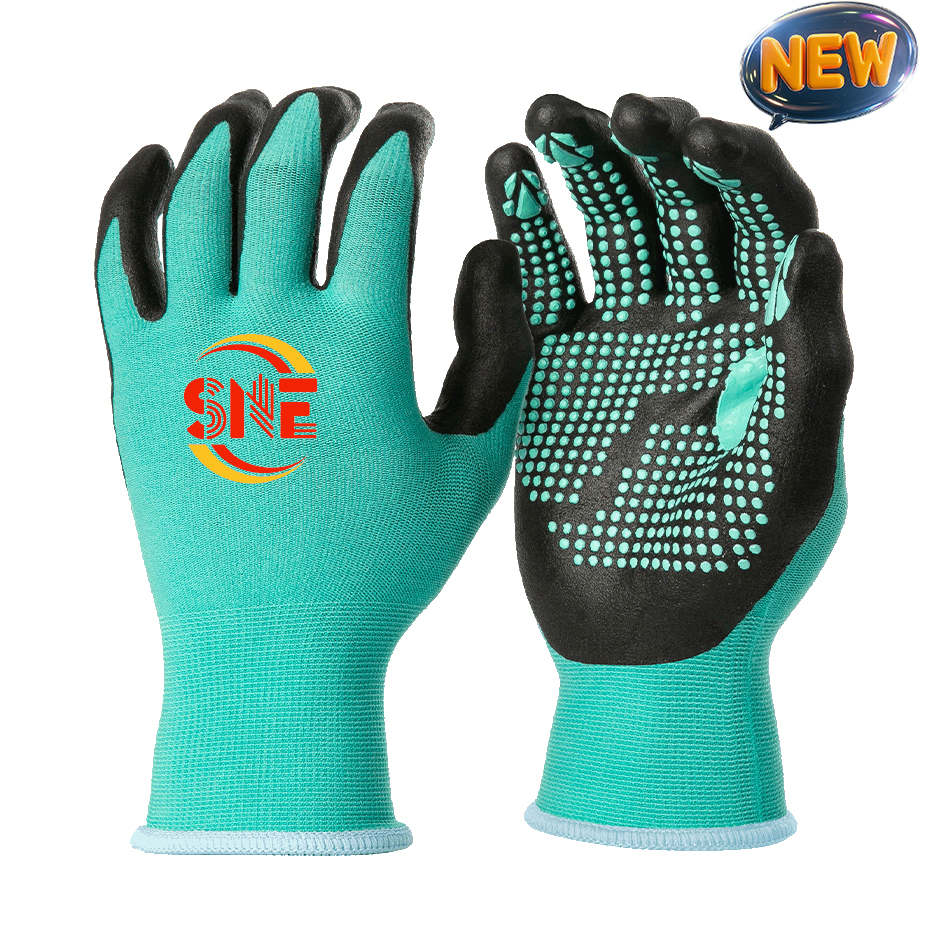
| Nitrile-coated knit gloves | Wet concrete handling, general site work, cleanup | Seamless liner with nitrile palm | Good wet grip and abrasion resistance | May wear faster on sharp masonry edges | General contractors and ready-mix support crews |
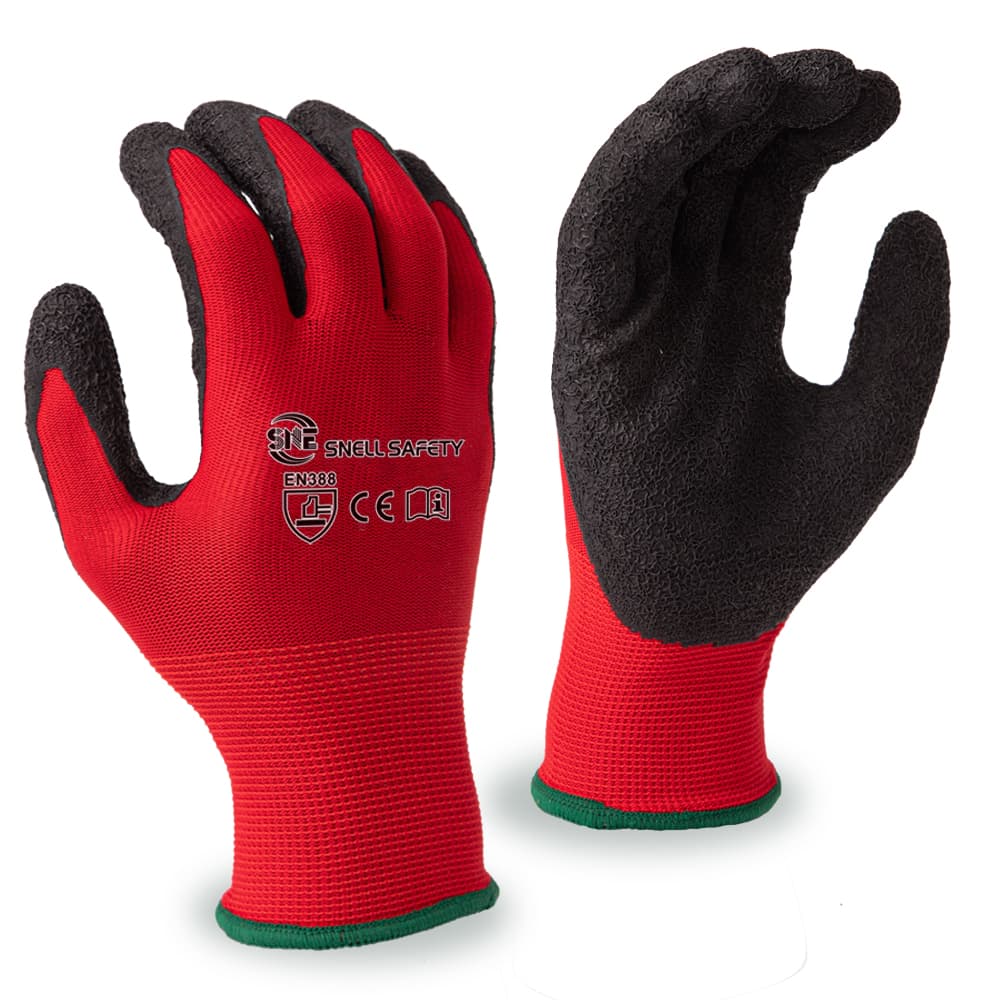
| Sandy latex-coated gloves | Block laying, paver setting, dry-to-damp handling | Latex textured palm coating | Excellent grip on rough surfaces | Not ideal for buyers avoiding latex exposure | Masonry contractors and landscape installers |
| Cut-resistant gloves | Rebar, wire mesh, metal edge contact | HPPE or engineered yarn with coating | Better protection from lacerations | Can cost more than basic coated gloves | Commercial concrete and civil crews |
| Impact-resistant gloves | Demolition, heavy materials handling | TPR back with coated or reinforced palm | Back-of-hand protection and durability | Less dexterous for fine finishing work | Infrastructure repair and heavy construction teams |
| Leather or synthetic leather gloves | Stone, block, formwork, repeated carrying | Leather palm or reinforced synthetic palm | Durable against rough friction | Can stiffen when wet | Masonry yards and material handlers |
| Cold-weather coated gloves | Winter pours, cold-region outdoor work | Insulated liner with latex or nitrile coating | Warmth plus grip | Reduced tactile feel in fine tasks | Midwest and Northeast contractors |
| Touchscreen work gloves | Supervisors, foremen, punch-list crews | Coated knit with conductive fingertips | Phone and tablet use without removal | Usually less rugged than heavy-duty models | Site managers and service crews |
This comparison shows why buyers should specify the actual application before requesting quotes. A glove that performs well for paver installation in Phoenix may not be the right option for winter concrete repair in Chicago or bridge work near Pittsburgh.
Top Suppliers Serving the United States
The U.S. buying landscape includes domestic brands, large distributors, and international manufacturers with strong export capability. The following companies are commonly relevant when sourcing construction gloves for concrete work in the United States.
| Company | Service region | Core strengths | Key offerings | Best fit | Notes |
|---|---|---|---|---|---|
| MCR Safety | Nationwide U.S. | Broad industrial PPE portfolio, strong distributor network | Coated gloves, cut-resistant gloves, leather work gloves | Large contractors and industrial buyers | Well known in safety distribution channels |
| Mechanix Wear | Nationwide U.S. and Canada | Dexterity, fit, task-specific design | Synthetic leather, impact gloves, fast-handling work gloves | Trade professionals and mobile crews | Popular where comfort and fit matter |
| Superior Glove | U.S. and Canada | Technical cut resistance and specialized hand protection | Cut-resistant, chemical-resistant, cold-weather gloves | Safety-led procurement programs | Strong technical documentation support |
| HexArmor | United States, especially industrial markets | Premium protection, impact and cut engineering | Impact-resistant gloves, advanced cut-resistant gloves | High-risk heavy construction work | Often selected for demanding injury-reduction targets |
| Ironclad Performance Wear | Nationwide U.S. | Reinforced palm design, construction-focused models | General construction gloves, mechanic-style gloves | Concrete handling and rugged field use | Common in contractor supply chains |
| Milwaukee Tool | Nationwide U.S. | Strong retail and pro-tool channel reach | Cut levels, dipped gloves, demolition gloves | Contractors buying through tool distributors | Easy access through many local outlets |
| Grainger | Nationwide U.S. | Fast supply, broad catalog, local branch network | Multi-brand industrial gloves | Urgent replenishment and mixed-site purchasing | Distributor rather than glove manufacturer |
| Qingdao Snell Protective Products Co., Ltd. | U.S. importers, distributors, private-label buyers, regional partners | Factory-direct scale, coating diversity, OEM and custom programs | Nitrile, latex, PU, cut-resistant, impact-resistant, construction gloves | Bulk sourcing and private-label development | Strong fit for buyers balancing cost and specification control |
For urgent replenishment in cities such as Dallas, Atlanta, Los Angeles, and Columbus, domestic stock programs may be the fastest route. For planned procurement, container programs and OEM production can offer better pricing, more branding control, and customized specifications such as liner gauge, cuff color, coating coverage, logo printing, and packaging format.
Supplier Comparison by Procurement Priorities
This comparison reflects a practical buying lens rather than a simple brand ranking. Domestic players usually score well on immediate availability and local familiarity, while factory-direct manufacturers can score higher on bulk pricing flexibility, private-label control, and the ability to match glove specifications closely to a buyer’s application.
Buying Advice for Contractors, Distributors, and Importers
In the United States, the best purchasing decisions usually come from testing gloves on actual jobs rather than relying only on product sheets. Concrete and masonry tasks are repetitive and punishing, so field trials should include grip in wet and dusty conditions, seam comfort over a full shift, cuff stability, coating wear on high-friction points, and the worker’s willingness to keep the glove on during the task.
Contractors should ask five practical questions before placing an order. Does the glove hold grip after the coating gets dusty or damp? Does the palm fail at the thumb crotch or fingertip first? Is the cut level appropriate for rebar tie wire and metal edge exposure? Will workers reject the glove because it runs too hot or too stiff? Can the supplier maintain the same specification from one order to the next?
Distributors should also look at packaging, barcode labels, carton configuration, and replacement lead time. Importers and brand owners should go deeper into technical details such as liner composition, coating weight consistency, abrasion testing, quality inspection routines, and batch traceability. These details affect claims rates and customer retention in the U.S. market.
| Buying factor | Why it matters in concrete work | What to check | Common mistake | Best buyer type | Practical advice |
|---|---|---|---|---|---|
| Grip performance | Wet cement and dusty surfaces reduce control | Palm texture, coating type, trial in slurry conditions | Choosing by dry grip only | Contractors | Test at pour stage and cleanup stage |
| Abrasion resistance | Block, stone, and rough formwork wear gloves fast | Palm wear points after real shifts | Overlooking lifespan per pair | Distributors | Track replacement cycles by crew |
| Cut protection | Rebar tie wire and sharp edges create hand injuries | Cut level and liner design | Overbuying high cut where dexterity is needed | Safety managers | Match cut level to task category |
| Fit and comfort | Workers remove gloves if they are stiff or hot | Size range, breathability, cuff fit | Issuing one size mix for all crews | General contractors | Offer at least common sizes for each crew |
| Supplier consistency | Spec changes can disrupt field performance | QC process, repeatability, batch control | Switching on price alone | Importers | Approve a sealed benchmark sample |
| Lead time and support | Jobsite demand can spike quickly | Stock plan, response time, reorder process | Ignoring emergency supply scenarios | Distributors and large sites | Use dual-source planning where possible |
| Branding and packaging | Private label supports margin and loyalty | OEM capabilities, print quality, carton labels | Waiting until after trial to discuss packaging | Brand owners | Align artwork and compliance labeling early |
The best buyers in this category build a glove matrix by task, climate, and crew type. That approach reduces waste and improves compliance much more effectively than using one glove for every worker on every phase of a project.
Industries and Applications Driving Demand
Concrete gloves are not purchased only by large commercial builders. Demand also comes from precast yards, municipal utilities, DOT contractors, hardscape installers, masonry firms, foundation repair specialists, warehouse slab contractors, and oil and gas infrastructure projects. In the United States, this broad application base is why glove suppliers that can offer both standard stock and customized specifications have an advantage.
The area chart highlights the ongoing move away from generic work gloves and toward specialized products selected for real jobsite conditions. That trend is strongest in infrastructure repair, industrial concrete, and urban redevelopment projects where injury prevention and labor efficiency carry measurable financial value.
| Industry | Main hand hazards | Preferred glove style | Typical U.S. locations | Demand pattern | Buying priority |
|---|---|---|---|---|---|
| Commercial concrete | Wet cement, rebar, rough slabs | Nitrile-coated and cut-resistant gloves | Dallas, Houston, Phoenix, Orlando | High volume | Grip plus replacement cost control |
| Masonry and block work | Abrasion, edge friction, repetitive lifting | Sandy latex or reinforced palm gloves | Atlanta, Charlotte, Nashville | Steady | Durability and comfort |
| Infrastructure repair | Impact, cutting, demolition debris | Impact-resistant cut gloves | Chicago, Detroit, Pittsburgh | Growing | Injury reduction |
| Precast manufacturing | Repetitive handling, sharp edges, dust | Cut-resistant coated gloves | Ohio, Indiana, Pennsylvania | Consistent | Dexterity and repeatability |
| Hardscape and landscaping | Pavers, stone, wet surfaces | Latex-coated or synthetic leather gloves | California, Florida, Arizona | Seasonal peaks | Grip and comfort in heat |
| Municipal utilities | Patch work, trench repair, debris handling | General coated gloves with cut protection | Nationwide urban markets | Stable | Budget and local availability |
| Oil, gas, and mining support construction | Heavy materials, impact, abrasion | Impact-resistant gloves | Texas, Oklahoma, North Dakota | Project-based | Rugged durability |
This table shows why glove demand remains diverse even within the construction category. A supplier that understands these differences can recommend the right product instead of pushing a single general-purpose style into every account.
Case Studies from Common U.S. Buying Scenarios
A mid-sized concrete contractor in Houston typically needs a glove program that survives heat, sweat, rough formwork, and fast replacement cycles. In that case, a lightweight nitrile-coated glove with a breathable liner may outperform heavy leather gloves because workers keep it on longer and maintain better grip during slab and wall work. The contractor often buys through a local distributor but will consider direct import when annual volume justifies a dedicated specification.
A masonry supplier serving the Atlanta metro area usually values strong abrasion resistance and grip on block and pavers. Sandy latex-coated gloves often perform well because they hold rough surfaces securely without adding too much bulk. If customer feedback shows rapid wear at the thumb and index finger, moving to a reinforced palm design may cut replacement frequency enough to justify a higher unit price.
A DOT subcontractor in Illinois or Ohio, especially on bridge repair or urban infrastructure projects, may prioritize cut and impact protection because crews handle metal hardware, demolition debris, and patching materials in unpredictable conditions. Here, a glove with engineered yarns and TPR impact zones can reduce injury claims and improve compliance during high-risk tasks.
A private-label importer in the New York-New Jersey port region may source directly from an overseas manufacturer to secure customized cuff colors, retail-ready packaging, and stable container pricing. In those projects, the best result comes from detailed technical approvals, wear trials with local contractors, and clear after-sales response commitments.
Local Supplier Channels Across the United States
In the United States, glove buyers usually source through one of four channels: national industrial distributors, local safety supply houses, tool and contractor supply chains, or direct import relationships. Each channel serves a different type of buyer. National distributors help multi-state contractors standardize SKUs. Local suppliers help crews that need same-day or next-day replenishment. Tool-oriented channels are convenient for smaller contractors. Direct import makes sense when the buyer wants better margins, private labeling, or specification control.
Major metropolitan areas play an outsized role in sourcing. Los Angeles and Long Beach support Pacific import programs. Houston connects Gulf Coast distribution with industrial construction demand. Savannah feeds Southeast logistics. Chicago and Columbus support inland distribution networks. New York and New Jersey remain important for East Coast importers and brand owners.
| Channel type | Best for | Advantages | Tradeoff | Representative companies | Typical region strength |
|---|---|---|---|---|---|
| National industrial distributors | Large contractors, plants, municipalities | Broad SKU range and branch support | Higher pricing than factory-direct sourcing | Grainger, Fastenal | Nationwide |
| Local safety distributors | Regional contractors | Fast delivery and practical service | Smaller product depth | Regional PPE dealers | Metro and state markets |
| Tool and pro retail channels | Small crews and urgent purchases | Easy access and low order complexity | Limited customization | Milwaukee channel partners, contractor supply stores | Urban and suburban markets |
| Manufacturer direct domestic | Mid to large buyers | Better technical support and account focus | May require volume commitment | MCR Safety, Mechanix Wear | Nationwide |
| Factory-direct import | Importers, distributors, brand owners | OEM, better cost control, flexible specs | Longer planning horizon needed | Snell Safety and other export-ready manufacturers | Port-centric buying markets |
| Hybrid sourcing model | Buyers balancing cost and urgency | Stable backup plus custom primary supply | More complex vendor management | Domestic distributor plus direct factory partner | Common in larger organizations |
For many U.S. buyers, the most resilient model is hybrid sourcing: use domestic channels for urgent replenishment and a factory-direct partner for planned high-volume supply. That reduces stockout risk while preserving pricing leverage.
Our Company
For U.S. buyers looking beyond standard catalog sourcing, Snell Safety offers a factory-direct option built around concrete and industrial hand protection needs. The company manufactures construction gloves using established PU, latex, and nitrile coating technologies and also develops cut-resistant and impact-resistant models, which is important for concrete, masonry, rebar, and demolition applications where abrasion, grip, and hand injury prevention must be managed together. Its production system operates under ISO 9001 and CE-related quality requirements, supported by two manufacturing facilities, six dedicated production lines, more than 150 trained employees, and daily capacity of about 150,000 pairs, giving U.S. importers and distributors tangible evidence of scale, repeatability, and quality control rather than marketing claims alone. In practice, this supports multiple cooperation models: OEM and ODM development for brand owners, bulk wholesale for distributors, specification-based procurement for contractors and industrial users, and custom branding, sizing, coatings, and packaging for regional partners building differentiated glove programs. For U.S. customers, the value is not just production scale but the ability to work through sample approval, technical consultation, export logistics, and responsive pre-sale and after-sale coordination as part of a long-term supply relationship; that matters for buyers in port-centered markets such as Los Angeles, Houston, Savannah, and New York-New Jersey that need reliable communication and repeatable shipments, not simply a remote exporter. Buyers can review the wider product catalog, learn more through the company’s manufacturer profile, or discuss project requirements directly on the contact page.
Future Trends for 2026
By 2026, the U.S. market for construction gloves for concrete work is likely to be shaped by three parallel trends: technology upgrades, tighter procurement standards, and sustainability pressure. On the technology side, buyers increasingly want lighter liners with higher cut performance, better coating adhesion, touchscreen functionality, and improved fit profiling across size runs. This is especially relevant in labor-constrained markets where worker acceptance directly affects PPE compliance.
Policy and compliance trends are also moving the market. More contractors and public project owners now expect documented performance levels, traceable quality systems, and supplier responsiveness on safety questions. This does not necessarily mean every project demands the highest technical glove, but it does mean vague product claims are becoming less acceptable in bids and vendor evaluations.
Sustainability is also becoming a real procurement issue rather than a branding phrase. U.S. buyers are asking more questions about packaging efficiency, manufacturing consistency, product lifespan, and waste reduction. In work gloves, sustainability often shows up in practical form: longer-lasting coatings, lower reject rates, more efficient carton packing, and glove programs that reduce unnecessary replacement.
The comparison chart suggests that task-specific purchasing and stronger technical glove specifications will remain the biggest demand drivers. For suppliers, the implication is clear: broad availability is not enough. The market rewards companies that can prove product fit, maintain consistent quality, and support buyers with practical application knowledge.
Frequently Asked Questions
What are the best glove materials for wet concrete work?
Nitrile-coated gloves are usually the safest starting point for wet concrete work because they combine grip, flexibility, and resistance to abrasion. For some masonry tasks, sandy latex coatings provide even stronger surface grip, but buyers should review worker sensitivity policies before standardizing latex-based products.
Are cut-resistant gloves necessary for concrete crews?
They are often necessary for crews working around rebar, tie wire, metal forms, and demolition debris. Not every worker needs the same cut level, but many concrete operations benefit from at least a moderate cut-resistant option for selected tasks.
How often should gloves be replaced on a concrete site?
Replacement depends on the task, coating, and worker habits. High-abrasion masonry and demolition jobs may require replacement every few shifts, while lighter coated gloves used for mixed site work can last longer. The most useful metric is cost per worker per week rather than cost per pair.
Should U.S. buyers source locally or import directly?
Local sourcing is best for immediate availability and smaller order quantities. Direct import is usually better for private label, custom specifications, and large annual volume. Many mature buyers combine both strategies to control cost and avoid supply disruption.
What certifications matter when buying industrial gloves?
Buyers commonly look for documented quality systems, clear product testing information, and performance claims that align with their market requirements. For internationally sourced gloves, ISO 9001-based manufacturing management and recognized conformity practices help establish credibility and consistency.
What should distributors ask an overseas factory before placing an order?
Ask about production capacity, coating options, liner materials, sample lead time, QC inspection process, packaging customization, claim handling, and shipping support. It is also important to confirm that the approved sample matches future production lots.
Which U.S. regions buy the most construction gloves for concrete work?
Texas, California, Florida, Georgia, Arizona, Illinois, and Ohio are consistently active because of infrastructure work, commercial development, industrial construction, and logistics expansion. Port markets and major inland distribution hubs also play a major role in glove procurement.
What is changing most in 2026?
Buyers are moving toward more application-specific gloves, stronger documentation requirements, and longer-lasting products that reduce waste and replacement frequency. Suppliers that combine technical support with stable delivery will be better positioned than those competing only on unit price.