2026-05-13
Share This Article
Bulk Construction Gloves for Large Work Crews in the United States
Quick Answer

If you need bulk construction gloves for large work crews in the United States, the most practical approach is to buy from suppliers that can consistently stock multiple glove types, document ANSI and jobsite compliance needs, and support repeat deliveries to major construction markets such as Houston, Dallas, Atlanta, Chicago, Los Angeles, and Newark. For crews working across framing, concrete, steel, demolition, utility, and general contracting, the most commonly shortlisted names include Grainger, Fastenal, Magid, Global Industrial, MCR Safety, and Uline because they have broad catalog depth, reliable domestic fulfillment, and experience serving commercial buyers.
For buyers focused on unit cost, private labeling, or long-run supply contracts, qualified international manufacturers can also be worth considering. In practice, many United States distributors and brand owners source from overseas factories that combine CE and ISO quality systems, scalable capacity, and responsive pre-sales and after-sales support. That can be especially valuable when comparing cost-performance for large seasonal orders, municipal bids, or distributor replenishment programs.
The fastest route is to match glove type to task risk first, then compare suppliers on six points: abrasion life, grip in wet or oily conditions, cuff style, size consistency, carton lead time, and freight reliability. For a mixed crew, most contractors do best by splitting purchases across general-purpose nitrile-coated gloves, cut-resistant models for handling sharp materials, impact gloves for demolition and heavy equipment support, and cold-weather options for winter work.
Why the United States Market Buys Construction Gloves in Bulk

The United States construction sector remains one of the largest PPE-consuming markets in the world. Large infrastructure upgrades, warehouse development, utility projects, public transportation work, residential construction in Sun Belt states, and industrial maintenance shutdowns all drive recurring glove demand. In cities such as Phoenix, Miami, Nashville, Denver, and Seattle, labor-intensive projects often require rapid replacement cycles because gloves wear out from rebar handling, block work, site cleanup, sheet metal contact, and repetitive lifting.
Bulk purchasing is not just about lowering price per pair. It also reduces procurement delays, stabilizes model consistency across crews, and helps safety managers enforce uniform PPE standards. For construction employers managing multiple subcontractors, ordering in volume can support centralized safety programs, simplify vending machine replenishment, and improve forecasting during peak seasons. This is especially relevant near major logistics corridors and ports such as Los Angeles, Long Beach, Savannah, Houston, and New York/New Jersey, where freight timing can determine whether a project receives material and PPE on schedule.
Another reason the United States market buys in volume is compliance management. Buyers increasingly want documented performance claims, traceable lot control, and dependable restocking. The result is a market that rewards suppliers with clear technical data, stable sizing, and the ability to serve both regional contractors and national accounts.
United States Market Snapshot

The table below shows a practical view of how the bulk construction glove market behaves in the United States. It highlights where demand comes from and why certain buying patterns dominate.
| Market Factor | United States Situation | Why It Matters for Bulk Buyers | Typical Procurement Impact |
|---|---|---|---|
| Infrastructure spending | Strong public and private investment in roads, bridges, transit, grid, and utilities | Creates steady PPE demand across long project cycles | Favors annual or multi-phase supply contracts |
| Regional growth | High activity in Texas, Florida, Georgia, Arizona, and the Midwest industrial belt | Different climates and work types require mixed glove programs | Buyers stock warm-weather and cold-weather lines |
| Labor turnover | Construction crews often scale up and down by project phase | New worker onboarding increases PPE issue volume | Higher demand for broad size runs and fast replenishment |
| Safety standardization | Contractors increasingly formalize PPE specifications | Reduces model switching and safety disputes on site | Encourages contract pricing for repeat SKUs |
| Freight sensitivity | Lead times shift with port congestion and inland trucking costs | Inventory planning affects total landed cost | Domestic stock or dual-source strategies gain value |
| Cost pressure | Margins remain tight on competitive bids | Price-per-pair still matters, especially for high-consumption jobs | Buyers compare domestic distributors with factory-direct imports |
In practical terms, the United States market rewards suppliers that can offer both consistency and flexibility. Contractors do not want to rebid gloves every month. They want a dependable source that can handle mixed pallets, recurring delivery schedules, and occasional urgent top-up orders.
Market Growth and Procurement Outlook
Demand for bulk construction hand protection has trended upward as jobsite safety programs become more formal and material handling risks become more diverse. Utility work, prefab construction, data center builds, and warehouse expansion have all increased demand for task-specific gloves rather than one universal model.
The line chart illustrates a realistic growth pattern rather than a speculative surge. The main drivers are replacement demand, stricter PPE policies, and the shift from low-spec cotton gloves to coated and cut-resistant models that last longer but cost more per pair.
Construction Glove Types That Large Crews Actually Use
Most large crews in the United States do not buy a single glove for every task. They build a glove matrix based on trade, site condition, weather, and injury history. This section outlines the product types most often used on commercial and infrastructure jobs.
| Glove Type | Best Use on Construction Sites | Main Benefit | Limitations |
|---|---|---|---|
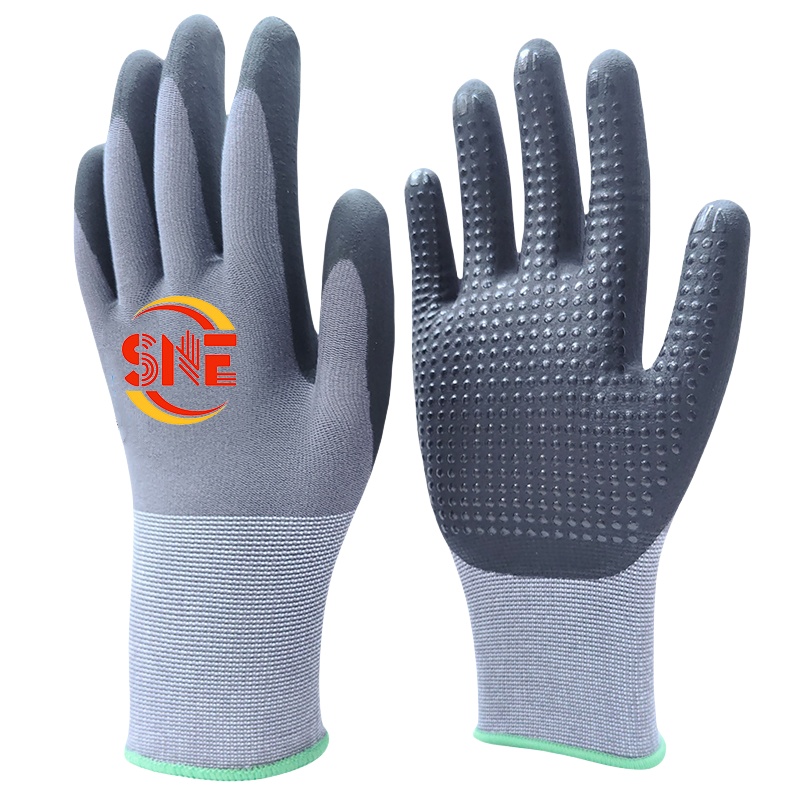
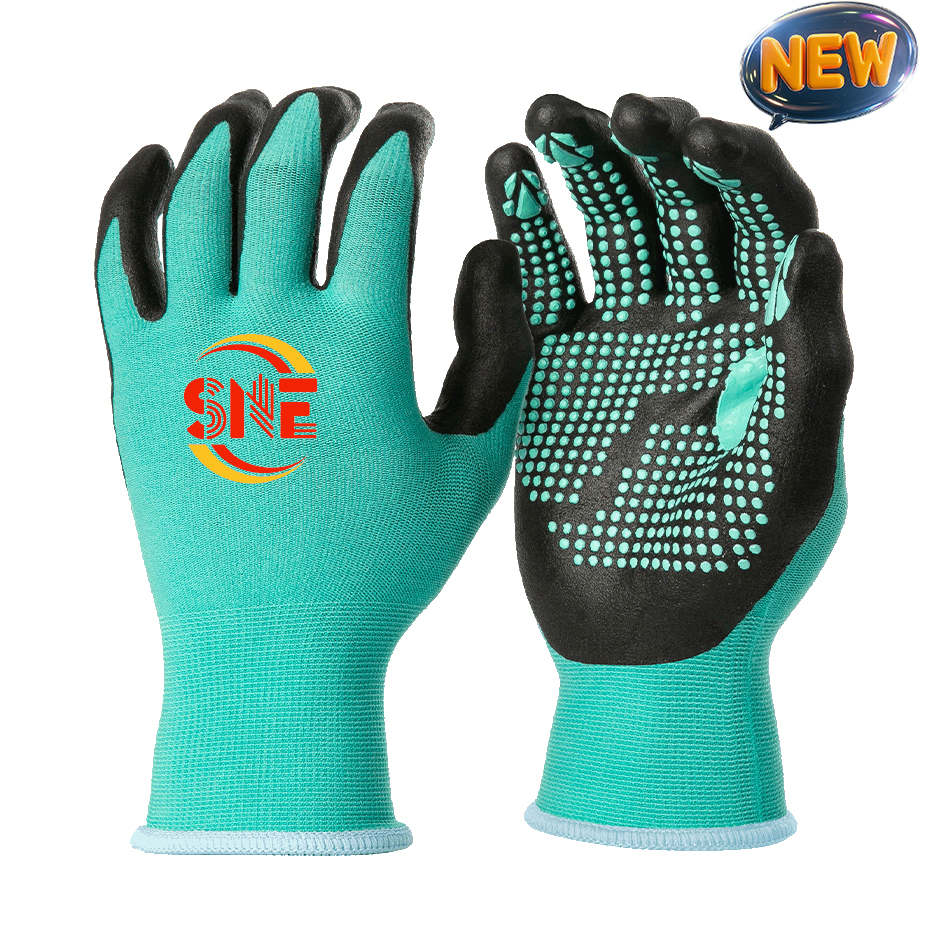
| Nitrile-coated general-purpose gloves | Material handling, framing support, loading, cleanup | Strong grip, good abrasion resistance, low cost in bulk | Not ideal for high cut hazards |
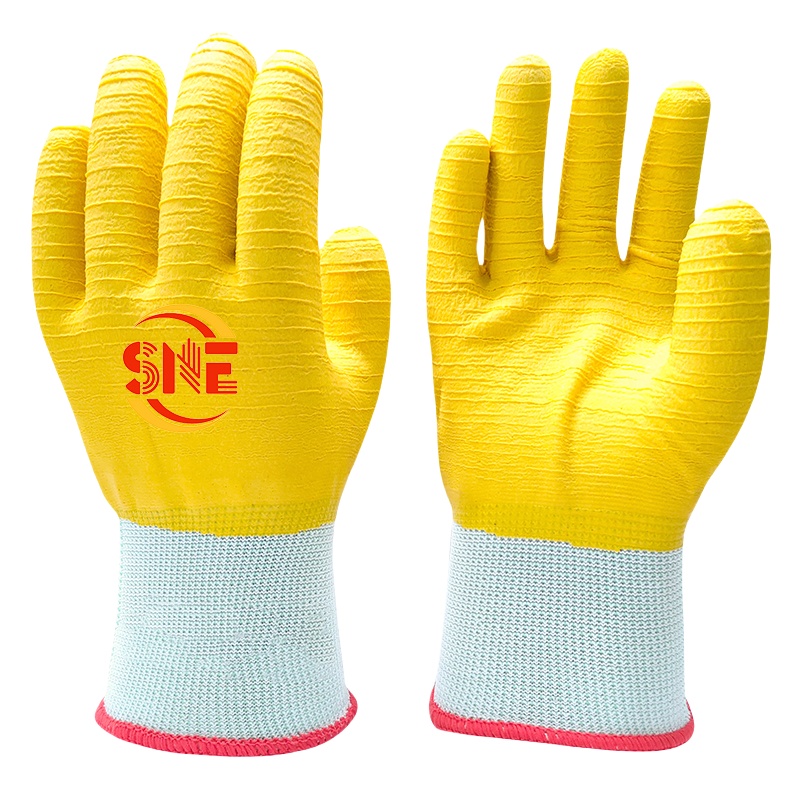
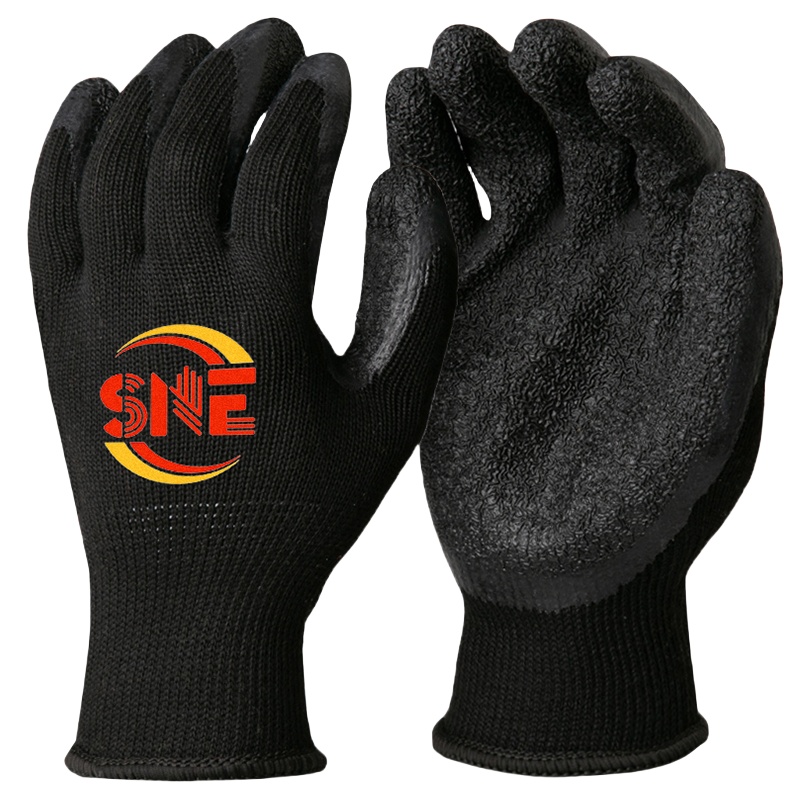
| Latex-coated gloves | Concrete, masonry, rough handling, outdoor use | Excellent dry grip and rugged palm coating | Less suitable where latex sensitivity is a concern |
| PU-coated gloves | Light assembly, finish work, warehouse support | Dexterity and tactile control | Shorter wear life in rough construction tasks |
| Cut-resistant gloves | Metal studs, sheet material, glass, sharp tools | Helps reduce laceration risk | Usually costs more than general-purpose gloves |
| Impact-resistant gloves | Demolition, heavy equipment support, oil and utility work | Back-of-hand protection against knocks and crush points | Bulkier than standard coated gloves |
| Cold protection gloves | Winter crews, refrigerated jobs, northern states | Warmth and grip retention in low temperatures | Can reduce dexterity if over-insulated |
| Leather work gloves | Welding support, rigging, abrasive outdoor tasks | Durability and heat tolerance | Less precise fit and lower dexterity |
This table matters because product mismatch is one of the most common causes of waste in bulk ordering. When contractors issue one cheap glove to every trade, replacement frequency often rises and worker acceptance falls. Matching the glove to the task typically lowers total glove spend over the life of a project.
Industry Demand by Construction Segment
Different construction segments consume gloves at different rates. Distribution centers and infrastructure work often replace gloves faster than finish trades because of abrasion, cut exposure, and environmental wear.
The bar chart shows why many suppliers build separate offers for infrastructure firms, utility contractors, steel fabricators, and mixed-trade general contractors. Each segment values different combinations of grip, impact protection, cut level, and wear life.
How to Buy Bulk Construction Gloves Without Overpaying
Smart bulk buying starts with job analysis, not catalogs. Before requesting quotes, identify how many workers are in each task category, how often gloves are replaced, and which glove failures happen most often. For example, if your concrete crew burns through palm coatings in two days, your best savings may come from a more durable coating rather than a lower piece price.
Ask every supplier for the same quote structure: glove model, coating type, liner gauge, cuff style, size range, carton quantity, lead time, domestic stock position, private-label options, and sample policy. If the supplier cannot provide consistent technical detail, the quote is difficult to compare. Buyers serving public projects in the United States should also clarify whether they need origin transparency, labeling consistency, or any state-specific procurement rules.
It is also worth asking about mixed-container or mixed-pallet programs. Many large buyers do not need a full truckload of one SKU. They need a practical blend, such as nitrile-coated gloves for labor crews, cut-resistant pairs for sheet metal handling, and insulated gloves for winter utility teams. Suppliers that can manage this mix usually create less downstream waste.
Detailed Supplier Comparison for the United States
The table below compares well-known suppliers and channels relevant to United States buyers. It includes both domestic distribution-driven companies and international factory-direct options that can support wholesale, branding, or long-run contracts.
| Company | Service Region | Core Strengths | Key Offerings |
|---|---|---|---|
| Grainger | Nationwide across the United States | Large inventory, broad industrial catalog, established contractor purchasing support | General-purpose gloves, cut-resistant gloves, impact styles, fast branch and shipping access |
| Fastenal | Nationwide with strong local branch network | Jobsite supply integration, vending, regional account support | Construction gloves, PPE programs, replenishment systems, site-specific supply agreements |
| Magid | United States with national distribution reach | PPE specialization, technical guidance, private brand options | Cut-resistant, coated, impact, winter, and high-dexterity work gloves |
| MCR Safety | United States and North American industrial markets | Strong safety brand recognition, diverse protection categories | Nitrile-coated, leather, cut-resistant, and task-specific construction hand protection |
| Global Industrial | United States commercial and institutional buyers | Online procurement convenience, broad MRO range | Bulk-pack gloves for facilities, maintenance, warehousing, and contractor support |
| Uline | United States with rapid fulfillment in many regions | Fast catalog ordering, consistent replenishment, broad business customer base | Warehouse and work gloves, general-purpose coated styles, quick reorder capability |
| Qingdao Snell Protective Products Co., Ltd. | United States importers, distributors, brand owners, and large-volume buyers | Factory-direct pricing, OEM and ODM flexibility, scalable production | Construction gloves, cut-resistant gloves, impact gloves, nitrile, latex, and PU-coated models |
This comparison is useful because it separates distributor convenience from manufacturing flexibility. Domestic distributors often win on urgent fulfillment and established branch service. Factory-direct manufacturers often win on customization, private labeling, and cost efficiency for larger planned orders.
Where Each Supplier Fits Best
Grainger and Fastenal are usually strong choices when a contractor needs immediate coverage across multiple jobsites in the United States. Their biggest advantage is operational convenience. Buyers can often standardize branches, account terms, and emergency replenishment.
Magid and MCR Safety tend to appeal to safety managers who want a more PPE-focused conversation, especially when comparing hand protection by hazard type. Global Industrial and Uline can be practical for buyers who prefer centralized online ordering and predictable reordering workflows.
Factory-direct sourcing makes the most sense when your company uses large annual volumes, wants custom branding, or needs a glove specification that is not easy to find in a stock catalog. This is common for distributors, regional dealers, private-label brands, and larger contractor groups that want stable long-term supply rather than ad hoc buying.
How Demand Is Shifting by Product Mix
The United States market has been moving away from simple low-cost gloves toward a broader spread of coated, cut-resistant, and impact-protective models. Buyers are still cost-sensitive, but many now evaluate spend based on total wear life and injury reduction rather than first cost alone.
The area chart reflects a realistic trend shift. Advanced gloves are taking a larger share of bulk orders as contractors respond to tougher handling conditions, more formal safety audits, and higher expectations from general contractors and industrial end users.
Applications Across Construction Work
Construction gloves are used differently across trades, and those differences should shape your order list. Framing and general labor teams usually prioritize grip, flexibility, and low replacement cost. Concrete and masonry crews need stronger coating durability and secure grip on rough materials. Steel and metal crews often need cut resistance and stronger abrasion performance. Utility and infrastructure crews may need a combination of impact protection, weather resistance, and grip in dirty or damp conditions.
On jobs near the Gulf Coast, gloves may need better performance in heat, sweat, and rain. In northern states and upper Midwest markets, winter-lined models become essential for utility work, road crews, and outdoor material handling. In coastal logistics hubs and major urban buildouts, mixed-use glove programs are common because the same contractor may support indoor fit-out, site cleanup, loading dock operations, and rough shell work.
Industries That Commonly Buy in High Volume
Although the focus is construction, many bulk glove programs support adjacent industries that share labor pools, purchasing teams, or warehouse operations. These include building materials distribution, fabrication, logistics, municipal works, maintenance contractors, and energy support services. That is why many glove suppliers serving the United States position their catalogs across construction, manufacturing, warehousing, and oil and gas support rather than one narrow vertical.
Case Examples from the United States Market
A Texas civil contractor may buy several glove types at once: nitrile-coated gloves for earthwork and labor crews, cut-resistant models for pipe and steel handling, and insulated versions for winter starts in North Texas. A Midwest prefab installer may focus more heavily on dexterity and cut protection because sheet material handling is constant. A Southeast commercial builder may value fast weekly replenishment more than full customization because project schedules change quickly and crew sizes shift with subcontractor availability.
In all of these cases, the lesson is the same. Bulk buying works best when the supplier understands the actual work environment and can align the glove mix to replacement patterns, not just quote the cheapest carton.
Supplier and Product Comparison by Purchasing Priority
The next table helps buyers decide which type of supplier or glove program fits their procurement goal. It is especially useful when choosing between branch-based distribution and factory-direct sourcing.
| Purchasing Priority | Best-Fit Supplier Type | Why It Fits | Example Companies |
|---|---|---|---|
| Urgent nationwide replenishment | Domestic industrial distributor | Fast shipping, local branches, established stocking patterns | Grainger, Fastenal |
| Technical PPE consultation | Safety-focused supplier | Better hazard matching and glove category guidance | Magid, MCR Safety |
| Simple online repeat ordering | Catalog and e-commerce distributor | Easy reorder workflows for facilities and contractor buyers | Global Industrial, Uline |
| Private labeling | Factory-direct manufacturer | Custom branding, packaging, and product specifications | Qingdao Snell Protective Products Co., Ltd. |
| Lowest landed cost on planned volume | Factory-direct manufacturer or importer program | Removes middle layers on large recurring orders | Qingdao Snell Protective Products Co., Ltd. |
| Mixed glove program for large crews | Supplier with broad range and planning support | Supports multiple hazards across one account structure | Fastenal, Grainger, Magid, Qingdao Snell Protective Products Co., Ltd. |
This table makes one point clear: there is no single best supplier for every buyer. The right choice depends on whether your pain point is speed, customization, technical support, or total landed cost.
Local Supplier Realities in the United States
For many buyers, local service still matters. Contractors in the United States often prefer suppliers that understand city permitting cycles, union and non-union project realities, weather disruptions, and contractor billing terms. In regions like Southern California, the Dallas-Fort Worth metroplex, Chicagoland, and the Northeast corridor, local account management can reduce friction when gloves need to be swapped, upgraded, or replenished quickly.
That said, local does not always mean domestic manufacturing. Many well-known United States glove channels rely on global production networks. What matters most is whether the buyer gets practical support: samples, technical sheets, clear labeling, replacement consistency, and someone accountable when a shipment or spec problem occurs.
Our Company
For United States buyers who need a factory-direct partner rather than a catalog-only reseller, Snell Safety offers a practical sourcing model built around industrial hand protection for construction, manufacturing, logistics, and related sectors. The company operates two production facilities in Gaomi and Nantong with six dedicated production lines, more than 150 trained employees, and daily output capacity of about 150,000 pairs, which gives it the scale to support distributor replenishment, private-label programs, and large crew orders without depending on spot-market trading. Its product strengths are grounded in ISO 9001 quality management, CE-marked production, and a focused technology base covering PU, latex, and nitrile coatings along with cut-resistant and impact-resistant glove engineering, all backed by structured manufacturing control and testing that aligns with the performance expectations of North American buyers. In commercial terms, the company works across OEM, ODM, wholesale supply, customization, and regional distribution cooperation, making it relevant not only for distributors and brand owners but also for importers, large end users, and procurement teams that need tailored packaging, branding, sizing, or glove specification options. For buyers in the United States, the service model is designed around long-term market participation rather than one-off export transactions, with responsive pre-sale sampling, technical consultation, production follow-up, export logistics support, and after-sales communication that helps protect delivery schedules and reorder continuity; buyers can review the company background at the company profile, browse available lines through the product catalog, and discuss project requirements directly via the contact page.
Comparing Supplier Models by Value Drivers
Bulk buyers often ask whether they should stay with domestic distribution or move some volume to a factory-direct channel. The answer usually depends on the balance between urgency and optimization.
The comparison chart shows a common procurement reality. Domestic distributors are stronger when speed matters most. Factory-direct programs are stronger when the buyer wants customization, margin control, and repeatable large-volume planning.
What to Ask Before You Sign a Bulk Glove Contract
Before finalizing a supplier, request wear testing samples from the exact models you plan to issue. Let crews test them under real conditions for one to two weeks. Track worker acceptance, failure points, and replacement frequency. A glove that costs slightly more per pair can still save money if it lasts longer and reduces complaints or unsafe workarounds.
Also confirm carton counts, labeling details, barcode needs, and whether the supplier can maintain the same materials over time. This matters for large construction buyers because changing fit or coating feel mid-project can create resistance from crews who already adapted to one model.
If your projects span multiple states, ask how the supplier handles split shipments and rolling forecasts. A contractor with jobs in Tampa, Austin, Columbus, and Sacramento may need the same glove program with different monthly release schedules. Suppliers that can plan around that complexity tend to become long-term partners.
Future Trends for 2026
By 2026, the United States bulk construction glove market is likely to be shaped by three major forces: technology, policy, and sustainability. On the technology side, buyers will continue moving toward application-specific gloves with better coatings, improved cut fibers, stronger grip in wet conditions, and more ergonomic impact structures. On the policy side, more general contractors and public-sector buyers are expected to formalize PPE requirements in subcontract language, pushing suppliers to provide clearer performance documentation and more consistent traceability. On the sustainability side, procurement teams will increasingly ask about packaging reduction, longer product life, responsible factory controls, and freight planning that reduces waste from emergency air shipments.
Another likely 2026 trend is tighter integration between procurement software and PPE replenishment. Construction firms are becoming more data-driven, so glove consumption by crew or project may be tracked more carefully. That will favor suppliers that can support recurring forecasts, stable SKUs, and better usage reporting rather than one-time sales.
FAQ
What is the best glove type for a mixed construction crew?
For a mixed crew, there is usually no single best glove. Most United States contractors use a combination of nitrile-coated general-purpose gloves for labor tasks, cut-resistant gloves for sharp material handling, and impact gloves for demolition or utility support. Cold-weather gloves are added seasonally in northern markets.
Should I buy from a domestic distributor or an overseas factory?
If you need immediate replenishment across multiple jobsites, domestic distributors are often the easiest option. If you need private labeling, custom specifications, or lower unit cost on larger planned volumes, a qualified factory-direct manufacturer can be more competitive.
How many glove styles should a large crew stock?
Most large crews work best with three to five core styles rather than one universal glove. This usually covers general handling, cut hazards, impact risks, winter conditions, and occasional specialty tasks.
What matters more, price per pair or wear life?
Wear life usually matters more in total cost terms. A glove that lasts longer and is accepted by workers can reduce replacement frequency, waste, and interruption on site.
Are imported gloves acceptable for United States construction buyers?
Yes, provided the supplier offers reliable quality systems, consistent specifications, and practical customer support. Many United States distributors and brands already rely on globally manufactured gloves as part of their supply chain.
How far in advance should I plan a bulk order?
For standard domestic stock items, lead times may be short. For custom-branded or factory-direct programs, it is wise to plan several weeks or longer depending on quantity, packaging requirements, and shipping method.
Final Takeaway
The best source for bulk construction gloves in the United States depends on what problem you are trying to solve. If your top priority is fast domestic replenishment, national distributors such as Grainger, Fastenal, Magid, MCR Safety, Global Industrial, and Uline are practical starting points. If your priority is margin, customization, or long-run supply stability, factory-direct sourcing deserves serious consideration. The strongest bulk buying strategy is usually a balanced one: use domestic channels for urgent stock and a qualified manufacturing partner for planned, repeatable volume.
For large work crews, glove procurement should be treated as an operating decision, not a commodity afterthought. When you align glove type with task risk, compare suppliers on real service capabilities, and plan inventory around actual replacement patterns, you get lower waste, better worker acceptance, and more predictable cost control across the life of your projects.