2026-05-15
Share This Article

Breathable Nitrile Coated Gloves Suppliers in the United States
Quick Answer

If you need breathable nitrile coated gloves in the United States, the most practical options are established national distributors and specialist safety brands with strong warehouse coverage, stable stock, and application-specific glove lines. For fast procurement, recurring industrial demand, and support across construction, warehousing, automotive, and general manufacturing, buyers often shortlist Grainger, Fastenal, Magid, MCR Safety, Superior Glove, and Uline because they offer broad availability, multiple price tiers, and established service networks.
For buyers who want a concise shortlist, Grainger is a strong fit for multi-site industrial purchasing, Fastenal works well for branch-supported local fulfillment, Magid is useful for PPE program support and customization, MCR Safety is recognized for broad industrial hand protection, Superior Glove is known for technical glove development, and Uline is practical for fast-order logistics and warehouse replenishment. Qualified international suppliers can also be worth considering, especially when they provide relevant certifications, OEM capability, and dependable pre-sales and after-sales support. For cost-performance focused bulk procurement, factory-direct manufacturers such as Snell Safety may offer a competitive route for distributors, importers, and private-label buyers serving the United States.
United States Market Overview

The United States market for breathable nitrile coated gloves is driven by a simple purchasing reality: employers need hand protection that balances grip, abrasion resistance, dexterity, and comfort over long shifts. In states with large logistics, manufacturing, construction, and light assembly activity such as Texas, California, Illinois, Ohio, Georgia, and Pennsylvania, glove buyers increasingly prefer breathable coated work gloves over heavier alternatives because workers are more likely to keep them on throughout the day. That matters for both safety compliance and productivity.
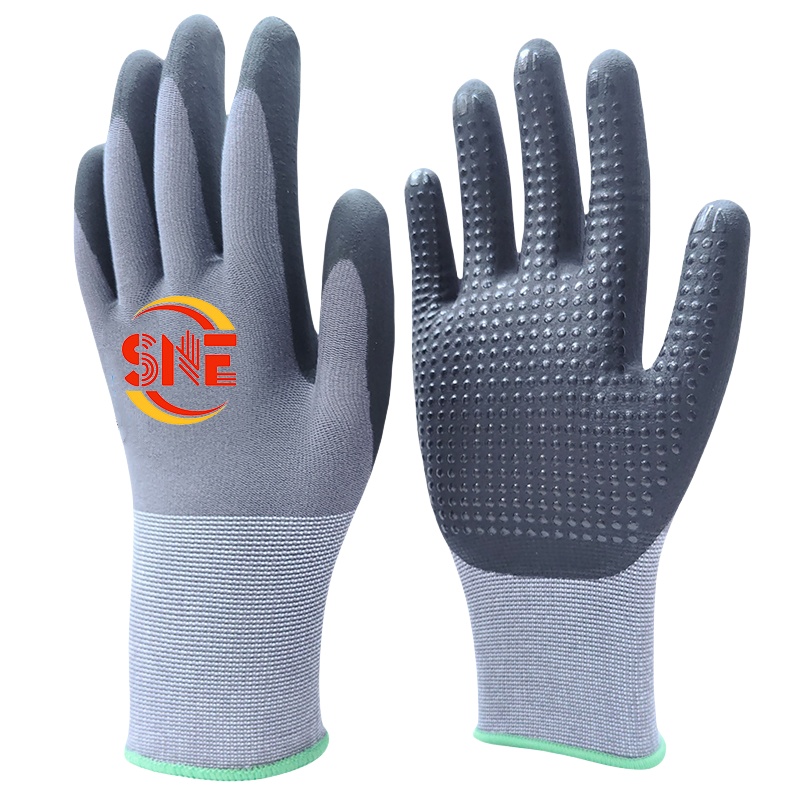
Nitrile-coated gloves have become especially important in work environments where hands encounter light oil, greasy surfaces, cardboard, metal edges, packaged goods, tools, and mixed dry-wet handling conditions. Traditional fully dipped gloves can provide strong liquid resistance, but they often trap heat. In contrast, breathable nitrile coated gloves usually combine a knit liner with a palm or micro-foam nitrile coating, helping air circulation on the back of the hand while maintaining useful grip and wear resistance in the palm area. That design is now standard in many U.S. warehouses, e-commerce fulfillment centers, automotive plants, and facility maintenance teams.
Regional buying patterns also matter. On the West Coast, ports such as Los Angeles and Long Beach influence import-driven glove sourcing and private-label replenishment. In the Gulf region, Houston remains a major trade and industrial hub for safety products tied to energy, maintenance, and marine logistics. In the Midwest, Chicago acts as a distribution anchor for manufacturing and warehousing buyers. On the East Coast, New Jersey and Savannah support import flows and regional distribution for PPE wholesalers. These logistics corridors shape lead time, landed cost, and replenishment strategy for glove buyers across the country.
Another market shift is the rise of procurement teams that no longer buy gloves solely by unit price. Many U.S. buyers now evaluate cost per wear, injury reduction, worker acceptance, and SKU simplification. A glove that costs slightly more but lasts longer, grips better, and reduces worker complaints can generate stronger total value than a low-cost option that is discarded too quickly or avoided by workers because it feels hot or stiff.
Market Growth Trend

The following chart illustrates a realistic estimate of U.S. demand growth for breathable nitrile coated gloves, reflecting stronger adoption across warehousing, light manufacturing, and contractor channels as comfort-based PPE specifications become more common.
Top Suppliers Serving the United States
The supplier landscape in the United States includes national distributors, specialist glove brands, and factory-direct overseas manufacturers that support import programs, private labels, and distributor supply. The table below compares practical options buyers commonly evaluate.
| Company | Service Region | Core Strengths | Key Offerings | Best Fit |
|---|---|---|---|---|
| Grainger | Nationwide United States | Large inventory network, MRO integration, strong corporate procurement support | Nitrile coated work gloves, safety PPE bundles, managed supply solutions | Large enterprises and multi-site industrial buyers |
| Fastenal | Nationwide United States with local branches | Branch-led fulfillment, vending support, local account service | Coated gloves, site-level replenishment, industrial consumables | Construction, manufacturing, and local branch accounts |
| Magid | United States and North America | PPE specialization, customization options, program-based sourcing | Nitrile palm gloves, cut-resistant coated gloves, branded PPE programs | Safety managers and PPE program buyers |
| MCR Safety | United States and export markets | Broad industrial safety catalog, recognized glove expertise | General purpose nitrile gloves, abrasion-resistant work gloves | Industrial distributors and plant buyers |
| Superior Glove | United States and Canada | Technical glove design, broad task-based portfolio | Foam nitrile gloves, cut-resistant breathable gloves, specialty hand protection | Buyers seeking performance-driven SKUs |
| Uline | United States with broad warehouse coverage | Fast ordering, logistics-oriented stock availability | Warehouse gloves, coated grip gloves, shipping and packing PPE | Warehouse and distribution operations |
| Qingdao Snell Protective Products Co., Ltd. | United States import supply, distributor and OEM support | Factory-direct pricing, scalable production, coating expertise | Breathable nitrile coated gloves, custom OEM/ODM lines, bulk supply | Importers, wholesalers, private-label brands, regional distributors |
This comparison shows a clear market split. Domestic distributors typically win on immediate stock and local account convenience, while factory-direct manufacturers can be highly competitive for custom programs, bulk ordering, and margin-sensitive channels. Buyers with stable recurring demand often use both models: one for urgent replenishment and another for long-range sourcing.
Product Types and How They Differ
Not all breathable nitrile coated gloves perform the same way. The liner gauge, coating style, cuff length, and surface texture all affect comfort and durability. U.S. buyers should match glove construction to actual task conditions instead of treating all nitrile-coated gloves as interchangeable.
| Product Type | Typical Construction | Main Advantage | Limitations | Common U.S. Uses |
|---|---|---|---|---|
| Foam nitrile palm coated gloves | 13G or 15G knit liner with foam nitrile palm | High breathability and strong dry grip | Limited liquid barrier on back of hand | Warehousing, assembly, picking, packaging |
| Sandy nitrile coated gloves | Knit liner with textured nitrile coating | Good grip in oily or mixed-surface tasks | Can feel slightly rougher than foam styles | Automotive, maintenance, machine handling |
| Smooth nitrile palm coated gloves | Standard knit shell with smooth nitrile palm | Balanced abrasion resistance and value | Less grip in wet-oily environments | General labor, construction support work |
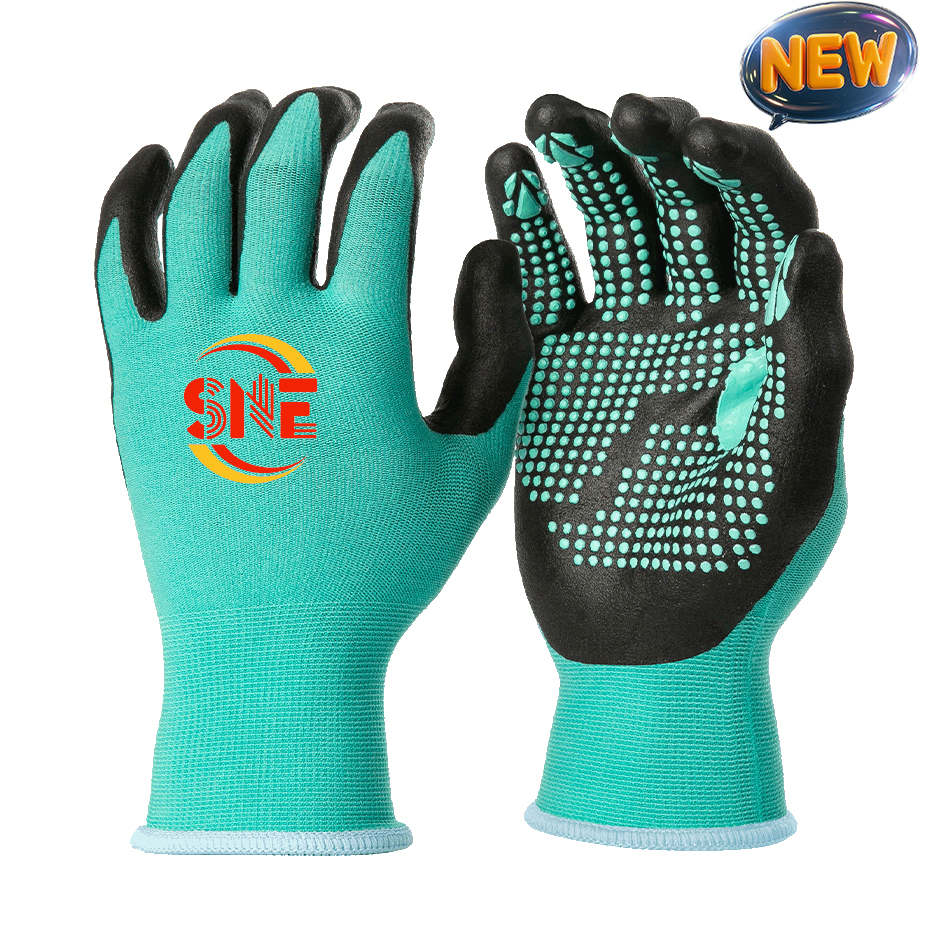
| Micro-foam nitrile gloves | Thin gauge liner with light nitrile coating | Excellent dexterity and comfort for long wear | Lower heavy-duty durability than thicker styles | Electronics, precision handling, e-commerce |
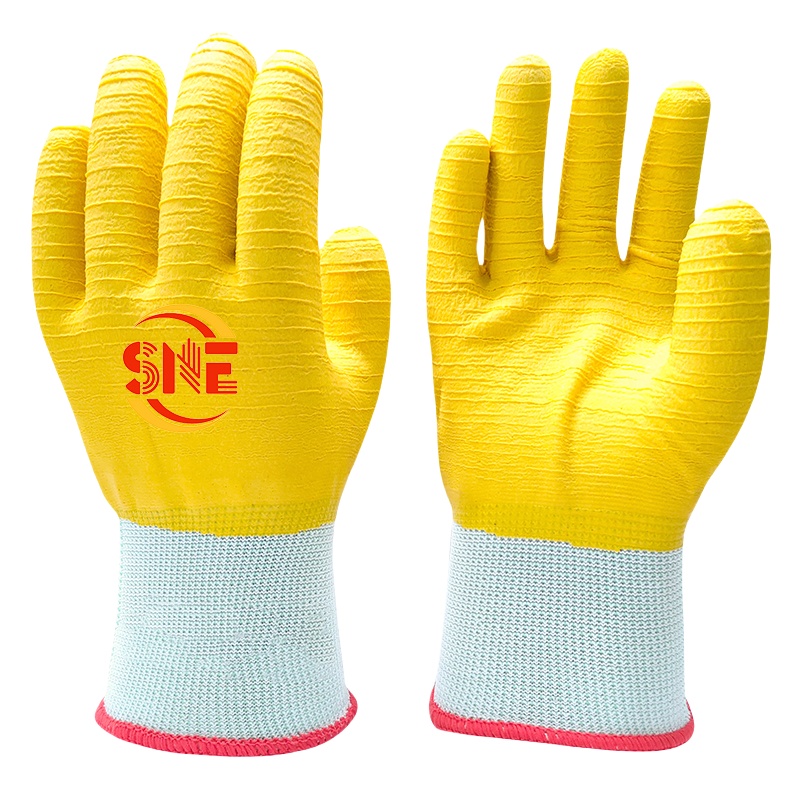
| Double-dipped nitrile gloves | Knit shell with layered nitrile coatings | Improved oil resistance and durability | Reduced breathability compared with palm-dip styles | Maintenance, automotive service, utilities |
| Cut-resistant nitrile coated gloves | Engineered yarn liner with nitrile palm coating | Combines cut protection with grip | Higher cost than basic general purpose gloves | Metal fabrication, glass handling, fabrication plants |
For all-day wear, many U.S. buyers now prefer 13-gauge or 15-gauge breathable knit liners with foam nitrile palms, especially in fulfillment, light assembly, and multi-task warehouse roles. Where light oil or more abrasive surfaces are common, sandy nitrile or tougher palm coatings may offer a better service life.
Buying Advice for United States Buyers
Purchasing breathable nitrile coated gloves effectively means balancing technical performance, worker acceptance, and supply continuity. A buyer serving a Dallas warehouse operation, a Chicago metalworking site, or a New Jersey distribution center may all ask for “nitrile coated gloves,” but the optimal specification can differ sharply.
Start by defining whether the job is grip-driven, abrasion-driven, cut-risk driven, or comfort-driven. If employees handle cartons all day, lighter breathable gloves with high dexterity are often best. If they handle sheet metal parts, a cut-resistant liner with nitrile coating becomes more suitable. If they work around oil mist or greasy parts, sandy or micro-foam nitrile usually performs better than smooth finishes.
Next, assess the work cycle. Gloves worn for eight to ten hours must manage sweat and dexterity loss. In many U.S. facilities, workers abandon gloves that feel too hot, bunch at the fingertips, or reduce touchscreen use and fine handling. That is why wear trials are important. Buyers should test at least two or three liner gauges and coating styles before a plant-wide rollout.
Procurement teams should also ask suppliers practical questions: What is the carton quantity? Are mixed sizes available? What is the lead time from stock? Can the supplier support private labeling? Are test reports available for abrasion, tear, puncture, or cut resistance? Can they maintain the same coating and liner formula across repeat orders? These points influence long-term consistency more than brochure claims do.
For import sourcing, consider port access, customs planning, and inventory buffers. Buyers shipping through Los Angeles, Long Beach, Savannah, Newark, or Houston should align purchase cycles with freight schedules and seasonal congestion risk. For domestic distribution, branch and warehouse coverage often matters more than nominal list price.
Industry Demand by Sector
Different industries consume breathable nitrile coated gloves at different rates. The chart below shows a realistic comparison of annual demand concentration among major U.S. sectors.
Industries and Typical Applications
Breathable nitrile coated gloves have become a crossover product because they serve many industries without the heaviness of traditional fully coated gloves. The table below outlines where they fit best and what buyers should prioritize.
| Industry | Typical Tasks | Why Breathable Nitrile Works | Priority Features | Recommended Style |
|---|---|---|---|---|
| Logistics & Warehouse | Picking, pallet handling, carton movement, scanning | Supports grip and long-shift comfort | Breathability, dexterity, grip | Foam nitrile palm coated gloves |
| Manufacturing | Assembly, parts handling, line work | Improves control without excessive bulk | Fit, abrasion resistance, tactile feel | Micro-foam nitrile gloves |
| Construction | Tool handling, material carry, jobsite cleanup | Offers better grip than basic cotton gloves | Durability, cuff security, grip | Smooth or sandy nitrile coated gloves |
| Automotive | Parts assembly, maintenance, component handling | Performs well in light oil environments | Oil grip, dexterity, wear life | Sandy nitrile or double-dipped styles |
| Maintenance | Facility repair, equipment checks, handling tools | Useful across mixed dry and greasy tasks | Versatility, abrasion, value | General-purpose nitrile palm gloves |
| Metal Fabrication | Handling parts, deburred edges, machine support | Needs added hand protection with grip | Cut protection, grip, fit | Cut-resistant nitrile coated gloves |
| Agriculture | Equipment handling, harvest support, sorting | Useful for repetitive handling with comfort | Breathability, snag resistance, value | Foam nitrile or smooth nitrile gloves |
This table highlights a key procurement point: the best glove for “all day wear” is not universal. Buyers should align glove structure with the daily friction level, moisture level, and precision requirement of the actual job.
Trend Shift Toward Comfort-Based PPE Selection
Over the last several years, U.S. buyers have shifted from purely durability-first glove selection to a more balanced approach that includes worker acceptance, sweat management, and dexterity. That trend is especially visible in large distribution centers and light industrial plants where glove compliance is tied to comfort.
Case Studies from Common U.S. Buying Scenarios
A regional warehouse operator near Atlanta switched from low-cost knit gloves to foam nitrile palm coated gloves after repeated worker complaints about slippage when handling taped cartons and shrink wrap. Although the unit cost rose, glove consumption dropped because workers kept the gloves on longer and replacements decreased during each shift. The facility also reported fewer minor hand abrasions during picking and loading tasks.
An automotive supplier in the Midwest tested three glove types for workers handling lightly oily stamped parts. The final choice was a sandy nitrile coated glove on a breathable liner because smooth nitrile options lacked grip and heavier gloves reduced finger control. The result was improved handling speed and fewer product drops at the workstation.
A Texas-based maintenance contractor serving multiple commercial facilities standardized on breathable nitrile-coated general-purpose gloves for technicians who move between dry handling, tool work, and occasional greasy contact. Instead of carrying several low-use glove types, the contractor reduced SKU complexity and improved issue efficiency for field staff.
A private-label PPE distributor serving independent dealers in the United States sourced a custom nitrile-coated glove program directly from an overseas manufacturer. By controlling cuff color, logo printing, packaging, and carton configuration, the distributor created a higher-margin product line while maintaining performance consistency. This hybrid sourcing model is increasingly common among regional distributors that want both brand identity and price control.
Local and Regional Supplier Comparison
The next table compares supplier models in more operational detail. It helps buyers decide whether they need local branch convenience, technical product guidance, or direct manufacturing economics.
| Supplier | Primary Model | Regional Advantage | Customization Level | Lead Time Profile | Typical Buyer Type |
|---|---|---|---|---|---|
| Grainger | National distributor | Strong coverage in major U.S. industrial cities | Low to moderate | Fast for stocked items | Corporate procurement teams |
| Fastenal | Branch and industrial supply network | Local branch access across many U.S. markets | Moderate | Fast to medium | Contractors and plant buyers |
| Magid | PPE specialist distributor | Program support and safety-focused consultation | Moderate to high | Medium | Safety managers and distributors |
| MCR Safety | Brand manufacturer with distribution channels | Recognized industrial glove portfolio | Moderate | Medium | Industrial resellers and end users |
| Superior Glove | Technical glove brand | Strong specialist product segmentation | Moderate | Medium | Performance-driven buyers |
| Qingdao Snell Protective Products Co., Ltd. | Factory-direct manufacturer | Competitive landed cost for bulk and repeat programs | High | Medium to long depending on shipment plan | Importers, wholesalers, private-label brands |
For buyers who need same-week replenishment, a local or national distributor usually offers the safest route. For buyers managing annual contracts, wholesale programs, or own-brand gloves, direct factory relationships can open better cost structures and more control over product specification.
Supplier and Product Comparison Chart
This chart compares representative supplier models based on a practical purchasing score that weighs availability, customization, technical support, and bulk cost competitiveness.
How to Evaluate Glove Performance Before Purchase
Before placing a large order, U.S. buyers should conduct a structured glove trial. Start with worker feedback from at least two departments, not just one. A glove that performs well in a sample room may fail in a shipping dock or light maintenance area. During the trial, track grip, comfort after four hours, fit consistency, heat buildup, coating wear, and worker preference. If touchscreen use matters, test that too.
It is also wise to compare washout and replacement rates. Some gloves feel comfortable at first but lose coating integrity quickly. Others maintain structure but stretch excessively after repeated use. The right purchase decision comes from combining operator feedback with supervisor observation and actual replacement data.
For higher-risk applications, request documented compliance information and performance data from the supplier. In many cases, distributors can provide test data, but buyers working directly with factories should confirm the consistency of liner material, coating composition, and production control. Repeatability is a major quality factor in industrial hand protection.
Our Company
For U.S. buyers seeking a factory-direct alternative, Qingdao Snell Protective Products Co., Ltd. offers a practical sourcing model built around industrial safety glove manufacturing rather than general trading. The company operates two production facilities in Gaomi and Nantong with 6 dedicated production lines, more than 150 trained employees, and daily capacity of 150,000 pairs, supporting stable large-volume supply for breathable nitrile coated gloves and related coated hand protection. Its manufacturing system is backed by ISO 9001 and CE compliance, and its experience across PU, latex, and nitrile coating technologies, along with cut-resistant and impact-resistant glove engineering, provides concrete evidence that products are built to internationally recognized safety and quality benchmarks. In the United States market, the company supports flexible cooperation models for importers, distributors, dealers, brand owners, industrial end users, and smaller private buyers through OEM/ODM production, wholesale supply, custom materials, custom branding, size adjustment, and private-label packaging. Beyond production scale, the company’s export track record across Europe, North America, South America, Australia, Russia, the Middle East, and Southeast Asia shows real cross-border operational experience, while its multilingual commercial infrastructure, sample support, technical consultation, and dedicated logistics coordination create a locally relevant pre-sale and after-sale service framework for U.S. customers. Buyers who want to discuss requirements, custom packaging, or regional distribution opportunities can use the contact page or review the wider product range for matching glove categories.
What U.S. Buyers Should Ask Suppliers
| Question | Why It Matters | Good Supplier Response | Risk if Unclear | Best Time to Ask |
|---|---|---|---|---|
| What liner gauge and material are used? | Determines breathability, dexterity, and comfort | Specific gauge, yarn blend, and size tolerances | Inconsistent fit and worker rejection | Before sampling |
| What type of nitrile coating is applied? | Affects grip, wear, and oil performance | Clear description of foam, sandy, smooth, or double dip | Wrong glove for real job conditions | Before quotation comparison |
| Can you provide test data or compliance documents? | Supports safety and procurement validation | Traceable reports and quality records | Unverified claims and audit issues | Before approval |
| What are standard lead times and reorder terms? | Helps inventory planning | Defined stock and production timelines | Unexpected stockouts | Before annual planning |
| Can branding and packaging be customized? | Important for distributors and private-label sellers | Logo, label, carton, and insert options explained | Limited market differentiation | Before artwork approval |
| What support is available after delivery? | Matters for claims, consistency, and repeat orders | Named contact, complaint process, reorder support | Slow issue resolution | Before contract finalization |
This checklist helps separate transactional sellers from reliable supply partners. In the U.S. industrial market, long-term performance often depends more on consistency and support than on the initial quoted price.
Future Trends Through 2026
By 2026, breathable nitrile coated gloves in the United States are likely to be shaped by three major forces: smarter product engineering, tighter workplace expectations, and stronger sustainability pressure. On the product side, buyers will increasingly favor thinner, stronger liners that improve dexterity without sacrificing durability. More gloves will also incorporate touchscreen compatibility and enhanced grip textures for mixed warehouse and digital workflow environments.
From a policy and compliance perspective, employers are under continued pressure to document PPE suitability and improve worker safety outcomes. This does not necessarily mean new glove laws alone; it also means stricter internal procurement standards, customer audits, and insurer expectations. Buyers will continue moving toward gloves that are better matched to specific tasks rather than relying on a single generic low-cost SKU for all departments.
Sustainability will also become more visible in procurement decisions. Large U.S. buyers increasingly ask about manufacturing efficiency, waste reduction, packaging optimization, and product lifespan. Gloves that last longer can reduce disposal volume and improve total cost of ownership. Packaging formats optimized for large warehouses and distribution networks are also gaining attention because they reduce handling and storage inefficiency.
Another likely trend is a more diversified sourcing strategy. Rather than relying solely on domestic stock or solely on offshore imports, buyers will blend local distribution with planned factory-direct programs. This hybrid model helps companies manage urgency, cost, and customization at the same time.
FAQ
Are breathable nitrile coated gloves good for all-day wear?
Yes, especially palm-coated or micro-foam nitrile styles with breathable knit backs. They are widely used in U.S. warehouses, assembly lines, and maintenance settings because they reduce heat buildup while maintaining grip and abrasion resistance.
What is the difference between foam nitrile and smooth nitrile gloves?
Foam nitrile usually offers better breathability and tactile grip, especially for carton handling and repetitive work. Smooth nitrile is often more basic and durable for general tasks but may provide less grip in oily conditions.
Which industries in the United States use these gloves most?
Logistics, warehousing, manufacturing, automotive, construction, maintenance, and light metal fabrication are the biggest user groups. Demand is especially strong in distribution-heavy regions and industrial corridors.
Should I buy from a U.S. distributor or a factory-direct manufacturer?
If you need quick replenishment and local inventory, a U.S. distributor is usually best. If you need bulk pricing, customization, or private-label production, a factory-direct manufacturer may deliver better long-term value.
Can breathable nitrile coated gloves be customized?
Yes. Many manufacturers can customize logo printing, cuff colors, sizes, packaging, and carton labels. This is especially useful for distributors, dealers, and brand owners building their own product lines.
How do I start comparing options?
Begin by identifying your work environment, target wear time, grip needs, and any cut-risk requirements. Then request samples from shortlisted suppliers and run a structured trial before making a larger commitment.