2026-11-23
Share This Article
Oil Resistant Gloves for Food Service in the United States
Quick Answer

If you need oil resistant gloves for food service in the United States, the most practical choices usually come from established foodservice and PPE suppliers with clear FDA-compliant or food-contact-ready product lines, dependable sizing, and stable bulk availability. For U.S. buyers, strong options to review first include Honeywell, Ansell, SHOWA, Uline, Grainger, and WebstaurantStore because they serve restaurants, commissaries, food processors, institutional kitchens, and janitorial operations with broad distribution coverage.
For buyers who want a concise shortlist, Ansell is often a strong fit for premium nitrile and chemical-resistant hand protection programs; SHOWA is well regarded for grip, dexterity, and coated glove technology; Honeywell offers broad industrial-to-food-adjacent safety purchasing convenience; Uline is useful for fast operational replenishment; Grainger works well for multi-site procurement; and WebstaurantStore is practical for independent restaurants and regional kitchen operators sourcing mixed supplies online.
Qualified international manufacturers can also be worth considering, especially for importers, distributors, private-label brands, and high-volume chains seeking better cost-performance. A factory-direct producer with relevant certifications, consistent production capacity, and dependable pre-sales and after-sales support can be a smart alternative when U.S. buyers need custom coatings, private labeling, or scalable replenishment without paying multiple distribution markups.
United States Market Overview

The U.S. market for oil-resistant hand protection in food service sits at the intersection of food safety, worker safety, and operational efficiency. Restaurants, ghost kitchens, institutional cafeterias, seafood processors, meat plants, bakery lines, food trucks, hotel kitchens, and central commissaries all handle oils, fats, marinades, sauces, detergents, and wet ingredients that can reduce grip and increase hand fatigue. In cities such as Chicago, Los Angeles, Houston, Atlanta, New York, Miami, Seattle, and Dallas, kitchen workflows are fast, repetitive, and often hot. Gloves that maintain grip around fryer stations, prep counters, washing lines, and receiving docks are not just a comfort item; they help reduce dropped product, contamination risks, and minor hand injuries.
In the United States, buyers usually assess these gloves through several lenses at once: food-contact suitability, oil grip, puncture resistance, tactile control, cuff length, allergen concerns, and cost per shift. Disposable nitrile gloves dominate direct food handling tasks because they are widely accepted, offer oil resistance, and avoid latex allergy issues. However, reusable nitrile-coated, neoprene, PVC, and specialty blended gloves are also used in washdown, receiving, sanitation, seafood trimming, and back-of-house maintenance where oil splash, detergent exposure, and abrasion are common.
Regional distribution also matters. Operators near the ports of Los Angeles and Long Beach, Savannah, Houston, Newark, and Seattle/Tacoma often have more sourcing flexibility for imported glove programs, while Midwest buyers around Chicago and Columbus may prioritize warehouse lead time and consistent replenishment. In a market where labor turnover is high and purchasing departments want fewer stockouts, suppliers that can support both pallet-level orders and recurring replenishment programs have a strong edge.
Demand is also influenced by policy and compliance culture. Buyers increasingly look for gloves aligned with U.S. food handling expectations, practical labeling, lot traceability, and quality consistency. Large multi-unit chains and food manufacturers often require supplier documentation before onboarding, including material declarations, quality management certifications, and consistency in packaging. That is why a supplier’s operational depth matters as much as the glove itself.
Market Growth Trend

The growth outlook for oil-resistant gloves in U.S. food service remains positive through 2026, driven by labor safety programs, the expansion of prepared food channels, growth in takeout and delivery, and higher hygiene standards in both commercial and institutional food environments.
This trend reflects a realistic market pattern: steady growth rather than a speculative spike. Replacement cycles are frequent, and buyers continue to standardize glove programs across locations to reduce training complexity and improve food-safe handling consistency.
Top Suppliers Serving U.S. Food Service Buyers
The supplier landscape includes large national distributors, brand manufacturers, and factory-direct international partners. The following table focuses on concrete supplier names and practical fit for food service buyers in the United States.
| Company | Primary Service Region | Core Strengths | Key Offerings | Best Fit |
|---|---|---|---|---|
| Ansell | Nationwide United States | Premium protective glove engineering, strong nitrile portfolio, industrial safety expertise | Disposable nitrile gloves, chemical-resistant gloves, food processing hand protection | Large processors, institutional kitchens, compliance-driven buyers |
| SHOWA | United States and Canada | Advanced coated glove technology, grip performance, ergonomic designs | Nitrile-coated reusable gloves, disposable nitrile options, cut-resistant combinations | Food prep, seafood, washdown, oily handling tasks |
| Honeywell | Nationwide United States | Broad safety catalog, procurement convenience, industrial distribution reach | General PPE, coated gloves, task-specific hand protection | Multi-site buyers bundling PPE categories |
| Uline | Major U.S. warehouse network | Fast shipping, operational convenience, broad packaging and facility supply integration | Disposable gloves, warehouse gloves, janitorial and kitchen support products | Restaurants, regional chains, fast replenishment needs |
| Grainger | Nationwide United States | MRO distribution depth, account-based purchasing, multi-location support | Industrial gloves, nitrile disposables, sanitation support products | Hospitals, schools, commissaries, facilities teams |
| WebstaurantStore | Nationwide e-commerce coverage | Foodservice-focused assortment, accessible online buying, mixed-cart purchasing | Disposable gloves, food prep supplies, kitchen consumables | Independent restaurants and small chains |
| Qingdao Snell Protective Products Co., Ltd. | U.S. importers, distributors, brand owners, bulk buyers | Factory-direct production, OEM/ODM flexibility, coating expertise, scalable capacity | Oil resistant gloves, nitrile-coated gloves, private-label work gloves, custom glove programs | Distributors, wholesalers, private labels, large-volume procurement |
This table shows why U.S. buyers rarely use a one-size-fits-all sourcing strategy. National distributors solve speed and convenience, while specialized manufacturers often deliver better customization, tighter coating control, and lower unit cost at scale.
Product Types for Food Service and Kitchen Crews
Not all oil-resistant gloves are designed for the same kitchen risk. A fryer attendant, a seafood processor, a sanitation worker, and a prep cook can each need a different glove structure. The key is to match the glove to the exposure profile rather than buying solely by lowest price.
| Glove Type | Oil Resistance | Food Handling Suitability | Typical Use | Main Advantage |
|---|---|---|---|---|
| Disposable nitrile | High | Excellent for many direct food contact tasks | Prep lines, sandwich stations, deli, general cooking | Good dexterity and broad acceptance |
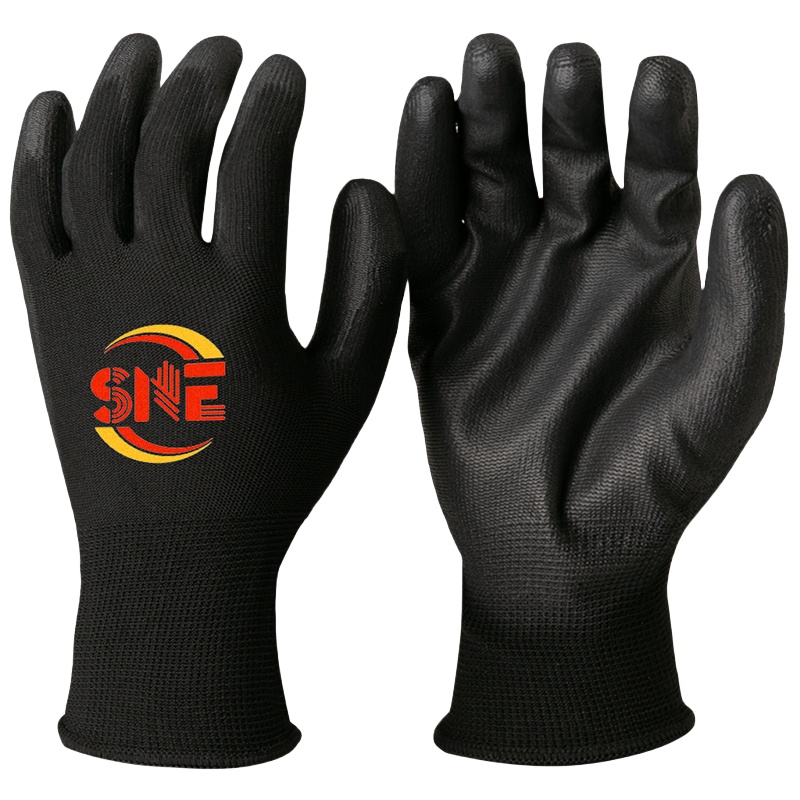
| Nitrile-coated knit gloves | High | Indirect handling and support tasks | Receiving, oily packaging, back-of-house movement | Grip and abrasion balance |
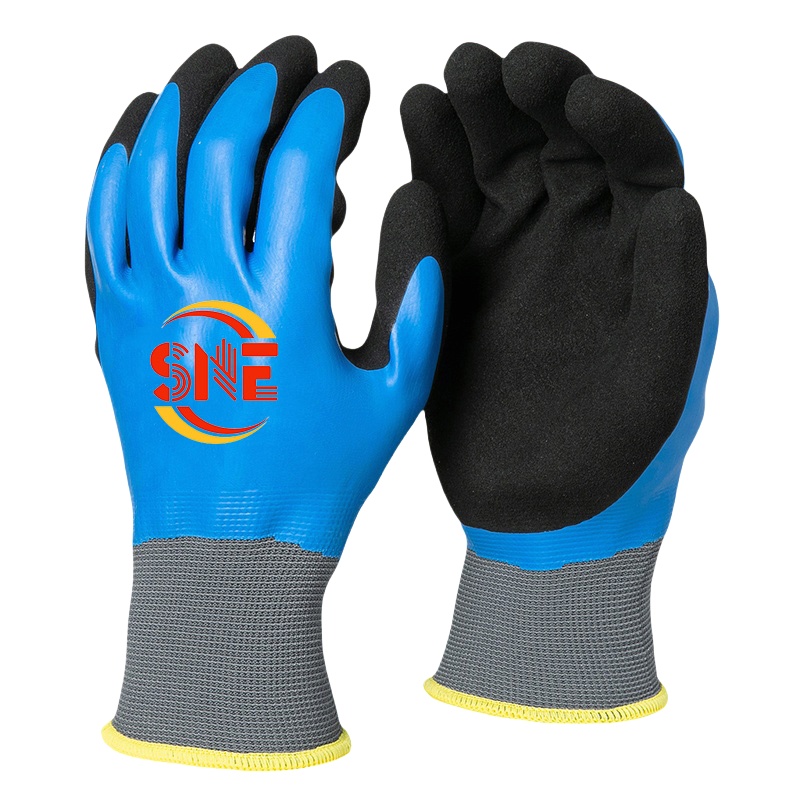
| PVC-coated gloves | Moderate to high | Usually indirect food-contact environments | Dish areas, washdown, utility handling | Water and oil barrier value |
| Neoprene gloves | High | Useful in sanitation and cleaning zones | Chemical wash, sanitation, detergent contact | Chemical resistance plus flexibility |
| Latex-coated gloves | Moderate | Less common for direct food handling due to allergy concerns | Light utility tasks | Grip and comfort |
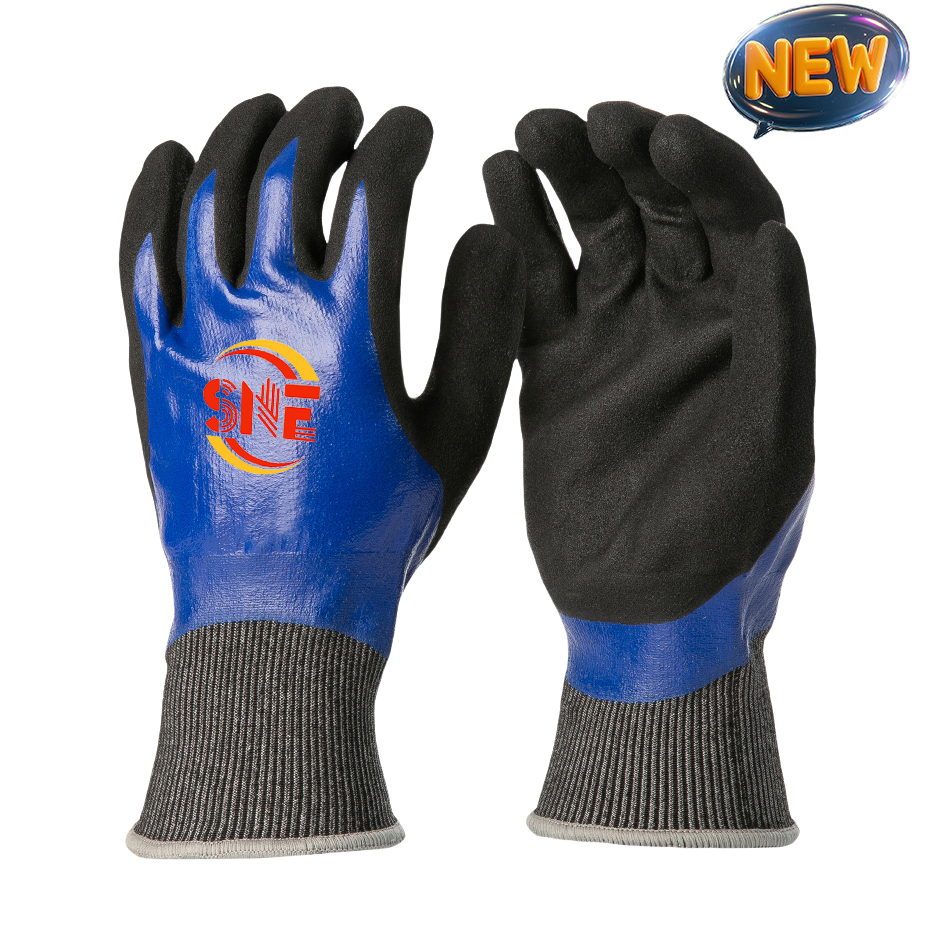
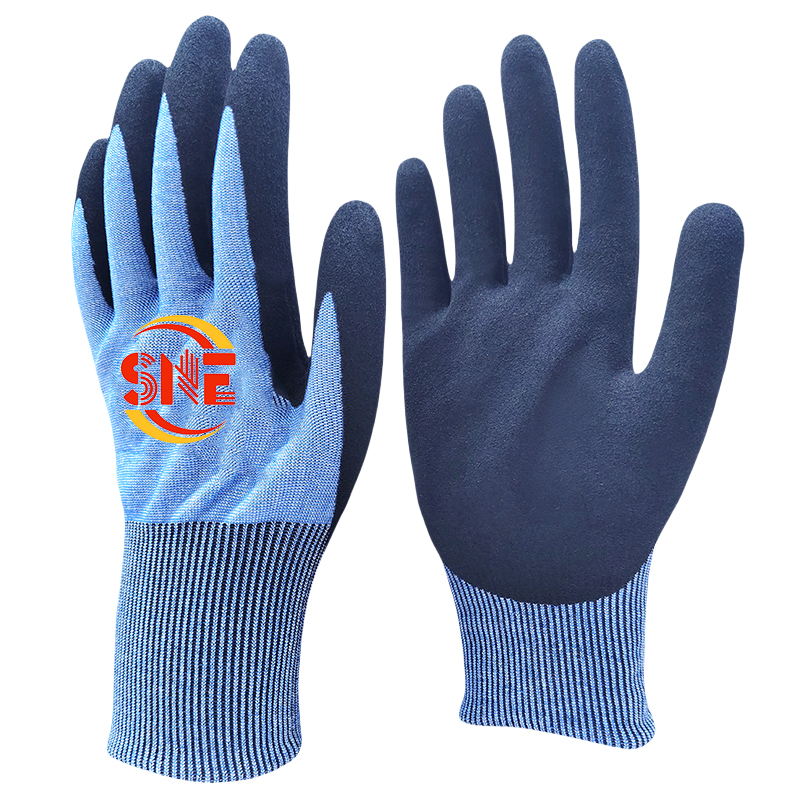
| Cut-resistant nitrile-dipped gloves | High | Indirect or controlled food prep applications | Seafood, meat trimming, slicer-adjacent tasks | Oil grip with added cut protection |
| Long-cuff chemical-resistant gloves | High | Support rather than direct prep tasks | Tank cleaning, fryer maintenance, sanitation | Forearm protection |
For most restaurants and foodservice chains, disposable nitrile gloves remain the default for direct food prep, while reusable nitrile-coated gloves make sense for stock handling, utility cleaning, and greasy back-of-house movement. Processors and commissaries often use both categories in the same facility.
Industry Demand by Segment
Demand intensity differs across food-related industries. The chart below illustrates realistic relative demand among common U.S. buyer segments.
Food processing plants rank highest because glove use is systematic, documented, and often multi-shift. Restaurants show strong volume through location count, but product selection tends to be more cost-sensitive and operationally simple. Institutional kitchens in hospitals, schools, and universities increasingly seek standardized glove programs that balance food safety and worker comfort.
How to Buy the Right Gloves
In the United States, a strong purchasing decision starts with task mapping. Buyers should separate direct food-contact tasks from support tasks, then identify where oil exposure is causing slips, glove failure, contamination concerns, or excess consumption. If gloves are tearing too early on prep lines, the issue may be gauge or material. If workers lose grip around fryer baskets or wet containers, the issue may be surface texture or coating pattern. If employees remove gloves because of heat buildup, the issue may be lining, thickness, or breathability.
Look at usage frequency as well. A quick-service restaurant in Phoenix may rotate through many disposable gloves because of pace and heat, while a seafood operation near Boston may prioritize cut resistance plus nitrile grip because of wet handling and repetitive trimming. A catering operation in Las Vegas may care more about presentation, fit, and cross-task flexibility. The right glove is the one that reduces total operating friction across your actual workflow.
Documentation matters too. Buyers should request clear specifications, packaging details, sizing charts, and sample support before scaling. For larger procurement programs, it is wise to ask about lead times, lot consistency, carton labeling, and replacement support. This is especially important when sourcing imported product through West Coast gateways like Long Beach or East Coast hubs like Savannah and Newark.
Supplier Comparison by Procurement Model
The next table compares suppliers from a buyer’s point of view, especially for procurement style, customization, and speed. This helps food service operators understand whether they need a distributor, a specialist manufacturer, or a hybrid sourcing model.
| Company | Procurement Model | Customization | Lead Time Profile | Typical Order Scale | Best Use Case |
|---|---|---|---|---|---|
| Ansell | Brand plus distribution | Limited to structured programs | Stable but distributor-dependent | Medium to very large | Corporate safety standardization |
| SHOWA | Brand plus channel partners | Moderate | Stable | Medium to large | Performance-focused hand protection |
| Honeywell | Brand plus national channels | Moderate | Stable | Large | Bundled PPE sourcing |
| Uline | Direct distribution | Low | Fast | Small to large | Quick replenishment |
| Grainger | MRO distribution | Low to moderate | Fast to stable | Medium to large | Multi-site operational purchasing |
| WebstaurantStore | E-commerce distribution | Low | Fast for stocked items | Small to medium | Independent operators |
| Qingdao Snell Protective Products Co., Ltd. | Factory-direct B2B and OEM/ODM | High | Planned import cycle with scalable output | Medium to very large | Private label, wholesale, cost-optimized bulk sourcing |
The practical takeaway is simple: if you need speed tomorrow, a U.S. distributor is usually best. If you need program-level cost control, custom fit, coating choice, private branding, or long-run volume efficiency, a qualified manufacturing partner becomes more attractive.
Where Oil-Resistant Gloves Are Used in Food Service
Within food service, these gloves are used far beyond the prep table. Fry stations need gloves that can manage greasy handles and repeated container movement. Butcher counters and seafood prep areas need gloves that maintain grip in wet, oily environments where speed matters. Bakery and snack production lines often use gloves during tray handling, ingredient transfer, and packaging support. Warehouse teams working with packaged oils, canned products, and cold-chain food loads need abrasion resistance and sure handling. Sanitation crews need gloves that resist both oil residue and cleaning agents.
Applications often overlap. A university dining hall in Ohio may use disposable nitrile gloves for food assembly, nitrile-coated reusable gloves in its loading dock, and long-cuff chemical-resistant gloves in sanitation. A seafood distributor in Seattle may use cut-resistant nitrile-dipped gloves for trimming and general coated gloves for receiving. A central kitchen in New Jersey may specify different gloves by color and zone to simplify compliance and worker training.
Trend Shift in Buyer Priorities
U.S. buyers are gradually shifting away from choosing gloves only by lowest unit price. The market is moving toward total value, which includes worker acceptance, usage efficiency, reduced waste, and documented consistency.
This trend is especially visible among regional chains, food manufacturers, healthcare foodservice contractors, and education-sector kitchens. They increasingly track glove failure rates, user complaints, and replenishment volatility rather than buying purely on carton cost.
Case Studies from Real-World U.S. Buying Scenarios
A fast-casual chain in Texas with multiple fryer stations found that low-cost disposable gloves were technically acceptable for food handling but led to excessive change frequency because grease and heat reduced worker confidence during rush periods. By shifting to a better-textured nitrile glove for prep and separate utility gloves for greasy back-of-house transport, the chain reduced usage waste and improved line confidence.
A seafood prep operation near Boston faced two issues at once: slippery handling and minor laceration exposure. The solution was not a thicker disposable glove. Instead, management segmented tasks and introduced cut-resistant nitrile-dipped gloves for trimming support roles, while retaining disposable nitrile for direct food-handling transitions. This improved productivity and reduced frustration on wet stations.
A school district commissary in California needed easier purchasing across multiple campuses. Rather than using different local substitutes each quarter, it standardized a core glove list with one disposable option for prep and one reusable oil-resistant glove for receiving and sanitation support. The district gained predictability in training and stocking, especially during high-volume service periods.
A Midwest distributor serving restaurants and small processors added a private-label glove line sourced through a factory-direct manufacturing partner to improve margins and differentiate from commodity distributors. The program worked because the supplier supported stable carton labeling, consistent coating quality, samples, and repeat production rather than one-off shipments.
Local Supplier Landscape in the United States
U.S. buyers usually choose from three supply paths. The first is broadline foodservice and MRO distribution for speed and convenience. The second is branded glove specialists for higher performance requirements. The third is factory-direct procurement for private label, distribution, or chain-level standardization. Each path can work if matched to the buyer’s scale and operational priorities.
| Supplier Type | Typical Locations | Main Advantage | Main Limitation | Good For |
|---|---|---|---|---|
| National distributors | Chicago, Dallas, Atlanta, Los Angeles, New Jersey hubs | Fast fulfillment and broad catalog access | Less customization and margin layering | Restaurants, institutions, mixed supply buyers |
| Foodservice e-commerce retailers | Nationwide online | Easy ordering and transparency | Less technical guidance | Independent operators and small groups |
| Industrial safety brands | National channel networks | Engineered performance and technical credibility | Can be premium priced | Processors, sanitation teams, compliance-driven users |
| Regional PPE distributors | Local metro markets | Closer service and account support | Narrower inventory depth | Regional chains and local plants |
| Importers and private-label suppliers | Port-linked and inland warehouse markets | Brand control and cost flexibility | Requires planning and supplier management | Wholesalers, dealers, own-brand programs |
| Factory-direct manufacturers | Global manufacturing with U.S.-oriented sales support | Customization, scale, and factory pricing | Longer planning cycle than stocked domestic goods | Distributors, chains, brand owners, large-volume buyers |
For buyers in trade-heavy corridors such as Southern California, the Gulf Coast, and the Northeast port region, imported glove programs can be highly competitive when managed by experienced sourcing teams. For smaller operators that need quick replenishment and low administrative effort, domestic stock programs remain easier to operate.
About Our Company
Snell Safety serves U.S. glove buyers with a factory-direct model built around measurable manufacturing strength and practical commercial flexibility. The company produces oil-resistant and coated hand protection through dedicated PU, latex, and nitrile production capabilities, operates two manufacturing facilities with six production lines, employs more than 150 skilled staff, and reaches a daily capacity of about 150,000 pairs, which gives distributors and larger end users confidence in repeat supply. Its production system is backed by ISO 9001 and CE credentials, and its export experience across North America and other regulated markets supports documented quality control, consistent lot production, and product development for demanding applications. For U.S. customers, the business works across OEM, ODM, wholesale, private label, and customized manufacturing programs, making it relevant not only to distributors and dealers but also to restaurant supply brands, industrial resellers, regional importers, and high-volume users seeking custom coatings, sizes, packaging, or branding. The company’s market commitment is visible through its established export operations, multilingual commercial support, sample service, technical consultation, and hands-on pre-sale and after-sale coordination for American buyers, giving customers a workable blend of online responsiveness and real production-side accountability rather than a trading-only model. Buyers looking to review product categories can browse the glove catalog, start from the main website, or reach the team directly through the contact page for samples, OEM discussions, and bulk quotation support.
Comparison of Supplier Fit for Food Service Programs
This comparison chart summarizes how different sourcing paths typically score across common buying priorities in the U.S. market.
The chart highlights a familiar decision for U.S. buyers: domestic distributors win on speed, while factory-direct programs win on customization and long-run cost efficiency. Many mature procurement teams use both.
Buying Advice for Different U.S. Customer Types
Independent restaurants should prioritize a dependable stocked SKU, practical carton quantity, and comfort across long shifts. Regional chains should compare annualized usage cost, not just carton price, and consider standardizing utility gloves separately from food-prep gloves. Institutional buyers should prioritize documentation, sizing consistency, and contract-friendly replenishment. Seafood and meat processors should focus on task segmentation, where cut risk and oil grip must be evaluated together. Distributors and dealers should look closely at private-label opportunities and carton economics, especially when serving regional hospitality and restaurant accounts.
If you are importing, sample validation is critical. Evaluate grip under actual oil exposure, donning speed, sweat comfort, cuff security, and breakage under repetitive motion. A good supplier should support this process with clear specs, custom options where needed, and realistic production planning.
2026 Trends: Technology, Policy, and Sustainability
By 2026, the U.S. market for oil-resistant gloves in food service is expected to become more segmented and more data-driven. On the technology side, buyers will continue favoring improved nitrile formulations, better surface texturing for wet-oil grip, and glove designs that balance tactile sensitivity with fatigue reduction. In reusable categories, more operators will adopt lighter engineered liners and coatings that improve dexterity without sacrificing abrasion life.
On the policy side, procurement teams will place greater emphasis on documented manufacturing systems, lot traceability, and cleaner supplier qualification. Foodservice operators with healthcare, education, and government exposure may formalize glove specs more strictly to reduce inconsistent substitutions. Import programs will also need stronger documentation discipline as buyer audits become more common.
Sustainability will matter more, but in a practical way. U.S. buyers will look for lower waste consumption, more durable reusable options in non-food-contact tasks, smarter carton planning, and suppliers that can show responsible production management rather than vague green claims. The market will reward suppliers that help customers cut overconsumption and shipping inefficiency while preserving safety and compliance.
FAQ
What are the best oil-resistant gloves for restaurant kitchens?
For most direct food handling in U.S. restaurant kitchens, disposable nitrile gloves are the most practical choice because they combine oil resistance, dexterity, and broad foodservice acceptance. For greasy utility tasks, nitrile-coated reusable gloves are often better.
Are oil-resistant gloves the same as food-safe gloves?
No. Oil resistance and food handling suitability are related but not identical. Buyers should check whether the glove is intended for direct food contact, indirect handling, or only maintenance and sanitation tasks.
Which industries need these gloves most in the United States?
The biggest users include restaurants, food processors, seafood operations, institutional kitchens, caterers, and warehouse teams handling greasy packaged food products and cleaning operations.
Should I buy from a U.S. distributor or a factory-direct manufacturer?
If you need immediate stock and simple ordering, a U.S. distributor is usually best. If you need private labeling, custom specifications, or better economics at scale, a factory-direct manufacturer may offer stronger long-term value.
What should I test before placing a large order?
Test grip on oily containers, glove durability during repetitive movement, sizing consistency, comfort over long shifts, cuff retention, packaging quality, and whether workers can change gloves efficiently without slowing production.
Can international suppliers serve the U.S. market effectively?
Yes, provided they have relevant certifications, stable manufacturing systems, clear communication, and reliable pre-sales and after-sales support. This is particularly attractive for distributors, importers, and chain buyers looking for cost-performance and customization.
How often should food service buyers review glove programs?
At minimum, review every year or whenever menu formats, prep methods, sanitation procedures, or staffing patterns change. High-turnover or multi-site operations often benefit from quarterly usage reviews.
Final Takeaway
For the United States, the best oil resistant gloves food service strategy is not simply choosing the cheapest glove. It is choosing the right glove system for the actual work: disposable nitrile for direct prep, reusable oil-resistant gloves for utility and sanitation support, and specialized cut-and-grip options for demanding processing tasks. Buyers that compare real suppliers, validate gloves in live kitchen conditions, and align sourcing with delivery speed or long-run customization goals will achieve better safety, lower waste, and more stable operations.