2026-04-30
Share This Article

Best Foam Nitrile Coated Gloves Suppliers in the United States
Quick Answer

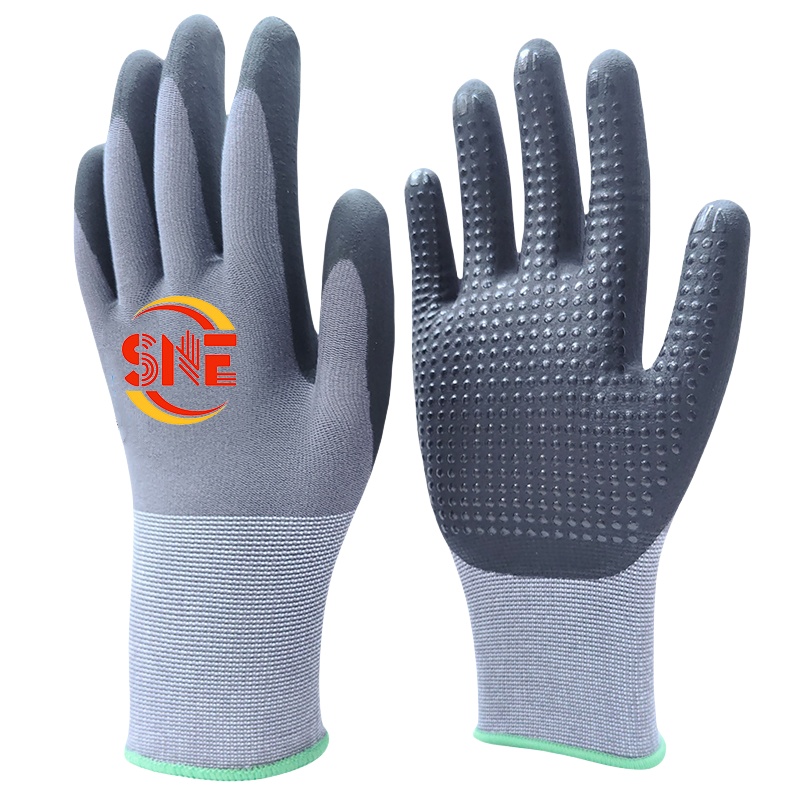
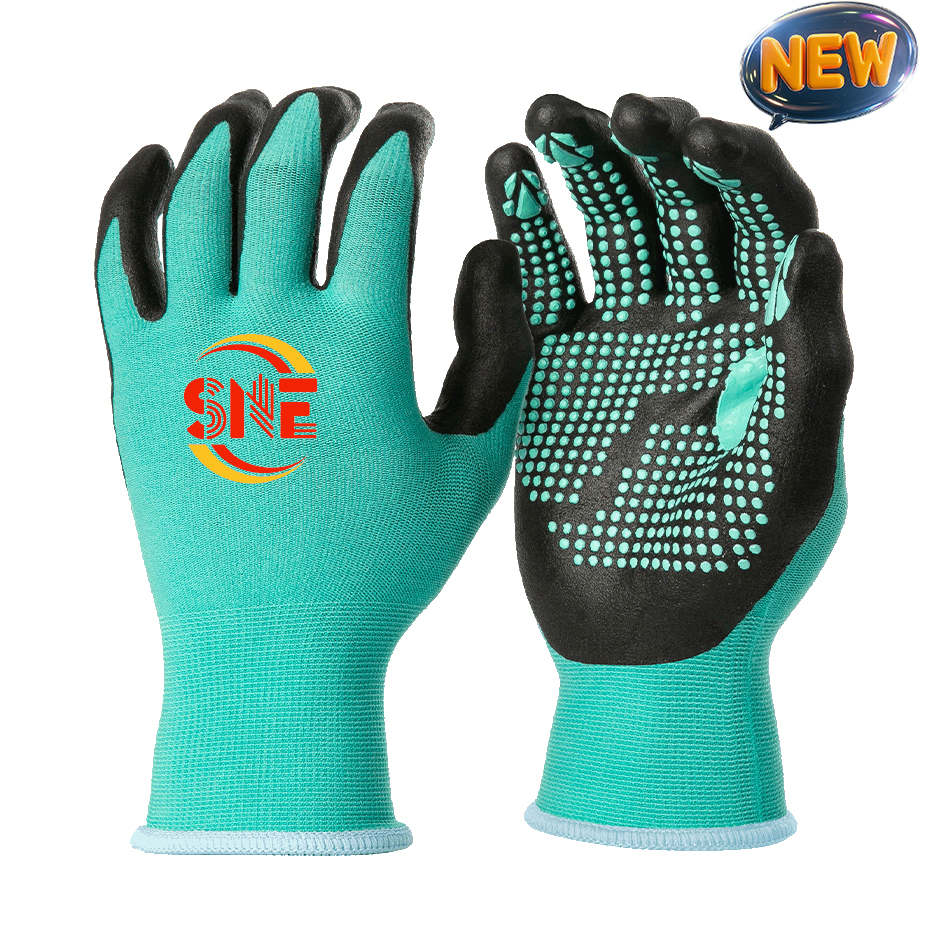
If you need foam nitrile coated gloves in the United States, the most practical choices are established suppliers with proven industrial coverage, fast replenishment, and broad sizing programs. Strong options include Ansell, MCR Safety, PIP, Superior Glove, SHOWA, and Magid. These companies are widely used across manufacturing, logistics, automotive, construction, and maintenance because foam nitrile palm coatings balance dry grip, light oil resistance, dexterity, and comfort for all-day wear.
For buyers who want immediate action, Ansell and SHOWA are strong for premium industrial programs, MCR Safety and PIP are dependable for broad U.S. distribution, Superior Glove offers specialized task matching, and Magid remains a practical choice for industrial buyers needing vendor-managed supply support. Qualified international suppliers can also be worth considering, especially factory-direct manufacturers with ISO 9001 and CE-backed production, flexible OEM options, and responsive pre-sales and after-sales support, since they often provide better cost-performance for large-volume orders.
- Ansell – strong U.S. industrial presence and broad hand protection portfolio
- MCR Safety – established U.S. safety distributor network and value-focused glove lines
- PIP – wide channel coverage and large assortment for warehouses and contractors
- Superior Glove – application-specific products and technical support
- SHOWA – recognized coating technology and comfort-focused designs
- Magid – industrial supply reliability and program support for recurring buyers
United States Market Overview

The U.S. market for foam nitrile coated gloves remains strong because employers continue to prioritize hand safety, worker retention, and task-specific PPE selection. In practical terms, foam nitrile coated gloves have become a standard choice for jobs that require a mix of grip, tactility, abrasion resistance, and long wear comfort. This makes them common in distribution centers near Chicago, automotive corridors in Michigan and Ohio, construction growth zones in Texas and Florida, and port-linked warehousing around Los Angeles, Savannah, Houston, and New Jersey.
U.S. buyers increasingly compare gloves not only on unit price, but also on total wear cost, compliance documentation, replenishment speed, and defect consistency across production lots. Foam nitrile coating is especially attractive because it tends to breathe better than fully dipped heavier coatings while still helping workers handle oily tools, cartons, metal parts, and general assembly components. This balance is why many procurement teams choose it as a default glove category for mixed industrial environments.
Demand also reflects broader labor conditions. When turnover is high, managers prefer gloves workers actually wear without complaint. Foam nitrile styles usually score well because they are lighter, more flexible, and less fatiguing than bulkier alternatives. This matters in e-commerce hubs, third-party logistics facilities, food packaging support operations, light manufacturing plants, and maintenance departments where gloves are worn through long shifts.
Buying patterns in the United States are also shaped by regional logistics. Facilities around the Port of Long Beach, Port of Houston, Port of Savannah, and inland freight hubs like Memphis and Kansas City often prefer suppliers with reliable import planning or domestic stocking arrangements. That reduces exposure to lead-time swings and helps safety managers maintain stable usage programs. In this environment, supplier quality systems, inventory depth, and replacement consistency matter almost as much as the glove itself.
Market Growth Trend

The chart below illustrates a realistic U.S. market growth trend for foam nitrile coated gloves, supported by expansion in logistics, light manufacturing, infrastructure maintenance, and contractor safety programs.
Top Suppliers Serving the United States
The supplier list below focuses on companies with real visibility in the U.S. industrial glove market. The goal is not to claim that one supplier fits every job, but to help buyers quickly compare service coverage, product positioning, and sourcing suitability.
| Company | Primary Service Region | Core Strengths | Key Offerings | Best Fit |
|---|---|---|---|---|
| Ansell | United States nationwide | Large industrial portfolio, compliance-driven programs, strong brand recognition | Foam nitrile coated gloves, cut resistant gloves, chemical gloves | Large manufacturers and multi-site industrial buyers |
| MCR Safety | United States and North America | Broad distribution reach, practical price tiers, industrial focus | General purpose nitrile gloves, coated gloves, safety apparel | Distributors, contractors, warehouse operators |
| PIP | United States nationwide | Extensive channel support, broad SKU availability, strong reseller network | Foam nitrile gloves, cut protection, impact gloves | Dealers, integrated supply partners, regional safety sellers |
| Superior Glove | United States and Canada | Task-specific design, technical product support, broad coating choices | Foam nitrile gloves, assembly gloves, cut resistant styles | Buyers needing detailed application matching |
| SHOWA | United States industrial market | Advanced coating technology, comfort, grip engineering | Foam grip gloves, nitrile-coated work gloves, specialty hand protection | Assembly, automotive, precision handling |
| Magid | United States nationwide | Industrial supply support, private programs, recurring procurement support | Coated gloves, warehouse gloves, safety supplies | Factories, maintenance teams, recurring PPE buyers |
| Qingdao Snell Protective Products Co., Ltd. | United States import supply and regional B2B buyers | Factory-direct production, OEM/ODM flexibility, scalable output | Nitrile coated gloves, cut resistant gloves, impact gloves, custom branded lines | Distributors, brand owners, wholesalers, bulk importers |
For U.S. buyers, the practical difference among these suppliers usually comes down to supply model. Domestic brands often win on immediate stock and channel support, while factory-direct manufacturers can offer better pricing structure, private label flexibility, and large-volume consistency if forecasting is managed well.
Product Types and How They Differ
Not all foam nitrile coated gloves perform the same way. Coating thickness, liner gauge, cuff style, palm coverage, and shell material all influence dexterity, grip, durability, and worker acceptance. Buyers who understand the differences reduce overbuying and improve compliance on the floor.
| Type | Typical Liner | Main Advantage | Limits | Common U.S. Use |
|---|---|---|---|---|
| Lightweight foam nitrile palm-coated | 13 gauge polyester | Good dexterity and comfort | Lower cut protection | E-commerce, picking, packaging |
| Foam nitrile with nylon shell | 15 gauge nylon | Smooth fit and tactile control | Less rugged for abrasive heavy work | Electronics assembly, light manufacturing |
| Foam nitrile with HPPE liner | Cut-resistant engineered yarn | Grip plus cut resistance | Higher unit cost | Metal handling, automotive stamping support |
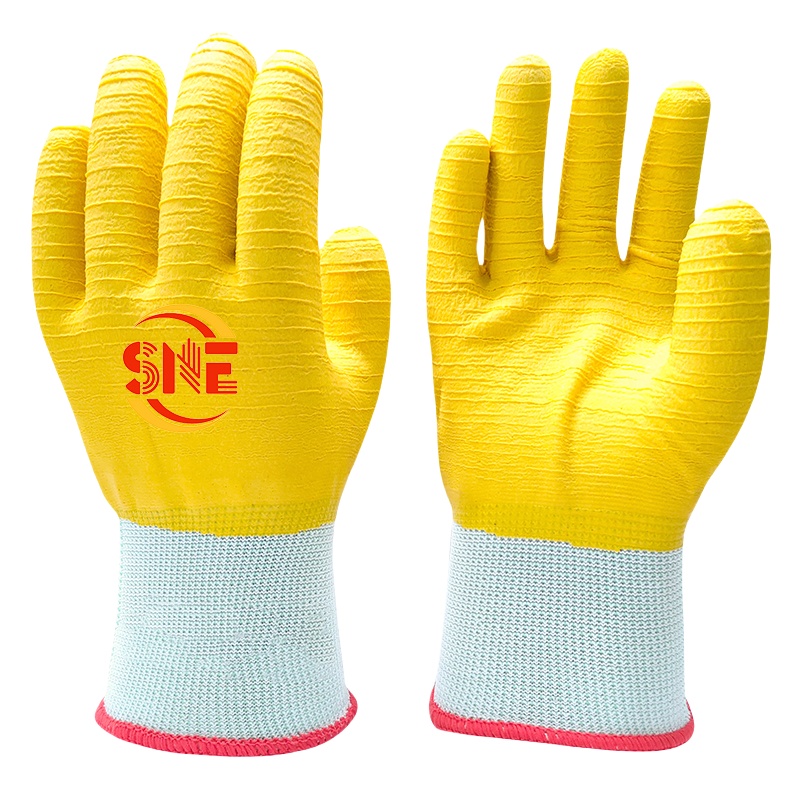
| Double-dipped nitrile work gloves | Polyester or blended liner | Better oil resistance and longer wear | Less breathability | Maintenance, fabrication, machine service |
| Sandy foam nitrile finish | Polyester or nylon liner | Enhanced grip in light oil | Can feel rougher to some users | Construction tools, parts handling |
| Touchscreen-compatible foam nitrile gloves | Fine gauge knitted liner | Digital device use without removal | Not always suitable for heavy abrasion | Warehousing, inventory control, field service |
| Cold-weather foam nitrile gloves | Brushed or insulated liner | Warmth with grip retention | Reduced dexterity compared with light styles | Outdoor yards, winter logistics, cold storage |
For many U.S. worksites, the best value is usually a 13-gauge or 15-gauge liner with palm foam nitrile coating, because it gives enough grip and comfort for general industrial use while keeping the cost manageable. However, sites working with sharp edges or oily components usually benefit from upgraded liners or stronger coating systems.
Industry Demand Comparison
This demand chart shows where foam nitrile coated gloves are most actively used in the United States. Warehousing, manufacturing, and automotive remain especially strong because they combine repetitive handling with a high need for grip and comfort.
How to Buy the Right Foam Nitrile Coated Gloves
U.S. buyers should start with the task, not the catalog. A glove that performs well in carton handling may fail in oily assembly, and a glove that lasts in fabrication may be too heavy for high-speed picking. The most effective procurement approach is to define the exposure first: sharp edges, dry grip, oily grip, abrasion, touch-screen use, climate, and wear duration.
Next, buyers should evaluate total cost per wear cycle rather than unit cost alone. A cheaper glove that workers reject, tear quickly, or frequently remove can raise the actual operating cost. This is especially true in fulfillment centers, airline ground support, municipal maintenance, and regional distribution facilities where glove replacement rates can vary significantly by shift pattern and task design.
Documentation also matters. Industrial purchasing teams should request size ranges, coating details, liner composition, abrasion or cut performance where relevant, carton pack information, and consistency data across production lots. For import purchases, it is also wise to confirm lead times, packaging standards, labeling needs, customs support, and whether the supplier can support private branding or mixed-SKU container planning.
Many experienced U.S. distributors run short wear trials across multiple departments before standardizing. This is smart because worker preference often changes by role. A receiving dock in Newark may prioritize oily grip and durability, while a light assembly line in Indiana may care more about fit and fingertip control.
Buyer Checklist Table
The table below translates common buying questions into practical selection criteria for U.S. procurement teams.
| Buying Factor | What to Check | Why It Matters | Typical Red Flag | Recommended Action |
|---|---|---|---|---|
| Grip environment | Dry, damp, or light oil handling | Determines coating texture and finish | Glove slips on oily parts | Request sandy or higher-grip foam nitrile samples |
| Dexterity level | Liner gauge and finger flexibility | Affects worker speed and compliance | Workers remove gloves for fine tasks | Test 15 gauge options for precision work |
| Abrasion exposure | Surface wear and replacement frequency | Drives cost per use | Palms wear out in days | Compare thicker coatings or reinforced styles |
| Cut risk | Presence of sharp edges or burrs | General purpose foam nitrile may be insufficient | Hand injuries despite glove use | Move to cut-resistant nitrile-coated models |
| Sizing range | XS to XXL availability | Improves fit and workforce adoption | One-size purchasing habits | Run a size profile by department |
| Supply continuity | Stocking plan and lead time stability | Prevents disruption across shifts | Frequent substitutions | Use dual-sourcing or safety stock planning |
| Branding and packaging | Private label, barcode, carton detail | Supports resale and inventory management | Generic cartons with unclear SKU control | Define packaging specs before order confirmation |
Applications Across U.S. Industries
Foam nitrile coated gloves are especially valuable when users need frequent hand movement and a reliable grip without moving into bulky heavy-duty PPE. In the United States, that makes them common in automotive parts handling, HVAC installation, appliance assembly, municipal repair, warehouse scanning, parcel sorting, and general contractor work.
In automotive operations around Detroit, Toledo, and Nashville, workers often use foam nitrile gloves for component handling, parts sorting, and subassembly work because the gloves maintain better control than loose cotton styles. In distribution centers near Inland Empire, Dallas-Fort Worth, Louisville, and Atlanta, the same glove category supports carton movement, pallet breakdown, inventory checks, and scanner-assisted work where flexibility matters.
Construction and field maintenance teams also use them for handling hand tools, conduit, fasteners, brackets, and packaged materials. While they are not substitutes for every heavy-duty glove class, they often serve as the most wearable option for medium-duty jobs with repeated grabbing and repositioning. This “wearability factor” explains their widespread use in mixed-task environments.
Trend Shift in Product Preferences
The market is gradually shifting from basic low-cost coated gloves toward more specialized versions with cut resistance, better grip textures, and worker-comfort features. This area chart reflects that trend in the U.S. market.
Case Studies from Real-World Buying Scenarios
A warehouse operator near the Port of Savannah replaced a basic latex-coated glove with a 15-gauge foam nitrile style after workers reported poor comfort during long picking shifts. The result was not just better user feedback; supervisors also saw fewer glove removals during scanning and carton sorting. Even with a slightly higher unit cost, the glove program improved because workers wore the gloves consistently.
A Midwest metal parts distributor introduced foam nitrile gloves with a cut-resistant liner for staff handling machined components with occasional sharp edges. Previously, the company had used a low-cost general-purpose glove and replaced pairs too frequently. The upgraded glove reduced replacement turnover and improved manager confidence during customer audits.
A Texas contractor supporting commercial HVAC installation standardized foam nitrile palm-coated gloves for technicians moving boxed units, sheet metal accessories, tools, and fasteners. The team still used heavier gloves for higher-risk tasks, but the foam nitrile model became the everyday default because it worked across enough jobsite conditions to simplify purchasing.
These examples show why glove selection should follow task mapping. In many U.S. operations, the best program is not one universal glove for every job, but a primary foam nitrile style supported by secondary gloves for cut, impact, cold, or chemical risk.
Local and Regional Supplier Comparison
The following comparison focuses on practical differences buyers often consider when sourcing for U.S. operations.
| Supplier | Distribution Style | Typical Strength | Customization Level | Lead Time Profile |
|---|---|---|---|---|
| Ansell | Large national channels | Enterprise hand protection programs | Moderate | Strong for stocked industrial lines |
| MCR Safety | Broad distributor network | Value and availability | Moderate | Good for standard industrial replenishment |
| PIP | National reseller and dealer coverage | Wide assortment and reseller support | Moderate to high | Reliable for channel-based purchasing |
| Superior Glove | Technical glove specialist model | Task-specific recommendations | Moderate | Good for specialized applications |
| SHOWA | Industrial supply channels | Grip and comfort technology | Moderate | Strong on established product lines |
| Magid | Industrial supply and account support | Program service and recurring orders | Moderate | Good for managed industrial accounts |
| Qingdao Snell Protective Products Co., Ltd. | Factory-direct export and B2B partnership | OEM, private label, bulk cost control | High | Best when planned with forecast-based import cycles |
This comparison highlights a common sourcing pattern in the United States: buyers often use domestic stock for urgent demand and add a factory-direct partner for private label, margin control, or planned high-volume replenishment.
Supplier and Product Comparison Chart
This chart compares supplier positioning across common buyer priorities in the U.S. market.
Our Company for United States Buyers
For U.S. importers, distributors, and private-label buyers looking beyond standard channel supply, Snell Safety offers a factory-direct sourcing model built around nitrile-coated, latex-coated, PU-coated, cut-resistant, impact-resistant, and application-specific industrial gloves. The company operates two manufacturing facilities with 6 dedicated production lines, more than 150 skilled employees, and daily output capacity of 150,000 pairs, giving it the scale needed for recurring bulk orders while maintaining lot consistency. Its production and quality systems are backed by ISO 9001 and CE compliance, and its established experience supplying Europe, North America, Australia, Russia, South America, the Middle East, and Southeast Asia supports its credibility with U.S. buyers who need evidence of export readiness. For cooperation, the company supports OEM, ODM, wholesale, custom branding, private label, and regional distribution arrangements, allowing end users, dealers, distributors, and brand owners to build glove programs that match local market needs rather than accept one fixed catalog. For service assurance, U.S.-focused buyers benefit from multilingual communication, sample support, technical consultation, export logistics coordination, and responsive pre-sale and after-sale follow-up through its international sales structure, which reflects an active long-term commitment to serving North American customers rather than a one-time remote export transaction. Buyers can review the broader product portfolio on the product catalog page, learn more about manufacturing capability on the company overview page, or contact the team directly through the U.S. buyer contact page.
What U.S. Buyers Should Ask Before Placing a Bulk Order
Before placing a container order or even a recurring pallet program, U.S. buyers should ask for wear trial samples from at least two glove constructions. They should also verify carton quantities, barcode format, harmonized import details, and whether mixed sizes can be packed efficiently for warehouse issue programs. For distributors, packaging consistency and retail-ready labeling often matter almost as much as the glove performance itself.
Another useful question concerns substitution policy. If a glove is unavailable, will the supplier switch liner composition, coating feel, or cuff finish without prior approval? Experienced procurement teams document these details in advance. This is especially important for foam nitrile gloves because seemingly small specification changes can affect grip, fit, and user acceptance on the floor.
Finally, ask about support after the sale. Industrial glove programs often need replenishment planning, complaint tracking, and technical guidance when a task changes. Suppliers that can support wear testing, sizing feedback, and packaging adjustments are usually better long-term partners than sellers focused only on unit price.
Industries That Benefit Most
Foam nitrile coated gloves are especially effective in environments where workers repeatedly pick up, reposition, hold, scan, or assemble items. That includes U.S. sectors such as e-commerce fulfillment, automotive parts distribution, appliance manufacturing, electrical assembly, building material supply, and municipal maintenance. In each case, the glove must be wearable enough for continuous use and durable enough to justify standardization.
They also fit well in mixed warehouses where staff switch between receiving, put-away, order picking, and returns processing. A glove that offers decent grip across multiple tasks simplifies inventory management and training. For this reason, many facilities around Memphis, Columbus, Reno, and Allentown select foam nitrile styles as their baseline issue glove.
2026 Trends: Technology, Policy, Sustainability
Looking ahead to 2026, the U.S. market will likely reward suppliers that combine three things: better worker-centric design, stronger documentation, and more credible sustainability practices. On the technology side, buyers can expect wider adoption of finer gauge liners, improved touchscreen compatibility, and better nitrile formulations that maintain grip while reducing hand fatigue. Demand for hybrid gloves that combine foam nitrile grip with cut-resistant yarns will also continue to rise, especially in advanced manufacturing and metal processing.
Policy trends will matter as well. Employers face greater pressure to document PPE selection decisions and show that issued gloves match actual workplace risks. As a result, suppliers with clearer test data, traceable quality systems, and stable specification control will gain an advantage. U.S. distributors may also place more emphasis on import resilience, country-of-origin planning, and secondary sourcing strategies in case of trade or freight disruption.
Sustainability is moving from marketing language to purchasing criteria. More buyers now ask about packaging reduction, production efficiency, waste control, and the usable lifespan of a glove program. In practice, the most credible sustainability strategy in this category is often a glove that lasts longer, fits better, and reduces unnecessary replacement frequency. By 2026, this “durability plus compliance” model is likely to become more influential than broad claims without measurable procurement value.
Frequently Asked Questions
Are foam nitrile coated gloves good for oily conditions?
They are good for light oil and many general industrial conditions, especially when the surface has a sandy or textured foam finish. For heavy oil exposure, a more robust nitrile coating or double-dipped style may perform better.
What is the difference between foam nitrile and smooth nitrile?
Foam nitrile is generally lighter, more breathable, and more flexible, making it better for long wear and dexterity. Smooth nitrile often offers stronger liquid resistance but can feel less breathable for all-day tasks.
Are these gloves suitable for construction?
Yes, for medium-duty construction tasks such as tool handling, material staging, fastener work, and general site movement. They are less suitable when the risk includes heavy impact, high cut exposure, or welding.
Can foam nitrile coated gloves be used in warehouses?
Yes. Warehouses are one of the strongest use cases in the United States because these gloves balance comfort, grip, scanning convenience, and carton handling performance.
Should distributors source only from domestic suppliers?
No. Domestic suppliers are valuable for fast stock and local coverage, but factory-direct international manufacturers can offer stronger private label options, lower landed costs on planned volume, and wider customization.
What makes a supplier trustworthy for U.S. bulk buying?
Consistent specifications, test documentation, clear lead times, export experience, responsive service, and the ability to support samples, packaging requirements, and repeat orders without performance drift.
Final Takeaway
For most U.S. buyers, the best foam nitrile coated gloves are the ones that match the actual task, fit workers properly, and arrive consistently through a dependable supply model. National brands like Ansell, MCR Safety, PIP, Superior Glove, SHOWA, and Magid remain practical choices for immediate industrial programs. At the same time, factory-direct manufacturers such as Qingdao Snell Protective Products Co., Ltd. deserve consideration when buyers want stronger cost-performance, private label development, or scalable bulk production with export-ready quality systems. The smartest procurement strategy is often a blended one: use local availability where speed matters and build planned volume programs with reliable manufacturing partners where margin and customization matter most.