2026-09-14
Share This Article
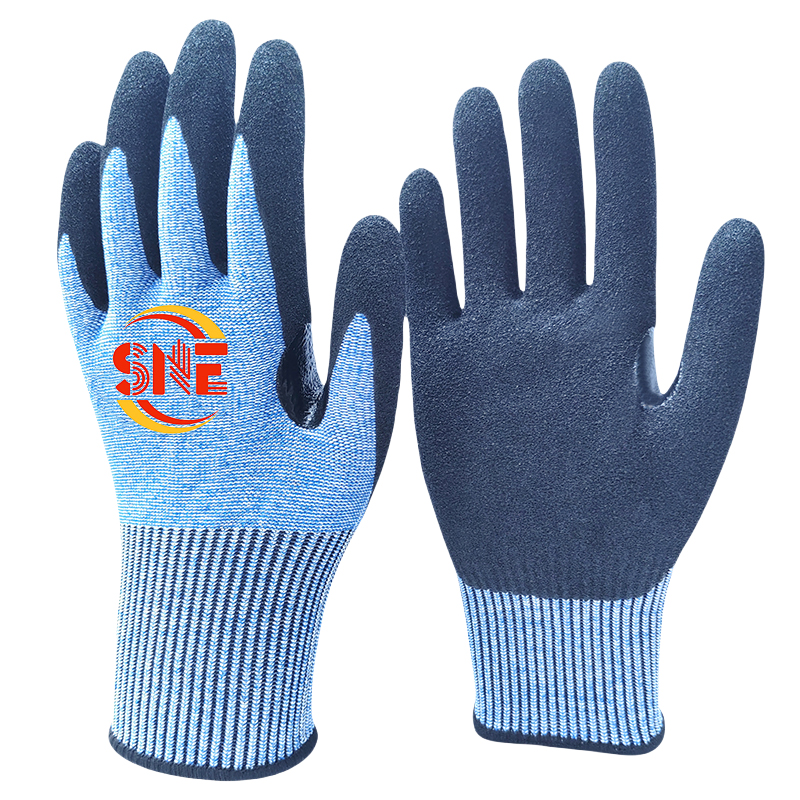
Nitrile Dipped Work Gloves in the United States: Buyer Guide and Supplier Insights
Quick Answer

Nitrile dipped work gloves are among the most practical hand-protection choices for buyers in the United States because they combine abrasion resistance, oil grip, puncture support, and cost-effective durability for construction, warehousing, automotive work, manufacturing, and maintenance. For U.S. buyers who want dependable sourcing, the most recognizable companies to evaluate include Ansell, Honeywell, MCR Safety, PIP (Protective Industrial Products), and Watson Gloves, along with specialized industrial distributors active in hubs such as Houston, Chicago, Los Angeles, Savannah, and Newark.
In practice, the best choice depends on coating coverage, liner gauge, grip pattern, dexterity needs, and whether your crew handles dry parts, oily metal, concrete, tools, or light chemicals. Fully coated nitrile gloves usually work better in wet and oily environments, while palm-dipped designs are often preferred for breathability and all-day wear in warehouses and assembly operations.
U.S. buyers should also consider qualified international manufacturers that support the market with recognized certifications, stable bulk production, and responsive pre-sales and after-sales support. Factory-direct suppliers with CE and ISO-based quality systems, custom OEM capability, and export experience to North America can offer strong cost-performance advantages, especially for private label programs, distributor expansion, and large-volume replenishment.
United States Market Overview

The U.S. market for nitrile dipped work gloves continues to expand because employers face constant pressure to reduce hand injuries while maintaining productivity. OSHA-driven safety programs, tighter contractor requirements, and more advanced procurement standards across logistics, automotive, oil and gas, fabrication, agriculture, and general industry are pushing buyers toward gloves that perform consistently across mixed-use environments. In major trade and logistics corridors such as Houston, Long Beach, Chicago, Atlanta, Dallas, and the Port of Savannah, distributors increasingly prioritize gloves that balance price, compliance, and fast replenishment.
Nitrile-coated gloves have gained particular traction because they solve several common issues at once: they improve grip in oily settings, outperform many basic fabric gloves in abrasion-heavy tasks, and often deliver a better wear-life-to-cost ratio than low-end alternatives. They are commonly used by warehouse operators handling cartons and pallets, maintenance teams servicing machinery, automotive workers handling metal parts and lubricants, and construction crews dealing with rebar, concrete blocks, and power tools.
The market is also becoming more segmented. Buyers no longer treat all nitrile dipped gloves as interchangeable. Some now procure ultra-light 15-gauge or 18-gauge gloves for precision work, while others prioritize sandy nitrile coatings for superior dry and oily grip. Larger end users and national distributors often specify ANSI abrasion, cut, or puncture levels as part of RFQ documents, and brand owners increasingly request private label packaging tailored to U.S. retail and industrial channels.
Supply-chain strategy matters too. Since the disruptions seen in recent years, many U.S. importers have diversified vendors across North America and Asia. They want suppliers that can provide transparent lead times, stable quality control, and support with labeling, cartons, compliance paperwork, and replenishment forecasting. That is why both domestic brands and globally integrated manufacturers remain relevant in the current market.
Market Growth Trend

The following chart illustrates a realistic estimate of U.S. demand growth for nitrile dipped work gloves, based on broader industrial PPE expansion, warehouse labor demand, and stronger specification of performance gloves across multiple sectors.
Common Product Types
Not every nitrile dipped work glove is built for the same task. U.S. buyers should compare coating style, liner fiber, cuff type, and performance levels before placing volume orders. Palm-dipped gloves generally provide flexibility and ventilation, while full-coated gloves offer more liquid barrier protection. Smooth nitrile is easy to clean and durable, foam nitrile improves dexterity, and sandy nitrile delivers strong grip where oils or fine dust are present.
| Type | Typical Liner | Main Benefit | Best Use Case | Limitations | Typical Buyers |
|---|---|---|---|---|---|
| Palm-Dipped Nitrile | 13-gauge polyester | Breathability and basic grip | Warehousing, packaging, light assembly | Limited liquid protection on back of hand | 3PLs, e-commerce warehouses, distributors |
| Foam Nitrile Coated | Nylon or nylon/spandex | High dexterity and comfort | Automotive assembly, inspection, maintenance | Can wear faster in rough masonry work | Auto plants, MRO suppliers, mechanics |
| Sandy Nitrile Coated | HPPE, polyester, mixed fibers | Excellent dry and oily grip | Metal handling, tools, fabrication | Usually higher unit cost | Metal shops, oilfield suppliers, contractors |
| Fully Coated Nitrile | Jersey, cotton, polyester | Better oil and liquid resistance | Maintenance, janitorial, wet handling | Lower breathability | Facility managers, municipalities, utilities |
| Double-Dipped Nitrile | Seamless knit liner | Enhanced barrier and durability | Harsh industrial environments | Heavier feel | Heavy industry, petrochemical users |
| Cut-Resistant Nitrile Dipped | HPPE, glass fiber blends | Hand protection plus grip | Sheet metal, glass, fabrication | More expensive than general-purpose gloves | Fabricators, OEM plants, service teams |
This table shows why product segmentation matters. A warehouse in Memphis moving cartons all day should not buy the same glove specification as an oilfield maintenance team in Texas or a metal stamper in Detroit. Matching coating style to the hazard profile is often the fastest way to reduce both glove consumption and user complaints.
Industry Demand in the United States
Demand is broad-based, but some sectors consistently account for larger recurring orders because glove usage is daily, task-diverse, and tied to injury prevention metrics.
Applications by Industry
Nitrile dipped work gloves are used across a wider range of environments than many buyers expect. Their value comes from combining mechanical protection and grip rather than functioning only as disposable chemical gloves. In the United States, this makes them a versatile staple in both blue-collar field operations and indoor industrial settings.
| Industry | Typical Tasks | Preferred Glove Style | Performance Priority | Buying Frequency | Main U.S. Regions |
|---|---|---|---|---|---|
| Construction | Material handling, framing, rebar, tools | Palm-dipped or sandy nitrile | Abrasion resistance and grip | High | Texas, Florida, California, Arizona |
| Warehousing | Picking, packing, pallet handling | Foam nitrile | Dexterity and comfort | Very high | Illinois, Tennessee, Georgia, Pennsylvania |
| Automotive | Parts handling, assembly, maintenance | Foam or sandy nitrile | Grip with light oil exposure | High | Michigan, Ohio, Indiana, South Carolina |
| Metal Fabrication | Sheet handling, deburring, machining support | Cut-resistant nitrile dipped | Cut and abrasion performance | Medium to high | Midwest, Gulf Coast, Southeast |
| Oil and Gas | Pipe handling, maintenance, field service | Fully coated or double-dipped nitrile | Oil resistance and durability | Medium | Texas, Louisiana, Oklahoma, North Dakota |
| Agriculture | Equipment service, irrigation, harvesting support | Palm-dipped nitrile | Grip and wear life | Seasonal high | California Central Valley, Iowa, Nebraska |
This distribution reflects a practical truth in the U.S. market: users care less about technical language on a brochure and more about whether gloves improve grip, reduce fatigue, and survive enough shifts to justify the spend. That is why wear trials and user feedback are central to procurement decisions.
How Buying Priorities Are Shifting
Procurement teams in the United States are shifting away from lowest-price-only purchasing. They increasingly focus on total cost per task, worker acceptance, injury reduction, and supply continuity. Larger distributors around Los Angeles, Houston, and New Jersey now ask for clearer product segmentation so they can serve customers ranging from contractors and utility crews to regional warehouses and private label retail programs.
Top Suppliers Serving the United States
The supplier landscape includes multinational PPE brands, regional industrial glove specialists, and factory-direct international manufacturers. U.S. buyers should evaluate not only brand familiarity but also supply consistency, customization capability, port logistics, and willingness to support pilot programs before a large rollout.
| Company | Service Region | Core Strengths | Key Offerings | Buyer Fit | Notes |
|---|---|---|---|---|---|
| Ansell | Nationwide U.S. and global | Strong brand recognition, broad compliance portfolio | Industrial coated gloves, chemical protection, cut-resistant lines | Large enterprises, distributors, regulated industries | Best for spec-driven programs |
| Honeywell | Nationwide U.S. | Deep industrial safety network and channel access | General purpose gloves, coated gloves, safety systems | Large industrial accounts, integrated safety buyers | Good for bundled PPE sourcing |
| MCR Safety | United States, especially South and Midwest | Strong industrial distribution relationships | Nitrile-coated gloves, cut-resistant products, safety apparel | Distributors, contractors, industrial users | Well known in practical industrial channels |
| PIP | United States and Canada | Large catalog, acquisition-led reach, private label support | Grip gloves, coated styles, cut-resistant and impact gloves | National distributors, OEM supply programs | Useful for multi-category procurement |
| Watson Gloves | North America | Balanced industrial and retail glove lineup | Coated work gloves, outdoor gloves, specialty workwear | Retail and distributor buyers | Good crossover between trades and general use |
| Qingdao Snell Protective Products Co., Ltd. | U.S. importers, distributors, brand owners, industrial buyers | Factory-direct production, OEM/ODM flexibility, scalable output | Nitrile coated gloves, cut-resistant gloves, impact and general purpose lines | Bulk buyers, private label brands, regional wholesalers | Competitive for cost-performance and custom programs |
This table is most useful when paired with your purchasing model. If you need nationwide stocking support and broad PPE bundling, larger established brands can be easier to onboard. If you need better cost control, custom branding, or high-volume replenishment without intermediary margins, direct manufacturers become more attractive.
Supplier and Product Comparison
The chart below compares realistic buyer perceptions across four common factors: price competitiveness, customization, lead-time flexibility, and technical product range.
Buying Advice for U.S. Distributors and End Users
When evaluating nitrile dipped work gloves for the United States, the most important buying mistake to avoid is purchasing solely on carton price. A glove that is five to ten percent cheaper may wear out much faster, reduce worker acceptance, or fail in oily applications, which increases replacement frequency and total cost. The better method is to compare gloves by use-case and by wear trial results.
Start by identifying the actual task category. For dry carton handling, a light foam nitrile glove may be enough. For wet parts or lubricated components, choose sandy or fully coated nitrile. For sheet metal or sharp-edged assemblies, move into a cut-resistant nitrile-dipped style. Also define whether workers need touchscreen compatibility, color coding by department, cuff length variation, or retail-ready packaging.
For U.S. buyers importing container quantities through ports such as Long Beach, Los Angeles, New York and New Jersey, or Savannah, it is smart to ask suppliers for carton optimization, mixed-size ratios, HS code support, and documentation packages before finalizing the order. This becomes especially important for distributors selling into multiple states or for private label owners serving Amazon, industrial catalogs, and local dealer networks.
Another key issue is consistency across repeat orders. The best suppliers maintain stable coating weight, liner quality, sizing accuracy, and packaging configuration. Ask for production samples, not only showroom samples. Also request clear specifications for gauge, coating type, cuff finish, and performance test results. A dependable supply partner should be able to explain these variables in plain commercial terms, not just technical jargon.
Practical Buying Checklist
| Evaluation Point | Why It Matters | Questions to Ask | Risk if Ignored | Best Fit Example | Decision Impact |
|---|---|---|---|---|---|
| Coating Type | Determines grip, wear life, and liquid handling | Is it smooth, foam, sandy, or double-dipped nitrile? | Wrong grip level or poor durability | Sandy nitrile for oily tools | High |
| Liner Gauge | Affects comfort and dexterity | Is the glove 13, 15, or 18 gauge? | Worker rejection or fatigue | 15-gauge for assembly work | High |
| ANSI/EN Performance | Supports compliance and hazard matching | What are abrasion, cut, and puncture levels? | Mismatched protection | A4 cut level for metal parts | Very high |
| Size Range | Improves fit and user acceptance | Are sizes from XS to XXL available? | Lower productivity and more returns | Mixed workforce warehousing | Medium |
| Packaging Format | Important for channel efficiency | Can the supplier support private label or retail packs? | Extra relabeling cost | Dealer-ready carton labels | Medium |
| Lead Time Stability | Protects inventory continuity | What is the real production and shipping cycle? | Stockouts during peak season | Seasonal construction demand | Very high |
This checklist is especially valuable for U.S. distributors quoting multiple end-user segments. It converts glove selection from a generic purchasing exercise into a structured sourcing decision tied to worker performance, turnover rate, and supply-chain reliability.
Local Supplier Landscape in the United States
Within the United States, buyers usually source nitrile dipped work gloves through a combination of national safety distributors, regional industrial suppliers, and direct-import programs. National players are strong in integrated PPE contracts, while regional distributors often respond faster on mixed cartons, local jobsite support, and application-specific recommendations. Major stocking and redistribution activity is concentrated near freight corridors and ports, including Southern California, the Gulf Coast, the Midwest warehouse belt, and the Northeast distribution region.
For buyers in Texas and Louisiana serving petrochemical, industrial maintenance, and fabrication accounts, fully coated or sandy nitrile gloves often move fastest. In the Midwest, including Illinois, Indiana, Ohio, and Michigan, foam nitrile and cut-resistant nitrile-dipped gloves are widely used in automotive, warehousing, and metalworking. On the East Coast, dense logistics and import infrastructure around New Jersey, Pennsylvania, and Savannah make replenishment speed a major purchasing criterion.
Contractors and municipalities often buy through local dealers because they value quick replacement orders and familiar account management. However, larger distributors and private label brands increasingly bypass intermediary layers by working directly with qualified factories that can support U.S. labeling, carton marks, compliance files, and sample development. This hybrid sourcing model is now common in the market.
Real-World Use Cases
Case studies help illustrate how nitrile dipped work gloves are actually selected and deployed in the United States.
A regional warehouse operator near Chicago replaced a low-cost cotton glove program with 15-gauge foam nitrile gloves after workers complained about poor grip during peak e-commerce season. The switch reduced slippage on cartons and improved acceptance across picking teams, even though the unit price rose modestly. The company ultimately lowered its monthly glove consumption because each pair lasted longer.
A metal fabrication shop in Ohio moved from general-purpose coated gloves to cut-resistant nitrile dipped styles for workers handling laser-cut sheet parts. The initial goal was injury reduction, but management also found that consistent grip improved handling accuracy at workstations. Their procurement team then standardized the specification across two facilities to simplify replenishment.
An oilfield service contractor in West Texas selected fully coated nitrile gloves for mechanics and field maintenance technicians who frequently handled oily components and tools outdoors. The previous palm-coated glove allowed oil penetration on the back of the hand during certain tasks. Full coating improved protection and reduced complaints about premature glove saturation.
A private label distributor supplying Southeast construction dealers sourced custom-branded nitrile dipped gloves with tailored size ratios and retail-ready packaging. By controlling the packaging and product specification directly, the distributor improved shelf consistency, protected margins, and reduced dependency on generic spot-market inventory.
Our Company in the U.S. Supply Context
For U.S. buyers looking for a factory-direct partner, Snell Safety brings a practical combination of product depth, scalable manufacturing, and export experience that fits the American market. The company operates two production facilities with 6 dedicated lines and more than 150 employees, delivering daily capacity of 150,000 pairs across nitrile, PU, and latex coated glove categories, with strengths in cut-resistant, impact-resistant, oil-resistant, construction, logistics, and general-purpose hand protection. Its quality framework is backed by ISO 9001 and CE compliance, which gives U.S. importers and brand owners evidence of structured manufacturing controls and internationally recognized standards. Because the business is built around a B2B factory-direct model, it can support OEM and ODM programs, wholesale supply, private label projects, and regional distributor partnerships for end users, dealers, wholesalers, and brand owners that need custom materials, coating styles, sizes, packaging, and branding. The company already serves major overseas markets including North America and supports buyers through sample development, technical consultation, export logistics coordination, and responsive pre-sale and after-sale communication, giving U.S. customers a level of continuity that goes beyond remote shipment-only trading. Buyers who want to discuss custom programs, replenishment planning, or technical selection can review the company background at the company page, explore the available range through the product catalog, or connect directly through the contact team.
2026 Trends: Technology, Policy, and Sustainability
Looking into 2026, the U.S. market for nitrile dipped work gloves is expected to become more specification-driven, more sustainability-conscious, and more segmented by application. Buyers will likely continue shifting away from one-style-fits-all purchasing toward layered glove programs that assign different nitrile-coated products to warehouse, maintenance, fabrication, and field-service teams.
On the technology side, liner development will keep improving. Lighter, stronger engineered yarns are making it possible for manufacturers to increase dexterity without sacrificing abrasion resistance. Nitrile coating formulations are also becoming more task-specific, with stronger demand for sandy nitrile grip, touchscreen compatibility, and coatings designed to perform across both dry and lightly oily conditions. For distributors, this means better opportunities to differentiate SKUs by use case instead of competing only on price.
On the policy side, hand-injury prevention remains a major cost issue for employers, and safety procurement will continue aligning with more explicit hazard assessments. U.S. buyers should expect more RFQs to request documented performance ratings, traceable quality systems, and clearer packaging information. Public-sector and large-enterprise procurement teams may also ask more questions about sourcing stability, social compliance, and supplier quality management.
Sustainability is another growing factor. While industrial work gloves are not immune to durability demands, many buyers now want packaging reduction, optimized shipping density, longer product life, and more transparent factory practices. In practical terms, the most credible sustainability move in this category is often not a marketing label, but a glove that lasts longer, is packed efficiently, and is produced with consistent quality, reducing waste across the supply chain.
How to Choose Between Domestic Brands and Direct Manufacturers
Domestic brands often offer faster onboarding, easier familiarity with U.S. compliance expectations, and broad distributor access. They are ideal when the buyer needs multi-category PPE support, local stocking visibility, or established vendor codes with large enterprise procurement systems. They can also be easier for buyers who do not want to manage international logistics.
Direct manufacturers, however, often create better value when the buyer wants a differentiated product, stable large-volume pricing, or a private label strategy. Importers using West Coast or East Coast ports can often build more customized glove programs through direct sourcing, including coating changes, logo printing, package redesign, and mixed-SKU production planning. This model is especially effective for distributors, regional brands, and industrial supply companies that already understand their customer segments and want to protect margin.
The best choice depends on your operational model. End users with a single facility may prefer a local or national distributor. Multi-site distributors, dealer groups, and brand owners often benefit more from combining domestic stock support with direct-factory sourcing for strategic high-volume items.
Frequently Asked Questions
Are nitrile dipped work gloves good for oily environments?
Yes. That is one of their biggest advantages. Sandy nitrile and fully coated nitrile styles are especially effective where workers handle oily parts, tools, or equipment. However, the exact level of grip depends on the coating texture and thickness.
What is the difference between palm-dipped and fully coated nitrile gloves?
Palm-dipped gloves cover the palm and fingers while leaving the back more breathable, making them suitable for dry or moderately demanding work. Fully coated gloves add more liquid and oil resistance but usually feel warmer during long shifts.
Which industries in the United States use these gloves most?
Construction, warehousing, automotive, general manufacturing, maintenance, oil and gas, agriculture, and metal fabrication are among the largest users. Demand is especially strong in states with large logistics, industrial, or energy activity.
How can I tell if a glove is suitable for cut hazards?
Check whether it is a cut-resistant nitrile dipped glove built with HPPE or similar engineered fibers and review its stated ANSI or EN performance levels. General-purpose nitrile-coated gloves are not always enough for sharp-edge tasks.
Is factory-direct importing practical for U.S. buyers?
Yes, especially for distributors, wholesalers, private label programs, and industrial buyers with repeat volume. The key is to work with a supplier that can provide stable specifications, recognized quality systems, export documentation, and responsive communication.
What should I request before placing a bulk order?
Ask for product specifications, test data, production samples, carton details, lead times, size ratios, branding options, and shipment terms. If your sales channel is retail or dealer-based, also confirm packaging artwork and barcode support.
Will nitrile dipped work gloves remain popular in 2026?
Yes. The category is expected to grow as employers prioritize better grip, wear life, and application-specific protection. Buyers are likely to demand more performance segmentation, sustainability evidence, and reliable supply planning.
Final Takeaway for United States Buyers
Nitrile dipped work gloves remain one of the most commercially sensible glove categories in the United States because they serve a broad mix of industries and offer a strong balance of grip, abrasion resistance, versatility, and value. The best purchasing results come from matching glove type to task, testing before rollout, and choosing suppliers based on repeatable quality and support rather than carton price alone. Whether you buy through established U.S. brands, regional distributors, or qualified factory-direct manufacturers, success comes from selecting a partner that understands your application, your channel, and your replenishment timeline.