2026-04-29
Share This Article
Nitrile Palm Coated Gloves Suppliers in the United States
Quick Answer

If you need nitrile palm coated gloves in the United States, the most practical route is to compare a mix of established national safety brands, regional industrial distributors, and factory-direct international manufacturers that already serve U.S. buyers. For immediate domestic coverage, strong options include MCR Safety, PIP, Ergodyne, Magid, Global Glove, and Grainger because they support fast replenishment, broad size ranges, and reliable industrial account service across major logistics corridors such as Chicago, Houston, Los Angeles, Savannah, and New Jersey.
For buyers focused on construction, warehousing, automotive, assembly, maintenance, and oil handling, the best choice depends on grip level, abrasion resistance, oil resistance, liner gauge, and whether you need private labeling or consistent bulk replenishment. Qualified international suppliers can also be a smart choice for U.S. importers when they offer recognized certifications, stable production capacity, and responsive pre-sale and after-sale support. In practice, many distributors and brand owners in the United States also evaluate Chinese manufacturers for better cost-performance in high-volume glove programs.
For direct sourcing and broader product comparison, you can review the main catalog through industrial glove products, learn more about the manufacturer via company background, or reach out through the U.S. supply inquiry page for bulk and OEM discussion.
United States Market Overview

The United States remains one of the most mature and demanding markets for nitrile palm coated gloves because hand protection is required across a broad base of industries, from commercial construction in Texas and Florida to automotive production in Michigan, warehouse networks in California and Tennessee, manufacturing in Ohio and Indiana, and oil, gas, and maintenance work across the Gulf Coast. Buyers in this market typically balance OSHA-oriented workplace requirements, total cost of ownership, replacement frequency, worker comfort, and SKU simplification.
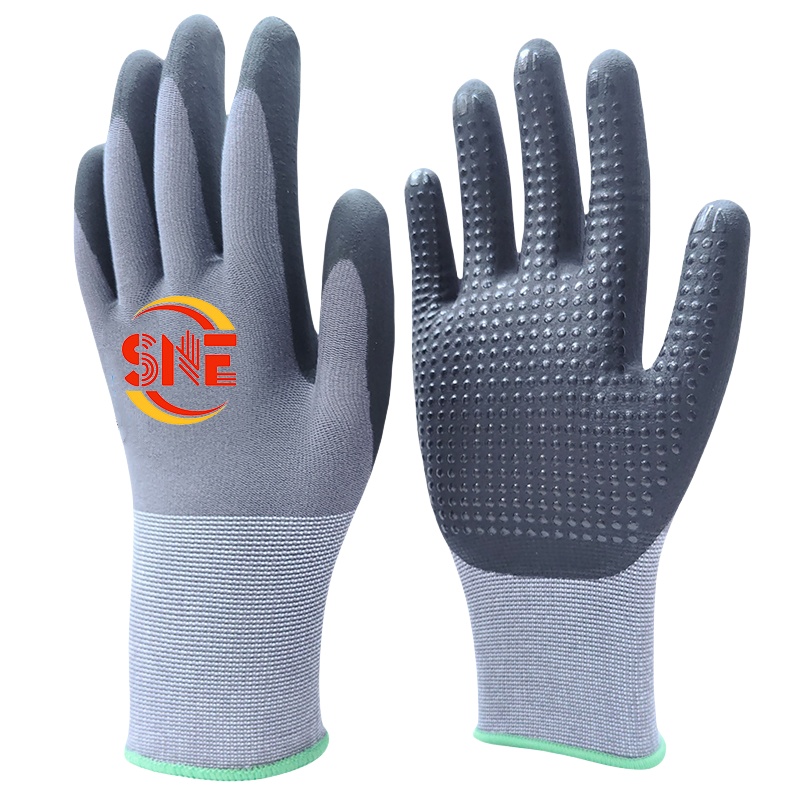
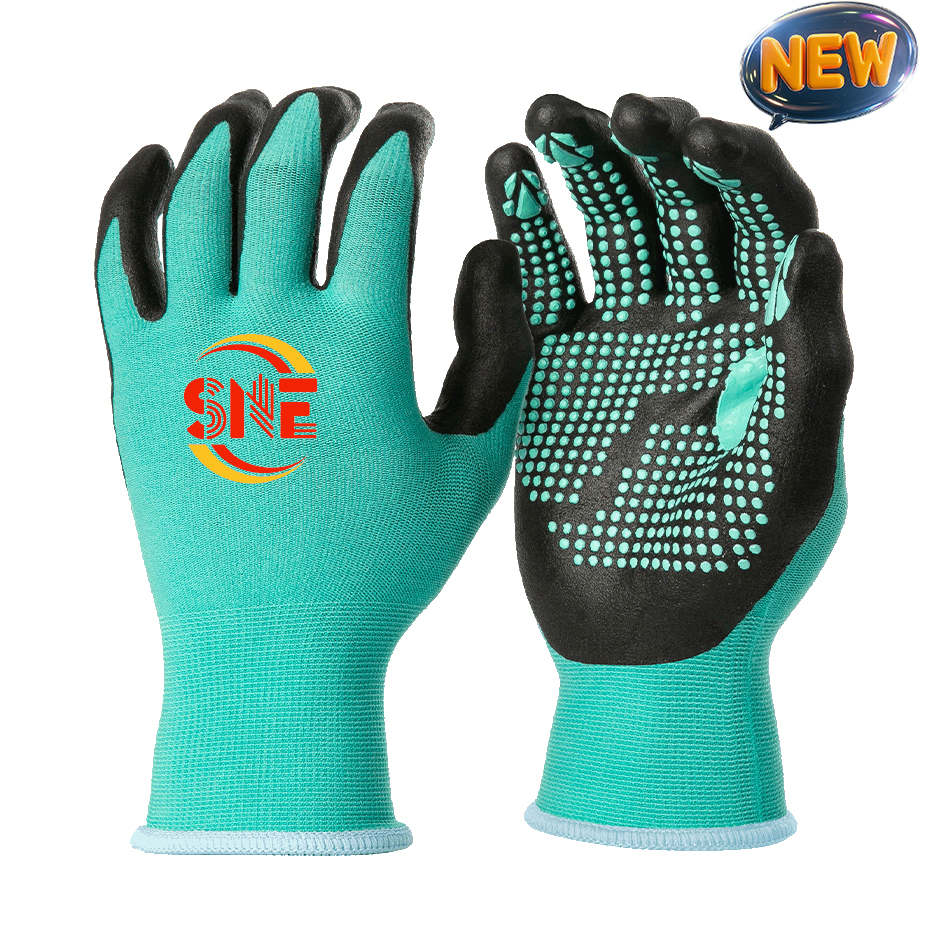
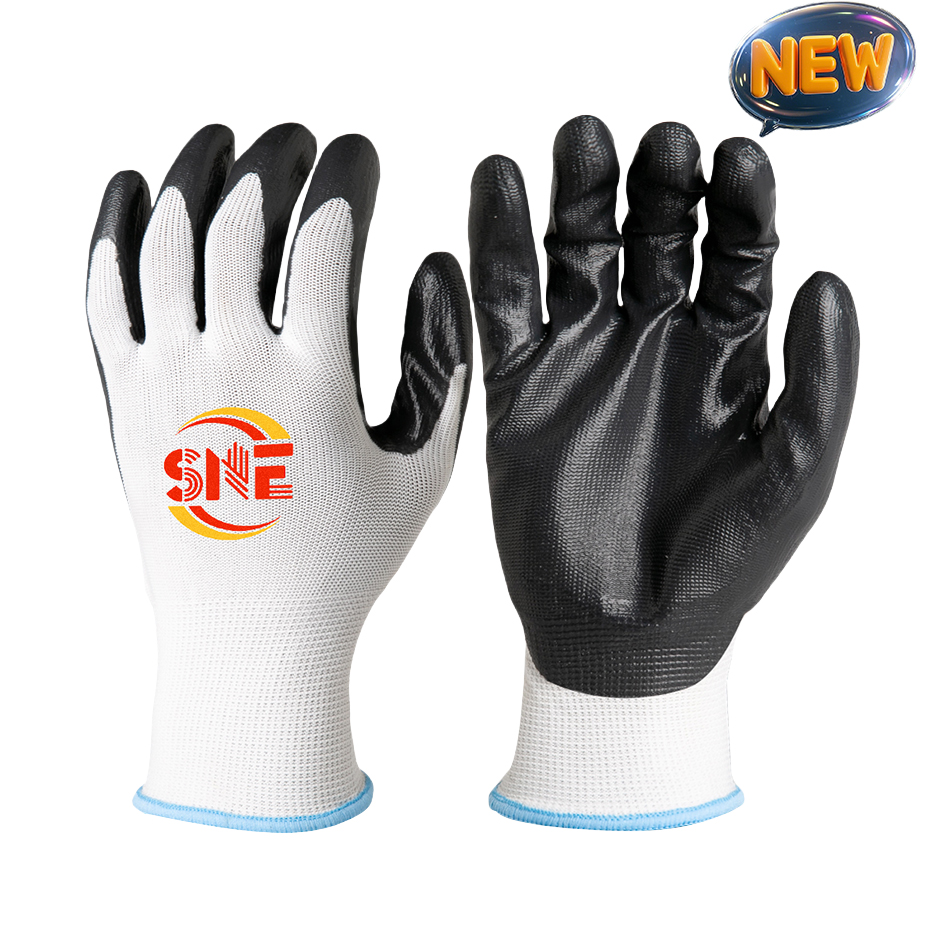
Nitrile palm coated work gloves are especially popular because they combine flexible knit liners with a nitrile coating concentrated on the palm and fingers, which helps preserve breathability on the back of the hand while improving grip and resistance to oils, light chemicals, and abrasion. In U.S. purchasing practice, these gloves are often selected for tasks where workers need better dexterity than heavy fully dipped gloves but more durability than basic PU-coated alternatives.
Demand also reflects the structure of American supply chains. Port gateways such as Los Angeles/Long Beach, Savannah, Houston, Newark, and Seattle-Tacoma connect import programs with inland distribution hubs in Chicago, Dallas, Atlanta, and Kansas City. This means buyers can source through domestic stocking distributors or import direct containers and palletized programs when they need stronger margin control.
Another major trend in the United States is segmentation. Entry-level buyers may only ask for economical gray-shell gloves with black nitrile palms. More advanced buyers often specify liner gauge, EN or ANSI cut level, touchscreen functionality, foam nitrile versus smooth nitrile, oil-channel grip, cuff color coding, customized packaging, and barcode-ready private label designs. That is why supplier selection matters as much as glove selection.
Market Growth Trend

The chart below illustrates a realistic outlook for U.S. demand growth in nitrile palm coated gloves as warehouse automation, infrastructure work, and industrial maintenance keep replacement rates elevated while quality expectations rise.
Top Suppliers Serving the United States
The supplier landscape includes domestic brands, large import-driven distributors, and manufacturing partners that support OEM and private label programs. The table gives a practical starting point for U.S. buyers comparing sourcing options.
| Company | Primary Service Region | Core Strengths | Key Offerings | Best For |
|---|---|---|---|---|
| MCR Safety | Nationwide United States | Broad industrial PPE portfolio, established distribution channels, strong safety market recognition | Nitrile-coated gloves, cut-resistant styles, safety eyewear, protective apparel | Large industrial accounts and multi-site buyers |
| PIP | United States and North America | Wide range of hand protection categories, distributor support, branding depth | General-purpose coated gloves, cut protection, impact gloves, task-specific PPE | National distributors and integrated PPE programs |
| Ergodyne | United States major metro and industrial regions | Strong worker-safety branding, practical jobsite product design, training-oriented selling | Grip gloves, thermal gloves, visibility gear, ergonomics accessories | Construction, utilities, and field service teams |
| Magid | Chicago hub with nationwide reach | Private label capability, broad SKU depth, industrial account support | Nitrile palm coated gloves, disposable gloves, cut-resistant gloves, custom programs | Distributors, factories, and enterprise procurement teams |
| Global Glove | United States and Canada | Focused hand protection catalog, practical value tiers, warehouse-friendly options | Foam nitrile gloves, sandy nitrile gloves, cut-resistant and cold-weather gloves | Warehouse, logistics, and assembly operations |
| Grainger | Nationwide branch and online distribution network | Fast replenishment, procurement convenience, wide brand access | Multiple glove brands, MRO supply, facility and maintenance products | Buyers prioritizing availability and consolidated purchasing |
| Qingdao Snell Protective Products Co., Ltd. | United States import supply via factory-direct B2B programs | OEM/ODM production, nitrile coating expertise, scale manufacturing, direct pricing | Nitrile coated gloves, PU and latex coated gloves, cut-resistant and impact-resistant gloves | Importers, wholesalers, brand owners, and private label buyers |
This mix matters because U.S. buyers rarely follow one single sourcing model. Fast-moving maintenance accounts often buy from local or national inventory, while distributors and private brands frequently combine domestic safety stock with direct factory purchasing to improve gross margin and maintain backup supply.
Common Product Types
Not all nitrile palm coated gloves perform the same way. Coating texture, liner material, gauge, cuff finish, and dip coverage all influence comfort and task suitability. The table below shows the most common types seen in the U.S. market.
| Type | Typical Liner | Grip Profile | Oil Resistance | Main Use Cases |
|---|---|---|---|---|
| Smooth nitrile palm coated | Polyester or nylon | Balanced dry grip | Good | General handling, maintenance, packaging |
| Foam nitrile palm coated | Nylon, polyester, or mixed knit | Enhanced grip in light oil | Good to very good | Assembly, warehouse, automotive parts handling |
| Sandy nitrile palm coated | Engineered knit liners | High grip on abrasive surfaces | Very good | Construction, metal handling, logistics |
| Double-dipped nitrile | Polyester or cut-resistant yarn | Strong wet and oily grip | High | Oil handling, utilities, heavy maintenance |
| Cut-resistant nitrile palm coated | HPPE, glass fiber, steel blend, engineered yarn | Task dependent | Good | Sheet metal, fabrication, automotive stamping |
| Touchscreen-compatible nitrile gloves | Fine-gauge knit | Light to medium duty | Moderate | Scanning, inventory, service technicians |
| Winter-lined nitrile palm coated | Acrylic or brushed interior liner | Cold-weather handling grip | Good | Outdoor logistics, cold storage, winter construction |
For most U.S. buyers, foam nitrile is the default choice where dexterity and moderate oil contact are both important. Sandy nitrile or double-dip designs are better when gloves must hold up in dirty, abrasive, or slick environments, especially in manufacturing, maintenance, or industrial freight handling.
Industry Demand by Application
The U.S. market does not consume coated gloves evenly. Warehousing, construction, automotive, and manufacturing account for a large share because gloves are replaced frequently and must balance price with worker acceptance.
Buying Advice for U.S. Procurement Teams
When buying nitrile palm coated gloves in the United States, start with the task, not the catalog photo. A glove that performs well in a clean fulfillment center may fail quickly in metal fabrication or outdoor utility work. Good procurement starts with five practical checks.
First, define the exact hazard profile. Are workers handling cartons, sharp edges, oily machine parts, masonry materials, or wet components? Nitrile palm gloves are versatile, but the right coating texture and liner depend on the real work environment. Second, compare wear life against unit cost. A lower-cost glove that lasts half as long usually raises total program cost.
Third, confirm sizing consistency. U.S. operations with multilingual labor forces often need simple cuff markings, reliable fit from size 7 through 11, and stable repeat production so workers do not reject replacement batches. Fourth, ask about packaging and replenishment options. Some U.S. distributors need retail-ready labels, while others need case-pack optimization for warehouse slotting.
Fifth, ask for trial quantities and field feedback. The best glove selection process usually includes side-by-side wear trials in actual workplaces in cities such as Dallas, Columbus, Atlanta, Phoenix, and Charlotte where different climates and tasks affect comfort and glove life.
Supplier Comparison Criteria
The following comparison table helps buyers evaluate glove suppliers beyond simple unit price. In the U.S. market, service reliability, documentation, and replacement consistency often matter just as much as the quoted case price.
| Evaluation Factor | Why It Matters | Domestic Distributor Strength | Factory-Direct Import Strength | Questions to Ask |
|---|---|---|---|---|
| Lead time | Protects against stockouts during peak season | Usually faster from U.S. stock | Better for planned replenishment | What is the standard reorder cycle? |
| Price stability | Helps annual contract planning | May include channel margin changes | Often stronger on volume contracts | How long is pricing valid? |
| Customization | Supports branding and SKU differentiation | Limited on stocked items | Usually stronger for OEM/ODM | Can you customize cuff, logo, and packaging? |
| Documentation | Needed for compliance and customer approval | Often easy to obtain | Must be confirmed early | Do you provide test reports and certifications? |
| Minimum order quantity | Affects smaller buyers and pilots | Good for smaller orders | Better for larger commitments | What are the MOQ levels by model? |
| Program flexibility | Supports changing industry demand | Strong for mixed-SKU buying | Strong for dedicated glove programs | Can mixed models ship in one order? |
| After-sales support | Important when field complaints arise | Often easier locally | Should be tested during onboarding | Who handles claims and wear feedback? |
For U.S. distributors and importers, the strongest model is often hybrid sourcing: domestic stock for urgent consumption and factory-direct supply for core volume lines. This can improve fill rates without giving up price competitiveness.
Applications Across Key Industries
In construction, nitrile palm coated gloves are commonly used for framing, concrete formwork, material handling, drywall support work, and general tool handling where workers need dry grip and abrasion control. On U.S. job sites from Phoenix to Orlando, lighter gloves are preferred in warm weather, while winter-lined versions become more relevant in the Midwest and Northeast.
In logistics and warehousing, these gloves are heavily used for picking, pallet breakdown, barcode scanning, and loading. Operators in distribution hubs near Inland Empire, Memphis, Louisville, and Harrisburg often prefer breathable foam nitrile gloves because repetitive wear comfort directly affects adoption.
Automotive and light manufacturing users rely on nitrile-coated gloves for handling parts, fasteners, sheet components, and oily surfaces. In Michigan, Ohio, Kentucky, and Alabama, procurement teams often choose gloves that combine dexterity, low lint, and predictable grip. Maintenance crews use them for machine servicing, MRO work, and facilities repair, especially where disposable gloves would tear too easily.
Oil, gas, and industrial service contractors may shift toward heavier nitrile coatings or double-dipped variants where surfaces are greasy or exposed to rough handling. In agriculture, nitrile palm coated gloves are used for equipment handling, irrigation work, and packhouse tasks, although specialized chemical gloves may be needed for direct pesticide contact.
Shift in Buyer Preferences
U.S. buyers are moving from generic low-cost coated gloves toward more targeted specifications that improve productivity and reduce injury risk. The trend below highlights the market shift from basic general-purpose gloves toward performance-engineered variants.
Case Studies from Typical U.S. Buying Scenarios
A Midwest automotive supplier replaced a low-cost smooth nitrile glove with a higher-grip foam nitrile model after workers complained about slippage on oily stamped parts. Although unit cost increased, glove usage per worker fell because wear life improved and defect handling became safer. This is a common U.S. outcome: the right coating often lowers overall spend.
A Texas warehouse operator standardized one foam nitrile glove across receiving, picking, and outbound packing to simplify inventory. The company reduced SKU complexity and improved worker acceptance because the glove fit most daily tasks without excessive bulk. Programs like this are especially common in e-commerce and third-party logistics centers.
A Southeast construction distributor built a private label glove line by sourcing directly from a manufacturer while keeping emergency stock through domestic distribution. This hybrid approach protected margin, preserved customer service levels, and allowed the distributor to offer a better value position against national brands.
A Gulf Coast maintenance contractor switched from cheap polyester-shell nitrile gloves to a more durable sandy nitrile style after repeated field complaints in hot and oily environments. The result was fewer replacements during each shift and better crew compliance because the gloves maintained grip without becoming overly rigid.
Local and Regional Supplier Channels
For U.S. buyers, supplier access usually falls into four channels: national industrial distributors, regional safety houses, online MRO platforms, and direct import manufacturers. National distributors are best when branch service, credit terms, and mixed-product fulfillment matter. Regional safety houses are often stronger at wear trials and site-level service. Online channels are useful for small volume replenishment. Factory-direct manufacturers are strongest where import volume, private label control, or long-term cost engineering is the priority.
Major buying corridors influence which channel makes the most sense. Buyers near the Port of Los Angeles or Port of Houston may favor direct import and transload strategies. Buyers in Chicago, Atlanta, or New Jersey may use central warehousing with lower safety stock because multiple domestic distributors can replenish quickly. Understanding the local freight structure is part of choosing the right glove partner.
Supplier and Product Program Comparison
This chart compares common decision factors used by U.S. buyers when balancing domestic supply convenience against factory-direct glove programs.
Our Company for U.S. Buyers
Qingdao Snell Protective Products Co., Ltd. serves U.S. glove buyers through a factory-direct model built around measurable production capability and documented quality systems rather than vague export claims. The company operates two manufacturing facilities in Gaomi and Nantong with 6 dedicated production lines, more than 150 skilled employees, and a daily output of 150,000 pairs, allowing stable replenishment for wholesale, distributor, and brand programs in the United States. Its nitrile coating expertise sits alongside PU and latex technologies, with product coverage that extends into cut-resistant, impact-resistant, oil-resistant, cold-protection, and general-purpose gloves, which is useful for American buyers looking to consolidate categories under one supply partner. ISO 9001 and CE certification support process control and regulatory credibility, while the company’s export history across Europe, South America, Australia, the Middle East, Russia, and Southeast Asia demonstrates proven experience in demanding safety markets. For cooperation, Snell supports OEM and ODM manufacturing, private label development, bulk wholesale supply, specification customization by material, coating, size, and branding, and program support for distributors, dealers, brand owners, end users, and smaller account buyers seeking scalable supply. U.S. customers are supported through multilingual online communication, sample development, technical consultation, packaging coordination, and dedicated export logistics support, with a sales approach designed for long-term regional partnerships rather than one-off remote shipments. Buyers exploring a direct relationship can start from the main website and continue through the contact channel for specification review, samples, and order planning.
Detailed Purchasing Checklist
Before placing a bulk order for nitrile palm coated gloves in the United States, buyers should confirm a practical specification sheet and supplier workflow. This prevents mismatches between lab claims and real field use.
| Checklist Item | What to Confirm | Why It Affects Performance | Typical U.S. Buyer Concern |
|---|---|---|---|
| Liner gauge | 13G, 15G, or task-specific knit density | Changes dexterity, comfort, and breathability | Worker acceptance on long shifts |
| Coating finish | Smooth, foam, sandy, or double-dip nitrile | Determines grip in dry, wet, or oily handling | Slip complaints and damaged goods |
| Cut level | Whether ANSI or task-based cut resistance is needed | Protects workers in fabrication and sharp-part handling | Safety manager approval |
| Size consistency | Fit from small through extra large or equivalent numeric sizes | Impacts comfort and user compliance | Return rate and worker resistance |
| Packaging format | Dozen pack, case count, barcodes, private label printing | Affects warehouse efficiency and resale readiness | Distributor inventory control |
| Testing and quality control | Batch standards, inspection process, documentation availability | Reduces performance variation between shipments | Contract consistency |
| Lead time and logistics | Production window, port routing, and replenishment planning | Prevents shortages during seasonal peaks | Construction and warehouse surge demand |
Most glove problems in the U.S. market come from under-specification. Buyers ask for a price on “nitrile palm gloves,” but there are meaningful performance differences inside that label. A clear checklist saves time and reduces failed trials.
2026 Trends in Nitrile Palm Coated Gloves
Looking ahead to 2026, three trends will shape the United States market. The first is technology. Buyers increasingly want finer-gauge liners, improved foam nitrile formulations, touchscreen compatibility, and cut-resistant yarn blends that preserve dexterity. Gloves are no longer chosen only as protective items; they are becoming productivity tools.
The second is policy and compliance. As large employers strengthen PPE standardization and site-level documentation, distributors will need better test transparency, more stable product coding, and clearer task matching. Procurement teams will also keep pressing for dependable quality systems and supplier traceability, especially in sectors tied to infrastructure, automotive, and energy.
The third is sustainability. U.S. buyers are showing more interest in packaging reduction, longer-lasting gloves that lower replacement frequency, and manufacturing partners that can explain process control, waste management, and responsible sourcing practices. Sustainability in this category is still practical rather than decorative: buyers want less waste, fewer emergency shipments, and more durable products that reduce cost per wear.
Another 2026 trend is the rise of dual-channel procurement. More companies will combine local inventory support with global contract manufacturing. This allows branch-level speed without giving up the cost and customization advantages available from specialized glove factories.
FAQ
What are nitrile palm coated gloves best used for?
They are best for handling tasks that need a mix of grip, abrasion resistance, flexibility, and moderate oil resistance. Common uses include warehousing, construction, automotive parts handling, assembly, maintenance, and general manufacturing.
Are foam nitrile gloves better than smooth nitrile gloves?
Foam nitrile usually offers better grip and comfort in light oil and repetitive handling, while smooth nitrile may be sufficient for simpler dry applications. The right choice depends on task conditions and expected wear life.
Can U.S. buyers import nitrile palm coated gloves directly from manufacturers?
Yes. Many U.S. distributors, wholesalers, and private brands import directly to improve pricing, packaging control, and product differentiation. This works best when order planning, documentation, and replenishment schedules are clearly managed.
Do these gloves work for oily environments?
Yes, but performance varies by coating finish. Foam nitrile, sandy nitrile, and double-dipped nitrile generally outperform basic smooth nitrile in oily or mixed wet-oil handling.
How should buyers test gloves before a large order?
Request samples, run a field trial in actual job roles, compare glove life by shift or by task, and collect worker feedback on grip, heat buildup, fit, and durability. That process is more reliable than selecting from catalog descriptions alone.
What should distributors ask from a factory-direct supplier?
They should ask about MOQ, lead time, production capacity, certifications, customization options, packaging, inspection standards, export support, and complaint handling procedures. Consistency matters more than one low opening quote.