2026-04-29
Share This Article
Cut Protection Gloves for U.S. Industrial Buyers
Quick Answer

If you need cut protection gloves for heavy industrial use in the United States, the most practical short list includes Ansell, MCR Safety, HexArmor, Superior Glove, PIP, and Magid. These companies are widely used across metal fabrication, automotive, warehousing, utilities, and oil and gas because they offer dependable ANSI cut-rated options, strong distributor coverage, and proven product documentation for workplace safety programs.
For buyers that need bulk supply, private labeling, or tighter cost control, qualified international manufacturers can also be a smart option. Suppliers such as Qingdao Snell Protective Products Co., Ltd. can be considered when they provide recognized certifications, consistent production standards, and responsive pre-sales and after-sales support for U.S. importers, distributors, and brand owners.
The fastest buying path is to match the glove to the cut hazard first, then confirm grip coating, dexterity, cuff length, heat exposure, and compliance requirements. In most U.S. plants, ANSI A3 to A6 gloves cover a large share of daily cutting risks, while higher-risk stamping, glass, and sharp-edged metal handling often require A6 to A9 protection plus impact or sleeve combinations.
U.S. Market Overview

The United States remains one of the most mature markets for cut-resistant hand protection because injury reporting, employer liability, and safety purchasing standards are more formalized than in many regions. Buyers in industrial corridors such as Houston, Chicago, Detroit, Cleveland, Pittsburgh, Atlanta, and Los Angeles are not just purchasing gloves as consumables; they are managing recordable injury risk, employee comfort, replacement cost, and compliance. In sectors such as automotive assembly in Michigan, oil and gas operations around Texas, port logistics in Long Beach and Savannah, steel and fabrication in the Midwest, and food processing across the Southeast, cut protection gloves are treated as a core category rather than an accessory.
Demand has also become more segmented. Ten years ago, many buyers accepted heavier gloves with limited touch sensitivity if they delivered cut resistance. Today, U.S. purchasing managers increasingly want a better balance of cut level, dexterity, touchscreen compatibility, breathability, and oil grip. This is one reason why engineered yarn blends, thin-shell HPPE gloves, nitrile micro-foam coatings, and reinforced thumb crotches have become standard in many procurement specs.
Another defining feature of the U.S. market is channel complexity. End users may buy directly from national brands, through industrial distributors, through regional PPE dealers, or from OEM/private-label manufacturers. Ports such as Los Angeles, Long Beach, New York and New Jersey, Houston, and Savannah continue to support imported PPE volume, which means domestic buyers often compare U.S. inventory programs with factory-direct imported programs depending on urgency, budget, and customization needs.
The market is also shaped by ANSI/ISEA 105 cut testing expectations. U.S. safety managers typically expect gloves to be clearly labeled with ANSI cut levels and supported by technical documentation. This makes transparent testing and specification control a commercial requirement, not just a technical preference.
The line chart shows a realistic upward demand curve for cut protection gloves in the United States through 2026. Growth is driven by automation support roles, higher warehouse throughput, stricter incident reduction targets, and broader use of task-specific PPE in sectors that previously relied on general-purpose gloves.
Product Types Buyers Commonly Source

Not every glove marketed as cut resistant is suitable for heavy industrial applications. The strongest procurement results come from matching glove construction to task exposure. Buyers usually compare shell fiber, gauge, palm coating, cuff length, reinforcement areas, and whether impact or heat protection is required alongside cut resistance.
| Product Type | Typical ANSI Cut Range | Common Coating | Best Use Cases | Main Advantage | Main Limitation |
|---|---|---|---|---|---|
| HPPE knit gloves | A2-A5 | PU or nitrile foam | Light metal handling, assembly, warehouse picking | High dexterity and comfort | Less suitable for extreme sharp-edge exposure |
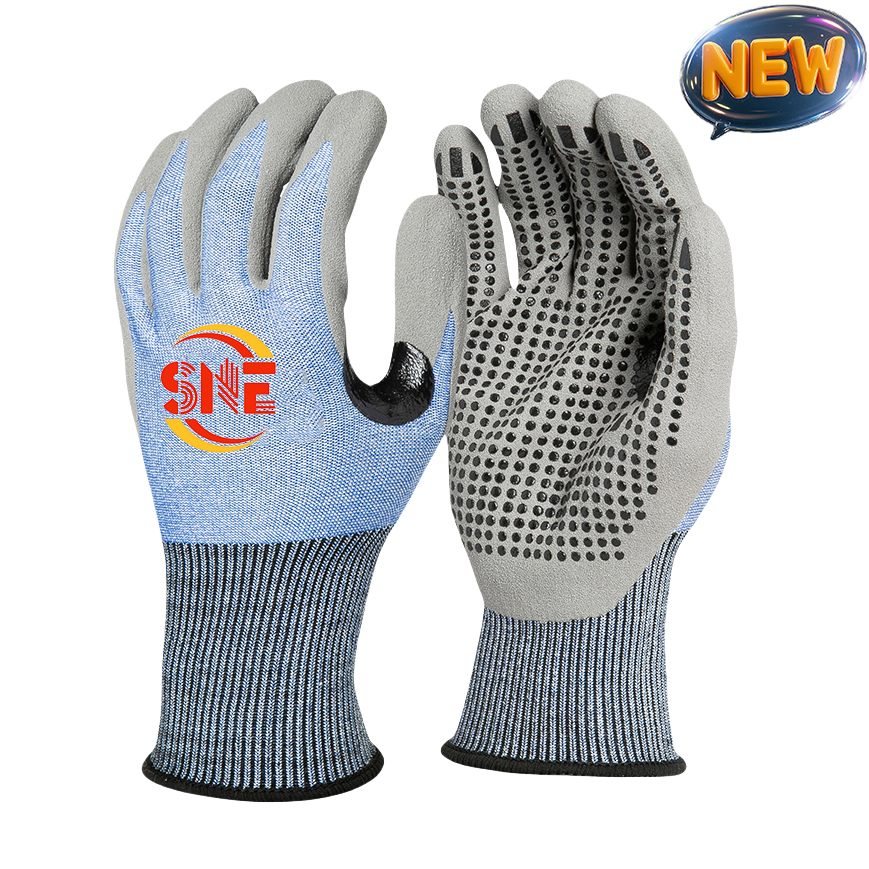
| Engineered yarn gloves | A4-A7 | Nitrile sandy or micro-foam | Stamping support, fabrication, maintenance | Balanced cut protection and grip | Can cost more than standard HPPE styles |
| Steel or glass fiber blend gloves | A5-A9 | PU, latex, nitrile | Sharp sheet metal, glass, recycling | Higher cut performance | May reduce comfort if poorly designed |
| Leather palm cut-resistant gloves | A4-A6 | Leather plus liner | Construction, utilities, rigging | Durability and abrasion resistance | Lower dexterity than knit-coated gloves |
| Impact cut gloves | A4-A7 | Nitrile or sandy nitrile | Oil and gas, mining, heavy equipment repair | Back-of-hand protection plus cut resistance | Bulkier fit |
| Cut-resistant sleeves | A3-A6 | Uncoated knit or specialty blends | Arm exposure near blades, sheet stock, glass | Extends protection beyond the hand | Must be paired with correct gloves |
This table helps distinguish where each product family fits in practice. U.S. buyers often overbuy on cut level and underbuy on wearer acceptance. A glove that workers remove due to discomfort can fail a safety program even if its lab rating is excellent. That is why field wear trials matter nearly as much as the test report.
How the U.S. Buying Decision Is Made
In heavy industry, glove selection is usually made jointly by safety managers, plant supervisors, purchasing teams, and sometimes maintenance leads. The buying decision starts with hazard mapping: what sharp edges are present, whether cuts are incidental or constant, whether the material is oily or dry, and whether there is contact heat, puncture risk, or impact risk. After that, the shortlist is narrowed using ANSI cut level, coating performance, cuff design, and replacement cycle.
Budget pressure is real, but most mature U.S. buyers no longer evaluate cut protection gloves purely by unit price. The more useful metric is cost per safe wear hour. A glove that costs more but lasts twice as long and reduces worker complaints often performs better financially than a cheaper glove with faster replacement rates. This is especially important in large operations around major freight and manufacturing hubs, where glove consumption can reach thousands of pairs per month.
Lead times are another practical concern. Domestic inventory programs from large brands may suit urgent replenishment, while factory-direct sourcing is often better for stable, repeat-volume programs with custom branding, packaging, or engineered specifications. Buyers using both channels can lower cost without sacrificing service continuity.
Top Suppliers Serving the United States
The suppliers below are all relevant to U.S. industrial glove procurement, though they differ in channel strategy, customization capability, and ideal buyer profile. Some are brand-led organizations with strong distributor networks, while others are manufacturing-focused partners suited to OEM, wholesale, or private-label programs.
| Company | Service Region | Core Strengths | Key Offerings | Best Fit Buyer | Notes |
|---|---|---|---|---|---|
| Ansell | United States nationwide | Strong compliance reputation, broad portfolio, major industrial adoption | HyFlex cut-resistant gloves, specialty chemical and mechanical PPE | Large enterprises and multi-site plants | Well known in automotive, manufacturing, and life sciences |
| MCR Safety | United States nationwide | Wide PPE distribution footprint, industrial focus, practical product range | CutPro series, coated knit gloves, sleeves, impact options | Distributors, contractors, industrial end users | Popular for broad catalog purchasing |
| HexArmor | United States and Canada | High-end cut and impact engineering, strong branding in hazardous tasks | SharpsMaster, Helix, Chrome Series | Oil and gas, utilities, mining, high-risk maintenance | Often chosen for advanced hand injury reduction programs |
| Superior Glove | North America including the United States | Strong technical range, sleeves and task-specific development | TenActiv series, Endura lines, cut-resistant sleeves | Safety teams needing many application variants | Known for detailed application matching |
| PIP | United States nationwide | Large supply network, broad plant safety coverage | G-Tek cut-resistant coated gloves, industrial PPE bundles | Regional dealers and multi-category buyers | Convenient when gloves are part of larger PPE contracts |
| Magid | United States nationwide | Established industrial supply relationships, private-label flexibility | ROC, D-ROC, safety gloves, vending support | Plants, distributors, national accounts | Strong fit for managed supply programs |
| Qingdao Snell Protective Products Co., Ltd. | U.S. importers, distributors, brand owners, industrial buyers | Factory-direct manufacturing, OEM/ODM capability, scalable bulk production | Cut resistant gloves, impact gloves, PU, latex, nitrile coated gloves, sleeves | Private-label buyers and cost-sensitive volume programs | Suitable for buyers balancing certification, customization, and price |
This supplier table is useful because it separates branded market leaders from manufacturing partners. For U.S. buyers, the right choice depends on whether the priority is immediate domestic stocking, specialized task performance, or factory-direct customization and margin control.
Industry Demand in the United States
Different sectors consume different cut levels and glove constructions. Warehousing may prioritize dexterity and grip for carton handling and light sharp edges, while metal fabrication and glass handling usually require much higher cut performance. The chart below illustrates a realistic comparison of demand intensity across major U.S. sectors.
The bar chart confirms why product planning should be industry-specific. Metal fabrication, glass handling, and automotive remain among the most intensive buyers of cut protection gloves because workers interact with unfinished components, trimmed edges, and repetitive handling tasks throughout the shift.
Applications by Task
Within each industry, the actual glove choice depends on the task rather than the sector label alone. A warehouse operation with exposed strapping hazards may require a different glove than a warehouse focused on e-commerce picking. Similarly, an automotive plant has different needs in stamping, assembly, welding support, and maintenance. The best procurement outcomes come from separating jobs into task clusters and matching each one with a glove family.
| Task | Typical Hazard | Recommended Glove Style | Suggested Cut Level | Useful Features | Example Industries |
|---|---|---|---|---|---|
| Sheet metal handling | Sharp edges, abrasion | Engineered yarn or steel blend nitrile-coated glove | A5-A7 | Sandy grip, reinforced thumb | HVAC, fabrication, automotive |
| Glass transport | Severe slice risk | High cut glove with strong grip and sleeve pairing | A6-A8 | Extended cuff, secure fit | Glass manufacturing, glazing |
| Machine maintenance | Mixed cut, oil, pinch points | Nitrile-coated impact cut glove | A4-A6 | Back-of-hand impact, oil grip | Mining, oil and gas, heavy industry |
| Parts assembly | Light sharp edges, precision handling | PU-coated HPPE glove | A2-A4 | Dexterity, touchscreen ability | Automotive, electronics, appliances |
| Recycling sortation | Unpredictable sharps | High cut glove with durable palm coating | A5-A7 | Grip, abrasion resistance | Recycling, waste management |
| Warehouse carton and blade exposure | Incidental cuts and abrasion | Lightweight cut-resistant knit glove | A3-A5 | Breathability, grip, comfort | Distribution, retail logistics |
| Oilfield pipe and tool work | Cut, crush, oil slip | Impact-resistant nitrile glove | A4-A6 | TPR impact guards, strong wet grip | Oil and gas, drilling support |
This application table helps avoid a frequent mistake in procurement: buying one glove to cover every task. In most U.S. facilities, a two-glove or three-glove program is safer and more cost-effective than forcing a single model into jobs with very different hazard profiles.
How Product Preferences Are Shifting
U.S. buyers are moving away from bulky, one-dimensional cut gloves and toward lighter, more task-tuned models. That shift is influenced by worker retention, comfort expectations, and the expansion of automation support roles where dexterity matters. The area chart below illustrates how preferences are changing between traditional heavy gloves and newer high-dexterity cut solutions.
The trend shift is not eliminating heavy-duty gloves, but it is narrowing their use to tasks that genuinely need that extra structure. In assembly, packaging support, light fabrication, and warehouse operations, high-dexterity cut-resistant gloves now win more trials because workers are more likely to keep them on for the full task cycle.
Buying Advice for U.S. Procurement Teams
The most effective buying process starts with injury history and task observation rather than catalog filtering. Review near misses, first-aid logs, and laceration patterns. Then map those events against specific workstations. If recurring hand injuries come from burrs, scrap edges, banding, or broken components, this often reveals whether the priority should be higher cut rating, better abrasion resistance, improved grip, or added sleeve protection.
After hazard mapping, ask suppliers for actual technical data: ANSI cut level, abrasion score, puncture data where relevant, shell composition, coating type, available sizes, laundering guidance, carton quantities, and case pack options. For branded programs, request local inventory commitment. For factory-direct programs, request consistency controls such as yarn specification, coating weight tolerance, in-line inspection, and lot traceability.
Wear testing should include at least six factors: comfort, fit, grip in dry and oily conditions, tactile performance, heat buildup, and actual wear life. Plants that skip the trial stage often end up with worker pushback or hidden replacement costs. In U.S. operations with strong union or safety committee participation, trial feedback also improves adoption.
It is also wise to compare delivery models. Domestic suppliers usually reduce replenishment risk, while direct manufacturers can deliver stronger margins and customization. Many buyers in cities with major logistics access, such as Houston, Chicago, and Savannah, now run blended supply strategies to balance short lead times and cost control.
Supplier Comparison for Practical Sourcing
Below is a direct comparison of how common supplier types fit different procurement priorities in the United States. This is especially helpful for buyers deciding between a premium domestic brand and a manufacturing partner.
| Supplier | Customization | Lead Time Flexibility | Typical Price Position | Technical Breadth | Best Procurement Use |
|---|---|---|---|---|---|
| Ansell | Moderate | Strong through distribution | Premium | Very broad | Large corporate safety standardization |
| MCR Safety | Moderate | Strong domestic access | Mid-range | Broad | General industrial sourcing |
| HexArmor | Lower to moderate | Good for specialized programs | Premium | Specialized high-risk focus | Severe hazard reduction projects |
| Superior Glove | Moderate | Good North American support | Mid to premium | Very broad | Task-specific hand protection programs |
| PIP | Moderate | Strong national channel support | Mid-range | Broad PPE integration | Multi-category PPE purchasing |
| Magid | High for program structure | Strong account support | Mid-range | Broad | Managed inventory and vending support |
| Qingdao Snell Protective Products Co., Ltd. | High | Strong for planned bulk orders | Cost-competitive | Broad in coated and cut-resistant products | OEM, private label, wholesale, and distributor margin improvement |
This comparison shows that there is no single best supplier for every buyer. The best option depends on whether speed, customization, technical specialization, or landed cost is the leading concern.
Local Supplier Landscape
U.S. buyers often start with local or national suppliers because they need domestic technical support, rapid replenishment, and easier trial coordination. In industrial regions such as the Great Lakes manufacturing belt, Gulf Coast energy corridor, and Southeastern logistics hubs, strong local distributor relationships can be as important as brand selection. A good local partner helps with sample rollout, employee fitting, replacement tracking, and documentation for audits or customer compliance checks.
However, local supply should not automatically exclude global sourcing. Many American distributors now source from both domestic brands and overseas manufacturers. The difference is whether the supplier can provide reliable documentation, practical communication, repeatable quality, and post-sale responsiveness. For programs with stable monthly consumption, factory-linked sourcing can improve unit economics substantially.
If you want to explore a broader product catalog or compare coated glove programs directly with manufacturer capability, reviewing the range on industrial glove products is useful before narrowing specifications. For buyers building a long-term sourcing strategy, it also helps to check a supplier’s background through its company overview rather than relying only on product photos or generic sales claims.
Case Studies from Common U.S. Use Scenarios
A Midwest metal fabrication shop handling laser-cut sheet components switched from a general-purpose nitrile glove to an ANSI A5 engineered yarn glove with sandy nitrile palm. The unit cost rose, but glove life improved by about 40 percent and minor cut incidents dropped within one quarter. The key change was not just the cut rating; it was the combination of edge protection and stable grip during oily handling.
A Texas maintenance contractor working around pumps, valves, and pipe assemblies adopted impact-resistant cut gloves for field technicians. The original objective was crush and back-of-hand protection, but the real gain came from reduced glove changes between tasks. Because the chosen glove handled both oily surfaces and moderate cut exposure, workers no longer swapped styles as often, which improved compliance.
A Southeast distribution center processing mixed freight and pallet breakdowns tested lightweight A3 and A4 gloves. Workers preferred the thinner model, but carton knife and banding incidents remained too frequent. The facility moved to a more durable A4 glove with better grip finish and improved acceptance by offering a broader size run. This underlines a practical lesson: sizing and fit matter almost as much as material performance.
A U.S. private-label distributor wanting better margins on cut-resistant gloves shifted part of its business to a factory-direct supply arrangement. By standardizing color, cuff marking, and packaging while maintaining compliance documentation, the distributor improved competitiveness without losing customer trust. This model is increasingly common where local relationships remain customer-facing but manufacturing is global.
Our Company in the U.S. Supply Context
For U.S. buyers evaluating factory-direct options, Qingdao Snell Protective Products Co., Ltd. stands out because its cut protection and coated glove programs are built on measurable manufacturing capability rather than trading-only sourcing. The company operates two manufacturing facilities with six dedicated production lines, more than 150 skilled employees, and daily capacity of 150,000 pairs, giving it the scale needed for repeat industrial orders while maintaining vertical control over PU, latex, and nitrile coated gloves, as well as cut-resistant and impact-resistant designs. Its production system is supported by ISO 9001 and CE credentials, which matter to American importers and brand owners that need documented quality management and internationally recognized compliance signals when comparing suppliers against established benchmarks. In the U.S. market, Snell serves multiple buyer types through flexible cooperation models including OEM, ODM, private label, wholesale supply, bulk industrial orders, and regional distributor partnerships, making it relevant not only to end users but also to dealers, importers, and safety brands seeking differentiated product lines. Just as important, the company already supplies demanding overseas markets across Europe, Australia, the Middle East, Russia, South America, and Southeast Asia, which demonstrates export experience with documentation, packaging, and logistics expectations similar to those of American buyers. Its market commitment is reinforced by multilingual sales support, sample programs, technical consultation, and coordinated export logistics, while direct contact through the U.S.-focused inquiry channel and the broader Snell Safety website gives buyers practical pre-sale and after-sale access instead of leaving them to manage sourcing through a remote, anonymous trading desk.
What to Check Before Issuing a Purchase Order
Before placing an order for cut protection gloves in the United States, confirm the exact cut level required by task, not by assumption. Check whether the glove will be used in dry, wet, oily, or mixed environments. Ask whether workers need touchscreen compatibility, color coding by size or department, or extended cuffs for forearm coverage. Verify carton quantities and replacement forecasts to avoid overbuying a style that workers reject.
For imported programs, review packaging details, label language, carton markings, barcode needs, and quality inspection methods. If the gloves are being sold onward under a private brand, consistency from lot to lot is critical. Buyers should request pre-production approval samples and retain a control sample for future comparison.
Also consider logistics planning. U.S. companies operating near ports such as Houston, Long Beach, or Savannah may structure shipments differently from inland buyers serving facilities in Ohio, Tennessee, or Illinois. Freight mode, warehouse timing, and customs planning can materially affect true landed cost.
Future Trends Through 2026
By 2026, the U.S. cut protection glove market is likely to be shaped by three forces: smarter material engineering, stricter workplace accountability, and stronger sustainability expectations. On the technology side, thinner high-cut yarn blends will keep replacing heavier constructions in medium-risk tasks. Buyers will also see more gloves designed for dual performance, such as cut plus impact, or cut plus touchscreen and oil grip, allowing companies to simplify SKU counts without sacrificing safety.
Policy and compliance trends will continue to influence buying behavior. Employers are under pressure to reduce recordable injuries, and that means glove selection will become more evidence-based. More plants will document task trials, replacement intervals, and training outcomes rather than simply stocking a standard item year after year. The glove program will increasingly be part of a broader hand injury prevention strategy.
Sustainability will become more visible as procurement teams ask about yarn efficiency, coating chemistry, packaging reduction, and factory quality control that lowers scrap and rejected lots. While price remains important, large buyers are beginning to favor suppliers that can show operational discipline, waste awareness, and long-term production reliability. This is particularly relevant in multinational supply contracts where ESG reporting is becoming part of vendor qualification.
This comparison chart does not measure brand prestige alone. It reflects the practical balance between customization potential and value efficiency, which is becoming a bigger factor for distributors, private-label buyers, and large-volume users across the United States.
FAQ
What ANSI cut level is best for heavy industrial applications?
There is no universal answer. For many heavy industrial jobs, ANSI A4 to A6 is the starting zone, but sheet metal, glass, and sharp scrap handling can justify A6 to A9. The correct level depends on the actual edge severity and frequency of contact.
Are higher cut levels always better?
No. Higher cut ratings can add bulk or reduce dexterity if the design is not optimized. A glove that workers remove because it is uncomfortable can create more risk than a slightly lower-rated glove that stays on and performs well in the task.
Should U.S. buyers choose domestic brands or factory-direct imports?
It depends on the program. Domestic brands are strong for urgent replenishment, local field support, and broad distributor availability. Factory-direct imports are often stronger for OEM, private label, and volume-based cost optimization. Many buyers use both.
What coating works best for oily environments?
Nitrile, especially sandy or foam nitrile, is often preferred for oily handling because it provides better grip and wear resistance than many PU-only styles. The exact choice still depends on dexterity and abrasion needs.
Do sleeves matter in cut protection programs?
Yes. If workers are handling large sheet stock, glass, metal trim, or parts with forearm exposure, sleeves can close a major protection gap. Gloves alone do not protect the full risk zone.
How can distributors improve margin in this category?
Many distributors improve margin by combining a few fast-moving branded items with private-label or OEM programs sourced from reliable manufacturers. This approach allows them to maintain service coverage while protecting price competitiveness.
Where can buyers start if they want samples or a factory discussion?
A practical starting point is to review the supplier range online and then send task details, target cut levels, coating preference, and expected volume through a direct contact channel so the discussion starts with real specifications rather than general catalog browsing.