Los mejores proveedores de Guantes de seguridad de nylon elastano en Alemania | Guía 2026
2026-04-17
Comparte este artículo
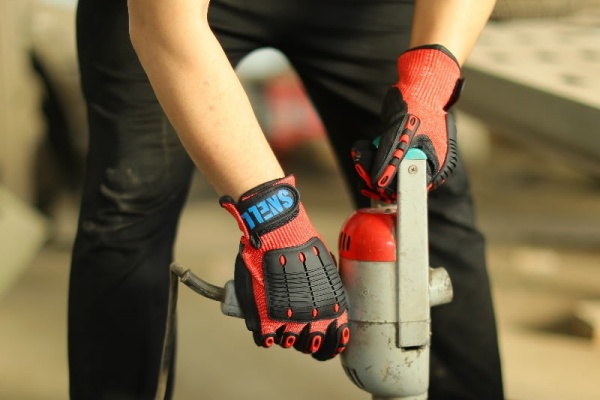
Nylon elastane safety gloves — engineered with a seamless-knit nylon/spandex liner and precision-applied coatings — have become the most widely specified general-purpose industrial glove across Germany’s manufacturing, automotive, and logistics sectors. Their unique combination of form-fitting comfort, exceptional dexterity, and reliable mechanical protection makes them indispensable for precision handling, assembly, and light-to-medium industrial tasks. This guide helps B2B procurement teams, PPE distributors, and EHS managers in Germany identify the right nylon elastane glove configurations, evaluate suppliers, and source products that fully comply with EN 388:2016+A1:2018 standards.
If you need expert guidance selecting the optimal nylon elastane safety gloves for your German operations — whether for custom OEM/ODM development, private-label branding, or competitive bulk pricing — contacte con nuestro equipo at Snell Safety. We have deep experience serving German clients across automotive, manufacturing, logistics, and construction sectors and can recommend configurations precisely tailored to your local requirements.
Respuesta rápida
For sourcing nylon elastane safety gloves in Germany, consider established local PPE distributors operating in major industrial regions like North Rhine-Westphalia, Bavaria, and Baden-Württemberg, who provide fast stock availability and on-ground technical support. Also evaluate Chinese manufacturers who specialize in customized nylon elastane glove products with competitive factory-direct pricing, flexible OEM/ODM capabilities, and full international certifications (ISO 9001/CE). This combined approach delivers optimal responsiveness, customization, and cost efficiency.
Panorama del mercado
Se prevé que el mercado alemán de guantes de seguridad pase de 1.068,97 millones de dólares en 2023 a una cifra estimada de 2.100,86 millones de dólares en 2032, lo que refleja una tasa de crecimiento anual compuesto (TCAC) del 7,78%. Within this expanding market, nylon elastane safety gloves represent a dominant share of the reusable coated-glove category, driven by their versatility across precision manufacturing, automotive assembly, and general material handling. Nitrile gloves are expected to grow at the fastest CAGR of 8.3% over the forecast period, and nitrile-coated nylon elastane gloves are a primary contributor to this acceleration.
In 2024, the number of reportable workplace accidents in Germany reached a historic low and the accident rate was the lowest ever recorded at 18.0 per 1,000 full-time equivalents. Despite this progress, hand injuries constitute up to 30% of the total cases treated in emergency departments, reinforcing the persistent need for effective hand protection. Germany’s robust framework for occupational safety regulations significantly drives the demand for safety gloves, with adherence to EU Regulation 2016/425 on personal protective equipment mandating the use of high-quality safety gloves across industries. This compliance-driven environment ensures sustained procurement of nylon elastane safety gloves by employers legally obligated to provide certified hand protection.
What Types of Nylon Elastane Safety Gloves Are Needed in Germany
The most in-demand nylon elastane safety gloves in Germany feature seamless-knit 15G or 18G nylon/spandex liners with precision-applied coatings — nitrile micro-foam, PU (polyurethane), nitrile foam, or sandy nitrile — designed for applications requiring high dexterity, tactile sensitivity, and reliable mechanical protection.
Nuestra experiencia al servicio de los clientes alemanes en Seguridad Snell, we have identified strong, consistent demand for nylon elastane gloves that balance dexterity with protection across Germany’s advanced manufacturing landscape. German HSE procurement teams prioritize snug-fitting gloves that conform naturally to the hand’s contours — what the industry calls the “hand at rest” feel — because their workforce performs intricate assembly, quality inspection, and precision handling tasks for extended 8-hour shifts. The elastane (spandex) component, typically comprising 3–8% of the liner blend, adds four-way stretch that eliminates bunching, reduces hand fatigue, and maintains consistent fit across sizes S–XXL. Germany’s temperate-to-cool climate also favors the breathability of fine-gauge nylon elastane liners, which wick moisture efficiently without causing overheating in indoor production environments.
The following configurations represent the highest-volume nylon elastane safety gloves types we supply to the German market:
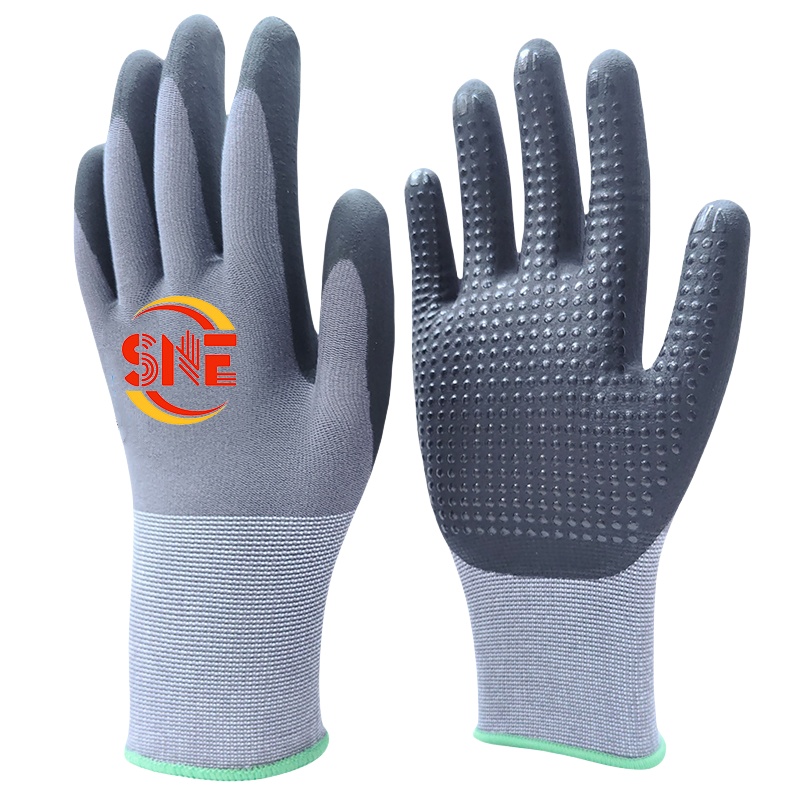
- 15G Nylon/Elastane Liner with Nitrile Micro-Foam Palm Coating (EN 388: 4131A) — The premium all-rounder for automotive assembly, electronics manufacturing, and precision handling. The micro-foam nitrile provides 360° breathability, excellent grip in dry and lightly oily conditions, and touchscreen compatibility. Sizes XS–XXL.
- 18G Nylon/Elastane Liner with PU Fingertip Coating (EN 388: 3131X) — Ultra-lightweight, high-dexterity variant for quality inspection, fine assembly, and cleanroom-adjacent tasks. The 18-gauge construction delivers near-barehand sensitivity with minimal coating for maximum tactile feedback.
- 15G Nylon/Elastane Liner with Nitrile Foam Full Palm Coating (EN 388: 4121A) — Robust general-purpose variant for warehouse logistics, material handling, and packaging. Full palm coverage provides wider protection while maintaining good breathability on the back of the hand.
- 13G Nylon/Elastane Liner with Sandy Nitrile Palm Coating (EN 388: 4231A) — Enhanced grip variant for handling oily or wet components in metal fabrication, automotive maintenance, and machinery operation. The sandy nitrile texture channels liquids away for superior grip performance.
- 15G Nylon/Elastane Liner with PU Palm Coating (EN 388: 4131X) — The classic European specification for light assembly, electronics, and general manufacturing. PU coating offers excellent dexterity and clean, lint-free handling with reliable abrasion resistance.
Why These Nylon Elastane Safety Gloves Types Are Recommended
These configurations are recommended because the nylon/elastane liner construction solves a critical challenge in German industry: delivering EN 388-certified mechanical protection in a glove thin and flexible enough for precision tasks — without sacrificing all-day comfort or grip performance during extended shifts.
The technical advantage of nylon elastane liners lies in the synergy between nylon’s tensile strength and elastane’s four-way stretch. Nylon provides the structural backbone — high abrasion resistance, low lint generation, and excellent tear strength — while 3–8% elastane content ensures the glove conforms precisely to individual hand geometry without restricting movement. This combination is critical for Germany’s advanced manufacturing sector, where workers perform thousands of repetitive micro-movements per shift and even minor discomfort translates to reduced productivity and increased hand fatigue. Fine-gauge knitting (15G and 18G) produces a thinner, smoother liner surface that accepts precision dip coatings evenly, resulting in consistent coating thickness and predictable performance batch after batch — a quality standard German procurement teams demand.
From a standards perspective, all recommended configurations meet EN 388:2016+A1:2018, the mandatory mechanical risk standard for CE-marked PPE under EU Regulation 2016/425. Key performance advantages compared to alternative liner constructions include:
- Destreza: 15G and 18G nylon/elastane liners achieve EN 388 dexterity Level 5 (highest), enabling workers to handle small fasteners, wiring, and precision components without removing gloves
- Resistencia a la abrasión: Nitrile micro-foam on nylon/elastane achieves EN 388 Level 4 (8,000+ Martindale cycles), outperforming pure PU coatings (typically Level 3) in sustained-contact applications
- Transpirabilidad: Micro-foam nitrile and PU coatings on fine-gauge nylon elastane allow moisture vapor transmission rates significantly higher than fully coated alternatives, reducing perspiration buildup
- Relación coste-eficacia: At €0.25–€1.80 per pair in bulk, nylon elastane safety gloves deliver the lowest cost-per-task in precision handling environments; typical service life is 1–4 weeks depending on application intensity
| Especificación | Indicador | Tipo de revestimiento | Calificación EN 388 | Mejor aplicación | Coste aproximado (€/par) |
|---|---|---|---|---|---|
| Nylon Elastane Safety Gloves — Micro-Foam Nitrile | 15G | Nitrile Micro-Foam, Palm | 4131A | Automotive assembly, precision handling | €0.45–€1.20 |
| Nylon Elastane Safety Gloves — PU Fingertip | 18G | PU, Fingertip | 3131X | Inspection, electronics, cleanroom | €0.25–€0.70 |
| Nitrile Foam Full Palm on Nylon/Elastane | 15G | Nitrile Foam, Full Palm | 4121A | Warehousing, material handling | €0.40–€1.00 |
| Sandy Nitrile Palm on Nylon/Elastane | 13G | Sandy Nitrile, Palm | 4231A | Oily metal handling, maintenance | €0.50–€1.30 |
| PU Palm Coat on Nylon/Elastane | 15G | PU, Palm | 4131X | Light assembly, general manufacturing | €0.30–€0.80 |
Use this table to match your workplace hazards, required dexterity levels, and budget to the right nylon elastane safety gloves specification before requesting samples.
Key Industries for Nylon Elastane Safety Gloves in Germany
Nylon elastane safety gloves serve the widest range of precision and general-purpose industrial applications in Germany, wherever dexterity, comfort, and reliable mechanical protection must be delivered simultaneously in a lightweight glove. Demand concentrates in sectors requiring fine motor control alongside EN 388-certified abrasion and tear resistance.
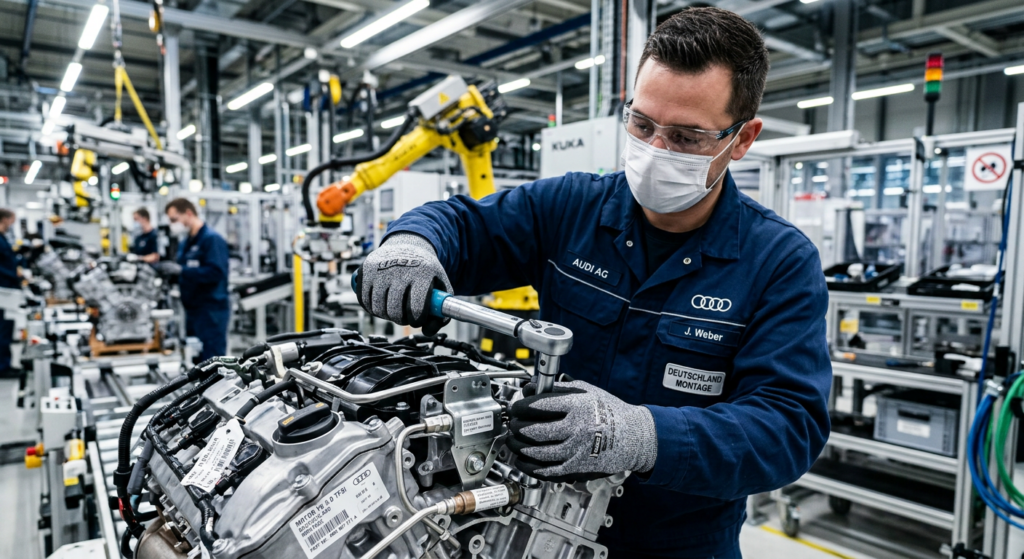
- Automotive Manufacturing & Assembly: Germany’s automotive sector — Europe’s largest — is the single biggest consumer of nylon elastane safety gloves. Assembly line workers, quality inspectors, and paint shop technicians handle small components, wiring harnesses, and precision fittings for 8-hour shifts. The 15G nylon/elastane liner with micro-foam nitrile provides the tactile sensitivity required for torque-sensitive fastener installation while resisting abrasion from metal edges.
- Electronics & Electrical Manufacturing: Circuit board assembly, component inspection, and cable harness production require lint-free, high-dexterity gloves that prevent electrostatic discharge damage. The 18G nylon/elastane PU-coated variant delivers near-barehand sensitivity with minimal particle generation.
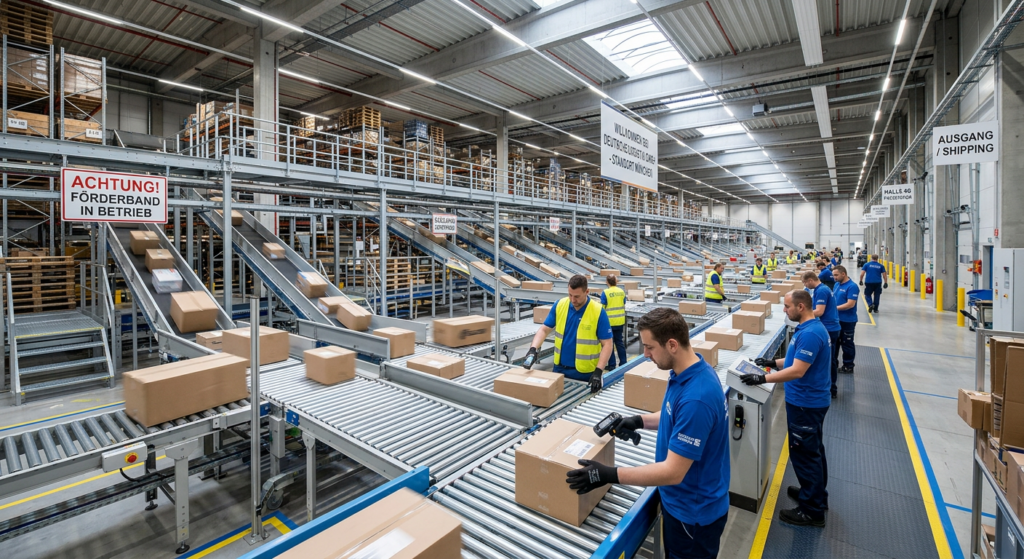
- Logística, almacenamiento y comercio electrónico: Germany’s logistics sector — anchored by major distribution hubs — demands lightweight gloves for picking, packing, and scanning tasks. Touchscreen-compatible nylon elastane gloves allow workers to operate handheld scanners and tablets without removing protection.
- General Manufacturing & Mechanical Engineering: The Mittelstand base of small and medium manufacturers requires versatile gloves for machine operation, CNC loading, surface finishing, and general material handling. PU palm-coated nylon elastane gloves provide the ideal balance for multi-task environments.
- Metal Fabrication & Stamping: Workers handling oily sheet metal, stamped components, and cutting fluid-coated parts need enhanced grip without sacrificing dexterity. Sandy nitrile on 13G nylon/elastane liners channels fluids for secure handling of slippery surfaces.
- Construction & Precision Finishing: Interior finishing, painting preparation, and electrical installation tasks demand lightweight gloves with reliable palm protection. Nylon elastane gloves serve as the preferred option for non-heavy-duty construction applications.
Industrial hubs such as North Rhine-Westphalia, Baden-Württemberg, and Bavaria lead market penetration, supported by strong manufacturing and automotive sectors. Los robustos sectores automovilístico y químico de Alemania están impulsando la demanda de guantes especializados que combinan características de protección avanzadas. Under DGUV guidelines and EU Regulation 2016/425, employers must conduct formal hazard assessments and provide appropriately certified hand protection — a regulatory framework that ensures sustained, compliance-driven demand for nylon elastane safety gloves across all major industries. The growing trend toward touchscreen-compatible PPE, driven by increased tablet and smartphone use on production floors, further accelerates adoption of nylon elastane gloves with conductive fingertip coatings.
Escenarios de aplicación específicos
Scenario 1: Automotive Wiring Harness Assembly near Stuttgart
At a Tier-1 automotive supplier, 280 assembly workers build complex wiring harnesses for premium vehicle platforms. Workers manipulate thin copper wires (0.35–2.5 mm²), insert miniature terminals into connectors, wrap harnesses with protective tape, and conduct continuity testing — all requiring fingertip precision at production-line speed. Primary hazards include abrasion from wire insulation, repetitive strain from micro-movements, and copper strand puncture to unprotected fingertips. The recommended specification is 15G nylon/elastane liner with nitrile micro-foam palm coating (EN 388: 4131A), touchscreen-compatible. The micro-foam nitrile provides just enough abrasion protection without dampening the tactile feedback needed to feel terminal seating clicks, while the elastane content ensures zero bunching during the thousands of insertion movements each worker performs per shift.
Scenario 2: High-Volume E-Commerce Fulfillment Center in North Rhine-Westphalia
A major distribution center processes 40,000+ parcels daily, with 500 picker-packers handling products ranging from electronics to household goods. Workers use handheld RF scanners, operate touchscreen workstations, lift packages up to 15 kg, and seal cartons at high speed. Key hazards include cardboard abrasion, repetitive grip fatigue, and finger contact with sharp package edges and staples. The recommended specification is 15G nylon/elastane liner with nitrile foam full palm coating (EN 388: 4121A). The full palm coating provides comprehensive abrasion coverage across all gripping surfaces, the foam nitrile offers excellent dry grip on cardboard and shrink-wrapped items, and the touchscreen-compatible fingertips eliminate the productivity loss of removing gloves to scan — a feature that saves an estimated 15–20 minutes of cumulative glove on/off time per worker per shift.
Scenario 3: CNC Machine Shop in Bavaria
A precision engineering workshop operates 35 CNC turning and milling machines, with operators loading raw aluminum and steel blanks, removing finished parts, deburring edges, and performing dimensional inspections with digital calipers. Workers handle parts coated with cutting oil and coolant residue, face abrasion from sharp machined edges, and require fine dexterity for caliper measurements accurate to 0.01 mm. The recommended specification is 13G nylon/elastane liner with sandy nitrile palm coating (EN 388: 4231A). The sandy nitrile texture maintains secure grip on oil-coated machined surfaces that smooth nitrile or PU coatings cannot reliably hold, while the nylon/elastane liner’s close fit preserves the tactile precision needed for caliper operation and visual part inspection.
Casos prácticos
Case 1: Automotive Assembly Plant, Baden-Württemberg
A premium automotive OEM standardized 15G nylon/elastane micro-foam nitrile gloves across its 1,200-person assembly operation, replacing a mix of three different glove types. Custom OEM branding with color-coded cuffs by production zone (body shop, paint, final assembly) streamlined inventory management. After 6 months, the facility reported a 35% reduction in glove consumption costs due to factory-direct bulk procurement and reduced SKU complexity, with worker comfort ratings increasing measurably.
Case 2: Private-Label E-Commerce Program, Hamburg
A Hamburg-based PPE e-commerce brand developed a 4-SKU nylon elastane safety gloves line for the Amazon.de marketplace, targeting small workshops and DIY professionals. The range included micro-foam nitrile, PU palm, sandy nitrile, and PU fingertip variants with unified German-language packaging and EN 388 certification documentation. Initial production of 80,000 pairs shipped within 20 days, with monthly replenishment and seasonal promotional inventory built into the supply agreement.
Los 6 proveedores locales más recomendados en Alemania
| Nombre de la empresa | Puntos fuertes | Regiones de servicio | Asistencia preventa | Asistencia posventa |
|---|---|---|---|---|
| RheinTech Arbeitsschutz GmbH | Broad nylon elastane safety gloves portfolio, automotive focus | Renania del Norte-Westfalia, Hesse, Renania-Palatinado | Pruebas de desgaste in situ, evaluaciones de riesgos EN 388 | Auditorías trimestrales de uso, gestión de existencias |
| BayernSafe Protección Industrial | Premium dexterity gloves for precision manufacturing | Baviera, Baden-Wurtemberg | Pruebas de ajuste ergonómico, paquetes de certificación | Field quality monitoring, warranty processing |
| NordGrip Handschutzlösungen | Logistics-optimized PPE portfolios, e-commerce fulfillment | Hamburgo, Baja Sajonia, Bremen | Fichas técnicas de productos, ayuda a la importación | Programas de sustitución exprés, gestión de devoluciones |
| SachsenPro PPE Solutions | Cost-effective bulk nylon elastane for Mittelstand plants | Sajonia, Brandeburgo, Turingia | Government tender support, flexible MOQ options | Seguimiento de existencias, trazabilidad de lotes |
| HansaFlex Schutzprodukte | E-commerce packaging optimized for Amazon.de and B2B | Nationwide (Hamburg fulfillment hub) | Contenido del listado, documentación de certificación | Gestión de las reseñas de los consumidores, apoyo al cumplimiento |
| AlpenGuard Arbeitsschutz AG | Oil & gas and heavy engineering specialized variants | Baviera, regiones alpinas y meridionales | Guía de selección de guantes para aplicaciones específicas | Seasonal stock planning, field performance audits |
When evaluating local suppliers, always request EN 388 test reports from an EU-notified body alongside physical wear-test samples — assess the coating adhesion to the nylon/elastane liner, grip performance under your actual working conditions, and comfort during a full-shift trial before committing to volume purchases.
Why Choose Snell Safety as Your Global Nylon Elastane Safety Gloves Partner
Seguridad Snell brings deep German market expertise built through years of collaboration with automotive manufacturers, logistics operators, PPE distributors, and precision engineering companies across Germany’s key industrial regions. We understand precisely which coating types, gauge weights, and hand-feel profiles German workers prefer — from the ultra-thin 18G PU fingertip variants favored in Bavarian electronics plants to the 13G sandy nitrile gloves demanded by NRW’s metalworking shops. With established local partners and planned European warehouse capacity for stock-ready delivery, we provide genuinely localized service across both online and offline channels. We are actively recruiting new distributors, agents, and e-commerce brand owners — offering comprehensive pre-sale empowerment (product selection guidance, technical training, market intelligence), full after-sale support (quality assurance, replacement policies), dropshipping services, free samples, and marketing material support including product photography and listing content.
Our vertically integrated production system — spanning R&D, material sourcing, seamless knitting (13G/15G/18G), precision dip coating (PU, nitrile foam, nitrile micro-foam, sandy nitrile), curing, quality inspection, packaging, and export — ensures consistent quality at factory-direct pricing. With over a decade of specialized safety glove manufacturing expertise, 6 dedicated production lines producing 150,000 pairs per day, ISO 9001 and CE certification, and full OEM/ODM capability, we deliver nylon elastane safety gloves from concept to shipment with fast turnaround. Browse our catálogo de productos o contacte con nuestro equipo para solicitar muestras gratuitas y un presupuesto competitivo.
| Capacidad | Snell Safety Specification | Buyer Benefit |
|---|---|---|
| Capacidad diaria | 150.000 pares en 6 líneas de producción | Scalable supply for high-volume programs |
| Opciones de calibre | 13G, 15G, 18G nylon/elastane seamless knit | Full range from heavy-duty to ultra-fine |
| Tecnologías de revestimiento | PU, nitrile foam, nitrile micro-foam, sandy nitrile | One-stop sourcing for all application needs |
| Certificaciones | ISO 9001, marcado CE, informes de pruebas EN 388 | Hassle-free EU import compliance |
| Personalización | OEM/ODM, private label, custom branding | Complete brand development capability |
Use this table to evaluate how Snell Safety’s manufacturing capabilities align with your specific nylon elastane safety gloves procurement requirements.
FAQ
What EN 388 rating should I expect for nylon elastane safety gloves?
Standard 15G nylon/elastane gloves with nitrile micro-foam palm coating typically achieve EN 388 ratings of 4131A — Level 4 abrasion (8,000+ cycles), Level 1 blade cut, Level 3 tear, and Level 1 puncture, with cut resistance Level A under the TDM method. PU-coated variants generally achieve 4131X or 3131X depending on coating thickness.
Which coating is best for oily environments in Germany?
For light oil contact, nitrile micro-foam provides adequate grip. For moderate-to-heavy oil, grease, or cutting fluid exposure, choose sandy nitrile palm coating on a 13G nylon/elastane liner — the textured surface channels liquids away for superior friction. Always test samples under your actual oily conditions before committing to volume orders.
¿Cómo elegir el calibre adecuado para mi sector?
Select 18G for maximum dexterity in electronics, inspection, and cleanroom tasks. Choose 15G for the best all-around balance of dexterity and protection in automotive assembly, general manufacturing, and logistics. Opt for 13G when you need enhanced mechanical protection and oil grip for metal fabrication or heavier handling tasks.
¿Qué certificaciones son necesarias para importar guantes de seguridad a Alemania?
All safety gloves sold in Germany must carry CE marking under EU Regulation 2016/425. Category II distribuidor de EPI (mechanical risk) requires EU Type Examination by a notified body, EN 388:2016+A1:2018 testing, a German-language Declaration of Conformity, and REACH/SVHC compliance documentation. Nylon elastane safety gloves fall under Category II.
What is the price range for bulk nylon elastane safety gloves orders?
For factory-direct bulk orders (MOQ typically 5,000–10,000 pairs), 15G PU palm-coated nylon elastane gloves range from €0.30–€0.80 per pair. Nitrile micro-foam variants cost €0.45–€1.20. Sandy nitrile versions range from €0.50–€1.30. Custom branding adds approximately €0.03–€0.08 per pair depending on print complexity.
How long do nylon elastane safety gloves typically last?
In light assembly and inspection tasks, expect 2–4 weeks per pair. In general manufacturing and logistics, 1–3 weeks. In abrasive metal handling, 1–2 weeks. Replace when coating shows visible wear-through to the liner fabric. Glove rotation programs (2–3 pairs per worker) extend effective service life and reduce per-pair degradation.
Are nylon elastane safety gloves touchscreen compatible?
Many 15G nylon/elastane gloves with thin nitrile micro-foam or PU coatings offer capacitive touchscreen compatibility, allowing workers to operate smartphones, tablets, and handheld scanners without removing gloves. Verify touchscreen capability in the product specification — not all coating thicknesses support reliable touch response.
What is the difference between nitrile micro-foam and PU coating?
Nitrile micro-foam provides superior grip in dry and lightly oily conditions, better abrasion resistance (EN 388 Level 4), and a slightly thicker protective layer. PU offers higher dexterity, cleaner lint-free handling, and lower cost — ideal for dry precision tasks. Choose nitrile micro-foam for grip-intensive work; choose PU for maximum tactile sensitivity.
Can nylon elastane safety gloves be laundered and reused?
Yes, most nylon elastane safety gloves can be machine-laundered 3–5 times without significant performance degradation, depending on coating type and wash temperature. Laundering at 40°C with mild detergent is recommended. This extends effective service life and reduces per-use cost, supporting sustainability goals increasingly prioritized by German procurement teams.
What cut level do I need for general manufacturing in Germany?
For standard general manufacturing, assembly, and logistics tasks, EN 388 cut Level A (or blade cut Level 1) is typically sufficient. For tasks involving sharp metal edges, glass, or bladed materials, upgrade to cut-resistant HPPE or Kevlar liners with EN 388 cut levels C–E (ANSI A4–A6). Always base glove selection on a formal workplace hazard assessment as required by DGUV guidelines.
Whether you are an end-user enterprise seeking factory-direct nylon elastane safety gloves supply for your German operations, a PPE distributor building a comprehensive hand protection portfolio, or an e-commerce brand developing a private-label range, Seguridad Snell is ready to support you with precisely engineered products and localized service. Envíe sus requisitos o solicite un presupuesto hoy mismo - incluyendo muestras gratuitas, desarrollo OEM/ODM a medida y asesoramiento técnico especializado para el mercado alemán.
Contenido revisado y actualizado: marzo 2026