Los mejores proveedores de Guantes de almacén para logística en Alemania | Guía 2026
2026-04-29
Comparte este artículo
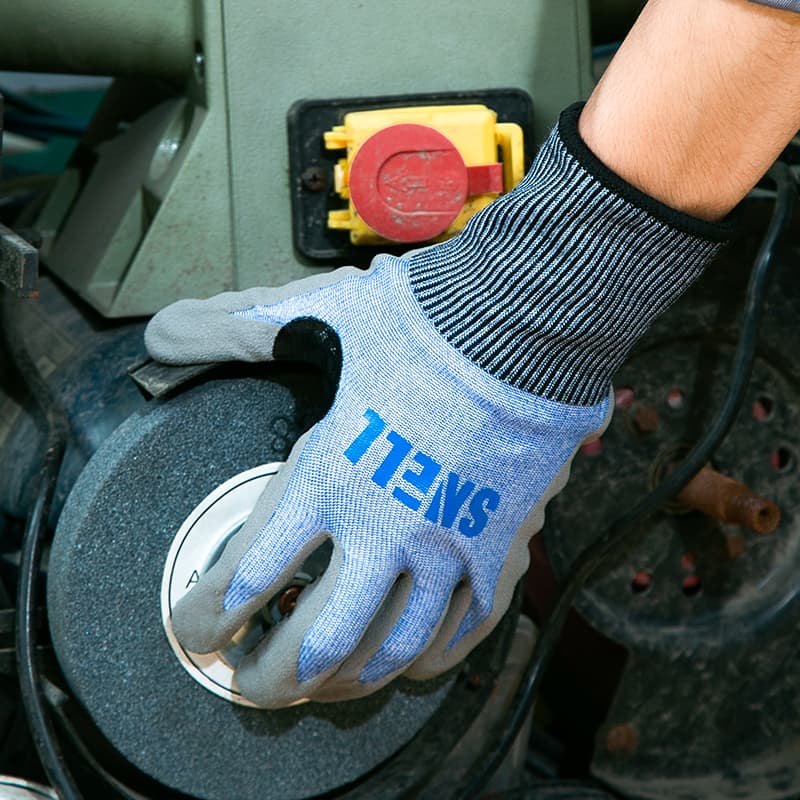
Germany’s logistics and warehousing sector is one of the largest in Europe, with approximately 46 million employed persons across all industries and a freight and logistics market valued at over USD 227 billion in 2026. For every warehouse picker, forklift operator, and distribution center handler in this vast ecosystem, the right pair of logistics warehouse gloves is the frontline defense against cuts, abrasions, crush injuries, and repetitive strain. This guide delivers an expert breakdown of the best glove types, specifications, and suppliers for German logistics operations — built on real-world sourcing experience and technical know-how.
If you need tailored product recommendations for your warehouse operations in Germany, contacte con nuestro equipo at Snell Safety. We have extensive experience serving German logistics clients and can help you select the ideal configurations for your specific handling scenarios.
Respuesta rápida
For sourcing logistics warehouse gloves in Germany, consider established regional PPE distributors across major logistics hubs like North Rhine-Westphalia, Hamburg, and Bavaria. For custom-branded, high-volume orders with competitive pricing, Chinese manufacturers who specialize in customized products with full international certifications (ISO 9001/CE) offer excellent value and OEM/ODM flexibility. The optimal strategy combines local stock availability with overseas manufacturing partnerships for cost-efficient, specification-controlled procurement.
Panorama del mercado
Germany’s freight and logistics market is projected to reach USD 264.17 billion by 2031, growing at a 2.99% CAGR, with warehousing and distribution services emerging as the fastest-growing segment. The country’s e-commerce penetration reached 87% in 2024, driving parcel density to over 54 items per capita and creating massive demand for warehouse labor and protective equipment. Meanwhile, the Germany safety gloves market is projected to grow from USD 1,068.97 million in 2023 to an estimated USD 2,100.86 million by 2032 at a CAGR of 7.78%, with stringent EU Regulation 2016/425 on PPE mandating certified hand protection across all warehouse and logistics operations.
Hand injuries represent a significant concern in the sector. According to UK HSE data applicable across European logistics environments, 20% or more of non-fatal injuries in logistics and warehousing involve hand injuries including cuts and abrasions. Research consistently shows that over 70% of workers who suffer hand injuries were not wearing any gloves, while the remaining 30% wore inadequate or incorrect gloves — underscoring the critical importance of proper glove selection for warehouse teams.
What Types of Logistics Warehouse Gloves Are Needed in Germany
The most in-demand logistics warehouse gloves in Germany are lightweight nitrile-coated and PU-coated gloves on 13G–15G nylon or polyester liners, optimized for grip, dexterity, and all-day comfort during high-repetition picking and packing tasks.
Based on our experience serving Germany clients, we consistently see demand concentrated around gloves that balance grip performance with tactile sensitivity. German warehouse operations — particularly in the booming CEP (courier, express, parcel) segment — require workers to handle packages of varying sizes and weights at speed, scan barcodes with handheld devices, and operate touchscreen terminals. This means heavy, rigid gloves are a poor fit. German logistics managers overwhelmingly prefer thin-gauge, breathable gloves that workers actually want to wear for a full 8–12 hour shift, because compliance drops sharply when gloves are uncomfortable or reduce hand feel.
Germany’s continental climate also influences product selection. Winter months in distribution centers — many of which are in semi-heated or unheated facilities — push demand for fleece-lined or thermal-backed variants from October through March. Summer months see a shift toward maximum breathability with open-back or dotted-palm designs. Here are the top configurations we supply to German logistics buyers:
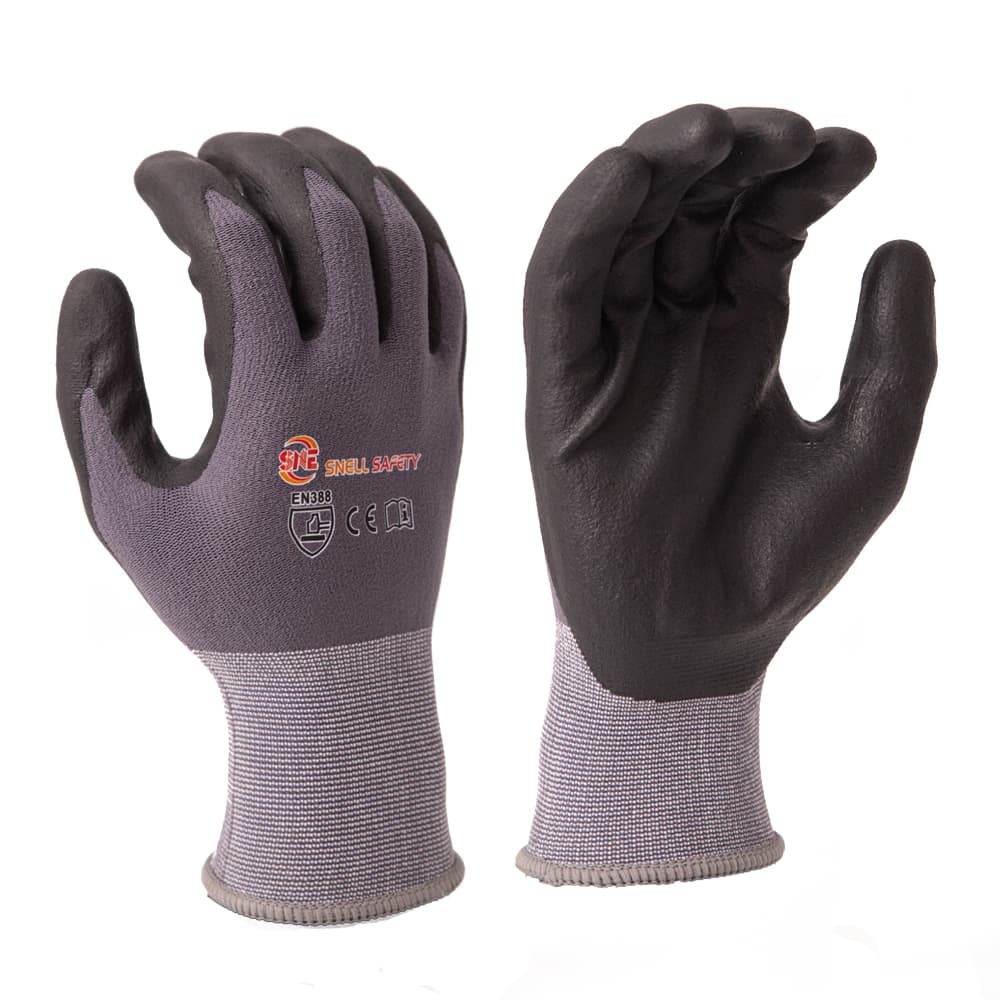
- 13G nylon liner + PU palm coating — EN 388 rating 4131A, cut level A1, abrasion level 4, dexterity level 5. The standard workhorse for general picking, packing, and sorting operations where dexterity and speed are paramount.
- 13G polyester liner + nitrile micro-foam palm coating — EN 388 rating 4121B, cut level A2, superior wet/oil grip. Ideal for handling shrink-wrapped pallets, damp cardboard, and refrigerated goods in cold-chain logistics.
- 15G nylon/spandex liner + PU fingertip coating (touchscreen-compatible) — EN 388 rating 4131A, cut level A1, maximum dexterity. Designed for scan-intensive operations where workers constantly interact with RF guns, tablets, and touchscreen terminals.
- 13G HPPE liner + sandy nitrile palm coating — EN 388 rating 4X42C, cut level C, oil-resistant. Essential for warehouse maintenance tasks, handling strapping materials, and working with sharp-edged metal fixtures.
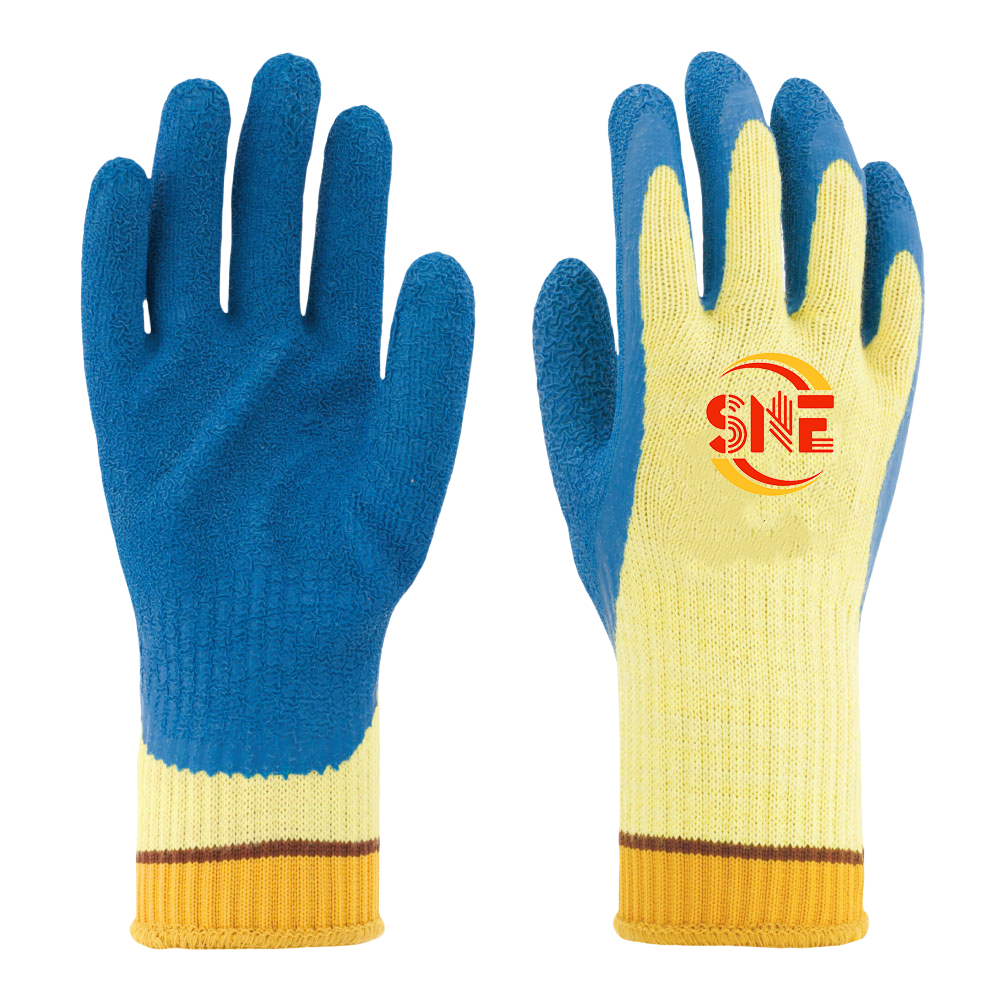
- 10G polyester/cotton liner + latex crinkle palm coating — EN 388 rating 2142, good dry grip, enhanced durability. Preferred for heavy-duty loading/unloading operations, pallet handling, and forklift battery changes where ruggedness matters more than fine dexterity.
Why These Logistics Warehouse Gloves Are Recommended
These specifications directly address the multi-hazard profile of German logistics operations, where the primary risks are abrasion from cardboard and plastic wrap, minor cuts from strapping and packaging edges, and crush hazards during pallet handling — all governed by EN 388:2016+A1:2018 testing standards.
The technical reasoning centers on optimizing the grip-comfort-durability triangle that logistics environments demand. PU palm coatings on 13G nylon liners deliver the highest dexterity rating (level 5 under EN 420) combined with abrasion resistance of 8,000+ cycles — more than sufficient for cardboard and package handling. For wet or cold-chain environments, nitrile micro-foam coatings provide micro-channeled surfaces that displace moisture and maintain grip on damp or condensation-covered surfaces, a critical advantage in Germany’s growing temperature-controlled warehouse segment. Sandy nitrile coatings on HPPE liners elevate cut resistance to EN 388 level C (5.0–14.9 N blade cut threshold) for workers handling metal shelving components, strapping tools, and sharp packaging materials.
Key performance metrics at a glance:
- 13G nylon + PU palm: 8,000+ abrasion cycles, cut A1, dexterity 5 — cost per pair €0.18–€0.45, ideal for high-volume pick-and-pack
- 13G polyester + nitrile micro-foam: 8,000+ abrasion cycles, cut A2, excellent wet grip — cost per pair €0.35–€0.75, best for cold-chain and damp environments
- 15G nylon/spandex + PU fingertip: 8,000+ abrasion cycles, cut A1, touchscreen-compatible — cost per pair €0.30–€0.60, optimized for scan-intensive workflows
- 13G HPPE + sandy nitrile: 8,000+ abrasion cycles, cut C, oil-resistant — cost per pair €1.10–€2.20, necessary for warehouse maintenance and heavy handling
| Especificación | Calificación EN 388 | Nivel de corte | Grip (Wet) | Best Logistics Application |
|---|---|---|---|---|
| Nylon 13G + PU Palm | 4131A | A1 | Moderado | General picking, Logistics Warehouse Gloves for parcel sorting |
| Polyester 13G + Nitrile Micro-foam | 4121B | A2 | Excelente | Cold-chain, refrigerated goods handling |
| Nylon/Spandex 15G + PU Punta de los dedos | 4131A | A1 | Moderado | Scan-intensive Logistics Warehouse Gloves for e-commerce fulfillment |
| HPPE 13G + Sandy Nitrile Palm | 4X42C | C | Excelente | Warehouse maintenance, metal fixture handling |
| Polyester/Cotton 10G + Latex Crinkle | 2142X | A1 | Good (dry) | Heavy loading/unloading, pallet handling |
Use this table to match your primary warehouse task profile to the right glove specification — always select based on the most demanding hazard your workers encounter regularly.
Key Industries Driving Logistics Warehouse Gloves Demand in Germany
Logistics warehouse gloves demand in Germany is fueled by a diverse range of industries that rely on warehousing, distribution, and material handling operations. The country’s position as Europe’s largest economy and logistics hub creates a broad and stable demand base.
The top industries requiring logistics warehouse gloves in Germany include:
- E-commerce fulfillment and CEP services — With Germany’s e-commerce penetration at 87% and parcel density exceeding 54 items per capita annually, fulfillment centers operated by major platforms and third-party logistics providers consume vast quantities of lightweight, high-dexterity PU and nitrile-coated gloves. Workers handling thousands of parcels per shift need gloves that maintain grip without causing hand fatigue.
- Automotive parts logistics — Germany’s automotive supply chain relies on just-in-time distribution centers where workers handle precision components, oily metal parts, and heavy sub-assemblies. Sandy nitrile and nitrile foam coatings with cut-resistant HPPE liners (EN 388 level B–C) protect against sharp edges and machining fluids.
- Food and beverage distribution — Temperature-controlled warehouses demand gloves that maintain grip on cold, damp surfaces while meeting EU food contact regulations. Nitrile micro-foam on polyester liners offers the best balance of cold-weather performance and hygiene compliance.
- Pharmaceutical and healthcare logistics — Good Distribution Practice (GDP) norms in Germany’s pharma cold chain require gloves that are clean-room compatible and provide reliable grip on temperature-sensitive packaging. Temperature-controlled warehousing is growing at a 2.86% CAGR from 2026–2031.
- Retail and consumer goods distribution — Large-format retail distribution centers processing high SKU counts need versatile general-purpose gloves for mixed-task environments, from case picking to shelf loading.
- Industrial manufacturing inbound/outbound logistics — Factories across North Rhine-Westphalia, Baden-Württemberg, and Bavaria maintain dedicated receiving and shipping warehouses where raw materials and finished goods require careful handling with mechanically rated gloves.
Germany’s DGUV (Deutsche Gesetzliche Unfallversicherung) system requires employers to conduct thorough Gefährdungsbeurteilung (risk assessments) that specifically evaluate hand protection needs for every warehouse role. This regulatory framework creates systematic, recurring procurement cycles for logistics warehouse gloves across all of these sectors. The ongoing expansion of warehouse automation — with robotics and AI-driven sorting systems becoming standard — is not eliminating glove demand but shifting it toward higher-dexterity models suitable for human-robot collaborative workflows.
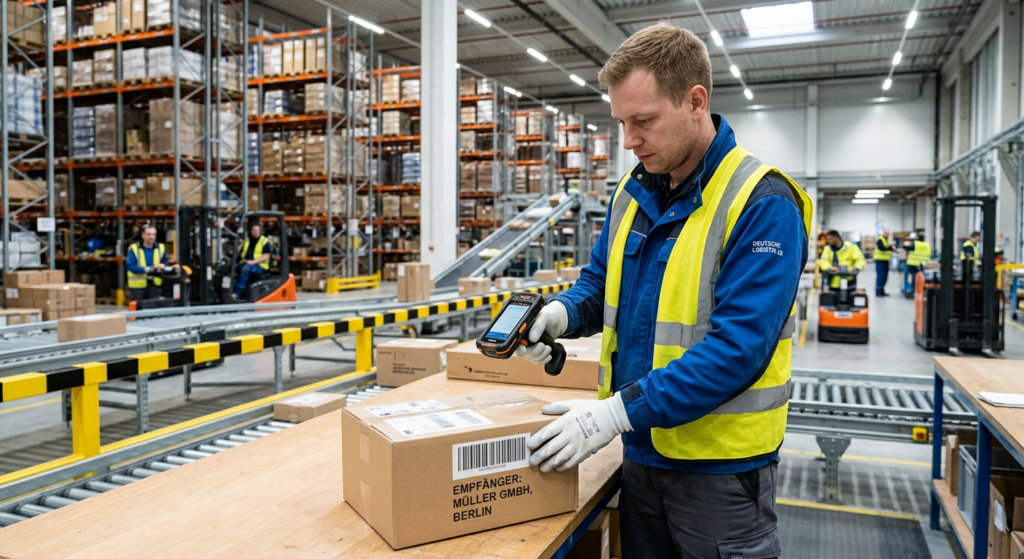
Specific Application Scenarios for Logistics Warehouse Gloves
Scenario 1: High-Speed Parcel Sorting in a CEP Distribution Hub Near Hamburg
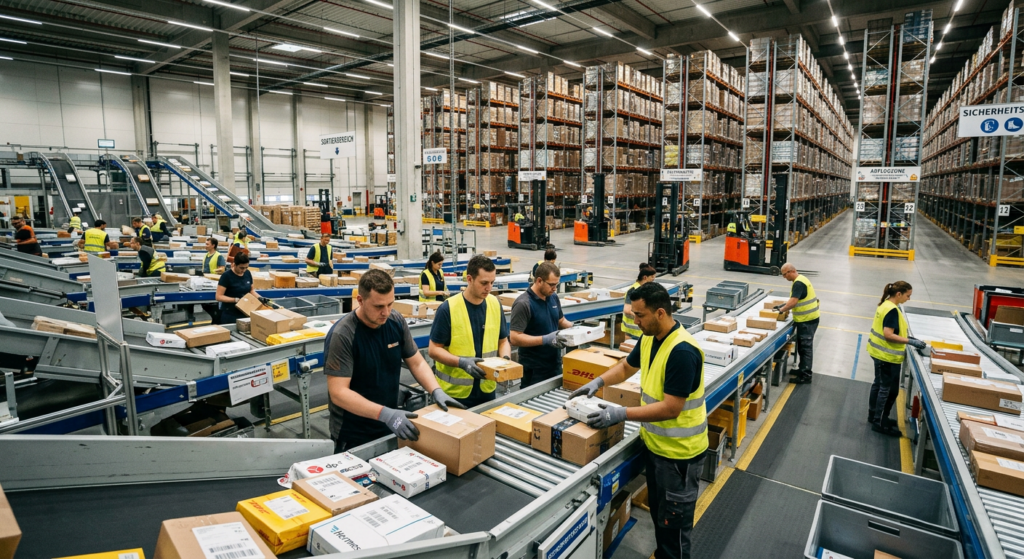
At a large parcel sorting facility processing over 80,000 packages per shift, workers stand at conveyor stations manually redirecting parcels into destination chutes. Each worker handles 800–1,200 parcels per hour, gripping cardboard, plastic mailers, and polybag-wrapped items in rapid succession. The primary hazards are abrasion from rough cardboard edges, paper cuts, and repetitive strain on the fingers and palms. The recommended logistics warehouse gloves are 13G nylon with PU palm coating (EN 388 4131A, dexterity level 5). The ultra-thin PU coating minimizes grip fatigue while providing abrasion protection rated at 8,000+ cycles. Crucially, the lightweight construction and breathable open back prevent hand sweating during intense sorting shifts, maintaining worker compliance throughout the full shift cycle.
Scenario 2: Cold-Chain Pallet Handling in a Refrigerated Warehouse Near Munich
Inside a 4°C chilled distribution center serving major grocery retailers, forklift operators and manual pallet handlers move pallets of dairy, meat, and fresh produce between cold storage zones and loading docks. Workers handle wet, condensation-covered shrink-wrapped pallets weighing up to 800 kg on pallet jacks, facing both cold exposure and slip hazards. The recommended logistics warehouse gloves are 13G polyester with nitrile micro-foam palm coating (EN 388 4121B). The micro-foam structure traps insulating air while its micro-channeled surface displaces moisture, maintaining reliable grip even on wet plastic wrap. For extended cold exposure below 0°C, an upgrade to a fleece-lined 10G variant with 3/4 nitrile coating provides additional thermal insulation while preserving enough dexterity for pallet jack controls.
Scenario 3: Returns Processing in an E-Commerce Fulfillment Center Near Dortmund
At a returns processing station, workers open customer return packages, inspect items for damage, repackage products, and reclassify inventory using touchscreen tablets connected to the warehouse management system. Hazards include unexpected sharp objects inside packages (broken glass, exposed metal), staple and tape cutter injuries, and the constant need to interact with digital devices. The recommended logistics warehouse gloves are 15G nylon/spandex with PU fingertip coating, touchscreen-compatible (EN 388 4131A). The conductive fingertip coating enables seamless tablet and scanner operation without glove removal, while the spandex-blended liner provides a snug, second-skin fit that enhances tactile feedback. For stations processing electronics or fragile items, the 15G construction prevents workers from dropping items due to bulky glove interference.
Casos prácticos
A third-party logistics provider operating five distribution centers across North Rhine-Westphalia needed to standardize logistics warehouse gloves for 1,200+ warehouse workers across general picking, cold-chain, and returns processing departments. We developed a three-SKU program: 13G PU palm for general picking, 13G nitrile micro-foam for cold-chain zones, and 15G touchscreen-compatible PU fingertip for returns processing. Quarterly bulk shipments of 120,000 pairs reduced their per-unit cost by 28% compared to previous local procurement.
A major automotive parts distributor near Stuttgart required cut-resistant logistics warehouse gloves for 350 workers handling stamped metal components in their inbound receiving warehouse. We supplied 13G HPPE with sandy nitrile palm coating (EN 388 cut level C) with custom-printed company branding and German-language EN 388 labeling. The gloves replaced a heavier leather-palm model, improving worker dexterity by two EN 420 levels while maintaining equivalent cut protection — resulting in a 15% increase in receiving throughput.
Top 6 Recommended Local Logistics Warehouse Gloves Suppliers in Germany
| Nombre de la empresa | Puntos fuertes | Regiones de servicio | Asistencia preventa | Asistencia posventa |
|---|---|---|---|---|
| HansaProtect Arbeitsschutz GmbH | Deep CEP and parcel logistics PPE expertise | Hamburg, Bremen, Lower Saxony | On-site warehouse hazard audits, free trial programs | Dedicated account managers, batch tracking |
| RheinLogistik Schutzhandschuhe KG | Broad logistics warehouse gloves portfolio, fast regional delivery | Renania del Norte-Westfalia, Hesse, Renania-Palatinado | Online product configurator, bulk sample kits | 30-day replacement guarantee, auto-reorder |
| BayernSafe Industrieschutz AG | Automotive logistics and cold-chain specialist | Baviera, Baden-Wurtemberg | Application-specific glove selection, EN 388 compliance consulting | Quarterly wear-test reviews, technical helpline |
| NordGrip Handschutz GmbH | E-commerce fulfillment and touchscreen glove specialist | Berlin, Brandenburg, Saxony | MOQ flexibility for mid-size operations, live chat | Automated restock alerts, loyalty pricing |
| WestPack Sicherheitshandschuhe e.K. | Cost-competitive bulk supply, strong Mittelstand network | NRW, Niedersachsen, Westphalia | Seasonal pricing programs, certification documentation | Quality performance audits, return processing |
| AlpenLogistik Schutz AG | Premium sustainable logistics gloves, ESG-aligned products | Bavaria, Austria border, Tyrol | Sustainability lifecycle reporting, eco-material sourcing | Extended warranty, green disposal guidance |
When evaluating any supplier, always request current EN 388:2016+A1:2018 test certificates from EU-accredited notified bodies and insist on conducting wear-tests across at least one full warehouse shift before committing to volume purchase orders.
Why Choose Snell Safety as Your Global Logistics Warehouse Gloves Partner
Seguridad Snell brings deep local market expertise to Germany’s logistics and warehousing PPE sector. Through extensive collaboration with distribution centers, CEP operators, 3PL providers, and PPE distributors across Germany, we understand precisely what warehouse workers need — from the nitrile coating textures that German logistics teams prefer for handling damp cardboard to the ultra-thin 15G touchscreen-compatible models that keep e-commerce fulfillment centers running at peak efficiency. We maintain established local partners in key German logistics regions and are developing overseas warehouse capacity to provide in-stock, ready-to-ship logistics warehouse gloves with drastically reduced lead times.
Our manufacturing backbone ensures consistent quality at factory-direct pricing: over a decade of production expertise, six dedicated production lines with a daily capacity of 150,000 pairs, ISO 9001 and CE certification, and a vertically integrated process spanning R&D, knitting, dip coating, curing, quality inspection, and export packaging. We offer full OEM/ODM customization across PU, nitrile foam, nitrile micro-foam, sandy nitrile, and latex crinkle coatings, with private-label branding and German-language compliance documentation. Explore our complete catálogo de productos to see available configurations.
We are actively recruiting distribution partners, agents, and e-commerce resellers across Germany. Partners receive comprehensive pre-sale empowerment including product selection guidance, technical training, and market intelligence, alongside robust after-sale support with quality assurance and replacement policies. For online brand owners, we offer dropshipping, free samples, and professional marketing material support. Whether you are a logistics enterprise seeking direct supply or a distributor building a warehouse PPE portfolio, contacte con nuestro equipo para explorar oportunidades de asociación.
| Criterios de Evaluación | Qué Verificar | Why It Matters for Logistics |
|---|---|---|
| Certificación EN 388 | Informe de ensayo válido emitido por un organismo notificado de la UE | Mandatory for Gefährdungsbeurteilung compliance |
| Grado de destreza | EN 420 level (1–5) | Critical for high-speed picking and scanning |
| Rendimiento de agarre en mojado | Coating type and surface texture | Essential for cold-chain and damp-environment handling |
| Transpirabilidad | Open-back design, liner gauge | Determines all-shift comfort and worker compliance |
| Compatibilidad con pantallas táctiles | Conductive fingertip coating | Required for RF scanner and WMS tablet interaction |
Use this checklist when comparing logistics warehouse gloves suppliers to ensure your hand protection meets both regulatory requirements and real-world warehouse performance demands.
FAQ
What EN 388 rating do I need for general warehouse picking in Germany?
For standard picking and packing of cardboard packages, EN 388 cut level A1 with abrasion level 4 (8,000+ cycles) is typically sufficient. This corresponds to common 13G nylon + PU palm gloves. If workers regularly handle strapping materials, sharp-edged items, or metal fixtures, upgrade to cut level B or C with nitrile-coated HPPE liners.
Which coating is best for handling wet or cold-chain goods?
Nitrile micro-foam provides the best grip on wet, damp, and cold surfaces by channeling moisture away from the contact area. For refrigerated warehouses (0–4°C), nitrile micro-foam on polyester liners is the standard. For frozen environments (below -18°C), switch to fleece-lined thermal gloves with 3/4 nitrile coating for insulation.
¿Qué certificaciones son necesarias para importar guantes de seguridad a Alemania?
All safety gloves sold in Germany must comply with EU Regulation 2016/425 and carry CE marking. This requires EN 388:2016+A1:2018 testing by an EU-accredited notified body, an EU Declaration of Conformity, and a designated authorized representative within the EU. Most logistics warehouse gloves fall under Category II PPE, requiring an EU type-examination certificate.
How to choose the right gauge for warehouse logistics gloves?
For high-dexterity tasks like parcel sorting and scanning, 15G–18G provides maximum finger sensitivity. For general-purpose warehouse work balancing comfort and protection, 13G is the most versatile gauge. For heavy loading, pallet handling, and rough material tasks, 10G offers enhanced durability and padding at the cost of some dexterity.
What is the price range for bulk logistics warehouse gloves orders?
Prices vary by specification and order volume. Basic 13G nylon + PU palm gloves range from €0.18–€0.45 per pair at MOQs of 10,000+. Nitrile micro-foam models cost €0.35–€0.75/pair. Touchscreen-compatible 15G gloves run €0.30–€0.60/pair. Cut-resistant HPPE sandy nitrile gloves range from €1.10–€2.20/pair. Factory-direct OEM sourcing typically reduces costs by 20–35%.
How long do logistics warehouse gloves typically last?
Lifespan depends on task intensity and handling volumes. General-purpose 13G PU-coated gloves typically last 1–2 weeks for high-volume picking operations. Nitrile micro-foam models last 2–3 weeks in cold-chain environments. Budget approximately 50–100 pairs per warehouse worker per year for high-throughput facilities.
Are touchscreen-compatible gloves reliable for warehouse scanners?
Yes. Gloves with conductive PU or nitrile fingertip coatings on 15G–18G liners work reliably with capacitive touchscreens, RF scanners, and tablet devices. Ensure the coating covers at least the thumb and index fingertip for consistent scanner operation. Quality touchscreen gloves should register input on first touch without requiring excessive pressure.
What is the difference between PU coating and nitrile coating for warehouse use?
PU (polyurethane) coatings are thinner, lighter, and deliver maximum dexterity and breathability — ideal for dry-environment picking and packing. Nitrile coatings (especially micro-foam and sandy variants) provide superior grip on oily, wet, or damp surfaces and offer better puncture resistance. Choose PU for speed-focused dry tasks; choose nitrile for grip-critical or wet tasks.
Do German warehouse regulations require specific glove standards?
Germany’s Arbeitsschutzgesetz (ArbSchG) and DGUV regulations require employers to conduct risk assessments (Gefährdungsbeurteilung) and provide appropriate PPE. For mechanical-risk hand protection, gloves must be EN 388:2016+A1:2018 tested and CE marked. Specific requirements depend on the identified hazards — there is no single mandated cut level, but gloves must match the risk assessment findings.
What MOQ should I expect for private-label logistics warehouse gloves?
Most OEM manufacturers require 5,000–10,000 pairs per SKU for custom-branded logistics warehouse gloves with logo printing and custom packaging. Standard catalog products may have lower MOQs of 1,000–3,000 pairs. Allow 45–60 days production lead time for custom orders, plus 25–35 days ocean freight to major German ports like Hamburg or Bremerhaven.
Ready to source high-performance logistics warehouse gloves for your German operations? Whether you are a logistics enterprise, 3PL provider, PPE distributor, or e-commerce brand owner, submit your requirements and request a competitive quotation at Página de contacto de Snell Safety. Visite snellsafety.com para explorar nuestra gama completa de soluciones de guantes de seguridad industrial.
Contenido revisado y actualizado: marzo 2026