Best Metal Fabrication Gloves Suppliers in Germany | 2026 Guide
2026-04-23
Partilhar este artigo
If you are sourcing metal fabrication gloves for the German market and need expert guidance on product configurations, compliance requirements, or custom OEM/ODM solutions, contactar a nossa equipa at Snell Safety. We have extensive experience serving clients in Germany and can recommend the ideal glove specifications for your specific applications.
Resposta rápida
For reliable metal fabrication gloves in Germany, consider established European PPE distributors with strong regional warehousing, as well as specialized Chinese manufacturers who offer customized products with competitive factory-direct pricing and full international certifications (ISO 9001, CE marking, EN 388). Local distributors typically offer faster delivery and on-site support, while overseas manufacturers provide greater flexibility in OEM/ODM customization, coating technologies, and bulk pricing for large-volume procurement.
Panorama do mercado
Prevê-se que o mercado alemão de luvas de segurança cresça de 1.068,97 milhões de dólares em 2023 para uma estimativa de 2.100,86 milhões de dólares até 2032, reflectindo uma taxa de crescimento anual composta (CAGR) de 7,78% de 2024 a 2032. This growth is anchored by Germany’s position as Europe’s largest manufacturing economy, where major industrial hubs such as North Rhine-Westphalia, Baden-Württemberg, and Bavaria drive consistent demand for high-performance hand protection. Germany’s robust automotive and chemical sectors are fueling demand for specialized gloves that boast a combination of protective features.
Germany’s robust framework for occupational safety regulations significantly drives the demand for safety gloves, with strict adherence to EU directives such as Regulation (EU) 2016/425 on personal protective equipment. For metal fabrication specifically, the German metal fabrication market was valued at USD 1,427.5 million in 2025 and is forecasted to rise at a CAGR of 4.5%. With metal processing being one of the major German industrial sectors, predominantly dominated by Mittelstand companies — around 5,000 mostly family-owned companies with approximately 500,000 employees — the demand for specialized metal fabrication gloves remains robust and growing.
What Types of Metal Fabrication Gloves Are Needed in Germany
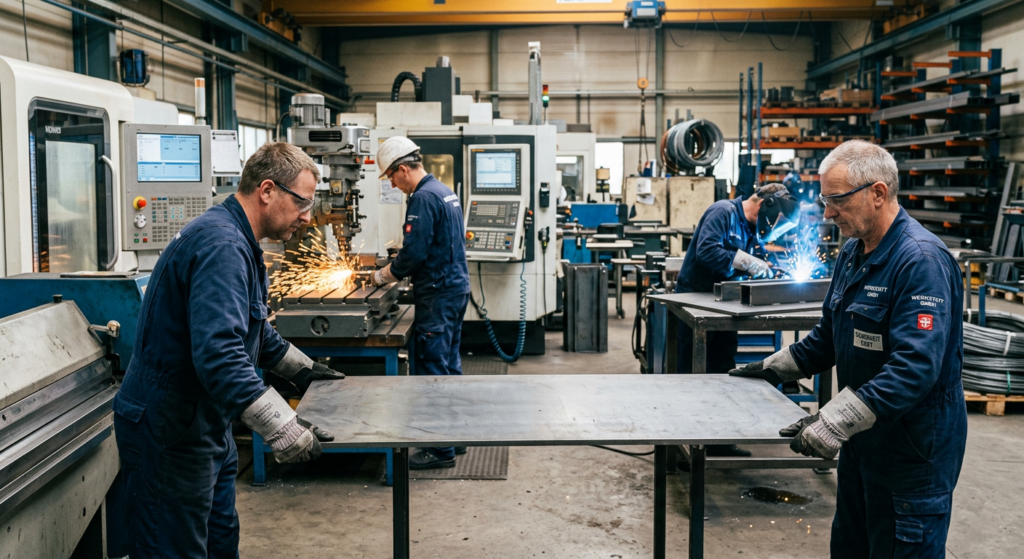
The most in-demand metal fabrication gloves in Germany are cut-resistant gloves rated EN 388 levels C through F, with nitrile or PU coatings on HPPE or Kevlar liners, in 13G or 18G gauges. These configurations reflect the precision demands of Germany’s advanced manufacturing sectors and the requirement for both high protection and exceptional dexterity.
Based on our experience serving Germany clients, we have observed that German buyers prioritize a careful balance between cut protection and tactile sensitivity. Workers in automotive stamping plants, precision metalworking shops, and structural steel operations require gloves that allow them to handle tools, operate touchscreens on CNC equipment, and manipulate small components — all while maintaining EN 388 cut level D or higher protection. Germany’s temperate continental climate also plays a role: during colder months in outdoor steel construction, workers prefer slightly thicker liners (13G HPPE/nylon blends) with latex crinkle coatings for warmth and wet grip, while indoor fabrication environments favor lightweight 18G gloves with PU palm coatings for maximum dexterity.
The top product types we supply to Germany include:
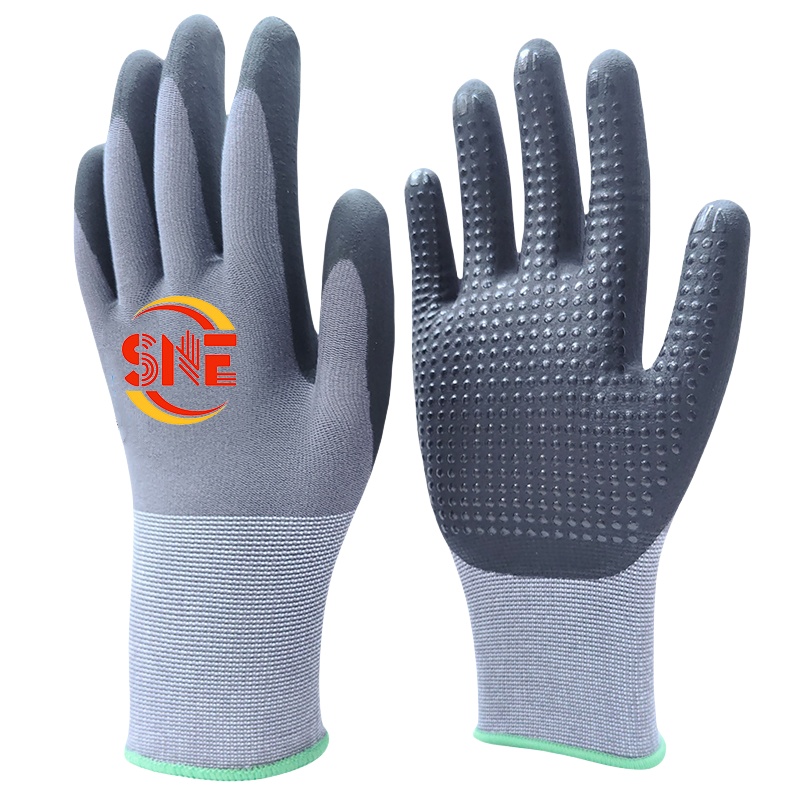
- HPPE 13G liner + nitrile micro-foam palm coating — EN 388 cut level D, ideal for general sheet metal handling, automotive part sorting, and CNC machine tending. The micro-foam finish provides excellent dry and light-oil grip.
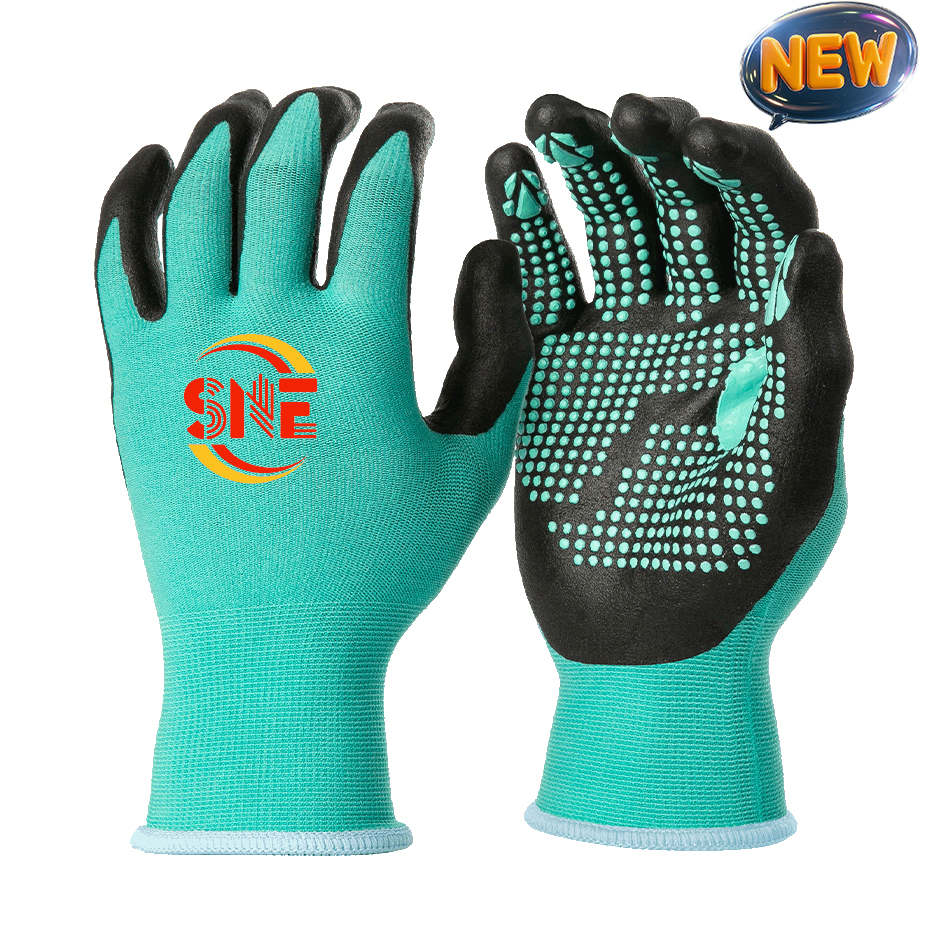
- HPPE/glass fiber 18G liner + PU palm coating — EN 388 cut level E, designed for precision metalwork where dexterity is paramount. The 18G fine gauge allows workers to handle small fasteners and electronic components.
- HPPE/Kevlar 13G liner + sandy nitrile full coating — EN 388 cut level E with superior oil resistance. Suited for metal fabrication shops that also handle oily stampings and machined parts.
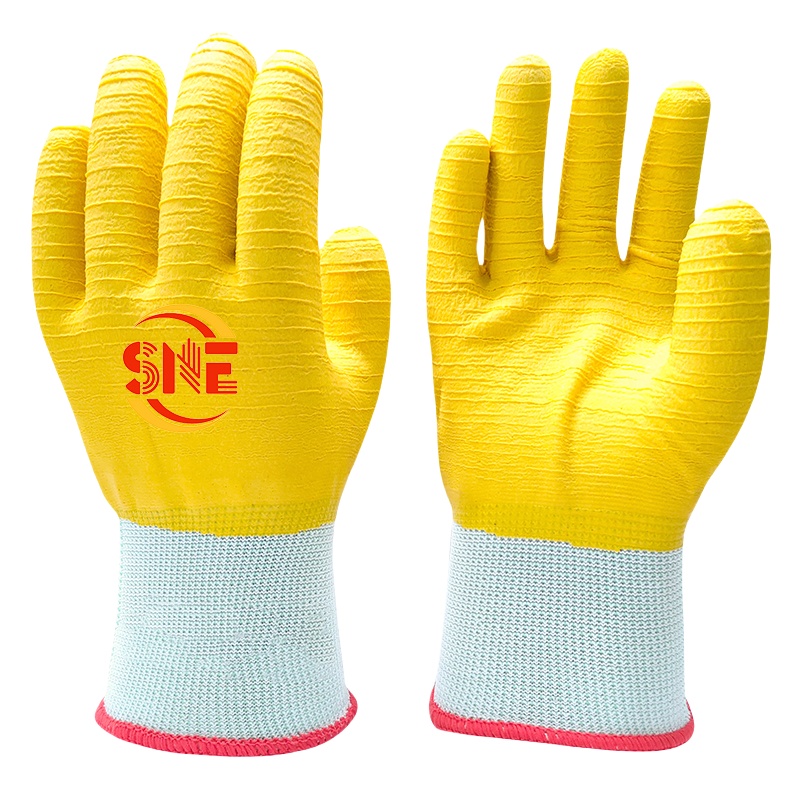
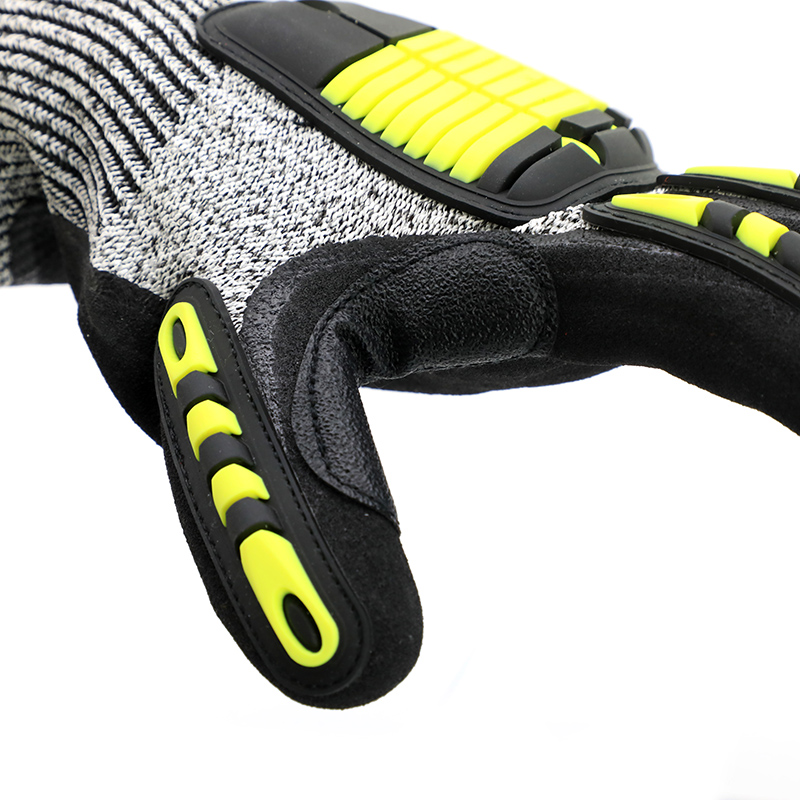
- HPPE/steel wire 10G liner + latex crinkle 3/4 coating + TPR back-of-hand impact protection — EN 388 cut level F with “P” impact rating. Engineered for heavy structural steel work, pipe fitting, and environments with crush hazards.
- Nylon/spandex 15G liner + PU fingertip coating, touchscreen-compatible — EN 388 cut level B, for light inspection tasks, quality control, and CNC screen operation in precision fabrication environments.
These product types reflect the hand feel preferences of German workers, who consistently report that grip consistency, breathability, and snug fit are as important as raw protection levels. Our collaboration with many German clients has taught us that a poorly fitting glove is often removed entirely — making fit and comfort a direct safety issue.
Porque é que estes tipos de produtos são recomendados
These glove specifications are recommended because they deliver the highest protection-to-dexterity ratio validated under the EN 388:2016+A1:2018 standard, while matching the specific mechanical hazards found in German metal fabrication environments. Metal fabrication requires the highest cut ratings (E–F) with durable coatings.
EN 388 is a European safety standard for protective work gloves, providing comprehensive assessment for their resistance to mechanical risks. The standard evaluates gloves based on their performance against abrasion, cut, tear, puncture, and impact. EN 388 cut level D (15 N to 21.9 N) is rated “medium/heavy duty” and is ideal for most serious metalwork — use this for handling steel plates, structural steel, castings, and long-term exposure to sharp edges. For operations involving razor-sharp stampings or sheet metal edges, upgrading to level E (22 N to 29.9 N) or level F (30 N+) is strongly advised. The comparative performance metrics below illustrate how different configurations serve distinct metal fabrication tasks:
| Especificação | EN 388 Nível de corte | Abrasão (Ciclos) | Tipo de revestimento | Melhor Aplicação |
|---|---|---|---|---|
| HPPE 13G + Nitrile Micro-foam | D | 4 (8,000+) | Nitrile micro-foam palm | General Metal Fabrication Gloves for sheet metal handling |
| HPPE/Glass Fiber 18G + PU | E | 4 (8,000+) | PU palm | Precision assembly, CNC operation |
| HPPE/Kevlar 13G + Sandy Nitrile | E | 4 (8,000+) | Sandy nitrile full coat | Oily metal parts, automotive stampings |
| HPPE/Steel Wire 10G + Latex + TPR | F | 4 (8,000+) | Latex crinkle 3/4 + TPR | Heavy steel, impact-prone Metal Fabrication Gloves |
| Nylon/Spandex 15G + PU Ponta dos dedos | B | 3 (2,000+) | PU fingertip dip | QC inspection, touchscreen use |
Use this table to match your specific metal fabrication task to the right glove configuration, prioritizing cut level first and then coating type based on grip environment (dry, oily, or wet).
From a cost-effectiveness perspective, nitrile micro-foam and PU palm-coated gloves on HPPE liners offer the best price-to-performance ratio for most German fabrication applications. They typically last 2–4 weeks under daily use in medium-duty sheet metal handling, while higher-spec HPPE/steel wire gloves with TPR protection can last 4–6 weeks in heavy-duty roles. The total cost of ownership — accounting for glove lifespan, injury prevention, and productivity — strongly favors investing in EN 388 level D or higher gloves over cheaper general-purpose alternatives.
Key Industries for Metal Fabrication Gloves in Germany
Germany’s industrial landscape creates diverse, high-volume demand for metal fabrication gloves across multiple sectors. The expanding aviation and automobile industries and technological innovations revolutionizing metal fabrication processes are the primary demand drivers. The following industries represent the largest procurement channels:
- Automotive manufacturing and Tier 1/2 suppliers — Germany’s automotive sector is the backbone of its metal fabrication demand. Workers handle stamped body panels, powertrain components, and EV battery housings. Gloves require EN 388 cut level D–E with oil-resistant coatings and high dexterity (13G–18G).
- Structural steel and construction — With ongoing infrastructure projects across Germany, structural steel fabricators need heavy-duty gloves (cut level E–F) with TPR impact protection and latex crinkle coatings for wet-weather grip on I-beams and rebar.
- Aerospace component manufacturing — Precision aluminum and titanium machining operations demand ultra-fine 18G gloves with PU coatings at cut level C–D, where lint-free performance and ESD compatibility are often additional requirements.
- General mechanical engineering (Maschinenbau) — Germany’s world-renowned machine-building sector requires versatile mid-range metal fabrication gloves (cut level C–D, nitrile foam coating) for assembly, maintenance, and prototype fabrication work.
- Sheet metal and HVAC fabrication — Thousands of Mittelstand sheet metal shops produce ductwork, enclosures, and custom fabrications. Workers handling raw sheet edges need cut level D–E gloves with snug fit for bending and forming tasks.
- Shipbuilding and marine engineering — Northern German shipyards require heavy-duty metal fabrication gloves resistant to saltwater exposure, with cut level E and chemical-resistant nitrile full coatings.
- Metal recycling and scrap processing — This growing sector demands the highest protection levels (cut level F, puncture level 4) due to unpredictable sharp edges, with reinforced palms and extended cuffs for wrist protection.
A crescente sensibilização para a segurança no local de trabalho e o cumprimento rigoroso da regulamentação em setores como a construção, os cuidados de saúde e a indústria transformadora impulsionam a procura no mercado, enquanto a aplicação das normas de segurança no trabalho e o crescimento das operações industriais amplificam a procura por luvas de segurança de alto desempenho. Germany’s Berufsgenossenschaften (trade associations for statutory accident insurance) actively enforce PPE compliance and conduct workplace audits, making certified glove procurement a non-negotiable operational requirement for every metal fabrication employer. The ongoing transition toward Industry 4.0 — with automated cutting, laser processing, and robotic welding — has not reduced glove demand; rather, it has shifted requirements toward higher-dexterity, touchscreen-compatible models that workers need for operating digital interfaces alongside manual metal handling.
Specific Application Scenarios for Metal Fabrication Gloves
Cenário 1: Planta de Estampagem Automotiva em Stuttgart
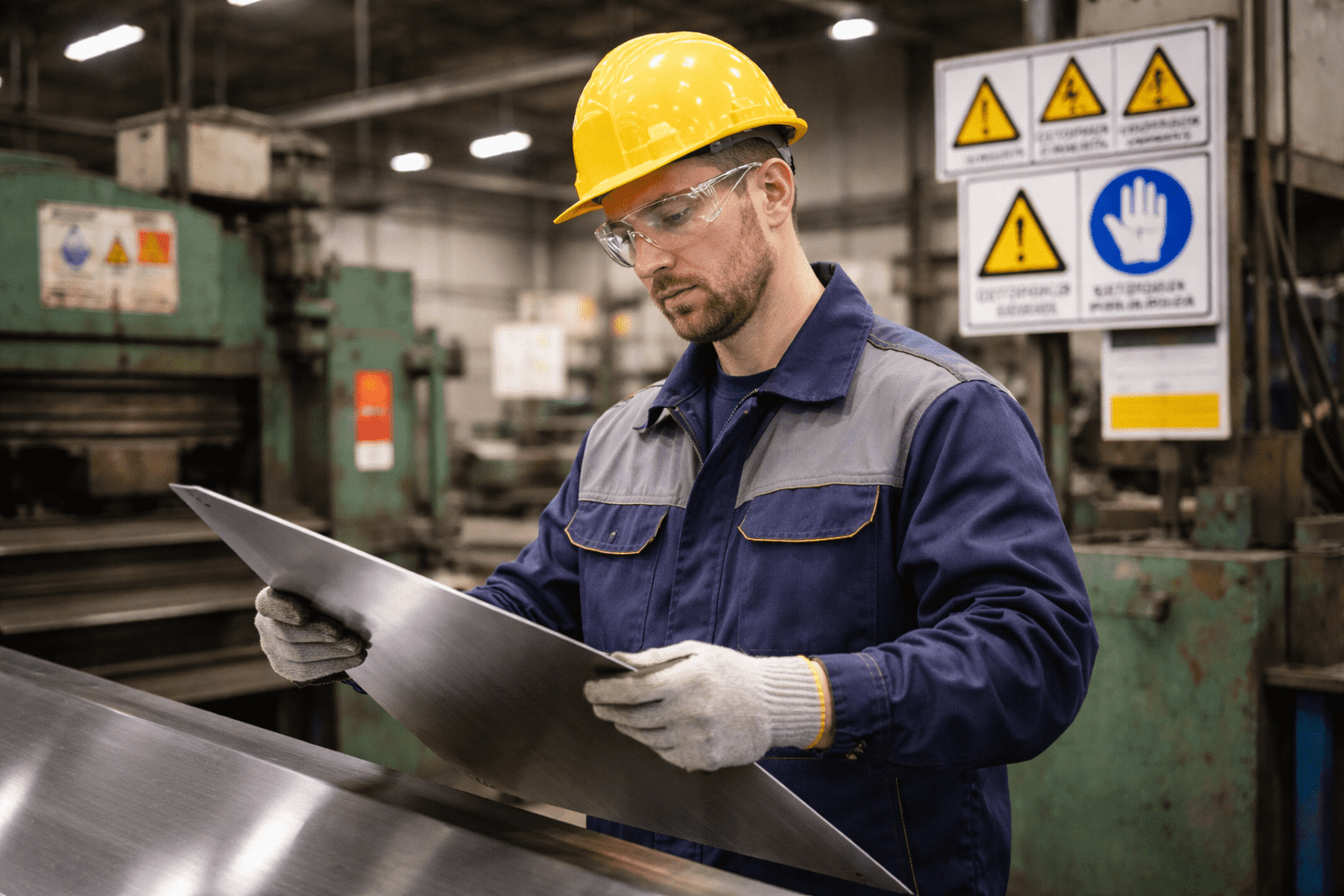
On the press line of a major automotive parts supplier, workers remove freshly stamped steel body panels from hydraulic presses and stack them on transport racks. The primary hazards are razor-sharp burrs on panel edges, residual stamping oil on surfaces, and the repetitive gripping motion that fatigues hands over an 8-hour shift. The recommended glove is an HPPE 13G liner with sandy nitrile palm coating at EN 388 cut level D, abrasion level 4, providing secure oil grip and consistent cut protection. The sandy nitrile texture channels away surface oil, maintaining grip force even after hours of handling oily parts. Workers typically go through one pair every 10–12 working days.
Scenario 2: Structural Steel Assembly on a Hamburg Construction Site
Ironworkers on a commercial high-rise project handle H-beams, welded connections, and rebar cages in all weather conditions, including rain and near-freezing temperatures during northern German winters. Crush injuries from dropped steel sections and deep cuts from raw beam edges are the primary hazards. The recommended glove is an HPPE/steel wire 10G liner with latex crinkle 3/4 coating and TPR back-of-hand impact protection, rated EN 388 cut level F with “P” impact certification. The latex crinkle finish maintains grip on wet steel, while the TPR ridges absorb impact energy from falling objects. A high-visibility color option (neon yellow shell) improves site safety.
Scenario 3: Precision Sheet Metal Shop in Bavaria
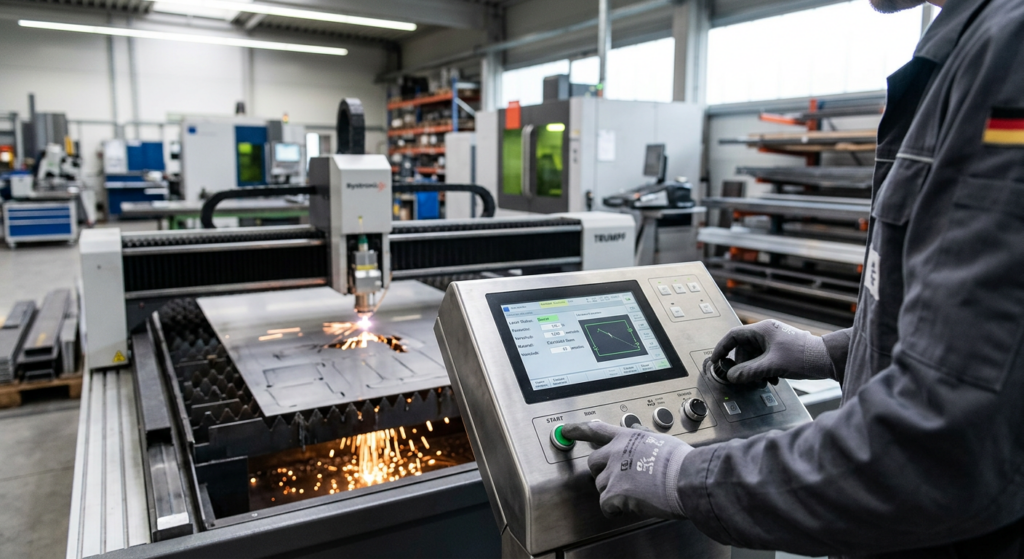
In a family-owned Mittelstand workshop, skilled technicians operate CNC press brakes, laser cutters, and TIG welding stations to produce custom enclosures for industrial electronics. They alternate between loading raw sheet metal (cut hazard), programming the CNC touchscreen (dexterity requirement), and inspecting finished parts for burrs (tactile sensitivity). The recommended glove is an HPPE/glass fiber 18G liner with PU palm coating at EN 388 cut level E. The ultra-thin 18G construction allows full finger articulation and touchscreen operation without removing gloves, while the PU coating provides clean grip without leaving residue on polished surfaces. For welding phases, workers switch to separate leather/welding gloves — highlighting the importance of having task-matched glove sets available on site.
Estudos de caso
A large German automotive Tier 1 supplier in North Rhine-Westphalia required 80,000 pairs of EN 388 level D metal fabrication gloves per quarter with custom private-label branding and bilingual (German/English) packaging. We configured an HPPE 13G nitrile micro-foam glove in seven sizes (S–4XL) to match their workforce demographics, delivered via sea freight to Hamburg in 28-day lead times, and maintained consistent quality across six consecutive quarterly shipments.
A PPE distributor based in Munich needed to expand their metal fabrication glove range to serve Mittelstand engineering workshops across Bavaria. We developed three OEM product lines — a light-duty 18G PU-coated, a medium-duty 13G nitrile foam, and a heavy-duty 10G TPR impact model — with custom packaging and multilingual technical data sheets. The partnership grew from an initial trial order of 5,000 pairs to a rolling quarterly commitment of 45,000 pairs within 12 months.
Os 6 principais fornecedores locais recomendados na Alemanha
| Nome da empresa | Principais pontos fortes | Regiões de serviço | Apoio à pré-venda | Apoio pós-venda |
|---|---|---|---|---|
| Rheinschutz GmbH | Wide cut-resistant glove portfolio, fast warehouse delivery | NRW, Hessen, a nível nacional | Product catalogs, on-site demos | Returns within 30 days, replacement policy |
| Bayern Arbeitschutz AG | Automotive-grade PPE specialist, custom sizing | Baviera, Baden-Württemberg | Technical consultation, sample program | Dedicated account managers, quality audits |
| NordSafe Handschuhe KG | Maritime & construction glove focus, cold-weather range | Hamburg, Schleswig-Holstein, Lower Saxony | Application-based selection guide | Warranty claims, on-site training |
| Mittelrhein PPE Solutions | Mittelstand-focused distributor, low MOQ flexibility | Rhineland-Palatinate, Saarland | Free trial boxes, bilingual support | Defect replacement, restocking support |
| Sachsen Schutzwerk GmbH | Cost-effective bulk supply, broad industrial range | Saxônia, Turíngia, Brandemburgo | Online ordering portal, spec sheets | Prazo de devolução de 14 dias, linha de apoio técnico |
| SüdWest SafetyDirect | E-commerce PPE platform, next-day delivery capability | Baden-Württemberg, nationwide | AI-powered glove selector tool, chat support | Automated reorder, loyalty pricing |
When evaluating local suppliers, always verify that their metal fabrication gloves carry current EN 388:2016+A1:2018 test reports from accredited EU laboratories, and request physical samples to assess fit and grip quality before committing to bulk orders.
Porquê escolher a Snell Safety como seu parceiro global
Segurança Snell brings a distinctive combination of deep local market expertise and vertically integrated manufacturing strength that makes us an ideal sourcing partner for Germany-bound metal fabrication gloves. Through extensive collaboration with German clients — including automotive OEMs, Mittelstand distributors, and construction procurement teams — we have developed a precise understanding of what works in the German market: the hand feel preferences of local workers (snug, breathable, with consistent coating thickness), the EN 388 cut levels required for specific regional industries, and the packaging and documentation standards expected by German importers. We already have established local partners in Germany and are building overseas warehouse capacity to provide in-stock, ready-to-ship supply with significantly reduced lead times.
Our manufacturing infrastructure supports this market knowledge with the capacity to deliver at scale. With over a decade of hands-on production expertise, six dedicated production lines producing 150,000 pairs of safety gloves daily, and ISO 9001 + CE certifications, we offer factory-direct pricing that eliminates middlemen while maintaining stringent quality control across the entire production chain — from HPPE yarn sourcing through knitting, dip coating, curing, inspection, and export packaging. Our diversified coating technologies (PU, nitrile foam, nitrile micro-foam, sandy nitrile, latex crinkle) and advanced cut-resistant and impact-resistant engineering mean we can manufacture virtually any metal fabrication glove configuration to your exact specifications through our catálogo de produtos and OEM/ODM programs.
We are actively recruiting new distribution partners, agents, and e-commerce resellers across Germany. Partners receive comprehensive pre-sale empowerment (product selection guidance, technical training, market intelligence) and after-sale support (quality assurance, replacement policies, ongoing technical assistance). For online sellers, we offer dropshipping services, free product samples, professional marketing material support, and dedicated e-commerce enablement. Whether you are an end-user enterprise seeking direct supply or a distributor looking to build a profitable metal fabrication gloves range, contactar a nossa equipa para explorar oportunidades de parceria.
FAQ
What EN 388 cut level do I need for metal fabrication in Germany?
Most metal fabrication tasks in Germany require EN 388 cut level D (15–21.9 N) as a minimum. For handling raw sheet metal, structural steel, or recycled scrap with unpredictable sharp edges, level E (22–29.9 N) or F (30 N+) is recommended. Light assembly and inspection work can be adequately covered at level C (10–14.9 N).
Which coating type is best for handling oily metal parts?
Sandy nitrile and nitrile micro-foam coatings provide the best grip performance on oily metal surfaces. Sandy nitrile excels in heavy-oil environments, while nitrile micro-foam offers a balance of oil grip and breathability for light-oil conditions. Avoid PU coatings for oily applications as they lose grip significantly.
Quais certificações são necessárias para importar luvas de segurança na Alemanha?
Safety gloves sold in Germany must comply with EU Regulation 2016/425 on PPE and carry CE marking. They must be tested to EN 388:2016+A1:2018 by an EU-accredited notified body. An EU Declaration of Conformity and technical documentation must be available, and importers need an authorized representative within the EU.
How do I choose the right gauge for my metal fabrication application?
For heavy-duty metal work with impact risk, choose 10G (thicker, sturdier). For general metal handling and fabrication, 13G offers the best balance of protection and dexterity. For precision work, CNC operation, and small parts assembly, 15G or 18G provides the highest tactile sensitivity.
What is the typical price range for bulk metal fabrication gloves?
Bulk pricing for metal fabrication gloves varies by specification. EN 388 level C–D gloves with nitrile coating on HPPE liners typically range from €1.20–€2.50 per pair at MOQs of 10,000+ pairs. Level E–F with TPR impact protection can range €2.80–€4.50 per pair. Factory-direct sourcing from certified manufacturers offers 20–35% cost savings versus domestic wholesale.
How long do metal fabrication gloves typically last?
Under daily use in medium-duty fabrication (sheet metal handling, assembly), quality EN 388 level D gloves typically last 2–4 weeks. Heavy-duty applications (structural steel, scrap handling) may reduce lifespan to 1–2 weeks. Factors include cut exposure frequency, abrasion intensity, contact with chemicals or oils, and proper sizing.
Can I get metal fabrication gloves with touchscreen compatibility?
Yes. Gloves with conductive PU fingertip coatings or integrated conductive yarn in the thumb and index finger enable capacitive touchscreen operation. These are available at cut levels B through D and are increasingly popular in German factories where workers operate CNC touchscreens and tablets without removing gloves.
What is the difference between nitrile foam and nitrile micro-foam coating?
Nitrile foam features larger air pockets in the coating, providing a softer feel and good dry grip. Nitrile micro-foam has finer, denser air pockets, delivering superior oil grip and better abrasion resistance. For metal fabrication with light oil exposure, micro-foam is the preferred choice; for dry-environment general handling, standard foam offers better breathability.
Do German regulations require impact-rated gloves for metal fabrication?
EN 388:2016 includes an optional impact protection test, marked with “P” on the label. While not universally mandated for all metal fabrication, German BG (Berufsgenossenschaft) risk assessments often require TPR impact protection for tasks involving heavy steel, pipe fitting, or overhead work where crush injuries are a documented hazard.
What minimum order quantities should I expect from Chinese glove manufacturers?
Reputable Chinese manufacturers typically set MOQs between 3,000 and 10,000 pairs per style for standard metal fabrication gloves. For OEM/ODM custom designs with private labeling, MOQs usually start at 5,000–10,000 pairs. Some manufacturers offer lower MOQ trial orders for first-time buyers to evaluate quality before scaling up.
Ready to source high-performance metal fabrication gloves for the German market? Whether you are an end-user enterprise seeking reliable direct supply or a distributor looking to build a profitable PPE partnership, submit your requirements or request a quote via Página de contacto da Snell Safety. Visite snellsafety.com para explorar a nossa gama completa de soluções de luvas de segurança industrial.
Conteúdo revisto e atualizado: março de 2026