Migliori guanti antitaglio Fornitori in Germania | 2026 Guida
2026-03-25
Condividi questo articolo
Finding a reliable cut resistant gloves manufacturer is essential for German buyers navigating strict EN 388 compliance requirements, high-volume procurement demands, and the need for consistent quality across industrial applications. This guide covers everything from product specifications and industry requirements to supplier evaluation and sourcing strategies tailored specifically for the Germany market.
If you are looking for expert help selecting the right cut resistant glove configurations for your German operations, contatta il nostro team at Snell Safety. We have extensive experience serving Germany-based clients and can recommend specifications precisely matched to your workplace conditions.
Risposta rapida
For sourcing a cut resistant gloves manufacturer in Germany, buyers should consider established regional PPE distributors in industrial hubs like North Rhine-Westphalia, Bavaria, and Baden-Württemberg who maintain local inventory and provide technical consultation. Chinese manufacturers who specialize in customized cut resistant gloves with competitive factory-direct pricing and full international certifications (ISO 9001/CE) offer excellent value for OEM/ODM and high-volume private label programmes.
Market Overview
The Germany safety gloves market is projected to grow from USD 1,068.97 million in 2023 to an estimated USD 2,100.86 million by 2032, reflecting a compound annual growth rate (CAGR) of 7.78%. Within this market, cut resistant gloves represent one of the fastest-growing segments. HPPE leads material growth with an 8.69% CAGR as its graphene-enhanced fibers deliver high cut resistance without compromising dexterity, and Germany’s robust automotive and chemical sectors are fueling demand for specialized gloves that boast a combination of protective features.
Germany’s robust framework for occupational safety regulations significantly drives the demand for safety gloves, with the country’s adherence to stringent EU directives such as Regulation (EU) 2016/425 on personal protective equipment (PPE) mandating the use of high-quality safety gloves across industries. The Arbeitsschutzgesetz (Occupational Health and Safety Act) and the oversight of the Deutsche Gesetzliche Unfallversicherung (DGUV) ensure that employers providing inadequate hand protection face substantial legal and financial consequences. Hand injuries constitute up to 30% of the total cases treated in emergency departments, making cut resistant gloves an essential procurement priority for every German industrial operation.
What Types of Cut Resistant Gloves Are Most Needed in Germany
The most in-demand cut resistant gloves from any manufacturer serving Germany include HPPE-based liners at cut levels C through F (per EN 388:2016+A1:2018), paired with nitrile or PU palm coatings in 13G and 15G gauge configurations. These products dominate procurement across automotive, metal fabrication, construction, and logistics sectors.
Based on our experience serving Germany clients, we have identified that German buyers prioritize a combination of high cut protection and exceptional dexterity. Workers in Stuttgart automotive plants, Ruhr Valley construction sites, and Hamburg logistics centres all share a common expectation: gloves must protect without limiting hand movement or tactile sensitivity. Germany’s continental climate also demands breathable liners during warm months and compatible layering during winter. The preference for 13G and 15G gauge liners reflects this — they offer the thinnest possible knit while still integrating HPPE, glass fiber, or Kevlar yarns for cut resistance.
Here are the top cut resistant glove configurations we manufacture for Germany:
- 13G HPPE/glass fiber + sandy nitrile palm coating — EN 388 rating 4X43D (cut level D). The highest-volume cut resistant specification for metalworking, stamping, and sheet metal handling. Sandy nitrile ensures reliable grip on oily components.
- 15G HPPE/spandex + PU palm coating — EN 388 rating 4X42C (cut level C). Rapidly growing in demand for precision automotive assembly, quality inspection, and electronics manufacturing where tactile feel is paramount.
- 13G HPPE/Kevlar/steel wire + nitrile foam palm coating — EN 388 rating 4X44E (cut level E). Required for heavy-duty glass handling, recycling operations, and environments with extreme laceration hazards.
- 13G HPPE + TPR back-of-hand impact protection + sandy nitrile palm — EN 388 rating 4X43DP. Essential for oil and gas, mining, and heavy maintenance where both cut and dorsal impact hazards coexist.
- 18G HPPE/nylon + PU fingertip coating — EN 388 rating 4X42B (cut level B). Specialized for electronics assembly and fine-component handling where maximum dexterity with light cut protection is needed.
These configurations align with Germany’s industrial character, where precision manufacturing coexists with heavy industry. This shift is particularly noticeable in industries like automotive manufacturing and construction, where companies are responding by designing gloves with multi-layered constructions that provide superior protection while maintaining dexterity.
Perché sono consigliati questi tipi di guanti resistenti al taglio
These specifications deliver the optimal balance of EN 388 compliance, worker comfort, durability, and total cost of ownership that German procurement managers demand from any cut resistant gloves manufacturer.
The EN 388:2016+A1:2018 standard evaluates cut resistance using the ISO 13997 TDM test (coup test), which measures the force in Newtons required to cut through the material. Cut level C requires 5.0–10.0 N, level D requires 10.0–15.0 N, and level E requires 15.0–22.0 N. HPPE-based liners achieve these levels while remaining significantly lighter than older steel-wire constructions — a 13G HPPE liner weighs approximately 35–50 grams compared to 80–120 grams for equivalent steel-wire products. This weight reduction translates directly into reduced hand fatigue over 8-hour shifts, improved compliance rates among workers, and lower rejection of PPE on the factory floor.
Key performance comparisons for cut resistant gloves:
- Cut Level C (15G HPPE/spandex + PU palm): €0.85–€1.60/pair wholesale, 5–10 day lifespan in precision manufacturing, highest dexterity rating
- Cut Level D (13G HPPE/glass fiber + sandy nitrile): €1.00–€2.30/pair, 7–14 day lifespan in metalworking, best all-around performance for medium-to-heavy industrial use
- Cut Level E (13G HPPE/Kevlar/steel wire + nitrile foam): €2.20–€3.80/pair, 10–21 day lifespan, maximum blade cut protection for extreme hazard environments
- Cut Level D + Impact (13G HPPE + TPR + sandy nitrile): €1.80–€3.50/pair, 10–21 day lifespan, combined cut and dorsal impact protection
| Specifiche | EN 388 Livello di taglio | Abrasion Cycles | Cut Resistant Gloves Manufacturer Price Range | Avg. Lifespan |
|---|---|---|---|---|
| 15G HPPE/Spandex + PU Palm | C (5.0–10.0 N) | 8,000+ | €0.85–€1.60/pair | 5–10 days |
| 13G HPPE/Glass Fiber + Sandy Nitrile | D (10.0–15.0 N) | 8,000+ | €1.00–€2.30/pair | 7–14 days |
| 13G HPPE/Kevlar/Steel Wire + Nitrile Foam | E (15.0–22.0 N) | 8,000+ | €2.20–€3.80/pair | 10–21 days |
| 13G HPPE + TPR Impact + Sandy Nitrile | D + Impact (P) | 8,000+ | €1.80–€3.50/pair | 10–21 days |
| 18G HPPE/Nylon + PU Fingertip | B (2.5–5.0 N) | 6,000+ | €0.70–€1.20/pair | 3–7 days |
Use this table to match each specification against your primary hazard profile and calculate true cost-per-worker-day when planning your cut resistant gloves procurement.
Key Industries Driving Cut Resistant Gloves Demand in Germany
Germany’s demand for cut resistant gloves is driven by its position as Europe’s leading industrial economy, with automotive, metal fabrication, construction, chemical processing, and logistics sectors each requiring distinct cut protection configurations from any manufacturer.
The top industries procuring cut resistant gloves include:
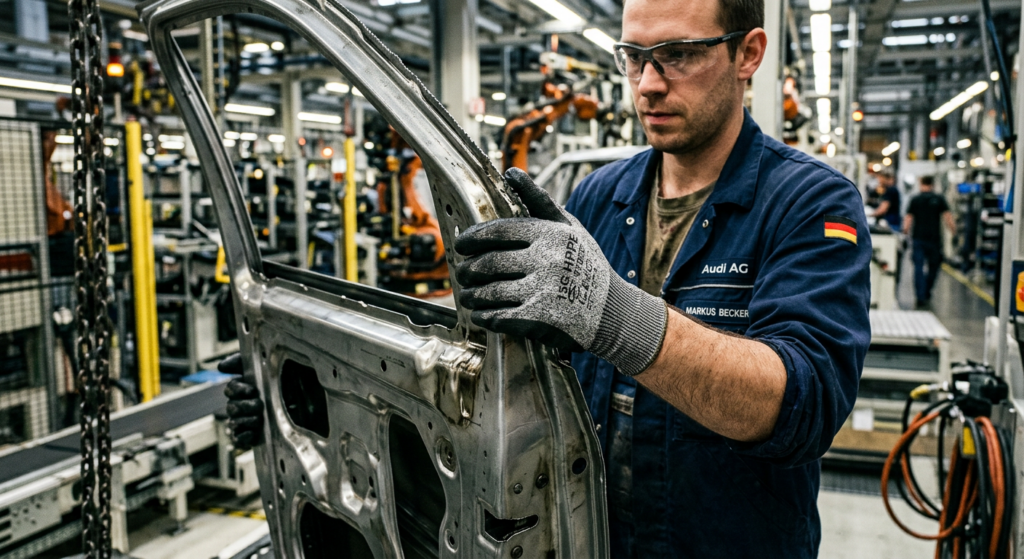
- Produzione automobilistica — The market shows significant penetration across major industrial hubs such as North Rhine-Westphalia, Baden-Württemberg, and Bavaria, supported by their robust manufacturing and automotive industries. Stamping lines, press shops, and body-in-white operations consume high volumes of cut level C–D gloves. Electric vehicle battery assembly is creating new demand for combined cut and chemical-resistant specifications.
- Metal fabrication and machinery manufacturing — Sheet metal handling, CNC machining, and deburring operations generate sharp-edged components that require EN 388 cut level D or higher. Sandy nitrile coatings are preferred for grip on oily machined parts. This sector represents one of the largest order volumes for any cut resistant gloves manufacturer.
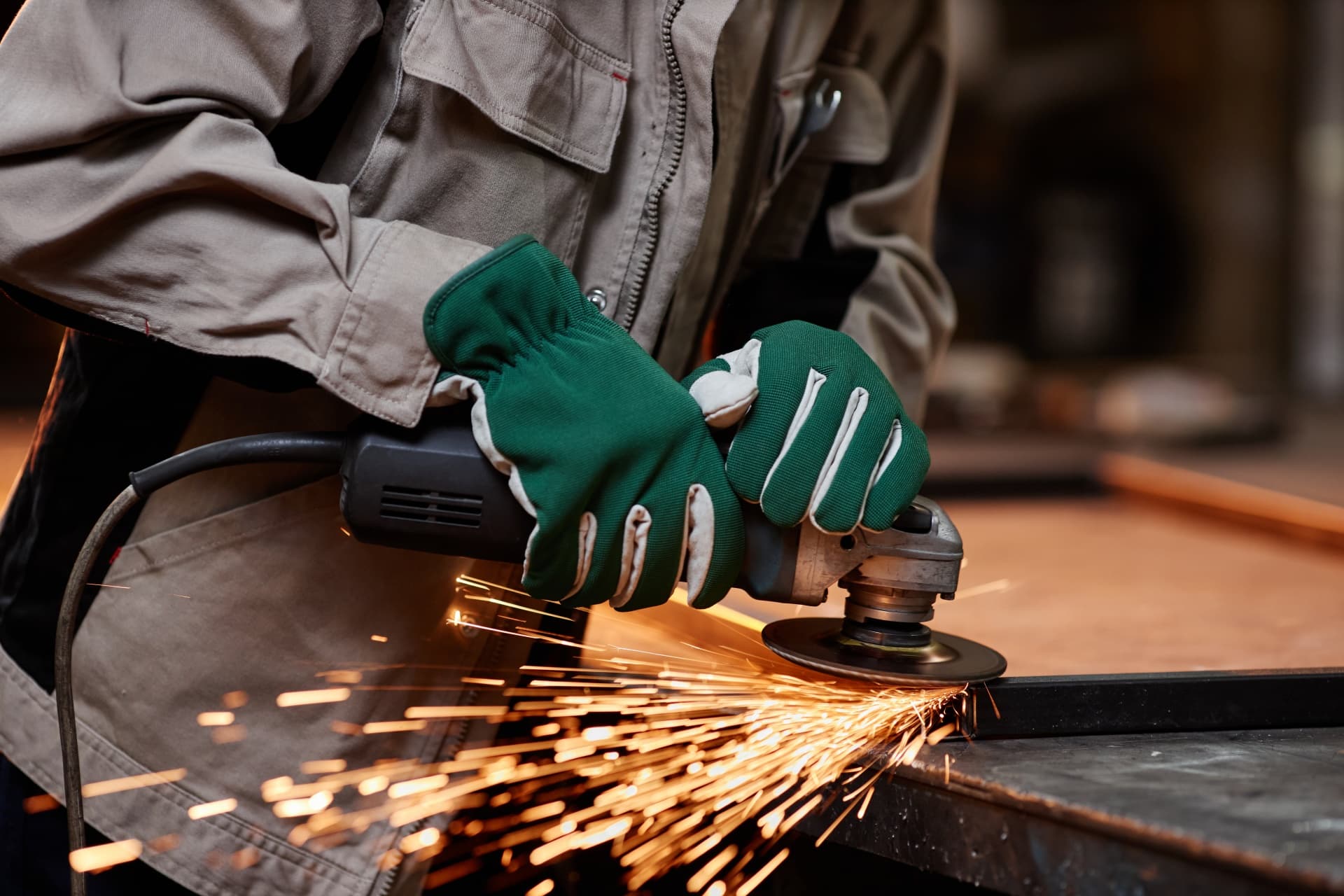
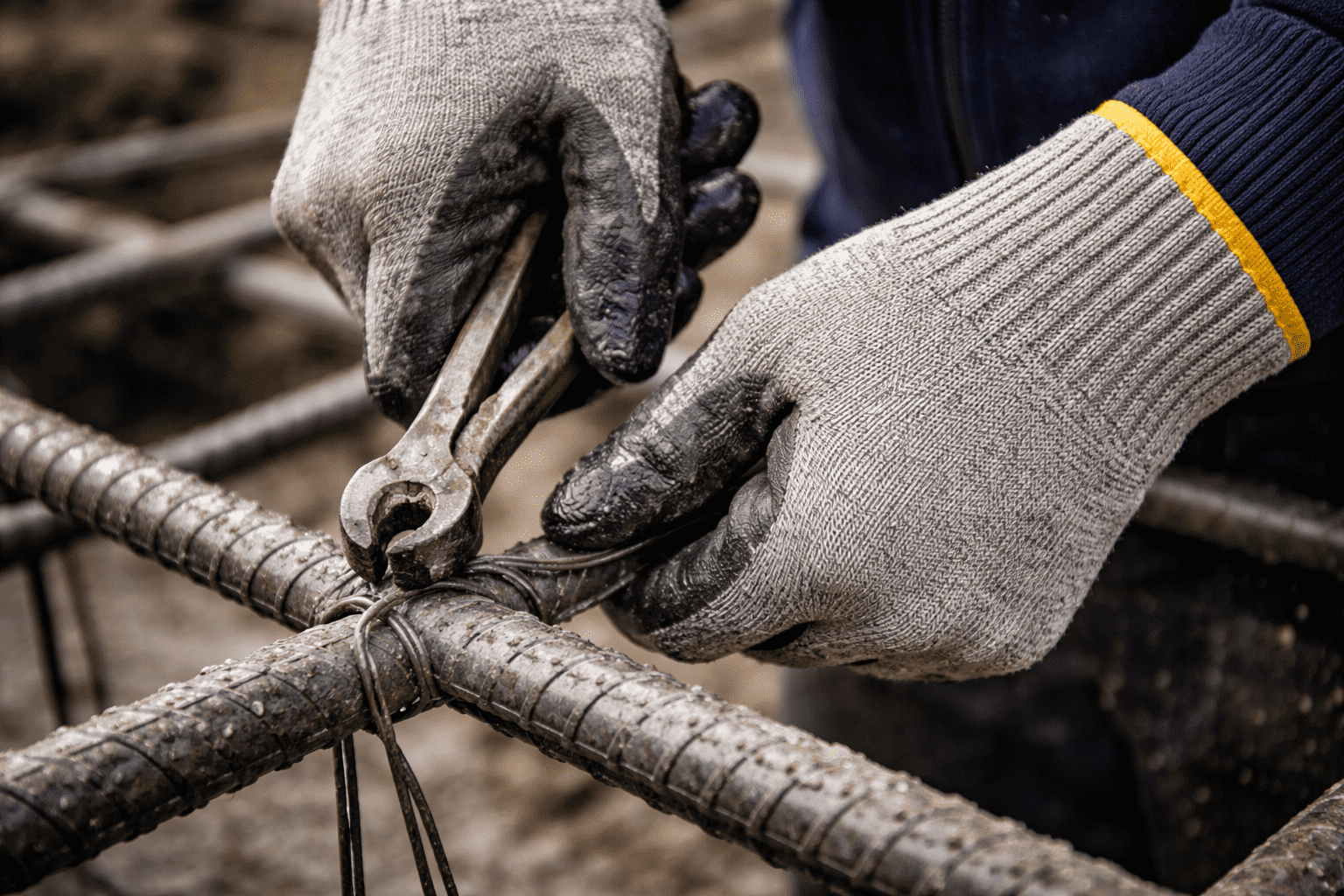
- Construction and civil engineering — Workers handling rebar, metal framing, glass panels, and sharp-edged building materials need cut level C–D gloves with high abrasion resistance. Latex crinkle or nitrile coatings provide all-weather grip for outdoor conditions.
- Chemical and pharmaceutical processing — Cut hazards from glass ampoules, sharp-edged equipment, and metal containers coexist with chemical splash risks. Dual EN 388 (cut) and EN 374 (chemical) certified gloves are standard procurement requirements.
- Oil, gas, and energy — The growing electrical industry in Germany underscores a parallel increase in the industry’s demand for hand protection equipment, with the surge in electricity generation activities and the expansive installation of solar power plants necessitating stringent safety measures. Impact-resistant TPR-backed cut resistant gloves with oil-repellent nitrile coatings dominate this sector.
- Logistica e magazzino — Box cutters, strapping tools, and sharp packaging edges create persistent cut hazards. Cut level B–C gloves with PU palm coating and touchscreen-compatible fingertips are increasingly specified.
- Riciclaggio e gestione dei rifiuti — One of the most hazardous environments for hand lacerations, requiring cut level E–F gloves with extended cuff protection and puncture-resistant reinforcements.
Europe experiences steady growth, driven by regulatory compliance frameworks that prioritize continuous improvement over mere adherence to minimum standards. Recent updates to the region’s EN 388:2016+A1:2018 standard necessitate enhanced testing methodologies. This gap presents lucrative opportunities for suppliers who can offer superior protection performance. Germany’s commitment to Industrie 4.0 and the transition to electric vehicle production are creating new cut hazards that legacy glove specifications may not adequately address, further driving procurement of advanced HPPE and Kevlar-based cut resistant gloves.
Specific Application Scenarios
Scenario 1: Automotive Stamping Plant in Baden-Württemberg
On a high-volume stamping line, press operators load steel blanks weighing 5–15 kg into hydraulic presses operating at 60+ strokes per minute. Workers then extract formed body panels with razor-sharp flanged edges, transferring them to welding fixtures. Each shift involves 300–500 part-handling cycles, creating constant laceration risk from burrs, sheared metal edges, and sharp flanges. The recommended specification is 13G HPPE/glass fiber liner with sandy nitrile palm coating at EN 388 cut level D. The sandy texture provides secure grip on oil-film-coated panels while the HPPE core resists blade-cut forces up to 15.0 N. Quarterly order volumes for a single facility typically run 30,000–60,000 pairs.
Scenario 2: Metal Recycling Facility in North Rhine-Westphalia
Sorting line workers manually separate ferrous and non-ferrous metals from mixed scrap streams. They handle jagged sheet metal offcuts, broken wire, sharp-edged aluminium cans, and contaminated materials at rapid pace across 8-hour shifts. Cut and puncture hazards are extreme, and materials may be oily or wet. The optimal specification is 13G HPPE/Kevlar/steel wire liner with nitrile foam full-dip coating at EN 388 cut level E, puncture level 4. The full-dip nitrile coverage protects the entire hand from abrasion and contamination while the multi-fiber liner delivers maximum slash resistance. Workers go through 2–3 pairs per week due to the aggressive operating conditions.
Scenario 3: Glass Panel Installation on a Berlin Construction Site
Glaziers install large architectural glass panels weighing 30–80 kg on commercial building facades. Workers grip polished glass edges during lifting, positioning, and securing operations, with the ever-present risk of panel fracture creating catastrophic laceration hazards. Outdoor work in variable weather demands consistent grip performance in rain and cold. The recommended specification is 15G HPPE/spandex liner with PU palm coating at EN 388 cut level C, offering the dexterity needed for precise panel alignment while providing reliable protection against glass-edge cuts. Silicone-dot grip enhancements on the palm further secure handling of smooth glass surfaces.
Casi di studio
A tier-one automotive supplier in Bavaria needed to reduce hand laceration incidents across 5 stamping and machining facilities. We conducted a hazard assessment and consolidated their 14-SKU glove programme into 3 optimized cut resistant specifications — level C for assembly, level D for stamping, and level D+impact for maintenance. Within 6 months, recordable hand injuries dropped by 41% and annual glove procurement costs fell 22% through volume consolidation from a single cut resistant gloves manufacturer.
A metal fabrication company in North Rhine-Westphalia required a custom private-label cut resistant glove for distribution to their network of 12 sub-contractors. We developed a branded 13G HPPE/glass fiber + sandy nitrile palm glove with their logo, bilingual EN 388 labelling, and custom 120-pair case packaging. The consolidated OEM programme delivered consistent quality across all sites while achieving a per-pair cost reduction of 28% versus their previous multi-source approach.
Top 6 Recommended Local Suppliers in Germany
| Nome della società | Punti di forza fondamentali | Regioni di servizio | Supporto pre-vendita | Assistenza post-vendita |
|---|---|---|---|---|
| RheinSchutz Industriebedarf GmbH | Automotive cut protection expertise, large HPPE inventory | NRW, Hessen, Rhineland-Palatinate | On-site hazard assessments, free trial kits | Quarterly quality reviews, batch traceability |
| BayernSafe Arbeitsschutz AG | Premium cut resistant and impact glove specialization | Bavaria, Baden-Württemberg | EN 388 compliance consulting, product seminars | Dedicated account managers, rapid replacement |
| HansaCut Handelsgesellschaft mbH | Logistics-focused, fast northern Germany fulfilment for Cut Resistant Gloves Manufacturer products | Hamburg, Lower Saxony, Bremen | Online ordering portal, bulk sample programmes | Automated restock alerts, 48-hour returns |
| SachsenPro Schutzhandschuhe KG | Chemical and pharma dual-certification focus | Saxony, Thuringia, Brandenburg | EN 374 + EN 388 combined consulting | Chemical compatibility database, field support |
| SüdWest Schnittschutz e.K. | Broad construction and metal fabrication range | Baden-Württemberg, Saarland | Seasonal planning, flexible MOQs | Extended warranty, field quality audits |
| NordStar Sicherheit GmbH | E-commerce enablement, white-label Cut Resistant Gloves Manufacturer solutions | Nationwide digital channels | Listing content, product photography | Dropship fulfilment, order management |
When evaluating any cut resistant gloves manufacturer or distributor, always request current EN 388:2016+A1:2018 test certificates from an EU-accredited notified body and insist on a documented wear trial before committing to volume contracts.
Why Choose Snell Safety as Your Global Cut Resistant Gloves Partner
Sicurezza Snell brings deep local market expertise in Germany developed through years of collaboration with distributors, industrial end-users, and e-commerce sellers across the country. We understand precisely which cut levels, liner blends, coating textures, and sizing distributions work best for German workers — from snug 15G HPPE/spandex gloves for Bavarian precision assembly to robust 13G HPPE/Kevlar models for Ruhr Valley metalworking. We have established local partners in key German markets and are developing European warehouse capacity for in-stock, ready-to-ship supply. We are actively recruiting new distribution partners, agents, and e-commerce resellers across Germany, providing comprehensive pre-sale empowerment (product selection guidance, technical training, market intelligence) and after-sale support (quality assurance, replacement policies, ongoing technical assistance). Online brand owners benefit from dropshipping services, free samples, and marketing material support including product photography and listing content.
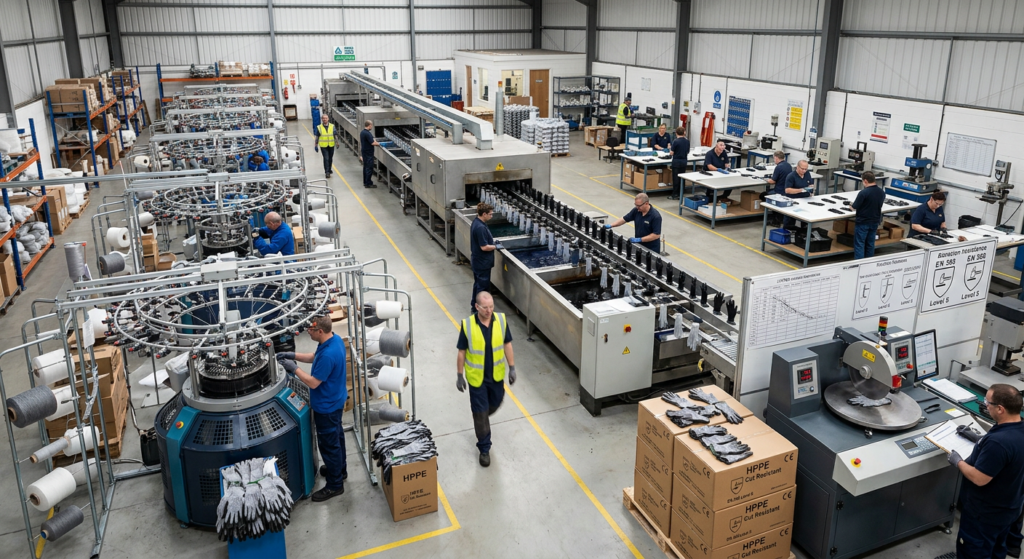
On the manufacturing side, our vertically integrated production — from R&D and HPPE yarn sourcing through knitting, dip coating, curing, quality inspection, and export packaging — ensures consistent cut resistance performance at factory-direct pricing. We operate 6 dedicated production lines with a daily capacity of 150,000 pairs, backed by ISO 9001 and CE certifications and over a decade of cut resistant glove engineering expertise. We offer full OEM/ODM customization across HPPE, Kevlar, glass fiber, and steel wire liners with PU, nitrile foam, nitrile micro-foam, sandy nitrile, and latex crinkle coatings in gauges from 7G to 18G. Browse our full catalogo prodotti to explore available configurations.
Whether you want to join our growing partner network or need factory-direct cut resistant gloves supply, contatta il nostro team to discuss your requirements and request complimentary samples.
FAQ
What EN 388 cut level do I need for construction work in Germany?
For general construction tasks like material handling and framing, EN 388 cut level B (2.5–5.0 N) provides baseline protection. For rebar work, metal stud framing, and glass handling, upgrade to cut level C or D (5.0–15.0 N) using 13G HPPE or HPPE/glass fiber liners with nitrile or latex coatings.
Which coating type is best for oily metalworking environments?
Sandy nitrile palm coating is the optimal choice for oily environments. Its engineered rough surface texture channels oil and coolant away from the grip zone, providing secure handling of lubricated metal parts. Nitrile micro-foam is a close alternative when slightly more dexterity is needed with lighter oil exposure.
Cosa significa la classificazione EN 388 per i guanti antitaglio?
EN 388:2016+A1:2018 is the European standard for mechanical protection in safety gloves. It rates abrasion (levels 1–4), blade cut via coup test (levels 1–5), tear (levels 1–4), puncture (levels 1–4), and ISO 13997 TDM cut resistance (levels A–F, measured in Newtons). An optional “P” suffix indicates dorsal impact protection.
How do I choose the right gauge for cut resistant gloves?
Select 10G for heavy-duty applications requiring maximum cut yarn density and cold-weather warmth. Choose 13G for the best balance of cut protection, comfort, and versatility across most industrial tasks. Opt for 15G–18G when maximum dexterity and tactile sensitivity are required alongside cut protection.
What is the price range for bulk cut resistant gloves manufacturer orders?
At wholesale volumes (10,000+ pairs), cut level C PU-coated HPPE gloves range from €0.85–€1.60 per pair. Cut level D sandy nitrile models cost €1.00–€2.30/pair. Cut level E heavy-duty gloves run €2.20–€3.80/pair. Factory-direct sourcing from a specialized manufacturer typically reduces costs by 20–35%.
What certifications are required to import cut resistant gloves into Germany?
All safety gloves sold in Germany must comply with EU Regulation 2016/425, carry valid CE marking, and be tested to EN 388:2016+A1:2018 by an EU-accredited notified body. Cut resistant gloves rated level C or higher typically fall under PPE Category II, requiring an EU type-examination certificate and EU Declaration of Conformity.
How long do cut resistant gloves typically last in industrial use?
Lifespan depends on cut hazard intensity and frequency. Cut level C PU-coated gloves last 5–10 working days in precision assembly. Cut level D sandy nitrile gloves in metalworking last 7–14 days. Cut level E gloves in recycling or heavy metal handling last 10–21 days. Budget 40–100 pairs per worker annually.
What is the difference between HPPE, Kevlar, and glass fiber in cut resistant gloves?
HPPE (High-Performance Polyethylene) offers the best cut-to-weight ratio with excellent dexterity. Kevlar provides superior heat resistance alongside cut protection up to 300°C contact. Glass fiber delivers high cut resistance at lower cost but can cause skin irritation without proper liner construction. Blending these materials optimizes performance for specific applications.
Can cut resistant gloves be touchscreen-compatible?
Yes. Conductive yarn or coating can be integrated into the index finger and thumb tips of 15G or 18G HPPE-based cut resistant gloves. These maintain EN 388 cut ratings while enabling operation of smartphones, tablets, and barcode scanners — increasingly required in German logistics and smart manufacturing environments.
{Professional photograph of diverse cut resistant safety gloves arranged on an industrial quality control table, showing HPPE liners, sandy nitrile coatings, PU palm coatings, and TPR impact protection models with EN 388 certification labels visible}
Ready to source your next cut resistant gloves order or explore a manufacturing partnership? Whether you are an end-user enterprise seeking factory-direct supply, a distributor building your PPE portfolio, or an e-commerce seller launching a private label cut protection brand, submit your requirements and request a competitive quotation at snellsafety.com/contatto-noi. Visit Sicurezza Snell to learn more about our full range of industrial safety glove solutions.
Contenuto rivisto e aggiornato: Marzo 2026