Beste Lieferanten von Öl- und Gas-Arbeitshandschuhen in Deutschland | Leitfaden 2026
2026-04-22
Diesen Artikel teilen
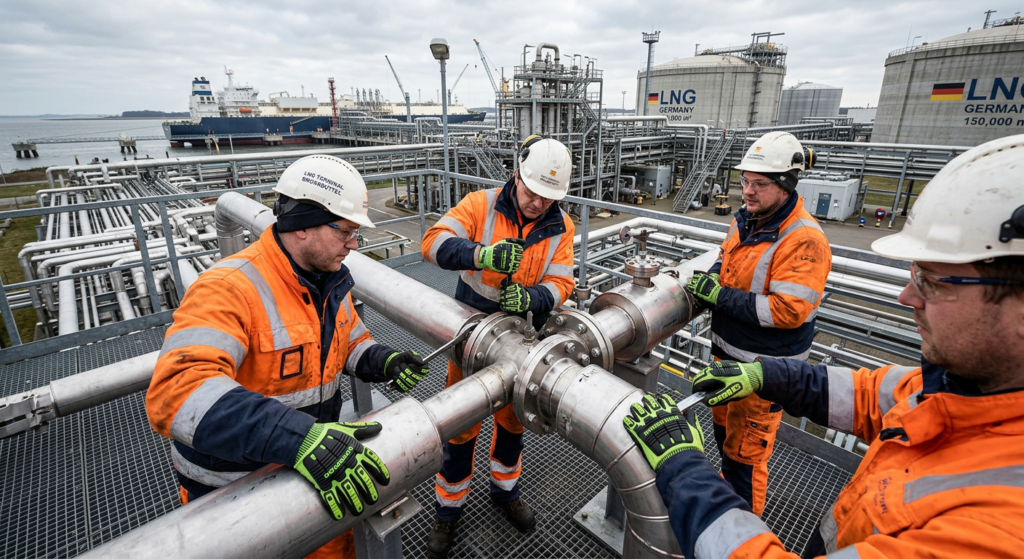
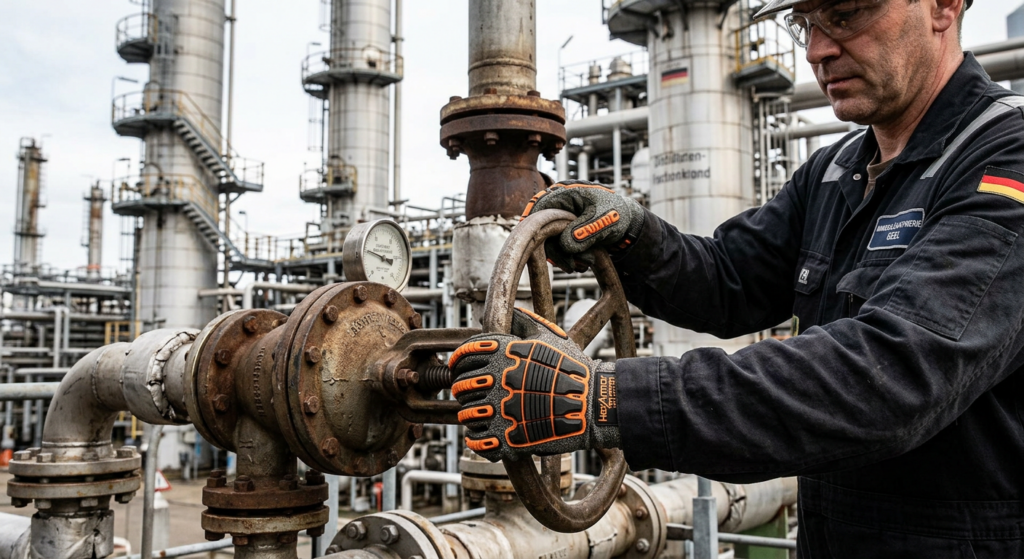
Öl- und Gas-Arbeitshandschuhe gehören zu den sicherheitskritischsten PSA-Kategorien im deutschen Energiesektor und schützen Arbeitnehmer in 16 Rohölraffinerien, mehreren neuen LNG-Terminals, Gas-Pipeline-Netzen und Petrochemie-Komplexen vor Stoß-, Schnitt-, Chemikalien- und thermischen Gefahren. Hand- und Fingerverletzungen machen fast 50 Prozent der Vorfälle in der Öl- und Gasindustrie aus, in manchen Anlagen sogar nahezu 80 Prozent aller meldepflichtigen Unfälle. Mit dem PPE-Segment der Öl- und Gasindustrie in Europa, das im Prognosezeitraum voraussichtlich eine jährliche Wachstumsrate (CAGR) von 10,3 % aufweist,beschleunigt sich die Nachfrage nach hochspezifizierten Öl- und Gas-Arbeitshandschuhen in Deutschland rasant – angetrieben durch Neubauten der LNG-Infrastruktur, Wasserstoff-Pilotprojekte und die strenge Durchsetzung der EU-Verordnung 2016/425.
Egal, ob Sie PSA für eine deutsche Raffinerie beschaffen, die Sicherheit eines LNG-Terminals verwalten oder Öl- und Gas-Arbeitshandschuhe in Mitteleuropa vertreiben: Dieser Leitfaden hilft Ihnen, die richtigen Handschuhspezifikationen, die besten Lieferantenoptionen und die effektivsten Beschaffungsstrategien zu identifizieren. Bereits für den deutschen Energiesektor sourcen? Kontaktieren Sie unser Team Bei Snell Safety – wir verfügen über umfangreiche Erfahrung in der Betreuung deutscher Öl- und Gas-Kunden und können die optimalen Produktkonfigurationen für Ihre spezifischen Einsätze empfehlen.
Schnelle Antwort
Für die Beschaffung von Öl- und Gas-Arbeitshandschuhen in Deutschland sollten Sie etablierte regionale PSA-Vertriebsunternehmen in der Nähe großer Energiehub in Niedersachsen, Nordrhein-Westfalen und Schleswig-Holstein in Betracht ziehen. Zudem lohnt sich die Prüfung chinesischer Hersteller, die sich auf maßgeschneiderte Öl- und Gas-Arbeitshandschuhe mit wettbewerbsfähigen Direktpreisen, fortschrittlicher Schnitt- und Stoßschutztechnik sowie vollständigen internationalen Zertifizierungen (ISO 9001/CE) spezialisiert haben. Die Kombination aus lokaler Lagerverfügbarkeit und Offshore-OEM-Anpassung bietet sowohl betriebliche Flexibilität als auch Kostenvorteile bei der Beschaffung.
Marktübersicht
Der Markt für Sicherheitshandschuhe in Deutschland soll von 1.068,97 Mio. USD im Jahr 2023 auf geschätzte 2.100,86 Mio. USD bis 2032 wachsen und weist eine jährliche Wachstumsrate (CAGR) von 7,78 % auf. Innerhalb dieser Entwicklung ist der Untersegment der Öl- und Gas-Arbeitshandschuhe eines der am schnellsten wachsenden. Deutschland bleibt Europas größtes Raffineriezentrum und verarbeitet jährlich über 106 Millionen Tonnen Rohöl in zwölf Raffinerien, die größtenteils internationalen Ölkonzernen gehören. Der rasante Ausbau der LNG-Importinfrastruktur im Land – mit betriebsbereiten Schwimmterminalen in Wilhelmshaven, Brunsbüttel und Lubmin sowie dauerhaften Landterminals im Bau – hat eine völlig neue Nachfrage nach spezialisierter Hand-Schutzausrüstung in Energieanlagen geschaffen.
Der Handschutzsegment hielt 2024 28,3 % des europäischen Marktes für Persönliche Schutzausrüstung, und Deutschlands Energiesektor ist ein Schlüsseltreiber dieser Nachfrage. Die EU-Verordnung 2016/425 klassifiziert Öl- und Gas-Arbeitshandschuhe als Kategorie-II- oder Kategorie-III-PSA je nach Gefahrenprofil und verlangt strenge EU-Typprüfungen. Das DGUV-System (Deutsche Gesetzliche Unfallversicherung) schreibt verpflichtende Risikobewertungen an jedem Arbeitsplatz vor und stellt sicher, dass Handschuhspezifikationen den tatsächlichen Gefahrenexpositionen entsprechen – von Kohlenwasserstoff-Spritzern und Stößen bis hin zu Schnitt- und Hitzrisiken.
Welche Arten von Öl- und Gas-Arbeitshandschuhen werden in Deutschland benötigt?
Die entscheidenden Öl- und Gas-Arbeitshandschuhe für den deutschen Markt sind schlagfeste (TPR), schnittfeste (EN 388 Stufe C–F) und ölgreifende (sandiges Nitril / Nitrilschaum) beschichtete Handschuhe auf 10G–13G-HPPE-, Kevlar- oder Glasfaserfutter, die für die extreme Mehrfachgefahrenumgebung von Raffinerien, LNG-Terminals und Pipeline-Betrieben konzipiert sind.
Basierend auf unserer Erfahrung bei der Betreuung deutscher Kunden haben wir bei Snell Sicherheit haben festgestellt, dass der deutsche Öl- und Gassektor Handschuhe mit einer einzigartigen Kombination aus Schlagfestigkeit, hoher Schnittfestigkeit, überlegener Ölgreifung und Kältefunktionalität verlangt. Die Energieinfrastruktur Deutschlands an der Nord- und Ostsee setzt die Arbeiter von Oktober bis April feuchten, kalten und windigen Bedingungen aus, bei denen die Temperaturen weit unter 0 °C fallen können. Arbeiter in Raffinerien bei Karlsruhe, Gelsenkirchen und Leuna stehen vor anderen Herausforderungen – hohe Hitze aus Prozessanlagen, Kohlenwasserstoffexposition und scharfe Metallschneiden –, die Handschuhe mit thermischer und chemischer Beständigkeit neben mechanischem Schutz erfordern.
Die folgenden Produktarten stellen die am stärksten nachgefragten Konfigurationen von Öl- und Gas-Arbeitshandschuhen dar, die wir für deutsche Energieabnehmer herstellen:
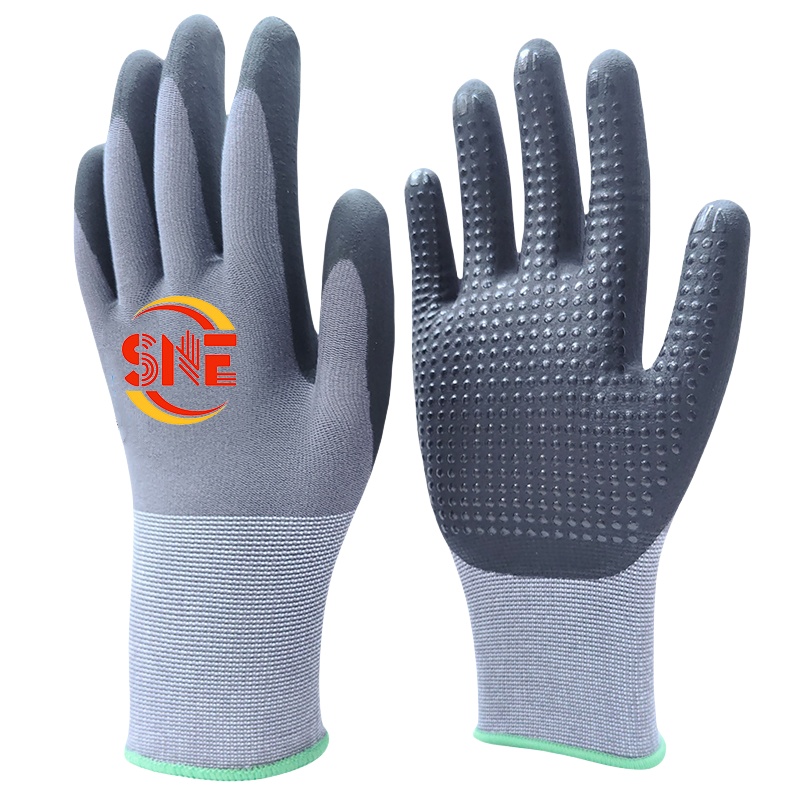
- 13G-HPPE/Kevlar/Glasfaserfutter mit sandigem Nitril-Vollbeschichtung + TPR-Rückhand (EN 388: 4X44DP) — Der Referenz-Arbeitshandschuh für Öl und Gas bei schweren Bohrarbeiten, Takelagen und Rohrhandhabung. Bietet EN 388 Schnittstufe D mit zertifizierter Schlagfestigkeit („P“-Bewertung). Größen S–XXL.
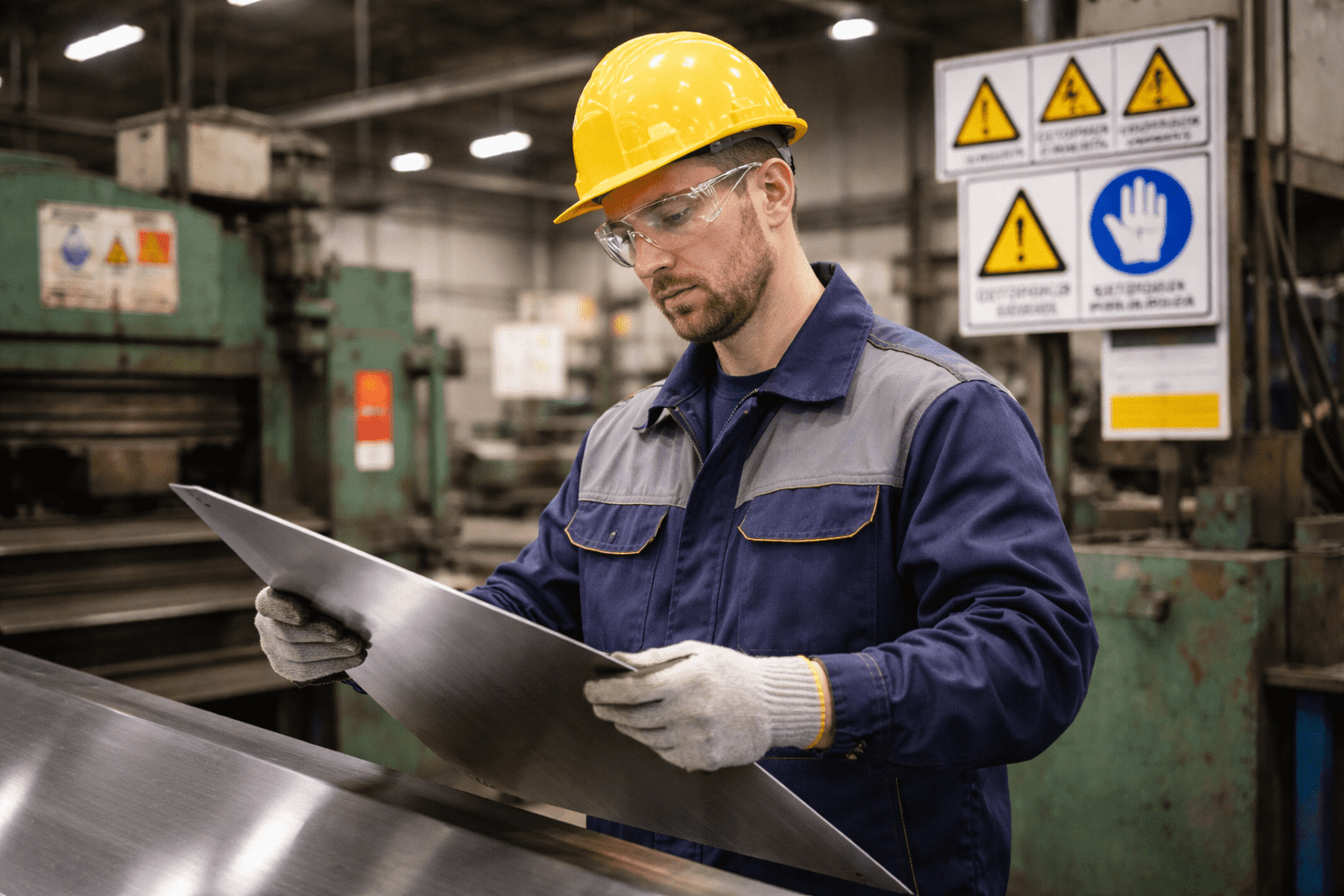
- 13G-HPPE/Stahl Drahtfutter mit Nitrilschaum-Handflächenbeschichtung + TPR (EN 388: 4X44EP) — Maximale Schnittfestigkeit (Stufe E) für Arbeiten mit scharfen Blechen, Ventilanordnungen und Bohrkopfkomponenten. Der Nitrilschaum sorgt für exzellente Greifung auf öligeren Oberflächen bei gleichzeitiger Fingerfertigkeit.
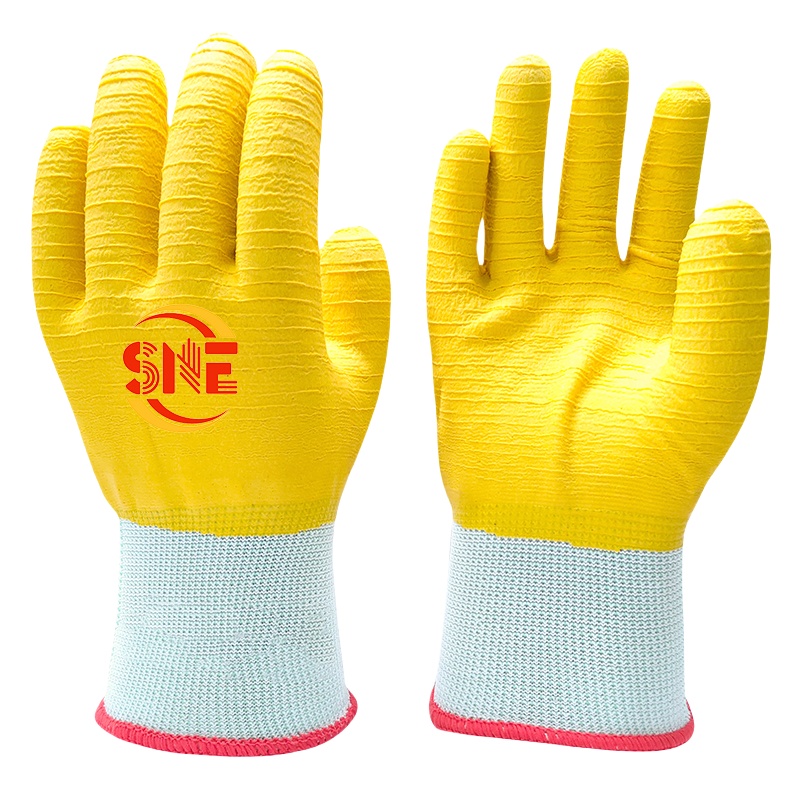
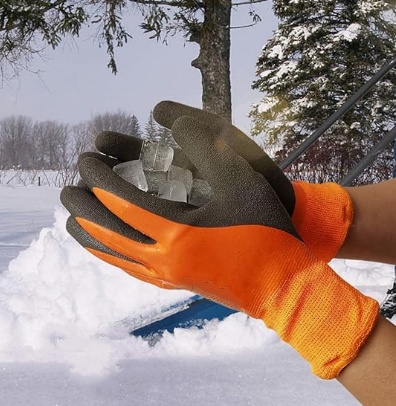
- 10G-Kevlar/Baumwolljerseyfutter mit Latex-Krissel-3/4-Beschichtung (EN 388: 3X43C) — Kältebewerteter mechanischer Schutz für Außenrohrwartungen und LNG-Terminalarbeiten im deutschen Winter. Die 10G-Konstruktion bietet zusätzliche Isolierung, während Krissel-Latex für feuchte Greifung sorgt.
- 13G-HPPE/Nylon/Spandexfutter mit sandigem Nitril-Handflächenbeschichtung (EN 388: 4X42C) — Mittelklasse schnittfester Öl- und Gas-Arbeitshandschuh für Wartung, Inspektion und allgemeine Raffinerieaufgaben. Ausgewogener Schutz und Fingerfertigkeit mit überlegener Ölgreifung.
- 13G-Kevlarfutter mit Nitril-Mikroschaum-Vollbeschichtung + verlängerte Manschette (EN 388: 4X43C) — Hitzebeständig bis 100 °C Kontakt, geeignet für nachgelagerte Prozessarbeiten nahe heißer Rohre, Flansche und Behälter. Die verlängerte Manschette schützt das Handgelenk vor Spritzern und Abrasion.
Warum diese Arten von Öl- und Gas-Arbeitshandschuhen empfohlen werden
Diese Spezifikationen sind speziell für die Mehrfachgefahrenumgebungen im deutschen Energiesektor entwickelt, wo Arbeiter gleichzeitig Schnitten durch scharfe Metalle, Schlägen durch schwere Ausrüstung, Öl- und Kohlenwasserstoffkontakt sowie Extremwetter ausgesetzt sind.
Der EN-388:2016+A1:2018-Standard ist der verbindliche europäische Maßstab zur Bewertung mechanischer Schutzfunktionen bei Arbeitshandschuhen. Für Öl- und Gasanwendungen sind die entscheidenden Leistungsaspekte Schnittfestigkeit (geprüft durch Coup-Test und ISO-13997-TDM-100-Messer-Schnitttest), Schlagfestigkeit („P“-Bewertung bei Bestehen des EN-13594-Schlagtests) und Abriebfestigkeit (gemessen in Martindale-Zyklen bei Stufe 4 = 8.000+ Zyklen). Der TPR (Thermoplastisches Gummi)-Rückhandschutz unserer empfohlenen Schlagfest-Handschuhe absorbiert und verteilt Energie von Schlägen, Quetschungen und Klemmkontakten – Gefahren, die bei Rohrhandhabung, Ventilbedienung und Takelarbeiten allgegenwärtig sind. Die Ergänzung durch thermoplastische Gummi-Rippen an Handschuhen zur Absorption und Verteilung von Schlägen auf den Handrücken zählt zu den neuen Technologien, die Handverletzungen reduzieren helfen.
Aus Kosteneffizienz-Sicht kann eine präzise Abstimmung der Handschuhspezifikationen auf Aufgabenebene-Gefahren in Öl- und Gasanlagen Verletzungsraten und Handschuhverbrauch pro Arbeiter erheblich senken. Wichtige Leistungsmetriken zum Vergleich:
- Schnittschutz (ISO 13997): Stufe C (10–15 N) für allgemeine Wartung; Stufe D–E (15–30 N) für Rohrfitting, Schweißvorbereitung und Blechhandhabung
- Aufprallschutz: „P“-zertifiziert nach EN 388 für alle Hochrisikozonen – Bohrdäcks, Rohrlager und Bereiche mit schweren Maschinen
- Ölgreifkoeffizient: Sandiges Nitril und Nitrilschaum gewährleisten zuverlässige Greifung selbst auf voll kohlenwasserstoffbelasteten Oberflächen und reduzieren Sturzobjektvorfälle
- Abnutzungswiderstand: Stufe 4 (8.000+ Martindale-Zyklen) verlängert die Nutzungsdauer auf 2–4 Wochen auch bei schweren Raffinerieanwendungen
- Kälte-Leistung: 10G-Kevlar/Baumwollfutter mit Latex-Krissel-Beschichtung behalten Flexibilität und Greifung bis −10 °C bei Winteraußenarbeiten
| Spezifikation | Liner / Spurweite | Beschichtung | EN 388-Bewertung | Primäre Anwendung in Öl & Gas | Preisbereich (€/Paar) |
|---|---|---|---|---|---|
| Öl- und Gas-Arbeitshandschuhe — Schlag + Schnitt | 13G HPPE/Kevlar/Glasfaser | Sandiges Nitril + TPR | 4X44DP | Bohrarbeiten, Takelung, Rohrhandhabung | €3,80–€6,50 |
| Maximale Schnittfestigkeit | 13G HPPE/Stahl Draht | Nitril-Schaum + TPR | 4X44EP | Ventilmontage, Bohrkopf-Arbeiten | 4,50–7,00 € |
| Kälte-Winter-Rohrleitung | 10G Kevlar/Baumwolljersey | Latex Krinkle 3/4 | 3X43C | Außenrohrleitungen, LNG-Terminal | €2,50–€4,00 |
| Öl- und Gas-Arbeitshandschuhe — Allgemeine Wartung | 13G HPPE/Nylon/Spandex | Sandy Nitril Handfläche | 4X42C | Inspektion, Raffineriewartung | €2,00–€3,50 |
| Hitzebeständiger Prozesshandschuh | 13G Kevlar | Nitril-Mikroschaum Voll + Verlängerte Manschette | 4X43C | Downstream-Arbeiten an heißen Rohren | 3,00–5,00 € |
Verwenden Sie diese Tabelle, um die Gefahrenbewertung Ihrer Anlage mit der optimalen Spezifikation für Öl- und Gas-Arbeitshandschuhe abzugleichen, bevor Sie sich zu einer Großbestellung verpflichten.
Schlüsselbranchen für Öl- und Gas-Arbeitshandschuhe in Deutschland
Die Nachfrage nach Öl- und Gas-Arbeitshandschuhen in Deutschland erstreckt sich über die gesamte Energie-Wertschöpfungskette – von der upstream Gasförderung und LNG-Import-Terminals über die midstream Rohrleitungsinfrastruktur bis zur downstream Raffination und petrochemischen Verarbeitung – und erzeugt vielfältige sowie anhaltende Beschaffungsanforderungen.
- Ölraffination: In Deutschland arbeiten 16 Rohöl-Raffinerien mit Atmosphärendestillation. Mitarbeiter in katalytischen Cracking-Anlagen, Destillationskolonnen und Tankfarmen benötigen schlagfeste Handschuhe mit Ölgriff und hohem Schnittschutz (EN 388 Stufe C–E), um scharfe Flansche, ölige Bauteile und schweres Werkzeug zu handhaben.
- LNG-Import und Regasifizierung: Die neuen LNG-Terminals in Wilhelmshaven, Brunsbüttel, Lubmin und Stade erfordern kältebeständige, chemikalienresistente Handschuhe, die bei kryogener Nähe die Fingerfertigkeit erhalten. Arbeiter handhaben schwere Schlauchkupplungen, Verlegeausrüstung und Regasifizierungskomponenten.
- Erdgas-Rohrleitungsinfrastruktur: Über 500.000 km Gasverteilungsleitungen in Deutschland erfordern laufende Wartung. Rohrleitungsschweißer, Monteure und Inspektionsmannschaften benötigen schnittfeste, hitzebeständige Öl- und Gas-Arbeitshandschuhe mit verlängerter Manschette zum Handgelenkschutz.
- Petrochemische Verarbeitung: Die Chemustriecluster in NRW, Sachsen-Anhalt und Bayern sind eng mit Raffinerien verknüpft. Chemikalienspritzschutz in Kombination mit mechanischem Schutz (EN 388 + EN 374 Doppelsertifizierung) ist unerlässlich.
- Wasserstoffinfrastrukturentwicklung: 2024 startete Deutschland Pilotprojekte zur Einmischung von Wasserstoff in regionale Netze für Industriecluster im Ruhrgebiet. Mitarbeiter an Wasserstoffmisch- und Elektrolyseanlagen stehen vor neuen Gefährdungsprofilen, die spezialisierte, druckbeständige Handschuhe erfordern.
- Offshore-Wind-Service-Schiffe (Energiewende): Die deutschen Offshore-Windparks in Nord- und Ostsee beschäftigen Servicetechniker, die kombinierten maritimen, mechanischen und Kältegefahren ausgesetzt sind und wasserdichte, schlagfeste Handschuhe benötigen.
Der Markt für Industrieschutzhandschuhe in Deutschland wird von 2025 bis 2034 ein starkes und vielversprechendes Wachstum verzeichnen, getrieben durch zunehmende Industrieaktivitäten, strengere Sicherheitsvorschriften und einen wachsenden Fokus auf Arbeitssicherheitsstandards. Deutschlands Engagement für technologische Innovation fördert die Einführung fortschrittlicher Schutzhandschuhe mit verbessertem Schnitt-, Chemikalien- und Aufprallschutz. Das verpflichtende Risikobewertungsrahmenwerk des DGUV-Systems stellt sicher, dass jeder Energiearbeitsplatz hinsichtlich spezifischer Handgefahren bewertet wird und schafft so eine compliancegetriebene Basis für Beschaffungsmengen, die unabhängig von Rohstoffpreiszyklen anhält.
Spezifische Anwendungsszenarien
Szenario 1: Rohrverbindung am LNG-Terminal in Wilhelmshaven
An einem LNG-Terminal auf Basis eines FSRU verbindet und trennt ein Team von 12 Technikern Hochdruckflexschläuche zwischen dem schwimmenden Speicherschiff und der landbasierten Regasifikationsanlage. Arbeiter sind schweren Aufprallgefahren durch Stahlkupplungen mit 40–60 kg Gewicht ausgesetzt, kombiniert mit Kältebelastung (Umgebungstemperaturen im Winter bis −8°C) und Kohlenwasserstoffrückständen auf allen Berührungsflächen. Die empfohlene Spezifikation lautet 13G HPPE/Kevlar/Glasfaser-Futter mit sandiger Nitril-Vollbeschichtung und TPR-Rückhandenschutz (EN 388: 4X44DP). Die sandige Nitril-Oberfläche gewährleistet Grip auf kalten, nassen, ölig benetzten Stahlflächen, während der TPR-Schutz Knöchel, Finger und den Metakarpalbereich vor Quetsch- und Einklemmverletzungen beim Ausrichten der Kupplungen schützt.
Szenario 2: Stillstandswartung in einer Raffinerie in Gelsenkirchen
Während eines geplanten Stillstands strömen über 200 Wartungssubunternehmer in eine Katcracker-Anlage für vier Wochen intensiver Demontage, Inspektion und Montage. Arbeiter schneiden korrodierte Schrauben mit Pneumatikwerkzeugen durch, handhaben messerscharfe Dichtungsflansche und manipulieren schwere, mit Prozessrückständen bedeckte Flansche. Gefahren umfassen Schnitte der Stufe D–E, Abrieb durch Rost und Schuppen, Aufprall durch fallende Werkzeuge und Kohlenwasserstoffkontakt. Die empfohlene Spezifikation lautet 13G HPPE/Stahl Draht-Futter mit Nitril-Schaumhandflächenbeschichtung und TPR-Aufprallschutz (EN 388: 4X44EP). Für heiße Arbeiten in der Nähe von Schweißbetrieben wechseln die Teams zu 13G Kevlar mit Nitril-Mikroschaum und verlängerten Manschetten, die nach EN 407 für begrenzte thermische Kontaktwiderstandsfähigkeit zertifiziert sind.
Szenario 3: Gasleitungsinspektion in Bayern
Ein fünfköpfiges NDT-(zerstörungsfreies Prüfverfahren-)Inspektionsteam reist zu ländlichen Leitungsstationen im Süden Bayerns, um Ultraschall-Wanddickenmessungen und Sichtprüfungen an oberirdischen Rohrabschnitten durchzuführen. Arbeiter handhaben Prüfgeräte, klettern Zugangleitern empor und entfernen Dämmstoffe mit scharfen Fasern. Das Gefahrenprofil umfasst moderate Schnitte, Abrieb durch Dämmmaterialien und kalte Außenbedingungen. Die empfohlene Spezifikation lautet 13G HPPE/Nylon/Spandex-Futter mit sandiger Nitril-Handflächenbeschichtung (EN 388: 4X42C). Dieser Handschuh bietet ausreichenden Schnittschutz der Stufe C bei überlegener Dexterität für sensible UT-Sonden und Touchscreen-Dateneingabegeräte, während die sandige Nitril-Oberfläche zuverlässigen Grip auf kalten, feuchten Rohroberflächen bietet.
Fallstudien
Fallstudie 1: Betreiber eines LNG-Terminals, Norddeutschland
Ein staatlich gefördertes LNG-Terminal hat drei Spezifikationen für Arbeitshandschuhe im Öl- und Gaseinsatz für sein 85-köpfiges Betriebsteam standardisiert: TPR-Aufprallhandschuhe für Schlauchhandhabung, kaltgeeignete Latex-Krinkle-Handschuhe für Außenseilungen und Nitril-Mikroschaum-Handschuhe für Instrumentenkalibrierung. Direkte OEM-Lieferung aus der Fabrik mit sicherheitsrelevanten Etiketten in deutscher Sprache vereinfachte die DGUV-Konformitätsdokumentation. Das konsolidierte Programm senkte die jährlichen Handschuhkosten pro Arbeiter um 25 % und erzielte in den ersten 12 Monaten null Verlustzeittage durch Handverletzungen.
Fallstudie 2: Raffinerie-Wartungsunternehmer, NRW
Ein multisitägiges Raffinerie-Wartungsunternehmen, das jährlich 120.000 Paar beschafft, ist auf maßgefertigte 13G HPPE/sandige Nitril + TPR-Handschuhe mit farbcodierten Manschetten umgestiegen (rot = hoher Schnittschutz, blau = allgemeine Wartung). Das Private-Label-Programm mit direkter Fabriklieferung in Vierteljahrescontainern reduzierte die Beschaffungskomplexität von sieben SKUs bei drei Lieferanten auf zwei SKUs bei einem Partner. Handschuhbedingte Handverletzungen sanken im ersten Vertragsjahr um 40 %.
Top 6 der empfohlenen lokalen Anbieter in Deutschland
| Name des Unternehmens | Zentrale Stärken | Service-Regionen | Vorverkaufsunterstützung | After-Sale-Unterstützung |
|---|---|---|---|---|
| NordEnergie Schutz GmbH | Arbeitshandschuhe für Öl und Gas für LNG- und Offshore-Anwendungen | Niedersachsen, Schleswig-Holstein, Hamburg | EN 388/EN 374-Konformitätspakete, Standortgefahrenanalysen | Lagerauffüllprogramme, Chargenrückverfolgbarkeit |
| RuhrSafe Industrieschutz AG | Raffinerie-fokussierter Aufprall- und Schnittschutz, Stillstandlogistik | NRW, Hessen, Rheinland Pfalz | Aufgaben-spezifische Handschuh-Auswahlmatrizen, Testkits | Garantieansprüche, vierteljährliche Leistungsüberprüfungen |
| BayernPetro PPE Solutions | Arbeitshandschuhe für Öl und Gas für Pipeline- und Petrochemiebranchen | Bayern, Baden-Württemberg, Sachsen | DGUV-Risikobewertungsvorlagen, technische Datenblätter | Vor-Ort-Passformtests, Austauschrichtlinien |
| HansaGrip Arbeitsschutz | Kaltgeeignete und wasserdichte Energie-Handschuhe für Küstenbetriebe | Hamburg, Bremen, Mecklenburg-Vorpommern | Klimagerechte Produktempfehlungen, Mustersets | Express-Nachbestellung, Defekt-Eskalationsprotokolle |
| LeunaPro Handschutz GmbH | Chemikalienresistente doppelt zertifizierte Handschuhe (EN 388 + EN 374) | Sachsen-Anhalt, Thüringen, Brandenburg | Chemikalienkompatibilitätsberatung, Zertifizierungsbundles | Jährliche Vertragsüberprüfungen, Qualitätsaudits |
| EnergieSicher Schutzhandschuhe | E-Commerce-optimierte PPE für Online-Händler im Energiesektor | Bundeszweit (Frankfurt ansässig) | Listungsinhalte, Produktphotographie, Zertifikatspakete | Digitale Qualitätsberichte, Verbraucher-Rückgabeabwicklung |
Beim Bewerten von Lieferanten stets prüfen, ob EN 388-Testberichte einer EU-benannten Stelle aktuell sind, Trage-Testmuster in mindestens zwei Größen für Ihre anspruchsvollsten Öl- und Gasanwendungen anfordern und die Dokumentation zur Aufprall-„P“-Bewertung vor Freigabe neuer Handschuhspezifikationen für Ihre Anlage bestätigen.
Warum Snell Safety als globaler Partner für Arbeitshandschuhe im Öl und Gas wählen
Snell Sicherheit Wir haben durch umfangreiche Zusammenarbeit mit Raffineriebetreibern, LNG-Terminal-Auftragnehmern, Pipeline-Wartungsunternehmen und PPE-Händlern in Niedersachsen, NRW, Bayern und Norddeutschland tiefe Expertise im deutschen Energiemarkt entwickelt. Wir kennen genau die bevorzugten TPR-Konfigurationen, Schnittschutzstufen, Beschichtungstexturen und Kältespezifikationen deutscher Öl- und Gasarbeiter – von den robusten 13G HPPE/Kevlar/sandigen Nitril-Schlaghandschuhen, die bei Raffinerie-Revisionen gefordert werden, bis zu den kältebeständigen 10G Latex-Crinkle-Varianten an Ostsee-LNG-Terminals. Mit etablierten lokalen Partnern und geplanter europäischer Lagerkapazität für sofort verfügbare Lieferungen bedienen wir Online- und Offline-Kanäle und unterstützen Endkunden-Energieunternehmen sowie Händlerpartner mit authentisch lokaler Serviceleistung.
Unsere Produktionsbasis liefert die Qualität und das Volumen, das der deutsche Öl- und Gassektor verlangt: über ein Jahrzehnt praktische Expertise in der Sicherheits-Handschuhproduktion, 6 dedizierte Linien mit 150.000 Paaren täglich, fortschrittliche Schnitt- und Schlagfestigkeits-Technologien (HPPE, Kevlar, Glasfaser, Stahldraht, TPR), vielfältige Beschichtungsverfahren (sandiges Nitril, Nitril-Schaum, Nitril-Mikroschaum, Latex-Crinkle, PU) sowie ISO 9001 + CE-Zertifizierung für einen vertikal integrierten Prozess von F&E über Stricken, Tauchbeschichtung, Trocknen, Qualitätsprüfung bis zur Exportverpackung. Wir gewinnen aktiv neue Partner – Händler, Agenten und E-Commerce-Markeninhaber – und stärken sie mit umfassender Vorkaufsberatung, Nachverkaufssupport, Dropshipping-Diensten, Gratisproben und Marketingmaterialien. Erkunden Sie unser vollständiges Produktkatalog oder Kontakt zu unserem Team für kostenlose Proben und ein wettbewerbsfähiges Angebot.
| Fähigkeit | Snell Safety liefert | Vorteile für deutsche Öl- & Gas-Käufer |
|---|---|---|
| Schlagfestigkeitstechnik | TPR-Rückenhand mit „P“-Zertifizierung nach EN 388 | Erfüllt DGUV-Anforderungen an Schlagrisikobewertung |
| Schnittfestigkeit | HPPE/Kevlar/Glasfaser/Stahldraht-Futter, EN 388 Stufe C–F | Volle Gefahrenabdeckung von allgemeiner Wartung bis zu schweren Montagearbeiten |
| Tageskapazität | 150.000 Paar in 6 Produktionslinien | Kapazität für Revisionsspitzen und Rahmenverträge |
| Zertifizierungen | ISO 9001 + CE (EN 388:2016+A1:2018, EN 374 optional) | Nahtlose EU-Importe und DGUV-Konformität |
| Lokale Marktexpertise | Deutschland-spezifisches Produktwissen, lokale Partner, geplantes EU-Lager | Maßgeschneiderte Spezifikationen, schnellere Lieferung, lokaler Support |
Nutzen Sie diese Tabelle, um zu prüfen, wie die vertikal integrierten Fähigkeiten von Snell Safety zu Ihren Anforderungen an die Beschaffung von Öl- und Gas-Arbeitshandschuhen passen.
FAQ
Welche EN-388-Bewertung benötige ich für Öl- und Gas-Arbeitshandschuhe in Deutschland?
Für allgemeine Raffineriewartung wird eine Mindestbewertung nach EN 388 von 4X42C (Schnittstufe C, Scheuerstufe 4) empfohlen. Für Bohrarbeiten, Montage und Rohrhandhabung spezifizieren Sie 4X44DP – Schnittstufe D mit zertifiziertem Schlagsschutz („P“-Bestätigung). Hochrisikoaufgaben wie Ventilschneiden oder Brunnenhead-Arbeiten erfordern möglicherweise Stufe E oder F.
Welche Beschichtung ist am besten für ölige Umgebungen in der Öl- und Gasindustrie?
Sandy-Nitril bietet den besten Grip auf stark geölten Oberflächen wie Rohrgewinden, Ventilstielen und kohlenwasserstoffbeschichteten Komponenten. Nitrilschaum ist für mäßig ölige Bedingungen mit höherer Fingerfertigkeit bevorzugt. Latex-Krinkle sorgt für exzellenten nassen Grip bei Freiluft-Pipeline-Arbeiten, weist jedoch eine geringere Chemikalienbeständigkeit auf als Nitril-Optionen.
Was ist TPR-Schlag-Schutz und warum ist er für Öl und Gas essenziell?
TPR (Thermoplastisches Gummi) bezeichnet geformte Schutzelemente auf Handrücken, Fingern und Knöcheln. Es absorbiert und verteilt Energie von Quetsch- und Einklemmungs-Schlägen. In Öl- und Gaseinrichtungen, wo Arbeiter schwere Rohre, Werkzeuge und Ausrüstung handhaben, kann TPR-Schlagschutz mit „P“-Bewertung nach EN 388 Frakturen, Schnittverletzungen und Amputationen verhindern.
Welche Zertifizierungen sind für den Import von Öl- und Gas-Arbeitshandschuhen nach Deutschland erforderlich?
Alle in Deutschland verkauften Sicherheitshandschuhe müssen die CE-Kennzeichnung gemäß EU-Verordnung 2016/425 tragen. Öl- und Gas-Arbeitshandschuhe fallen typischerweise in Kategorie II (mechanische Risiken) und erfordern EU-Typprüfung durch eine benannte Stelle, EN-388:2016+A1:2018-Testberichte, eine Konformitätserklärung sowie REACH/SVHC-Konformität. Bei beanspruchter Chemikalienbeständigkeit ist zusätzlich EN-374-Zertifizierung erforderlich.
Wie wähle ich die richtige Maschenweite für Öl- und Gas-Anwendungen?
Verwenden Sie 13G für das beste Gleichgewicht aus Schnittfestigkeit und Fingerfertigkeit — dies ist der Standard für die meisten Raffinerie- und Pipeline-Aufgaben. Wählen Sie 10G für Kälteanwendungen im Freien an LNG-Terminals oder Pipeline-Stationen, wo zusätzliche Isolierung und Volumen akzeptabel sind. Reservieren Sie 15G oder 18G ausschließlich für leichte Inspektions- und Instrumentenhandhabungsaufgaben.
Wie hoch ist der Preisbereich für Großbestellungen von Öl- und Gas-Arbeitshandschuhen?
Bei direkt vom Hersteller bezogenen Großbestellungen (Mindestbestellmenge in der Regel 5.000–20.000 Paar) kosten allgemeine Wartungs-Öl- und Gas-Arbeitshandschuhe (13G HPPE/sandiges Nitril) 2,00–3,50 € pro Paar. Stoßfeste TPR-Handschuhe kosten je nach Schnittschutzstufe und Beschichtung 3,80–7,00 € pro Paar. Kaltfeste 10G-Latex-Krinkle-Varianten kosten 2,50–4,00 € pro Paar.
Wie lange halten Öl- und Gas-Arbeitshandschuhe typischerweise im Raffinerieeinsatz?
Unter den harten Bedingungen einer Raffinerie-Revision halten TPR-Stoßschutzhandschuhe pro Paar in der Regel 1–2 Wochen. Bei allgemeinen Wartungsaufgaben bieten 13G-sandige-Nitril-Handschuhe eine Nutzungsdauer von 2–4 Wochen. Ersetzen Sie sie sofort, sobald Beschichtungsverschleiß, Risse im TPR, Einschnitte im Futter oder Nahttrennungen sichtbar sind. Eine routinemäßige Inspektion vor jedem Schichtwechsel wird empfohlen.
Welche spezifischen DGUV-Anforderungen gelten für Handschuhe in deutschen Energieanlagen?
Nach DGUV-Vorgaben müssen deutsche Arbeitgeber für jeden Arbeitsplatz dokumentierte Gefahrenanalysen durchführen, Handschuhe passend zu identifizierten mechanischen, chemischen und thermischen Risiken auswählen, diese kostenlos stellen, die Belegschaft in richtiger Anwendung und Grenzen schulen und PSE Ausgaberegister führen. Alle Öl- und Gas-Arbeitshandschuhe müssen CE-zertifiziert und mindestens EN 388:2016+A1:2018-konform sein.
Können Öl- und Gas-Arbeitshandschuhe mit Touchscreen-Geräten verwendet werden?
Standard-sandige-Nitril- und TPR-Stoßschutzhandschuhe sind in der Regel nicht touchscreensicher aufgrund der Beschichtungsdicke. Ausgewählte 13G-Nitril-Mikroschaum-Varianten mit leitfähigen Fingerspitzenfäden ermöglichen jedoch Touchscreen-Funktionalität für Tablets und Scanner bei Inspektionen. Geben Sie diese Anforderung bei der Beschaffung an, um das richtige Produkt zu erhalten.
Wie bewertete ich die Qualitätskonstanz von Handschuhen eines ausländischen Herstellers?
Fordern Sie Drittanbieter-EN-388-Testberichte von einer EU-notifizierten Stelle für jede Produktionscharge an. Führen Sie Eingangsqualitätsinspektionen an Stichproben aus jeder Lieferung durch. Überprüfen Sie die ISO-9001-Zertifizierung der Fertigungsstätte. Bestehen Sie auf Chargenrückverfolgbarkeitsdokumentation und bewahren Sie Proben für interne Referenztests auf. Ein seriöser Hersteller wird diesen Verifizierungsprozess willkommen heißen und unterstützen.
Egal ob Sie als Energieunternehmen direkte Werkslieferungen für Raffinerie oder LNG-Terminal suchen, als PPE-Händler eine Öl- und Gas-Produktlinie aufbauen oder als E-Commerce-Markeninhaber Dropshipping-Support benötigen, Snell Sicherheit steht bereit, um Ihre Anforderungen zu erfüllen. Reichen Sie Ihre Spezifikationen ein oder fordern Sie noch heute ein kostenloses Angebot an – inklusive Gratisproben, OEM/ODM-Entwicklung und dedizierter technischer Beratung für den deutschen Energiemarkt.
Inhalt überprüft und aktualisiert: März 2026