Best Manufacturing Work Gloves Suppliers in Germany | 2026 Guide
2026-04-25
Share This Article
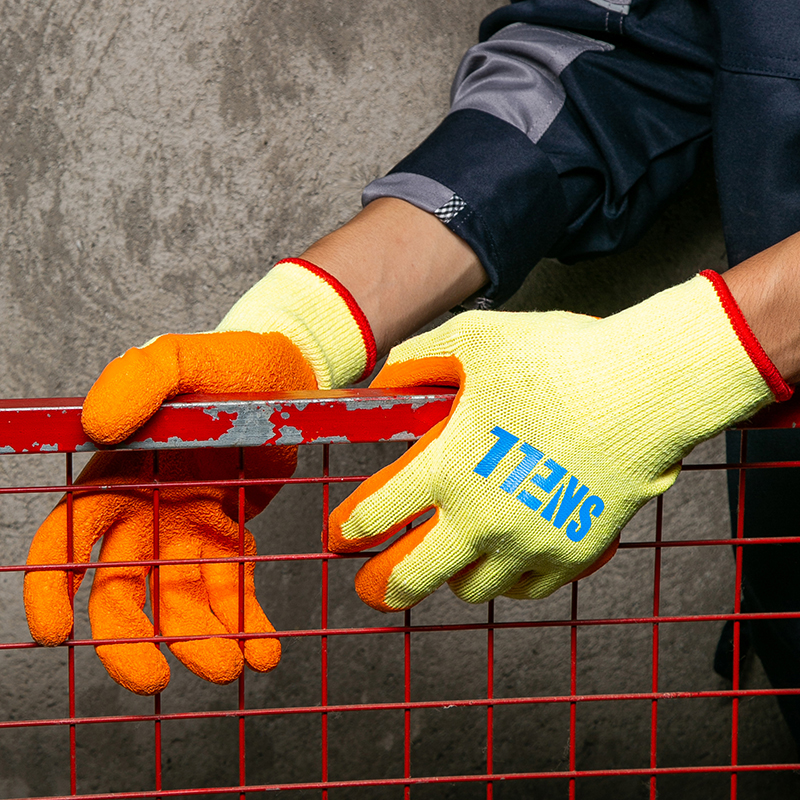
Selecting the right manufacturing work gloves for Germany’s diverse industrial landscape requires expertise in both product engineering and local workplace regulations. Whether you are procuring cut-resistant gloves for automotive assembly, nitrile-coated gloves for chemical handling, or general-purpose PU-coated gloves for electronics production, matching the right specification to the right task is critical. If you need help identifying the optimal glove configuration for your specific application, contact our team at Snell Safety — we have extensive experience serving manufacturing clients across Germany and can provide tailored product selection guidance, custom OEM/ODM solutions, or competitive quotations for bulk orders.
Quick Answer
For reliable manufacturing work gloves in Germany, look to established European PPE distributors with deep industrial sector expertise and regional warehousing, such as those operating across North Rhine-Westphalia, Baden-Württemberg, and Bavaria. Additionally, consider Chinese manufacturers who specialize in customized products with competitive factory-direct pricing and full international certifications (ISO 9001/CE). Combining local distribution with overseas OEM sourcing often delivers the best balance of cost, quality, and supply flexibility.
Market Overview
The Germany Safety Gloves Market is projected to grow from USD 1,068.97 million in 2023 to an estimated USD 2,100.86 million by 2032, reflecting a compound annual growth rate (CAGR) of 7.78% from 2024 to 2032. This growth is largely driven by Germany’s position as Europe’s manufacturing powerhouse — manufacturing is the most important sector in industry and accounts for 79 percent of total production, spanning automotive, machinery, metals, electronics, and chemicals. Increasing workplace safety awareness and strict regulatory compliance across industries like construction, healthcare, and manufacturing drive market demand, while the enforcement of occupational safety standards and growth in industrial operations amplify the demand for high-performance safety gloves.
The regulatory environment further accelerates procurement. Germany’s robust framework for occupational safety regulations significantly drives the demand for safety gloves, with adherence to stringent EU directives such as Regulation (EU) 2016/425 on PPE mandating the use of high-quality safety gloves across industries. In 2024, the number of reportable workplace accidents in Germany reached a historic low and the accident rate was the lowest ever recorded (18.0 per 1,000 full-time equivalents) — a testament to the effectiveness of Germany’s prevention-first approach, but also to the sustained investment in certified PPE including manufacturing work gloves.
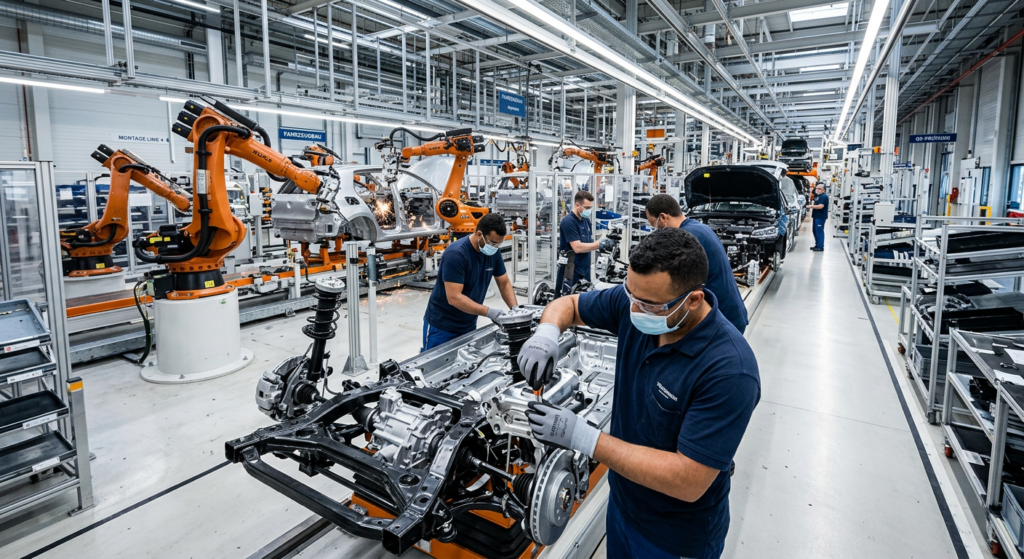
What Types of Manufacturing Work Gloves Are Needed in Germany
The most in-demand manufacturing work gloves in Germany are lightweight PU palm-coated gloves on nylon/polyester liners for precision assembly, nitrile-coated gloves (foam and micro-foam variants) for oil-exposed machining environments, and HPPE cut-resistant gloves rated EN 388 levels B through E for metal fabrication and stamping operations. These three categories account for the vast majority of our orders from German manufacturing clients.
Based on our experience serving Germany clients, we have found that German manufacturers overwhelmingly prioritize tactile sensitivity and comfort alongside protection — a combination that reflects the country’s emphasis on both worker safety and production efficiency. German factory operators tend to prefer 13G and 15G gauge liners for their excellent dexterity, and they strongly favor seamless knit construction with ergonomic fit. In our collaboration with automotive parts manufacturers in Baden-Württemberg and machinery producers in North Rhine-Westphalia, we consistently see demand for gloves that can be worn through a full 8-hour shift without causing hand fatigue, while still meeting strict EN 388 mechanical performance requirements. The climate factor is also noteworthy: Germany’s temperate but damp continental conditions mean that moisture-wicking liner materials and breathable coatings perform significantly better than heavy-duty latex or thick rubber alternatives during spring and autumn factory shifts.
The top product types we supply to German manufacturing operations include:
- Nylon/polyester 13G liner + PU palm coating (white or grey) — EN 388 cut level A1, abrasion level 4. The dominant choice for electronics assembly, quality inspection, and light parts handling where maximum dexterity and cleanliness are essential.
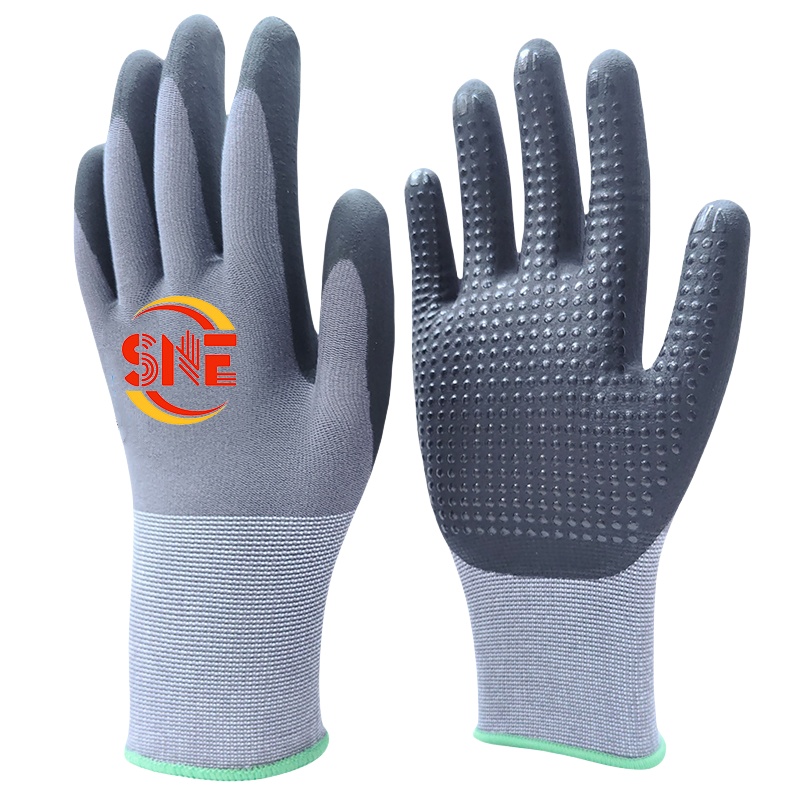
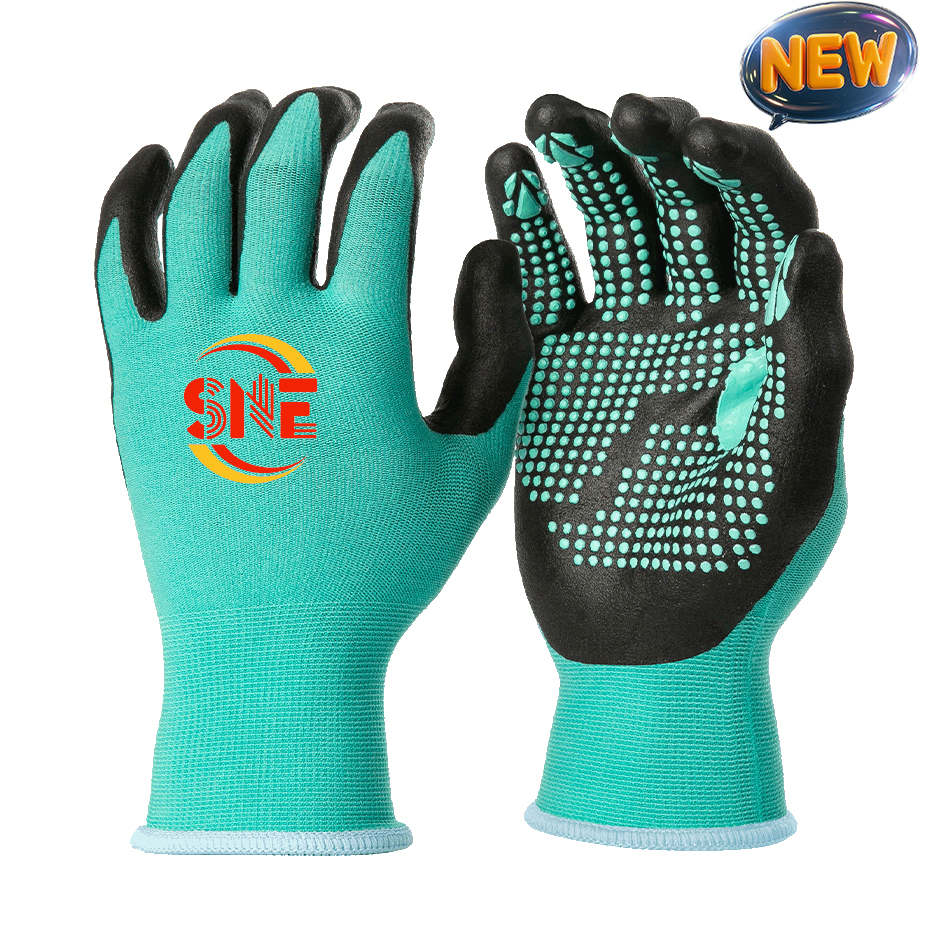
- Nylon/spandex 15G liner + nitrile micro-foam palm coating — EN 388 cut level A2, abrasion level 4. Preferred for general machining, CNC operation, and automotive sub-assembly where light oil contact and moderate abrasion are common.
- HPPE/glass fiber 13G liner + sandy nitrile palm coating — EN 388 cut level D, abrasion level 4 (8,000+ cycles). Essential for metal stamping, sheet metal handling, and fabricated metal product processing where sharp edges pose significant laceration risk.
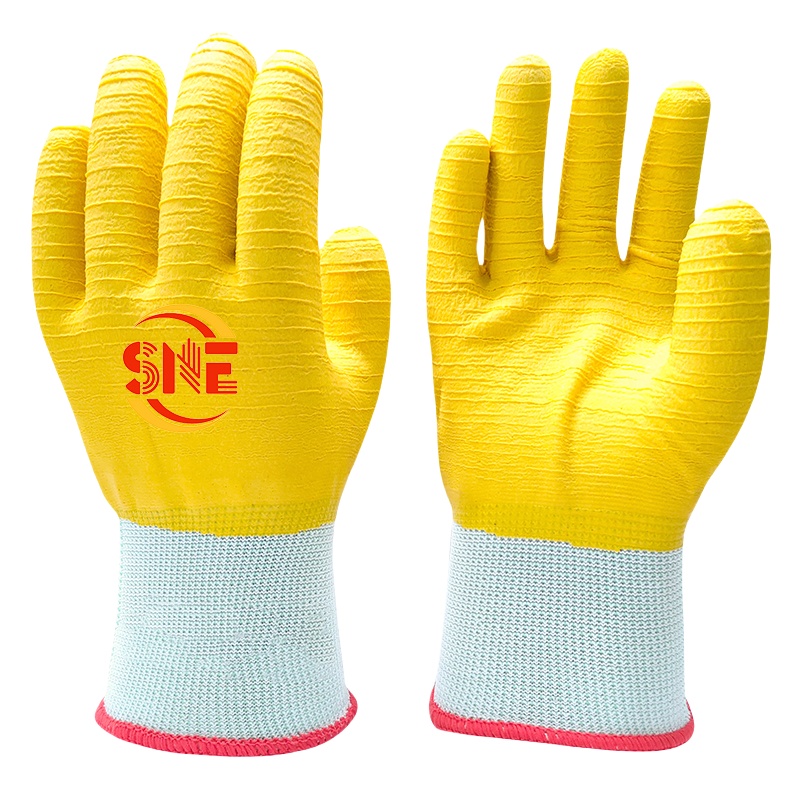
- HPPE/Kevlar 10G liner + latex crinkle 3/4 coating + TPR back-of-hand impact protection — EN 388 cut level E, impact “P” rated. Engineered for heavy machinery maintenance, die setting, and press operations where crush and pinch hazards coexist with sharp metal exposure.
- Polyester 13G liner + nitrile foam full coating — EN 388 cut level A2, oil-resistant. Purpose-built for oily component handling, engine block assembly, and lubricated parts processing across Germany’s automotive and machinery sectors.
Why These Product Types Are Recommended
These manufacturing work gloves specifications are recommended because they deliver the precise balance of protection, dexterity, and durability required under the EN 388:2016+A1:2018 standard — the governing benchmark for mechanical risk gloves sold in the European market. Hand injuries remain a critical safety concern in manufacturing: hand injuries count for a 1/3 of all injuries at work, 1/3 of chronic injuries, 1/4 of lost working time, and 1/5 of permanent disability. In Europe specifically, manufacturing recorded the highest number of accidents in 2022, representing 18% of the total across all sectors — making proper glove selection not just a compliance matter but a direct contributor to operational continuity and workforce retention.
The technical advantages of the recommended specifications center on three pillars: cut protection calibrated to task hazard, coating performance matched to environmental conditions, and gauge selection optimized for shift-long comfort. The key performance metrics are as follows:
- 13G PU palm coating: Abrasion level 4 (8,000+ cycles), dexterity level 5, EN 388 4131 — lowest bulk weight per pair, ideal for 8-hour precision tasks
- 15G nitrile micro-foam palm: Abrasion level 4, oil grip rating superior to PU, breathability 30% better than smooth nitrile — best for light-oil machining environments
- 13G HPPE sandy nitrile palm: EN 388 cut level D (10–14.9 N TDM), abrasion level 4, puncture level 3 — optimal cost-per-wear for sheet metal and stamping lines
- 10G HPPE/Kevlar latex crinkle + TPR: EN 388 cut level E (22–29.9 N TDM), impact “P” rating, puncture level 4 — maximum protection for heavy maintenance and press operations
| Specification | EN 388 Rating | Cut Level | Abrasion Cycles | Best Manufacturing Application |
|---|---|---|---|---|
| Nylon 13G + PU Palm | 4131A | A1 | 8,000+ | Electronics assembly, inspection |
| Nylon/Spandex 15G + Nitrile Micro-foam | 4121B | A2 | 8,000+ | CNC machining, Manufacturing Work Gloves for automotive |
| HPPE/Glass Fiber 13G + Sandy Nitrile | 4X43D | D | 8,000+ | Metal stamping, fabrication |
| HPPE/Kevlar 10G + Latex Crinkle + TPR | 4X44EP | E | 8,000+ | Heavy maintenance, Manufacturing Work Gloves for press ops |
| Polyester 13G + Nitrile Foam Full Coat | 4121A | A2 | 8,000+ | Oily parts handling, engine assembly |
Use this table to match your manufacturing task profile to the right glove — start with the hazard (cut level needed), then choose the coating based on whether the environment is dry, oily, or wet.
From a cost-effectiveness perspective, 13G PU-coated gloves typically range €0.40–€0.80 per pair at scale, lasting 1–3 weeks in light assembly. Cut-resistant HPPE gloves with nitrile coating range €1.50–€3.50 per pair but last 3–6 weeks in metal handling, delivering a lower total cost of ownership when accounting for reduced injury rates and lower replacement frequency.
Key Industries for Manufacturing Work Gloves in Germany
Germany’s manufacturing sector generates the largest concentrated demand for work gloves in Europe, driven by its globally significant automotive, machinery, chemicals, and metals industries. The biggest segments within manufacturing are machinery and equipment (12 percent of total production), motor vehicles, trailers and semi-trailers (12 percent), basic metals and fabricated metal products (10 percent), and computers, electronic and optical products and electrical equipment (10 percent). Each of these segments requires distinct glove configurations:
- Automotive manufacturing — Germany’s largest manufacturing employer, with over 720,000 workers in direct production. Assembly line workers need 13G–15G nitrile micro-foam or PU palm-coated gloves for precision component handling, while stamping and body-in-white workers require EN 388 cut level D–E gloves with sandy nitrile for sharp sheet metal edges. Touchscreen compatibility is increasingly demanded for digital work instruction terminals.
- Machinery and equipment production — Engineers and machinists handle heavy metal parts, operate lathes and milling machines, and perform assembly of complex mechanical systems. They need cut-resistant HPPE gloves (level C–D) with oil-resistant nitrile foam coatings for lubricated environments, plus impact-resistant TPR models for maintenance tasks.
- Basic metals and fabricated metal products — Steel mills, foundries, and metal fabrication shops across the Ruhr Valley and Saarland require heat-resistant gloves (EN 407 rated) for hot metal handling, combined with high cut-resistance (level E–F) for processing sharp-edged metal sheets, tubes, and profiles.
- Chemicals and pharmaceuticals — Germany’s chemical industry, centered in the Rhine-Main corridor, demands chemical-resistant nitrile full-coated gloves with extended cuffs. Pharmaceutical production requires lint-free, cleanroom-compatible PU-coated gloves on nylon liners for contamination control.
- Electronics and electrical equipment — Precision assembly of circuit boards, sensors, and electrical components requires ultra-lightweight 18G or 15G PU-coated fingertip gloves that prevent electrostatic discharge (ESD) while maintaining maximum tactile sensitivity.
- Food processing and packaging — Food-safe certified nitrile or latex gloves meeting EU Regulation 1935/2004 for food contact are required across meat processing, beverage production, and packaging facilities concentrated in Lower Saxony and Bavaria.
Germany’s adherence to stringent EU directives such as Regulation (EU) 2016/425 on PPE mandates the use of high-quality safety gloves across industries, ensuring worker safety in hazardous environments including construction, manufacturing, healthcare, and chemical industries. Employers are obligated to provide employees with certified protective equipment, fostering consistent demand for durable and compliant safety gloves. The DGUV (German Social Accident Insurance) and Berufsgenossenschaften (BG) trade associations enforce compliance through mandatory risk assessments and regular workplace inspections, creating a procurement environment where only properly certified EN 388-rated gloves are acceptable.
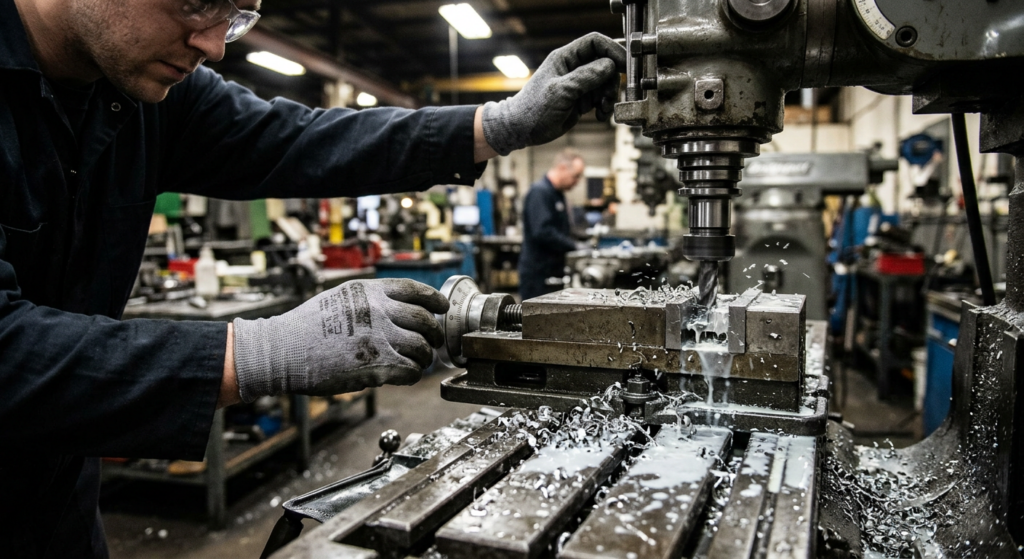
Specific Application Scenarios for Manufacturing Work Gloves
Scenario 1: Automotive Stamping Line in Stuttgart
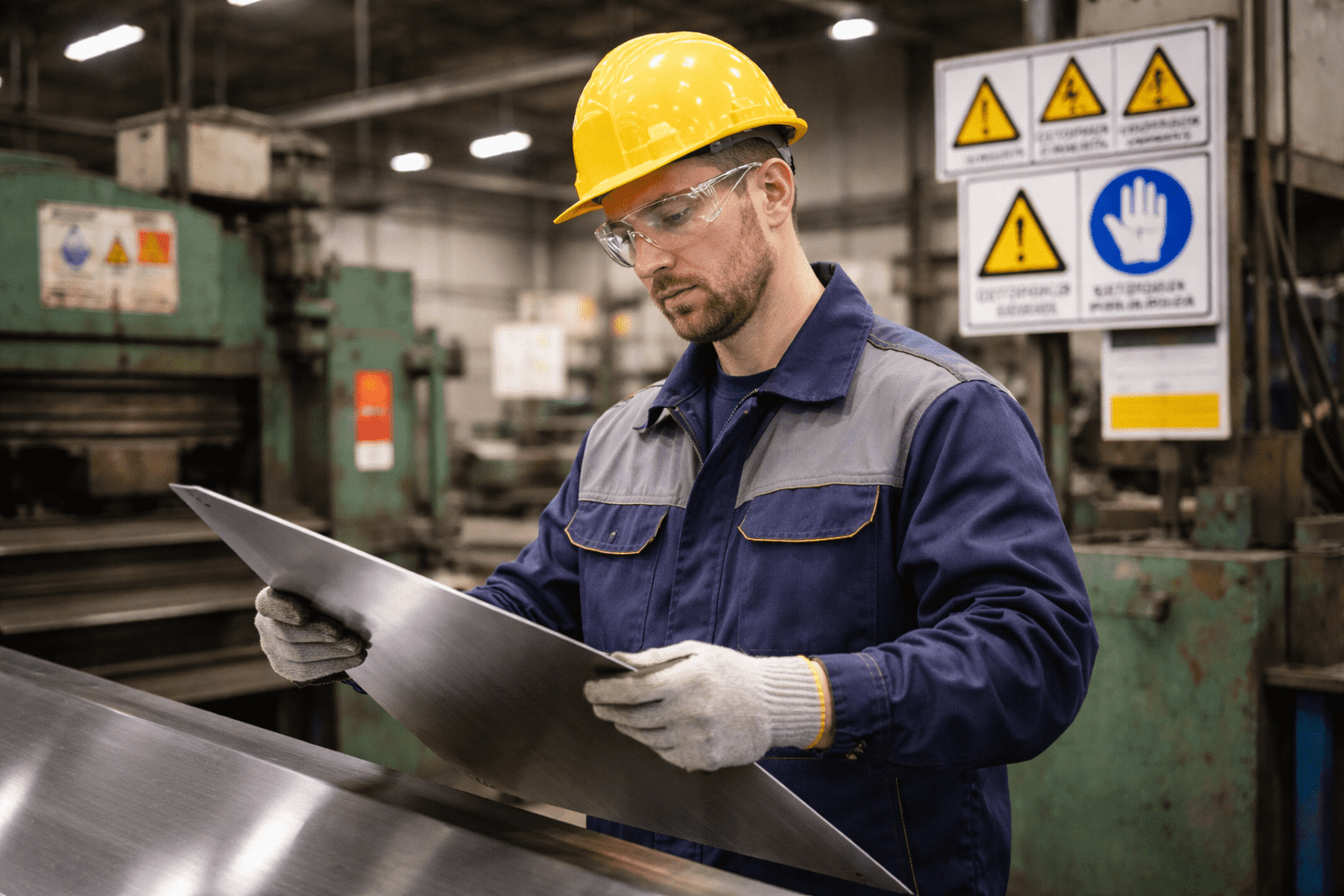
On a high-speed stamping line producing vehicle body panels, operators load and unload large sheet metal blanks weighing 5–15 kg into a 2,000-ton press. The primary hazards are deep lacerations from razor-sharp stamped metal edges, crush injuries during die changes, and skin abrasion from repetitive sheet handling. Workers require HPPE/glass fiber 13G gloves with sandy nitrile palm coating, rated EN 388 cut level D with abrasion level 4. The sandy nitrile finish provides secure grip on both dry and lightly oiled steel surfaces, while the 13G construction allows enough dexterity to position blanks precisely in the die cavity. During die change maintenance — a weekly operation — workers switch to 10G HPPE/Kevlar gloves with TPR impact guards and latex crinkle 3/4 coating (cut level E, impact “P”) to protect against pinch points and dropped tooling.
Scenario 2: Chemical Mixing Plant in Ludwigshafen
In a specialty chemicals blending facility, operators transfer liquid raw materials between reactor vessels, replace gaskets on pressurized lines, and handle sample containers for quality control testing. Hazards include chemical splash exposure to solvents and acids, puncture risk from broken glass sampling vials, and moderate abrasion from pipe fittings and valve assemblies. The recommended glove is a polyester 13G liner with nitrile foam full coating and extended safety cuff (8 cm beyond the wrist), rated EN 388 cut level A2 with puncture level 2 and tested to EN 374 for chemical permeation resistance. The closed-cell nitrile foam coating repels chemical splashes while maintaining breathability during extended shifts in a warm production environment.
Scenario 3: Electronics Assembly in Munich
On a precision electronics assembly line, workers place micro-components onto circuit boards, solder connectors, and perform visual quality inspections under magnification. Hazards are relatively low-force — minor cuts from PCB edges, static discharge damage to sensitive components, and contact dermatitis from flux residues. Workers need ultra-thin nylon 18G or 15G PU fingertip-coated gloves rated EN 388 cut level A1 with dexterity level 5. The PU fingertip coating provides tactile precision for picking up components as small as 2 mm, while ESD-dissipative properties (surface resistance 10⁶–10⁹ ohms) prevent electrostatic damage. Gloves are typically changed every 2–3 days due to contamination from flux and solder paste rather than mechanical wear.
Case Studies
A tier-2 automotive supplier operating stamping and welding facilities across three sites in Baden-Württemberg required 200,000 pairs of cut-resistant manufacturing work gloves annually. We developed a custom HPPE 13G sandy nitrile glove with reinforced thumb crotch and hi-vis green shell, delivered quarterly via sea freight to Hamburg with private-label packaging and German-language compliance documentation. The solution reduced their hand laceration rate by 40% in the first year.
A machinery manufacturer near Düsseldorf needed to consolidate five different glove models into a rationalized two-SKU program covering both CNC machining and final assembly. We engineered a 15G nylon/spandex nitrile micro-foam model for general assembly and a 13G HPPE sandy nitrile model for machining areas, both with the client’s corporate logo and color scheme. The streamlined procurement reduced their per-unit cost by 25% while improving worker satisfaction scores.
Top 6 Recommended Local Manufacturing Work Gloves Suppliers in Germany
| Company Name | Core Strengths | Service Regions | Pre-sale Support | After-sale Support |
|---|---|---|---|---|
| RheinPro Industrieschutz GmbH | Automotive PPE specialist, deep stamping/welding expertise | NRW, Hessen, nationwide | On-site hazard assessment, trial kits | Dedicated account managers, batch QC reports |
| BavariaGuard Arbeitsschutz AG | Precision manufacturing focus, ESD glove range | Bavaria, Baden-Württemberg | Application-matched product selection | 30-day returns, technical hotline |
| NordHand Safety Solutions KG | Chemical industry PPE, comprehensive nitrile range | Lower Saxony, Hamburg, Bremen | Free sample programs, REACH documentation | Warranty claims, on-site fitting |
| SachsenTech Schutzhandschuhe GmbH | Electronics & cleanroom PPE, 18G specialty gloves | Saxony, Thuringia, Brandenburg | ESD testing consultation, MOQ flexibility | Rapid replacement, quarterly reviews |
| WestGrip Sicherheitsprodukte AG | Metal fabrication PPE, cut-resistant specialist | NRW, Saarland, Rheinland-Pfalz | Bulk pricing programs, EN 388 guidance | Quality audit support, reorder automation |
| HandSchutz Direct e.K. | E-commerce PPE platform, fast nationwide delivery | Nationwide | Online glove selector tool, live chat | Automated restock alerts, loyalty discounts |
When evaluating suppliers, always request current EN 388:2016+A1:2018 test reports from EU-accredited notified bodies and conduct physical wear trials across at least two shift cycles before committing to volume procurement.
| Evaluation Criteria | What to Verify | Why It Matters |
|---|---|---|
| EN 388 Certification | Valid test reports from notified body | Legal compliance under EU 2016/425 |
| Coating Consistency | Batch-to-batch thickness uniformity | Ensures predictable grip and durability |
| Liner Quality | Gauge accuracy, seamless knit uniformity | Affects comfort and Manufacturing Work Gloves lifespan |
| MOQ Flexibility | Minimum order quantities per SKU | Critical for multi-site, multi-spec programs |
| Lead Time | Production-to-delivery timeline | Impacts inventory planning and stock reliability |
Use this evaluation checklist when comparing both local suppliers and international Manufacturing Work Gloves manufacturers.
Why Choose Snell Safety as Your Global Manufacturing Gloves Partner
Snell Safety brings a unique combination of deep local market expertise and vertically integrated manufacturing capability to German manufacturing buyers. Through extensive collaboration with automotive, machinery, and metal fabrication clients across Germany, we have built an intimate understanding of what performs on the factory floor — from the coating textures that German workers prefer for long-shift comfort to the specific EN 388 cut levels required by BG auditors during Gefährdungsbeurteilung (risk assessment) reviews. We already maintain established local partners in Germany and are building overseas warehouse capacity to provide in-stock, ready-to-ship supply with shortened lead times for repeat orders.
Our manufacturing backbone ensures consistent quality at scale: over a decade of production expertise, six dedicated production lines producing 150,000 pairs daily, ISO 9001 and CE certified, with a complete vertically integrated process from R&D through knitting, dip coating, curing, quality inspection, and export packaging. We offer full OEM/ODM customization including private-label branding, custom shell colors, coating formulations, and multilingual packaging — all at factory-direct pricing that eliminates middleman markup. Explore our complete product catalog to see the range of manufacturing work gloves available.
We are actively recruiting distribution partners, agents, and e-commerce resellers across Germany. Partners receive comprehensive pre-sale empowerment (product selection guidance, technical training, market intelligence) and robust after-sale support (quality assurance, replacement policies, ongoing technical assistance). For online brand owners, we offer dropshipping services, free product samples, and professional marketing material support. Whether you are an end-user manufacturer seeking direct factory supply or a distributor building a manufacturing PPE portfolio, contact our team to discuss partnership opportunities.
FAQ
What EN 388 rating do I need for manufacturing work gloves in Germany?
For light assembly and inspection, EN 388 level A1–A2 with abrasion level 3–4 is sufficient. For metal handling and machining, level C–D is recommended. For stamping, pressing, and heavy fabrication, level E–F provides maximum cut protection. Always match the cut level to the specific hazard identified in your Gefährdungsbeurteilung (risk assessment).
Which coating type is best for oily manufacturing environments?
Nitrile foam and nitrile micro-foam coatings offer the best grip performance in oily conditions, outperforming PU and latex. Sandy nitrile provides even stronger oil grip for heavily contaminated surfaces. Avoid PU coatings in oily environments — they lose grip quickly and degrade faster when exposed to industrial lubricants and cutting fluids.
How do I choose the right gauge for my manufacturing application?
For heavy-duty tasks requiring thick cut-resistant liners, choose 10G. For general manufacturing balancing protection and dexterity, 13G is the most versatile choice and accounts for roughly 60% of manufacturing glove orders. For precision assembly and electronics, 15G or 18G provides maximum tactile sensitivity. Higher gauge numbers mean finer knit and greater dexterity.
What certifications are required to import safety gloves into Germany?
Safety gloves must comply with EU Regulation 2016/425 and carry CE marking. They require testing to EN 388:2016+A1:2018 (mechanical risks) by an EU-accredited notified body, an EU Declaration of Conformity, and full technical documentation. An authorized representative within the EU must be designated by non-EU manufacturers. Category II and III PPE require type-examination certificates.
What is the price range for bulk manufacturing work gloves orders?
Prices vary by specification. Basic 13G PU-coated gloves range €0.35–€0.80 per pair at MOQs of 10,000+. Nitrile-coated general-purpose gloves range €0.60–€1.50. Cut-resistant HPPE gloves with nitrile coating range €1.50–€3.50. TPR impact-resistant models range €3.00–€6.00. Factory-direct sourcing can reduce costs by 20–35% versus domestic wholesale.
How long do manufacturing work gloves typically last?
Lifespan depends on the task intensity. PU-coated assembly gloves last 1–3 weeks in light handling. Nitrile-coated gloves last 2–4 weeks in general machining. Cut-resistant HPPE gloves last 3–6 weeks in metal fabrication. Abrasion level 4 (8,000+ cycles) gloves consistently outlast level 3 models by 40–60% in real-world manufacturing use.
Are touchscreen-compatible manufacturing work gloves available?
Yes. Conductive PU or nitrile fingertip coatings enable touchscreen operation on tablets, smartphones, and digital work terminals without glove removal. These are increasingly standard in German manufacturing facilities using Industry 4.0 digital workflows. Specify “touchscreen-compatible” when ordering — fingertip conductivity typically requires specialized coating formulation on the index finger and thumb.
What is the difference between nitrile foam and nitrile micro-foam coatings?
Nitrile foam features an open-cell structure that provides excellent breathability and dry grip but absorbs liquids. Nitrile micro-foam has a tighter cell structure that repels light oils and water while maintaining good breathability — making it the preferred choice for manufacturing environments with intermittent oil or coolant exposure. Both provide abrasion level 4 performance.
How should I store manufacturing work gloves to maximize shelf life?
Store gloves in a cool, dry environment (15–25°C, below 65% relative humidity) away from direct sunlight and UV exposure. Keep them in original packaging until use. Properly stored nitrile and PU-coated gloves have a shelf life of 3–5 years. Latex-coated gloves have a shorter shelf life of approximately 2–3 years due to natural rubber degradation.
What MOQ is typical for private-label manufacturing work gloves?
For custom private-label manufacturing work gloves with logo printing, custom colors, and branded packaging, typical MOQs start at 5,000–10,000 pairs per design from established OEM manufacturers. Standard catalog models without customization may have lower MOQs of 1,000–3,000 pairs. Multi-design programs across several SKUs can often negotiate combined MOQ thresholds for flexibility.
Ready to source high-performance manufacturing work gloves for the German market? Whether you are an end-user manufacturer seeking reliable direct supply or a distributor looking to build a profitable PPE partnership, submit your requirements or request a quote via Snell Safety’s contact page. Visit snellsafety.com to explore our complete range of industrial safety glove solutions.
Content reviewed and updated: March 2026