Best Construction Work Gloves Suppliers in Germany | 2026 Guide
2026-04-03
Share This Article
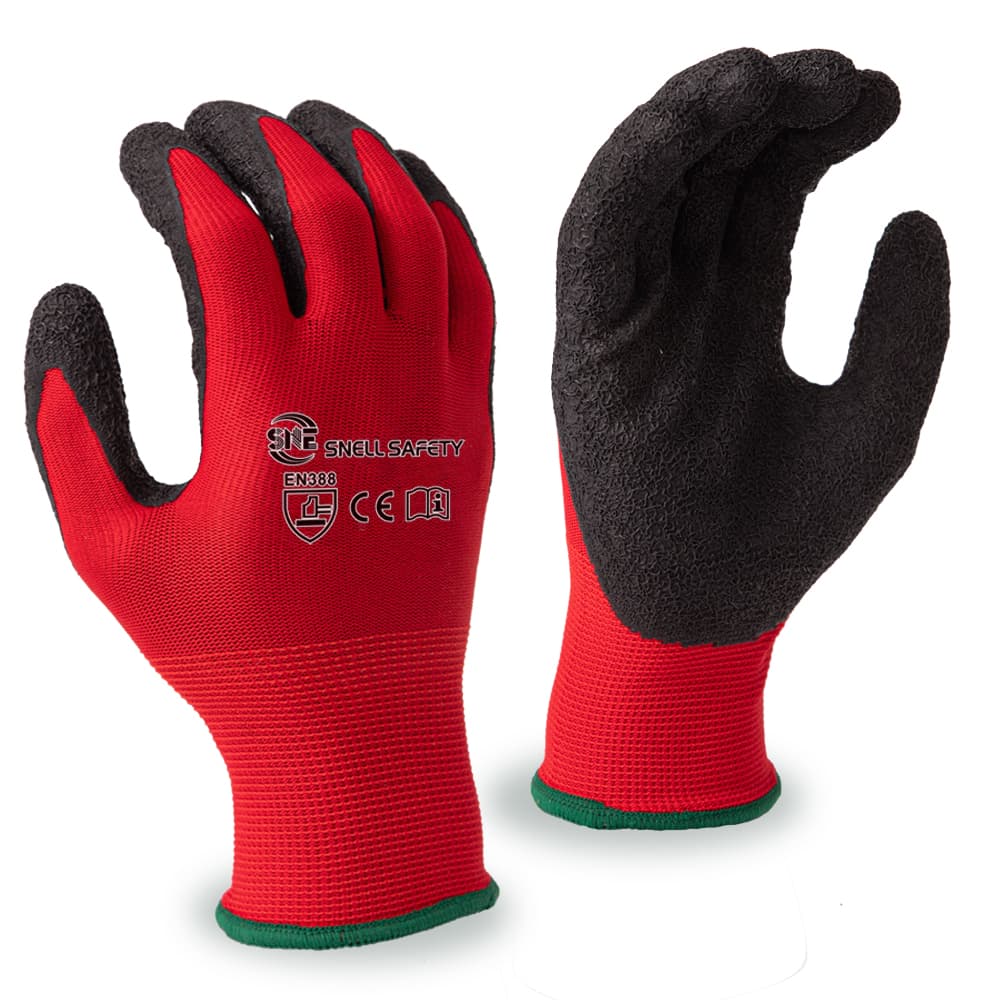
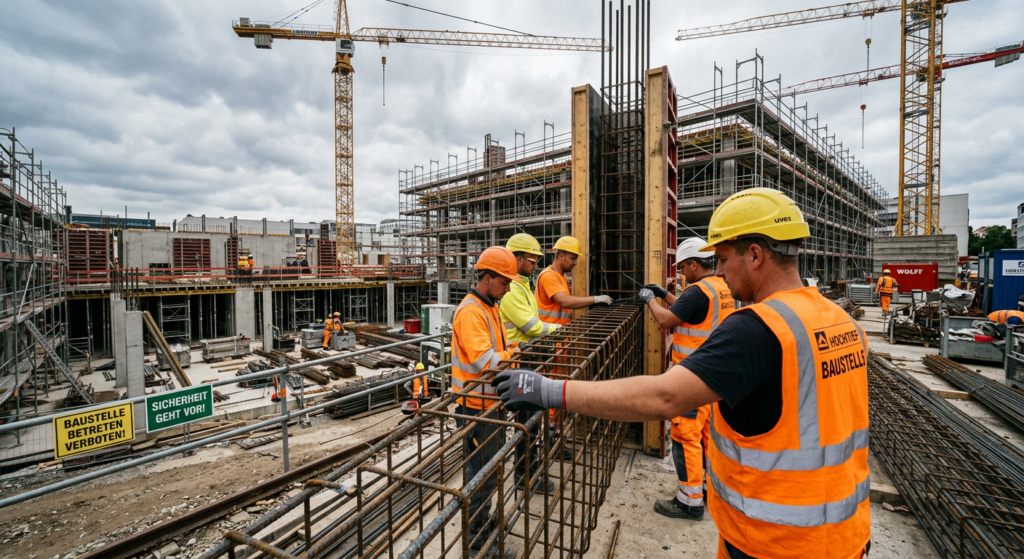
Construction work gloves are among the most critical PPE items on German job sites, where hand injuries remain one of the leading causes of workplace downtime and disability claims. With Germany’s construction industry valued at approximately €413 billion and poised for recovery, the demand for high-performance hand protection continues to intensify across residential, infrastructure, and industrial building segments. This guide helps B2B buyers — from PPE distributors and HSE procurement managers to private-label brand owners — identify the right construction work gloves and the best suppliers to source them from.
If you need expert product recommendations or custom OEM/ODM construction work gloves tailored for the German market, contact our team at Snell Safety. We have extensive experience serving German clients and can guide you toward the optimal configurations for your specific application needs.
Quick Answer
For sourcing construction work gloves in Germany, consider established local PPE distributors who maintain regional inventory and offer EN 388-certified product lines, as well as Chinese manufacturers who specialize in customized products with competitive pricing and full international certifications (ISO 9001/CE). A blended sourcing strategy — combining local distributors for rapid restocking with a factory-direct OEM partner for custom bulk orders — typically delivers the best balance of cost, quality, and supply chain resilience.
Market Overview
The Germany Safety Gloves Market is projected to grow from USD 1,068.97 million in 2023 to an estimated USD 2,100.86 million by 2032, reflecting a compound annual growth rate (CAGR) of 7.78% from 2024 to 2032. Construction work gloves represent a substantial share of this market, driven by increased awareness of workplace safety, stringent regulations, and rising industrial activities across sectors such as construction, healthcare, and manufacturing. Industrial hubs like North Rhine-Westphalia, Baden-Württemberg, and Bavaria dominate the market due to their strong manufacturing and automotive industries.
Germany’s construction sector itself is undergoing a pivotal transformation. The German construction industry is expected to recover at an average annual growth rate of 3.1% between 2026 to 2029, supported by investments in manufacturing, and road construction projects. Germany last year introduced a €500bn plan for infrastructure and climate investments, aiming to expand further in the years ahead. This massive public investment pipeline — spanning bridge rehabilitation, rail modernization, and residential development — will drive sustained demand for construction work gloves across all German federal states. With almost 30% of all work-related injuries in the natural resources, construction and maintenance occupations involving injuries to the hands or fingers, proper hand protection remains a regulatory and operational imperative.
What Types of Construction Work Gloves Are Needed in Germany
The most in-demand construction work gloves in Germany combine high abrasion resistance (EN 388 level 4), moderate-to-high cut protection (levels B through D), and reliable wet-grip coatings suitable for the country’s frequently damp working conditions. Based on our experience serving German clients across residential construction, civil engineering, road building, and renovation projects, the German market overwhelmingly favors gloves that balance mechanical protection with excellent dexterity — German workers and safety managers consistently prioritize hand feel and comfort alongside protection ratings.
Through years of collaboration with distributors and end-user construction firms throughout Germany, we have identified clear regional and task-specific patterns. Buyers in northern coastal regions (Hamburg, Bremen) tend to prioritize waterproof coatings for wet-weather construction, while southern German clients (Bavaria, Baden-Württemberg) focus on cut resistance and impact protection for precision engineering and heavy infrastructure work. Across the board, breathability remains a key concern — German construction workers operate in environments that shift from cold, damp winters to warm summers, and overheated hands lead to glove removal and increased injury risk. Here are the top product types we supply most frequently to Germany:
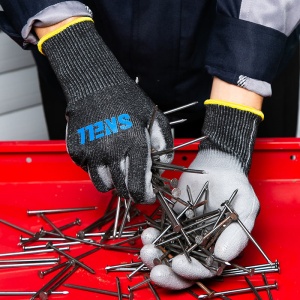
- 13G HPPE + Glass Fiber + Spandex Liner with Sandy Nitrile Palm Coating — EN 388: 4X42C (Cut Level C). The most popular all-around construction work gloves for German sites. Excellent abrasion resistance (8,000+ cycles), reliable wet grip from the sandy nitrile texture, and cut protection for handling rebar, wire, and sheet metal. Sizes M–XXL.
- 13G HPPE + Nylon Liner with Nitrile Foam 3/4 Coating — EN 388: 4X42B (Cut Level B). Preferred for general construction handling, bricklaying, and material logistics. The nitrile foam coating provides outstanding oil-wet grip while maintaining breathability through the uncoated back-of-hand. Sizes S–XXL.
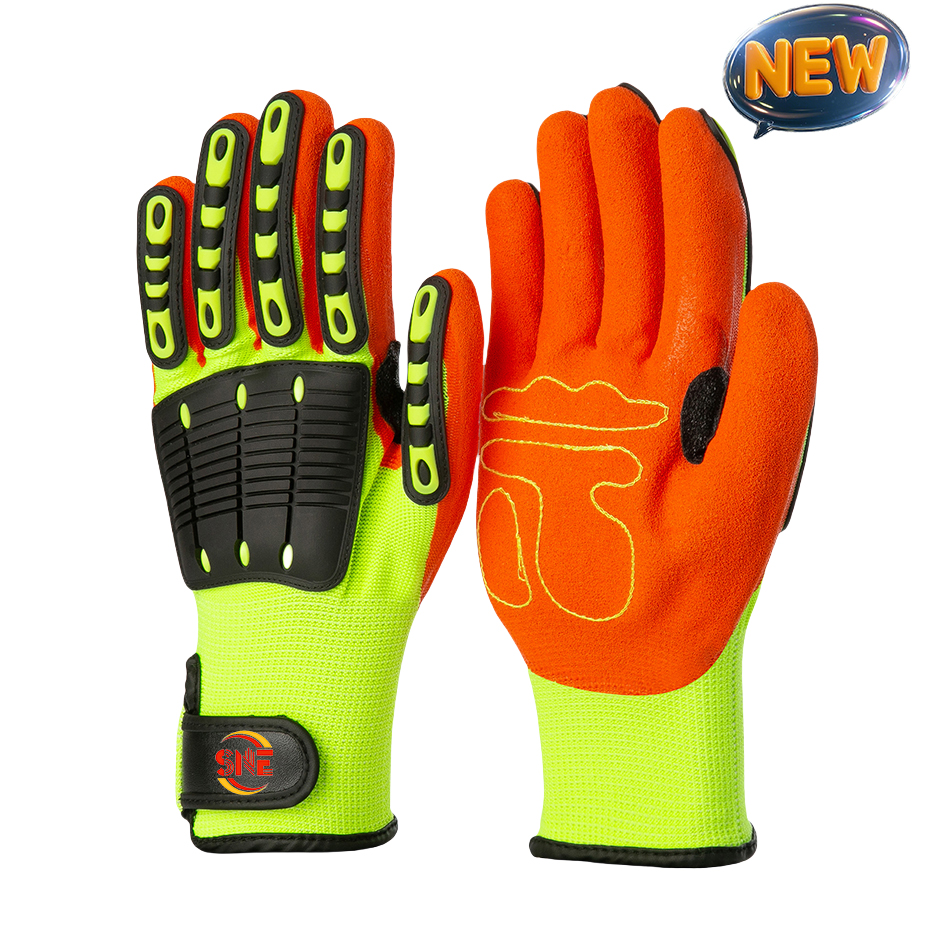
- 10G HPPE + Kevlar Liner with Latex Crinkle Full Coating + TPR Back-of-Hand Protection — EN 388: 4X44DP (Cut Level D, Impact Pass). Heavy-duty construction work gloves for demolition, steel erection, and heavy equipment operation. TPR knuckle and finger guards absorb impact energy from falling objects and struck-by hazards. Sizes L–XXL.
- 15G Nylon + Spandex Liner with PU Palm Coating — EN 388: 4X31B. Lightweight precision construction work gloves for finishing tasks, electrical installation, and scaffolding assembly. The 15G knit delivers superior tactile sensitivity for handling small fasteners and touchscreen devices. Sizes S–XL.
- 13G Polyester Liner with Latex Crinkle Palm Coating — EN 388: 2X42A. Cost-effective general-purpose option for high-consumption tasks like concrete forming, painting prep, and site cleanup. Excellent wet grip from the crinkle finish at an affordable bulk price point. Sizes M–XXL.
Why These Construction Work Gloves Are Recommended
EN 388 is a European safety standard for protective work gloves, providing comprehensive assessment for their resistance to mechanical risks. The standard evaluates gloves based on their performance against abrasion, cut, tear, puncture, and impact, ensuring that users can select the appropriate hand protection for various industrial and occupational hazards. For construction applications specifically, high abrasion and tear resistance are the primary requirements, supplemented by cut and puncture protection depending on the specific task profile.
The recommended specifications above are engineered around the real hazard profiles found on German construction sites. Abrasion resistance at level 4 (8,000+ cycles) is essential because construction workers constantly grip rough surfaces — concrete blocks, timber, steel profiles, and masonry — that rapidly degrade lesser gloves. Cut levels B through D address the spectrum of sharp-edge hazards: Level B suffices for general handling and material transport, while Level C and D are necessary for rebar tying, sheet metal work, and glass installation. The inclusion of TPR impact protection (indicated by the “P” marking under EN 388:2016+A1:2018) is increasingly demanded by German HSE departments for demolition, pile driving, and heavy structural work where struck-by and crush injuries threaten unprotected knuckles.
| Performance Metric | Sandy Nitrile + HPPE (13G) | Nitrile Foam + HPPE (13G) | Latex Crinkle + TPR (10G) | PU Palm + Nylon (15G) |
|---|---|---|---|---|
| EN 388 Abrasion | Level 4 (8,000+ cycles) | Level 4 (8,000+ cycles) | Level 4 (8,000+ cycles) | Level 4 (8,000+ cycles) |
| EN 388 Cut (ISO 13997) | Level C | Level B | Level D | Level B |
| EN 388 Impact | Not tested (X) | Not tested (X) | Pass (P) | Not tested (X) |
| Wet Grip Performance | Excellent | Very Good | Excellent | Moderate |
| Construction Work Gloves Type | Multi-Hazard General | Handling & Logistics | Heavy-Duty / Demolition | Precision / Finishing |
| Dexterity Rating | Good | Good | Moderate | Excellent |
| Approx. Bulk Price (€/pair) | €1.80–€3.20 | €1.50–€2.80 | €3.50–€5.50 | €1.20–€2.20 |
Use this table to match your primary construction hazard profile and task requirements to the optimal glove specification and budget range.
Key performance considerations for German construction buyers:
- Coating durability vs. dexterity: Sandy nitrile and latex crinkle coatings maintain grip on wet concrete and oily steel but add slight thickness; PU palm coatings maximize dexterity for fine tasks but wear faster under heavy abrasion.
- Liner gauge selection: 13G represents the optimal balance for most German construction tasks; 10G for heavy-duty work requiring more padding; 15G or 18G for electrical, finishing, and scaffolding work where tactile feedback is critical.
- Cut-resistant fiber blends: HPPE + glass fiber delivers higher cut ratings without the heat sensitivity of Kevlar; HPPE + Kevlar blends add heat resistance for tasks near hot-work zones.
- Cost-effectiveness: At €1.20–€5.50 per pair in bulk (MOQ 5,000+), investing in properly rated construction work gloves prevents injuries that cost German employers thousands of euros per incident in BG (Berufsgenossenschaft) claims, lost productivity, and worker compensation.
Key Industries for Construction Work Gloves in Germany
Construction work gloves serve a wide range of industries beyond traditional building construction in Germany, driven by the country’s massive infrastructure renewal programs, manufacturing expansion, and energy transition investments. The expanding automotive, manufacturing, and construction sectors significantly contribute to market growth as these industries rely on manual labor and advanced machinery, increasing exposure to potential risks.
- Residential and Commercial Construction: Germany’s ongoing housing shortage — with permit issuance still below 2021 levels — is driving a policy-led push for accelerated residential building. Workers performing concrete forming, masonry, drywall installation, and roofing need construction work gloves with high abrasion resistance (EN 388 level 4), latex crinkle or sandy nitrile coatings for wet-grip in all weather, and cut protection level B minimum for general handling tasks.
- Infrastructure and Civil Engineering: The €500 billion infrastructure fund is channeling investment into bridge rehabilitation, highway expansion, rail modernization, and tunnel construction. Steel erectors, welders, and heavy equipment operators require construction work gloves with cut level C–D, TPR impact protection, and full-coating waterproofing for demanding outdoor conditions.
- Energy and Renewable Infrastructure: Wind turbine installation, solar farm construction, and grid expansion projects demand specialized hand protection that combines mechanical resistance with electrical insulation awareness. Lightweight 15G PU-coated gloves serve cable-pulling and panel-mounting tasks, while heavier 13G nitrile-coated models protect during steel tower assembly.
- Industrial and Manufacturing Facility Construction: Germany’s semiconductor megaprojects (such as Dresden’s expanding fab cluster) and automotive plant renovations create demand for precision construction work gloves that meet both mechanical and cleanroom-adjacent standards.
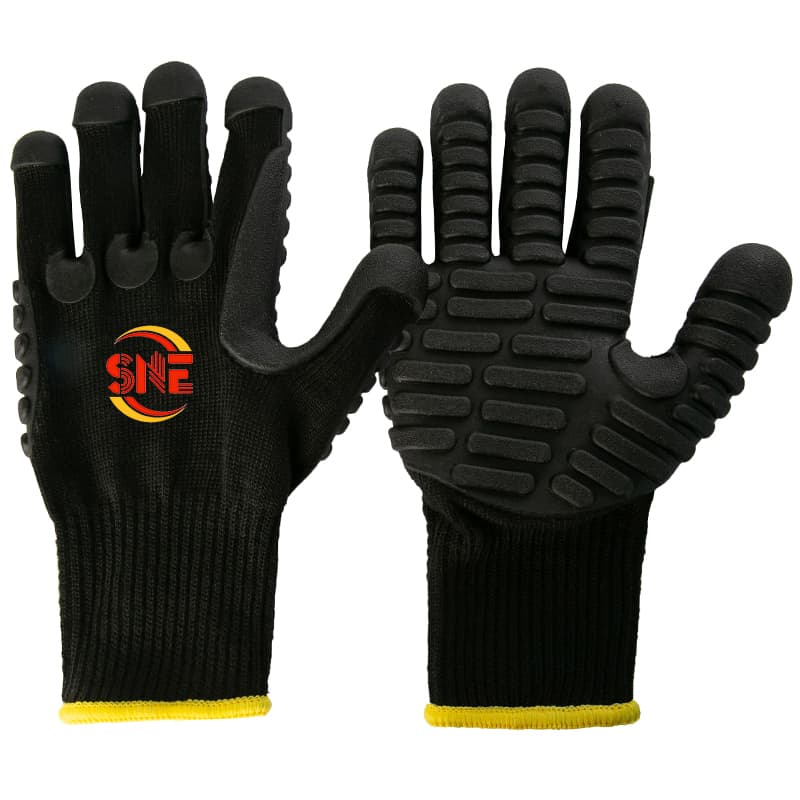
- Road and Rail Construction: Highway maintenance, asphalt laying, and rail track work expose hands to abrasive aggregates, bituminous materials, and vibration from pneumatic tools. High-abrasion, chemical-splash-resistant gloves with anti-vibration padding are specified for these applications.
- Renovation and Energy Retrofits: Germany’s building energy efficiency mandates are driving a massive renovation wave across existing building stock. Workers installing insulation, replacing windows, and upgrading HVAC systems need versatile construction work gloves that handle fiberglass, sharp metal flashing, and adhesive compounds.
Germany dominates the European Industrial Hand Protection Gloves Market owing to the strong presence of automotive as well as machinery manufacturing industry. Strong emphasis on worker safety, robust infrastructure, and stringent regulatory compliance for imports are some of the major factors sustaining the demand. Under the Arbeitsschutzgesetz (ArbSchG) and DGUV regulations, German employers are legally obligated to conduct workplace risk assessments and provide appropriate PPE — including EN 388-certified construction work gloves — at no cost to workers. This regulatory framework creates a compliance-driven procurement cycle that sustains year-round demand.
Specific Application Scenarios for Construction Work Gloves
Scenario 1: Rebar Tying on a High-Rise Residential Project in Munich
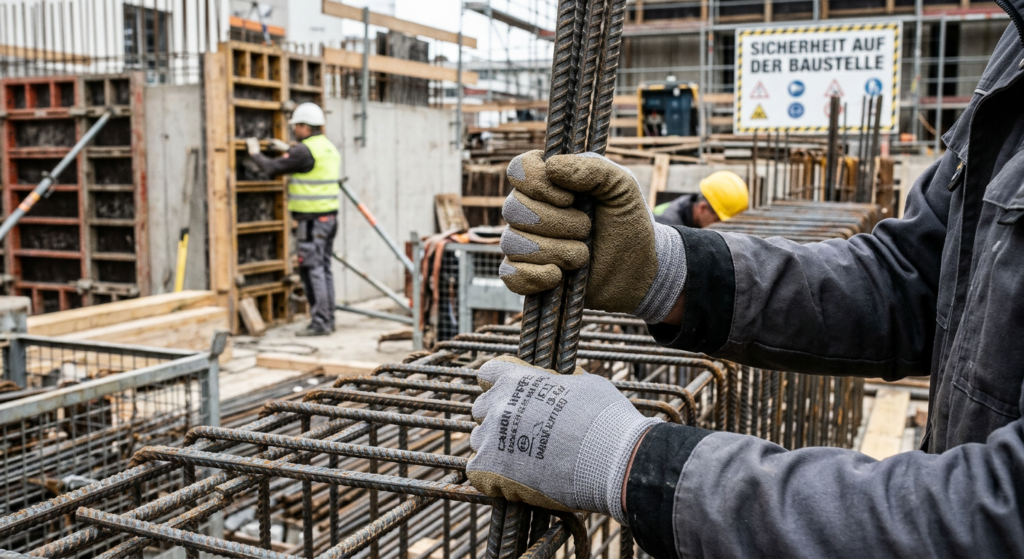
On a 12-story residential tower project in Munich’s expanding eastern suburbs, 25 ironworkers spend their shifts cutting, bending, and tying reinforcing steel bars using manual rebar tying tools and wire cutters. The primary hazards include lacerations from sharp-cut rebar ends, abrasion from constantly gripping textured steel surfaces, and puncture wounds from protruding wire ties. The recommended specification is 13G HPPE + glass fiber + spandex liner with sandy nitrile palm coating (EN 388: 4X42C), providing cut level C protection against steel edges while the sandy nitrile texture maintains reliable grip on dewy or rain-dampened rebar. Workers consume approximately 2–3 pairs per week due to the highly abrasive nature of the work, making cost-per-pair a critical procurement factor at this volume.
Scenario 2: Bridge Demolition and Reconstruction on the A45 Autobahn
Germany’s Autobahn bridge rehabilitation program involves hundreds of aging structures requiring partial or full demolition before reconstruction. On a major A45 bridge segment near Lüdenscheid, a crew of 30 workers operates pneumatic breakers, handles demolished concrete debris, cuts structural steel, and rigs heavy crane loads. The hazard profile includes impact from falling debris, severe abrasion from rough concrete surfaces, cut risks from exposed steel reinforcement, and crush injuries during rigging operations. The recommended specification is 10G HPPE + Kevlar liner with latex crinkle full coating and TPR back-of-hand protection (EN 388: 4X44DP) — the impact-rated “P” designation is essential given the struck-by hazard exposure, and the full latex crinkle coating provides waterproofing during Germany’s frequent rain events.
Scenario 3: Interior Finishing and Electrical Installation in a Berlin Office Conversion
In a large-scale office-to-residential conversion project in central Berlin, 40 tradespeople perform drywall installation, electrical wiring, plumbing fit-out, and final painting. Workers handle sharp metal studs, copper wiring, small fasteners, and power tools in confined interior spaces. The primary hazards are fine cuts from sheet metal edges, punctures from drywall screws, and abrasion from handling rough building materials. The recommended specification is 15G nylon + spandex liner with PU palm coating (EN 388: 4X31B), offering excellent dexterity for gripping small components and operating touchscreen measuring instruments, while still providing level 4 abrasion resistance and level B cut protection for incidental sharp-edge contact.
Case Studies
Case 1: Regional Construction Group, North Rhine-Westphalia
A mid-sized German construction group operating 15 active job sites across NRW needed 30,000 pairs annually of EN 388-rated construction work gloves spanning three protection tiers — general handling, rebar work, and demolition. Their previous supplier struggled with inconsistent cut resistance performance between batches. After partnering with a vertically integrated OEM manufacturer offering batch-traceable HPPE sourcing and in-house EN 388 testing, they achieved consistent certification compliance across all deliveries and reduced hand injury incident rates by 35% within the first year.
Case 2: PPE Distributor Expanding Construction Product Line
A German PPE distributor serving the Bavarian construction market identified construction work gloves as their highest-growth category. They needed 5 SKUs spanning cut levels A through D with private-label packaging, German-language EN 388 documentation, and individual EAN-coded pair packaging. Their factory OEM partner delivered the first order of 50,000 pairs across all SKUs within 30 days, including custom box artwork, high-resolution product photography for e-commerce listings, and complete CE technical file documentation for EU regulatory compliance.
Top 6 Recommended Local Suppliers in Germany
| Company Name | Core Strengths | Service Regions | Pre-sale Support | After-sale Support |
|---|---|---|---|---|
| RheinBau Arbeitsschutz | Deep Construction Work Gloves range for general contracting and civil engineering | NRW, Hessen, Rhineland-Palatinate | On-site hazard assessments, EN 388 product matching | Dedicated account managers, seasonal restocking programs |
| BaySafe Handschutz GmbH | Premium dexterity-focused gloves for precision construction and renovation trades | Bavaria, Baden-Württemberg | Wear-trial programs, ergonomic fit evaluations | Warranty processing, technical performance reviews |
| NordGuard PPE Solutions | Broad multi-hazard Construction Work Gloves catalog for infrastructure and heavy civil | Hamburg, Lower Saxony, Schleswig-Holstein | EN 388 compliance consultation, bulk sampling | Batch quality audits, express replacement shipping |
| OstBau Sicherheit | Cost-effective bulk supply for road construction and municipal projects | Saxony, Brandenburg, Thuringia | Government tender documentation support, spec sheet generation | On-site inspections, returns processing |
| HansaWerk Distribution | E-commerce fulfillment specialist; Amazon.de and B2B platform integration | Nationwide via Hamburg logistics hub | Product listing content packages, certification documents | Consumer support, review management assistance |
| AlpenPro Schutzhandschuhe | Specialized impact-rated and heavy-duty gloves for demolition and mining operations | Nationwide (industrial corridor focus) | Custom specification development, risk assessment consultations | Wear-life data tracking, field performance reporting |
When evaluating any construction work gloves supplier, always request third-party EN 388:2016+A1:2018 test reports from an EU-accredited notified body and verify batch-to-batch consistency in cut resistance, abrasion cycles, and coating adhesion before committing to a long-term supply agreement.
Why Choose Snell Safety as Your Global Construction Work Gloves Partner
Snell Safety brings deep German market expertise built through years of serving PPE distributors, construction companies, and HSE procurement teams across Germany. We understand precisely which liner blends, coating types, cut levels, and gauge configurations perform best on German construction sites — from the sandy nitrile multi-hazard gloves favored by NRW infrastructure contractors to the lightweight PU-coated models preferred by Bavarian finishing trades. With established local partners and planned overseas warehouse capacity for stock-ready delivery in Germany, we serve both end-user enterprises and distribution partners with products tailored to local workplace conditions, hand-feel preferences, and regulatory requirements. We are actively recruiting new distributors, agents, and e-commerce brand owners — offering comprehensive pre-sale empowerment (product selection guidance, technical training, market intelligence), after-sale support (quality assurance, replacement policies), dropshipping services, free product samples, and marketing material support including product photography and listing content.
Our manufacturing capabilities ensure that this local market knowledge is backed by production excellence. With over a decade of hands-on expertise, 6 dedicated production lines, and a daily capacity of 150,000 pairs, our vertically integrated process (R&D → material sourcing → knitting → coating/dipping → drying/curing → quality inspection → packaging → export) delivers consistent quality at factory-direct pricing. We specialize in the full range of coating technologies — PU palm, nitrile foam, nitrile micro-foam, sandy nitrile, and latex crinkle — as well as advanced cut-resistant (HPPE, Kevlar, glass fiber) and impact-resistant (TPR) engineering. ISO 9001 and CE certifications provide the compliance documentation German importers require. Explore our product catalog or contact our team to request samples and a custom quotation.
FAQ
What EN 388 rating do I need for construction work in Germany?
For general construction handling, look for EN 388 ratings of at least 4X42B — meaning abrasion level 4 (8,000+ cycles), cut level B minimum, tear level 2, and puncture level 2. For rebar work and steel handling, cut level C or D is recommended. Demolition and heavy structural work should specify impact protection (P marking).
Which coating type is best for wet construction environments?
Sandy nitrile and latex crinkle coatings provide the best grip performance on wet, oily, and damp construction materials. Sandy nitrile excels in mixed wet/oily conditions, while latex crinkle offers superior grip on wet concrete and masonry. PU palm coatings are better suited for dry precision tasks where maximum dexterity is needed.
What certifications are required to import construction work gloves into Germany?
Construction work gloves are classified as Category II PPE under EU Regulation 2016/425 and must carry CE marking. They require EU Type Examination by an accredited notified body, EN 388:2016+A1:2018 testing, and a German-language EU Declaration of Conformity. REACH compliance is also mandatory for EU market entry.
How do I choose the right gauge for construction gloves?
For heavy-duty construction (demolition, earthworks), use 7G or 10G for maximum padding and durability. For general construction handling (masonry, rebar, concrete), 13G offers the optimal protection-to-dexterity balance. For finishing trades (electrical, painting, drywall), 15G or 18G maximizes tactile sensitivity while maintaining core protection.
What is the price range for bulk construction work gloves?
For factory-direct bulk orders (MOQ 5,000+ pairs), prices range from €1.20–€2.20/pair for standard 15G PU-coated models to €3.50–€5.50/pair for premium 10G HPPE/Kevlar impact-rated gloves with TPR protection and full latex coating. Custom branding, specialized features, and private-label packaging typically add €0.15–€0.40/pair.
How long do construction work gloves typically last on German sites?
Service life depends on task intensity. In heavy rebar tying and steel handling, expect 1–2 weeks per pair. For general material handling and masonry, 2–4 weeks is typical. In finishing trades and lighter construction tasks, 4–6 weeks is achievable. Replace immediately when coating delaminates, cut-resistant fibers are exposed, or grip performance degrades.
What cut level do I need for handling steel and glass on construction sites?
For rebar tying and structural steel handling, EN 388 cut level C (ISO 13997: 10–15 N) is the minimum recommendation. For sheet metal work, window glass installation, and aluminum framing, cut level D (15–22 N) or higher is advisable. Always pair appropriate cut levels with the right coating for your grip requirements.
Can construction work gloves also provide impact protection?
Yes. Gloves with TPR (Thermoplastic Rubber) back-of-hand guards meet the EN 388:2016 impact test requirement and earn the “P” designation. These are increasingly specified by German HSE departments for demolition, pile driving, heavy rigging, and any task with struck-by or crush hazards. Impact-rated construction work gloves typically use 10G or 13G liners with full or 3/4 coating for additional hand coverage.
Are touchscreen-compatible construction work gloves available?
Yes. Gloves with conductive yarn or conductive coatings on the index finger and thumb allow workers to operate tablets, smartphones, and digital measuring devices without removal. These are growing in demand on German construction sites as BIM (Building Information Modeling), digital surveying, and electronic documentation become standard practice.
What is the difference between palm coating and 3/4 coating?
Palm coating covers only the palm and fingertips, leaving the back of the hand uncoated for maximum breathability — ideal for general construction handling in warm conditions. A 3/4 coating extends coverage over the fingertips and partially up the back of the hand, providing additional protection against scrapes and liquid splash while still allowing ventilation. Full coating covers the entire glove for maximum liquid and abrasion protection, best suited for wet and heavy-duty demolition applications.
Whether you are an end-user construction company seeking reliable factory-direct supply, a PPE distributor expanding your German product range, or an e-commerce brand owner developing a private-label construction glove line, Snell Safety is ready to support your requirements with deep market expertise and world-class manufacturing capability. Submit your specifications or request a quote today — including free samples, custom OEM/ODM solutions, and dedicated technical consultation for the German market.
Content reviewed and updated: March 2026