Best PU Coated Gloves Suppliers in Germany | 2026 Guide
2026-04-06
Partilhar este artigo
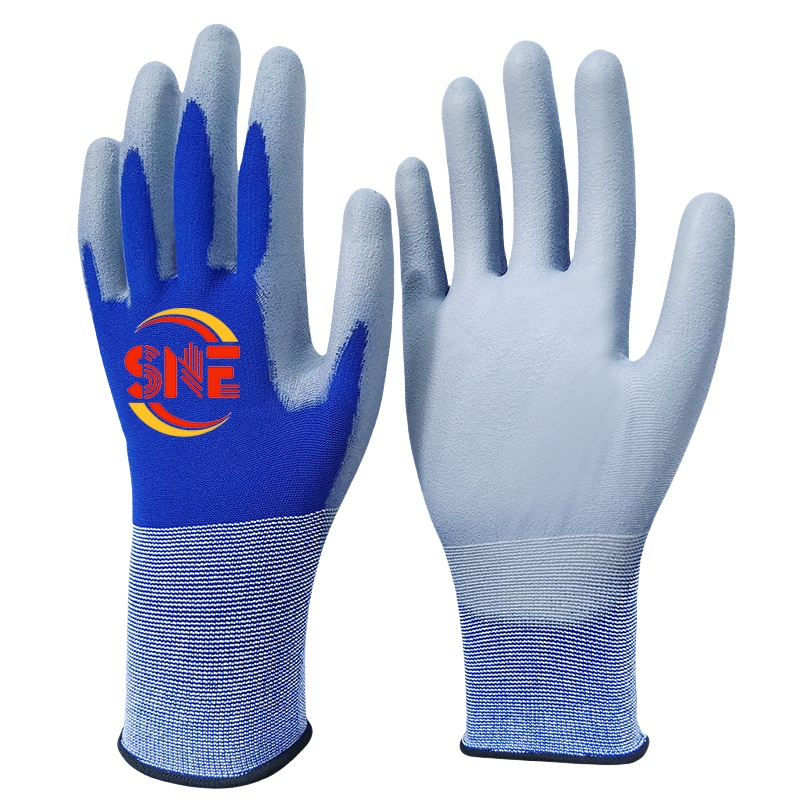
PU coated gloves are among the most versatile and widely specified categories of industrial hand protection in Germany, prized for their exceptional dexterity, lightweight comfort, and reliable grip in precision-oriented work environments. With Germany’s safety gloves market growing rapidly and strict EU PPE regulations shaping every procurement decision, finding the right supplier of PU coated gloves is essential for HSE managers, PPE distributors, and procurement professionals.
If you are sourcing PU coated gloves for the German market and need expert guidance on product configurations, OEM/ODM custom manufacturing, or competitive bulk pricing, contactar a nossa equipa at Snell Safety. We have extensive experience serving German clients and can recommend the optimal specifications for your specific workplace applications.

Resposta rápida
For reliable PU coated gloves supply in Germany, consider established local PPE distributors with broad EN 388-certified product ranges and regional logistics networks. Additionally, Chinese manufacturers who specialize in customized products with competitive pricing and full international certifications (ISO 9001/CE) deliver excellent value for OEM/ODM, private-label, and high-volume bulk programs. A blended sourcing strategy — local partners for quick replenishment and a certified factory-direct manufacturer for custom bulk orders — provides the best cost-performance balance.
Panorama do mercado
O mercado de luvas de segurança na Alemanha deve crescer de 1.068,97 milhões de USD em 2023 para uma estimativa de 2.100,86 milhões de USD até 2032, refletindo uma taxa composta anual de crescimento (CAGR) de 7,78%. PU coated gloves represent one of the fastest-growing segments within this market, driven by demand from automotive manufacturing, electronics assembly, precision engineering, and logistics operations where dexterity and tactile sensitivity are non-negotiable requirements. The global PU coated gloves market size was valued at USD 1,971.2 million in 2023 and is forecast to reach USD 2,630.9 million by 2030 with a CAGR of 4.2%.
Germany’s robust framework for occupational safety regulations significantly drives the demand for safety gloves. The country’s adherence to stringent EU directives, such as Regulation (EU) 2016/425 on personal protective equipment, mandates the use of high-quality safety gloves across industries. Under the Arbeitsschutzgesetz (ArbSchG) and DGUV regulations, employers must provide CE-certified hand protection to workers at no cost — ensuring that standards-compliant PU coated gloves remain a consistent procurement priority across all federal states. As Germany’s most industrialized region, NRW leads the market, accounting for approximately 28% of the national safety gloves demand.
What Types of PU Coated Gloves Are Most in Demand in Germany
The most popular PU coated gloves in Germany feature thin polyurethane palm coatings on seamless-knit nylon, polyester, or HPPE liners, optimized for precision handling, electronics assembly, and light mechanical protection. Based on our experience serving German clients across automotive, manufacturing, and logistics sectors, we at Segurança Snell consistently see demand concentrated around high-gauge configurations that prioritize dexterity without sacrificing EN 388-compliant mechanical protection.
Through years of collaboration with German PPE distributors, HSE departments, and end-user enterprises, we have identified clear demand patterns shaped by Germany’s industrial profile and worker preferences. Automotive suppliers in Baden-Württemberg and Bavaria overwhelmingly prefer 18G and 15G nylon liner PU coated gloves for precision parts handling and quality inspection tasks. Manufacturing and maintenance operations across North Rhine-Westphalia favor 13G nylon or polyester liners with PU palm coating for general-purpose mechanical work. Germany’s growing electronics and clean-room sectors require lint-free, anti-static PU coated gloves for sensitive component handling. Worker hand-feel preferences in Germany lean strongly toward snug-fitting, second-skin gloves that provide maximum tactile feedback — which is precisely why PU coated gloves dominate the precision-work category. Here are the top product types we supply most frequently:
- 18G Nylon Liner + PU Fingertip Coating, EN 388: 4131 — Ultra-thin precision glove for electronics assembly, quality inspection, and clean-room environments. The 18G gauge delivers the highest dexterity rating (EN 420 level 5) while the PU fingertip coating provides targeted grip exactly where it is needed.
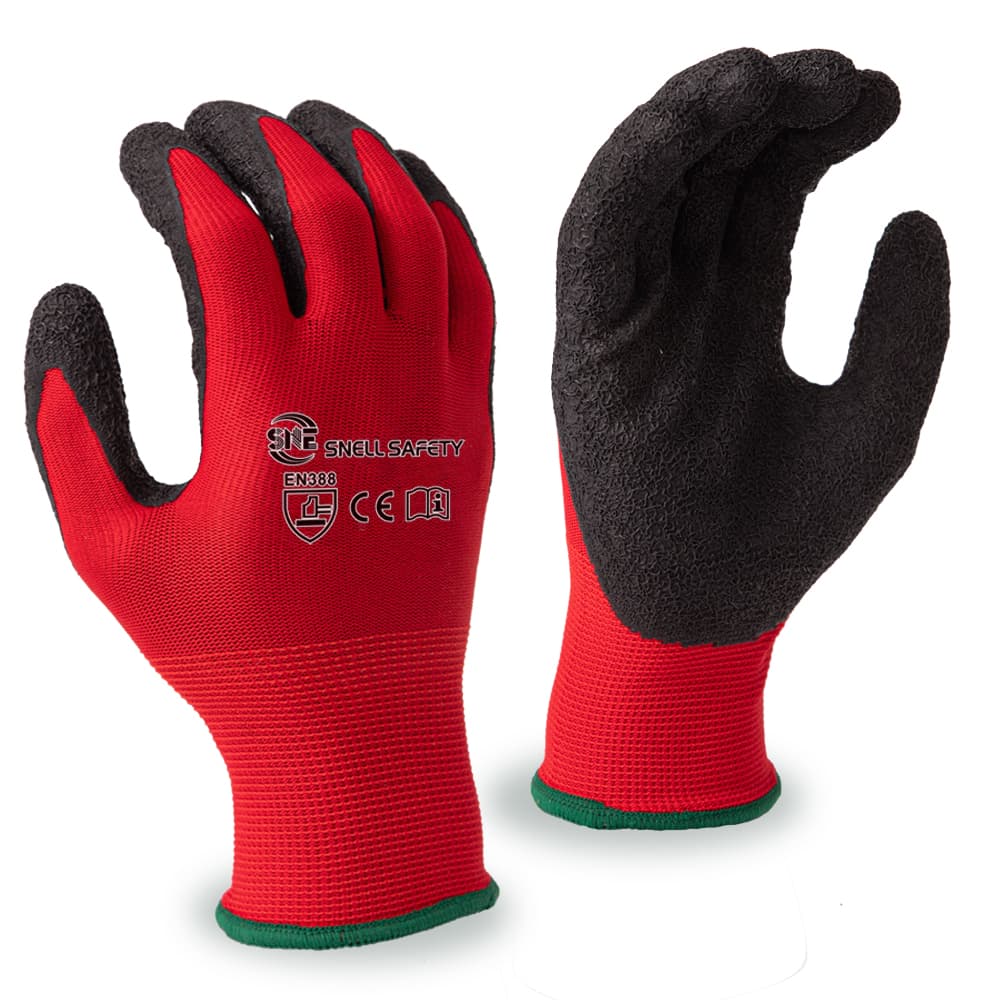
- 15G Nylon Liner + PU Palm Coating, EN 388: 4131 — High-dexterity glove for automotive parts handling, light assembly, and packaging operations. Excellent balance of comfort, breathability, and abrasion resistance. Available in sizes S–XXL with multiple color options for department identification.
- 13G Polyester Liner + PU Palm Coating, EN 388: 3131 — Cost-effective general-purpose glove for warehouse operations, maintenance tasks, and light manufacturing. The polyester liner offers good durability at a competitive price point.
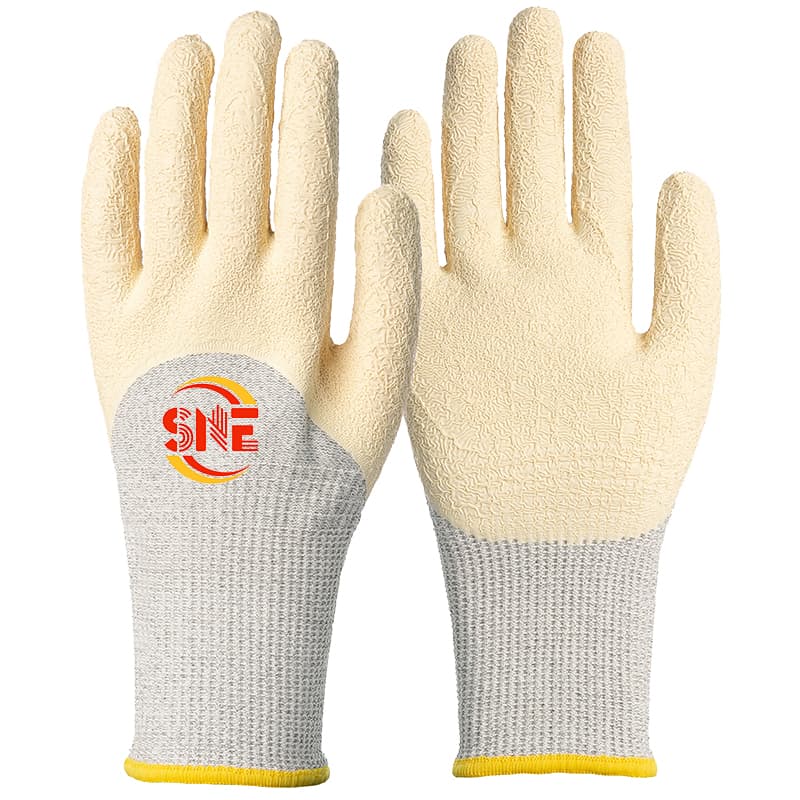
- 13G HPPE Liner + PU Palm Coating, EN 388: 4X42C — Cut-resistant PU coated glove for metal stamping, glass handling, and automotive sheet-metal operations. Combines EN 388 cut level C protection with the dexterity and comfort of PU coating.
- 15G Nylon-Spandex Liner + PU Palm Coating, Touchscreen-Compatible, EN 388: 4131 — Smart-device-enabled glove for logistics, warehouse scanning, and modern manufacturing environments where workers use tablets and handheld devices throughout their shifts.
Why These PU Coated Glove Types Are Recommended
PU coated gloves deliver a unique combination of technical advantages that make them the preferred choice for precision-oriented industrial applications in Germany. Polyurethane is flexible, durable, and breathable. The thin PU coating conforms closely to the hand’s natural contours, providing a second-skin fit that minimizes fatigue during 8-hour shifts while maintaining reliable grip on dry and slightly oily surfaces. PU performs best in dry or slightly oily conditions such as automotive assembly, electronics, and packaging lines.
The EN 388, similar to ANSI/ISEA 105, evaluates the mechanical risks for hand protection. Gloves with an EN 388 rating are third-party tested for abrasion, cut, tear, puncture and impact resistance. For PU coated gloves destined for the German market, the EN 388 mechanical hazard profile must match specific workplace demands. The polyurethane coating itself contributes significantly to abrasion resistance — a critical metric for tasks involving repetitive contact with metal parts, cardboard, and plastic components. When paired with HPPE or Kevlar liners, PU coated gloves can achieve EN 388 cut levels up to C or D while maintaining the thin profile and dexterity that heavier coatings like latex or nitrile cannot match. Cost-effectiveness is another compelling factor: PU coated gloves on nylon liners typically offer 2–4 weeks of service life in general assembly environments, delivering lower per-shift costs than premium alternatives.
Key performance metrics to compare when selecting PU coated gloves:
- Resistência à abrasão: PU palm coatings on nylon liners typically achieve EN 388 level 3–4 (2,000–8,000 cycles), providing strong durability for repetitive handling tasks.
- Destreza: 15G and 18G PU coated gloves score EN 420 dexterity level 5 — the highest rating — enabling workers to handle small fasteners, wiring, and delicate components with precision.
- Respirabilidade: PU palm coating leaves the back of the hand uncoated, allowing continuous air circulation that reduces perspiration and heat buildup during extended wear.
- Coating adhesion: Quality PU dip coatings maintain bond integrity for 2,000+ flex cycles without peeling or cracking, ensuring consistent performance throughout the glove’s service life.
| Especificação | Liner / Gauge | Coating Style | Classificação EN 388 | Melhor Aplicação | PU Coated Gloves Variant |
|---|---|---|---|---|---|
| 18G Nylon | Nylon / 18G | PU fingertip | 4131 | Electronics, inspection | Ultra-precision |
| 15G Nylon | Nylon / 15G | PU palm | 4131 | Montagem automóvel | High-dexterity standard |
| 13G Polyester | Polyester / 13G | PU palm | 3131 | Warehouse, maintenance | Economy PU Coated Gloves |
| 13G HPPE | HPPE / 13G | PU palm | 4X42C | Metal handling, glass | Cut-resistant |
| 15G Nylon-Spandex | Nylon-Spandex / 15G | PU palm, touchscreen | 4131 | Logistics, scanning | Smart-device compatible |
Use this table to match your primary workplace hazard and task requirements to the optimal PU coated gloves specification for your operations.
Key Industries for PU Coated Gloves in Germany
PU coated gloves serve critical hand protection roles across Germany’s most productive and precision-demanding industrial sectors. The market shows significant penetration across major industrial hubs such as North Rhine-Westphalia, Baden-Württemberg, and Bavaria, supported by their robust manufacturing and automotive industries.
- Fabrico de automóveis: Germany’s automotive sector — concentrated in Stuttgart, Munich, Wolfsburg, and Ingolstadt — is the single largest consumer of PU coated gloves. Workers handling stamped panels, wiring harnesses, plastic trim, and precision assemblies need EN 420 dexterity level 5 gloves that protect against minor abrasions without reducing tactile sensitivity. High-gauge 15G and 18G PU palm coated gloves are the standard specification.
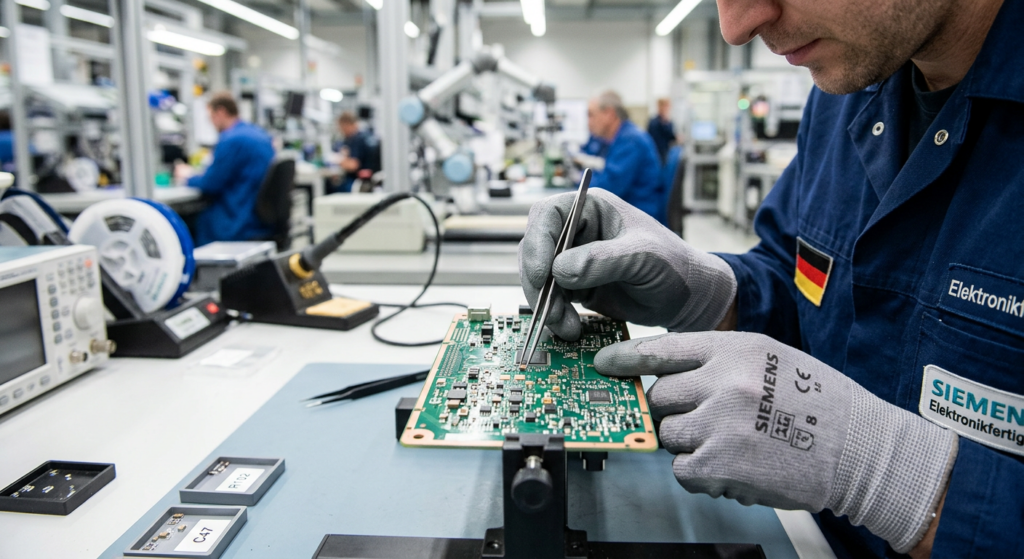
- Electronics and Electrical Engineering: Germany’s electronics manufacturing clusters require lint-free, anti-static PU coated gloves for PCB assembly, semiconductor handling, and sensitive equipment maintenance. Carbon-fiber-infused nylon liners with PU fingertip coating provide both ESD protection and contamination control.
- Logística e Armazenagem: Germany’s position as Europe’s logistics hub — with major distribution centers in Hamburg, Frankfurt, and the Ruhr Valley — generates massive demand for 13G polyester-PU coated gloves for parcel handling, pallet loading, and barcode scanning. Touchscreen-compatible variants are increasingly specified.
- General Manufacturing and Maintenance (Mittelstand): Germany’s extensive network of small and mid-sized industrial enterprises (Mittelstand) consumes large volumes of versatile 13G nylon-PU gloves for machinery maintenance, tool handling, and general assembly tasks.
- Metal Fabrication and Stamping: Sheet metal operations require cut-resistant HPPE liners with PU palm coating (EN 388 cut level B–D) that protect against sharp edges while maintaining the dexterity needed to handle individual parts and operate precision equipment.
- Aerospace and Precision Engineering: High-value component assembly in Germany’s aerospace sector demands premium 18G nylon-PU coated gloves that prevent fingerprint contamination on polished surfaces while providing secure grip on small fasteners and composite materials.
The industrial safety gloves market in Germany is anticipated to experience substantial and promising growth from 2025 to 2034, driven by increasing industrial activities, stricter safety regulations, and a growing emphasis on workplace safety standards. Os robustos setores automotivo e químico da Alemanha estão impulsionando a demanda por luvas especializadas que se destacam por uma combinação de recursos protetores. This regulatory and economic environment ensures sustained year-round procurement of PU coated gloves, with particular demand peaks during Q1 and Q3 as companies refresh annual PPE inventories.
Specific Application Scenarios for PU Coated Gloves
Scenario 1: Automotive Wiring Harness Assembly in Stuttgart
At a Tier 1 automotive supplier near Stuttgart, 200 assembly workers route, connect, and tape wiring harnesses for premium vehicle models. The primary hazards are abrasion from wire insulation, minor cuts from cable-tie edges, and repetitive strain from manipulating small connectors over 8-hour shifts. Workers wear 15G nylon liner gloves with PU palm coating (EN 388: 4131) — the thin PU layer provides just enough grip to pull connectors into place without slipping, while the 15G nylon liner wicks moisture and reduces hand fatigue. The gloves must pass the manufacturer’s lint-free specification to prevent contamination inside electrical junction boxes. Each worker consumes approximately one pair per week, making unit cost a significant procurement factor across 200+ headcount.
Scenario 2: E-Commerce Fulfillment Center in the Ruhr Valley
In a high-throughput e-commerce fulfillment center near Dortmund, 350 order pickers scan barcodes on handheld devices, retrieve items from shelving, and pack shipments across three shifts. Workers need touchscreen-compatible gloves that do not need to be removed for device operation, with sufficient grip to handle cardboard cartons and poly-bagged products. The recommended specification is 15G nylon-spandex liner with touchscreen-compatible PU palm coating (EN 388: 4131). The PU coating provides secure grip on mixed surfaces — glossy poly bags, corrugated cardboard, and plastic bins — while the conductive fingertip zones register reliably on capacitive screens. The nylon-spandex blend ensures a snug fit across diverse hand sizes (S–XXL).
Scenario 3: Precision Metal Parts Inspection in Bavaria
At a CNC machining facility near Augsburg, 60 quality inspectors handle freshly machined aluminum and steel components with residual cutting oil on their surfaces. The hazards include sharp edges and burrs on machined parts, slippery oil films, and the need to detect surface defects by touch. The recommended specification is 13G HPPE liner with PU palm coating (EN 388: 4X42C) — delivering cut level C protection against sharp edges while maintaining dexterity level 4 for defect detection. The PU coating provides adequate grip in light-oil conditions, though for heavier oil contamination, a transition to nitrile foam coating is advisable. Inspectors consume approximately 2 pairs per week due to oil exposure degrading the PU coating over time.
Estudos de caso
Case 1: Automotive PPE Standardization, Baden-Württemberg
A major German automotive component manufacturer operating 8 plants needed to consolidate PU coated gloves supply from multiple inconsistent sources to a single, optimized OEM specification. Working with a factory-direct partner, they developed a custom 15G nylon-PU palm coated glove with anti-static properties, company branding, and a high-visibility blue liner for easy identification on the production floor. The consolidated SKU reduced annual procurement costs by 22% while improving worker satisfaction scores through consistent fit and grip performance.
Case 2: Private-Label Launch for German E-Commerce Brand
A German PPE startup identified PU coated gloves as a high-demand entry product for Amazon.de. They partnered with an OEM manufacturer to produce 4 SKUs spanning general-purpose, cut-resistant, touchscreen, and ESD variants — all with bilingual DE/EN retail packaging, individual poly-bag presentation, and complete CE documentation. The initial order of 25,000 pairs shipped within 20 days, accompanied by professional product photography and A+ content, enabling the brand to go live within 5 weeks.
Top 6 Recommended Local PU Coated Gloves Suppliers in Germany
| Nome da empresa | Principais pontos fortes | Regiões de serviço | Apoio à pré-venda | Apoio pós-venda |
|---|---|---|---|---|
| RheinTech Arbeitsschutz GmbH | Broad PU Coated Gloves range for automotive and precision manufacturing | NRW, Hesse, Renânia-Palatinado | On-site hazard assessments, EN 388 compliance consulting | Dedicated account managers, quarterly usage reviews |
| BayernGrip Sicherheit | Premium high-gauge dexterity gloves for electronics and aerospace | Baviera, Baden-Württemberg | Ergonomic fit testing, ESD certification support | Warranty processing, field quality audits |
| NordSafe PPE Handel | Multi-category catalog including touchscreen PU Coated Gloves | Hamburgo, Baixa Saxônia, Schleswig-Holstein | Technical datasheets, regulatory import guidance | Express replacement shipping, returns handling |
| SachsenPro Handschutz | Cost-effective bulk supply for Mittelstand manufacturing | Saxônia, Brandemburgo, Turíngia | Apoio a concursos públicos, correspondência entre especificações | On-site inventory audits, batch traceability |
| HansaPPE Distribution | E-commerce-ready packaging with Amazon.de fulfillment integration | A nível nacional através do centro de Hamburgo | Conteúdo de listagem de produtos, documentação de certificação | Consumer review management, warranty processing |
| AlpenSafe Industrieschutz | Specialized cut-resistant PU coated gloves for metal fabrication | Bavaria, Alpine industrial regions | Cut-hazard-specific product recommendations | Seasonal stock planning, field performance tracking |
When evaluating suppliers, always request EN 388 test reports from EU-accredited notified bodies and verify that the supplier can provide a German-language EU Declaration of Conformity and REACH compliance documentation alongside each product.
Why Choose Snell Safety as Your Global PU Coated Gloves Partner
Segurança Snell brings deep German market expertise built through years of serving PPE distributors, automotive suppliers, and manufacturing enterprises across Germany. We understand which liner materials, PU coating thicknesses, gauge counts, and color configurations perform best in German workplaces — from the ultra-thin 18G PU fingertip gloves demanded by Stuttgart electronics assemblers to the cut-resistant 13G HPPE-PU models used in Bavarian metal fabrication shops. With established local partners and planned overseas warehouse capacity for stock-ready delivery in Germany, we support both end-user enterprises and distribution channels with products tailored to local working conditions and the precise hand-feel preferences German workers expect. We are actively recruiting new distributors, agents, and e-commerce brand owners — offering pre-sale empowerment (product selection guidance, technical training, market intelligence), comprehensive after-sale support, dropshipping services, free samples, and marketing material support.
Our manufacturing capabilities back this market knowledge with production excellence. With over a decade of expertise, 6 dedicated production lines, and a daily capacity of 150,000 pairs, our vertically integrated process (R&D → material sourcing → knitting → PU dipping/curing → quality inspection → packaging → export) ensures consistent quality at factory-direct pricing. We offer the full range of PU coating configurations — palm, fingertip, and 3/4 coverage — on liners from 10G to 18G in nylon, polyester, HPPE, Kevlar, and nylon-spandex blends, all carrying ISO 9001 and CE certifications for seamless EU market entry. Browse our catálogo de produtos ou contactar a nossa equipa para solicitar amostras e um orçamento personalizado.
| Capacidade | Detalhes |
|---|---|
| Capacidade de produção diária | 150,000 pairs across 6 production lines |
| PU Coating Configurations | Palm, fingertip, 3/4 coating; standard, ESD, touchscreen |
| Liner Gauge Options | 10G, 13G, 15G, 18G |
| Materiais de revestimento | Nylon, polyester, HPPE, Kevlar, nylon-spandex |
| Personalização | OEM/ODM private label, custom colors, branding, packaging |
| Certificações | ISO 9001, CE marking (EN 388, EU 2016/425) |
Use this table to evaluate whether Snell Safety’s manufacturing capabilities align with your PU coated gloves sourcing requirements for the German market.
{Interior photograph of a modern safety glove manufacturing facility showing automated knitting machines producing seamless nylon liners alongside a PU dipping line with rows of hand-shaped formers being coated in polyurethane, quality inspectors checking finished PU coated gloves under bright lights, clean organized factory floor}
FAQ
What EN 388 rating should I look for in PU coated gloves for general assembly?
For general assembly and light manufacturing tasks, PU coated gloves rated EN 388: 4131 or 3131 are standard. This provides level 3–4 abrasion resistance, level 1 cut (Coup Test), level 3 tear, and level 1 puncture — sufficient for most dry-handling mechanical hazards encountered in German factories and warehouses.
Which coating type is best for dry precision handling?
PU (polyurethane) coating is the optimal choice for dry and slightly oily precision handling tasks. PU delivers the thinnest, most flexible coating profile among all dip-coating technologies, maximizing tactile sensitivity and dexterity. For heavily oily environments, nitrile foam or sandy nitrile coatings provide superior oil grip performance.
What certifications are required to import PU coated gloves into Germany?
PU coated gloves for workplace use must comply with EU Regulation 2016/425 and carry CE marking. They require EN 388:2016+A1:2018 testing by an EU-accredited notified body, a German-language EU Declaration of Conformity, and REACH compliance documentation. Category II distribuidor de EPI (mechanical risk protection) requires EU Type Examination certification.
Como é que escolho o calibre certo para o meu sector?
For precision electronics assembly and quality inspection, 18G provides maximum dexterity and tactile sensitivity. For automotive assembly and general manufacturing, 15G offers an ideal balance of comfort and protection. For warehouse operations and maintenance, 13G delivers greater durability. Lower gauges (10G) suit heavier handling but reduce fine-motor control.
What is the price range for bulk PU coated gloves orders?
For factory-direct OEM orders (typical MOQ 5,000–10,000 pairs), standard 13G nylon-PU palm coated gloves range from €0.20–€0.45 per pair. Premium 15G or 18G models cost €0.40–€0.80 per pair, while cut-resistant HPPE-PU variants range from €0.80–€1.50 per pair. Custom branding and individual packaging add €0.05–€0.15 per pair.
How long do PU coated gloves typically last in industrial use?
Service life depends on application intensity. In general assembly and light manufacturing, expect 2–4 weeks per pair. In warehouse and logistics operations, 1–2 weeks is typical. For metal handling with sharp edges, 3–5 days is common. Replace PU coated gloves when the coating shows visible wear-through, peeling, or loss of grip.
Can PU coated gloves be used in cold-weather outdoor work?
Standard PU coated gloves offer minimal thermal insulation and are best suited for indoor or temperate environments. For cold-weather applications below 10 °C, consider thermal-lined alternatives or switch to latex or nitrile coated gloves with insulating cotton jersey or acrylic fleece liners that provide EN 511 cold-protection ratings.
What is the difference between PU palm coating and PU fingertip coating?
PU palm coating covers the entire palm and fingers, providing broad-area grip and abrasion protection for general handling tasks. PU fingertip coating applies polyurethane only to the fingertips and thumb, maximizing breathability and flexibility while providing targeted grip precisely where contact occurs — ideal for electronics assembly and inspection work.
Are PU coated gloves suitable for touchscreen device operation?
Standard PU coated gloves are not touchscreen-compatible. However, specialized touchscreen-enabled variants incorporate conductive fibers (typically carbon or silver-coated nylon) into the fingertip zones of the liner, allowing reliable capacitive touchscreen operation without removing gloves — increasingly essential in modern logistics and manufacturing environments.
What cut level do I need for metal handling in Germany?
For handling stamped sheet metal, machined components, or glass, EN 388 cut level B (ISO 13997: 2.5–5.0 N) is the minimum recommended protection. For sharp-edged metal stamping or recycling operations, cut level C or D (5.0–15.0 N) on an HPPE or Kevlar liner with PU palm coating provides reliable protection while maintaining good dexterity.
Whether you are an end-user enterprise seeking reliable factory-direct supply of PU coated gloves, a PPE distributor expanding your German product catalog, or an e-commerce brand developing a private-label hand protection line, Segurança Snell is ready to support your requirements with precisely tailored products, competitive pricing, and comprehensive partner empowerment. Envie suas especificações ou solicite um orçamento hoje — incluindo amostras gratuitas, soluções personalizadas OEM/ODM e consultoria técnica dedicada para o mercado alemão.
Conteúdo revisto e atualizado: março de 2026