Beste Schnittschutzhandschuhe Lieferanten in Deutschland | 2026 Leitfaden
2026-03-25
Diesen Artikel teilen
Germany is Europe’s largest industrial economy and one of the continent’s most demanding markets for cut resistant gloves. Whether you are an HSE procurement manager in automotive manufacturing, a PPE distributor serving construction firms, or an e-commerce brand owner building a safety glove line, selecting the right supplier is critical to compliance, worker safety, and cost control. This guide provides a comprehensive analysis of the types, specifications, industries, and suppliers that define the cut resistant gloves market in Germany today.
Looking for expert guidance on which cut resistant gloves specifications are right for the German market? Contact our team at Snell Safety — we have extensive experience serving German clients and can recommend exact configurations tailored to your industry, application, and budget requirements.
Schnelle Antwort
For sourcing cut resistant gloves in Germany, consider established local PPE distributors with nationwide logistics networks and deep regulatory expertise, as well as Chinese manufacturers who specialize in customized products with competitive pricing and full international certifications (ISO 9001, CE marking). Combining a local distributor’s service speed with a factory-direct manufacturer’s OEM/ODM flexibility and cost advantages often yields the strongest procurement strategy.
Market Overview
Germany’s cut resistant gloves market is experiencing robust growth, driven by the country’s massive industrial base and some of the strictest occupational safety enforcement in Europe. The Germany Safety Gloves Market is projected to grow from USD 1,068.97 million in 2023 to an estimated USD 2,100.86 million by 2032, reflecting a compound annual growth rate (CAGR) of 7.78% from 2024 to 2032. Hand protection led the market and accounted for 29.0% of revenue share in 2024, owing to increasing demand in various end-use industries such as manufacturing, construction, and chemicals. With hand injuries constituting up to 30% of all emergency department cases, the demand for reliable cut protection has never been higher.
Germany was the top performer of the Europe personal protective equipment market owing to its world-leading industrial base and rigorous occupational safety enforcement, employing over 7 million people in manufacturing, construction, and chemicals sectors where PPE is legally mandated under the German Occupational Safety Act. The ongoing shift from traditional leather and cotton gloves toward high-performance materials like HPPE, Kevlar, and advanced nitrile coatings is accelerating demand for engineered cut resistant gloves across all major industrial sectors.
What Types of Cut Resistant Gloves Are Needed in Germany
Based on our experience serving German clients, cut resistant gloves demand in this market spans a wide performance range — from EN 388 cut level A2 for light assembly tasks to cut level E and F for heavy metal fabrication and glass handling. German buyers consistently prioritize three factors: certified cut performance backed by EN 388:2016+A1:2018 test reports, high dexterity for precision tasks (particularly in automotive and electronics manufacturing), and long-term coating durability under intensive daily use. The temperate continental climate also means workers need breathable, comfortable gloves that perform well year-round, including in heated indoor facilities where hand perspiration is a common complaint.
We have found that the German market strongly favors HPPE-based liners for their excellent cut resistance-to-weight ratio, with nitrile coatings (foam, micro-foam, and sandy variants) dominating over latex in most industrial settings due to superior oil resistance and reduced allergy risk. Impact-resistant cut resistant gloves with TPR back-of-hand protection are gaining significant traction in the oil and gas, mining, and heavy construction sectors. Touchscreen compatibility is increasingly specified for logistics and warehouse operations where workers use handheld scanners and tablets.
The following product types represent the highest demand configurations we supply to German clients:
- 13G HPPE + Glass Fiber Liner with Nitrile Micro-Foam Palm Coating (EN 388 Cut Level C): The single most popular cut resistant glove in Germany. Ideal for automotive assembly, general manufacturing, and maintenance tasks. Offers excellent dexterity and breathability with reliable cut protection. Sizes S–XXL.
- 18G HPPE + Spandex Liner with PU Palm Coating (EN 388 Cut Level B–C): A premium ultra-thin option for precision handling in electronics manufacturing, quality inspection, and small-parts assembly. The 18-gauge construction delivers outstanding tactile sensitivity while maintaining EN 388 compliance.
- 13G HPPE + Kevlar + Steel Wire Liner with Sandy Nitrile Palm Coating (EN 388 Cut Level E–F): Designed for heavy-duty applications in metal fabrication, glass handling, and recycling operations. The sandy nitrile coating provides exceptional wet and oily grip, while the reinforced liner delivers maximum cut protection.
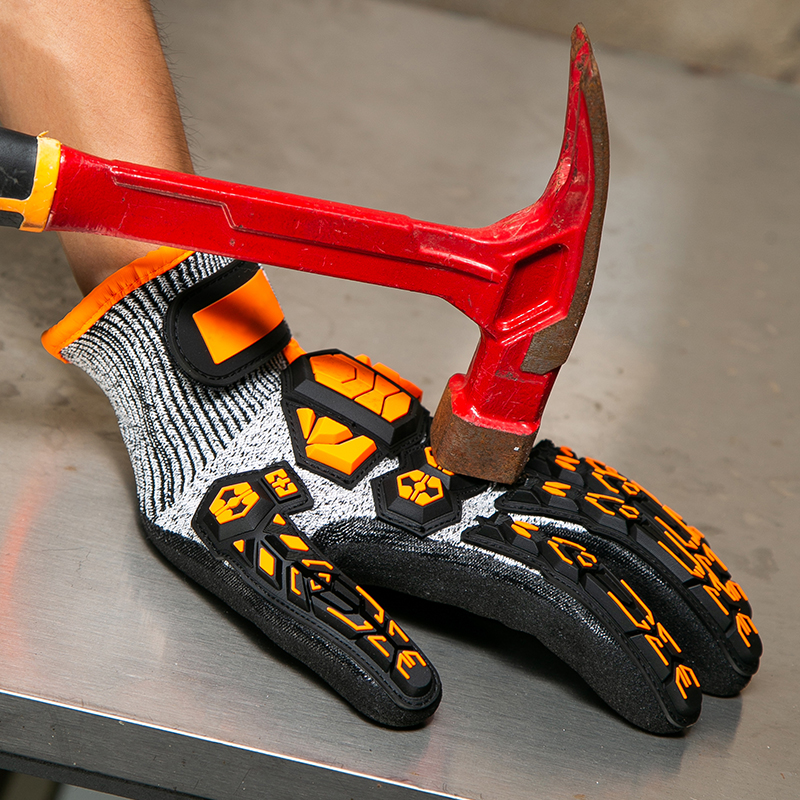
- 13G HPPE Liner with Nitrile Foam 3/4 Coating + TPR Back-of-Hand (EN 388 Cut Level D, Impact Protection): The go-to specification for oil and gas, mining, and heavy construction in Germany. TPR (thermoplastic rubber) knuckle and finger guards protect against impact and crushing hazards while the nitrile foam coating ensures reliable grip in oily conditions.
- 15G HPPE + Nylon Liner with PU Fingertip Coating (EN 388 Cut Level B, Touchscreen-Compatible): Increasingly popular in logistics, warehousing, and e-commerce fulfillment centers. Conductive fingertips enable use with barcode scanners and touchscreen devices without removing gloves.
Why These Product Types Are Recommended
Each recommended specification is engineered to meet the EN 388:2016+A1:2018 standard, which is mandatory for all mechanical protection gloves sold within the European Union. The 2016 revision introduced the ISO 13997 (TDM) blade-cut test alongside the older Coup test, providing a far more accurate assessment of real-world cut resistance. Under this system, cut levels range from A (lowest, 2N) to F (highest, 30N), and German buyers increasingly demand verified TDM-tested results rather than relying on the older Coup test alone.
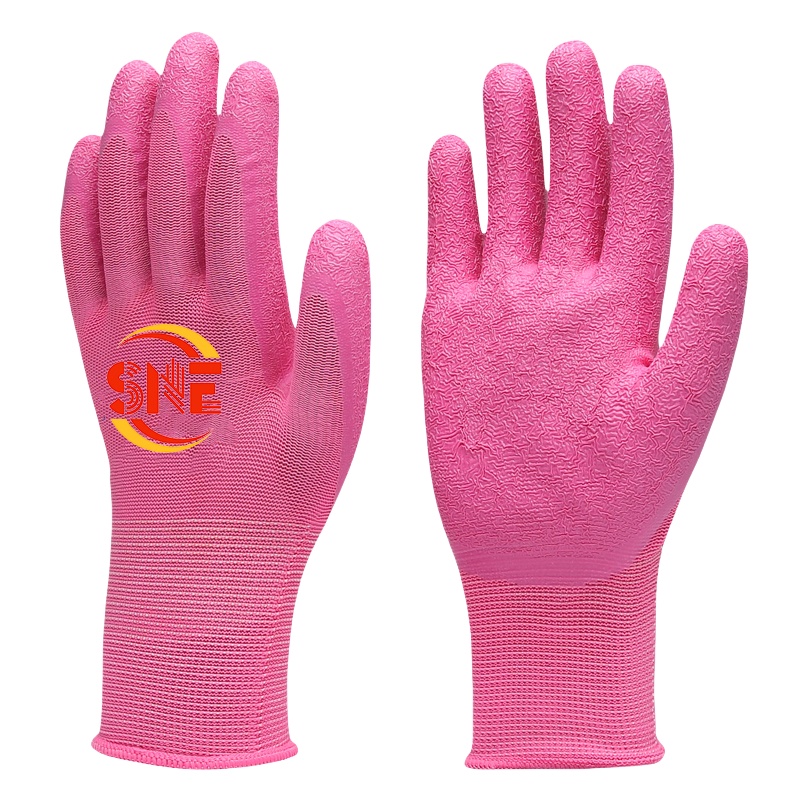
The nitrile micro-foam coating outperforms other coating technologies for the German market because it delivers the optimal combination of oil resistance, breathability, and grip consistency across dry, wet, and oily conditions — conditions that are common in Germany’s automotive and metalworking plants. Sandy nitrile finishes excel in heavy oil and cutting fluid environments, where the micro-textured surface channels liquids away from the grip zone. PU coatings, while offering superior dexterity and cleanroom compatibility, are best suited for dry precision tasks. From a cost-effectiveness perspective, 13G HPPE nitrile micro-foam gloves offer the best per-unit value for general cut protection, typically lasting 2–4 weeks under daily industrial use at a fraction of the cost of leather or Kevlar alternatives.
| Spezifikation | 13G Nitrile Micro-Foam (Cut C) | 18G PU Palm (Cut B–C) | 13G Sandy Nitrile (Cut E–F) | 13G Nitrile Foam + TPR (Cut D) |
|---|---|---|---|---|
| Primary Use | Cut Resistant Gloves for General Industry | Precision Assembly | Heavy Metal/Glass Handling | Oil & Gas / Impact Protection |
| EN 388 Cut Level | C (ISO 13997: 15N) | B–C (ISO 13997: 10–15N) | E–F (ISO 13997: 22–30N) | D (ISO 13997: 18N) |
| Öl-Griff | Ausgezeichnet | Mäßig | Ausgezeichnet | Sehr gut |
| Dexterity (1–5) | 4 | 5 | 3 | 3 |
| Abnutzungswiderstand | Level 4 (8,000 cycles) | Level 3 (2,000 cycles) | Level 4 (8,000 cycles) | Level 4 (8,000 cycles) |
| Typische Lebenserwartung | 2–4 weeks | 1–3 weeks | 3-6 Wochen | 3–5 weeks |
Use this table to match the right cut resistant gloves specification to your workers’ specific hazard exposure and dexterity requirements.
Key Industries for Cut Resistant Gloves in Germany
Cut resistant gloves represent the single largest sub-category within Germany’s hand protection market, driven by demand across virtually every industrial sector. The following industries represent the primary procurement channels and highest volume demand:
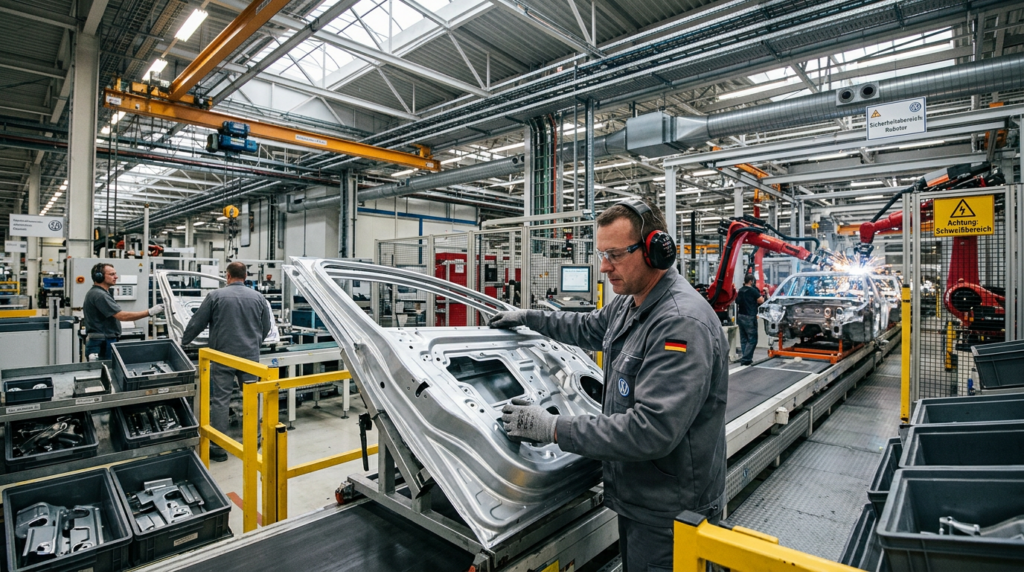
- Automobilherstellung: Germany’s automotive sector is the largest industrial consumer of cut resistant gloves. Workers handling stamped sheet metal, machined components, and sharp-edged trim parts require EN 388 cut level C–D gloves with nitrile micro-foam or PU coatings. The shift toward electric vehicle production introduces new hazards from battery module handling and composite materials.
- Metal Fabrication & Machining: CNC machining, stamping, deburring, and welding preparation tasks demand cut level D–F gloves. Sandy nitrile coatings are essential in shops where cutting oils and coolants are present, and workers need 13G or 15G liners to maintain the dexterity required for precision metalwork.
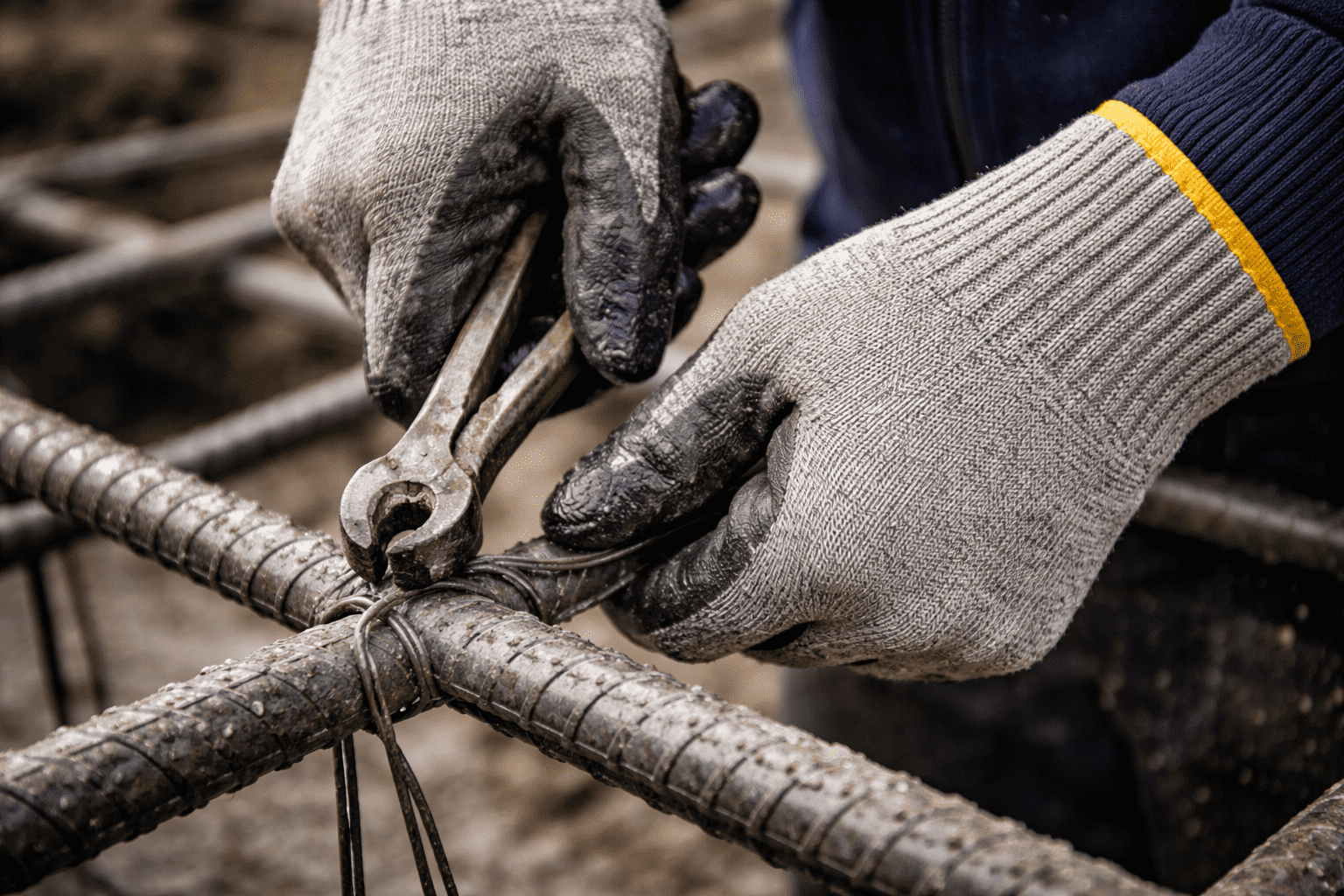
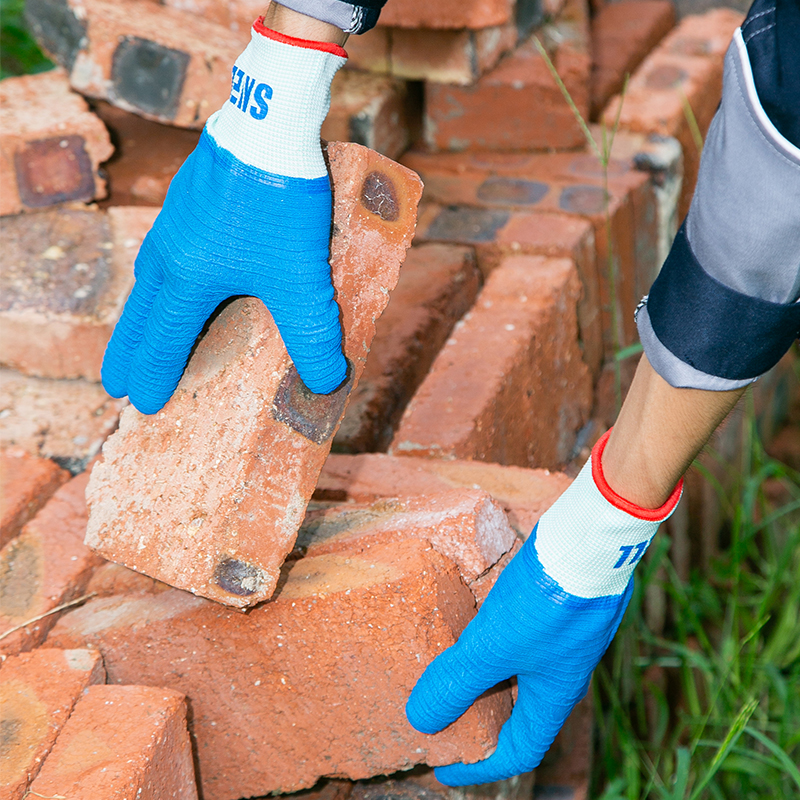
- Construction & Civil Engineering: Germany’s robust construction sector requires cut resistant gloves for rebar handling, formwork assembly, and glass installation. Impact-resistant TPR variants are increasingly mandated on large infrastructure projects and commercial building sites.
- Öl & Gas & Bergbau: Offshore and onshore operations in Germany’s North Sea sector and domestic mining operations demand multi-hazard gloves combining cut resistance (level D+), impact protection (TPR), and hydrocarbon-resistant coatings. These are typically the highest-specification gloves in any procurement program.
- Logistik und Lagerhaltung: The explosive growth of e-commerce in Germany has created massive demand for cut resistant gloves in distribution centers where workers handle sharp packaging materials, box cutters, and banding. Touchscreen-compatible models with cut level B are the standard specification.
- Food Processing & Commercial Kitchens: HACCP-compliant cut resistant gloves (typically HPPE or stainless steel mesh) are required in Germany’s large meat processing, bakery, and industrial kitchen sectors. These gloves must be detectable, food-safe, and easy to sanitize.
- Glass & Recycling Industries: Glass manufacturing, window installation, and recycling sorting facilities require maximum cut protection (level E–F) combined with robust abrasion resistance and adequate grip for handling smooth, heavy glass panels and sharp recyclable materials.
Germany’s position as Europe’s leading industrial hub directly influences the demand for safety gloves. The expanding automotive, manufacturing, and construction sectors significantly contribute to market growth as these industries rely on manual labor and advanced machinery, increasing exposure to potential risks. The German government’s strict enforcement of occupational safety legislation — particularly through the Berufsgenossenschaften (employer’s liability insurance associations) and the German Occupational Safety Act (ArbSchG) — ensures that non-compliance carries significant financial and legal consequences, reinforcing consistent demand for certified cut resistant gloves across all sectors.
Specific Application Scenarios
Scenario 1: Automotive Stamping Plant in Stuttgart
A Tier 1 automotive parts supplier operates a 500-worker stamping facility producing sheet-metal body panels for a major German OEM. Workers on the press line handle sharp-edged blanks weighing up to 15 kg, with constant exposure to cutting oils and hydraulic fluids. The primary hazards are laceration from burrs and sheared edges, and slip-related drops caused by oily surfaces. The EHS department specifies 13G HPPE + glass fiber liner with nitrile micro-foam palm coating, rated EN 388: 4X43C. This configuration provides reliable cut level C protection with exceptional oily grip, while the 13-gauge construction allows workers to manipulate parts, operate controls, and handle fasteners with confidence. The facility procures 15,000 pairs per quarter with custom branding and sizes M–XXL.
Scenario 2: North Sea Offshore Maintenance Platform
An offshore maintenance contractor deploys 120 technicians across three German North Sea platforms for turnaround and planned maintenance operations. Workers perform pipe fitting, valve replacement, scaffolding, and cable pulling — all tasks involving sharp metal edges, heavy equipment, and hydrocarbon exposure. The required specification is 13G HPPE liner with nitrile foam 3/4 coating and full TPR back-of-hand impact protection, rated EN 388: 4X44D with impact protection (P). Gloves must also meet high-visibility requirements with fluorescent yellow backs. Each technician receives 4 pairs per rotation, totaling approximately 2,000 pairs per maintenance campaign.
Scenario 3: E-Commerce Fulfillment Center in Leipzig
A major logistics company operates a 50,000 m² distribution center with 800 workers processing up to 200,000 packages daily. Warehouse associates use box cutters and tape splitters while handling sharp-edged packaging, metal banding, and heavy cartons. The primary hazards are cuts from blades and lacerations from plastic strapping. The facility specifies 15G HPPE + nylon liner with PU fingertip coating, rated EN 388: 4X42B, with touchscreen-compatible fingertips for RF scanner operation. The lightweight, breathable design minimizes hand fatigue during 8–10 hour shifts, while cut level B provides adequate protection against packaging-related hazards. Annual procurement exceeds 40,000 pairs.
Fallstudien
Case 1: Automotive Parts Distributor in Bavaria
A regional PPE distributor supplying 150+ automotive manufacturing SMEs needed a consistent source for 13G HPPE nitrile micro-foam cut resistant gloves with private branding and quarterly volumes exceeding 80,000 pairs. Previous suppliers delivered inconsistent cut-level performance between batches. After partnering with a vertically integrated Chinese manufacturer, the distributor achieved batch-to-batch consistency verified by independent EN 388 testing, reduced per-pair cost by 22%, and shortened lead times from 8 weeks to 5 weeks.
Case 2: Industrial Safety E-Commerce Brand on Amazon.de
A German e-commerce brand owner launched a five-SKU cut resistant gloves line on Amazon.de targeting construction professionals and DIY users. The project required OEM branding, German-language packaging with EN 388 performance pictograms, CE documentation, and professional product photography. A factory-direct partner produced 100,000 pairs across all variants within 30 days, including complimentary packaging design, Amazon-ready EAN barcodes, and A+ listing content support — enabling a successful launch within 6 weeks of order placement.
Top 6 Recommended Local Suppliers in Germany
| Name des Unternehmens | Zentrale Stärken | Service-Regionen | Vorverkaufsunterstützung | After-Sale-Unterstützung |
|---|---|---|---|---|
| RheinSchutz Arbeitsschutz GmbH | Broad Cut Resistant Gloves catalog, automotive sector expertise | Western Germany (NRW, Hessen, BaWü) | On-site safety audits, product trials | Dedicated account manager, rapid replacement |
| NordSafe Handschutz | Specialized in offshore and industrial impact/cut protection | Northern Germany (Hamburg, Bremen, Lower Saxony) | Technical consultation, hazard assessment | Warranty claims processing, field feedback reports |
| BayernPro PPE Vertrieb | Strong government and municipal procurement network | Bavaria, Baden-Württemberg | Tender documentation, EN 388 certification dossiers | Annual quality audits, contract renewal support |
| OstGrip Schutzhandschuhe | Budget-friendly bulk supply for construction and logistics | Eastern Germany (Saxony, Brandenburg, Thuringia) | MOQ flexibility, mixed-container options | Batch traceability, defect resolution |
| SüdTech Sicherheit GmbH | Premium Cut Resistant Gloves for metal fabrication and glass handling | Southern Germany | Cut-level testing coordination, sample kits | Performance monitoring, seasonal restocking programs |
| HansaGuard PPE Solutions | E-commerce and Amazon.de fulfillment specialist | Pan-European via Hamburg hub | Listing content support, photography, FBA coordination | Customer service integration, returns management |
When evaluating suppliers, prioritize those who can provide independent EN 388 test reports from accredited notified bodies, demonstrate consistent batch-to-batch quality, and offer flexible MOQ terms with clear after-sale policies for defective units.
| Evaluation Criteria | Gewicht | What to Verify |
|---|---|---|
| EN 388 Certification | Hoch | Valid test report from EU notified body, Declaration of Conformity |
| Cut Level Consistency | Hoch | Batch-to-batch TDM test results, quality inspection protocols |
| Coating Durability | Mittel | Abrasion cycle data, field-use lifespan estimates |
| MOQ-Flexibilität | Mittel | Minimum per style, mixed-container policy |
| Lead Time Reliability | Mittel | Production-to-port timeline, shipping track record |
| Private Label Capability | Variabel | Branding, packaging, documentation, EAN/UPC support |
Use this evaluation framework to systematically compare potential cut resistant gloves suppliers during your procurement process.
Warum Sie Snell Safety als Ihren globalen Partner wählen sollten
Snell Sicherheit brings a powerful combination of deep German market knowledge and advanced cut-resistant glove engineering to every partnership. Through years of serving German distributors, automotive manufacturers, and industrial procurement teams, we have developed a precise understanding of what works in this market — from the exact nitrile micro-foam formulation that delivers optimal oily grip on stamping lines to the HPPE liner blends that meet EN 388 cut level C–F while maintaining the dexterity German workers expect. We maintain established local partners in Germany and are actively building overseas warehouse capacity for in-stock, ready-to-ship supply. Distributors, agents, and e-commerce sellers are invited to join our growing partner network with full pre-sale empowerment (product selection guidance, technical training, market intelligence), after-sale support (quality assurance, replacement policies), dropshipping services, free samples, and marketing material support.
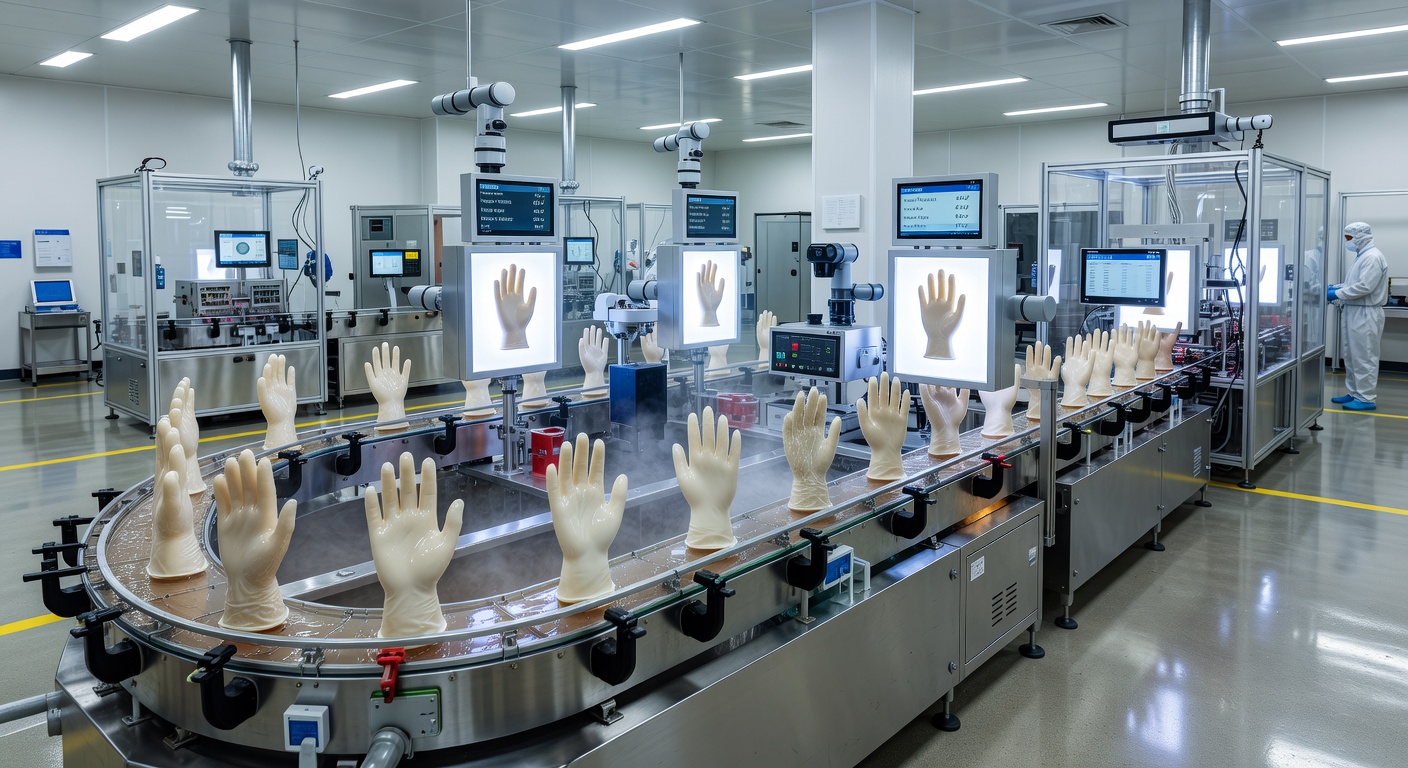
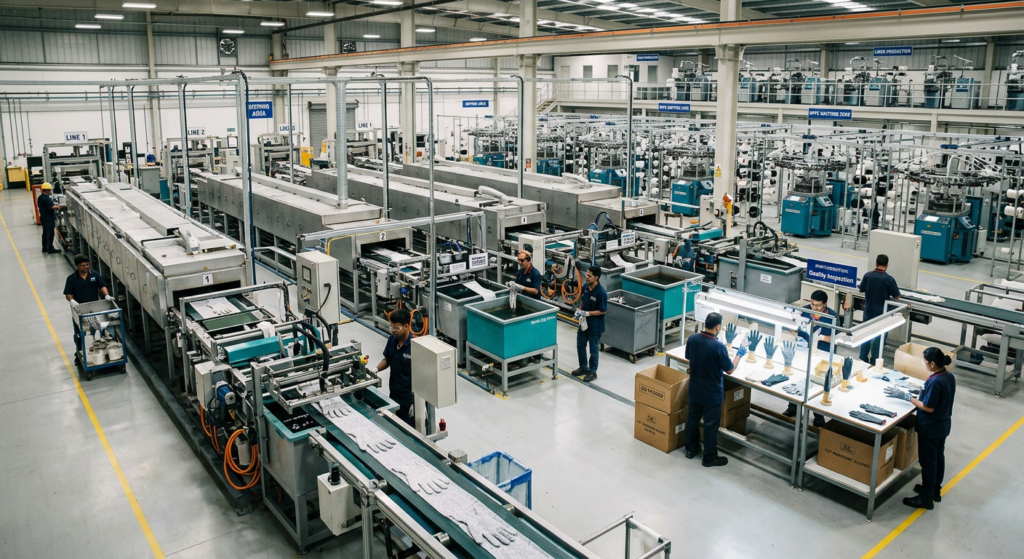
On the manufacturing side, our two facilities operate 6 dedicated production lines with a daily capacity of 150,000 pairs, powered by a vertically integrated process from yarn knitting through dip coating to final quality inspection. With over a decade of production expertise in cut-resistant and impact-resistant glove engineering, ISO 9001 and CE certifications, and full OEM/ODM capability across all major coating technologies (PU, nitrile foam, nitrile micro-foam, sandy nitrile, latex crinkle), we deliver the quality consistency, competitive factory-direct pricing, and scalable volume that German buyers demand.
Explore our full Produktkatalog oder Kontakt zu unserem Team to request samples, discuss custom specifications, or receive a competitive quotation.
FAQ
What EN 388 cut level do I need for construction work in Germany?
For general construction tasks like rebar handling, formwork, and scaffolding, EN 388 cut level C (15N under ISO 13997) is the standard minimum. For glass installation and sheet metal work on construction sites, cut level D or E is recommended. All gloves must carry valid CE marking and comply with EU Regulation 2016/425.
Which coating is best for oily environments?
Nitrile micro-foam and sandy nitrile coatings provide the best grip performance in oily conditions. Sandy nitrile excels in heavy oil and cutting fluid exposure (automotive stamping, CNC machining), while nitrile micro-foam offers a better balance of oil grip and breathability for lighter oil exposure. Avoid PU coatings for oily applications.
Was bedeutet die EN 388-Einstufung für Schnittschutzhandschuhe?
EN 388:2016+A1:2018 tests gloves against four mechanical risks: abrasion (0–4), blade cut/Coup test (0–5), tear (0–4), and puncture (0–4), plus the ISO 13997 TDM cut test (A–F) and optional impact protection (P). For cut resistant gloves, the TDM letter rating (A–F) is the most reliable indicator of real-world cut performance.
Wie wähle ich das richtige Messgerät für meine Branche?
Gauge determines liner thickness and dexterity. For precision electronics and inspection tasks, choose 18G for maximum tactile feel. For general manufacturing and automotive assembly, 13G–15G is the standard. For heavy-duty applications in mining, oil and gas, or metal fabrication, 10G–13G provides additional durability. Lower gauge numbers mean thicker, more robust liners.
Was ist die typische Preisspanne für Großbestellungen von schnittfesten Handschuhen?
Bulk pricing varies by specification. Standard 13G HPPE nitrile micro-foam cut level C gloves range from €0.80–€1.50 per pair FOB for orders above 10,000 pairs. High-cut level E–F variants range from €1.50–€3.00 per pair. Impact-resistant TPR models command €2.00–€4.00 per pair. OEM branding adds approximately €0.05–€0.15 per pair.
What certifications are required to import safety gloves into Germany?
All protective gloves sold in Germany must comply with EU Regulation 2016/425 (PPE Regulation) and carry CE marking. Cut resistant gloves classified as Category II PPE require EU Type Examination by a notified body, an EN 388:2016+A1:2018 test report, and an EU Declaration of Conformity. REACH compliance documentation is also required.
How long do cut resistant gloves typically last under daily industrial use?
Under standard daily industrial use (8-hour shifts), 13G HPPE nitrile micro-foam cut level C gloves typically last 2–4 weeks before coating wear-through. Higher-cut-level HPPE/Kevlar/steel wire variants last 3–6 weeks. Lifespan depends on hazard intensity, abrasion exposure, and oil/chemical contact. Replace gloves immediately when coating degradation is visible.
What is the minimum order quantity for OEM cut resistant gloves?
Most factory-direct manufacturers require MOQs of 5,000–10,000 pairs per style for OEM/private-label cut resistant gloves. Standard catalog models may have lower MOQs of 2,000–3,000 pairs. Custom liner blends, special TPR mold designs, or unique coating colors may require 10,000+ pairs per style.
Are touchscreen-compatible cut resistant gloves available?
Yes. Touchscreen functionality is achieved through conductive yarn or coating applied to the thumb and index fingertips. PU-coated 15G HPPE cut resistant gloves are the most common touchscreen-compatible option, suitable for logistics, warehousing, and any application requiring interaction with RF scanners or tablets. Additional cost is minimal at €0.03–€0.08 per pair.
How do I verify EN 388 test results from my supplier?
Request the full EN 388 test report issued by an EU-accredited notified body, including the notified body’s identification number. Verify accreditation on the EU NANDO database. The report should show all six performance values (ABCDEF format) plus the optional impact rating (P). Cross-reference the notified body number on the glove marking with the certificate.
Whether you are an end-user enterprise seeking reliable cut resistant gloves supply, a distributor looking to expand your product range, or an e-commerce brand owner building a PPE line, Snell Sicherheit is ready to support you. Contact us today to submit your requirements, request free samples, or receive a detailed quotation tailored to the German market.
Inhalt überprüft und aktualisiert: März 2026